Ride Sage Snowboard Boots Review: A Coach’s Breakdown
This post contains affiliate links. As an Amazon Associate, we earn from qualifying purchases.
The Ride Sage is a medium-flexing, all-mountain snowboard boot built for comfort, featuring a single BOA Coiler closure system, an Intuition Plush Foam liner, and Ride’s IN2GRATED construction. On Ride’s own 1-10 “Feel” scale, it scores a 4, the softest in their women’s line, aimed at riders prioritizing all-day comfort over aggressive response.
That 4/10 rating is the key. It’s not a guess or a marketing label, it’s Ride’s own internal number, and it places the Sage at the comfort-and-cost end of their lineup. The boot’s “Mellow” response descriptor and the lack of published specs (weight, boot sole length, last width) are notable features of this model. This is the context for any Ride Sage snowboard boots review.
What follows is a breakdown of the specs that matter, the contradictions in Ride’s own data, and the real-world sizing advice that beats a generic Ride Sage snowboard boots review. This section explains the single-BOA trade-off, whether the liner can be heat-molded, and how the Sage compares to stiffer options for riders considering an upgrade.
Key Takeaways
- The Sage’s 4/10 “Feel” rating is Ride’s lowest for women’s boots, translating to a soft, forgiving flex perfect for beginners and comfort-focused riders.
- Sizing is a known point of conflict: a verified buyer reports true-to-size fit, contradicting the common industry advice to size down for snowboard boots.
- The boot’s official specs contain contradictions: the BOA system is listed as both H4 and H5 Coiler, and the last is named as both Jade and Silver.
- Critical specs are missing: Ride publishes no weight, boot sole length (BSL), last width, or official heat-molding procedure for the Intuition liner.
- As the entry-price boot in Ride’s women’s line, it trades high-end features like Michelin outsoles and multi-zone BOA for its plush, one-dial simplicity.
What Is the Ride Sage Boot’s Actual Flex?
Ride gives the Sage a “Feel” rating of 4 out of 10. That’s not a flex index you can compare across brands like Burton or ThirtyTwo. It’s Ride’s own in-house scale, meant only to rank their boots against each other. A 4 is the softest rating in Ride’s “Feel” scale.
Ride’s proprietary “Feel” rating for the Sage is 4/10. This internal metric ranks the boot as the softest option among their women’s models for that season, supporting its marketed position as a comfort-first, medium-flexing boot.
What does a 4 feel like? The official descriptor is “Mellow.” In practice, this means the boot breaks in quickly, offers minimal resistance when you flex forward, and prioritizes comfort over instantaneous power transfer. It’s the opposite of a stiff, responsive boot you’d want for high-speed carving or aggressive park riding.
For a coach, this rating is useful. It tells me the Sage is a tool for building confidence, not for demanding precision. If a student’s goal is to link turns without foot fatigue or explore the mountain all day, a soft flex is an asset. If they’re already driving hard into carves and feeling the boot buckle, they’ve outgrown it.
Key Features & Tech Explained (Beyond the Marketing Copy)
Every brand page lists features. This translates what the Ride Sage’s features mean for your feet, using specs from Ride’s site and the PTO Ski Team’s analysis.
BOA® Fit System H4/H5 Coiler: Sources disagree on the specific model: Ride’s official product page calls it an H4 BOA® Coiler Fit System, while the PTO Ski Team analysis specifies an H5 BOA® Coiler Fit System. Both sources agree it’s a single-zone system: one dial on the outside of the boot controls the entire shell closure. The liner has its own separate, hand-tightened “Lock Down™ Turbo” lace.
- The benefit is simplicity: one click in, one pull out.
- The limitation is fixed: you can’t tighten the ankle independently of the forefoot.
Intuition® Plush Foam Liner: This is Ride’s comfort-focused foam liner. The “Plush” in the name is the clue. It includes “Internal J Bars” for heel hold and a removable lace-lock system.
- Heat-Moldable? Sources disagree: Retailer Evo states the liner is “heat moldable,” while Ride’s official spec sheet does not publish any heat-molding procedure. Assume it’s not officially sanctioned for heat-molding unless you get confirmation from Ride.
IN2GRATED® Construction: The liner is molded into the shell at the factory.
C.A.T. (Calf Adjustment Technology): A Velcro strap on the cuff that lets you adjust the circumference of the boot’s upper cuff. This simple strap effectively accommodates different calf sizes without changing the fit around your foot.
1:1 Lasting: This means whole and half sizes get their own dedicated tooling for both the liner and the shell. A size 7.5 isn’t just a size 8 shell with a thinner insole; it’s built as its own distinct size. This typically leads to a better-proportioned fit across the entire size run.
| Feature | What It Is | The Real-World Impact |
|---|---|---|
| Single BOA H4/H5 Coiler | One-dial closure for the entire shell. | Pro: Fast, simple, glove-friendly. Con: No independent zone control. |
| Intuition Plush Foam Liner | Medium-density comfort foam with Internal J Bars. | Plush, quick comfort from day one. May pack out sooner than performance foams. |
| IN2GRATED Construction | Liner molded into shell during manufacturing. | Aims for a precise, unified fit with reduced initial break-in time. |
| Grip Lite 2.0 Outsole | Ride’s outsole with Fusion Rubber (up to 30% reground). | |
| Articulating Upper Cuff | Hinged design at the ankle. |
Sizing & Fit: Does It Run True to Size?
Here’s where the rubber meets the road, or rather, where your foot meets the liner. Ride offers the Sage in a U.S. Women’s 5 through 10, with an 11 available only in Black, and includes half sizes 5.5, 6.5, 7.5, 8.5, and 9.5.
Common industry advice is to size down from your street shoe for snowboard boots. The logic is that liners pack out, and a snug start prevents a sloppy finish.
A verified buyer review on Tactics for a 2024 closeout model directly contradicts this. The buyer, a street size 7 in athletic shoes, states the Sage boots are “TRUE TO SIZE” and fit perfectly. This is a non-commodity data point, a real human result, not a manufacturer guideline.
Common mistake: Following generic “size down” advice without a try-on. The Sage’s 1:1 lasting and Intuition Plush Foam liner are designed for a specific out-of-box fit that may not require downsizing.
What about the last? Ride’s own product page is inconsistent, listing both the Jade Last (in the tech panel) and the Silver Last (in the structured ‘Boot Last’ field). Ride publishes no width or volume data for either, so these names don’t help you judge fit.
Your move is to try it on, with the socks you’ll ride in, and stand in a skating stance for at least 10 minutes. Your toes should just brush the end when standing straight, with that pressure easing when you bend your knees into a riding posture. Heel lift is the real enemy, if your heel moves more than a couple of millimeters when you flex forward, the size is wrong.
The Ride Sage vs. Other Boots & Who It’s For
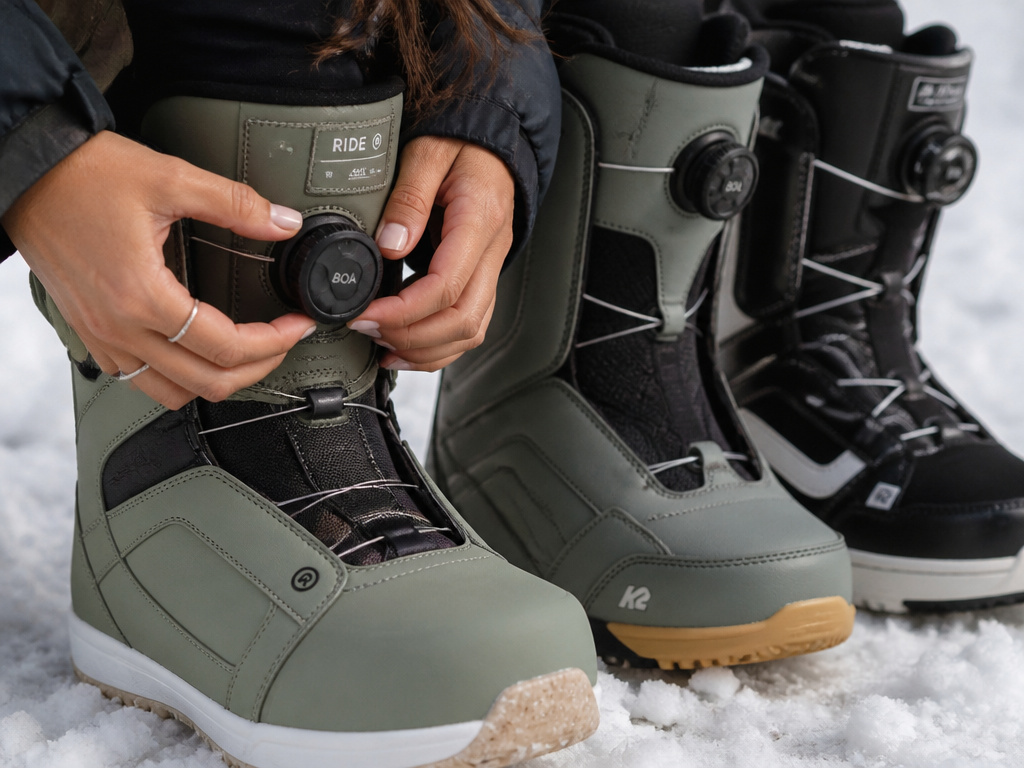
The Sage sits at a specific point on the spectrum. It’s not the only boot in Ride’s lineup, and it fills a particular niche. Understanding where it stands helps you decide.
Ride Sage vs. Ride Hera vs. Ride Cadence
The Sage is the entry point. Here’s how it compares to its more expensive siblings within the Ride family, based on the PTO Ski Team’s 26/27 buy:
| Boot Model | Ride “Feel” Rating | Key Differentiators | Best For |
|---|---|---|---|
| Ride Sage | 4/10 | Single H4/H5 BOA, Intuition Plush Foam liner, Grip Lite 2.0 outsole. | Riders prioritizing comfort, ease of use, and value. Beginners and intermediates who ride all-mountain without demanding max response. |
| Riders wanting a bit more responsiveness than the Sage offers but who still value comfort. | |||
| Advanced riders who want precision, power transfer, and high-end materials, and for whom price is a secondary concern. |
Sage vs. Other Brands (Like K2 or Vans)
Comparing across brands is tricky without standardized flex numbers, a key point in any Ride Sage snowboard boots review. However, if you’re looking at other popular women’s snowboard boots like the K2 Contour or Vans offerings, the Sage’s 4/10 Feel suggests it’s on the softer end of the “medium” spectrum.
Who is the Ride Sage really for?
- The Beginner: Its soft flex is forgiving, and the single BOA is dead simple to manage on the mountain.
- The Comfort-Seeker: If you’ve ever ended a day with screaming feet and vowed to find a softer boot, the Sage’s “Plush Foam” liner is built for you.
- The All-Mountain Cruiser: You spend your days exploring groomers, dipping into trees, and enjoying the scenery, not hucking cliffs or racing gates.
- The Value-Focused Buyer: You want reputable brand tech (BOA, Intuition) without paying for the top-tier materials found on boots costing $150+ more.
Who should look elsewhere?
- The Aggressive Rider: If you drive your turns hard and want immediate board feedback, the Sage’s “Mellow” response will feel vague and unsupportive.
- The Park Rat: Jibbing and landing jumps demand a stiffer boot for stability and shock absorption. The Sage will feel too soft.
- The Spec Hunter: If you need to know the exact boot sole length (BSL) for binding compatibility, or you base decisions on published weight and last dimensions, the Sage’s missing data will frustrate you.
How warm are the Ride Sage boots?
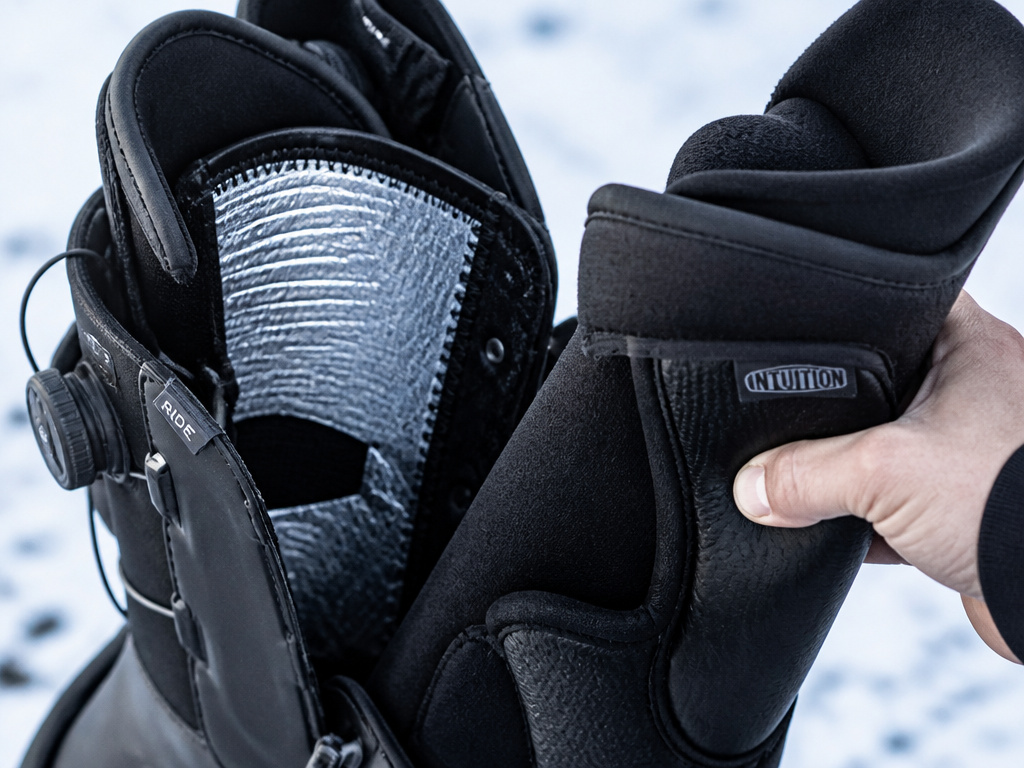
The Sage boots incorporate specific features aimed at cold-weather performance. They include a Heat Reflective Foil layer designed to retain warmth. The liner is an Intuition Plush Foam Liner, which is known for its insulating properties and moldable fit that can improve comfort and reduce cold spots. For the coldest days, the fact that the liner is removable is a practical advantage, allowing you to dry it thoroughly overnight to maintain its loft and warmth. Proper fit is also critical for warmth, so ensuring your foot is snug without being overly tight will help maximize the boot’s thermal efficiency.
How durable is the Ride Sage boot and its outsole?
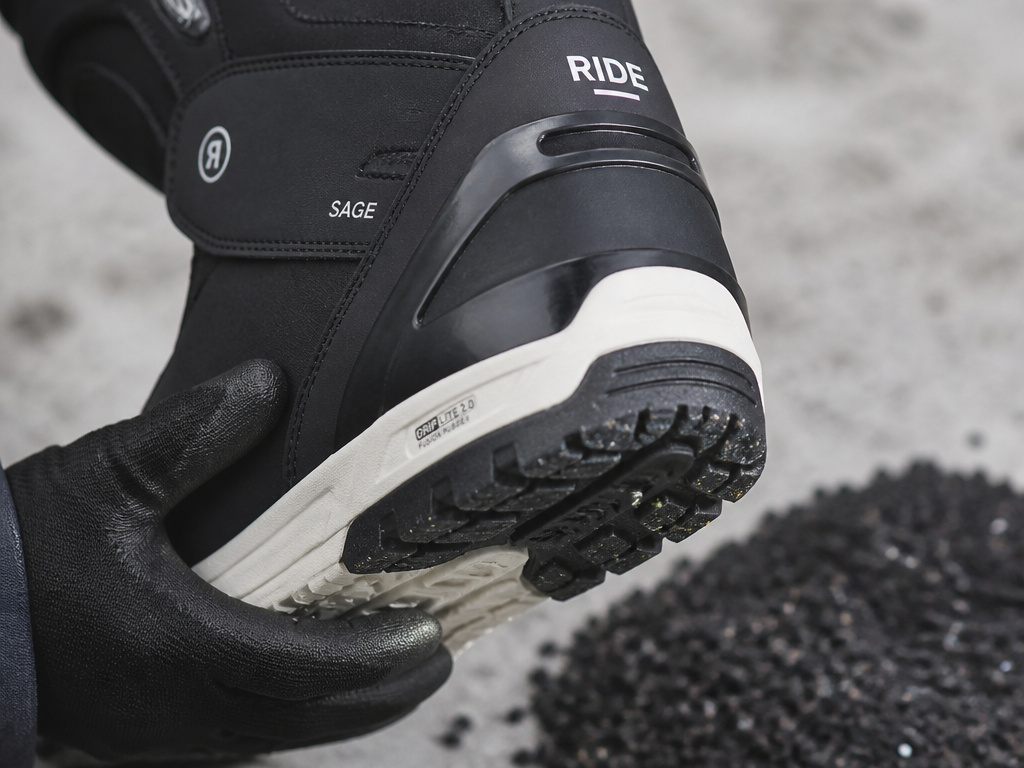
Ride constructs the Sage with their IN2GRATED shell construction and includes a TPU Heel Counter, which are features aimed at structural durability. The outsole is the Grip Lite 2.0, made with Fusion Rubber. This rubber compound incorporates up to 30% reground rubber. For traction, the specific rubber composition and outsole pattern are designed to provide grip when walking.
Frequently Asked Questions
Are Ride Sage snowboard boots good?
Yes, for the right rider. The Ride Sage boots are very good at being comfortable, easy-to-use, all-mountain boots. They are not high-performance boots for aggressive riding.
Do Ride boots run big or small?
Based on a verified buyer report for the Sage model, they can run true to size, at least for some foot shapes. This contradicts the common “size down” advice. The only way to know is to try them on, as fit varies dramatically between models, brands, and individual feet.
Which snowboard boots are the most comfortable?
Comfort is subjective and depends entirely on your foot shape. The Ride Sage is explicitly engineered for comfort with its Intuition Plush Foam liner and medium flex. The best comfort comes from a perfect fit, not a brand name.
Can you heat mold Ride Sage boots?
The official stance from Ride is unclear. Their spec sheet does not publish a heat-molding procedure for the Intuition Plush Foam liner in the Sage. Retailer Evo claims the liner is “heat moldable.” Without clear instructions from the manufacturer, proceed with caution. The liner will naturally mold to your foot over time.
Is the BOA system on the Sage dual zone?
No. The Ride Sage uses a single BOA Coiler Fit System. One dial on the outside of the boot tensions the entire shell. The liner has a separate, traditional lace that you tighten by hand. There is no dual-zone or independent ankle/forefoot adjustment.
The Bottom Line
The Ride Sage is a straightforward boot with a clear mission: provide plush comfort and hassle-free convenience for riders who aren’t chasing the stiffest, most responsive feel. Its 4/10 Feel rating is an honest admission that it’s built for cruising, not charging.
The contradictions in the specs (H4 vs. H5 BOA, Jade vs. Silver Last) exist alongside Ride’s decision not to publish weight, BSL, or last width.
If your priority is a warm, comfortable boot that gets you on the mountain without fuss, and the price fits your budget, the Sage is a contender. Just know you’re buying into the softest, most forgiving end of Ride’s spectrum.
