Skate Banana Snowboard Review: Who Should Buy It?
This post contains affiliate links. As an Amazon Associate, we earn from qualifying purchases.
The Lib Tech Skate Banana is a soft-flexing, rocker-dominant freestyle board built for low-speed playfulness, butters, and jibs, with its 7-point Magne-Traction® providing a safety net on hard snow. It forgives mistakes and initiates turns easily, but feels loose and unstable when carving at speed or riding through choppy snow.
That description comes straight from the people who have ridden it, not just the marketing copy. The manufacturer claims “full contact and control in all conditions,” but independent reviewers consistently note it gets “washy” when you push it, highlighting a key point of disagreement. This gap between promise and real-world feel is the single most important thing to understand before you buy one, and it’s the central theme of every skate banana snowboard review.
What follows is a breakdown of the hard specs, a direct comparison to boards like the Yes Basic, and a clear map of where the Skate Banana shines and where it will hold you back.
Key Takeaways
- The Banana Tech rocker/camber hybrid profile makes the board incredibly forgiving and easy to initiate turns, but it sacrifices high-speed stability and precise carving feel.
- Lib Tech rates the 156cm model’s flex a 6/10, but a professional reviewer on snow rated the same board’s “Flex Feel” a much softer 4/10 (Medium-Soft). Sources disagree on the flex feel.
- It excels in the park, on jibs, and for casual cruising, but becomes “unstable at speed” and gets “bucked around quite easily” in crud or variable conditions.
- Magne-Traction® with 7 serrations does provide noticeable edge hold on ice compared to other rocker boards, but it doesn’t make the board a hard-snow charger.
- For a first board, its catch-free nature helps beginners link turns, but its loose feel can make one-footing off the chairlift surprisingly tricky for new riders.
The Core Specs: What You’re Actually Buying
Before we talk about how it rides, let’s lock down what you’re getting. The specs aren’t vague marketing, they’re printed on the product page, and they tell you exactly what the board is engineered to do.
The core is a blend of 75% Aspen and 25% Paulownia, which is FSC® certified. The base is a Sintered Knife Cut Base. The top sheet is an Eco Sublimated Poly Top. The headline tech is the Banana Tech profile, a rocker-dominant shape with camber sections under the feet, and Magne-Traction® with 7 strategically located edge serrations.
For the 156cm model, the contact length is 117cm, sidecut radius is 8.3m, and the waist width is 25.5cm. The stance range is 20.25″ to 25″ (51.5cm to 63.5cm) with 0cm setback. Lib Tech’s official flex rating is 6/10 (where 10 is firm), and the recommended rider weight is 80+ lbs / 35+ kg.
Those are the facts. The board features a sintered base and Magne-Traction®. The board has a rocker-dominant profile and a softer flex. The conflict is baked into the spec sheet.
Where this goes sideways: Lib Tech’s own flex rating. They call the 156cm a “6” on their scale. A professional reviewer who demoed the 2026 Skate Banana 156cm on February 26, 2025, rated its “Flex Feel on Snow” as a 4/10 (Medium-Soft). That’s a big difference. A professional reviewer experienced a softer feel, rating it 4/10.
How It Rides: Playful, Loose, and Limited
So what does all that tech feel like under your feet? The experience splits into two very clear camps: low-speed fun and high-speed compromise.
At slow to moderate speeds, think park laps, buttering on groomers, hitting side hits, the Skate Banana is a blast. The rocker between your feet makes it incredibly easy to initiate turns and virtually catch-free. It feels surfy and loose. Pressing the nose or tail for a butter requires minimal effort; the board seems to help you.
The board is “pretty loose and washy, particularly when carving at good speed” and “didn’t find it hopeless for carving, but also not great.” It becomes unstable at speed and gets “bucked around quite easily” in crud.
That’s the professional take. When you push it beyond its comfort zone, trying to lay down a high-speed carve, power through chopped-up snow, or ride aggressively, the soft flex and rocker profile work against you. The board feels vague underfoot, lacking the torsional rigidity to grip confidently.
Magne-Traction® is its saving grace on hard snow. Those 7 serrated points do bite better than a traditional rocker board’s smooth edge.
Skate Banana vs. The Competition: Yes Basic, Capita DOA
You don’t buy a board in a vacuum. Here’s how they stack up for a park-focused rider.
| Board | Profile | Flex Feel | Best For | Where It Loses |
|---|---|---|---|---|
| Lib Tech Skate Banana | Banana Tech (Rocker/Camber) | Medium-Soft (4/10) | Low-speed play, butters, jibs, forgiving park | High-speed carving, stability in variable snow |
| Yes Basic | Camber (Traditional) | Medium (5-6/10) | Learning proper park fundamentals, more pop, better edge hold | Less forgiving on rails, requires more precise control |
| Capita DOA | Camber (Traditional) | Medium-Stiff (6-7/10) | Aggressive park riding, big jumps, all-mountain charging | Demanding for beginners, less playful for butters |
The Yes Basic is the classic choice for someone who wants to learn park on a true camber board.
The short version: Pick the Skate Banana if your priority is messing around and having fun with minimal consequence.
Who Should (and Shouldn’t) Buy the Skate Banana
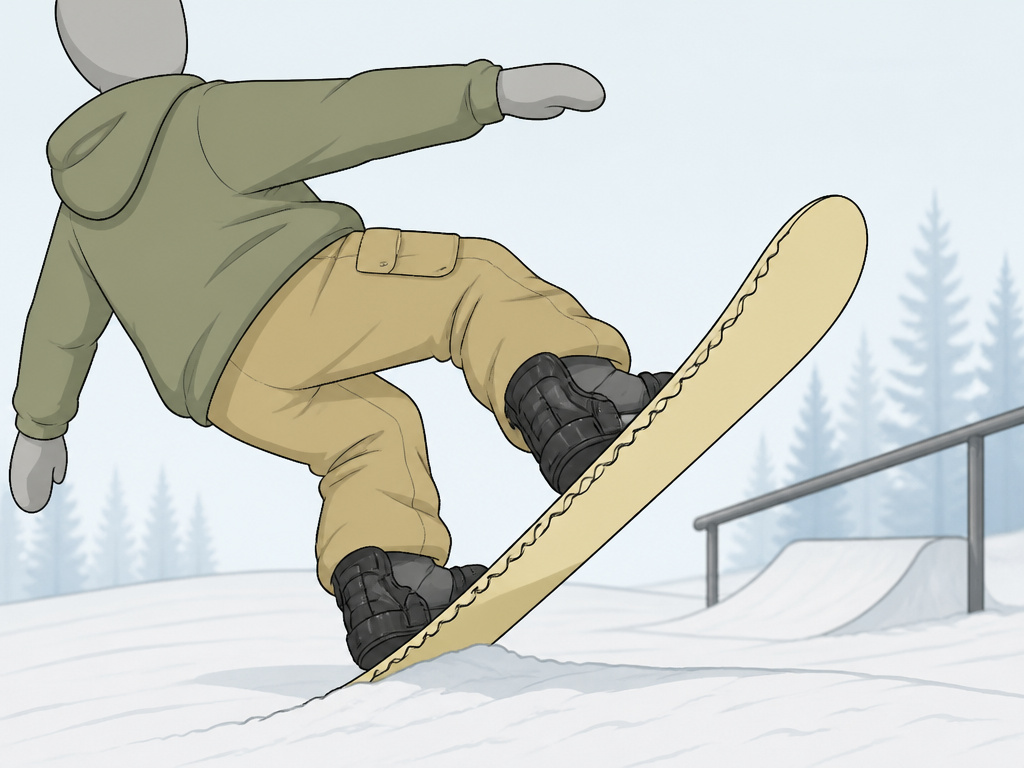
This board has a specific user manual. Ignoring it is how you end up with a board you resent.
Buy the Skate Banana if:
- You live in the park and spend most of your time on rails, boxes, and small-to-medium jumps.
- Your favorite part of riding is buttering, pressing, and playful ground tricks.
- You’re a beginner who is terrified of catching edges and wants the most forgiving board to learn to link turns.
- You want a dedicated “fun” board for spring slush days or mellow cruising with friends.
Skip this if: Your local mountain is a sheet of ice and you define a good day by high-speed carving. The board’s loose feel will frustrate you, and while Magne-Traction® helps, it’s not enough to make this an ice board.
Do not buy the Skate Banana if:
- You love to charge, seek out steep groomers, and want a board that feels locked-in at speed.
- You frequently ride in variable, choppy, or crud-covered snow.
- You’re a heavier or more powerful rider who will easily overpower the soft flex.
- You’re looking for a one-board quiver to do everything well.
There’s an edge case worth mentioning, straight from an early skate banana snowboard review. The rocker profile can make the board want to spin when you’re skating in a lift line. “Occasionally bonking the boards or skis of fellow chair occupants.” It’s a quirk, not a deal-breaker, but it’s a funny, real-world detail you won’t find on the spec sheet.
Setting It Up: Bindings and Stance
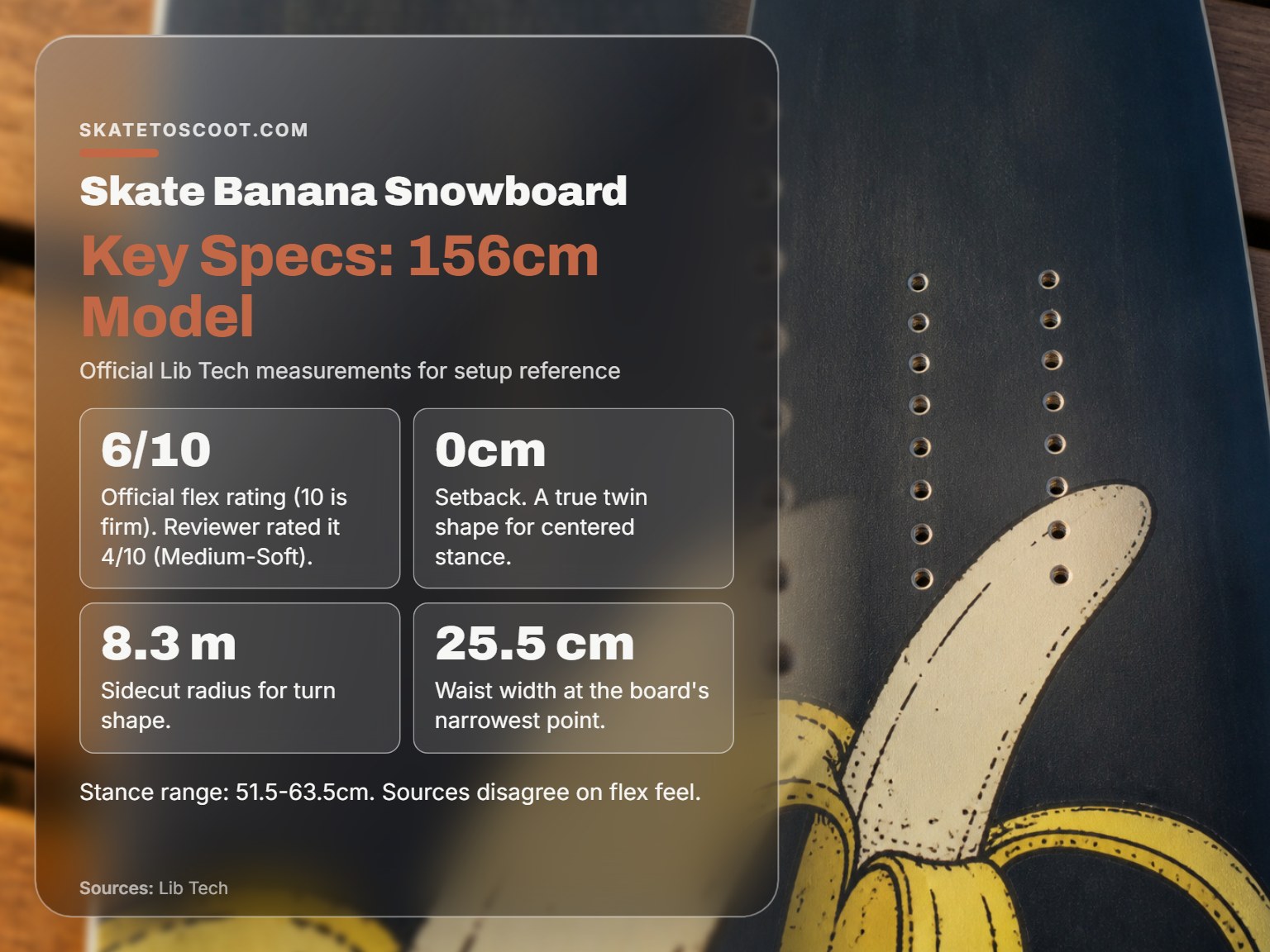
You can’t talk about a snowboard without talking about what you screw into it. The Skate Banana’s soft, playful character should guide your setup choices.
- Bindings: Match the flex. A soft or medium-soft binding like the Union Strata or Burton Malavita will complement the board’s press-friendly nature. A super-stiff binding will feel disconnected and fight the board’s personality. The goal is to let the board flex and move, not to strap it down like a race board.
- Stance: With 0cm of setback, it’s a true twin. Set your stance centered on the inserts. Because it’s so loose, you might find a slightly wider stance gives you a more stable platform, especially when learning.
- Angles: For park and freestyle, a duck stance (e.g., +12°/-12°) is the standard. It keeps the board feeling identical whether you’re riding regular or switch, which is where this twin shape excels.
Putting stiff bindings on this soft board, a common caution in any skate banana snowboard review, can make the setup feel disconnected.
Where to Buy the Skate Banana
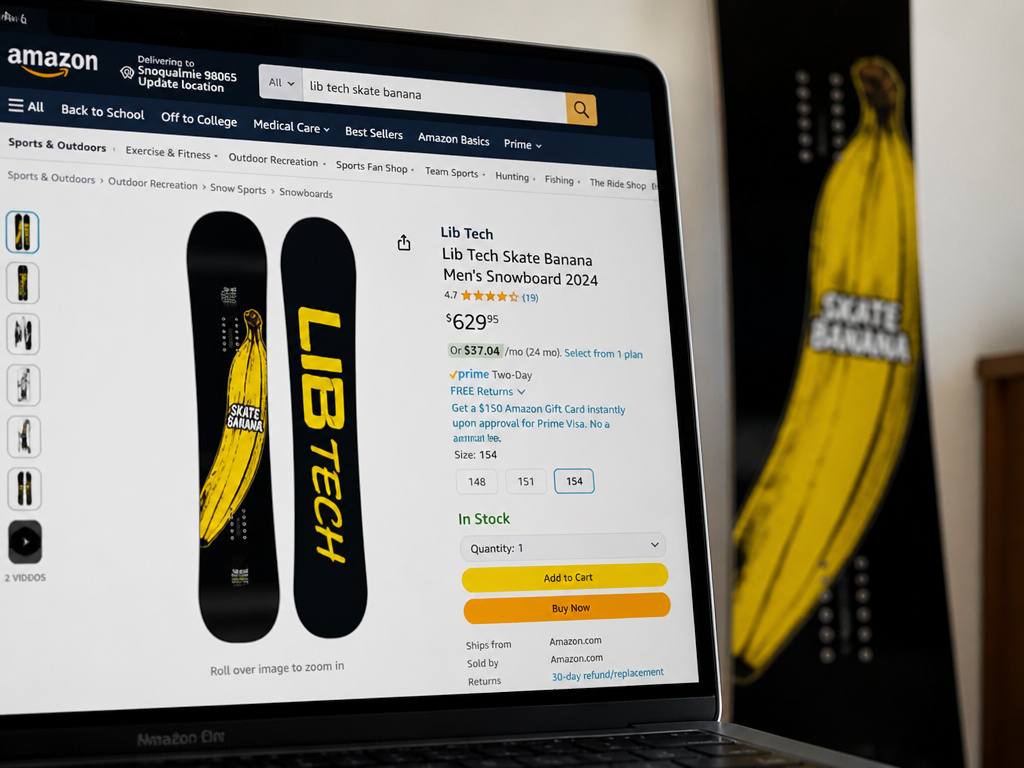
You’ll find the Skate Banana at major snowboard retailers, both online and in physical stores. Your best bet for current pricing and availability is to check the websites of large outdoor sports retailers or directly with Lib Tech’s own site. Prices can vary based on the specific model year and size you’re after, so it’s worth comparing a few sellers.
Frequently Asked Questions
Is the Lib Tech Skate Banana a good beginner board?
It’s a mixed bag. Its catch-free rocker profile makes learning to turn and link skidded turns easier and less punishing. However, its very loose feel can make basic tasks like one-footing off the chairlift or maintaining a controlled, slow-speed traverse more challenging for a true first-timer.
How does the Skate Banana handle ice and hardpack?
The Magne-Traction® edge serrations provide significantly better grip on ice than a traditional rocker board. It won’t skate out as easily. However, the board’s overall soft flex and rocker profile mean it lacks the powerful, locked-in carving feel of a camber board on hard snow. It’s manageable, not exceptional.
What size Skate Banana should I get?
Follow Lib Tech’s weight recommendations as a starting point, but consider sizing down if you plan to use it primarily as a jib/park board. The rocker provides plenty of float, so a shorter length can feel more playful and maneuverable. For example, a rider who might normally ride a 158cm all-mountain board could go down to a 154cm or 156cm Skate Banana for park use.
Has the Skate Banana changed over the years?
The core design and technology have remained remarkably consistent since its introduction. Graphics and minor construction materials get updated, but a 2026 Skate Banana rides very similarly to a 2012 model. This consistency is a strength, you know exactly what you’re getting, but it also means the board’s known limitations (like high-speed instability) haven’t been engineered out.
What are the best bindings for the Skate Banana?
Pair it with a mid-flex binding that allows for tweaks and presses. The Union Strata is an excellent match, offering a blend of response and forgiveness. The Rome Vice or Burton Malavita are also great choices. Avoid ultra-stiff, high-back bindings designed for freeriding; they will clash with the board’s soft personality.
The Bottom Line
The Skate Banana isn’t a mystery. It’s a purpose-built tool that does a few things extraordinarily well and other things not at all. It’s the board you grab when the goal is fun, not fast.
If your ideal day involves spinning onto rails, buttering down a green run, and laughing with friends, this board will feel like a best friend. It encourages creativity and minimizes consequences. But if you hear the phrase “carve ice” and picture laying down trench-like euro-carves, you’re looking at the wrong stick. That’s not a criticism of the board; it’s a clarification of its job.
For the right rider, it’s a perfect song, as Lib Tech’s co-founder said. For the wrong rider, it’s just a noisy distraction. Know which one you are before you click “add to cart.”
