Skate Helmet Review: What the Recalls Teach Us
This post contains affiliate links. As an Amazon Associate, we earn from qualifying purchases.
A real skate helmet review looks past marketing colors and sponsored pros to the certifications printed inside the helmet, the recall history of the brand, and the lab-tested impact numbers. For street and park skating, you need a helmet certified to ASTM F1492, the standard that tests for multiple low-speed impacts and hits against park coping. Bike-helmet standards like CPSC don’t cover those specific risks.
That certification is your baseline, not a bonus. A 2021 study in the British Journal of Sports Medicine tested certified skate helmets and found they all showed degraded performance on a second hit, a fact many brands gloss over in a typical skate helmet review. And recalls from Kmart Australia and Rollerblade USA show that straps and shells can fail in ways the standards are supposed to catch, making a close look at the label essential.
What follows is a breakdown of the standards that actually matter, the common fit mistakes that void protection, and the real-world failure modes you won’t find in a marketing brochure or a superficial skate helmet review. By the end, you’ll know how to read the inside label of any helmet and decide in thirty seconds if it’s worth your skull.
Key Takeaways
- The ASTM F1492 certification is considered by many as the key baseline for street and park skating; it tests for impacts against triangular “coping” anvils that some bike standards ignore.
- Use the “2-2-2” fit rule: no more than two fingers should fit under the chin strap, the side straps should form a V under your ears, and the helmet should fit snugly with no spaces between the foam and your head.
- Replace the helmet after any solid impact. Lab tests show protective foam compresses and performance degrades on the second hit, even if the shell looks fine.
- Check for recalls using the model number inside the helmet; straps and attachment points are common failure points that have led to official government recalls.
- For most skaters, a Triple 8 Certified Sweatsaver or S1 Lifer provides the certified protection and fit range needed; MIPS is a bonus for reducing rotational force, but it doesn’t replace the multi-impact certification.
The ASTM F1492 vs. Bike Helmet Standards Showdown
The label inside the helmet tells you what it’s built to survive. A bicycle helmet standard like the U.S. CPSC certification or ASTM F1447 is designed for a single, high-energy impact, as is typical in cycling accidents. The foam is meant to crush once and be replaced. The ASTM F1492 skate helmet standard, however, is built by one standard body for a different reality, while others like EN 1078 or ASTM F1447 also claim applicability.
ASTM F1492 requires testing against flat, cylindrical hazard, and triangular hazard anvils. The triangular anvil simulates the sharp edge of a concrete ledge or metal coping, a specific impact scenario common in skateboarding that bicycle standards do not address.
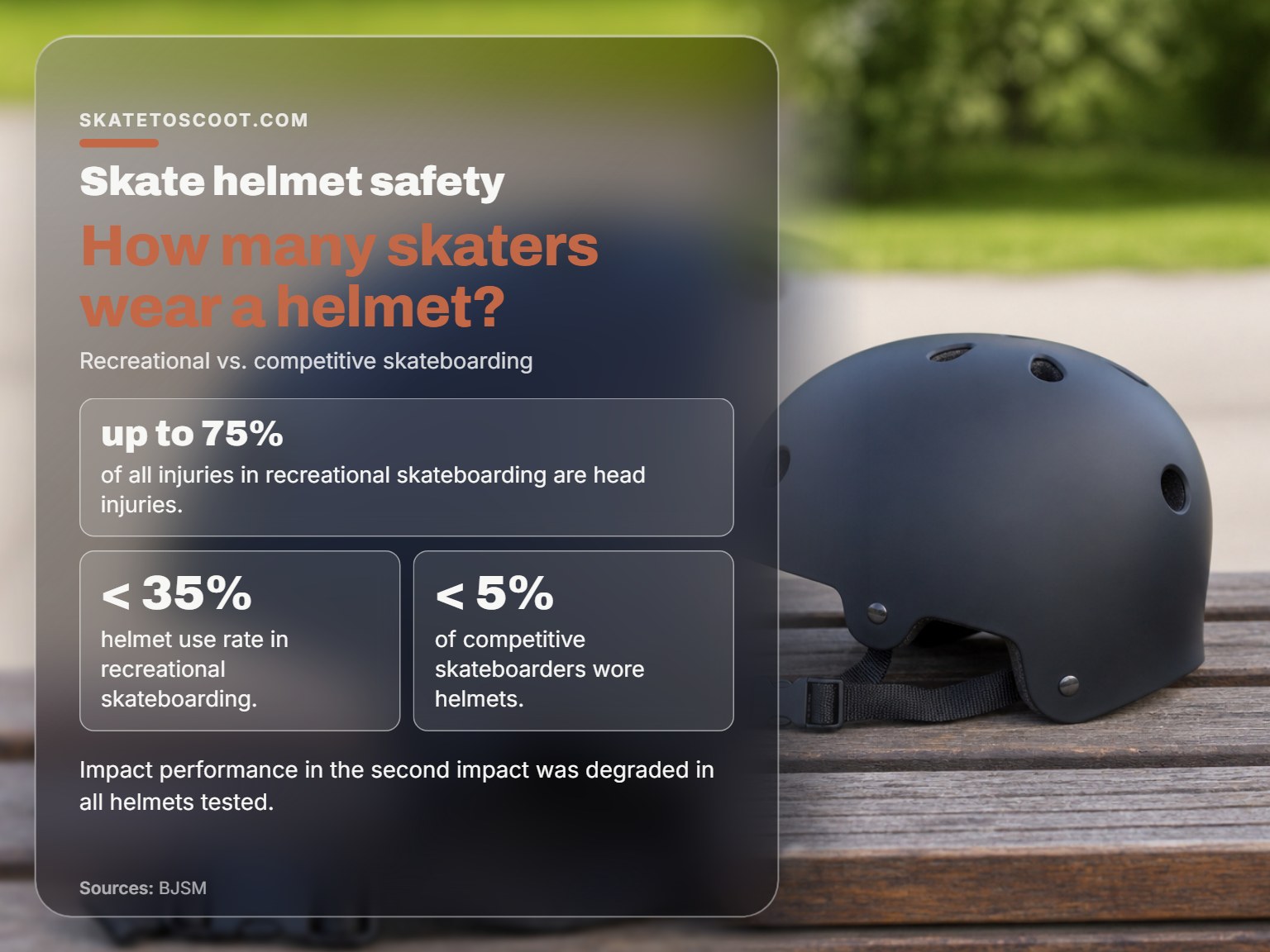
This isn’t an academic difference. Skating involves repeated low-to-medium-speed slams, bailing on a grind, slipping out on a carve, catching a backside edge on transition. While some claim skateboard helmets are certified for multiple low-speed impacts, a study found impact performance was degraded in all helmets tested on a second hit. A bike helmet’s foam can be too stiff, transmitting more force to your head in a typical skate fall. It might still “pass” a test, but it’s not optimized for how you actually hit the ground.
Here’s a quick comparison of what each standard prioritizes:
| Standard | Primary Use | Impact Philosophy | Key Test Anvil | Common Certifications |
|---|---|---|---|---|
| ASTM F1492 | Skateboarding, Trick Roller Skating | Multiple low-speed impacts | Triangular Hazard (simulates coping) | Often standalone or with CPSC |
| CPSC / ASTM F1447 | Bicycling, Recreational Roller Skating | Single high-energy impact | Flat & Hemispherical | Rarely includes F1492 |
| EN 1078 | Cycling, Skateboarding, Roller Skating | Single impact (European standard) | Flat & Hemispherical | Common in European markets |
Where this goes sideways: You buy a “skate-style” helmet that only has a CPSC or EN 1078 sticker. It looks the part, but the first time you slam the back of your head on a concrete quarter-pipe, the protection is fundamentally different than what an F1492 helmet is engineered for. That’s why seasoned skaters in forum threads constantly stress: “The important thing for helmets is to make sure it’s certified for skateboard safety (ASTM F-1492).”
How to Fit a Skate Helmet: The 2-2-2 Rule
A perfect certification is useless if the helmet flies off. The CDC’s fitting guide breaks it down into clear, checkable steps. I teach this as the 2-2-2 rule because it’s easy to remember on the spot.
First, position. The front rim should align with your eyebrows. If it’s perched on the back of your head like a bonnet, the first impact will drive the front rim into your forehead.
Second, straps. The side straps must make a V shape under, and slightly in front of, your ears. If the strap runs straight down behind your ear, it won’t hold during a forward or side roll. Buckle the chin strap tight. The CDC guideline is strict: no more than one or two fingers should fit between the strap and your chin.
Third, stability. Grab the helmet and try to twist it side-to-side and roll it forward and back. If it moves more than two inches in any direction, it’s too loose. Your skin should move with the helmet, not slide under it.
Common mistake: Leaving the chin strap loose for comfort. In a fall, a loose helmet can rotate and expose the very part of your head you’re trying to protect. That “snug” feeling should be non-negotiable.
A final note on hair and hats. Fit the helmet with the hairstyle you’ll skate in. A bulky bun changes the fit, and a helmet fitted over a beanie will be dangerously loose without it. This seems minor until you take a slam and feel the whole shell shift.
Real-World Failure: What the Recalls Teach Us
Certifications exist because products can fail. Two major recalls demonstrate exactly where helmets fall short, and both are tied to the retention system, the very thing that keeps the helmet on your head.
The Kmart Australia recall from 2014 involved multiple “Assorted Skate & Roller Derby Helmet” models. The official finding was that “the straps may fail to hold the skate helmet in place during a fall or accident.” These helmets, sold for skateboarding and biking, failed the mandatory safety standard. The list of affected APN numbers (like 9341101353819 for the Black XS/S) is a stark reminder: a major retailer can sell a non-compliant product for years before it’s caught.
This wasn’t a strap material failure; it was a structural flaw in the shell design. If that anchor point breaks, the strap is useless. These helmets were sold for about $60 at major sporting goods stores, not a black-market product.
The lesson isn’t to avoid Kmart or Rollerblade. It’s that you must be the final inspector. Find the certification label and the model number inside the helmet. A quick search on the CPSC recall database for the Rollerblade Maxxum helmet or its Australian equivalent can tell you if that specific model has a known hazard. This takes two minutes and is the most direct due diligence you can do.
Sourced Impact Performance: What the Lab Data Says
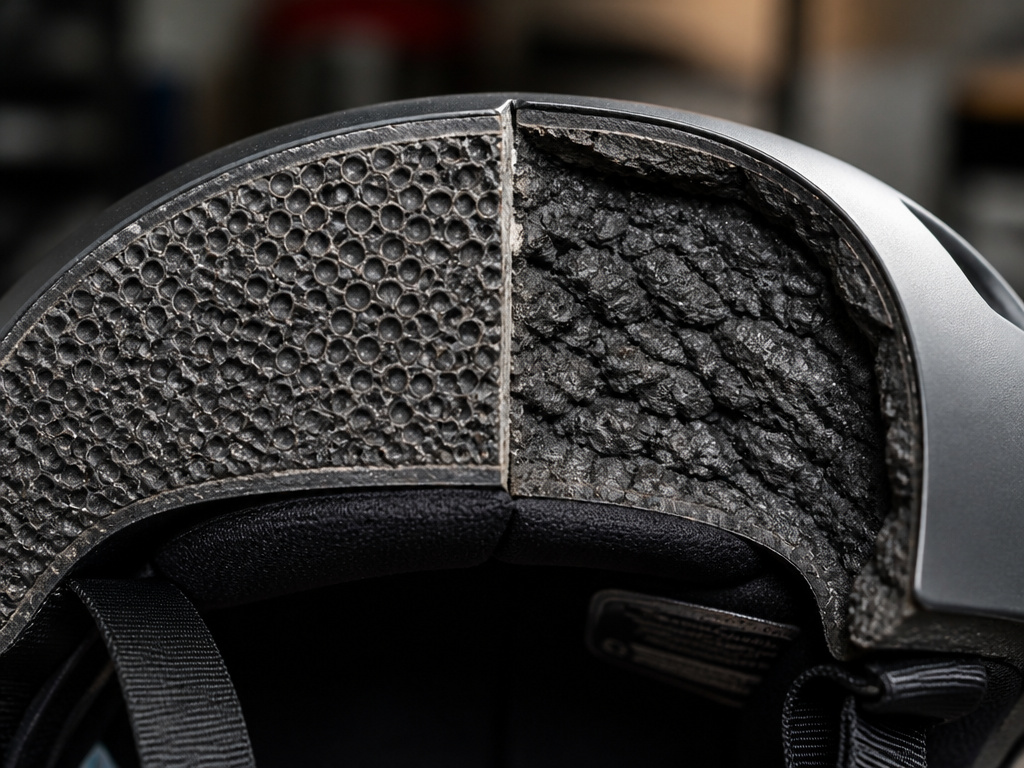
Marketing says “multi-impact protection.” What does the science say? A 2021 study published in the British Journal of Sports Medicine took helmets marketed for skateboarding and put them through standardized drop tests. The numbers are specific and revealing.
At a 0.8 meter drop height (simulating a lower-speed fall), peak head accelerations ranged from 114 to 148 g. At a 1.5 meter drop (a more serious impact), accelerations jumped to 173–220 g. The critical finding, though, was this: “Impact performance in the second impact was degraded in all helmets tested.”
This is the core truth every skater needs to internalize. The foam liner works by crushing. Once it’s compressed, it can’t absorb the same energy again. Even if the hard outer shell looks untouched after a significant impact, the interior foam is compromised. They are certified to survive multiple test impacts, but their performance drops each time.
The part nobody mentions: After a solid impact, the helmet might still feel snug. But the foam inside is permanently compacted, like a car bumper after a fender-bender. It’s done its job once. Continuing to use it is like driving that damaged car into another collision.
This is why the standard replacement advice exists, and why it’s not corporate upsell, it’s physics. The study provides the hard numbers behind that warning.
MIPS, Pro Models, and the Worth-It-Upgrades
Once you have the F1492 certification locked down, other features enter the conversation. The most common is MIPS (Multi-directional Impact Protection System).
MIPS is a low-friction layer inside the helmet designed to reduce rotational forces on the brain during an angled impact. It’s not a magic shield, and crucially, it is not a multi-impact system. As one Reddit user correctly pointed out, “MIPS helps prevent injuries from torsion. Skate impacts tend to be to the back of the head most often.” For the direct, rear-of-head slams common in skating, the primary protection still comes from the EPS foam and the F1492 standard. MIPS is a valuable addition for off-angle hits, but it adds cost. If your budget forces a choice between MIPS and an F1492-certified helmet, always choose the certification.
Regarding pro models versus standard versions from brands like Triple 8 or S1, the difference is rarely in the core protective materials. Pro models often feature different graphics, lighter-weight shells, or improved ventilation. These are comfort and style upgrades. The certification sticker is the same. Don’t pay a pro premium expecting pro-level protection; you’re paying for fit, finish, and brand affiliation.
Top Brands and Final Recommendation
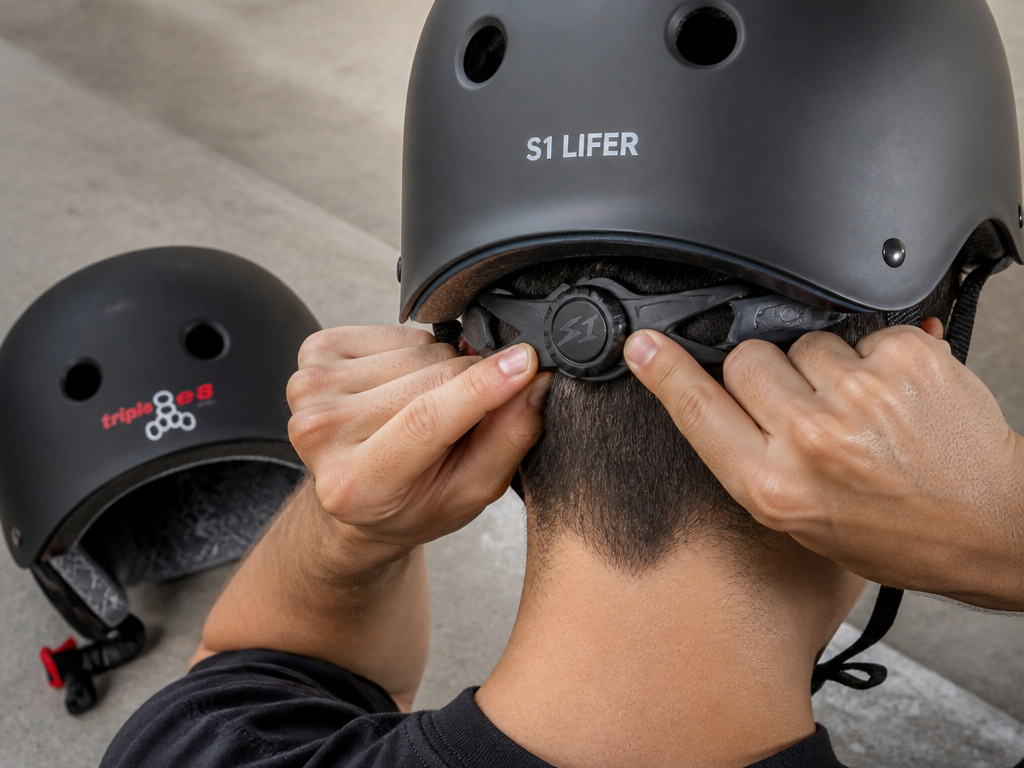
Some brands commonly mentioned in the skateboarding community include Triple 8, S1, and Pro-Tec. Your choice among them comes down to fit and head shape.
Some popular helmet models are marketed as meeting the ASTM F1492 certification. The fit system is straightforward, and the signature “sweatsaver” lining does help with moisture. It’s the default pick for a new skater who needs reliable protection without a complicated fitting process.
The S1 Lifer is another heavyweight contender, known for its extended rear coverage and robust construction. S1 markets its “Megamerge” fit system, which can be a great option for people with rounder head shapes who find other helmets pinch at the temples.
Remember, the best helmet is the one you wear every single session. Certification is the ticket to the game, but perfect fit is what keeps you playing.
What are the best skate helmet brands?
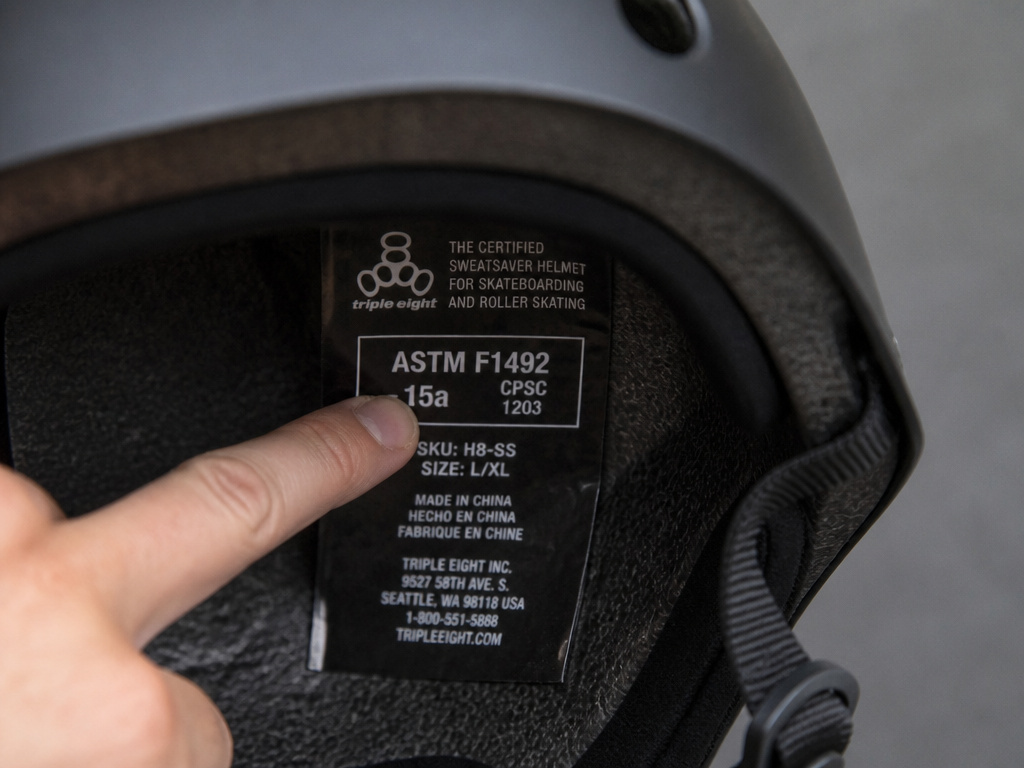
When looking at specific models, the label inside is your first and most important review. Look for a certification dedicated to skateboarding, like ASTM F1492. This standard is built for the types of impacts common in skating, testing against specific anvil shapes meant to simulate curbs and edges. Be wary of helmets that only meet a general cycling standard, as they may not offer the same multi-impact design philosophy. The helmet must fit snugly; the front rim should align with your eyebrows, and the straps should form a ‘V’ under your ears. Check for any history of recalls related to strap failures or shell cracks, as these are real points of failure.
Are full-face helmets necessary for downhill?
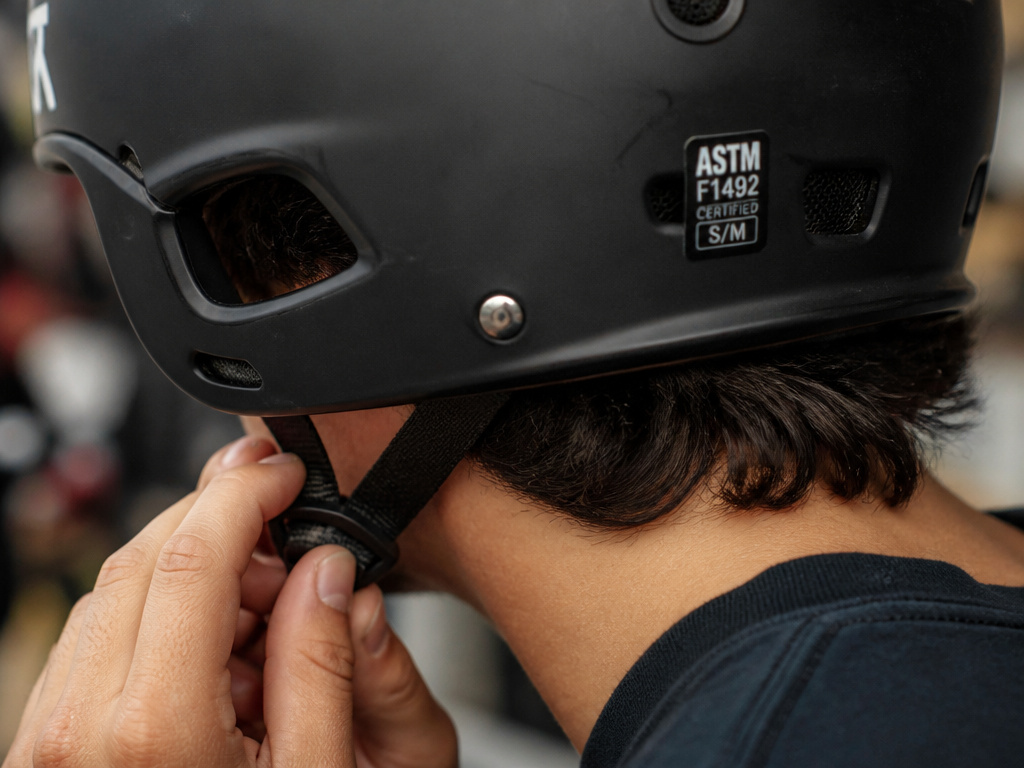
For downhill and high-speed longboarding, a full-face helmet provides critical protection for your jaw and face. The safety standard to look for is still ASTM F1492, as it is the performance standard specifically for skateboarding and trick roller skating. This certification means the helmet has been tested for the types of impacts relevant to the sport. When trying one on, ensure the chin strap can be centered and tightened snugly under your chin, with no more than one or two fingers fitting between the strap and your skin. The entire helmet must fit snugly all around your head, with no gaps between the padding and your skull, to stay securely in place during a fall.
How do I choose between Triple 8, S1, TSG, and Pro-Tec?
Choosing between major brands starts with verifying the certification inside the helmet. The key is finding ASTM F1492 on the label, which indicates the helmet meets the specific skateboard standard. This standard requires testing against flat, cylindrical, and triangular hazard anvils, simulating real-world impacts. Beyond the certification, focus on fit. A study found head injuries make up a large portion of skateboarding injuries, and a loose helmet is a major risk. The front rim must sit at your eyebrows, side straps should form a ‘V’ under your ears, and the chin strap must be tight. Ignore any helmet where the straps feel weak or compromised, as strap failure has been a cause for product recalls.
Frequently Asked Questions
What is the 2-2-2 rule for helmets?
The 2-2-2 rule is a quick fit checklist: 1) No more than two fingers should fit under the fastened chin strap, 2) The side straps should form a V under and in front of your ears, and 3) The helmet should not move more than two inches in any direction when you try to twist or roll it on your head. It consolidates the CDC’s fitting guidelines into an easy-to-remember mantra.
Do any pro skaters wear helmets?
Yes, absolutely. While the British Journal of Sports Medicine study noted less than 5% of competitive skateboarders wore helmets, helmet use among professionals varies. The “no helmet” culture is fading, especially as the sport evolves and tricks become higher-consequence.
Is EN 1078 okay for skateboarding?
EN 1078 is a European standard that covers pedal cycles, skateboards, and roller skates. While it’s a legitimate safety standard, many experienced skaters and reviewers consider it less rigorous than ASTM F1492 for skate-specific impacts. The key difference is that F1492 includes testing against a triangular “coping” anvil. If you have a choice, many experienced skaters prefer an F1492-certified helmet over EN 1078 for skateboarding, citing its dedicated testing.
Can you use a skate helmet for scootering or biking?
You can, and many are dual-certified (ASTM F1492 and CPSC). The skate helmet’s multi-impact design is suitable for the types of falls in scootering. For biking, it provides protection, but a dedicated bike helmet will typically be lighter and better ventilated for sustained cardio. The critical check is for the CPSC bike certification sticker inside the helmet if you plan to use it primarily for cycling.
Before You Go
Look for the ASTM F1492 sticker. It’s that simple. That one line of text separates a helmet designed for your sport from one that just looks the part. Check the fit with the 2-2-2 rule before you ever step on the board. And understand that the first solid impact is the helmet’s last perfect performance, the foam compresses, the data shows it, and your head deserves a fresh one.
Start with a Triple 8 Certified Sweatsaver or an S1 Lifer. Get the fit right. Skate within your limits. The helmet is your last line of defense, not an invitation to recklessness. Everything you learn about balance, falling, and commitment happens before your head ever gets near the concrete.
