Skate Review: The Early Access Version Explained
This post contains affiliate links. As an Amazon Associate, we earn from qualifying purchases.
Skate is a free-to-play, online-only live-service game that has evolved the classic Flick-It controls into a smooth, modern system, but it’s wrapped in a sanitized, corporate package with aggressive monetization and a cringe-worthy tone that alienates fans of the original trilogy.
The core skating feels fantastic, buttery smooth and instantly familiar to anyone who played the old games. Everything surrounding that core, from the sterile city of San Vansterdam to the AI host named V and the $25 cosmetic bundles, feels like it was designed by a committee worried about offending shareholders, not skaters. This isn’t Skate 4; it’s a gentrified, free-to-play platform built for player retention and microtransactions first. This Skate review is based on the open beta.
What follows is a breakdown of the good, the bad, and the ugly from the first weeks of Early Access in this skate review. This review will examine the silky controls, the hollow live-service grind, the missing soul, and whether there’s enough free fun here to justify the download.
Key Takeaways
- The Flick-It controls are superb and feel like a natural evolution of the classic system, making skating around an immediate joy.
- The game is an always-online live service with a battle pass and expensive cosmetic store, locking progression behind constant server connection.
- The tone is sanitized and corporate, replacing the series’ edge with a cringeworthy AI host and an injury-preventing lore device called Impervitech.
- You can earn most cosmetic items through gameplay by completing challenges and collecting bearings, the in-game currency for lootboxes.
- For a free game, the core skating is strong enough for casual sessions, but it lacks the heart, story, and offline freedom that made the originals classics.
The Core Gameplay & Controls: Where Skate Still Shines
We begin with the only thing that matters in a skate review: how it feels to skate. After a decade away from the series, I picked up the controller expecting a learning curve. There wasn’t one. Within five minutes, I was carving through the plaza, popping kickflips, and grinding ledges. The team has absolutely nailed the feel.
The Flick-It system is back and better than ever. Tricks on the right stick, turning on the left, grabs on the triggers, it’s all there. The physics feel weightier and more responsive than I remember from Skate 3. Landing a clean line after linking a few tricks together delivers that same silent “yes” the old games were famous for. It’s the one undeniable win for this iteration.
The Flick-It control scheme uses analog stick gestures to perform tricks: a quarter-circle forward on the right stick executes a kickflip, while holding a trigger modifies it into a grab. This system prioritizes fluid, chainable motions over button combos, creating a uniquely tactile skating experience.
New additions like slappies and wallies are fantastic and open up new ways to interact with the environment. The sense of speed is great, and the sound design is phenomenal, the hiss of urethane on concrete, the clack of a board hitting a rail. This is where you remember why you loved Skate.
Where this goes sideways: The default “Grind Assist” setting is turned up way too high. It magnetizes you to rails and ledges, making grinds feel automatic and cheap. Turn it off in the settings menu immediately. The game is infinitely more rewarding when you have to nail the approach and alignment yourself.
The Live-Service Model & Monetization: The Free-to-Play Grind
Skate is free to play. That means it’s also always-online, has a battle pass, and features a cash shop. This is the central tension of the 2025 version. The moment you boot up, you’re greeted by V, an AI “virtual guide” who walks you through corporate-sponsored challenges. The entire progression loop is built around completing these objectives to earn “bearings,” which you spend on lootboxes for cosmetic gear.
The map, San Vansterdam, is a sprawling playground of famous skate spots. But it’s also a sterile, clean, and oddly quiet place. It feels like a corporate campus or an IKEA showroom. You’ll see dozens of other players skating around, but they often stutter and clip through each other, breaking the immersion. The online-only requirement bit me hard during the first week, with frequent disconnections kicking me back to a main menu queue.
It’s aggressive. However, it’s not entirely pay-to-play. A huge portion of the clothing, including some branded gear, is earnable just by playing. You grind challenges, collect bearings, and open lootboxes. It’s a slow, repetitive loop, but it’s there.
For the player who just wants to skate with friends and slowly earn a cooler jacket, this model works. For anyone looking for the career mode, the pro skaters, and the sponsored video parts of Skate 1 and 2, it’s a hollow substitute. The game’s soul has been outsourced to the engagement department.
What’s Missing vs. The Skate Trilogy (And Why It Hurts)
This isn’t just a comparison for nostalgia’s sake. The things Skate 2025 is missing define what made the original series special. The most glaring omission is any sense of stakes or consequence. In the old games, bailing meant a painful crash, an X-ray of broken bones, and a sarcastic comment from your filmer. Here, a lore device called “Impervitech” makes all skaters invincible.
Common mistake: Diving into trick tutorials before mastering stance and balance. In Skate 2025, the forgiving physics might let you land sloppy tricks, but that builds bad muscle memory. The game’s lack of consequence can teach you to rely on assists instead of clean technique.
The tone is the biggest casualty. Gone are the authentic, slightly grungy human characters. Your guide is V, the AI app whose dialogue is a nauseating stream of faux-hip, corporate-approved “slang.” The human characters you meet speak in lines no real person would ever say. It feels like it was written by an algorithm trained on youth marketing reports from 2015.
There’s no story. No earning sponsorships, no filming video parts for sponsors, no building your skate reputation. You just complete challenges for the AI. The iconic Hall of Meat crash mode is gone. The ability to play offline is gone. The soul is gone. What’s left is a very competent skating simulator wrapped in a plastic shell.
| Feature | Skate 1-3 | Skate 2025 (Early Access) |
|---|---|---|
| Core Gameplay | Excellent Flick-It controls | Excellent, evolved Flick-It controls |
| Progression | Career mode, sponsor progression | Challenge-based grind for cosmetics |
| Tone & Style | Authentic, slightly edgy, human | Sanitized, corporate, AI-driven |
| Online Requirement | Optional for multiplayer | Always-online mandatory |
| Monetization | One-time purchase | Free-to-play with battle pass & cash shop |
Performance, Requirements, and the “Early Access” Label
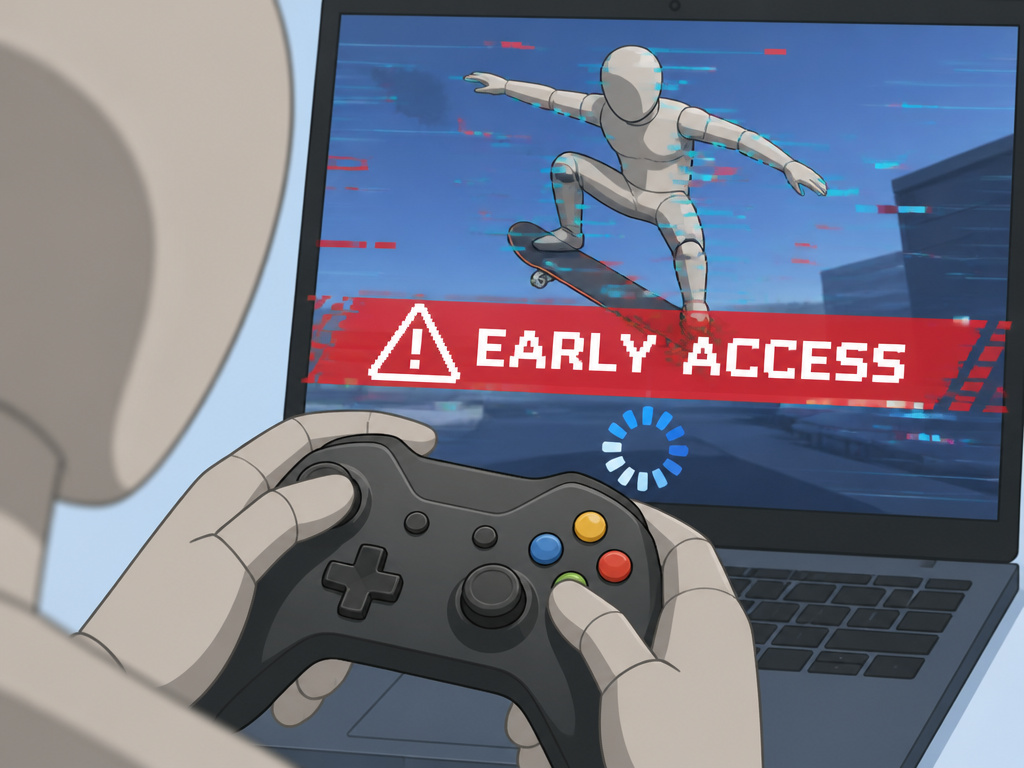
Skate is in Early Access, which explains some of its rough edges. During my first sessions, I encountered bugs that blocked mission progress, forcing a restart. Player models stutter and pop in. The framerate can chug in busy areas, even on capable hardware. The week-one server queues were long and frustrating.
The game isn’t a graphical powerhouse, its stylized, clean look is more an artistic choice than a technical demand, but the online elements and large map seem to cause hitches.
The “Early Access” tag is your get-out-of-jail-free card for now. There’s hope that the rock-solid gameplay foundation could be pivoted into a more traditional, offline-friendly sequel down the line. For now, you’re beta-testing a free-to-play platform.
Skate vs. Tony Hawk’s Pro Skater: Different Games, Different Goals
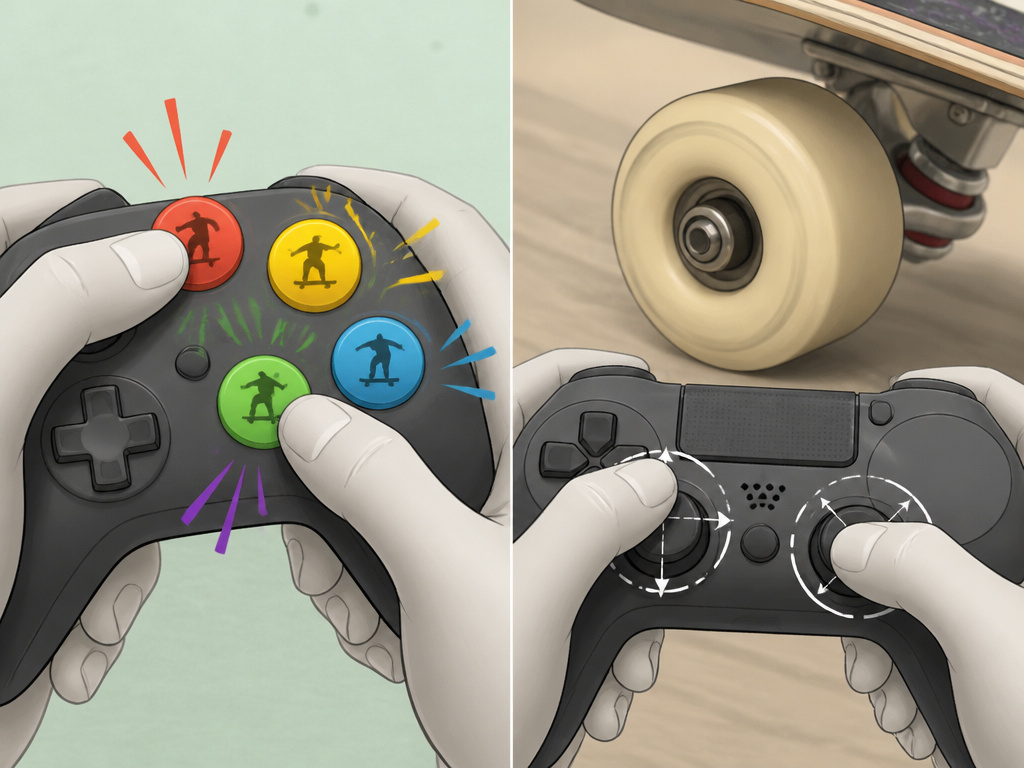
“Is Skate better than THPS?” is a “People also ask” question for a reason, but it’s comparing apples and oranges. Think of it as a spectrum. On one end, you have the arcade-style, score-chasing, button-mashing joy of Tony Hawk’s Pro Skater. On the other, you have the simulation-heavy, twin-stick precision of games like Session or Skater XL.
Skate 2025 sits much closer to the sim end. It’s about flowing through a line, linking tricks realistically, and feeling the weight of the board. You don’t chain together a million-point combo by mashing buttons; you build a clean run. If you want the over-the-top, rocket-powered action of THPS, you will be bored. If you’ve ever wanted the feeling of skateboarding translated into a controller, Skate is still the king.
That said, THPS has something Skate 2025 desperately lacks: personality. The classic THPS games are bursting with iconic skaters, punk rock soundtracks, and a clear, fun vision. Skate 2025 has traded all its personality for a bland, inoffensive corporate sheen. In a head-to-head on soul, the 20-year-old Tony Hawk games win easily.
What about community mods?
While the fact sheet doesn’t cover specific community modifications, the broader skate scene is full of tinkerers. Mods can range from simple grip tape swaps to more involved hardware tweaks. If you’re considering a mod, start by thoroughly checking your board’s official manual for any warnings. Some modifications can void warranties or affect the board’s safety systems, especially on electric models where battery and motor tampering is a serious risk. Always prioritize safety gear and test any changes in a controlled environment first. The community is a great resource for inspiration, but remember you’re responsible for the integrity of your ride.
Frequently Asked Questions
Is the new skate game any good?
The skating itself is excellent and feels like a modern, polished version of the classic Skate controls. Everything surrounding the skating, the always-online requirement, corporate tone, aggressive store, and lack of a traditional career mode, ranges from annoying to outright bad. If you can download it for free and focus solely on skating around with friends, there’s fun to be had. If you’re expecting Skate 4, you’ll be disappointed.
Is skate better than THPS?
They are fundamentally different games. Tony Hawk’s Pro Skater is an arcade score-attack game. Skate is a simulation-focused experience about realistic trick lines and flow. Skate is “better” at simulating the feeling of skateboarding; THPS is “better” at delivering over-the-top, high-energy fun. It comes down to the experience you want.
Was skate made by AI?
No, the core game was made by human developers at Full Circle. However, the in-game virtual host, a character named “V,” is presented as an AI app, and the dialogue throughout the game has a sterile, algorithmically generated quality that makes it feel artificial and soulless.
How do you unlock items without paying?
You earn the in-game currency “bearings” by completing daily and weekly challenges, as well as finding them scattered in the world. You spend bearings on lootboxes that contain random cosmetic items. A significant portion of the clothing catalog is earnable this way, but it involves a repetitive grind. Some exclusive items are cash-only.
Is Skate 4 doing good?
Skate 2025 is not Skate 4. As a free-to-play live-service game, its player numbers are likely healthy, especially at launch. However, Its financial success will depend on microtransaction sales, not critical acclaim.
The Bottom Line
Here is the thing, the best part of Skate is completely free. The act of skating, of nailing a line, of just cruising with a buddy, feels incredible. For that alone, it’s worth downloading. Just manage your expectations.
You are not getting a sequel to Skate 3. You are getting access to a polished skateboarding sandbox that happens to live inside a always-online, microtransaction-driven platform. Mute the dialogue, turn off Grind Assist, ignore the store, and focus on the concrete. There’s a great skate sim in here, buried under layers of corporate decisions. Whether you can enjoy it comes down to how much of that baggage you’re willing to tolerate for the sake of a perfect heelflip.
For the casual player who will hop on for 30-minute sessions, it’s a solid free option. For the veteran who lived in the old games, it’s a bittersweet reminder of what we lost. My advice? Download it, skate until the corporate vibe chases you off, and keep your old copies of Skate 2 and 3 handy. They still work offline, and they still have soul.
