Snowboard Bindings Review: Matching Flex and Feel
This post contains affiliate links. As an Amazon Associate, we earn from qualifying purchases.
Snowboard bindings are the critical mechanical interface between your boots and board, transmitting force, dampening vibration, and, when built and chosen correctly, preventing catastrophic failure. A review must separate marketing from mechanics, which means looking past flex ratings to international safety standards like ISO 15344:2005, documented recall histories from the CPSC, and the long-term durability reports that only surface after multiple seasons of hard use.
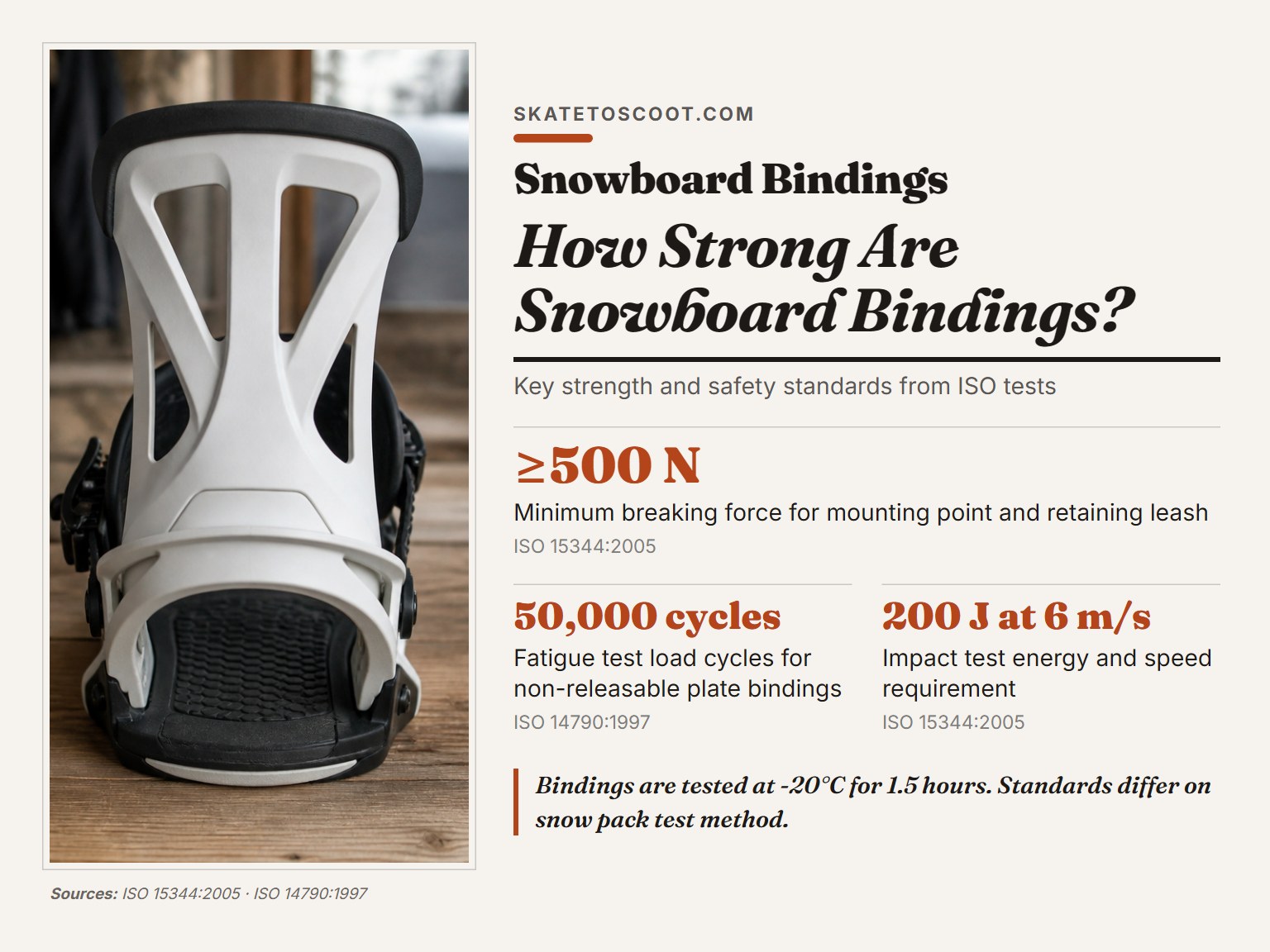
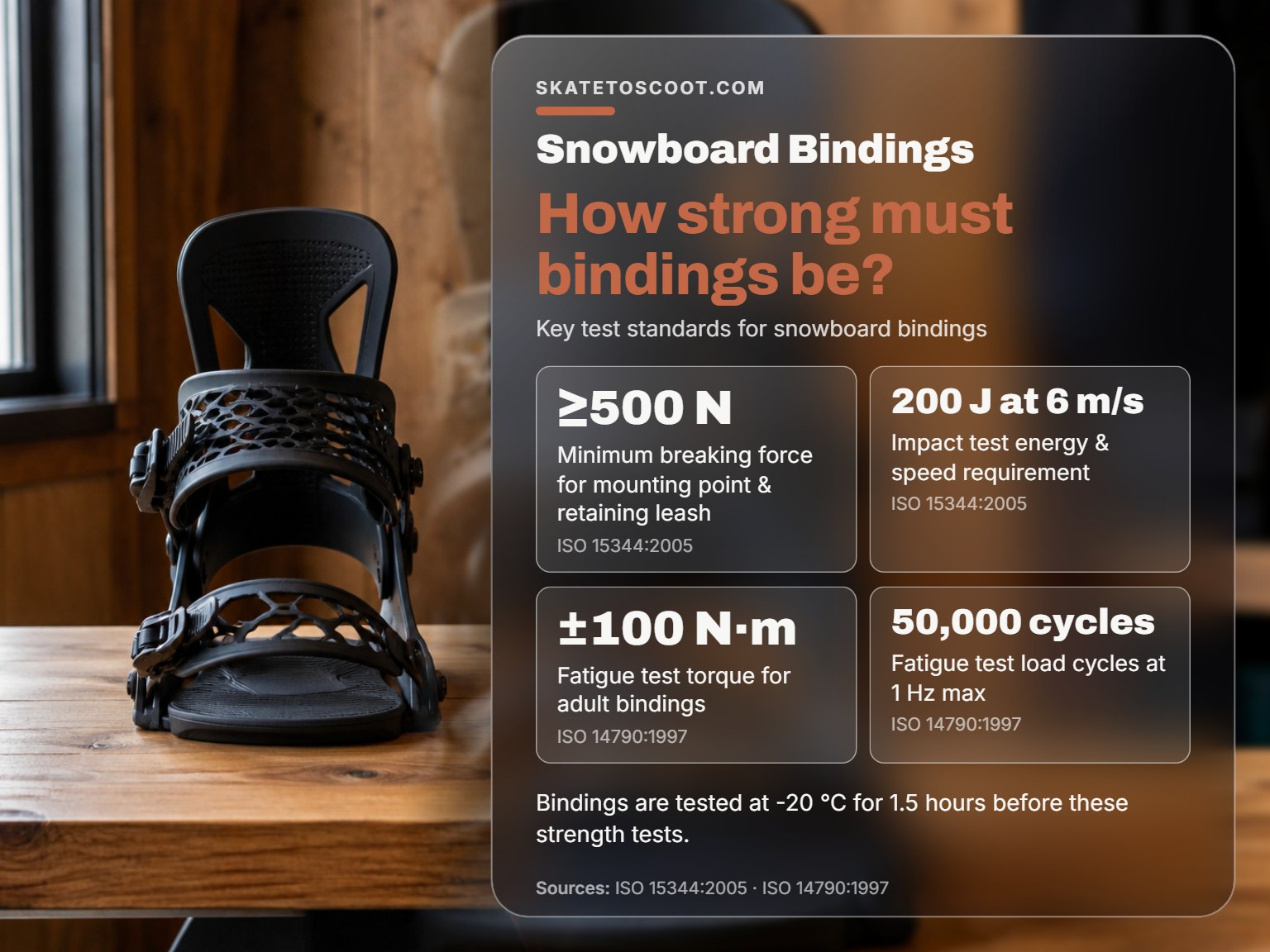
That mechanical reality defines the stakes. A binding isn’t just about feel; it’s a load-bearing component tested to withstand specific forces. For example, the ISO standard for step-in bindings mandates a minimum breaking force of 500 N for the retaining leash, a number that exists because a leash that fails under that load is a liability, not an accessory. This is the essential context for any serious snowboard bindings review. The conversation starts there, not with colorways.
What follows is a breakdown of binding systems, a look at the data behind recalls and durability, and a framework for matching a binding to your riding. This moves past “best of” lists to the engineering and owner feedback that actually predicts how a binding will perform when you’re leaning into a turn, not just when it’s fresh out of the box.
Key Takeaways
- Mix-and-match step-in systems are not guaranteed. ISO 15344:2005 explicitly states compatibility between different manufacturers’ step-in systems is “not expected or anticipated”; each boot-binding combo requires separate testing.
- Pay attention to the 500 N leash rule. The retaining leash on a step-in binding isn’t a tether; it’s a last-resort safety device with a minimum breaking force of 500 N as per the standard. A weak leash is a red flag.
- Long-term durability often hinges on straps and ratchets. Recalls from brands like GNU and Rossignol show ankle straps and t-nuts are common failure points after 1-3 seasons of aggressive riding, not the baseplate.
- Step-on feel is a real, measurable difference. Riders switching from traditional straps often report a lower, more direct connection but also note a learning curve for lateral support, especially in steep, technical terrain.
- Binding flex is a starting point, not a finish line. A “medium-stiff” rating from one brand can feel completely different from another’s due to highback shape, strap placement, and bushing material, always try before you buy if possible.
The 500 N Leash and M6 Screws – What a Standard Actually Means
You’ll see a lot of talk about response and damping. We’ll begin with what keeps you attached to the board. The ISO 15344:2005 standard for step-in bindings is a safety floor, not a performance guideline.
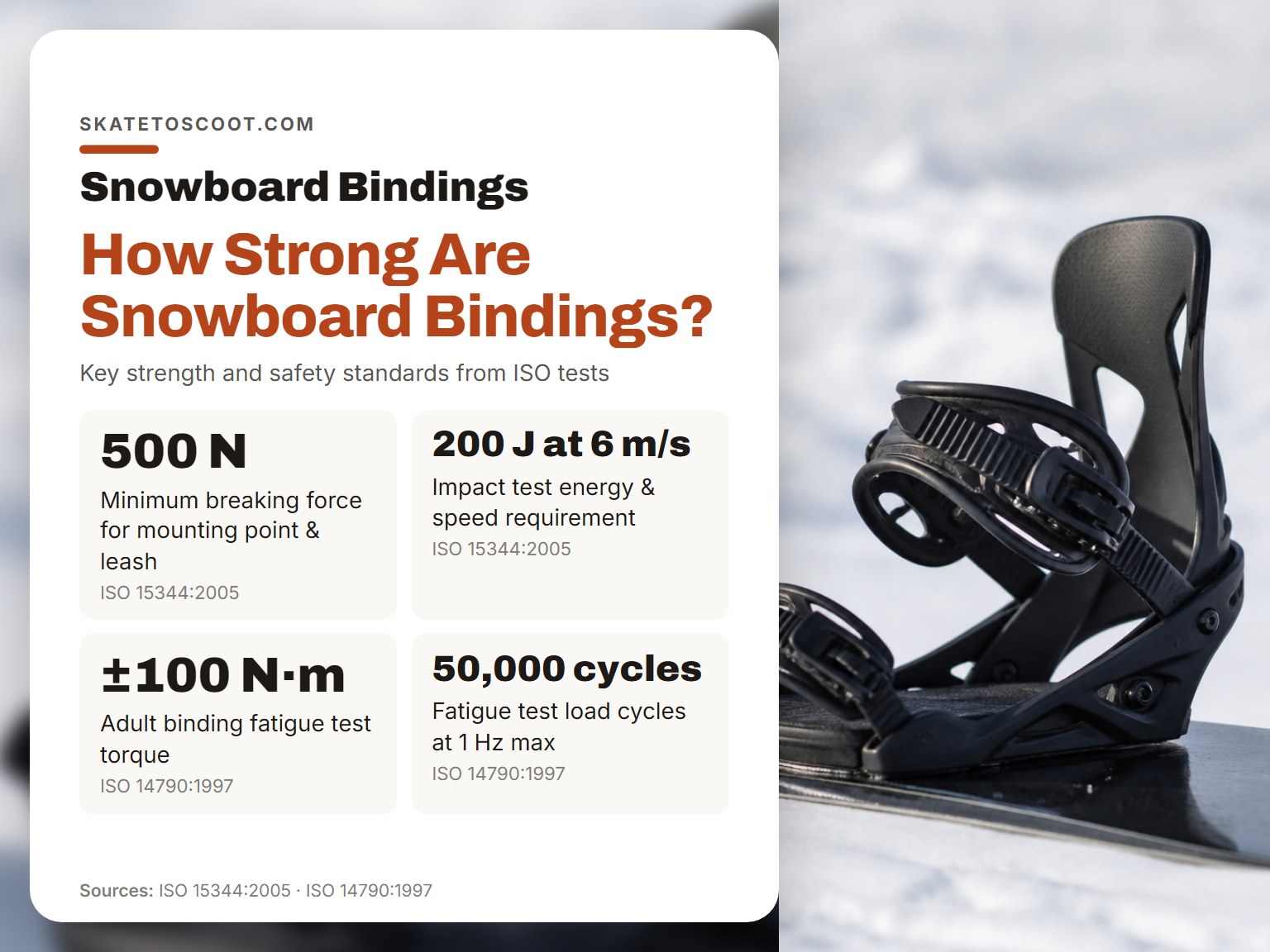
The most concrete rule is the 500 N minimum breaking force for the retaining leash and its mounting point. In the shop, that translates to a leash that should withstand a sharp, static tug of 500 N before it snaps. It’s not about everyday use; it’s about the one-in-a-thousand catch that could otherwise send your board sliding down the mountain alone.
The minimum breaking force of the mounting point and of the retaining leash shall be 500 N. . ISO 15344:2005, Section 5.2
Another spec that matters more than you think: mounting screws. The same standard specifies M6 Class G metric screws for boards with inserts. The “Class G” denotes a specific grade of strength and thread tolerance. Using the wrong screw, or one that’s worn, is how you get a mysterious “creak” that turns into a pull-out on your first hard carve of the day. It’s a small part, but it carries the entire system’s load.
| ISO 15344:2005 Key Safety Spec | What It Means For You | How To Check It |
|---|---|---|
| Retaining Leash: 500 N min. Breaking force | Your leash is a safety tether, not a decorative cord. A weak leash fails when you need it most. | Look for a stout, woven leash with robust stitching at the ends. Flimsy, thin cords are a warning sign. |
| Mounting Screws: M6 Class G | Ensures the screws can handle the torque and vibrational loads without stripping the board’s inserts. | Check the screws supplied with the binding. They should be marked and feel substantial. Replace worn or questionable ones immediately. |
| Latching with snow pack | ISO 15344:2005 requires the binding to latch with a minimum of 2 mm snow pack, while ISO 14790:1997 uses a 2 mm PTFE plate for its function test. | Test the step-in mechanism with a thin card or plastic shim under your boot sole. It should still click home. |
| Binding Type A: >45 kg body mass | “Adult” bindings are engineered for riders over 100 lbs. Heavier riders must ensure their bindings meet this type rating. | Check the manufacturer’s spec sheet or labeling on the binding itself for the rider weight classification. |
The other critical piece here is compatibility. The standard dryly notes that interoperability between different brands’ step-in systems is “not expected or anticipated.” In plain English: mixing a Burton Step On boot with a Nidecker Supermatic binding is a gamble unless the manufacturer explicitly certifies the combo. The mechanical interlocks are proprietary. This isn’t like choosing any compatible snowboard boots; the connection is the whole system.
Step-In, Step-On, and Rear-Entry – Cutting Through the Hype
The market is split between traditional strap bindings and quick-entry systems. Each has a real trade-off, not just a marketing story.
Traditional strap bindings, like the perennial favorite Union Force, are the baseline. The connection comes from the wrap and cinch of the ankle and toe straps over your boot. The feel is highly adjustable, and the failure modes are usually gradual, a worn ratchet, a fraying strap. This is the default for most progressing riders because it’s predictable. For a deep dive on models suited for this stage, see our guide on bindings for intermediates.
Step-On systems (Burton, now Union Atlas Step On) replace straps with a mechanical latch. Boots have cleats that hook into the binding. The appeal is speed and a lack of over-tightening. The feel is distinct: many riders report a lower center of gravity and more direct board feedback, as there’s no strap material between the boot’s cuff and the highback. The downside is lateral flex. Some riders, especially in steep, consequential terrain, miss the locked-in, wrap-around support of a tight ankle strap. As one Reddit user put it after getting cliffed out, “I was not able to take the board off because I was heelside in steep terrain” with Step Ons.
Rear-entry systems (Flow, some Nidecker models) use a hinged highback that flips down for entry. They’re a middle ground. You get most of the speed of a step-in with the wrapped feel of a strap. However, the mechanism adds complexity. The CPSC Flow Sports recall of about 10,400 bindings was due to a pin disengaging, a failure specific to that moving-part design. Thirty reports led to that recall.
FASE and other “fast-entry” strap bindings try to keep the strap feel while simplifying entry. They work, but often add weight. The consensus from testers is they feel closest to traditional bindings while riding, which is a point in their favor if you’re wary of a learning curve.
Where this goes sideways: Assuming all quick-entry systems feel the same. A Burton Step On delivers a firm, direct connection with almost no slop. A rear-entry Flow binding has more inherent flex in the highback mechanism. They solve the same problem (speed) but create vastly different board-feel.
So, which system wins? For most riders who already own boots and don’t want to replace them, a traditional strap binding is the safest, most adaptable choice. If you’re building a new setup from scratch and prioritize convenience, a Step On or quality rear-entry system is a legitimate, performance-oriented option, but you must commit to the compatible boot ecosystem. For a focused look at those options, check out our review of the best step-in bindings.
The Long-Term Durability Report – What Breaks First
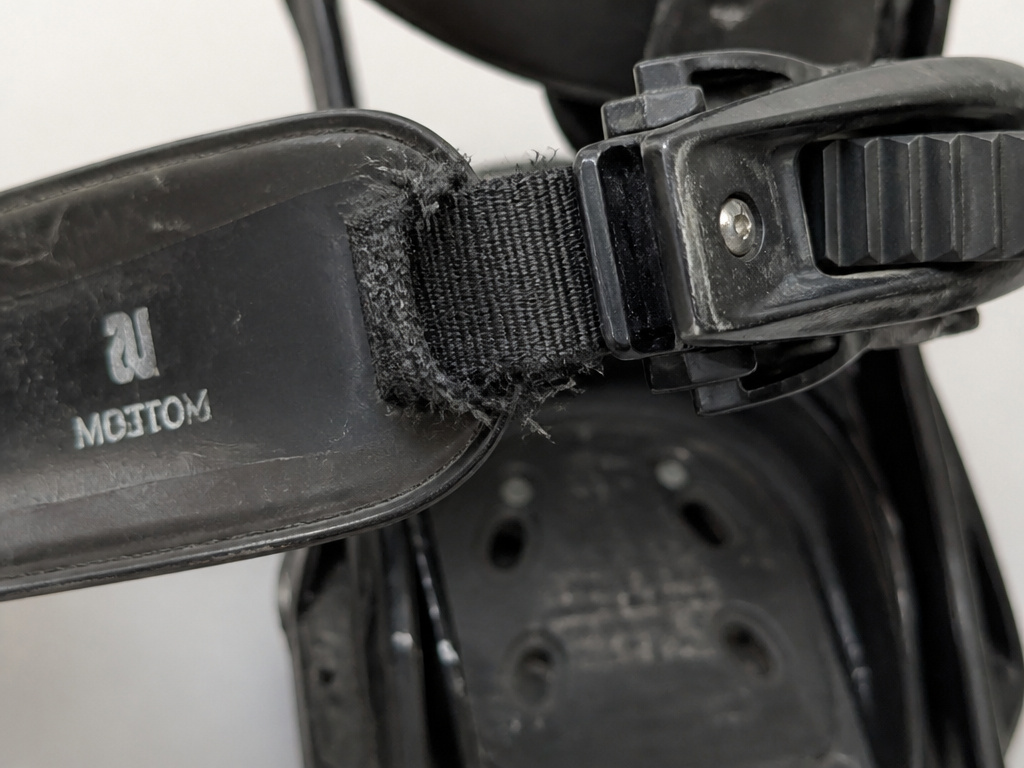
Reviews based on a season of testing miss the point. Bindings live or die in years two, three, and four. The data from real recalls and forum reports paints a clear picture: straps and ratchets are the weak link, not the baseplate.
Consider the evidence. The official GNU binding recall in 2013 covered about 6,800 pairs of GNU bindings, including the AGRO model. The failure? Ankle strap breakage. Mervin Manufacturing had received 30 reports. Similarly, Rossignol’s recall of roughly 3,500 pairs of 2007 model year HC bindings was due to strap failure.
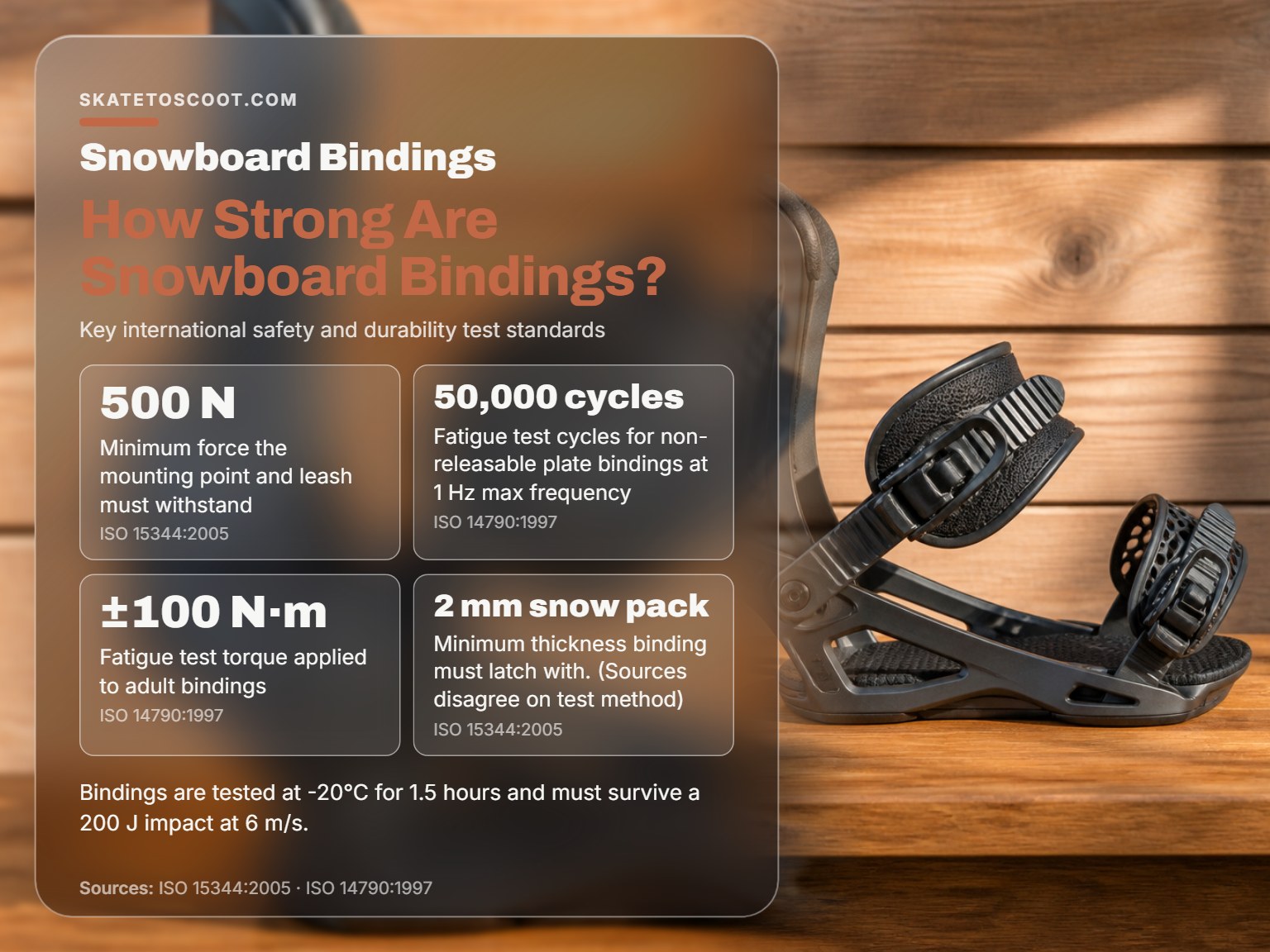
The baseplate, engineered to withstand fatigue tests of 50,000 load cycles at ±100 N·m for adults (per ISO 14790:1997), usually remains intact. The high-wear components fail first: the plastic ratchet teeth, the strap webbing at high-stress bends, and the hardware that holds it all together.
| Common Failure Point | Typical Symptom | Timeline | DIY Fix? |
|---|---|---|---|
| Ankle Strap Webbing | Fraying at the bend near the buckle, loss of tension | 2-4 seasons of regular use | No. Requires strap replacement. |
| Ratchets / Buckles | Teeth won’t hold, lever feels loose or pops open | 1-3 seasons | Sometimes. Many brands use proprietary ratchets; a warranty claim is best. |
| T-Nuts (strap anchors) | Strap feels detached at one side, visible wobble | Can occur early if defective (see Rossignol recall) | Yes, with a repair kit, but verify it’s a recalled model first. |
| Highback Cracking | Hairline crack near the forward lean adjustment, usually on cheaper models | 3+ seasons of aggressive riding | No. Highbacks are often model-specific and not sold separately. |
What does this mean for your choice? First, inspect the strap construction on any binding you consider. Look for reinforced stitching, robust webbing, and metal buckles over plastic where possible. Second, consider brand reputation for warranty support. A Reddit user praised Union, saying they replaced “a highback, baseplate and both toe straps on a 3 year old pair of katanas with like 250 days on them.” That kind of support adds years to a binding’s practical life.
Third, understand that a binding’s “stiffness” or “response” will change as these components wear. A stiff binding with a worn, stretched ankle strap becomes a medium-flex binding, regardless of what the baseplate is doing. This is why seasoned riders often look at binding reviews that mention long-term testing or have active forum followings.
Matching Flex, Feel, and Your Riding Style
Flex rating is the most advertised spec and the most misunderstood. A “7” from Burton doesn’t feel like a “7” from Rome. The number is a starting point; the feel comes from three interacting elements: highback stiffness and shape, strap placement and design, and the baseplate’s torsional give.
A highback that’s stiff vertically but has some torsional flex will feel supportive during heel-side carves but forgiving during presses. A strap mounted in a higher ankle position pulls your leg back into the highback more aggressively, increasing responsiveness. A baseplate with a minimalist, articulated design (like many “surf-inspired” bindings) will feel looser and more playful than a solid, full-length baseplate designed for charging.
For all-mountain riders who mix groomers, powder, and the occasional park hit, a medium to medium-stiff binding (think Union Force, Burton Cartel) is the default for good reason. It offers a balance of response and forgiveness. The key is adjustability, being able to fine-tune the highback forward lean and strap position to match your snowboard stance setup is crucial.
For park and freestyle-focused riders, a softer, more forgiving binding (like the Burton Scribe or many Flow models) allows for tweaks and reduces leg fatigue. However, “softer” shouldn’t mean “flimsy.” Look for durable strap materials and a solid heel cup, as park riding involves many impacts and lateral loads.
For big mountain and freeride charging, a stiff binding (Jones Mercury, Burton Cartel X) provides the stability and edge hold needed at high speeds. Here, damping becomes a premium feature. Materials like urethane bushings or elastomer inserts absorb chatter, saving your legs on long, choppy runs. This is where the ISO fatigue test of 50,000 cycles at high torque really translates to performance you can feel, or rather, don’t feel, in the form of less vibration.
Common mistake: Choosing a binding based solely on a flex number for your “riding style.” A stiff binding with poor strap design can feel dead and unresponsive. A softer binding with a perfectly positioned, responsive highback can feel quicker edge-to-edge. Demo if you can, or lean on detailed reviews that describe the components, not just the rating.
The Direct Comparison: Union Force vs. Burton Cartel
Two bindings dominate the “all-mountain, do-everything” conversation: the Union Force and the Burton Cartel. Both are medium-stiff, but they achieve that feel through different engineering philosophies, leading to a distinct on-snow experience.
The Union Force is often described as “lively” or “surfy.” Its classic, minimal baseplate has some inherent torsional flex, and the strap system is designed for a wrapped, comfortable feel. This makes it forgiving and playful, excellent for riders who value board feel and a less rigid connection. This binding allows the board to do more of the work. Over time, owners report the straps and ratchets hold up well, and Union’s warranty service is consistently praised in community discussions.
The Burton Cartel (and its stiffer sibling, the Cartel X) uses Burton’s Extended Sidewall (EST) design in some models, which integrates the binding into the board’s edge for a more direct power transfer. The highback is often more structured, and the ankle strap tends to sit a bit higher, pulling you firmly into the heel-side carve. The result is a more precise, driver-oriented feel. It communicates board feedback clearly but can feel less forgiving on landings or in slush.
| Aspect | Union Force | Burton Cartel (Reflex) |
|---|---|---|
| Primary Feel | Lively, forgiving, board-focused. | Precise, responsive, driver-focused. |
| Key Tech | Minimalist baseplate, traditional disc mounting. | Often features EST mounting for edge-to-edge integration, Re:Flex baseplate. |
| Strap Design | Focus on comfort and wrap; often praised for break-in feel. | Structured, higher ankle strap placement for aggressive heel-side engagement. |
| Best For | Riders who prioritize board feel, playfulness, and a less rigid connection. | Riders who want direct power transmission, precise carving, and a locked-in heel. |
| Longevity Note | Strong community reports on durability and warranty support. | High-quality materials; some older models had strap hardware recalls (check dates). |
Your boot choice matters here too. A stiff boot paired with a Cartel will feel incredibly powerful and direct, perhaps overly so for a beginner. A softer boot with a Union Force might lack the support a heavier, aggressive rider needs. This is why selecting paired boots and bindings as a system is always recommended over picking components in isolation.
Sizing, Fit, and the Nuances Everyone Misses
Binding size (S, M, L) corresponds to boot size, but the fit within that range is critical. A binding at the very top of its size range (e.g., a size 10.5 boot in a Medium binding rated for 8-10) will often have the straps fully extended, which can affect control and feel. Conversely, a boot at the small end of the range might leave excess strap length that needs to be managed.
The heel cup is where many mid-range bindings show their cost. A heel cup that doesn’t snugly cradle your boot allows heel lift, which murders response and forces you to over-tighten straps. Better bindings offer tool-less heel cup adjustments that can be micro-tuned forward or back by several millimeters. This one adjustment can solve more fit issues than any other.
Boot brand also plays a role. Burton boots tend to have a specific heel shape that works well with Burton bindings. Some riders find that ThirtyTwo or Vans boots fit differently in a Union or Rome binding. This isn’t a defect; it’s a nuance. When researching, look for forum comments from riders with your specific boot model discussing fit in the binding you’re considering. This level of detail is what separates a guide based on specific boot and binding combinations from a generic list.
Finally, consider the mounting system. Most bindings use a 4×4 or 2×4 disc pattern, which is universal. Burton’s EST system is proprietary to their Channel boards. If you own a Channel board, you can use EST bindings for integrated performance or use the included adapter discs to fit any standard binding. If you don’t own a Channel board, EST bindings are not an option. Always verify compatibility before purchase.
Maintenance, Care, and Pre-Ride Checks
Bindings are maintenance items. A five-minute pre-season check can prevent a mountain-top failure.
- Inspect all straps and webbing for fraying, especially at high-stress bends near buckles and where the strap loops through the ladder.
- Check every screw. This includes the main baseplate screws (those M6 Class G ones) and all the tiny screws on buckles and highback adjusters. A dab of low-strength thread locker (blue Loctite) on the baseplate screws after confirming your stance is a pro move.
- Cycle the ratchets. Open and close them dozens of times. Feel for any grit, skipping teeth, or a lever that doesn’t spring back crisply. Gunk in the mechanism is a common cause of failure.
- Look for cracks. Examine the highback, especially around forward lean adjustment holes and the base where it meets the baseplate. Check the baseplate itself for hairline cracks, particularly on older models or after a major impact.
If you ride frequently, consider having a backup set of straps or a complete spare binding in your gear closet. Straps can be swapped in minutes with a Phillips head screwdriver, turning a binding you were about to retire into a backup pair for another season. This is far more cost-effective than replacing the whole unit.
How much should you spend on snowboard bindings?
Price doesn’t always reflect long-term value. Looking at recall data shows that some bindings sold in a similar price range, like the recalled Flow bindings ($110-$150) and Rossignol bindings ($100-$150), have been subject to significant recalls. This suggests that a higher initial cost doesn’t automatically guarantee durability, and a lower price doesn’t necessarily mean a bad deal. Your focus should be on proven construction that meets rigorous safety testing standards, not just the sticker price. A binding that fails costs you more in the long run, regardless of what you paid upfront. Consider how the binding is built to handle stress over thousands of cycles in freezing conditions, not just its initial feel.
Frequently Asked Questions
Which snowboard binding brand is considered the best?
There is no single “best” brand. Different brands excel in different areas. Union is renowned for durability, customer service, and a classic, lively feel. Burton leads in innovative system integration (Step On, EST) and precise, powerful bindings. Rome and Now/Jones are praised for unique, performance-oriented tech like the AsymWrap chassis or skate-truck inspired pivot. The best brand is the one whose design philosophy matches your riding style and whose warranty support backs it up.
Do snowboard bindings actually matter?
Absolutely. More than any other component besides your board itself, bindings dictate how power is transferred from your body to your edges. They control responsiveness, dampening, and comfort. A poor binding can make a great board feel dead, and a great binding can bring out a board’s potential. They are the critical, load-bearing link in the chain.
How do I know which snowboard bindings to get?
Start by identifying your primary riding style (all-mountain, park, freeride) and match a flex range. Then, consider your boot brand and any desire for quick-entry systems. Read a detailed snowboard bindings review that focuses on component quality and long-term durability, not just initial impressions. Finally, if possible, demo before you buy. Your personal preference for “feel” is the final, un-measurable spec that matters most.
How much should I pay for snowboard bindings?
You can find functional beginner bindings for a lower investment, but they often use less durable materials in straps and ratchets. The sweet spot for performance and durability for most riders is in the mid-range. This is where you find proven models like the Union Force or Burton Cartel that will last multiple seasons. High-end bindings offer premium materials, advanced damping, and weight savings, which are valuable for expert riders but offer diminishing returns for intermediates.
Are step-on bindings worth it?
They are worth it for riders who value convenience and a specific, direct board feel, and who are willing to invest in a boot and binding system from the same brand. They are not worth it if you already own boots you love, if you heavily ride steep, technical terrain where quick exits are rare, or if you prefer the customizable wrap and feel of traditional straps. Demo them first if you’re curious.
The Bottom Line
Choosing a binding is about matching a piece of engineered equipment to your boots, your board, and the way you ride, not just finding the top-rated model. Ignore the flex number on the box until you’ve read about the strap design, the highback shape, and the brand’s track record for honoring warranties after the plastic wears.
One point is clear. The government recall announcement for K2 bindings and the fall hazard recall documentation for GNU models are reminders that these are mechanical devices with failure points. Your job is to pick one where those points are well-understood, serviceable, and backed by a company that stands behind its product.
So before you click “buy,” do this final check: Will the straps hold up? Does the heel cup fit your boot? And if something goes wrong in 18 months, who’s going to answer the phone? The binding that passes that test is the one you want under your feet.
