Snowboard Helmet Review: What the Standards Don’t Tell You
This post contains affiliate links. As an Amazon Associate, we earn from qualifying purchases.
Research cited in a 2024 study suggests ski helmets reduce the overall risk of head injury by 21-45%, but the same study found helmet use did not significantly reduce linear head acceleration in impacts onto groomed snow. Your choice comes down to three things: a certified safety standard label (ASTM F2040 or equivalent), a proven rotational protection system (MIPS, WaveCel), and a fit so precise the helmet doesn’t move when you shake your head.
That gap between lab certification and real-world snow performance is the whole conversation. The standards test against flat steel anvils, but most head impacts, between 65% and 70% of skiing and snowboarding traumatic brain injuries, happen against snow. This is a critical point for any snowboard helmet review. The helmet that passes the test might not perform the same way on the mountain.
What follows: a breakdown of the safety tech that matters, how to interpret ratings beyond the marketing, the exact fit checklist that prevents injury, and the models that bridge the gap between the standard and the slope.
Key Takeaways
- Look for a certification label inside the helmet: ASTM F2040, CSA Z263.1, SNELL RS-98, or EN 1077. Health Canada states helmets without these pose a danger to human health.
- Prioritize rotational protection systems like MIPS or WaveCel. A 2024 engineering simulation found they “significantly reduced angular kinematics and brain responses” compared to standard helmets.
- Fit is essential. The helmet must sit 1 inch above the eyebrows, and the chin strap should be snug enough that no more than one or two fingers fit underneath.
- Independent ratings like Virginia Tech’s STAR are more revealing than marketing claims. They test 12 impacts and measure both linear acceleration and rotational velocity.
- A helmet is a single-use device for serious impacts. After any hit that makes you question its integrity, replace it.
The 51G, 106G, 170G Reality: What Helmets Actually Do on Snow
The certification label inside your helmet tells a specific story. It says the model passed a series of controlled lab tests, impact absorption, strap retention, stability, against rigid steel anvils, as defined in standards like the ASTM F2040 snow helmet standard. The standard itself is clear: “a helmet that meets this specification will help reduce the risk of some types of injuries to the head at slower speeds, but the protection is limited.”
Now, hold that thought. A 2024 peer-reviewed study took helmets and measured what happens on snow, not steel. Researchers recorded head impacts at speeds between 5.3 and 7.5 m/s (that’s a typical intermediate fall). On soft snow, the mean peak acceleration was 51G. On hard snow, it jumped to 106G. On very hard, groomed snow, it hit 170G at 6.1 m/s.
The study’s key finding? “Helmet use did not significantly reduce head linear acceleration for the snow conditions tested.”
Where this goes sideways: Assuming a certified helmet makes you invincible on ice or hardpack. The lab test and the mountain are two different environments. The certification is your baseline, not a guarantee of performance in all snow conditions.
This isn’t a reason to ditch the helmet. Other research, cited in that same study, shows ski helmets reduce the overall risk of head injury by between 21% and 45%. The point is the type of risk. The standards are optimized for high-energy, direct hits against trees or lift poles. The most common head impact, 65% to 70% of TBIs on the mountain, is onto snow, where the mechanics are different.
So what do you do with this? You buy for the worst-case scenario the standard covers, and you add layers for the reality of the mountain. The next layer is managing how your brain moves inside your skull on impact.
| Impact Surface | Tested In Standard? | Typical Peak Acceleration (Study Data) | What the Helmet is Optimized For |
|---|---|---|---|
| Flat Steel Anvil | Yes | (Pass/fail thresholds defined in ASTM F2040-18 Section 9.1/9.2) | High-speed collisions with rigid objects (trees, lift infrastructure) |
| Hard, Groomed Snow | No | 106G – 170G at 6.1 m/s | Common falls during skiing/snowboarding |
| Soft, Powdery Snow | No | ~51G at 6.1 m/s | Low-energy falls in deep snow |
TL;DR: Certifications are your legal safety floor. Real-world snow impacts produce forces the standards don’t fully address, which is why the next layer of technology, and a perfect fit, is critical.
The Tech That Moves With Your Brain
When your head hits the ground at an angle, it wants to rotate suddenly. Your brain, floating in fluid, lags behind and then snaps forward, causing shearing and stretching. This rotational force is a major contributor to concussions. Standard helmets are great at absorbing straight-on, linear hits. Managing rotation is a different game.
That’s where systems like MIPS (Multi-directional Impact Protection System) and WaveCel come in. MIPS is a thin, low-friction layer inserted between the helmet’s liner and foam. On an angled impact, this layer allows the helmet to slide slightly relative to your head, theoretically reducing the rotational force transmitted to your brain. It works like a mechanical clutch that lets the shell move independently.
WaveCel is a rotational protection system developed by Smith. A 2024 engineering simulation study that compared technologies concluded that helmets with MIPS, WaveCel, and another silica-pad system “significantly reduced the angular kinematics and brain responses compared to the conventional helmet” per ASTM F2040.
Common mistake: Choosing a helmet based solely on the presence of a buzzword like MIPS. The implementation matters. A poorly integrated or cheaply made low-friction layer is just extra weight.
The strongest signal now isn’t from the manufacturer’s marketing, but from independent labs. The Virginia Tech Helmet Lab snow sport ratings are a major advance. They rate helmets using 12 impact tests measuring both linear acceleration and rotational velocity, which are correlated to concussion risk. A 5-star Virginia Tech rating is a more meaningful performance indicator than any single brand’s claim.
So, you want a certified helmet (ASTM F2040 or CSA Z263.1) with a proven rotational management system, preferably one with a high Virginia Tech STAR rating. But none of that matters if the helmet isn’t physically attached to your head correctly. A floating helmet is a useless helmet.
The 7-Step Helmet Fit Checklist (And the One Step Nobody Skips)
All the advanced technology in the world is worthless if your helmet fits like a salad bowl. A proper fit is the single most important factor in a helmet’s performance. It’s not about comfort first; it’s about security first. The CDC snowboard helmet fact sheet lays out the non-negotiables.
Here is the sequence, in order. Do not move to step two until step one is locked in.
- Start with the right size. Measure your head circumference just above your eyebrows. Ignore your hat size. Match it to the brand’s specific size chart, they all differ.
- Position the helmet. It should sit level on your head, about 1 inch above your eyebrows. The back should not touch your neck.
- Check the surround. The foam or padding should contact your head evenly all the way around. No gaps, especially at the temples or forehead.
- Adjust the retention system. Turn the dial or adjust the straps at the rear. The helmet should feel snug, not tight. Shake your head side-to-side and up-and-down. The helmet should move with your skin, not slide over it.
- Secure the chin strap. Center the buckle under your chin. Tighten it until no more than one or two fingers fit flat between the strap and your chin.
- Perform the “yawn test.” Open your mouth wide. You should feel the helmet pull down onto the top of your head. If it doesn’t, tighten the chin strap more.
- Final stability check. With the strap buckled, try to roll the helmet forward off your head or side-to-side. It should not move. If it does, it’s too big.
The step everyone skips? The yawn test. It’s the final proof that the chin strap is doing its job of cinching the helmet down, not just sitting against your skin. A loose chin strap is why helmets fly off in crashes.
Easy to miss: Trying on the helmet with your intended hairstyle and goggles. A thick beanie or a ponytail changes volume. Your goggles should sit flush with the helmet’s brow, with no gap for snow to enter.
Fit also dictates comfort, which dictates how often you’ll wear it. A helmet that gives you a headache after 20 minutes will spend more time in your lap than on your head. Look for adjustable, removable padding and consider venting if you run hot.
Decoding the Helmet Market: From Budget Basics to Backcountry Bombers
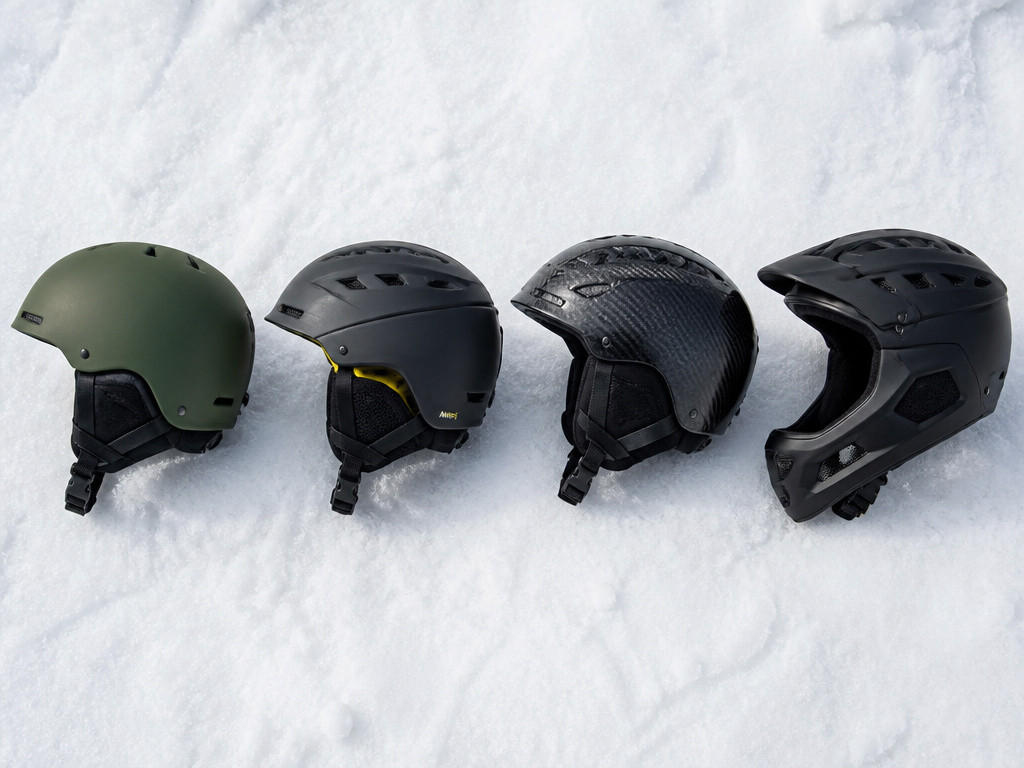
The market splits into clear tiers, each with a best-use case. Your job is to match the helmet to the riding you actually do, not the rider you aspire to be.
Budget / Beginner Helmets: These are your sub-$100 options, often found in helmet/goggle bundles. They meet the basic ASTM F2040 or EN 1077 certification. They typically have fixed venting, basic liner materials, and rarely feature advanced rotational systems like MIPS. They’re perfect for the occasional resort rider, a first-time buyer, or a growing kid. Their limitation is often weight, ventilation, and a lack of fine-tuning adjustment. For a few days a year, they’re sufficient. For a dedicated season pass holder, they’re a compromise.
Mid-Range All-Mountain Helmets: This is the sweet spot for most riders. Prices range broadly, but here you find MIPS or WaveCel as standard, better ventilation controls (often adjustable), lighter weight through hybrid shell construction (in-mold), and superior comfort liners. Brands like Smith, Giro, and POC dominate here. These helmets are designed for full-day, every-weekend resort riding. They balance protection, weight, and features. This is also the tier where you start seeing strong performers in the Virginia Tech STAR ratings.
Premium / Performance Helmets: This tier is for pros, aggressive park riders, and backcountry enthusiasts. Materials shift to carbon fiber or advanced composites to shave grams. Venting becomes hyper-engineered for uphill climbs and downhill descents. Features like integrated audio, camera mounts, and FIDLOCK magnetic buckles are common. The protection level is top-tier, often incorporating the latest rotational tech and boasting top Virginia Tech scores. You’re paying for marginal gains in weight, ventilation, and often, style.
Specialty Helmets: This includes full-face helmets for extreme speed or park protection, convertible helmets with removable chin bars, and dual-certified helmets like the Smith Holt, which meets both snow sport and bike/skate standards. These are for a specific, narrow use case.
| Helmet Tier | Best For | Key Features | Compromise |
|---|---|---|---|
| Budget / Beginner | Occasional riders, first-timers, kids | Basic certification, low cost | Heavy, poor venting, no advanced tech |
| Mid-Range All-Mountain | Regular resort riders, most adults | MIPS/WaveCel, adjustable venting, better fit systems | More expensive, can be over-featured for beginners |
| Premium / Performance | Park rats, backcountry tourers, pros | Lightweight materials (carbon), superior ventilation, top safety ratings | High cost, often less durable for frequent impacts |
| Specialty (Full-face, Convertible) | Speed events, pro park, bike/skate crossover | Maximum jaw/face protection, dual-sport versatility | Can be hot, restrictive, and niche |
When you look at a ranked list of the best snowboard helmets, you’re seeing a spread across these tiers. Your goal when you read a snowboard helmet review isn’t to buy the “best” in absolute terms, but the best for your specific riding style and frequency.
Safety, Recall, and the Long-Term View
A helmet is not a permanent piece of gear. Its materials degrade with UV exposure, temperature cycles, and sweat. The CDC guidelines are explicit: do not store it in a car, where extreme heat and cold can break down the foam and plastics. Clean it with warm water and mild detergent, no strong chemicals, no soaking.
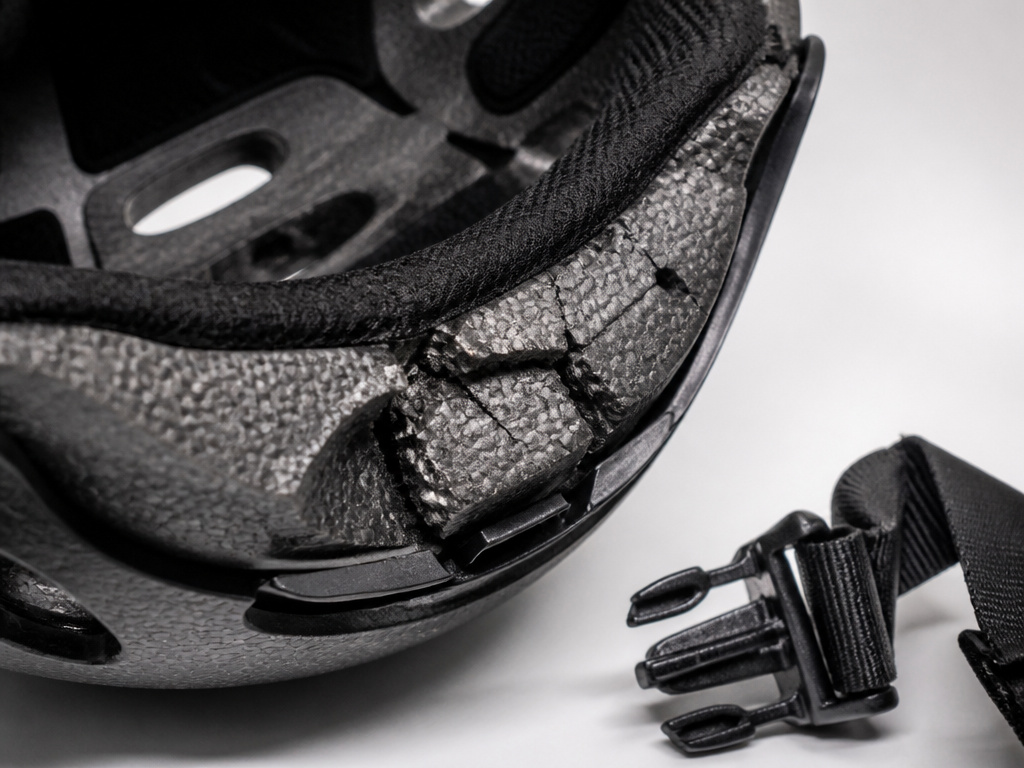
More critically, a helmet is designed for a single significant impact. The EPS foam liner crushes to dissipate energy. After a crash where you hit your head, even if the shell looks fine, the foam may be compromised. If you have any doubt, replace it. This is critical.
Recalls happen, and they’re serious. In 2017, the CPSC announced a recall for all 2016 and 2017 Smith Quantum ski and snowboard helmets, approximately 7,000 units in the U.S. The buckle could disengage, posing a risk of head injury. This highlights a vital point: your safety relies on the integrity of every component, not just the foam. Check for recalls on your model.
Health Canada’s stance is even more direct. Their assessment states that ski and snowboard helmets that do not conform to applicable standards (CSA Z263.1, ASTM F2040, SNELL RS-98, or EN 1077) pose a danger to human health or safety. They are aware of five incident reports in Canada over an 11-year period linked to helmets. The regulatory line is clear: certification isn’t a marketing stamp; it’s a binary indicator of whether a product is considered safe for sale.
So your long-term protocol is simple: buy certified, check for recalls, store it properly, clean it gently, and replace it after any meaningful impact or every 3-5 years of regular use, whichever comes first. The $200 you spend on a replacement is cheaper than the alternative.
How to find the best snowboard helmet for you
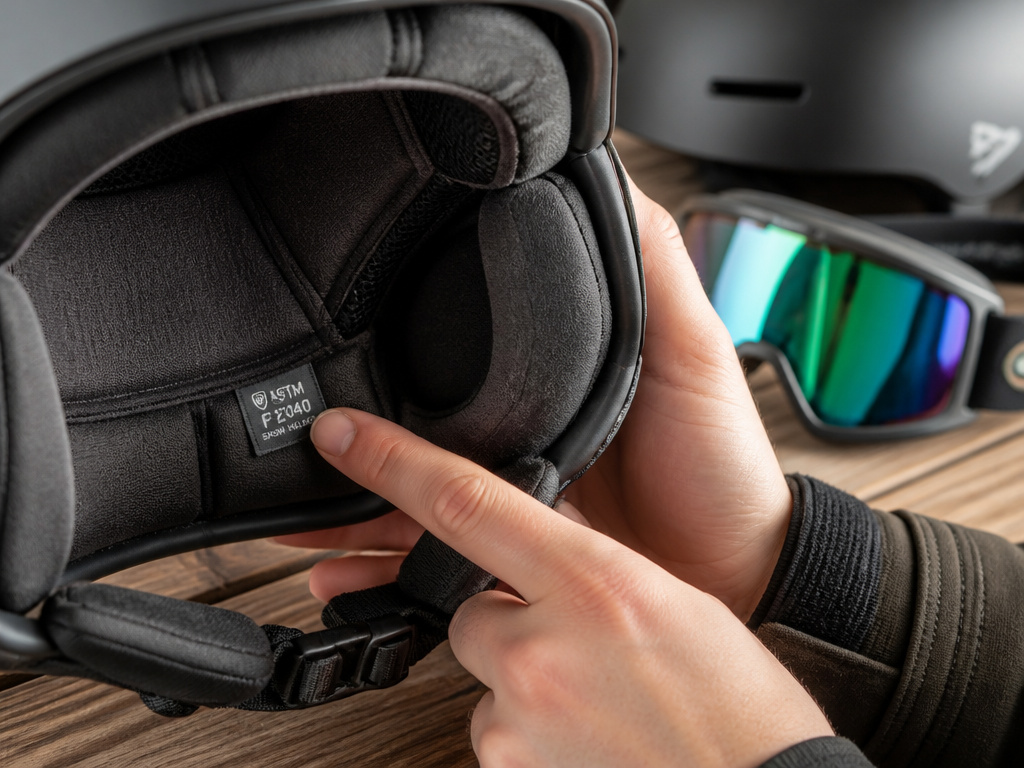
Look for a helmet that meets a recognized safety standard like ASTM F2040-18, CSA Z263.1-14, or EN 1077:2007. Check for a certification label inside. Some independent labs, like Virginia Tech, perform additional impact tests and publish ratings based on linear and rotational acceleration. Their results can help you compare models. Remember that standards test against rigid anvils, while real-world impacts involve snow of varying hardness. A recent study suggests helmet performance can vary significantly with snow conditions. The best pick from a snowboard helmet review is one that fits you perfectly, carries a valid certification, and suits your riding style.
Using headphones and audio with your helmet
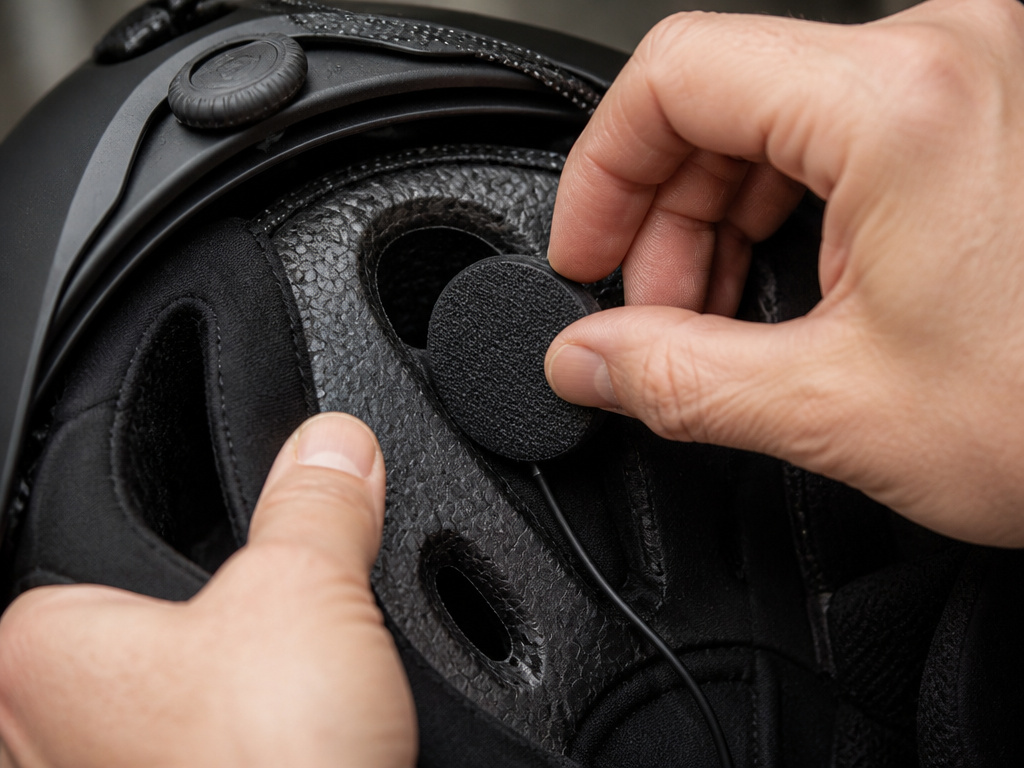
Many modern helmets are designed with integrated audio or pockets for aftermarket speaker pads. If you’re adding audio, ensure the components are specifically designed for helmet use and do not compromise the helmet’s structure or safety systems. Never carve out or modify the foam liner to fit speakers, as this can damage the impact-absorbing material. Follow the manufacturer’s instructions for installation. The fit of the helmet should remain snug and stable with the audio system in place; a proper fit means the helmet sits about one inch above your eyebrows and the chin strap allows no more than one or two fingers between the strap and your chin.
Helmet fit systems: dials, Boa, and straps
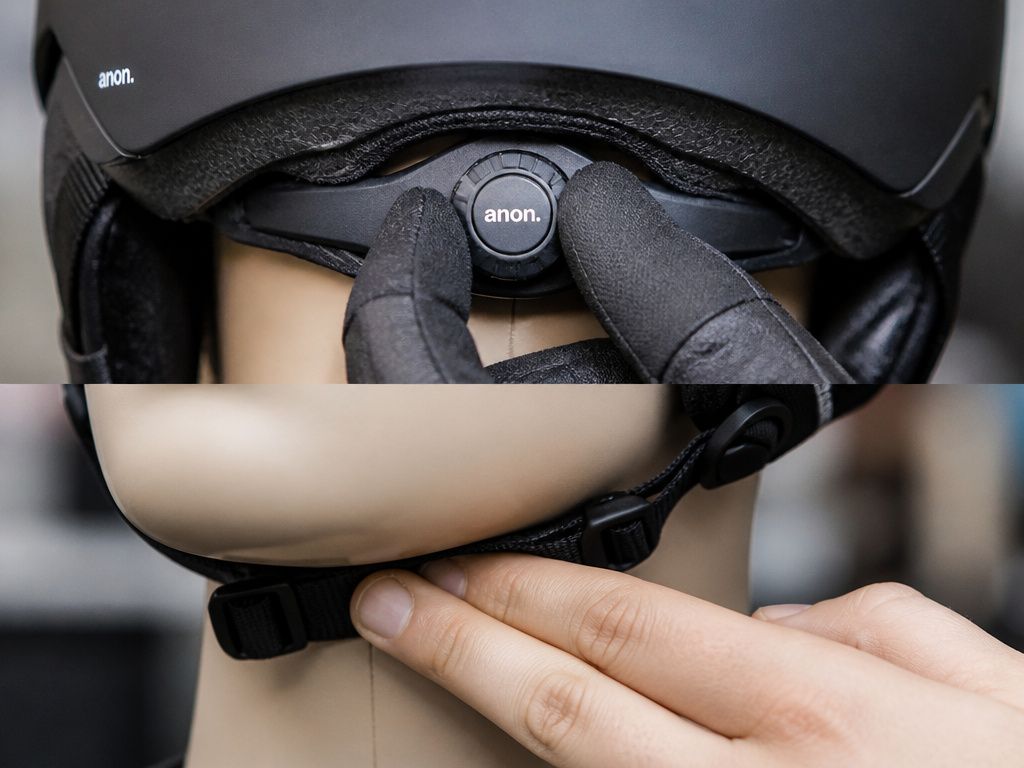
A good adjustment system is key for a secure, stable fit. Dial systems at the back let you micro-adjust the circumference for a custom feel. The goal is a snug fit that prevents the helmet from rolling off your head during a fall, a key test in safety standards. The chin strap is equally critical; it must be buckled and tightened so only one or two fingers fit between the strap and your chin. Always check that any adjustment mechanism operates smoothly and doesn’t interfere with the helmet’s safety function. A proper fit ensures the helmet stays in the correct position to provide the intended level of protection.
Frequently Asked Questions
What is the most important safety feature in a snowboard helmet?
The certification label (ASTM F2040, CSA Z263.1, etc.) is the most critical feature. Without it, the helmet has not been verified to meet baseline safety standards. After that, a proper fit is the most important “feature,” followed by a rotational protection system like MIPS or WaveCel.
How do I know if my old helmet is still safe?
Inspect it closely. Look for cracks in the shell, dents or compression in the foam liner (you might see a permanent indentation), and fraying or damage to the straps and buckles. If it’s been in a crash where your head hit the ground, replace it regardless of visible damage. Replace a helmet after any meaningful impact or if inspection reveals damage.
Are more expensive helmets actually safer?
Not always in a linear way. A $500 helmet isn’t necessarily twice as safe as a $250 helmet. You pay for premium materials (carbon fiber for lightness), advanced ventilation, comfort features, and integration. Safety plateaus in the mid-range, where most helmets meet the same stringent certifications. The extra money often buys comfort, style, and weight savings, which can indirectly improve safety by ensuring you wear it.
Do I need MIPS or WaveCel?
The evidence is compelling that these systems manage rotational forces better than standard helmets. A 2024 simulation study confirmed they “significantly reduced angular kinematics and brain responses.” For any rider, especially those pushing their limits in the park or backcountry, it’s a worthwhile investment. For a beginner on gentle greens, the certification and fit are more immediately important.
Can I use my ski helmet for cycling or skateboarding?
Only if it is explicitly dual-certified. Some models, like the Smith Holt, are designed and tested to meet both snow sport (ASTM F2040) and bike/skate (CPSC) standards. Using a standard snowboard helmet for biking is dangerous, as the impact profiles and testing protocols are completely different.
The Bottom Line
Start with the label inside. If it doesn’t say ASTM F2040, CSA Z263.1, SNELL RS-98, or EN 1077, put it back. That’s your essential foundation. Then, get the fit locked down, so tight that a yawn pulls it down on your head, so secure that it doesn’t shift when you shake your head violently.
Understand what you’re buying. The certification protects against the worst-case, high-energy hit. Systems like MIPS address the more common, angled impacts that can cause concussions. Independent ratings from Virginia Tech cut through the marketing and give you a comparative score based on 12 real-world impact simulations.
For most riders, the best choice is a mid-range, certified helmet with a rotational protection system like MIPS or WaveCel that fits you perfectly. Check its Virginia Tech STAR rating if available. Spend your money here, not on extra features you won’t use.
Finally, trust the helmet to do its job once. After a solid impact, retire it. Store it indoors, clean it gently, and check for recalls. Your brain gets one body. The helmet is the cheapest insurance policy you’ll ever buy for it.
