Story Inline Skates Review: A Coach’s Breakdown
This post contains affiliate links. As an Amazon Associate, we earn from qualifying purchases.
Story inline skates are a budget-friendly, direct-to-consumer brand offering adjustable soft boots for casual use and hard-shell speed skates. The Story Urban is a soft-boot recreational skate with 90mm 82A wheels, while the Story Blade is a hard-boot speed skate with 100/110mm 85A wheels and a carbon/fiberglass shell. Both feature ABEC-9 bearings and aluminum frames. For a casual skater on smooth paths, the Urban is a serviceable start; for serious speed or aggressive skating, community feedback and component quality raise significant red flags.
That split between casual roll and performance demand is where most reviews of this brand stop. They list the specs and call it a day. But your safety and progression hinge on the details those specs don’t show, the missing weight limits, the lacing warnings other brands print, and the real-world reports of what happens after 50 hours on pavement. This is the missing story inline skates review.
What follows: a side-by-side tear-down of the two main Story models, the safety standards they don’t mention, the Reddit-level truth about their aggressive skates, and where I’d tell a student to spend their money instead.
Key Takeaways
- The Story Urban adjustable skate is a soft-boot, casual cruiser; its soft boot with textile/foam liner and 82A wheels are built for smooth pavement, not park or street impact.
- The Story Blade speed skate uses a 2-layer carbon, 5-layer fiberglass shell and 100/110mm 85A wheels, but its low ankle support and community feedback question its durability for high-intensity use.
- Sizing runs small; the retailer explicitly advises going up one size for the Story Blade, Devil, and Shadow models.
- Critical safety information is absent from Story manuals, including user weight limits and warnings about overly tight lacing that competitors like Powerslide explicitly provide.
- For aggressive inline skating, multiple community reports describe Story skates as “dropshipped trash” with warnings that very hard wheels (e.g., 102A) would be ‘like skating on rocks’ and ‘slide out constantly’; a used pair from a known brand is a safer, more reliable investment.
Story Urban vs Story Blade: Key Specs Compared
You have two main paths with Story: the casual, adjustable Urban or the speed-oriented Blade. On paper, they share some specs. In your hand, they’re built for completely different jobs.
The Story Urban is the one you’ll see most often. It’s built around a soft boot with a textile and foam liner, designed for comfort right out of the box. The shell is High Impact Polypropylene, a plastic that’s flexible and decent for vibration damping on long, flat rolls. It rolls on 90mm diameter wheels with an 82A hardness, a middle-of-the-road setup that’s quiet on smooth bike paths but will chatter and stick on rough asphalt. The frame is a straightforward aluminum flat design, and it uses ABEC-9 bearings. Its party trick is the adjustable size, letting it grow with a kid’s foot or fit a range of adults.
The Story Blade is a different animal. It’s a hard boot, full stop. The shell is a composite of two layers of carbon fiber and five layers of fiberglass, which should make it stiff and responsive. It’s built for low ankle support, a design choice for speed skating that prioritizes range of motion over lateral stability. The wheels jump to 100mm or 110mm in diameter with an 85A hardness, aiming for higher top speed and a slightly harder ride. It also uses an aluminum flat frame and ABEC-9 bearings. The closure mixes laces, a Velcro strap, and an adjustable buckle.
Technical Snapshot: The European standard EN 13843 governs roller sports equipment safety. A Decathlon inline skate manual citing this standard specifies “Class A: For 20 – 100kg user weight.” Story product pages and manuals contain no stated user weight limits, leaving the skater to guess if the equipment is rated for their mass.
Here’s how they stack up side-by-side:
| Feature | Story Urban | Story Blade |
|---|---|---|
| Boot Construction | Soft boot (Textile/Foam Liner, High Impact Polypropylene) | Hard boot (2-layer carbon, 5-layer fiberglass) |
| Wheel Specs | 90mm diameter, 82A hardness | 100/110mm diameter, 85A hardness |
| Primary Use Case | Casual recreation, fitness on smooth surfaces | Speed skating, fitness for experienced skaters |
| Ankle Support | Moderate (soft boot flex) | Low (designed for forward flex) |
| Closure System | Laces + adjustable mechanism | Laces + Velcro strap + adjustable buckle |
| Key Advantage | Adjustable size, comfort-focused | Stiffness for power transfer, larger wheels for speed |
The part nobody mentions: That adjustable size feature on the Urban is great for growing feet, but every moving part in a skate is a potential failure point under stress. An adjustable mechanism that isn’t built to a standard like EN 13843 is operating on trust, not verified engineering.
Sizing, Fit, and a Critical Safety Omission
Getting the size wrong is the fastest way to hate skating. Story complicates this with inconsistent fit and a glaring lack of the safety warnings you’ll find in manuals from established brands.
First, the fit: it runs small. The retailer page for the Story Blade explicitly states, “Note that this product is small in size. We therefore recommend going up one size.” This advice also applies to the Story Devil and Shadow models, which are similarly small. That’s a direct, useful data point most generic review pages miss. If you’re a US 10, order an 11. It’s that simple, and ignoring it means a cramped, painful experience that’ll cut your session short.
Now, the omission. Compare the Story manual (which, from what I could access, focuses on adjustment instructions) to the Powerslide instruction manual. Powerslide includes a specific, physiological warning: skates tied too tightly “can lead to blood congestion in the foot.” They also suggest skaters with narrow feet can compensate with suitable insoles. This isn’t just comfort advice; it’s a safety guideline about restricting circulation. Its absence from Story’s documentation only proves they haven’t documented the risk, not that they disagree.
Where this goes sideways: Cranking down laces to eliminate heel lift in a soft boot like the Urban. Without the structural guidance, you overtighten over the instep, cut off blood flow, and your feet go numb within fifteen minutes. You then lose fine control, which is how you catch an edge.
This gap highlights a broader issue with direct-to-consumer brands: they often skip the “why” behind the “how.” A good inline skate buying guide doesn’t just list sizes; it explains the relationship between fit, control, and safety. When you’re learning how to choose inline skates, the manual itself is your first piece of evidence in a story inline skates review about the company’s priorities.
The Aggressive Skate Dilemma: Community Feedback vs. Marketing
Story makes aggressive inline skates. This is where the gap between spec sheet and real-world performance widens into a chasm, and where community feedback becomes essential research.
On paper, you might see an aggressive skate with very hard wheels and high ABEC bearing ratings. Here is the main point. First, as multiple experienced skaters on Reddit have pointed out, the ABEC scale for bearing tolerance only goes up to 9. An “ABEC-11” rating is marketing nonsense, a red flag that the seller doesn’t understand the product. Second, wheel hardness is a tuning tool. A 102A wheel, as one Reddit commenter put it, would be “like skating on rocks” and would “slide out from under you constantly.”
I’ve seen this common mistake a hundred times. A beginner sees a low price on a full aggressive setup and thinks they’ve found a hack. The reality is they’ve bought a package designed by someone who doesn’t skate, for an audience they don’t understand.
Feedback in forums like r/AggressiveInline is mixed but often negative, with descriptors like “dropshipped trash” and “cheap Chinese stuff,” while other users report Story skates were ‘fine to learn on’ for casual use. The recommendation is nearly universal: save a bit more and buy a used pair from a known brand like Razors, USD, or Flying Eagle, or invest in a budget model from a company like Razors, USD, or Flying Eagle. The reasoning isn’t snobbery; it’s about safety and not wasting money. A skate that fails during a basic stall or grind can cause a fall a beginner isn’t prepared for.
So, are Story aggressive skates any good? For actually learning aggressive maneuvers, the answer from the community is a resounding no. They might hold together for rolling around, but the moment you put them under the specific stresses of grinds and park skating, the component quality, from the overly hard wheels to the potentially weak frame, becomes a liability. For rolling with your kid on a bike path? Maybe fine. For trying to soul grind a ledge? Look elsewhere.
Where Safety Standards and Owner Reports Disagree
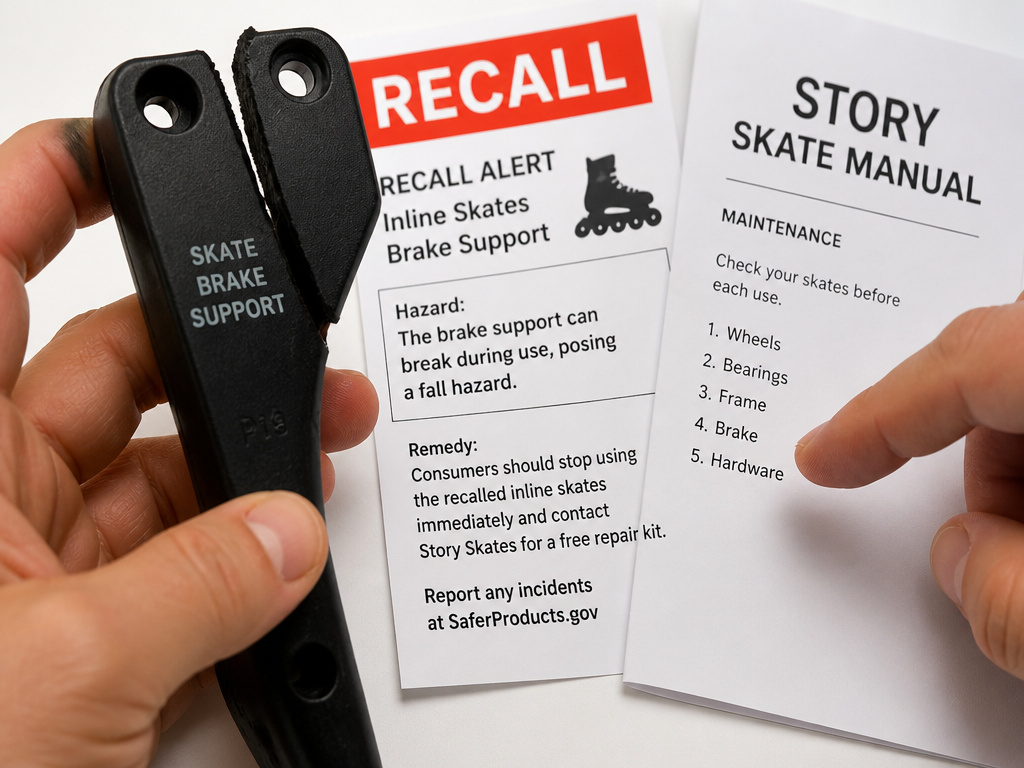
This is the messy middle ground that decides whether a skate is “fine” or “unsafe.” It’s where manufacturer silence meets real-world failure reports, and it’s the most important part of this review.
The Standards Gap: We’ve already covered the missing weight limit (EN 13843) and the missing lacing warning (Powerslide manual). These are silent disagreements. Story isn’t saying these things don’t matter; they’re just not saying anything at all. In the safety-critical world of sports equipment, silence is a data point, not neutrality. When you’re comparing top inline skates, the presence of these warnings in other brands’ literature is a feature.
The Recall Reality: To understand the stakes, look at the official CPSC recall for youth inline skates. In April 2023, Rollerblade recalled its Fury model because the brake support could fracture. They had 11 reports of it breaking off. No injuries were reported, but the fall hazard was clear enough for a government-mandated recall and free repair. This wasn’t a no-name brand; it was Rollerblade. It shows that even established players have failures, but they have systems (and regulatory pressure) to address them.
Contrast this with anecdotal owner reports on Reddit. One user said their Story skates were “fine to learn on” but they upgraded quickly for park skating, noting the stock wheels were “a bit crappy.” Another called the boot supportive with little break-in. These are positive, if limited, reports for casual use. But they are balanced by harsher critiques about confusing websites, a lack of specs, and components that feel cheap.
| Aspect | Community Concerns (Reddit) | Story’s Published Position (Spec Sheets) |
|---|---|---|
| Component Quality | “Stock wheels a bit crappy,” “frames look outdated.” | Lists wheel diameter/hardness (e.g., 90mm 82A), aluminum frame. |
| Durability | “Won’t last a year” with regular hockey use; upgrades needed quickly for park. | No stated durability claims or lifespan estimates. |
| Information Transparency | Website called a “confusing mishmash… With almost no specs.” | Product pages list basic specs (boot material, wheel size, bearing ABEC). |
| Safety Warnings | Implied by criticism of “unsafe dropshipped garbage” under $100. | Manuals lack specific warnings found in competitors’ guides (e.g., lacing, weight limits). |
The takeaway is that Story skates operate with less transparency than established brands, not that they are definitively dangerous. For a casual, low-speed skater on a budget, they might be a calculated risk that pays off. For any skating that involves impact, speed, or complex maneuvers, that calculation shifts. The government-mandated skate repair details from a 2010 Rollerblade recall show the level of accountability that exists in the mainstream market, a backstop that’s harder to find with direct-to-consumer imports.
Story Skates vs. The Competition: Who Are They For?
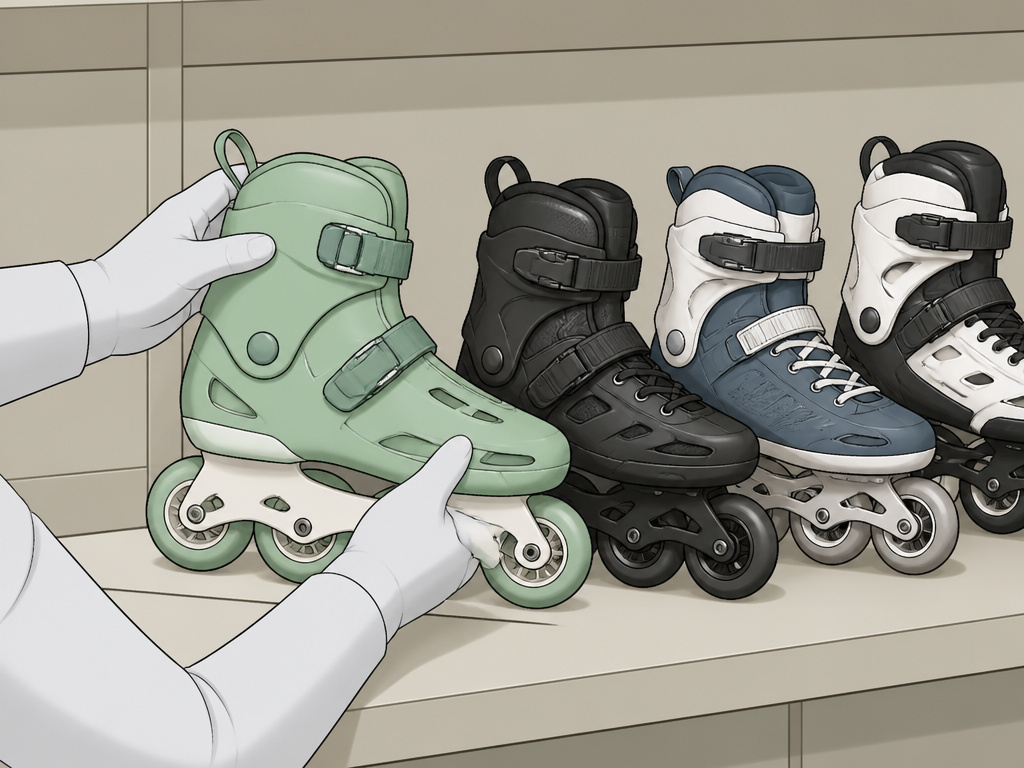
Consider the actual choice. You’re not just buying a skate; you’re buying into a category. Where do Story models fit alongside the brands that dominate skate shop shelves?
For casual fitness and beginner skating, the Story Urban enters a crowded field. It’s competing with entry-level soft-boot models from Rollerblade, K2, and even Decathlon’s own brands. Its advantage is often price and the adjustable fit. Its disadvantage is the lack of a known durability record and the missing safety documentation. For an adult looking to skate smooth bike paths a few times a month, it could suffice. I’d still point them first to a guide on the best inline skates for beginners to see what a few more dollars buys for peace of mind and resale value.
For urban and city skating, the requirements change. You need a boot that can handle vibrations from rough pavement, a secure fit for quick maneuvers, and reliable hardware. The Story Blade, with its low ankle support and focus on forward speed, isn’t designed for this. For that discipline, you’d look at dedicated urban inline skates from brands like FR Skates, Powerslide, or Seba, which offer better ankle support, shorter frames for agility, and a known reputation in the community.
For outdoor trail skating, the larger wheels of the Story Blade are theoretically a benefit. But trail skating also demands comfort over long distances, vibration damping, and reliable braking. The Blade’s hard boot and low ankle support make it a poor choice for mixed-use trails where control and braking are priorities. A proper outdoor inline skate from Rollerblade or K2 will have a softer boot, shock-absorbing features, and a brake system suited for public paths.
The verdict: Story skates occupy a niche of “budget-conscious, low-commitment” skating. They are a solution for the “I just want to try it” crowd or for parents whose kids’ feet change size every season. They are not a tool for progression into serious fitness, urban exploration, or aggressive skating. The community feedback and missing safety information create a risk that more established brands have already mitigated through decades of iteration, standardized documentation, and recall systems.
Frequently Asked Questions
Are Story inline skates any good?
It depends heavily on your use. For casual, infrequent skating on smooth surfaces, some owners report they are “fine to learn on.” For any serious fitness, speed, aggressive, or urban skating, the consensus from experienced communities and the lack of critical safety information make them a poor choice compared to established brands.
What is the best brand of inline skates?
There is no single “best” brand, as it depends on skating style. For aggressive skating, Razors and USD are leaders. For urban/freestyle skating, FR Skates and Powerslide are top-tier. For fitness and recreation, Rollerblade and K2 are the most popular and well-tested. The key is matching the brand’s specialty to your goals, which is why reading a detailed story inline skates review is crucial.
Do ABEC-9 bearings make Story skates fast?
Not really. ABEC ratings measure bearing manufacturing tolerance, not speed. As many skaters note, the deformation from a single landing outweighs the nanoscale differences between ABEC ratings. While Story product specs list ABEC-9 bearings as a feature, many experienced skaters argue ABEC ratings are irrelevant for skating purposes, viewing the ABEC-9 label as a marketing spec rather than a performance guarantee. Smoothness comes from bearing maintenance and quality grease, not the ABEC number alone.
Why do people warn against skates under $100?
The warning, often seen in skating forums, is based on component quality. At very low price points, manufacturers cut corners on materials (using brittle plastics for frames, poor-quality urethane in wheels, weak axle hardware) to hit a cost target. These components can fail unexpectedly under stress, leading to falls. Established brands have engineering standards and safety testing, which cost money to implement.
Can I use Story skates for inline hockey?
It’s not advisable. A Reddit user specifically advised against the Story Compact Mission for hockey, stating they are “on the extreme low end” and “won’t last you more than a year” with regular use. Hockey demands lateral support, quick acceleration, and durable components that can withstand intense stop-start play. Dedicated hockey skates from Bauer, CCM, or Mission are designed for this specific stress profile.
Before You Go
Here is the process. Reviewing gear is about matching a tool to a task with your eyes open to the trade-offs, not creating a simple thumbs-up or thumbs-down.
If your task is “coast on a smooth path a few times a summer and budget is the absolute priority,” a Story Urban might work. Size up, lace it carefully, and manage your expectations. But understand you are accepting the risk that comes with missing safety guidelines and an unproven durability record.
If your task is anything more demanding, learning to skate seriously, hitting a skate park, skating for fitness, or playing hockey, the calculation changes. The extra $50-$100 you’d spend on a used pair from a known brand, or a new entry-level model from Rollerblade or K2, buys into decades of engineering, a community of users who can vouch for the product, and a safety net of published standards and recall protocols. Your fundamentals are your foundation, and that foundation includes reliable equipment.
For adults looking to start, I’d point you to a review of the best inline skates for adults that have stood the test of time. For beginners, the best beginner inline skates are a safer investment. Don’t let a low price tag shortcut your research on what makes a skate safe and effective. The cost of a bad fall is always higher than the savings on a questionable pair.
