Subnado Underwater Scooter Review: Key Takeaways Explained
This post contains affiliate links. As an Amazon Associate, we earn from qualifying purchases.
The Waydoo Subnado underwater scooter is a compact, travel-friendly tool that delivers real thrust, but its real-world speed and battery life fall short of marketing claims. Independent tests show a single Subnado Lite moves an adult at 1.01–1.28 m/s (2.2–2.9 mph), not the claimed 1.4 m/s, and full-speed runtime in tests is 12 minutes. For snorkelers, freedivers, and casual scuba divers wanting hands-free propulsion in calm water, it’s a capable, portable option. For technical divers or anyone needing sustained high-speed tows, it’s underpowered.
That gap between the spec sheet and the pool test is the whole story. Manufacturers quote numbers under ideal, controlled conditions, a lightweight tester, still water, a fresh battery. Your dive has currents, gear, and a body that fights drag. The Subnado bridges that gap better than most toys, but not as completely as a dedicated DPV. This is the core of any Subnado underwater scooter review.
This Subnado underwater scooter review walks through the Subnado Lite, Standard, and Plus models using data from Waydoo’s technical guides and independent tests by DiveIN. We’ll cover the speed you actually get, the battery life you can plan for, the mounting system that changes how you use it, and the long-term reliability questions real owners are asking. By the end, you’ll know which model fits your dives and what its real limits are.
Key Takeaways
- Real speed is 20–40% slower than claimed. Independent pool tests with adult users clock the Subnado Lite at 1.01–1.28 m/s; the Subnado Plus hits 1.7–2.1 mph (0.76–0.94 m/s) in scuba gear.
- Full-speed battery life is 12 minutes, not 30. Marketing claims of “30 minutes at full speed” are based on ideal lab tests; real-world use at high speed drains the 98Wh (Lite/Standard) or 144Wh (Plus) battery in 11–12 minutes.
- The thumb controller is a known weak point. Multiple owners report failure due to pin oxidation despite following maintenance advice; the controller has a six-month warranty versus one year for the main unit.
- The Plus model’s larger battery complicates air travel. Its 144Wh capacity requires airline pre-approval and may be denied, while the Lite/Standard’s 98Wh battery is universally airline-approved for carry-on.
- This is a recreational tool, not a DPV replacement. It excels for snorkeling, pool play, and casual reef dives but lacks the sustained power and runtime for technical diving or fighting strong currents.
The Real-World Speed & Battery Numbers
Forget the brochure. The numbers that matter come from the pool, the ocean, and the users who log dives.
Waydoo’s technical guide claims the Subnado Lite moves at 1.4 m/s (3.1 mph) and the Subnado Plus at 1.7 m/s (3.8 mph), while independent tests report lower speeds. An independent test by DiveIN tells a different story. In a 25-meter pool with an adult user, the Subnado Lite reached a top speed of 1.28 m/s. Its top speed was 1.28 m/s.
Waydoo quotes the speed of a single Subnado at 1.35m/s and the double at 2m/s. In the 25-m pool, we achieved top speeds of 1.28m/s and 1.74m/s. Though not as fast as Waydoo’s data, considering the constraints of a small pool, we were still impressed by how fast we went. – DiveIN review
Why the difference? Drag. A human body isn’t a streamlined test dummy. Scuba gear adds enormous resistance. The test itself, starting from a standstill, not a flying start, cuts into the average. The thrust is there; the Subnado Lite produces 6.5 kg (14.3 lbs) of thrust, the Plus makes 9.3 kg (20.5 lbs). But thrust doesn’t directly equal speed when you’re fighting water physics.
Battery life follows the same pattern. Those figures assume you’re using the low-speed gear almost exclusively. At full speed (Super Gear), the story changes. DiveIN’s test recorded just 12 minutes at full speed for the Subnado Lite, followed by 13 minutes at a reduced pace.
| Metric | Subnado Lite (Claimed) | Subnado Lite (Tested) | Subnado Plus (Claimed) | Subnado Plus (Tested) |
|---|---|---|---|---|
| Full-Speed Runtime | Up to 56 min (mixed use) | 12 min (full) + 13 min (reduced) | Up to 60 min (mixed use) | 11 min 31 sec (full) |
| Battery Capacity | 98 Wh | 98 Wh | 144 Wh | 144 Wh |
| Thrust | 6.5 kg | 6.5 kg | 9.3 kg | 9.3 kg |
The takeaway is practical. Plan your dive around 10–12 minutes of high-speed travel if you need it. For longer excursions, use the low or medium gears. That’s the realistic use case: conservative pace, extended time.
Design, Portability, and the Mounting System
The Subnado’s biggest win isn’t raw power. It’s how you use it.
At 1.4 kg (3.1 lbs) for the Lite and Standard and 1.8 kg (4 lbs) for the Plus, the main unit is lighter than a laptop. The Subnado Standard’s profile is just 2.4 inches (6 cm) wide. You can slide it into a backpack’s water bottle pocket. This compactness is why it gets called a “travel pick” in reviews of the best underwater scooters.
The aluminum housing feels solid. The IP68 depth rating (60 meters) is legitimate for recreational scuba. The real genius is the mounting ecosystem. Unlike a handheld scooter you grip until your forearm cramps, the Subnado uses quick-release mounts for your arm, leg, scuba tank, or even a SUP board.
Where this goes sideways: Using only the handle grip. Your grip fatigues in 10 minutes, you drop speed, and the fun stops. The arm or tank mount lets you cruise hands-free, which changes the entire experience from a workout to exploration.
Mounting it to a tank bracket means you’re not holding anything. One reviewer with limited mobility reported using it for two weeks in the Keys on single tanks. For snorkeling, the arm mount allows you to hover over coral, point out fish, or use a camera without struggling to stay in place. That versatility puts it in a different category than basic tow toys and is a key feature when comparing sea scooter reviews.
Just remember the maintenance rule: rinse with freshwater after saltwater use and keep the USB-C cap sealed. The connector is a corrosion point.
Durability, Reliability, and Known Issues
Here’s where owner forums get honest. The hardware is robust, but the thumb controller is a common failure point.
One user stated, “the thumb controllers on all of them have failed,” citing oxidation on the connector pins.
Battery degradation is another long-term note. That’s expected with any lithium-ion battery, but it’s a cost of ownership to factor in since the battery is not user-replaceable.
The propeller guard is a legitimate safety feature. The double-click start prevents accidental activation. These are thoughtful touches that show the design is meant for real water, not just a lab.
For the main aluminum body, complaints are rare. Users who’ve traveled with it for years report no structural issues when basic care is followed. It’s a well-built piece of gear. The weak link is the electronic interface between you and the motor, the controller.
Subnado Lite vs. Standard vs. Plus: Which Model Fits Your Dives?
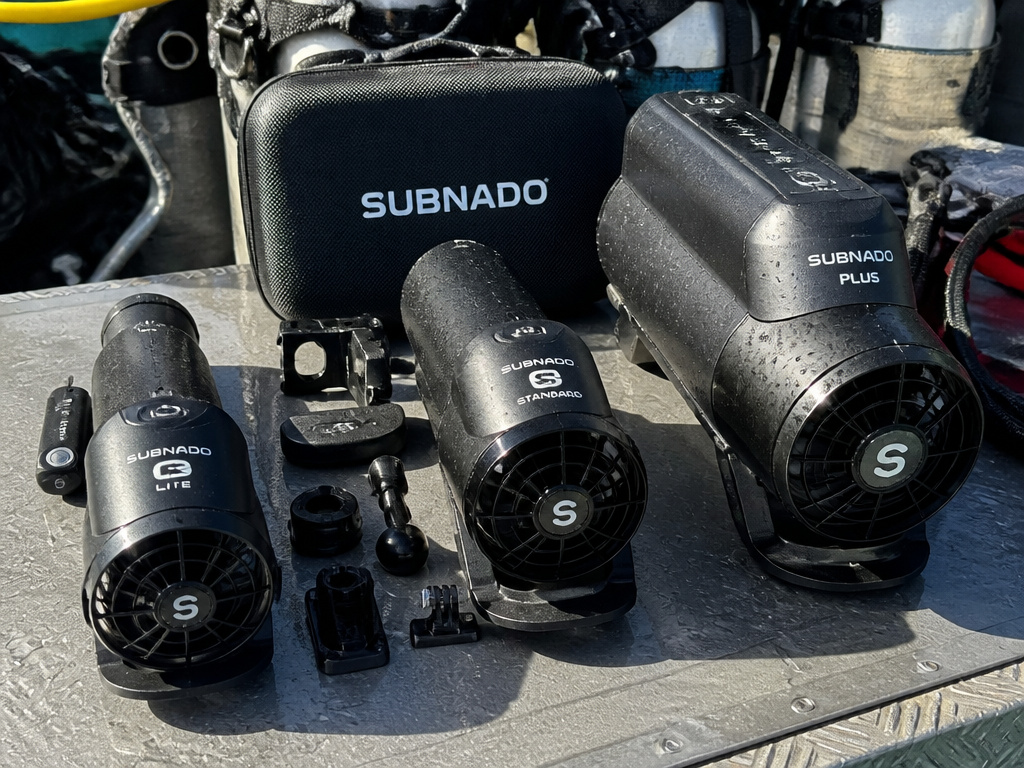
Waydoo sells three tiers. The differences are meaningful, not just marketing.
It’s for the traveler who values absolute minimal weight and size above all else. You get the core scooter, a basic controller, and a travel case. It’s enough for pool play and casual snorkeling.
Subnado Standard is the default for most buyers. Same 98Wh battery and 1.4 kg weight as the Lite, but it comes with a full accessory ecosystem. The value is better if you plan to use the mounts. This is the model most compared in broader dive scooter reviews.
It’s for heavier users (over 200 lbs), divers wanting better performance against mild currents, or anyone craving the longer runtime. The trade-off is travel hassle, the 144Wh battery requires airline pre-approval and may be denied.
Common mistake: Buying the Plus for travel without checking your airline’s battery policy. You might have to gate-check it or worse, leave it behind. The Lite/Standard’s 98Wh battery clears TSA carry-on rules without a second glance.
My take? If you fly to dive, get the Standard. The accessory kit is worth it, and the travel simplicity is priceless. If you drive to local lakes or ocean spots and want more grunt, the Plus is a legitimate step up. Skip the Lite unless your budget is locked and you’ll never use the mounts.
Performance Against Currents and Competitors
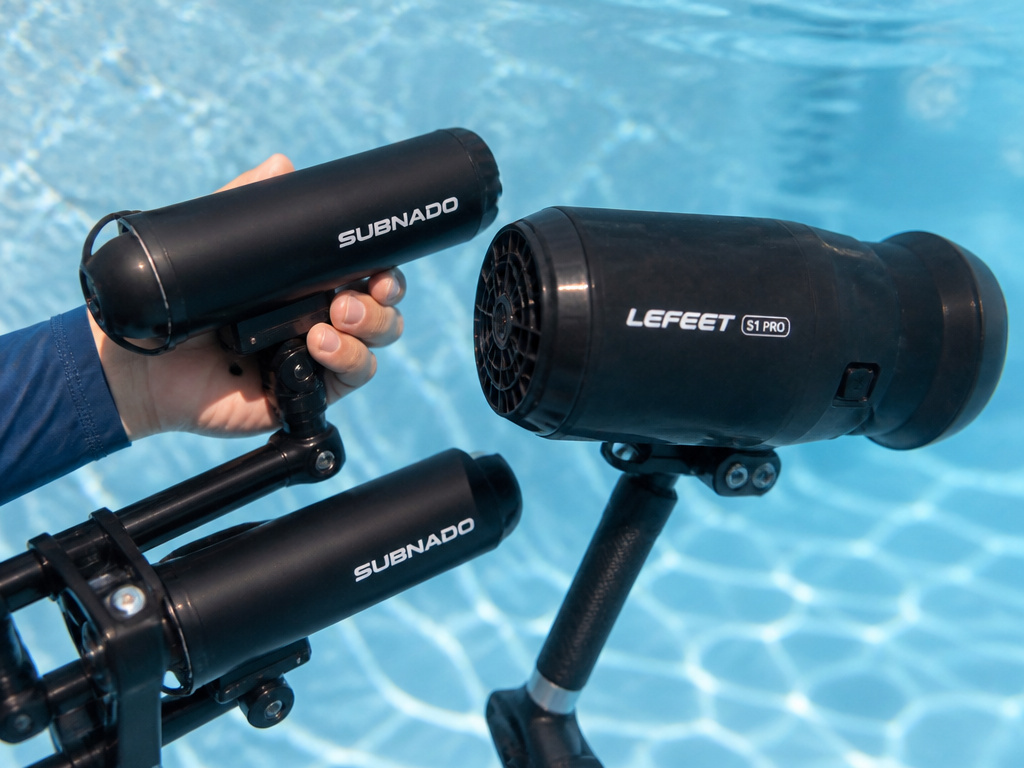
The Subnado lives in a crowded market. How does it stack up against names like LEFEET or Sublue?
It’s not the most powerful. The LEFEET S1 Pro, for example, weighs 2.5 kg (5.5 lbs) but offers more thrust and a replaceable battery. The Subnado’s advantage is its slim profile and mounting system. For fighting currents, neither is a true DPV. The Subnado is meant for cruising in calm to mild conditions. In a strong ocean current, it will struggle.
For snorkeling and reef exploration, the Subnado’s portability is king. A Sublue MixPro might be more powerful, but it’s also bulkier. The Subnado fits in a daypack. This makes it ideal for spontaneous use, boat trips where space is tight, or families with multiple gear bags. It’s a tool for water scooter fun, not serious underwater work.
Using two units together changes the game. Connected via the dual handle bracket, thrust roughly doubles. Speed increases significantly with two Plus models. This is a completely different experience, enough for an underwater cruise. The cost, of course, doubles too.
Who It’s For (And Who Should Look Elsewhere)
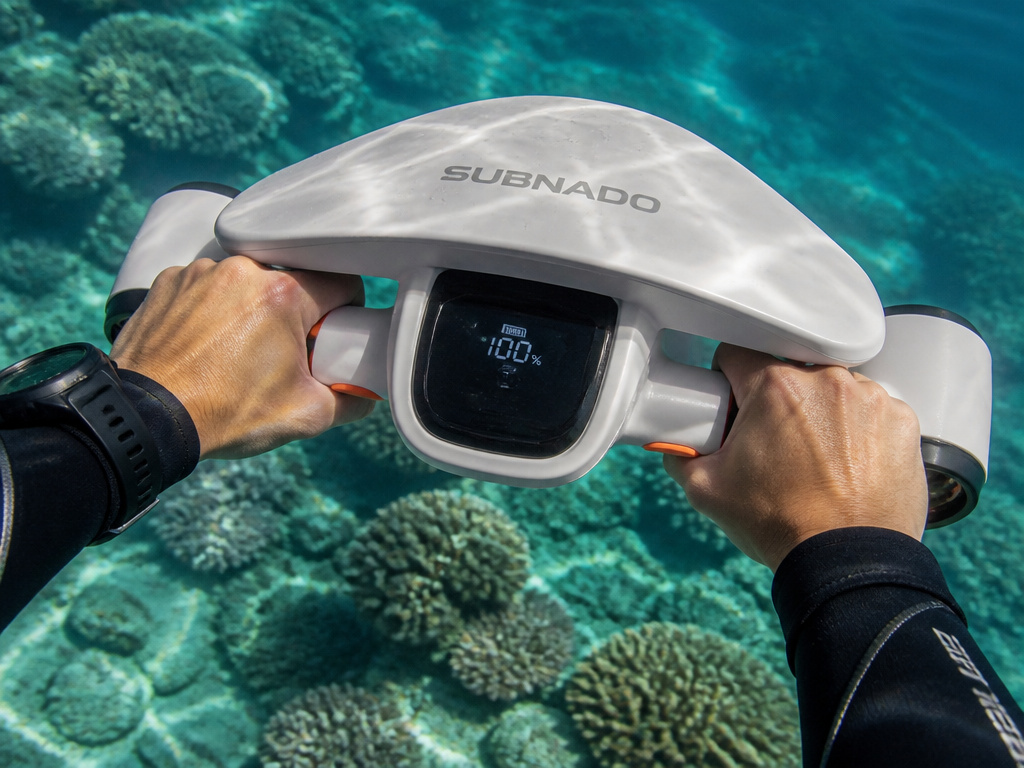
The Subnado has a clear ideal user. It’s for the snorkeler, freediver, or recreational scuba diver who wants to extend range and reduce fatigue in calm, clear water. It’s for families wanting to keep kids engaged on the reef. It’s for the traveler who values gear that doesn’t dominate a suitcase.
It is not for the technical diver, cave diver, or anyone needing a scooter for sustained, high-speed tows. It is not for use in strong currents. It is not for divers who expect lab-performance numbers in the open ocean.
If your needs lean toward the former, the Subnado is a compelling, well-engineered option. Its blend of portability and genuine thrust is unique. If your needs are the latter, you need to look at purpose-built DPVs, which are in a different price and weight class entirely. For those considering electric mobility in wet environments, the principles of reliability and waterproofing also apply to waterproof electric scooters designed for surface use.
How much does a Subnado cost?
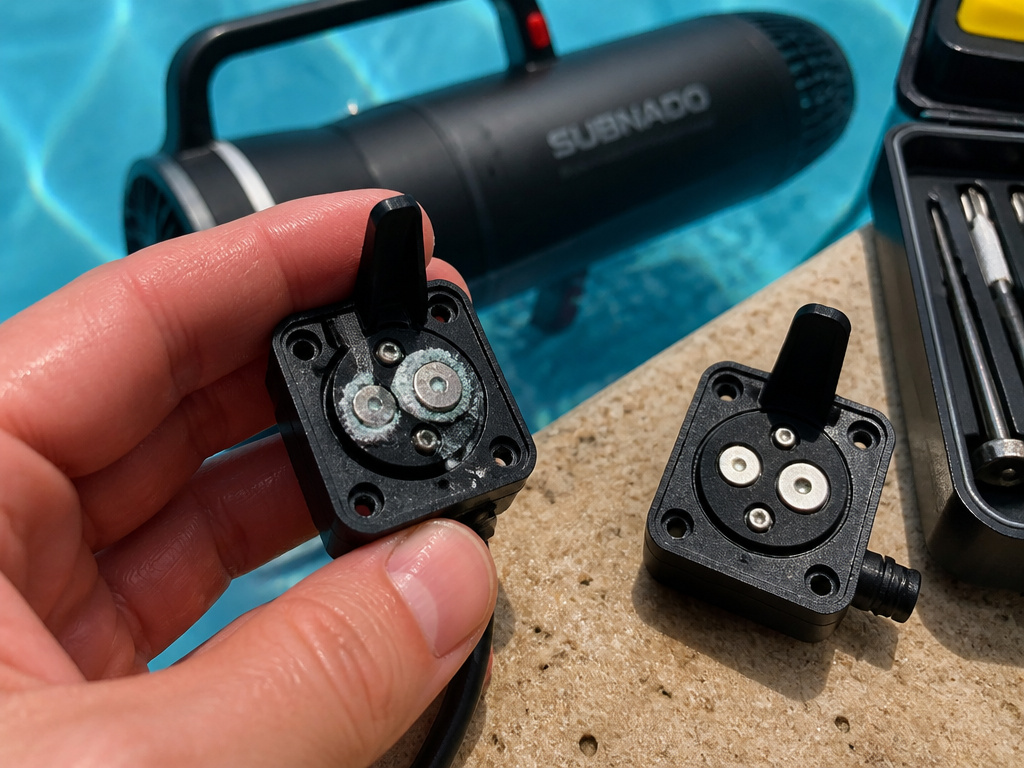
However, user reviews frequently mention thumb controller failures due to oxidation, suggesting potential extra costs or hassle despite following maintenance advice. When considering value in a Subnado underwater scooter review, weigh the official price against the practical run times and speeds reported in independent tests, which are often lower than the marketing claims, and factor in the possibility of needing controller replacements.
Frequently Asked Questions
Are underwater scooters worth it?
For snorkelers and recreational divers, yes, if you buy the right one. A scooter like the Subnado allows you to cover more reef with less effort, keep a group together, and free your hands for cameras. It turns swimming into gliding. For serious scuba or current diving, a recreational scooter is underpowered; you’d need a dedicated DPV.
How long does a Subnado last on one charge?
It depends entirely on speed setting. At full Super Gear speed, expect 11–12 minutes. At low speed, you can stretch a charge to 75 minutes or more. The official “up to 56 minutes” is a mixed-use estimate under ideal conditions.
Can you take a Subnado on a plane?
The Subnado Lite and Standard, with their 98Wh batteries, are universally approved for carry-on luggage. The Subnado Plus has a 144Wh battery, which requires airline pre-approval and may be denied. Always check your airline’s specific lithium battery policy before flying with the Plus.
What is the maximum depth of the Waydoo Subnado?
How does the Subnado compare to a LEFEET scooter?
The Subnado is generally lighter, slimmer, and focuses on portability with its mounting system. The LEFEET S1 Pro is heavier, often more powerful, and may offer features like a replaceable battery or wireless control. The Subnado is better for travel and casual use; the LEFEET might be better for frequent divers who don’t travel by air.
The Bottom Line
The Subnado isn’t a toy, but it’s not industrial gear either. It occupies a smart middle ground: enough power to be useful, packaged small enough to actually bring with you. The mounting system is what makes it work, without those arm and tank brackets, it’s just another thing to hold onto until your hand goes numb.
Ignore the top-line speed and runtime claims. Plan for 1.0–1.3 m/s and 12 minutes of boost. That’s enough for what most buyers actually do: explore a reef, play in a pool, or cruise a spring run.
If you’re eyeing the Plus for the extra thrust, just be sure you’re not planning to fly with it regularly. The 144Wh battery is a logistical hurdle. For everyone else, the Standard is the sweet spot. You get the full kit without the travel headaches.
Final call? It’s a capable, portable scooter for its intended use. It won’t replace a DPV, but it will fit in your backpack, and that’s the trade-off you’re deciding on.
