TGA Breeze S3 Mobility Scooter Review: Is It Worth It?
This post contains affiliate links. As an Amazon Associate, we earn from qualifying purchases.
The TGA Breeze S3 is a Class 3, 3-wheel outdoor mobility scooter with a 200kg capacity, an 8mph top speed, and fully active suspension. It trades the absolute stability of a 4-wheel base for a tighter turning circle and more legroom, making it best for pavements, pathways, and users who prioritise manoeuvrability over all-terrain confidence.
That trade-off is the whole decision. The Breeze S3 shares its motor, suspension, and core specs with the 4-wheel Breeze S4, which costs the same. Your choice depends on whether you value nimbleness in tight spaces or unshakeable confidence on cambers and slopes. This is the central question for any TGA Breeze S3 mobility scooter review.
What follows is a breakdown of the specs you can actually trust, the charging routine that contradicts common battery advice, and the one comparison. S3 vs S4 vs X, that answers the question you’re really asking.
Key Takeaways
- Sources disagree on the maximum weight capacity: TGA’s product page and retailer Mobility Masters state 200kg, while the INS05 v2 manual states 250kg.
- Charge the batteries every 4 to 6 weeks during storage and try to run them down by at least 50% before recharging, this specific TGA advice goes against the shallow-discharge rule for other sealed lead-acid batteries.
- The 8mph ‘Fast mode’ is for road use only; UK law limits pavement speed to 4mph, which requires manually selecting the ‘Normal’ mode.
- Choose the 3-wheel Breeze S3 for tight turning and legroom; choose the 4-wheel S4 if you ride on cambered pavements or want maximum stability.
- Never hose the scooter down and avoid damp storage; water forced into the electronics causes permanent damage.
TGA Breeze S3 Specifications: The Numbers You Can Actually Use
You will find two different numbers for the Breeze S3’s weight capacity and ground clearance. The official TGA product page states a max user weight of 200kg (31.5 stone) and a ground clearance of 14cm (5.5″). However, the INS05 v2 instruction manual lists a “Max Carrying Weight” of 250kg (551 lbs) and a ground clearance of 120mm (5″). This is a specification change, not a simple mistake.
Sources disagree on the maximum weight capacity: TGA’s product page and retailer Mobility Masters state 200kg, while the INS05 v2 manual states 250kg. Plan your load around that.
Other specs are consistent and form the scooter’s backbone:
- Motor & Controller: 24v motor with controller (specific wattage and amp-hour rating not provided in sources).
- Top Speed: 12.8kph / 8mph (Fast mode), 6.4kph / 4mph (Normal/Pavement mode).
- Turning Radius: 2200mm / 86.6″.
- Scooter Weight: 142kg (per retailer Wheel Freedom).
- Dimensions: Length 154cm, Width 68cm, Seat Width 46cm (per Wheel Freedom).
- Battery Options: Standard 2x12v 50ah (approx. 20-24 mile range), Long Range 2x12v 75ah (approx. 30-34 mile range).
- Warranty: 3 years on the product, 1 year on the batteries.
The part nobody mentions: The front tyre pressure spec also conflicts. The INS05 v2 manual says 40psi, while the INS05 v4 manual says 25psi. Without knowing your specific model year, starting at 30psi and adjusting for ride feel is the pragmatic move. An over-inflated tyre transmits every bump; an under-inflated one drags and wears quickly.
These numbers aren’t just a list. They tell you what the S3 is built for: carrying a full load at road-going speeds, with a footprint narrow enough for most pathways but substantial enough for its fully active suspension to work.
Performance and Handling: Where the 3-Wheel Design Wins and Loses
A 3-wheel scooter has a single front wheel. This isn’t a cost-cutting measure; it’s a deliberate engineering choice with clear consequences. The Breeze S3’s handling is defined by that lone front wheel.
The advantage is a tighter turning circle. With 2200mm to get fully around, the S3 can pivot in spaces that would force a 4-wheel model into a three-point turn. Your feet and legs also benefit. There’s no second front wheel or a wide axle intruding into the footwell, so taller riders get more room to stretch out. For navigating shop aisles, crowded pavements, or a narrow garden gate, this nimbleness is the S3’s greatest asset.
The trade-off is stability on uneven ground. A 4-wheel base is a rectangle, resistant to tipping. A 3-wheel base is a triangle, with a pivot point at that front wheel. On a steep side slope or a severely cambered pavement, you will feel the difference. The S3 is not tippy, but your confidence level on side slopes may be lower than on a 4-wheel model.
Where this goes sideways: Leaning heavily into a turn at higher speeds on an uneven surface. The S3’s suspension soaks up the bump, but the geometry can feel less planted than a 4-wheeler’s. The fix is simple: slow down for the turn. This isn’t a sports car; it’s a mobility aid. Smooth inputs beat aggressive ones every time.
The fully active suspension is the great equaliser. The fully active suspension means that a kerb or a patch of cobbles translates into a soft lurch, not a jarring crash. You hear the bump more than you feel it. This suspension, combined with large pneumatic tyres, is why the Breeze line has a reputation for comfort over rough ground. It works.
The 3-Wheel vs 4-Wheel Trade-Off (Stability vs Manoeuvrability)
Because the Breeze S3 and Breeze S4 share a price point (£5,195), motor, battery options, and suspension, your choice is distilled to a single question: three wheels or four? This is the most common crossroads in a TGA Breeze S3 mobility scooter review, and the Breeze models make it perfectly clear.
| Feature | Breeze S3 (3-Wheel) | Breeze S4 (4-Wheel) |
|---|---|---|
| Primary Advantage | Tighter turning, more legroom | Superior stability on slopes/cambers |
| Best For | Pavements, pathways, confined spaces | Roads, uneven pavements, user wanting max confidence |
| Compromise | Less stable on side slopes | Wider turning circle, less foot space |
| Ground Clearance | 14 cm | 15 cm |
| Scooter Weight | 142 kg | 148 kg |
The S3 is the urban specialist. It’s for the user whose route includes narrow passages, frequent 90-degree turns into shops, or a tight shed at home.
The S4 is the all-rounder. The wider, square footprint makes it feel planted on cambered roads, gravel driveways, or any situation where you might feel a lean. If you ever think “I wish this felt more solid,” the S4 is your answer.
The Breeze X (£5,595) is a separate conversation. It’s the S4 chassis fitted with larger all-terrain tyres and slightly more ground clearance. The Breeze X is the S4 chassis fitted with larger all-terrain tyres and is intended for rougher terrain.
Bottom line: If your world is paved and often confined, the S3’s agility pays off daily. If stability is your top priority, the S4 is the safer bet. There is no wrong choice, only a right one for your terrain.
Daily Use: Charging, Storage, and the Manual’s Non-Negotiables
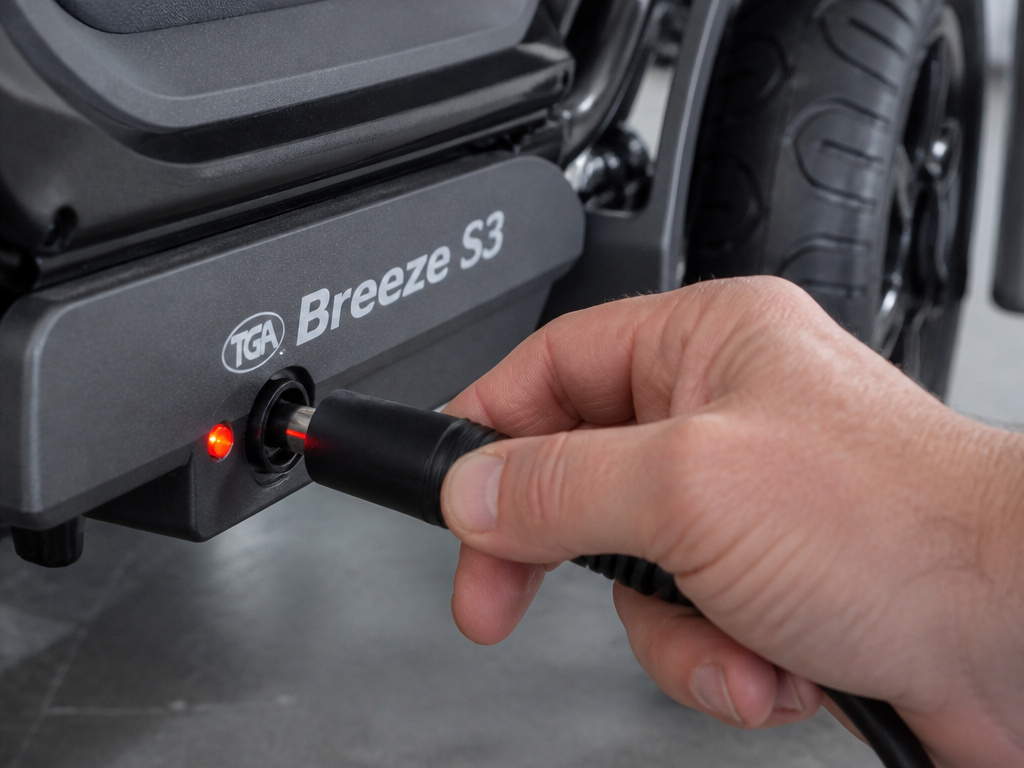
The owner’s manual contains advice that contradicts common knowledge. Following it is the difference between a battery that lasts a season and one that lasts years. This is the practical, daily-living detail most reviews gloss over.
TGA’s official charging guidance is specific and counterintuitive. The manual states: “For the best results and to prolong battery life, try to run the battery down by at least 50% before recharging.” It also advises a complete charge cycle each time and warns that excessive short-period charging will be detrimental.
This directly opposes the standard “shallow discharge” rule for sealed lead-acid batteries, which recommends frequent top-ups. TGA’s rationale is about battery conditioning. They further advise cycling the batteries (running them down and charging fully) for the first 10-15 charges to reach optimum efficiency, which takes approximately 12 cycles.
For the best results your batteries must be cycled for their first 10-15 charges. This means run them down as much as you safely can in use and then give them a full charge. They will not work at their best until this process has been carried out. . TGA Breeze S Operating Instructions
What does this mean for you? Don’t plug in after a quick trip to the shops. Plan your usage so the batteries get a discharge of at least 50% before a long, overnight charge. This isn’t always convenient, but it’s the manufacturer’s advice for battery longevity.
Storage is another critical point. The manual is explicit: “Avoid storing your Breeze in locations with extreme heat or cold. A cool dry location is ideal.” Before storing it for winter or a long period, charge the batteries fully and then recharge every 4 to 6 weeks. Letting them sit flat can damage the batteries.
Finally, never hose the scooter down. Water forced into the electronics can cause permanent damage. Wipe it clean with a damp cloth.
Safety Features and Emergency Procedures
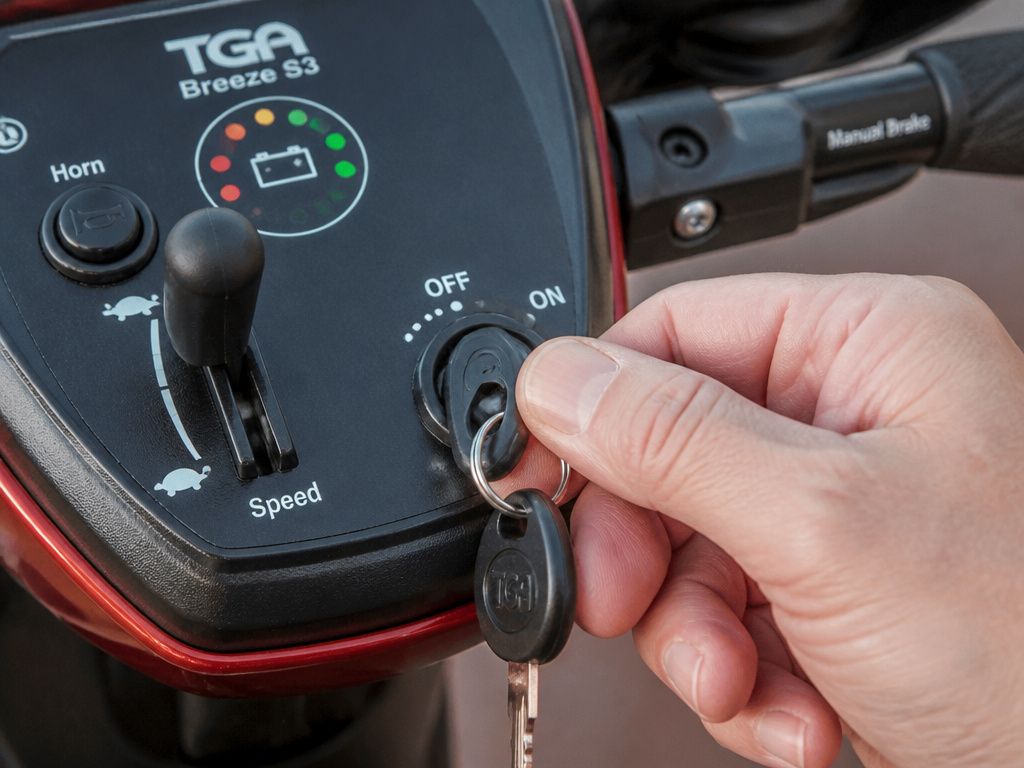
The Breeze S3 has multiple redundant systems, but you need to know how they work before you need them. This isn’t optional reading.
The primary safety system is the speed control lever. Letting go should engage the electronic brake and slow you to a stop. The manual states: “If you find for any reason your Breeze does not reduce speed when you let go of the speed control lever, use the manual brake on the handlebars.” That’s your first backup.
If the manual brake also fails, your final resort is the emergency stop: “switch your Breeze off with the ON/OFF key. The parking brake will activate immediately and stop your Breeze.” The scooter will stop when the key is turned off.
Common mistake: Using the key-off emergency stop regularly. The manual warns: “Care! … continual use of this procedure will damage the drive transmission and motor brake.” It’s for genuine emergencies only. The manual warns that continual use of the emergency stop will damage the drive transmission and motor brake.
Another critical note concerns Free Wheel mode, used for manually pushing the scooter. The manual uses bold text for a reason: “If the Breeze has been used in the Free Wheel mode … it is VERY IMPORTANT to re-engage the drive so the scooter brake is on before you get off.” Forget this step, and the scooter can roll away.
These procedures highlight a key point about mobility scooters for outdoors: robustness requires both tyres and suspension and failsafes that work when the primary system doesn’t. The S3 has them, but they require you to be the operator who knows the drill.
TGA Breeze S3 vs The Competition: Is It Worth It?
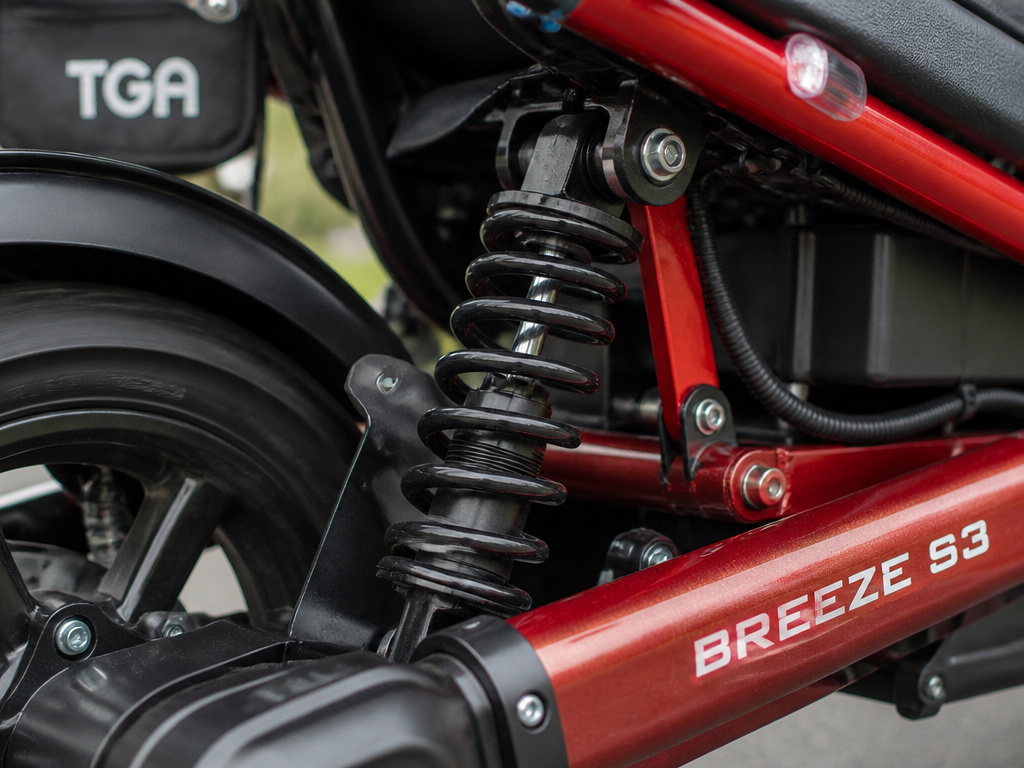
At over £5,000, the Breeze S3 sits at the premium end of the market. The justification is in the details that cheaper scooters may omit: the fully active suspension and the 3-year warranty. It’s a vehicle, not a toy.
When compared to lightweight mobility scooters or folding mobility scooters, the Breeze S3 is in a different category. Those are for portability and occasional use. The S3 is for daily, all-weather reliance over varied terrain. It is heavier than many lightweight or folding scooters.
Is it worth the investment? If your needs match its design, outdoor use, a user up to 200kg, a desire for comfort over bumps, and a preference for 3-wheel manoeuvrability, then a TGA Breeze S3 mobility scooter review would likely conclude yes, it justifies its cost.
If your world requires frequent car transport, a lighter model might be more practical. The Breeze S3 isn’t the answer to every mobility question, but for the question it is designed to answer, it is a compelling one.
What do real users say about the Breeze S3?
Users often comment on the dual speed modes, appreciating the ability to switch between a pavement-legal lower speed and a faster setting for roads. The manufacturer states a maximum user weight of 200kg. The fully active suspension system contributes to comfort over varied surfaces. The manual provides specific charging guidance that differs from common advice for sealed lead-acid batteries. The overall width is 68cm and length is 154cm, which affects storage and maneuverability.
Can you customize or upgrade the Breeze S3?
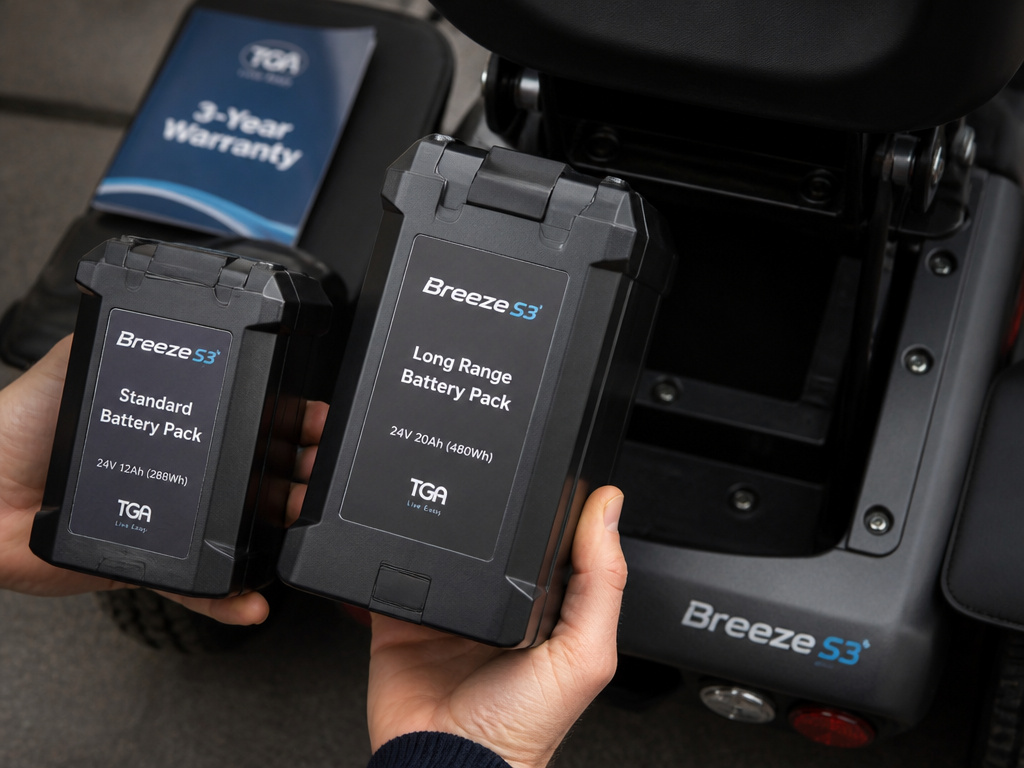
The Breeze S3 offers a key choice at purchase: the battery. You can select between a standard capacity pack for an approximate range of 20-24 miles or a long-range option for 30-34 miles. Beyond this, the scooter comes as a complete unit. The manufacturer’s warranty covers the product for three years and the batteries for one year, but modifications or using non-approved parts could void this protection. For those considering different wheel configurations or all-terrain capabilities, TGA offers the four-wheel S4 and the Breeze X models as distinct alternatives rather than upgrades for the S3. It’s wise to choose the model that fits your primary needs from the start.
How is the Breeze S3 delivered and set up?
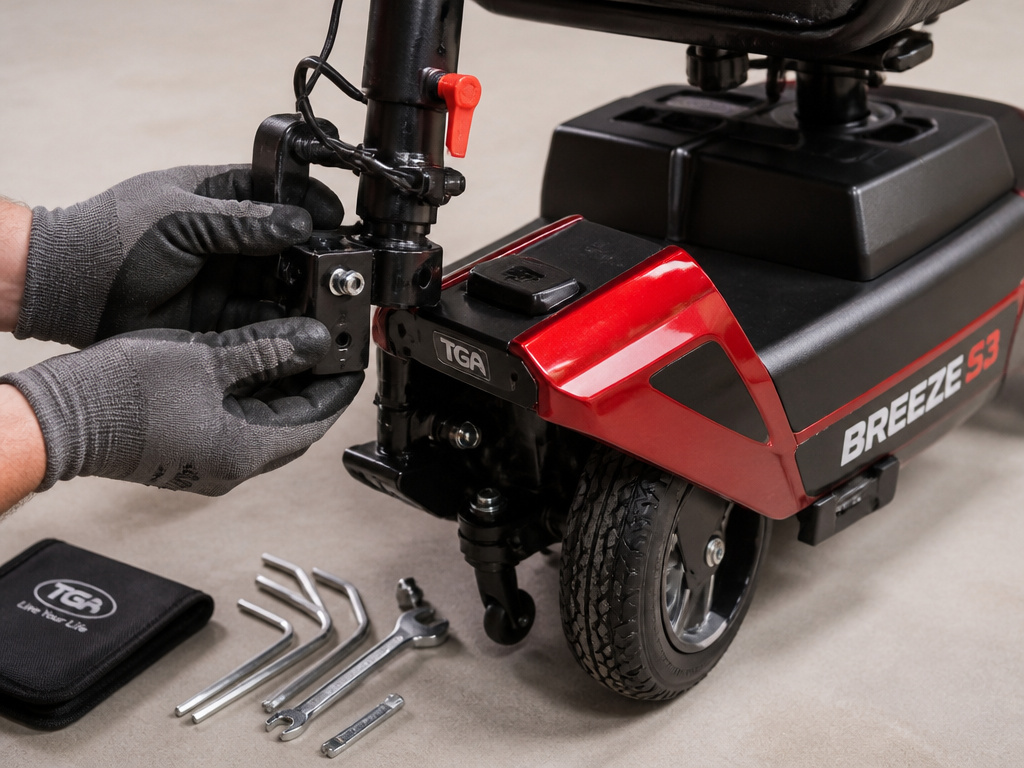
When you order a Breeze S3, it typically arrives partially assembled and requires final setup. Retailers often offer a delivery service that includes bringing the scooter into your home. The setup process involves attaching components like the tiller and seat, connecting the batteries, and performing an initial charge. It is strongly recommended to have this done by the delivery team or a qualified dealer. They will ensure everything is secure, the brakes are functioning correctly, and that you understand the controls, including how to switch between the pavement and road speed modes. This service ensures your scooter is ready and safe for its first use.
Frequently Asked Questions
Are TGA mobility scooters any good?
TGA scooters, particularly the Breeze line, have a strong reputation for build quality, comfort, and aftercare support. They use robust components like metal chassis, proper suspension, and powerful motors, which justifies their higher price compared to budget brands. The 3-year warranty is also a market-leading sign of confidence.
What is the most reliable mobility scooter brand?
Reliability is difficult to pin to a single brand, as it depends on model and usage. However, brands like TGA, Pride, and Drive Medical are consistently noted for durable construction and good dealer networks. Reliability often correlates with buying from a dealer who offers the 3-year product and 1-year battery warranty.
Where are TGA mobility scooters made?
TGA Mobility Ltd is a British company, and their scooters are designed and engineered in the UK. The actual manufacturing may involve global supply chains, which is standard for the industry. The company’s headquarters and main operations are in Sudbury, Suffolk.
Is the Breeze S3 good for seniors?
The Breeze S3 can be an excellent choice for active seniors who are comfortable handling a larger, more powerful scooter. Its stability, comfort, and ease of use are big positives. However, its size and weight (142kg) make it less suitable if the senior needs to transport it in a car frequently. For those who need a more portable solution, a scooter for seniors that is lighter or folds would be a better first look.
How far can the Breeze S3 go on one charge?
The range depends on the battery option. The standard 50ah batteries offer an approximate range of 20-24 miles. The optional long-range 75ah batteries extend that to approximately 30-34 miles. Terrain, user weight, and use of lights will affect the real-world distance.
The Bottom Line
The TGA Breeze S3 review boils down to a single, physical trade-off you must feel comfortable with. Do you want the tighter turn and extra legroom of a 3-wheel scooter, or the planted stability of a 4-wheel base? Since the S3 and S4 cost the same, that’s your real choice.
Beyond that, the S3 is a premium product built for daily outdoor use. Its specs are strong, its suspension is genuinely comfortable, and its manual contains specific, sometimes non-standard, advice you should follow to the letter on charging and storage. It’s a significant investment, but for the user whose needs align with its design, it’s an investment in reliable, comfortable mobility.
If your routes are paved but often narrow, and you value agility, the S3 is the clear pick. If you look at a cambered road and think “that looks sketchy,” default to the 4-wheel S4. Either way, you’re getting a capable machine backed by a strong warranty. The rest is about how you move through your world.
