Vive Scooters Review: Specs, Comfort, and Performance
This post contains affiliate links. As an Amazon Associate, we earn from qualifying purchases.
Vive mobility scooters are a range of Class I medical devices with models like the 4-wheel Series A, the 3-wheel MOB1025, and an automatic folding version, differentiated by weight capacity (up to 300 lbs), range (up to 15.5 miles), and portability features for different user needs.
The difference between a 3-wheel and a 4-wheel Vive isn’t just about looks. It’s a stability-versus-maneuverability trade-off that decides where you can safely ride. The 3-wheel’s tighter turn radius gets you through a cluttered living room, but the 4-wheel’s wider stance keeps you planted on a sloped driveway. For a detailed comparison, see the Vive scooters review.
What follows is a breakdown of the main models using manufacturer specs, a look at where the manuals disagree on care, and the practical realities of comfort and transport that reviews often gloss over.
Key Takeaways
- Match the wheel count to your primary terrain: 3-wheel models (like the MOB1025) turn tighter for indoor use, while 4-wheel models (like the Series A) offer more stability for outdoor paths.
- Verify the weight capacity first: The top-end Vive Series A supports 300 lbs, but other models have lower limits, exceeding them voids the warranty and risks component failure.
- Lead-acid batteries need scheduled charging: For long-term storage, both the Series A and CareCo Vive 4 manuals advise a full charge every two weeks to prevent permanent capacity loss.
- Water resistance is not waterproof: The CareCo Vive 4 has an IPX5 rating for light rain, but the Series A manual explicitly warns against hosing it down or driving through standing water.
- Portability claims require verification: The “lightweight” 3-wheel MOB1025 still has a 29 lb rear base; if you can’t lift that into your trunk, the scooter isn’t portable for you.
Vive Scooter Models and Key Specs Compared
You’ll see four main models in reviews: the 4-wheel Series A (MOB1053), the 4-wheel CareCo Vive 4, the 3-wheel MOB1025, and the Automatic Folding Scooter. They share a brand name but are built for different jobs.
The Series A is the workhorse. Its 300 lb weight capacity and 15.5-mile range target users who need to cover ground outdoors. The CareCo Vive 4 is its UK-market cousin with different specs. The 3-wheel MOB1025 trades some stability for a 2.6-foot turning radius, making it a candidate for navigating tight indoor spaces. The Automatic Folding model is the travel specialist, with a lithium battery and a one-touch fold, but it has the widest turning circle of the bunch.
The technical snapshot: The Vive Series A (MOB1053) uses a 24V/250W transaxle motor powered by a 24V/20Ah lead-acid battery, providing a maximum travel distance of 15.5 miles per charge at a top speed of ≤4.9 mph. It has a static stability angle ≥9° and a minimum turning radius ≤4.9 feet.
| Model | Wheels | Key Spec | Best For | Weight to Lift |
|---|---|---|---|---|
| Series A (MOB1053) | 4 | 300 lb capacity, 15.5 mi range | Outdoor errands, all-day use | 114 lbs (total) |
| CareCo Vive 4 | 4 | 136 kg capacity, IPX5 water resistance | Damp climates, lighter users | Varies by assembly |
| 3-Wheel (MOB1025) | 3 | 2.6 ft turning radius | Tight spaces, indoor mobility | 29 lbs (heaviest piece) |
| Automatic Folding | 4 | One-touch fold, lithium battery | Car travel, multi-modal trips | 25 kg (total) |
The specs tell you what’s possible, but your daily routine tells you what’s practical. A 15.5-mile range sounds generous until you factor in hills, frequent stops, and a user weight near the limit, each one chips away at that theoretical maximum.
Comfort and Seating: What the Numbers Mean
Seat width and depth are printed on spec sheets, but they don’t tell you about thigh support or lower back pressure after an hour. The Vive Series A (MOB1053) seat is 16.5 inches wide and 15.7 inches deep. For a larger rider, that depth is the difference between sitting squarely on the seat and perching on the front edge, which strains posture.
Armrest height matters more than people think. The Vive Series A’s armrests sit 8.2 inches above the seat. If that’s too low for your arm length, you’ll hunch your shoulders to rest on them, turning a comfort feature into a source of neck tension. The flip-up design helps for side transfers, but the pivot mechanism is a common wear point mentioned in long-term user reports.
The seat height from the ground, 22.8 inches for the Vive Series A, is a critical number for entry and exit. Too low, and standing up requires a major leg push. Too high, and your feet don’t plant firmly when stopped. There’s no perfect height for everyone, but an adjustable column helps. The 3-wheel model’s lower seat can be a barrier for those with limited knee flexion.
Where this goes sideways: Assuming a “padded seat” means all-day comfort. The padding density and foam type aren’t specified. Thin padding over a hard plastic base becomes uncomfortable within 30 minutes, regardless of the seat’s dimensions.
Battery Life, Charging, and Real-World Performance
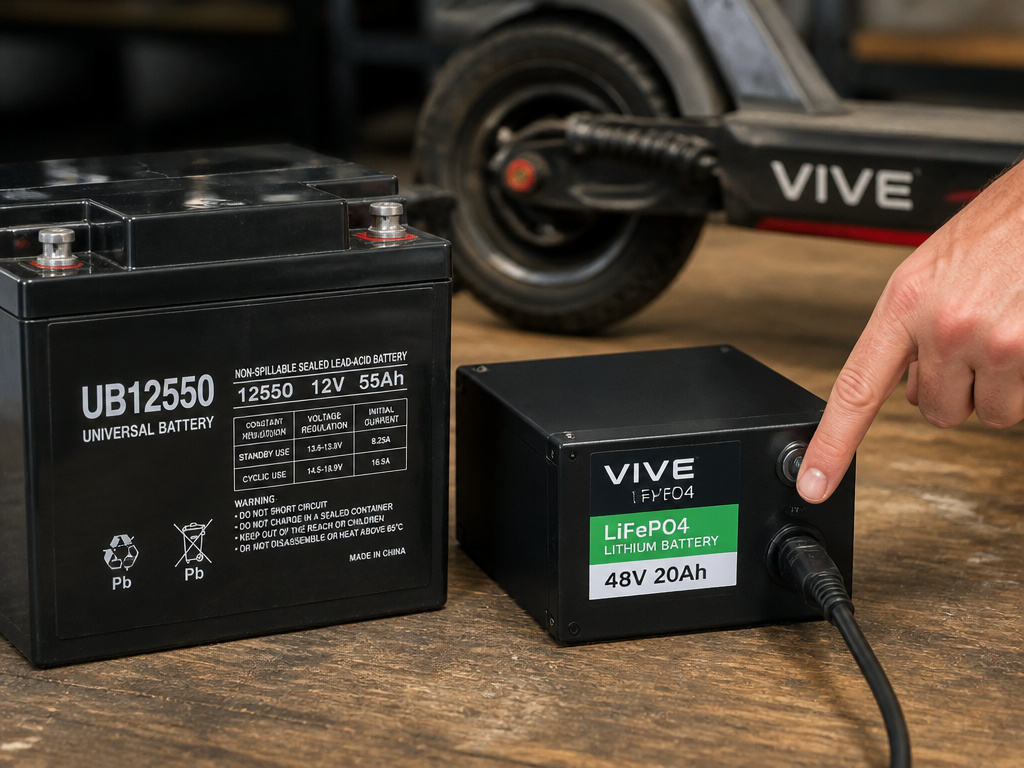
The battery is the scooter’s heart, and its chemistry dictates your routine. The Series A and most 3-wheel models use lead-acid batteries. They’re affordable and reliable but heavy and sensitive to discharge cycles. The Automatic Folding Scooter uses a lithium battery, lighter and more energy-dense, but also more expensive to replace.
Manufacturer range claims are best-case scenarios. The 15.5-mile maximum for the Series A assumes a light rider on a flat, smooth surface at a steady, moderate speed. Add a 250 lb rider, a few gentle hills, and stop-and-go pavement, and you might see 8–10 miles. That’s not a defect; it’s physics. Plan your trips around the lower number.
Charging protocols get confusing because the manuals don’t agree. The Vive MOB1053 manual states new lead-acid batteries reach peak performance after four or five charging cycles. The CareCo Vive 4 manual doesn’t mention this conditioning period. Who’s right? Both, probably. The chemistry is the same, but the manufacturer’s testing might differ. Following the stricter advice (the 4-5 cycle rule) costs you nothing but a bit of patience.
For storage, the advice aligns: charge every two weeks. Lead-acid batteries self-discharge, and letting them sit empty sulfates the plates, permanently reducing capacity. The MOB1053 manual specifies a full charge every two weeks. The CareCo manual just says “charge.” Always err on the side of a full charge.
Portability and Transport: Beyond the Marketing
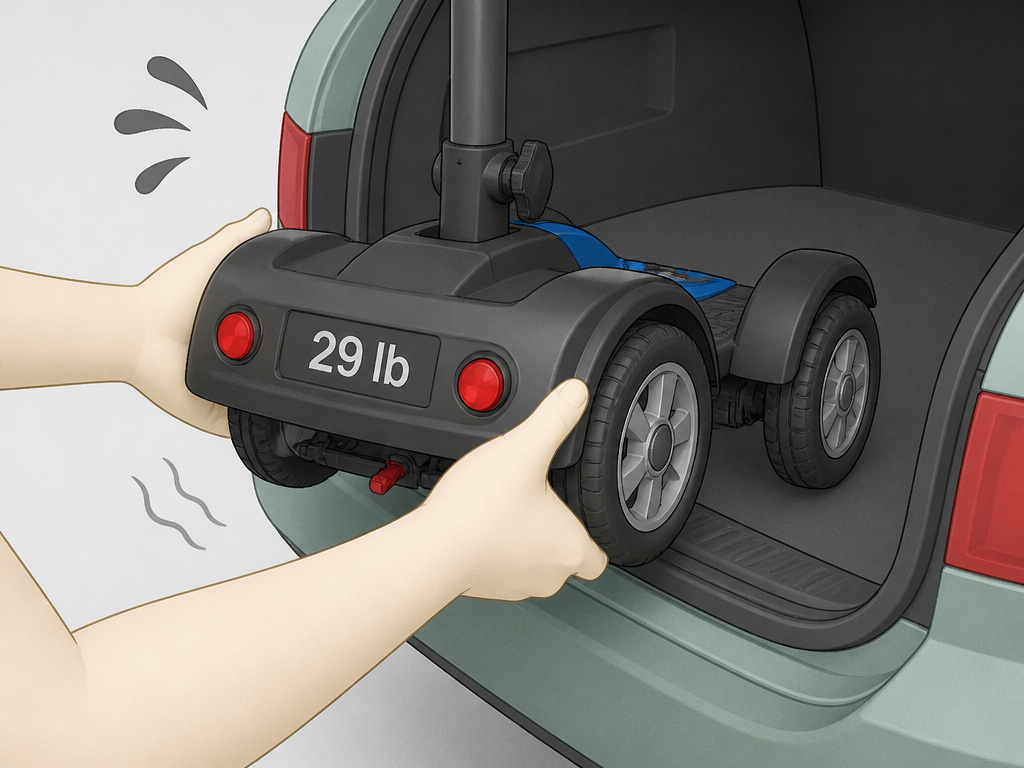
“Easy to disassemble” is a relative term. For the 3-wheel MOB1025, the heaviest piece is the 29 lb rear base. Can you lift that from the ground into your car trunk? If not, the scooter isn’t portable for you, regardless of the marketing. The Series A, at 114 lbs net weight, typically requires two people to load unless you have a ramp.
The automatic folding model solves the lift problem but introduces a new one: the 6.6-foot turning radius. It’s the least maneuverable in tight spaces, so while it’s brilliant for stowing in a car, it’s cumbersome in a crowded pharmacy aisle.
Beyond a typical vive scooters review, YouTube videos show the disassembly process, but they rarely time it. From unboxing to first ride, budget time for initial assembly, not the “10-minute setup” some listings promise. The reverse process, breaking it down for transport, gets faster with practice.
Common mistake: Buying a scooter for travel based on “lightweight” claims without checking the weight of the heaviest individual piece. Your lifting capacity is limited by that single piece, not the scooter’s total weight.
Safety Features and Intended Use
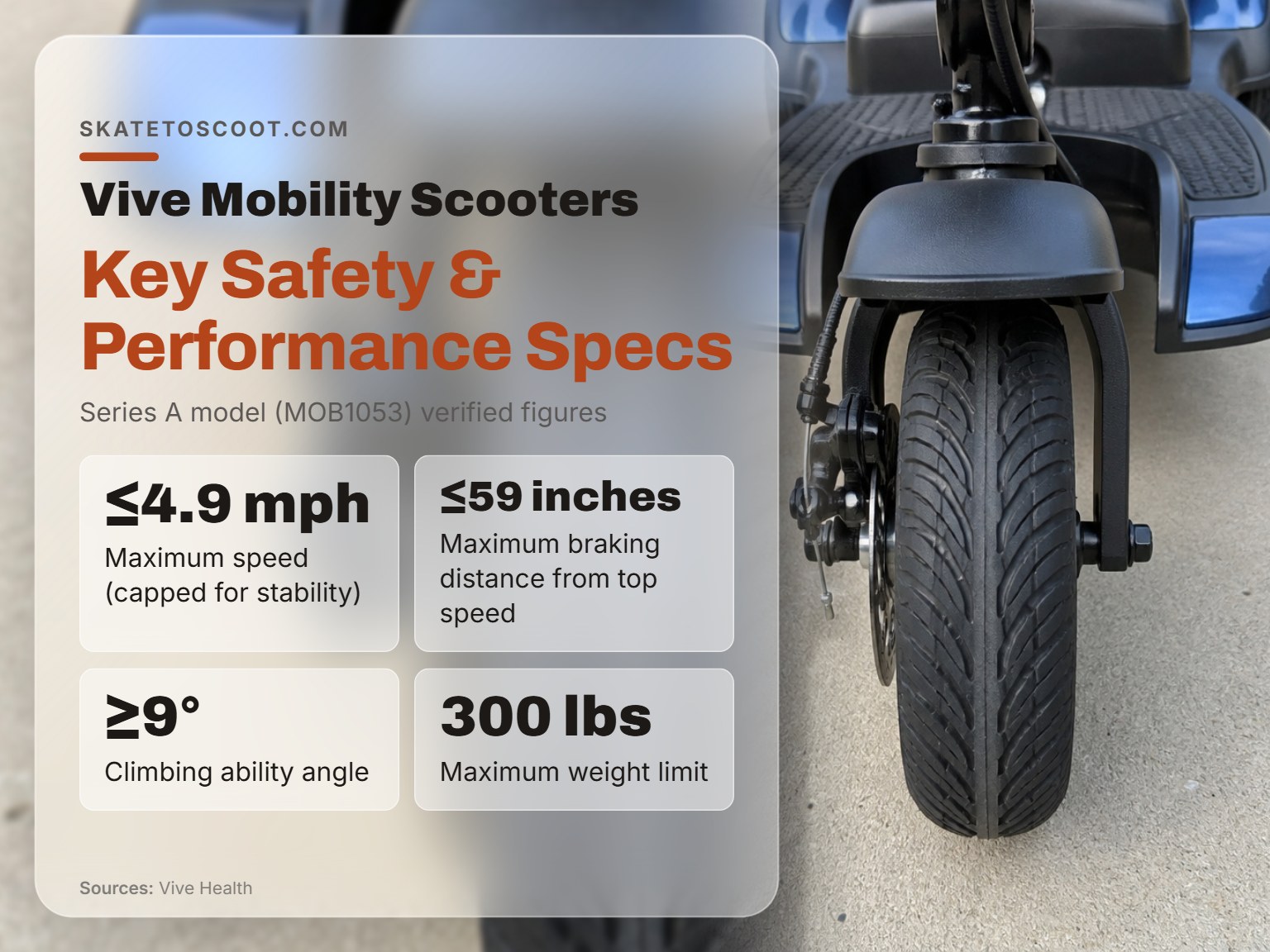
These are Class I medical devices, not toys. The maximum speed is capped at 4.9 mph (or 4 mph for the Class A CareCo Vive 4) for a reason. It’s a safety limit for stability. Aftermarket modifications to bypass this are a terrible idea, the braking distance, stability angles, and motor torque are calibrated for that speed.
Speaking of braking, the Series A’s maximum braking distance is ≤59 inches from its top speed. That’s on a dry, level surface. On a damp decline, it will be longer. This is why you maintain a safe following distance from pedestrians and objects.
The lights and horn are basic but essential. The LED headlight is for being seen, not for illuminating a dark path. It’s a safety light. The horn is a polite beep, not a car horn. It’s for alerting someone who’s stepped into your path, not for clearing a crowded sidewalk.
Intended use is clearly split. The 4-wheel Series A model, with its ≥9° climbing ability (per the Series A sheet), can handle gentle driveway slopes and low curbs. Neither is an all-terrain vehicle. Grass, gravel, and deep sand will stop them, not maybe, will.
Where the Manuals Disagree: Climbing and Water
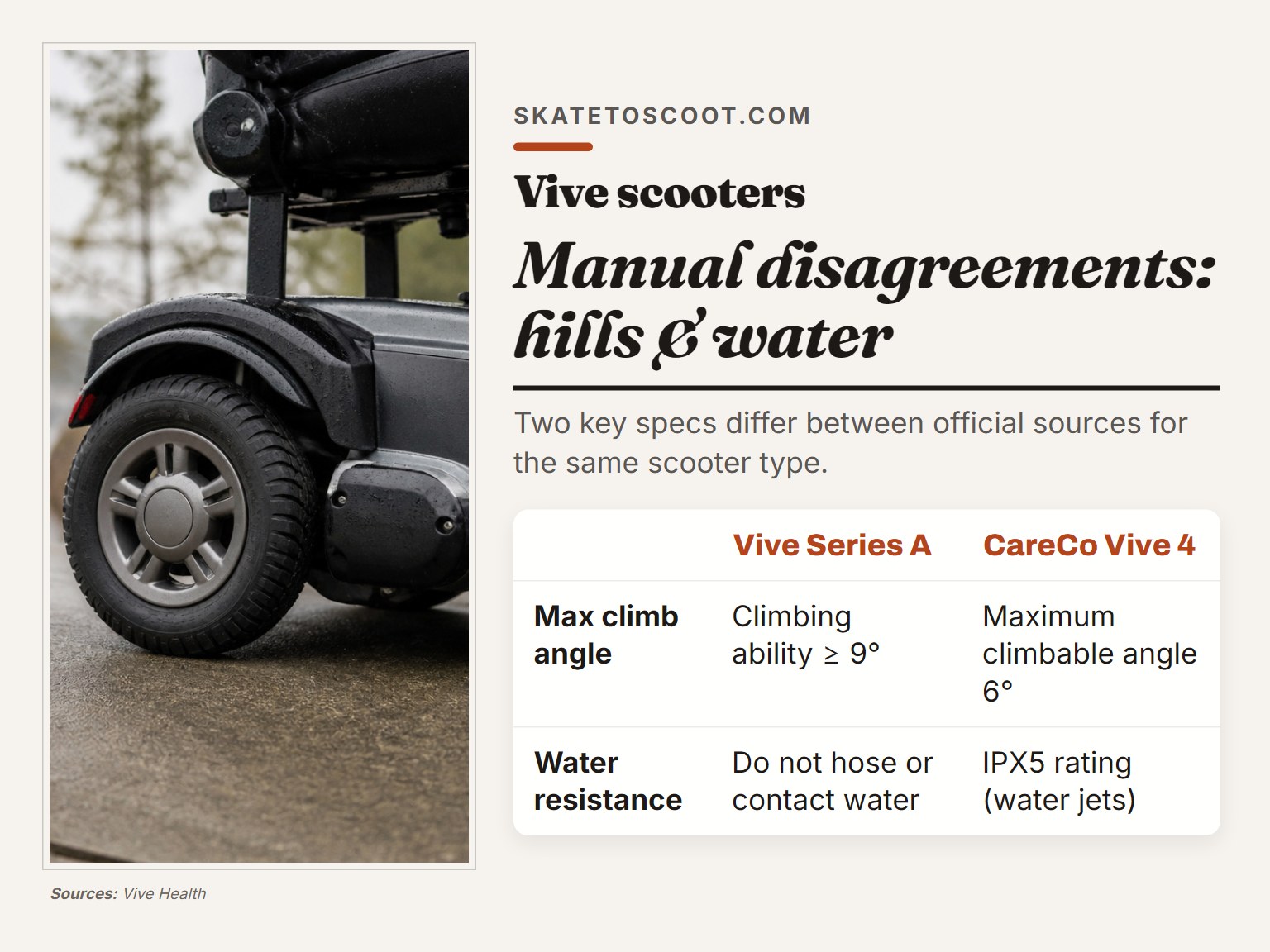
Two key areas show conflicting guidance straight from the source material.
Maximum Climbable Angle: The Vive Series A product sheet claims ≥9°. The CareCo Vive 4 manual states 6°. This isn’t a mistake; it’s likely a difference in testing methodology or component specs (motor torque, gear ratio). The safe takeaway is to assume the lower number, 6°, as your working limit. A 6° slope is noticeable but gentle. A 9° slope is a significant hill. If your daily route includes a known incline, check its grade.
Water Exposure: The MOB1053 manual warns not to hose off the scooter or bring it into direct contact with standing/flowing water. The CareCo Vive 4 boasts an IPX5 moisture resistance rating (protected against low-pressure water jets). So, is it safe in the rain? The IPX5 rating on the Vive 4 suggests light rain is okay. The Series A warning suggests you should avoid it. The resolution is practical: no model is submersible or shower-proof. If you get caught in a drizzle, dry the scooter off afterward. Never drive through puddles that submerge the footboard or motor casing.
| Issue | Vive Series A (MOB1053) Manual | CareCo Vive 4 Manual | Practical Resolution |
|---|---|---|---|
| Hill Climbing | Climbing ability ≥ 9° | Maximum climbable angle 6° | Plan routes for a 6° maximum slope. |
| Water & Rain | Do not hose off or contact flowing water. | IPX5 rating (low-pressure water jets). | Avoid active hosing. Wipe dry after rain. |
These disagreements aren’t flaws. They’re reminders to read the manual for your specific model. The generic “Vive scooter” advice online doesn’t cut it.
Long-Term Ownership: Reliability and Parts
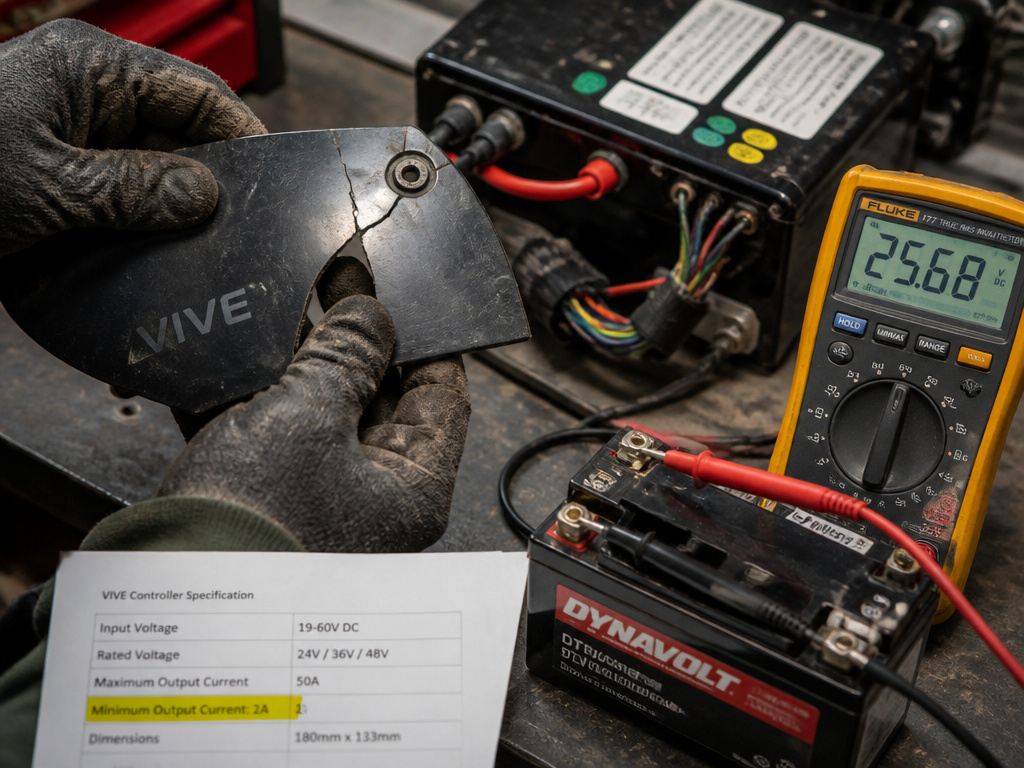
Forum threads and an extended vive scooters review point to a few common themes. The plastic shrouds and trim pieces can crack if the scooter is frequently disassembled without care. The swivel-seat locking mechanism and flip-up armrest hinges are wear points that may develop play over a year of daily use.
Lead-acid batteries have a finite lifespan with proper care. Replacement is straightforward but requires sourcing the correct 24V battery pack. The lithium battery in the folding model is more expensive to replace but should last longer.
The part nobody mentions: The controller’s minimum output current is 2A (per the Series A sheet). This low-draw state is for when the scooter is on but not moving. If you leave the key in the “on” position for days, it will still slowly drain the battery, even parked.
There’s no sugarcoating it: a mobility scooter is a complex electromechanical device. Things will eventually need service. Vive Health provides a one-year limited warranty. Understanding that basic maintenance, tightening fasteners, keeping connectors clean, scheduled charging, falls on you is key to long-term satisfaction.
How much does a Vive scooter cost?
Vive scooters are positioned as budget-friendly options in the mobility market. Their value comes from offering core features like a solid weight capacity and a range of up to 15.5 miles per charge at a lower price point than many premium brands. You’re typically getting a functional scooter built for everyday errands and smooth surfaces. The trade-off often involves heavier construction using lead-acid batteries and more basic components. For someone who needs reliable, simple transportation without advanced extras, the price can represent good value. Just be sure to match the scooter’s specific capabilities, like its travel distance and clearance, to your daily needs to ensure it’s a worthwhile investment.
How does Vive compare to other scooter brands?
Compared to other brands, Vive scooters generally offer a more affordable entry point. You’ll find they prioritize function over luxury, often featuring more utilitarian seats and controls. Their performance specs, like maximum speed and travel range, are competitive for the price but may be outmatched by higher-end models from brands known for longer-range lithium batteries or more powerful motors. Where Vive models can differ significantly from each other is in their intended use; their 3-wheel option has a tighter turning radius for indoors, while their 4-wheel models prioritize stability. Always compare the specific weight limit, turning radius, and ground clearance against models from other brands to see which best fits your environment.
Frequently Asked Questions
Is Vive a good scooter brand?
Vive Health is a known manufacturer in the mobility aid space. Their scooters are competitively priced and cover a range of common needs, from indoor maneuverability to extended outdoor range. They are considered a solid mid-tier option, but as with any brand, model choice and proper maintenance matter more than the logo.
Who makes Vive scooters?
Vive mobility scooters are manufactured by Vive Health. The company’s headquarters are listed at 8955 Fontana Del Sol Way, Naples, FL, USA. Some models, like the CareCo Vive 4, are distributed under partnership with specific retailers in other markets.
What is the most reliable scooter brand?
Reliability is tied to model, not just brand. A scooter’s reliability depends heavily on matching it to the user’s weight and environment, and following the maintenance schedule. Brands like Pride, Golden Technologies, and Drive Medical also have strong reputations, but all produce both entry-level and premium models with corresponding durability.
How far can a Vive scooter go on one charge?
It depends entirely on the model and conditions. The Vive Series A has a maximum travel distance of 15.5 miles per charge under ideal conditions. In real-world use with normal stops, starts, and varied terrain, expect 60-70% of the maximum claimed range.
Can Vive scooters be used indoors?
Yes, particularly the 3-wheel models. The Vive 3-Wheel (MOB1025) has a minimum turning radius of 2.6 feet, which is designed for navigating through doorways and around furniture. The 4-wheel models can be used indoors but require more space to turn comfortably.
The Bottom Line
Choosing a Vive scooter comes down to a honest assessment of three things: your daily terrain, your physical ability to handle its weight, and your willingness to stick to a battery care schedule.
If your world is mostly flat pavement and you need to run errands, the Series A’s range and capacity are the logical target. If you’re navigating a cramped apartment and need to get to the car, the 3-wheel’s tight turn wins. And if storage charging every two weeks sounds like a chore you’ll forget, a scooter with a lead-acid battery will disappoint you within a year.
The specs are clear, the manuals are detailed, and the real-world performance is predictable if you read them. Your job is to match the numbers to your life, not your life to the marketing.
