What Are Bearings on a Longboard: Anatomy and Types
This post contains affiliate links. As an Amazon Associate, we earn from qualifying purchases.
Longboard bearings are standardized 608-size (8mm inner diameter) components that fit inside your wheels, mounting them to the truck axles. A set of eight bearings, two per wheel, uses rolling balls to minimize friction, letting your board coast. Their construction, typically steel or ceramic balls inside steel races, affects durability and maintenance far more than the often-overhyped ABEC precision rating.
That 8mm inner diameter is the one spec that never changes. Every longboard truck axle is built for it, which makes bearing selection one of the few truly universal decisions in skating. The real choice isn’t about finding some secret, faster bearing; it’s about matching the bearing’s materials and seals to how you actually ride and how much maintenance you’re willing to do. A common question from new riders is what are bearings on a longboard.
What follows is a breakdown of the 608 bearing: what’s inside it, why the ABEC debate is mostly noise, and how to pick between steel, ceramic, and the built-in designs that change how you swap wheels when you compare a what are bearings on a longboard guide. By the end, you’ll know why a $15 set can outlast a $50 set, and what actually makes your board roll farther.
Key Takeaways
- Every standard longboard uses eight 608-size bearings (8mm inner diameter, 22mm outer).
- Ignore the ABEC rating hype; seal quality and materials matter more for skateboarding performance.
- For high-impact tricks, some sources like SMB Bearings suggest chrome steel bearings may last longer than ceramic, while hybrid ceramics are offered as a compromise; others, like Original Skateboards, state ceramic bearings are more durable.
- Avoid double metal-shielded bearings if you ever want to clean and re-lube them; they’re disposable.
- Built-in bearings with integrated spacers, like Zealous, make wheel swapping foolproof and are the default recommendation for most riders.
The Anatomy of a 608 Bearing
Open any wheel, and you’ll find two small, ring-shaped metal units. These are the bearings, the direct answer to what are bearings on a longboard. Their sole job is to replace sliding friction with rolling friction. Think of it as the difference between dragging a suitcase and rolling it on wheels, the latter takes a fraction of the effort. In a longboard, that efficiency translates directly to longer coasting distance per push.
A standard 608 deep-groove ball bearing consists of an inner race (presses onto the 8mm axle), an outer race (presses into the wheel), a set of balls (most commonly seven, but some contain 6 or 8) that roll between them, a cage to keep the balls separated, and a shield or seal to keep grease in and dirt out. This precise arrangement is what allows the outer race (and your wheel) to spin freely around the stationary inner race and axle.
The “608” isn’t a brand; it’s an international standard size. The numbers break down: 8mm inner diameter, 22mm outer diameter, 7mm width. This is why bearing compatibility between skateboards and longboards is almost a given, if the truck axle is 8mm, a 608 bearing fits. This standardization is a gift. It means you can grab a set of Bones Reds, Bronson G2s, or Zealous bearings and know they’ll physically fit your setup. The number of bearings needed is also standardized: two per wheel, for a total of eight per board.
The first time I replaced bearings, I assumed a tighter fit meant better quality. I hammered a set in, only to feel the wheel spin with a gritty, grinding resistance. I’d deformed the outer race. The lesson was simple: bearings need a firm, square seat in the wheel, not a crushed one. A bearing press or the truck axle itself is the right tool for the job.
ABEC Ratings: The Precision Myth
You’ll see bearings labeled ABEC 3, ABEC 5, ABEC 7, or ABEC 9. The Annular Bearing Engineers’ Committee (ABEC) rating specifies manufacturing tolerances, how perfectly round and smooth the bearing races are. A higher number means tighter tolerances.
Few people mention that ABEC is an industrial standard made for high-speed machinery in clean, controlled environments. A skateboard bearing lives in a world of grit, water, side impacts, and variable loads. According to bearing manufacturer SMB Bearings, the ABEC rating is “overemphasized for skateboarding; seal quality, materials, and construction are more critical.” A perfectly round raceway (high ABEC) loses all value if a cheap seal allows road dust to grind the balls into pitted steel.
Some bearing brands offer skate-specific designations as a response to the limited relevance of ABEC ratings. It’s a brand’s way of saying, “We’ve optimized this bearing for skating impacts and contamination, not just for a number on a micrometer.” When choosing bearings, prioritize brands known for good seals and skate-specific construction over chasing the highest ABEC number.
Steel vs. Ceramic: The Real Trade-Off
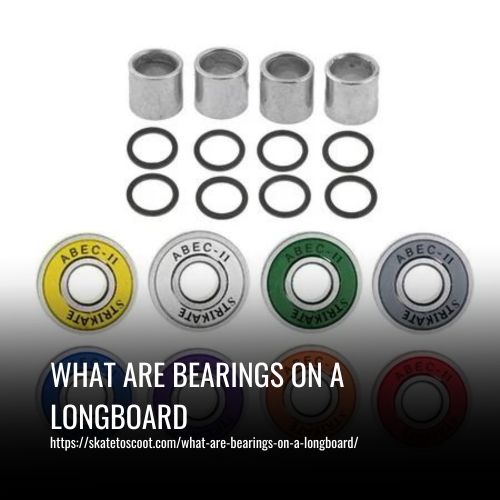
This is where personal riding style dictates the answer. The core materials debate isn’t about which is universally “better,” but which is better for you.
Steel Bearings are the workhorses. Made from chrome or stainless steel, they’re affordable, durable, and ubiquitous. As Original Skateboards notes, steel bearings “can and will rust if exposed to moisture,” so keeping them lubed and avoiding puddles is key. Their advantage is impact resistance. For technical street skating, park riding, or any discipline with lots of jumps and hard landings, a steel bearing can actually last longer.
Ceramic Hybrid Bearings (like Boca Bearings’ hybrids) use silicon nitride ceramic balls inside steel races. Ceramic is harder, smoother, and less porous than steel. This means: * Less friction: The wheels roll with marginally less resistance, which can mean longer coasting, especially from a slow push. * Rust resistance: The ceramic balls themselves cannot rust. However, as Stoked Ride Shop clarifies, “rust can still form on the inner and outer races,” which are still steel.
Full Ceramic Bearings have ceramic balls and ceramic races. They offer very low rolling resistance and the ceramic components cannot rust, but they are brittle and extremely expensive. If any steel parts remain, like the cage, rust can still occur. They’re a niche choice for pro-level racers or long-distance pushers.
Where this goes sideways: Buying ceramics for high-impact street skating. The ceramic material is brittle. A hard landing that a steel bearing would survive can crack a ceramic ball, turning your premium bearing into a gritty, seized mess.
For the majority of riders, cruisers, commuters, carvers, a hybrid ceramic bearing is a great upgrade. You get most of the friction reduction without the fragility or extreme cost of full ceramics. For downhill racers, sources disagree: Boca Bearings states full ceramic bearings are ideal for pro-riders seeking minimal rolling resistance, while Original Skateboards notes many serious downhill racers may choose high quality steel bearings over ceramics.
Bearing Types: Standard vs. Built-In
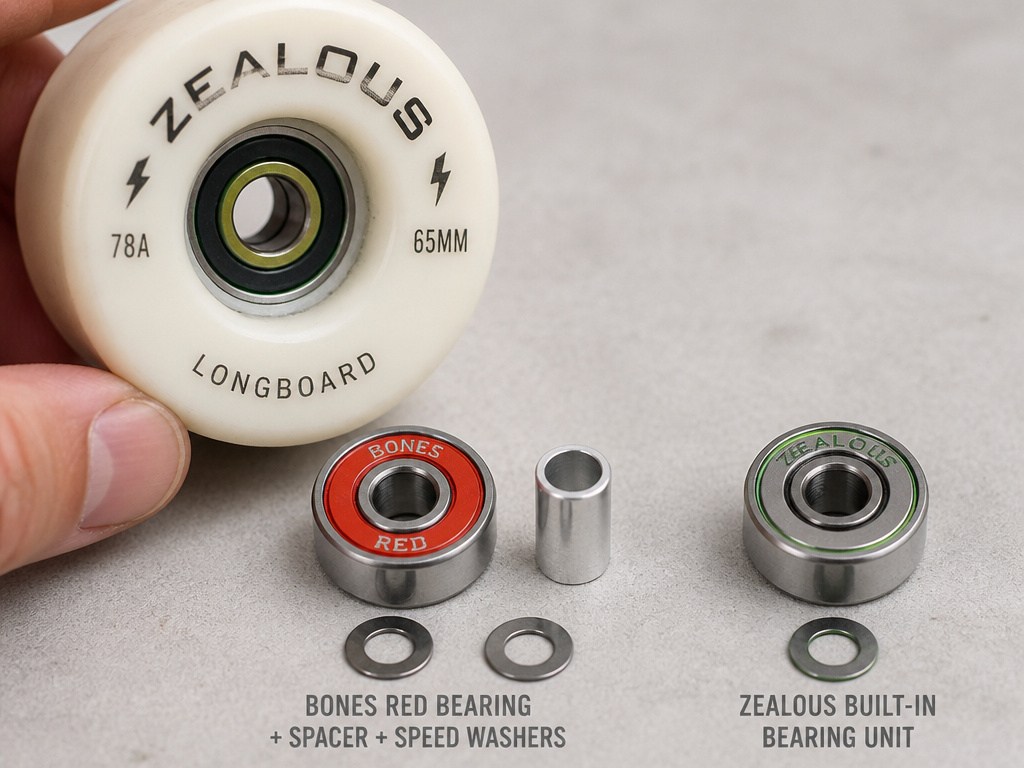
Not all 608 bearings are installed the same way. The difference comes down to spacers and speed washers, the small metal pieces that sit between the bearings inside the wheel.
Standard Bearings (e.g., Bones Reds, Bronson G2) are just the bearing unit. When you install them, you must add a separate spacer between the two bearings inside the wheel, and speed washers on the outside. This ensures the axle nut can be tightened without squeezing the bearing races, which would create drag. Forgetting the spacer is a classic mistake that leads to prematurely destroyed bearings.
Built-In Bearings (e.g., Zealous, Loaded Jehu V2) have the spacer and speed washers integrated into the bearing assembly. As Concrete Waves describes, this makes “swapping them in/out of wheels easier” and eliminates the chance of forgetting a part. The trade-off is that they are often not intended to be taken apart for cleaning; you ride them until they’re done, then replace them. For most riders, this low-maintenance approach is a feature, not a bug.
| Bearing Type | Components | Best For | Maintenance |
|---|---|---|---|
| Standard | Bearing only. Requires separate spacer & speed washers. | Riders who enjoy tinkering, cleaning, and re-lubricating their gear regularly. | Fully serviceable. Shields are often removable for cleaning. |
| Built-In | Bearing, spacer, and speed washers integrated into one unit. | Riders who want a “set and forget” component with foolproof installation. | Generally not serviceable. Designed to be ridden until replacement. |
Shields, Seals, and Serviceability
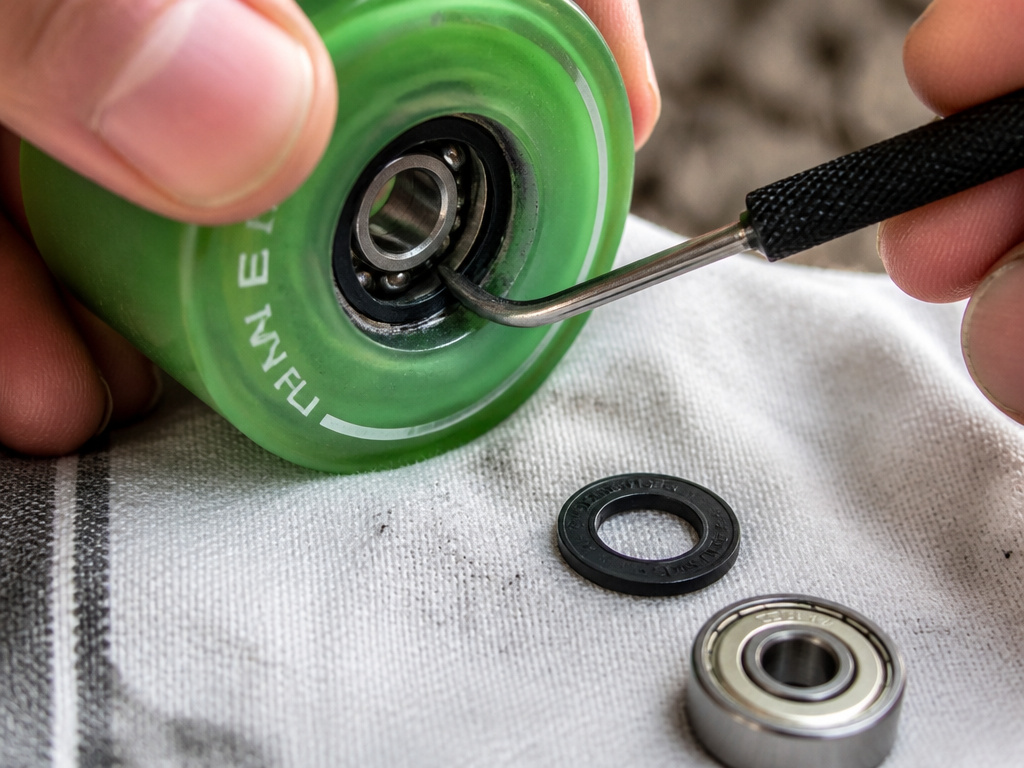
The shield (or seal) is the metal or rubber cover on the side of the bearing. Its job is critical: keep lubricant in and contaminants out. This is the part that most directly determines bearing lifespan in the messy real world.
- Metal Shields (ZZ): These are pressed in and are not removable without damaging the bearing. As Polyboards states, bearings with permanent metal shields “can’t be cleaned.” Once they get gritty, they’re disposable. Avoid double metal-shielded bearings if you plan on doing maintenance.
- Rubber Contact Seals (RS): These are removable, usually by prying out with a pin. They offer excellent protection and allow for cleaning and re-lubrication. Most quality skate bearings use these.
- Non-Contact Seals: As recommended by SMB Bearings, these seals sit close to, but don’t touch, the inner race. This creates a labyrinth that blocks debris while minimizing friction from seal drag. They offer the best balance of protection and speed.
The choice here dictates your bearing care routine. If you like to deep-clean your gear, insist on removable rubber seals. If you prefer to install and ride, a built-in bearing with non-contact seals is your best bet.
How Bearings Affect Your Ride (And How They Don’t)
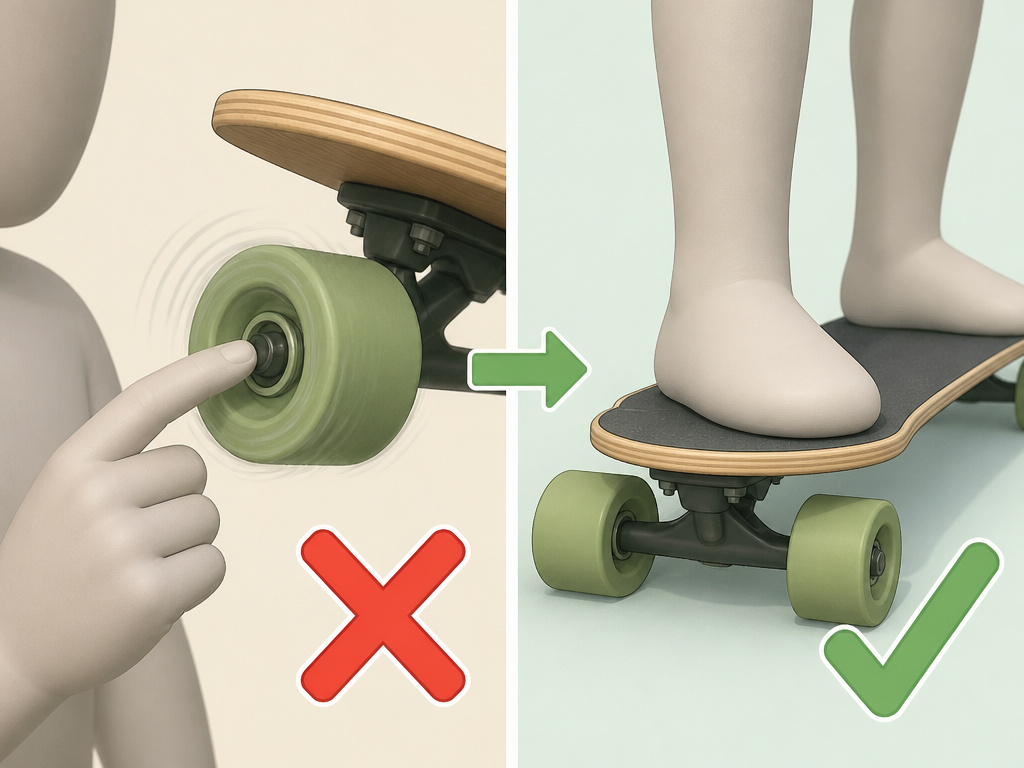
A bearing’s primary job is to roll freely, not to be a rocket booster. The biggest misconception is the “hand-spin test.” Flicking a wheel with your hand and watching it spin is nearly meaningless. As Stoked Ride Shop emphasizes, “hand spin does not equal a fast longboard.” A bearing must be under load, your weight, to function properly. A bearing that spins forever in your hand might have too-thin lube that will fling out or offer no protection under pressure.
What you will feel with good bearings is:
- Longer coast: After a push, your board maintains speed for more distance.
- Quieter operation: Well-lubricated, sealed bearings produce a soft, whirring sound, not a gritty grind or loud whine.
- Consistent performance: The roll feels the same at the start of your session as it does at the end.
How to replace/install bearings
You’ll need eight bearings total, two for each wheel. The truck axle itself is the best tool for removing old bearings. To install new ones, press the bearing squarely into the wheel’s core by hand until it’s flush. Then, use the truck’s axle nut to gently pull the bearing the rest of the way into its seat. Tighten the nut against the bearing’s inner race until it’s fully seated, but avoid overtightening. This method ensures the bearing goes in straight without damaging it. Once both bearings are in a wheel, slide it onto the axle, add a speed washer, and secure it with the axle nut.
Tools needed for bearing work
The only essential tool you need is a skate tool or a wrench that fits your axle nuts. Your longboard’s own truck axle is the perfect tool for bearing removal. For installation, you can often press bearings in by hand until they’re flush, then use the axle nut to carefully pull them into their final position. Avoid using excessive force or makeshift tools that can damage the bearing’s internal components. If you plan on cleaning and re-lubricating your bearings, you’ll also need bearing lubricant and a way to pop off any removable shields, but for a simple swap, your skate tool is enough.
Frequently Asked Questions
Are longboard bearings the same as skateboard bearings?
Yes, in virtually all cases. Both use the standard 608 bearing size. You can take bearings from a street skateboard and put them in a longboard, and vice-versa. The mechanics of longboarding and skateboarding rely on this same, simple component.
How long do longboard bearings last?
It’s less about time and more about conditions. The lifespan of bearings depends heavily on conditions and maintenance. Riding through water, sand, or dirt drastically shortens lifespan, sometimes to a single session if not cleaned immediately. Ceramic hybrids often outlast steel in wet conditions because the balls don’t rust.
Do I need to break in new bearings?
Slight break-in period is normal. The fresh, thick grease inside needs a few minutes of riding to warm up and distribute evenly. Don’t expect peak performance straight out of the box.
What about bearings for electric longboards?
Most electric skateboards take most of the same bearings as longboards. The notable exception was Boosted Boards, which used six standard 608 bearings and two larger, special bearings on the drive wheels. Always check your board’s manufacturer specs, but a standard 608 is the default assumption.
The Bottom Line
Your longboard’s bearings are the round metal components that turn hard pushes into effortless glides. Forget the marketing mystique. Start with the 608 standard, then choose based on your reality: a built-in, steel bearing like Zealous for simple durability, or a hybrid ceramic if you crave every bit of coasting distance and ride in damp climates.
The real performance gain doesn’t come from the most expensive box. It comes from matching the bearing materials and seals to your riding style, and from basic, consistent maintenance. Keep them clean, keep them lubed, and they’ll turn thousands of rotations without a complaint. That’s how a simple metal ring becomes the heart of your roll.
