Are Drop Deck Longboards Good for Beginners? Key Takeaways
This post contains affiliate links. As an Amazon Associate, we earn from qualifying purchases.
Drop deck longboards are good for beginners who prioritize stability and easy pushing over sharp, responsive turning. Their lowered platform creates a lower center of gravity, which feels more secure at low speeds and reduces fatigue. However, this design also distances your feet from the trucks, making the board feel less nimble and slower to turn compared to a topmount or even a drop-through.
That stability comes with a specific trade-off in control. A common question is: are drop deck longboards good for beginners? It’s not a universal “best” choice, but a targeted one.
What follows is a breakdown of that trade-off, the specific specs that matter, and a clear look at who a drop deck actually serves well versus who might be better on a different board. We’ll also cover the real beginner models that get the details right.
Key Takeaways
- Drop decks excel at low-speed stability and pushing comfort, making them ideal for learning basics and casual cruising on flat ground.
- The design reduces the mechanical advantage at the trucks, leading to slower, less responsive turning, a potential frustration for riders wanting to carve tightly.
- For your first board, target soft wheels (78A-83A) and reverse kingpin trucks with a 44-50 degree baseplate to maximize the forgiving nature of a drop deck.
- A drop deck is a specialist, not a generalist; be prepared to add a more responsive board to your quiver if you progress into carving or downhill.
What a Drop Deck Actually Is (And Isn’t)
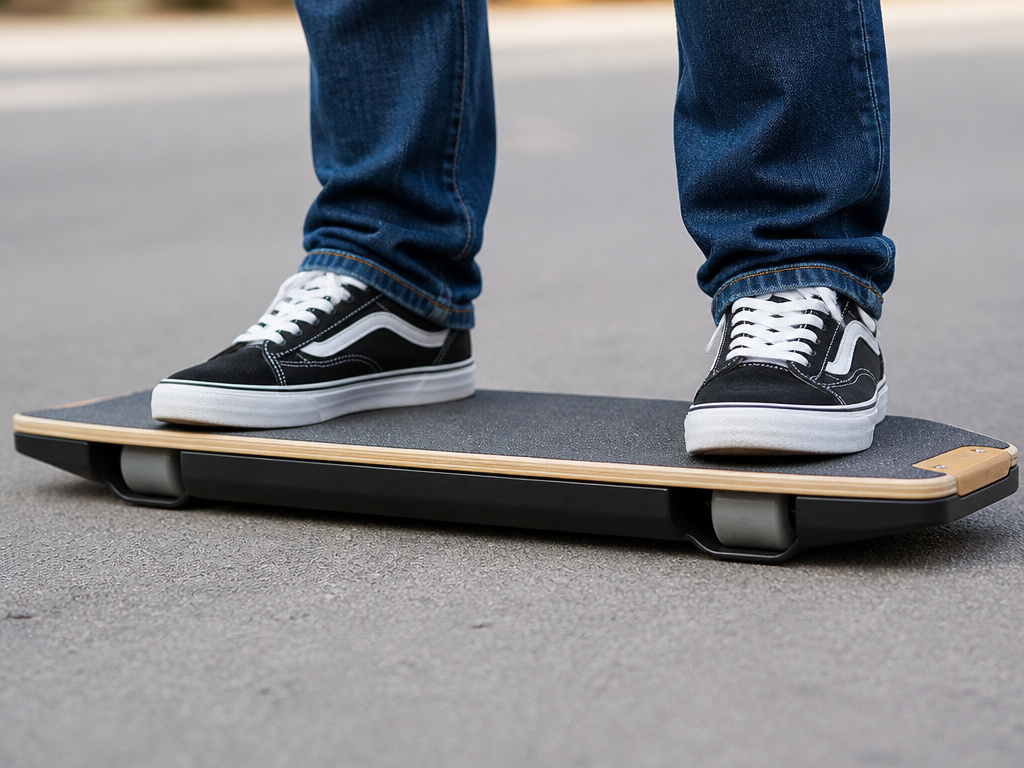
A drop deck longboard has a standing platform that is physically lower than the points where the trucks attach to the deck. Imagine the deck bending downward between the mounts, creating a “U” shape in profile where your feet rest. This drop is measured in inches or millimeters, with common specs ranging from subtle micro-drops to pronounced plunges.
This is different from a drop through longboard, where the trucks are mounted through cutouts in the deck, lowering the entire board relative to the wheels. A drop deck can be topmounted or drop-through mounted. When it’s drop-through mounted, it’s called a double drop longboard, which is the absolute lowest ride you can get.
The physical result is simple: your feet are closer to the pavement. The experiential result is what every beginner feels immediately: a profound sense of not being about to tip over. Your center of mass is lower, so the board feels planted. Pushing requires less leg lift, which means less fatigue on longer rides. For someone just figuring out balance and foot placement, that planted feel is confidence in a tangible form.
The amount of drop is usually dictated in inches (ex. “0.625 inch dropped riding platform”). This measured drop directly translates to how much lower your center of gravity sits compared to a flat deck.
The Core Trade-Off: Stability vs. Responsiveness
Here’s the part most guides gloss over. That wonderful stability is purchased with a specific currency: control.
On a topmount board, your feet are positioned directly over, or very close to, the trucks. This gives you direct control. Lean on your toes, and the board responds quickly. On a drop deck, your feet are in a valley between the trucks. You’re standing inside the wheelbase, not on top of the pivot points.
Where this goes sideways: The drop distributes your weight over the trucks more evenly resulting in slightly less response in the trucks. In practice, this means your leans and weight shifts need to be more pronounced to initiate a turn. For a beginner on a smooth bike path, this might not matter. But when you need to make a quick, sharp turn to avoid a curb or a crack, that delayed response can be the difference between a smooth maneuver and a stumble.
This isn’t a flaw; it’s a design choice. The board prioritizes feeling solid underfoot over feeling lively. For pure, straight-line cruising and distance pushing, that’s a benefit. For learning the nuanced weight shifts that lead to dynamic carving, it’s a hindrance.
| Aspect | Benefit for Beginners | Potential Drawback |
|---|---|---|
| Lower Center of Gravity | Increased stability, reduced fear of wobbling. | Less direct feel for truck control. |
| Easier Pushing | Less leg fatigue, encourages longer practice. | Can mask poor pushing technique. |
| Plantier Feel | Builds initial confidence for balance. | Can feel “dead” or unresponsive when trying to carve. |
| Secure Foot Pockets | The drop often creates natural foot locks. | Limits foot placement options for different stances. |
Are Drop Decks Good for Beginners? The Source Disagreement
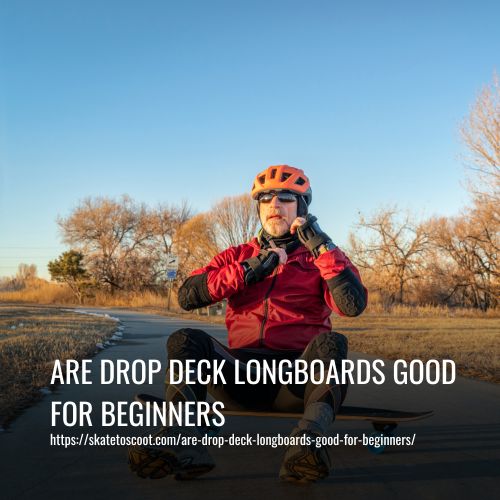
Even the experts aren’t fully aligned here, and it’s important to show both sides.
One camp, represented by enthusiast sites like Ridingboards.com, champions drop decks for newcomers when you compare a are drop deck longboards good for beginners analysis. They argue the stability is ideal for “newer riders who are working on their balance and basic riding skills” and call them “great for a complete beginner.”
The other camp, which includes coaching resources and some manufacturers, gently steers first-timers toward drop through longboards. Lush Longboards, for instance, explicitly recommends you “start with a drop-through for your first speedboard, as you’ll find it more stable, and easier to control your speed.” The reasoning is nuanced. A drop-through offers nearly as much stability and pushing ease as a drop deck, but because the deck itself is flat, it preserves more truck responsiveness and feedback. It’s a middle ground.
Choosing Your First Drop Deck: A Spec-by-Spec Guide
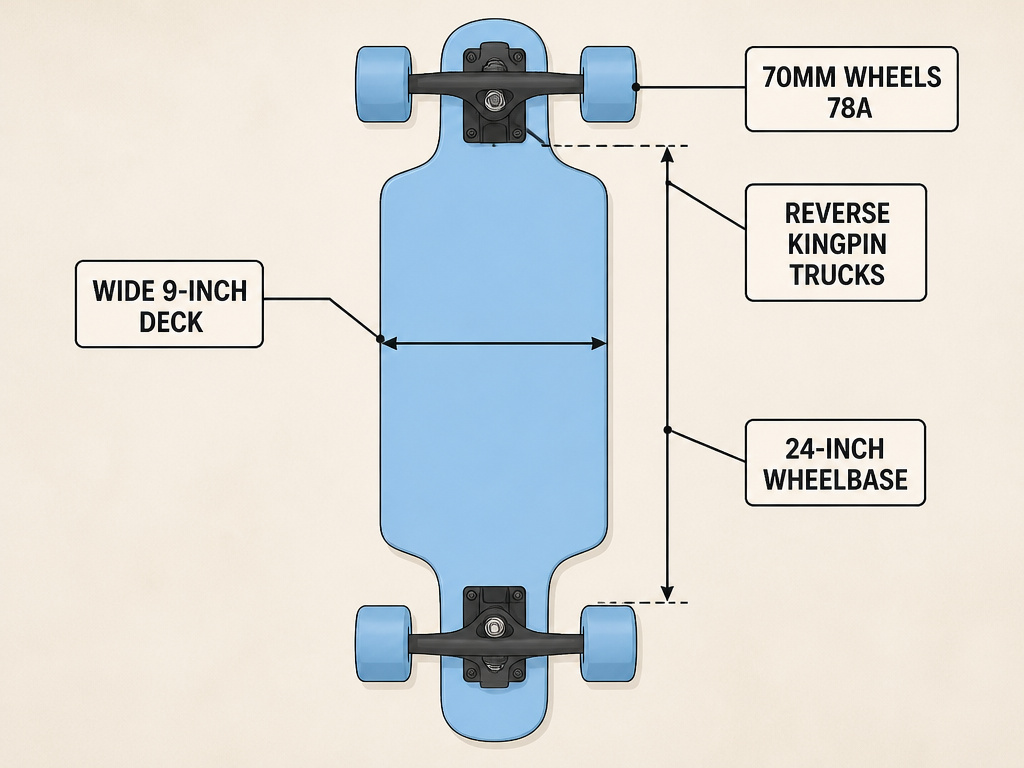
If you’ve weighed the trade-off and a drop deck still seems right after considering are drop deck longboards good for beginners, these are the specs that turn a generic low board into a beginner-friendly tool.
Deck Size & Rider Fit: This is essential. A board that’s too long or too wide is unwieldy.
- Length: Use your height. Under 5’6″? Look between 32-38 inches. 5’6″ to 5’10”? The 38-42 inch range is your sweet spot. Over 5’10”? You can handle 40-46 inches.
- Width: Match it to your shoe size. Size 5-6.5: under 8.5 inches. Size 7-8.5: 8.5 to 9 inches. Size 9+: 9 inches or wider. A wide deck, generally 9 inches or more, is cited for beginner stability.
Trucks: You need reverse kingpin (RKP) trucks, not street-style trucks. RKPs are designed for longboarding and turn more predictably. Look for a baseplate angle of 44 to 50 degrees. For a 9-10 inch deck, 180mm truck width is standard.
Wheels: This is where cheap boards fail. Get soft, large wheels.
- Diameter: 65-75mm. 70mm is a sweet spot for rolling over cracks.
- Durometer (Hardness): For beginners, 78A to 83A is ideal. Softer wheels grip better and absorb vibrations.
Bearings: Don’t overthink it, but don’t cheap out. ABEC-7 is the minimum you want, ABEC-9 is better. Never use WD-40 on bearings, it strips lubrication and attracts grit. Use actual bearing lubricant.
Wheelbase: The distance between the trucks. For cruising and learning, a wheelbase of 20 to 26 inches is ideal. Longer equals more stable but less turny.
Real Beginner Drop Decks: Three That Get It Right
You can know all the specs, but you need to see them applied. These models consistently get the beginner formula right.
The Budget Workhorse: Atom Drop Deck
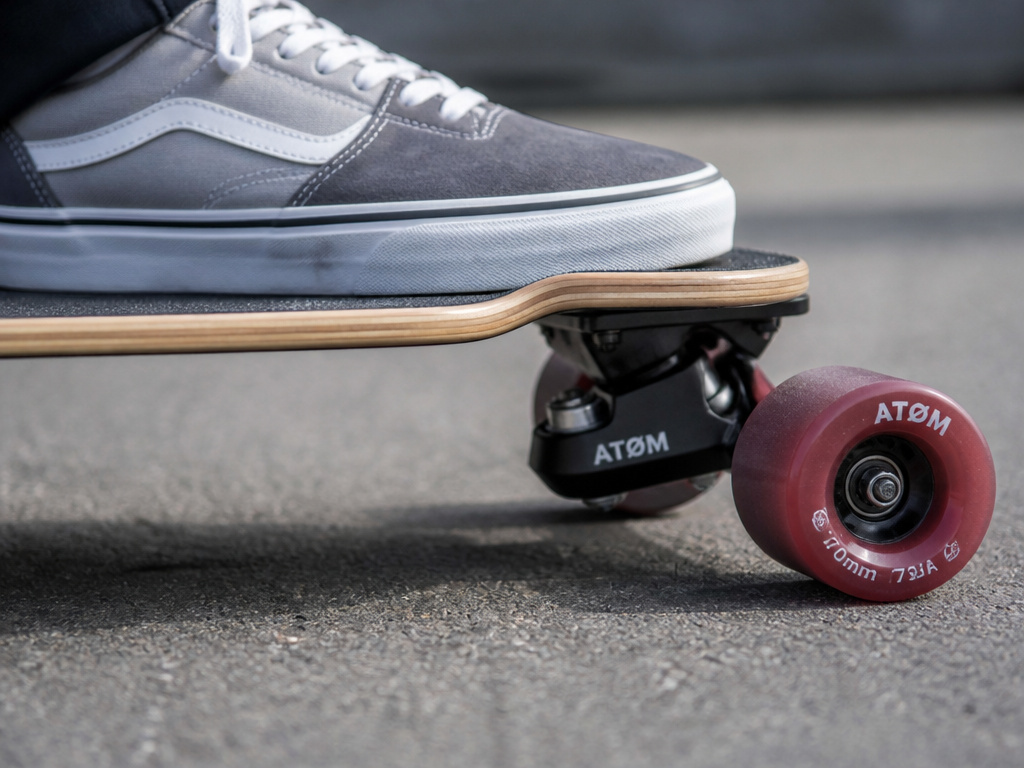
The Atom Drop Deck is the default recommendation for a reason. Sized 39″ by 9″ with a significant drop, it’s built from solid 9-ply maple. It’s not light or portable, but it’s a tank. The reverse kingpin trucks and 70mm 78A wheels create a package that’s stable, smooth-rolling, and almost comically forgiving. It’s the board you buy when you just want to ride and not fuss.
The Compact Carver: Santa Cruz 36″ Micro-Drop
If the Atom feels too big, the Santa Cruz 36“ offers a different approach. It’s a micro-drop deck, meaning the platform lowering is subtler. This retains more truck responsiveness while still offering a secure feel. Made of 9-ply maple, it’s stiff and durable. The shorter wheelbase makes it more nimble for riders who want to practice carving sooner rather than later.
The Stable Cruiser: Sector 9 Fault Line
The Sector 9 Fault Line (39.5″ x 9.75″) hits a middle ground. Its slanted drop provides excellent foot lock-in, and the construction offers a comfortable flex. It comes with Gullwing Charger trucks, which are quality RKPs right out of the box. This board is less about raw affordability (like the Atom) and more about refined, out-of-the-box performance for a beginner willing to invest a bit more.
Common mistake: Buying the longest, widest deck you can find thinking “more stable is better.” An oversized deck is harder to control and maneuver, slowing your progress. Match the board to your body.
The Beginner’s Progression: When You Might Outgrow a Drop Deck
You won’t ride your first board forever. A drop deck excels at the fundamentals, but it can become a limit as your skills grow.
Your first clue will be a desire to carve. You’ll lean, but the board will respond with a slow, wide arc instead of a quick turn. You might start feeling “stuck” in a straight line. Next, you might try a hill, even a mild one. Sources disagree on drop deck performance at speed: some note reduced grip and vague truck response, while others cite maximum stability and control for high speeds.
This is normal. It doesn’t mean you bought the wrong board; it means you’re graduating from it. This is when you’d look at a drop through longboard for a more responsive feel, or even a topmount for aggressive carving and downhill. Your drop deck becomes your dedicated cruiser, your low-effort pusher for relaxed rides. Adding a second, more specialized board to your quiver is the natural progression of a skater.
Safety and Setup: Non-Negotiables
A stable board doesn’t prevent falls. Gear up.
- Helmet: Get a skate-specific helmet. It’s designed for the impacts of skating, not biking.
- Wrist Guards: Wrist guards are actually more important than most people realise. Your instinct is to catch your fall with your hands. These prevent the sprains and fractures that can sideline you for weeks.
- Setup: When you get your board, check all hardware. Trucks often come overly tight from the factory. Loosen them until you can turn by leaning, not until they wobble. This makes the board more manageable from day one.
Why you should avoid cheap or Amazon boards as a beginner
While it’s tempting to grab a bargain board online, very cheap boards often cut corners on the components that matter most for a safe and stable learning experience. Aim to spend at least $90 to $100 for a complete board with components that will actually work properly. These budget-friendly boards frequently use subpar trucks, wheels, and bearings that can feel unpredictable or fail quickly, making it much harder to build confidence and balance. Investing a bit more upfront ensures you get a board designed with the right stability features, like appropriate truck angles and durable construction, which is crucial for mastering the basics.
Frequently Asked Questions
What’s the difference between a drop deck and a double drop longboard?
Drop deck refers to the shape of the board: the standing platform is lowered between the truck mounts. A double drop longboard takes that drop deck shape and uses a drop through design for mounting the trucks. This stacks both lowering effects, creating the lowest possible ride height. All double drops are drop decks, but not all drop decks are double drops.
Is a 40 inch drop deck good for beginners?
Yes. According to beginner buying guides, 40 inches is actually an ideal length for most beginner riders. It provides a stable, forgiving platform without being so long that it becomes cumbersome to carry or store. It fits the recommended range for riders between 5’6″ and 5’10”.
Can I learn to slide on a drop deck?
You can, but it’s harder initially. The low center of gravity reduces the board’s ability to ‘tip’ into a slide, requiring more forceful technique. Many drop decks also have a stiffer construction, which can be less forgiving during slide initiation. Beginners typically find sliding easier to learn on a more responsive topmount or drop-through deck first.
Are drop decks good for heavy riders?
They can be, due to their often stiffer, multi-ply construction (often 9-11 plies of maple). However, a heavier rider will also compress the bushings in the trucks more, which can further reduce responsiveness. A heavier beginner might prioritize a stiff drop deck for stability but should be prepared to adjust truck bushings to a harder durometer to maintain control.
How do I maintain my drop deck longboard?
Keep it indoors to prevent warping. Clean your bearings twice a year with proper lubricant (not WD-40). Periodically check and tighten all hardware, as vibration loosens bolts over time. Rotate your wheels to ensure even wear. For the deck itself, avoid dragging the tail to stop, as this causes “razor tail” damage.
Before You Go
Be realistic about the choice. A drop deck isn’t a magic “beginner board.” It’s a board that makes one part of learning, gaining stable, confident footing, remarkably easy, while making another part, developing dynamic, responsive control, slightly harder.
If your primary goal is to comfortably cruise your neighborhood or campus path, to feel secure while you build your leg muscles and basic balance, a well-chosen drop deck like the Atom or Sector 9 models listed above is a fantastic place to start. It will get you rolling and smiling quickly.
But understand the trade you’re making. The moment you want to throw the board into a deep carve or navigate a tight, winding path, you’ll feel its limits. That’s okay. It means you’re progressing. View your first drop deck as the most stable training wheels you can get, knowing that the skills you build on it will transfer directly when you’re ready for a board that answers back a little quicker.
