Are Ice Skates Sharp How Sharp Are Ice Skates?
This post contains affiliate links. As an Amazon Associate, we earn from qualifying purchases.
Ice skates are sharp, but not like a knife. Their sharpness is defined by a measurement called the Radius of Hollow (ROH). A smaller ROH number, like 1/2″ (12.7mm), creates a deeper groove and delivers more grip, less glide. A larger number, like 5/8″ (15.9mm), creates a shallower groove for more glide, less grip. A medium hollow provides a balance of control and speed.
That’s the technical answer. The real-world feeling is different. According to Bauer, a fresh cut creates the same sharpness regardless of ROH depth, though a common player belief is that a deeper hollow is inherently ‘sharper’. The “bite” you feel comes from how deep that hollow digs into the ice, not from a razor-like edge. A key question for new skaters is: are ice skates sharp how sharp are ice skates? Get this wrong, and you’re either slipping uncontrollably or catching an edge and stumbling.
We’ll examine this step by step. We’ll look at how skate blades are actually shaped, how to choose your sharpness, and the clear signs you’re skating on the wrong hollow. By the end, you’ll be able to walk into any pro shop and tell them exactly what you need.
Key Takeaways
- Your skate’s sharpness is its Radius of Hollow (ROH). A 1/2″ ROH feels sharper (more grip), a 5/8″ ROH feels smoother (more glide).
- A medium sharpening is recommended for beginners and most recreational players, not razor sharp. According to Hockey Calgary, sharpening 4 to 6 times a season is average.
- Inspect your blades before each skate. The Riedell manual states you should check for nicks, rust, and ensure mounting screws are tight for safety.
- Blade steel matters. Bauer’s LS4 steel, made from Sandvik 14C28N, holds an edge longer, while softer steels may need resharpening multiple times per game.
- If your stops feel “stuttery” or you feel stuck in the ice, your hollow is likely too deep (too sharp). Wait for it to dull slightly or have it re-sharpened to a shallower ROH.
What Is Radius of Hollow (ROH)?
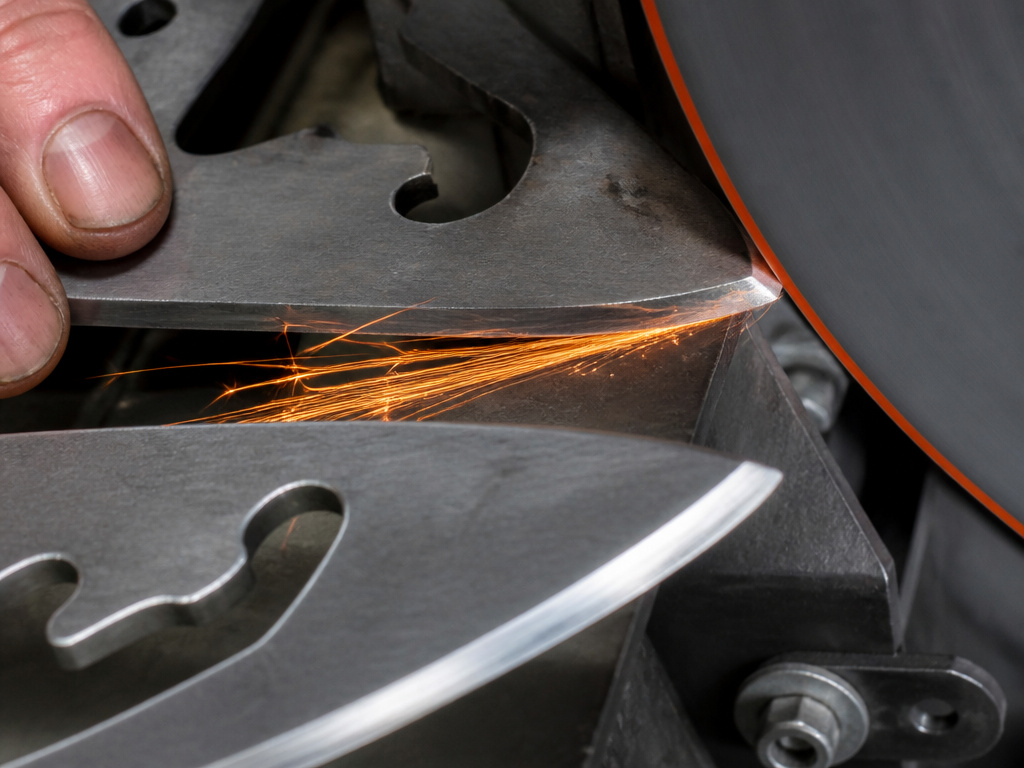
Look at the bottom of your skate blade. It’s not flat. A grinding wheel cuts a concave channel down the center, creating two distinct edges, an inside edge and an outside edge. The radius of the grinding wheel that made that channel is your ROH.
A 1/2″ Radius of Hollow (12.7mm) means the grinding wheel had a 1/2″ radius. This creates a deep, narrow channel. A 5/8″ ROH (15.9mm) uses a larger wheel, creating a wider, shallower channel. This single measurement dictates your grip-to-glide ratio on the ice.
The math is simple: a smaller ROH number equals a deeper hollow. Think of it like tire tread. A deep, aggressive tread (small ROH) grips loose terrain but creates drag on pavement. A shallow tread (large ROH) rolls fast but slips more easily.
Common ROH Options:
| ROH (Inches) | ROH (mm) | Primary Feel | Best For |
|---|---|---|---|
| 3/8″ | 9.5 mm | Very High Grip | Aggressive turners; very soft ice |
| 1/2″ | 12.7 mm | High Grip | Most hockey players; standard choice |
| 5/8″ | 15.9 mm | Balanced Glide | Recreational skaters; speed-focused players |
| 3/4″ | 19.0 mm | High Glide | Speed skaters; goalies; very hard ice |
| 1″ | 25.4 mm | Maximum Glide | Advanced skaters wanting minimal bite |
This is the foundation. Your blade sharpness isn’t a mystery, it’s a number you can choose and change.
How Sharp Should Your Skates Be? (A Beginner’s Guide)
You’re new. You want to stand up, not slice your fingers open. So what’s the right starting point?
The consensus from coaching guides like Hockey Calgary is a medium sharpening when considering are ice skates sharp how sharp are ice skates. They explicitly advise against “razor sharp” for beginners. A medium hollow “will keep you in a stable upright position and allow you to just bite into the top layer of the ice, to push and glide without falling.”
For a first-time adult skater, a shallower hollow can be more forgiving. Here’s why:
- More Forgiving: The shallower bite means you’re less likely to catch an edge during a wobbly stride or an uncertain stop.
- Easier Glide: It requires less effort to maintain speed, so you can focus on balance and technique, not muscling your way around the rink.
- Natural Progression: It’s easier to go from a 5/8″ to a deeper 1/2″ later if you want more grip, than to fight a too-sharp 1/2″ hollow from day one.
What about kids? The same logic applies, but weight is a bigger factor. A lightweight child on a deep hollow will sink in too much and struggle to push off. Hockey Calgary notes the ROH “should be based on your child’s height and weight.” For a young beginner, a shallower hollow may be appropriate. Let them feel the glide first; the grip can come later.
Common mistake: Going straight for the “pro sharp” 1/2″ hollow because NHL players use it. A study in the Journal of Glaciology measured standard hockey blades with a 12.7mm (1/2″) hollow. Pros often use a 1/2″ hollow. You’ll just feel stuck.
How Often Should You Sharpen Your Skates?
There’s no universal timer. Your sharpening frequency depends on three things: how you skate, what you skate on, and what your blades are made of.
- Your Ice Time: Hockey Calgary recommends sharpening 4 to 6 times a season, though player practices vary widely, with some sharpening more or less frequently.
- Ice Conditions: Hard, cold ice wears edges slower. Soft, warm ice acts like sandpaper. The World Steel Association notes that in the US, where ice is generally harder, “players choose a sharper edge.”
- Blade Steel Hardness: This is the biggest variable nobody talks about. The World Steel Association states that softer steels on other brands “sometimes need resharpening three to five times during a game.” In contrast, their LS4 steel with Sandvik 14C28N can “go a whole game or maybe more without resharpening.”
The Sensory Check (Do This Every Session):
Don’t just go by the calendar. Your skates will tell you when they’re dull.
- Slipping on Turns: If your outside edge washes out during a crossover, you’ve lost bite.
- Struggling to Stop: A proper hockey stop requires a clean edge. If you’re skidding sideways with no control, it’s time.
- The Visual Test: Lift your skate and look down the blade. A sharp edge will appear as a clean, defined line. A dull edge will look rounded and faint.
After every session, follow the Riedell manual: wipe down your blade with a clean cloth and make sure the skates are dry. Storing them in a well-ventilated area at room temperature prevents rust, which can ruin an edge faster than skating ever could. This routine is part of your blade maintenance.
What Does “Too Sharp” Actually Feel Like?
“You can have too much of a good thing” absolutely applies to skate sharpness. It’s a specific, physical sensation.
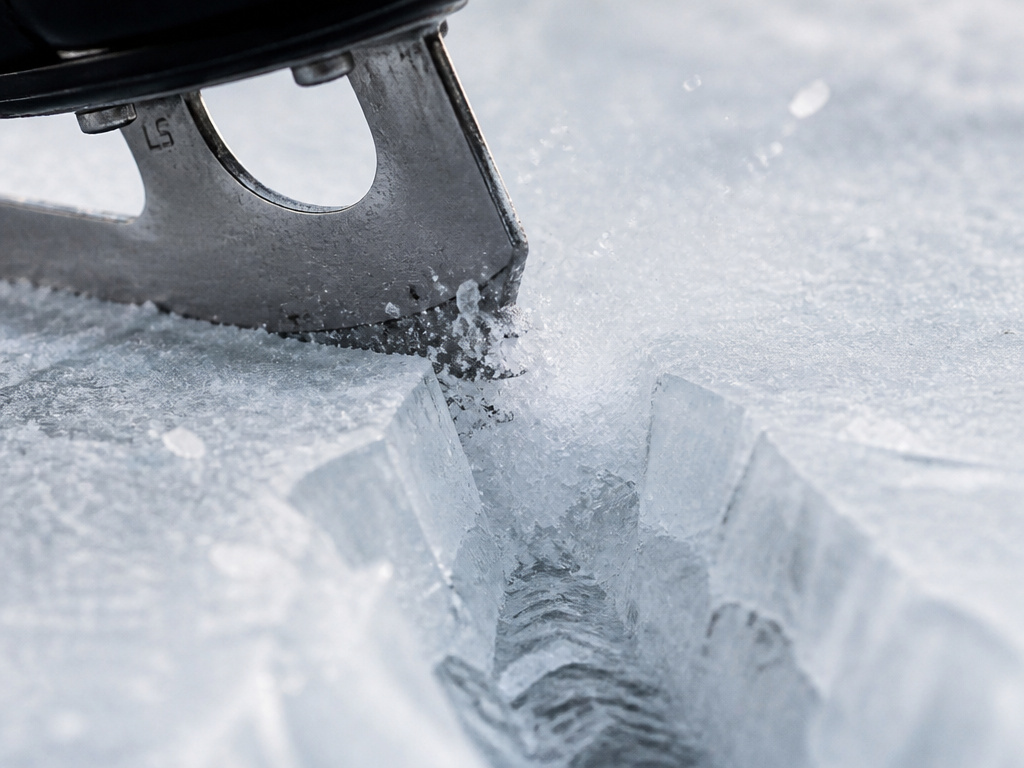
Hockey Calgary describes it perfectly: “if they are too sharp, they will dig deeply into the ice and prevent smooth stops and create a stutter when stopping.”
On-Ice Symptoms of “Too Sharp”:
- Stutter Stops: Instead of a smooth, controlled scrape, your stop feels choppy and grabs the ice in chunks.
- Feeling “Stuck”: During strides, it feels like you have to rock your foot extra hard to release the edge from the ice. Your strides feel short and labored.
- Reduced Glide: You decelerate rapidly when you try to coast. The deep hollow acts like a brake.
A 2010 Sports Engineering study found that skating performance was “significantly impeded at a hollow radius of 3.18 mm” (about 1/8″). That’s an extreme example, but the principle holds. Past a certain point, more bite hurts your agility.
How to Fix “Too Sharp” Skates:
- Wait It Out: Skate on them for an hour or two. The edges will naturally wear to a comfortable level. This is the easiest fix.
- Re-Sharpen to a Shallower ROH: Take them back to the pro shop and ask for your next cut to be a larger ROH (e.g., go from 1/2″ to 5/8″).
- Use a Honing Stone (Sparingly): A few light passes with a hand stone on the flat bottom of the blade can slightly dull the extreme bite without a full re-sharpening. Don’t overdo it, this is for minor adjustment, not regular maintenance.
Recognizing the “stuck” feeling is a real milestone. It means you’re developing the sensitivity to feel your edges, which is a core skating skill. For more on the tools that can help, our guide on the best skate sharpeners covers hand tools and when to use them.
Hockey vs. Figure Skates: A Sharpness Comparison
The basic mechanics are the same, both use a hollow to create two edges. But the design priorities create different sharpness experiences.
Hockey Skates:
- Priority: Quick, powerful strides, rapid stops, and agile turns.
- Typical ROH Range: Narrower, usually between 1/2″ and 5/8″. The focus is on responsive bite for explosive movement.
- Blade Profile: Shorter blade with a pronounced rocker for tight turns. Studies like the one in the Journal of Glaciology skate friction study reference a standard hockey blade rocker radius of 3.35 meters.
Figure Skates:
- Priority: Stability, controlled glides, and precise edge work for spins and jumps.
- Typical ROH Range: Often slightly shallower than hockey, commonly from 5/8″ up to 1″ or more. This provides a longer, more stable glide platform.
- The Toe Pick: This is the major difference. The serrated picks at the front are for jumping and planting, not for gliding. They don’t affect the sharpness of the main blade edges.
- Blade Profile: Longer, flatter blade for stability on landings and during long glides.
The Takeaway: A figure skater might use a 3/4″ hollow for effortless glide in a spiral, while a hockey winger might use a 1/2″ hollow to dig into a sharp corner. The “right” sharpness is defined by your sport’s demands. The physics behind this interaction is still being refined, as newer research like the ice-skate mechanics unified hypothesis challenges old theories on how blades actually interact with ice.
Can Skate Blades Cut You? Understanding the Risk
Yes, skate blades can cut you, but not in the way a kitchen knife does. The danger comes from force and pressure, not just a light touch.
The blade edge is nearly perpendicular to the grinding stone, not angled to a fine point. Running your finger lightly along it might not even break skin. The real risk is in two scenarios:
- A Stumble or Fall: If you lose balance and your hand slides across the blade with your body weight behind it, it can cause a serious laceration.
- A Skate Stepping on You: This is the severe, but rare, risk. The concentrated force of a person’s weight on the thin edge can cause deep cuts. This is why safe skating and awareness are crucial, it’s a shared space.
The Riedell owner’s manual is unambiguous: “Never skate on damaged blades.” A blade with a deep nick or burr can create a stress point that fails, or catch the ice unpredictably. This is a core part of skate safety. Inspecting for damage isn’t just about performance; it’s a direct safety check.
Where this goes sideways: Assuming “sharp = dangerous, dull = safe.” Dull blades are far more dangerous in motion because they cause slips and falls, which lead to collisions and injuries. A properly sharpened blade gives you control. Control is safety.
Professional Sharpening vs. At-Home Machines
You have two main paths: the pro shop or a home machine like a Sparx.
Professional Sharpening:
- The Gold Standard: A trained technician using a commercial machine can deliver a perfectly balanced, consistent edge. They can also spot blade issues like bends, rust, or mounting problems.
- Profile Matching: They can “profile” your blades, changing the longitudinal curvature, to match your old skates or a specific style of play. This is a level of customization home machines can’t touch.
- The Drawback: It’s a trip to the shop, and quality varies. You need to find a tech you trust.
At-Home Machines (e.g., Sparx):
- Consistency & Convenience: You get the same cut every time, on your schedule. For maintaining a known ROH you like, it’s excellent.
- The Limitation: It’s a preset system. It can’t profile blades, adjust for warps, or offer expert advice.
Which is Right For You?
- Choose a Pro: If you’re new, if you’re changing your ROH or profile, or if your blades have any damage.
- Choose a Home Machine: If you’re an experienced player with a set ROH you love, you skate frequently, and you just need consistent maintenance between pro visits.
For most people starting out, a pro shop is the way to go. Let them handle the professional skate sharpening machines and the expertise. Once you’ve settled into your perfect setup and know what you need, then consider the convenience of a home sharpener.
How sharp are ice skates compared to knives?
Comparing a skate blade to a kitchen knife is misleading when you ask are ice skates sharp how sharp are ice skates. A freshly sharpened skate blade has a sharp edge. However, According to Bauer, the sensation of sharpness comes from the depth of the hollow and how you skate, not the edge’s inherent keenness, though a common player belief differs. A deeper hollow creates more grip, which can feel ‘sharper’ because the edges dig into the ice more. A shallower hollow provides less grip but more glide, which can feel ‘duller’ even though the edges themselves are just as sharp. The goal is a medium sharpening that provides control without causing your stops to stutter or dig in too deeply.
Frequently Asked Questions
How sharp are NHL player skates?
NHL players typically use a relatively deep hollow, often around 1/2″ (12.7mm), because they skate on very hard, cold ice and require extreme bite for powerful strides and quick stops. However, it’s highly personalized. Some may use 3/8″ for more grip, others 5/8″ for more glide.
Do new skates need to be sharpened?
Yes, absolutely. Binnie’s Hockey states skates absolutely need to be sharpened before use. A professional sharpening before first use is essential for performance and safety.
What is the “fingernail test” for skate sharpness?
It’s an unreliable myth. Dragging your fingernail perpendicular across the edge can tell you if an edge exists, but it cannot gauge the sharpness or the ROH depth. The “bite” comes from the hollow, which this test doesn’t measure. Trust your feel on the ice, not your fingernail.
What is a Flatbottom V (FBV) sharpening?
FBV is an alternative to the traditional rounded hollow. It creates a V-shaped channel with a small flat section at the bottom. Proponents claim it offers the grip of a deeper ROH with the glide of a shallower one. It’s a matter of preference, not a universally “better” option.
How does blade steel affect sharpness?
Harder blade steels, like Bauer’s LS4 made with Sandvik 14C28N, retain their sharpened edge much longer. Softer steels dull quickly; the World Steel Association states other brands sometimes need resharpening three to five times during a game. The steel doesn’t change the initial sharpness of a fresh cut, but it dramatically changes how long that sharpness lasts.
Before You Go
Your skate’s sharpness isn’t a mystery or a matter of machismo. It’s a deliberate choice between grip and glide, measured in fractions of an inch.
Listen to your skates. The stutter-stop is your sign the hollow is too deep. The uncontrolled slide is your sign the edges are gone. That feedback loop is more valuable than any generic sharpening schedule.
Finally, remember that the best blade in the world is useless if it’s not secure. Before you lace up, make it a habit to check that the blades are secure to the boot and all mounting screws are tight. It takes five seconds and it’s the simplest way to prevent a world of trouble. Now get out there and trust your edges.
