Can You Roller Skate in an Airport? Rules and Realities
This post contains affiliate links. As an Amazon Associate, we earn from qualifying purchases.
You cannot legally roller skate inside many U.S. Airport terminals or secured areas, as official rules from airports like San Francisco (SFO), Pittsburgh (PIT), and Atlanta (ATL) explicitly prohibit it. Airport authorities explicitly prohibit riding Personal Transportation Devices (PTDs), a category that includes roller skates and rollerblades, for safety and liability reasons. However, the Transportation Security Administration (TSA) permits skates in both carry-on and checked baggage, so you can transport them, just not wear them.
Those two rules from different agencies create the whole confusion. The TSA controls what passes through the checkpoint; the local airport authority controls conduct on its property. This means your skates are welcome as luggage but banned as transportation the moment you step onto the terminal floor. You might wonder, can you roller skate in an airport?
What follows is a breakdown of the specific rules from major airports, the real-world enforcement you might face, and the safest way to pack and travel with your gear without risking a missed flight or worse.
Key Takeaways
- Skating is explicitly prohibited at major airports like San Francisco (SFO), Pittsburgh (PIT), and Atlanta (ATL). Violations of airport rules can potentially be treated as a misdemeanor, as noted in an anecdotal report about Minneapolis airport rules.
- The TSA allows skates in carry-on or checked bags, but this only covers transport through security, not riding them in the terminal.
- Enforcement is inconsistent; while rules are clear, some skaters report rolling through without issue, while others have had skates confiscated or been threatened with arrest.
- Always have backup shoes and be prepared to switch immediately if asked by security, arguing can escalate the situation quickly.
- Check your specific airport’s website for its official Rules and Regulations document before you travel; don’t rely on general advice.
The Official Answer: What Airport Rules Say
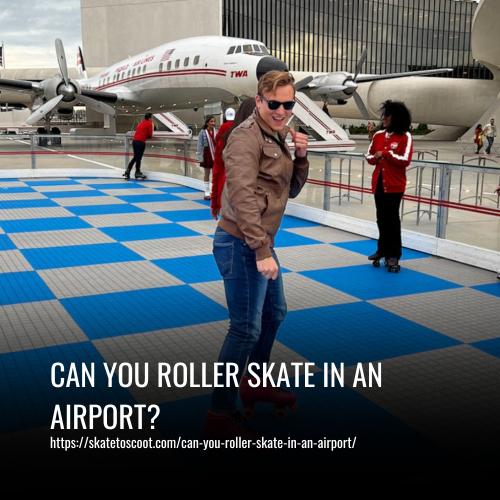
Airport rules aren’t suggestions. They are legal ordinances or regulations, and they are remarkably consistent across the country in banning skating. The primary reason is liability. A crowded terminal with slippery floors, rolling luggage, and distracted travelers is a high-risk environment for a collision.
San Francisco International Airport (SFO) Rules and Regulations state: “Operation of rollerblades/skates” is prohibited in public areas and Secured Areas. The rule exempts devices for medical purposes and on-duty law enforcement. Within tenant leaseholds, like an airline’s back office, the tenant may set its own policy.
Pittsburgh International Airport (PIT) has an identical prohibition: “riding of roller skates/blades” is banned in all areas of the Baggage Makeup Area and Passenger Terminals. Their exemptions cover wheelchairs, medical devices, and tenant business bicycles in leased areas.
City of Atlanta Ordinance governing Hartsfield-Jackson Airport is even more comprehensive. It defines Personal Transportation Devices (PTDs) to include “roller skates (including retractable roller shoes), rollerblades… Or any similar devices.” The rule is blunt: “No person shall operate any PTD on Airport Property except Authorized Employees and individuals with disabilities.” Authorized employees can only use specific devices like bicycles or Segways for airport business.
The pattern is clear. These aren’t hidden clauses; they are front-and-center in the documents that govern airport conduct. Sacramento International Airport rules also prohibit operating “skateboards, scooters and other personal/recreational transportation devices” on the Secured Area/Air Operations Area unless specifically authorized.
| Airport / Authority | Rule | Key Exemptions |
|---|---|---|
| San Francisco (SFO) | Prohibits operation in public & secured areas. | Medical devices, on-duty law enforcement. |
| Pittsburgh (PIT) | Prohibits riding in terminals & baggage areas. | Wheelchairs/medical devices, tenant bicycles in leased areas. |
| City of Atlanta | Prohibits all PTD operation on airport property. | Authorized employees, individuals with disabilities. |
| Transportation Security Administration (TSA) | Permits skates in carry-on and checked bags. | N/A (regulates items through checkpoints, not conduct). |
The critical takeaway here is the jurisdictional split. The TSA skate carry-on rules are about moving an item through a federal security checkpoint. Once you’re past that, you’re on property governed by the airport’s own laws, which universally say “don’t ride.”
TSA & Airline Carry-On Rules for Skates
This is the part where you can breathe easy. According to the official TSA What Can I Bring? page, rollerblades (and by extension, roller skates) are explicitly permitted in both carry-on and checked baggage. There’s no special flag or warning attached to them.
I’ve traveled with skates as my personal item dozens of times, usually leashed together and slung over my shoulder. Security occasionally pulls the bag for a hand check, the metal plates and wheels look odd on the X-ray, but once they see what they are, you’re cleared. I keep all tools (Y3 wrenches, bearing removers) in my checked luggage to avoid any debate about “sharp objects.”
The real variable is your airline. The TSA allows them, but each airline sets its own rules for sporting equipment. Some may count them as your standard carry-on; others might direct you to check them, sometimes with an oversized or special-item fee. You must check your carrier’s website before you pack. Assuming “it’s fine” is how you end up gate-checking your prized skates at the last second.
Common mistake: Assuming TSA approval means airline approval. The TSA governs security; the airline governs what’s allowed on the plane. Always verify both.
What Happens If You Get Caught? Enforcement and Consequences
Here’s where the rubber meets the road, or doesn’t. Official rules paint one picture; lived experience paints another. Official rules suggest consequences ranging from a warning to a misdemeanor charge, but anecdotal reports from skaters show enforcement is inconsistent, with many reporting no issues.
A Reddit user once asked airport staff if they could skate and was told, “sure, if you want to get arrested lol.” That flippant answer captures the reality: enforcement is a tool, and staff will use it if they perceive a risk.
Potential official consequences include:
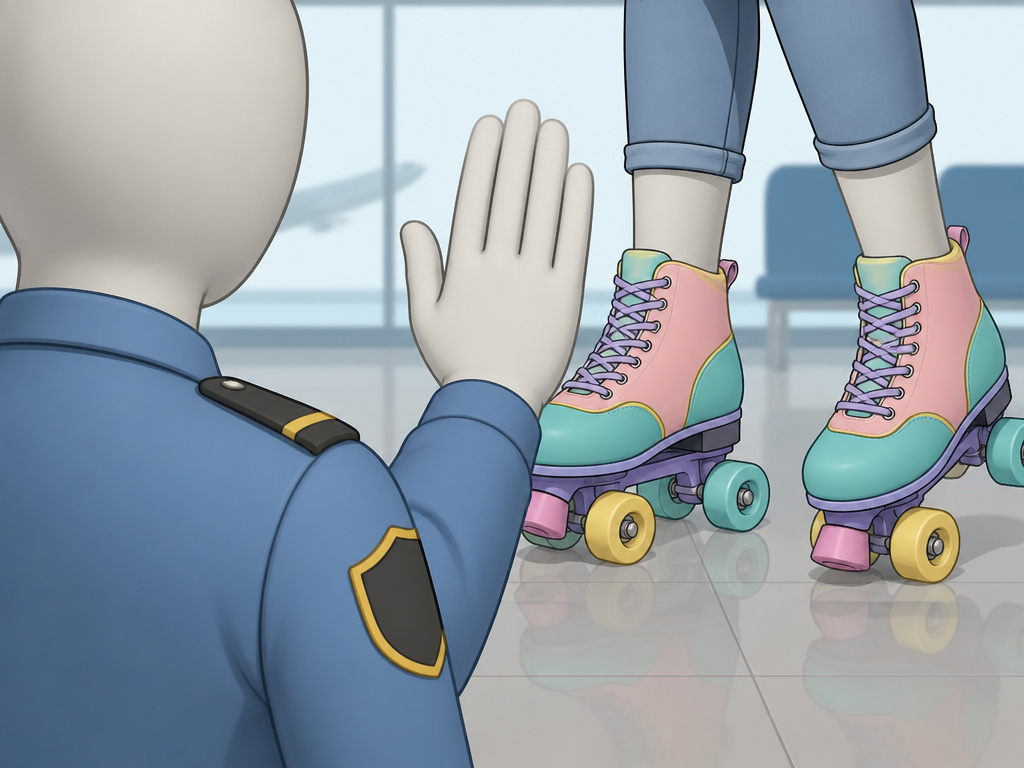
- Immediate Order to Stop: This is the most likely outcome. A security officer or airport police tells you to take off your skates.
- Confiscation: Anecdotal reports exist of skates being taken by security. This is a significant penalty, as it means losing your gear.
- Escort from the Area: You could be escorted to a security office or even out of the secure zone, potentially causing you to miss your flight.
- Citation or Fine: Some airport ordinances allow for fines. The City of Atlanta ordinance establishes the prohibition as law.
- Misdemeanor Charge: As noted in a discussion about Minneapolis airport rules, violation can be treated as a misdemeanor offense. This is the nuclear option, rarely used for a first-time, compliant offender, but it’s on the books.
Where this goes sideways: Refusing to comply immediately. The moment you’re asked to stop, you stop. Arguing that “others have done it” or “I’m not hurting anyone” turns a simple instruction into a defiance issue. You will lose that argument every time.
Contrast this with the many anecdotal reports of skaters who faced no issues. Users have reported skating through Sea-Tac and Denver airports late at night without a word from security. This inconsistency, between official prohibitions and anecdotal reports of non-enforcement, is why the can you roller skate in an airport question persists.
Safety, Liability, and Why the Rules Exist
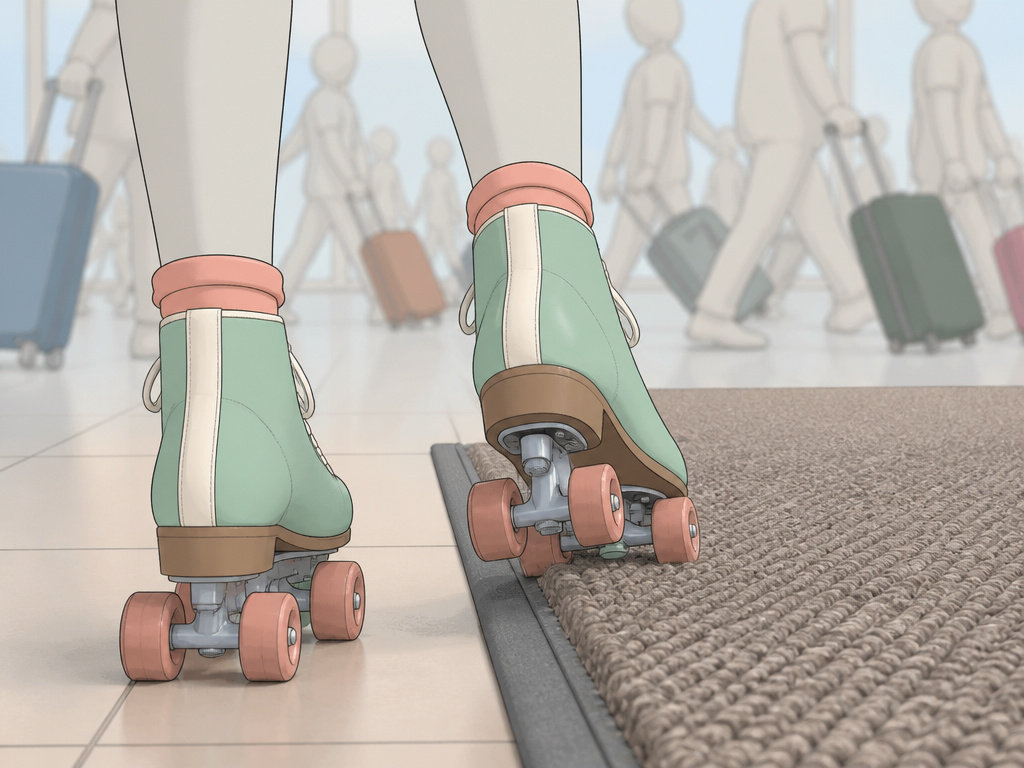
It’s not about killing your fun. It’s about managing a complex, high-traffic environment where a single slip can cause a cascade of problems. Here are the reasons.
Floor Surfaces Are Unpredictable. Airport floors are a mix of tile, carpet, polished concrete, and mats. Transitioning between them on wheels, especially while maneuvering luggage, is an invitation to wipe out. A fall can injure you and anyone you collide with.
Pedestrian Traffic is Chaotic. People are dragging suitcases, staring at phones, shepherding kids, and rushing for gates. They step sideways without looking. Your ability to stop or turn on a dime is much lower on skates than in shoes, increasing the risk of a serious collision.
Liability is a Legal Minefield. If you crash into someone and they get hurt, who is liable? You certainly are. But the airport could also be sued for failing to maintain a safe environment. Their blanket prohibition is the simplest way to mitigate that risk. It’s the same reason many malls and shopping centers ban skating.
The safety argument isn’t theoretical. A Reddit user recounted a story where a friend was tackled while skating at ATL airport. Whether he “deserved it” or not, the outcome, a physical confrontation with security, is a scenario everyone should want to avoid.
Practical Guide: Traveling With Your Skates
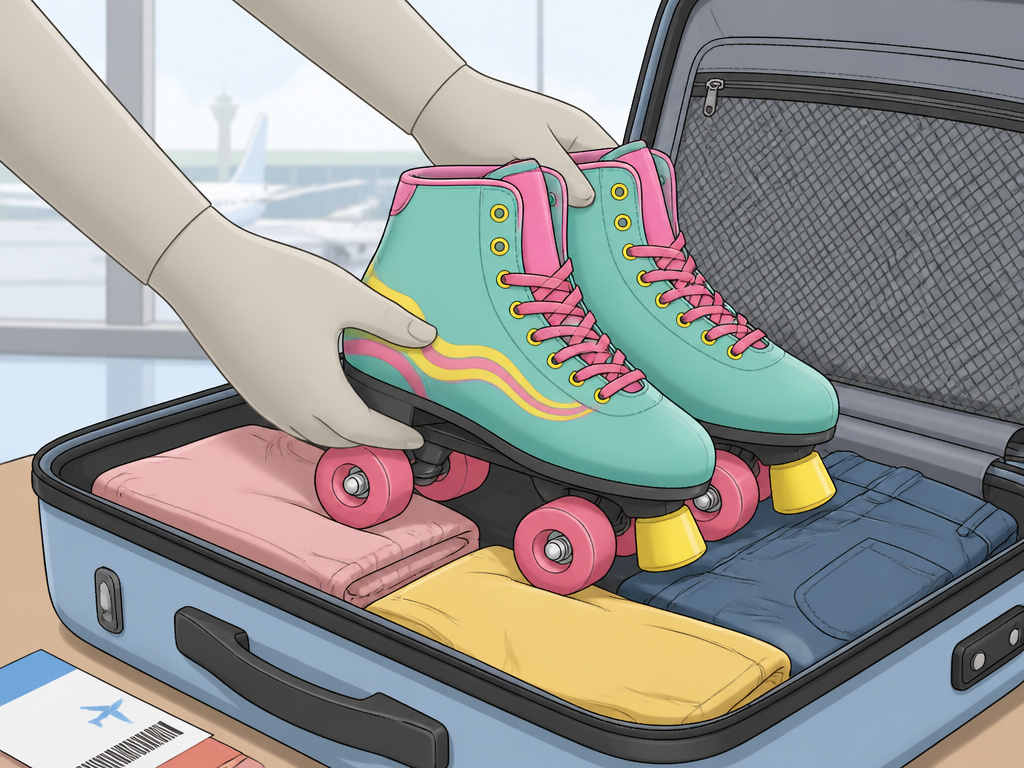
Okay, so you can’t skate in the airport. But you absolutely can bring your skates to the airport and on your flight. Here’s how to do it smartly, drawing from my own miles logged with gear.
Your Packing Options:
- As a Personal Item: This is my go-to. I use a dedicated roller skate bag or simply leash my skates together and sling them over my shoulder. They count as your one personal item, so your backpack or purse must fit under the seat.
- In Your Carry-On Luggage: If you have a spacious carry-on roller, you can pack your skates inside. This protects them better but uses valuable space. Make sure your bag still fits the overhead bin dimensions.
- Checked Luggage: The safest option for your skates, but the riskiest for your journey. Airlines lose bags. If you must check them, use a sturdy, lockable bag and consider an AirTag. Remember, checking a bag often costs extra.
The Non-Negotiables:
- Backup Shoes: Never travel to the airport wearing your skates. Always, always have a pair of regular shoes in your bag. If you are asked to stop skating, you need to be able to switch instantly.
- Secure Your Gear: Use skate leashes or a bag. Carrying loose skates in your hands is awkward and increases the chance you’ll drop them or whack someone.
- Know Your Airline’s Policy: A quick web search for “[your airline] sporting equipment policy” will tell you if there are special fees or packing requirements for flying with roller skates.
What most people get wrong: Trying to wear their skates through security. You cannot skate through the TSA checkpoint. You will have to take them off to go through the metal detector/body scanner, creating a hassle for you and everyone behind you. Put them in your bag before you reach the security line.
For more detailed methods, our guide on carrying roller skates covers everything from leashes to backpacks.
International Airport Rule Variations
While U.S. Rules are broadly similar, international travel adds another layer of uncertainty. There is no global standard.
Some airports in Europe or Asia might be more permissive, especially in less crowded areas or during off-hours. However, the core safety and liability concerns exist everywhere. The principle of checking local rules is even more critical.
How to check for an international airport:
-
Navigate to the airport’s official website (e.g., Heathrow, Schiphol, Narita). 2.
-
Search the page or PDF for keywords like “skate,” “roller,” “scooter,” or “personal transportation.”
- If you can’t find a clear answer, default to the safest assumption: it’s prohibited.
When in doubt, don’t test it. The stress of dealing with foreign security or police in a language you might not speak is a surefire way to ruin a trip.
Frequently Asked Questions
Can I take my roller skates on a plane?
Yes. The TSA explicitly permits roller skates and rollerblades in both carry-on and checked baggage. Your airline may have specific rules about how they are packed or if they count as a personal item, so always verify with your carrier before flying.
Can you skateboard in an airport?
The rules are identical. Skateboards are universally classified as Personal Transportation Devices (PTDs) alongside roller skates. Skateboarding in airports is prohibited in passenger terminals and secured areas. You can carry your skateboard as luggage, but you cannot ride it. Our dedicated article on can you skateboard in an airport covers this in detail.
Can I bring roller skates in my carry-on luggage?
Yes, this is generally the easiest method. The TSA allows it, and it keeps your gear with you. Just ensure your carry-on bag (with skates inside) meets your airline’s size and weight requirements for the overhead bin.
What about rollerblades? Are the rules different?
No. The terms “rollerblades” (inline skates) and “roller skates” (quad skates) are used interchangeably in airport ordinances. Both are prohibited from being ridden on airport property. The process for rollerblading in an airport is the same as for quads: pack them, don’t wear them.
Could I really get arrested for skating in an airport?
Technically, yes. Violating airport rules can be classified as a misdemeanor offense, which is an arrestable crime. While it’s extremely unlikely for a first-time, compliant person just skating calmly, the legal mechanism exists. The more realistic risk is having your skates confiscated, being fined, or missing your flight.
The Bottom Line
The can you roller skate in an airport question isn’t really “can you,” but “should you risk it?” The official answer from multiple airport authorities is a clear, written no. The TSA’s green light only applies to the skates as cargo, not as transportation inside the terminal.
I’ve seen the temptation firsthand, those long, smooth hallways are a siren call. The potential consequences, from a missed flight to a confiscation, far outweigh the few minutes of fun. The fundamentals of safe, smart travel apply here: know the rules, pack properly, and don’t create problems for yourself or others.
Your best move is to master the art of traveling with roller skates, not skating through travel. Pack your backup shoes, and save the wheels for a rink or park on the other side of your journey.
