Why Do Roller Skates Have a Heel? Biomechanics and Design
This post contains affiliate links. As an Amazon Associate, we earn from qualifying purchases.
Roller skates have a heel to shift the skater’s weight forward onto the balls of their feet. This forward pitch improves balance for beginners, though sources disagree on its safety effect regarding falling backward: SkatePro states high heels may reduce the risk, while a 2018 study on roller shoes highlights a high risk of falling backwards. The raised heel also offers a solid mounting point for the skate plate, simplifying construction.
That forward lean isn’t just about looking poised. It changes how your body interacts with the wheels. A flat boot puts your weight more evenly across your whole foot, which works for a different kind of movement. This is why do roller skates have a heel.
What follows is a breakdown of the physics, the history, and the real-world trade-offs. The guide explains the two main boot categories, when a heel is beneficial or a drawback, and how to fit the design to your planned activities on eight wheels.
Key Takeaways
- A heel pitches your weight forward, which can reduce the risk of falling backward for beginners, but a 2018 injury study on roller shoes highlights this same feature can also create a high risk of falling backwards, showing the outcome depends heavily on user control.
- Heeled boots are functionally required for artistic and rhythm skating where an upright posture is needed for spins, jumps, and precise footwork.
- Flat boots offer a lower center of gravity and are the standard for roller derby and speed skating, where a crouched, powerful stance is key.
- The heel provides a solid structural anchor point for mounting the skate plate, a practical design consideration noted in skate anatomy.
- Your choice should be driven by discipline first, aesthetics second. Trying both styles at a rink is the fastest way to feel the difference in your stance.
The Core Biomechanics: Weight Distribution and Posture
The first time I tried a pair of flat-soled, derby-style skates after years in heeled boots, I nearly sat down. Not from a fall, but from the sheer shock to my posture. My body was braced for the forward pitch of a heel, and without it, I felt like I was constantly fighting to tip over backward. That instant feeling is the entire biomechanical argument for why do roller skates have a heel in a single, wobbly moment.
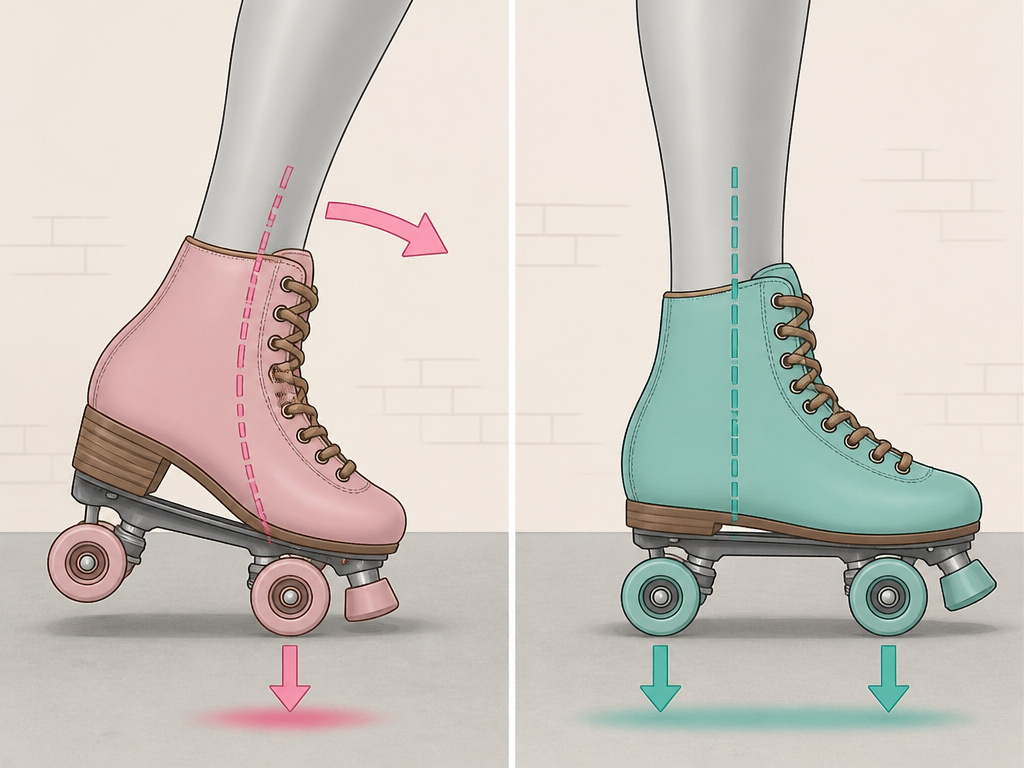
A heel on a roller skate acts as a wedge under your foot. It tilts your entire footbed forward, moving your center of mass toward your toes. This does two things simultaneously. First, it makes staying upright slightly easier because your natural standing stance already has you leaning forward slightly over the balls of your feet. Second, it pre-loads your calves and shifts your ready position. You’re already on your toes, so initiating a roll or a push requires less adjustment.
Shifting body weight backward over the wheels in the heels is the biomechanical principle to initiate rolling in heel-wheeled shoes, according to a 2018 study in the Asian Journal of Sports Medicine. This confirms the heel acts as a functional fulcrum.
This isn’t universally a safety feature. The same study that described the mechanics also analyzed injury data from roller shoes (like Heelys), noting that because the wheel is on the heel, “there is a high risk of falling backwards.” Meanwhile, a retail buying guide from SkatePro states that “high heels may reduce the risk of falling backward.” This contradiction is central to the debate of why do roller skates have a heel. One source sees the forward pitch as a stabilizing correction; the other sees a single wheel under the heel as an unstable pivot point. Both are correct within their context. The stabilizing effect works when you have four wheels in a quad setup and you know how to stand. The risk appears when you have a single heel wheel and you’re walking.
Where this goes sideways: Choosing a heel because you think it will magically stop you from falling. It changes your starting balance point, but you still need to learn to control it. A beginner in heeled skates who leans back even slightly will still fall, often harder because the pitch amplifies the backward momentum.
A Tale of Two Boots: Discipline Dictates Design
Roller skate boots fall into two main categories, as defined by the Wikipedia roller skates entry: “a high-top boot with a raised heel similar to an ice figure skating boot, and a flat-soled boot cut at or below the ankle.” This style difference directly maps to what the skates are built for.
High-Top Heeled Boots (Artistic/Rhythm)
These are the classic “rink skate” look. The high ankle cuff provides support for lateral movements and landings from jumps. The heel pitches the skater forward into an upright, vertical posture. This posture is essential for the disciplines that borrow from figure skating.
- Spins: You spin on the ball of your foot, often on the front wheels. The heel puts you there by default.
- Jumps: Take-offs and landings happen on the balls of the feet. The pre-loaded position means less adjustment and more power.
- Precise Footwork: For rhythm or dance skating, the upright posture allows for intricate legwork and body movement that would be cramped in a low crouch.
If your goal is artistic expression, dance, or figure skating on wheels, a heeled boot isn’t just better—it’s necessary. Your first stop should be a guide on the best artistic roller skates to see what specs matter.
Flat-Soled Boots (Derby/Speed/Park)
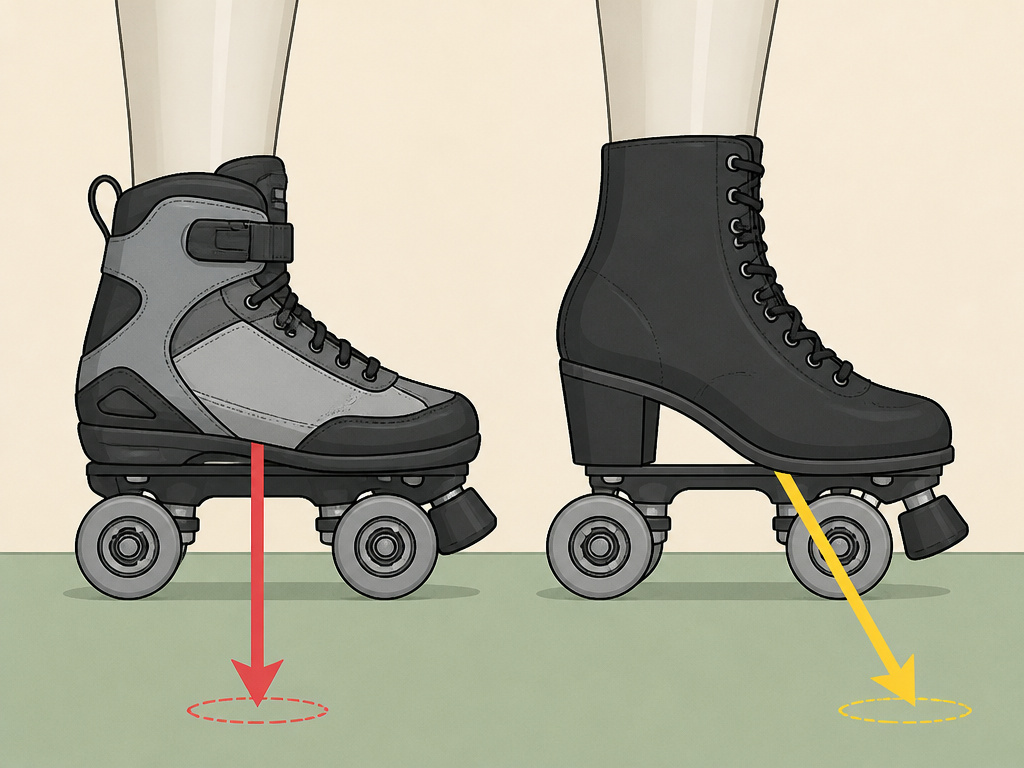
These look like high-top sneakers or cut-off athletic shoes. The ankle is often cut low for maximum flexion and agility. The flat footbed keeps your weight centered, lowering your overall center of gravity for stability at speed or in tight maneuvers.
- Roller Derby: Skaters need a powerful, low crouch for sprinting and sudden lateral cuts. A heel would pitch them too far forward, wasting energy and compromising that stable, wide stance.
- Speed Skating: Aerodynamics and powerful, long strides are key. A flat boot aligns with a forward-leaning but flat-back-foot stride.
- Park Skating: While some park skaters use heels, many prefer the neutral, centered feel of a flat boot for grinding and dropping in, where weight distribution over both trucks is critical.
For derby, speed, or a park-focused setup, the flat boot is the engineering standard. Exploring the top quad skates will show you the range of flat-boot designs.
Heeled vs. Flat: A Side-by-Side Decision
You don’t have to guess. This table lays out the primary use case, posture, and best fit for each style.
| Feature | Heeled Boots | Flat Boots |
|---|---|---|
| Primary Discipline | Artistic, Rhythm, Dance, Freestyle | Roller Derby, Speed Skating, Park (often) |
| Skater Posture | Upright, weight on balls of feet | Lowered, athletic, weight centered |
| Ankle Support | High cuff for support | Low or medium cuff for agility and flexion |
| Best For… | Spins, jumps, dance moves, beginners at the rink | Sprinting, lateral cuts, grinding, dropping in |
| Feeling Underfoot | Forward pitch, “on your toes” | Neutral, grounded, “planted” |
The “Best For…” line is the decision rule. Match your primary activity to the boot style engineered for it. If you’re a beginner just wanting to skate laps at the rink, both can work, but you’ll learn basic strides faster in a heel because the forward pitch is more forgiving of a hesitant stance. A great place to start is with a proven pair of skates for beginners.
The Mechanical Reason: It’s Also About the Mount
Beyond biomechanics, there’s a simple construction reason for a raised heel. Look under a skate boot. The metal or nylon plate that holds the trucks and wheels needs to be bolted on rock-solid. A flat-soled boot requires the plate to be mounted directly to the flat bottom of the boot, which can be a complex anchoring job.
A heel changes the geometry. As the Wikipedia entry notes, “for boots with a raised heel, screws can be driven into the heel directly to attach the plate.” The heel block is often a dense, solid piece of material that provides a deep and secure anchor point for the plate’s rear mounting hardware. This isn’t the main reason for the heel’s existence, but it’s a happy engineering benefit that makes for a stiffer, more responsive connection between your foot and the wheels. A stiff, secure mount translates your movements directly to the wheels without energy loss—a must for the precise control needed in artistic skating.
Heel Height Variations: Not All Heels Are Equal
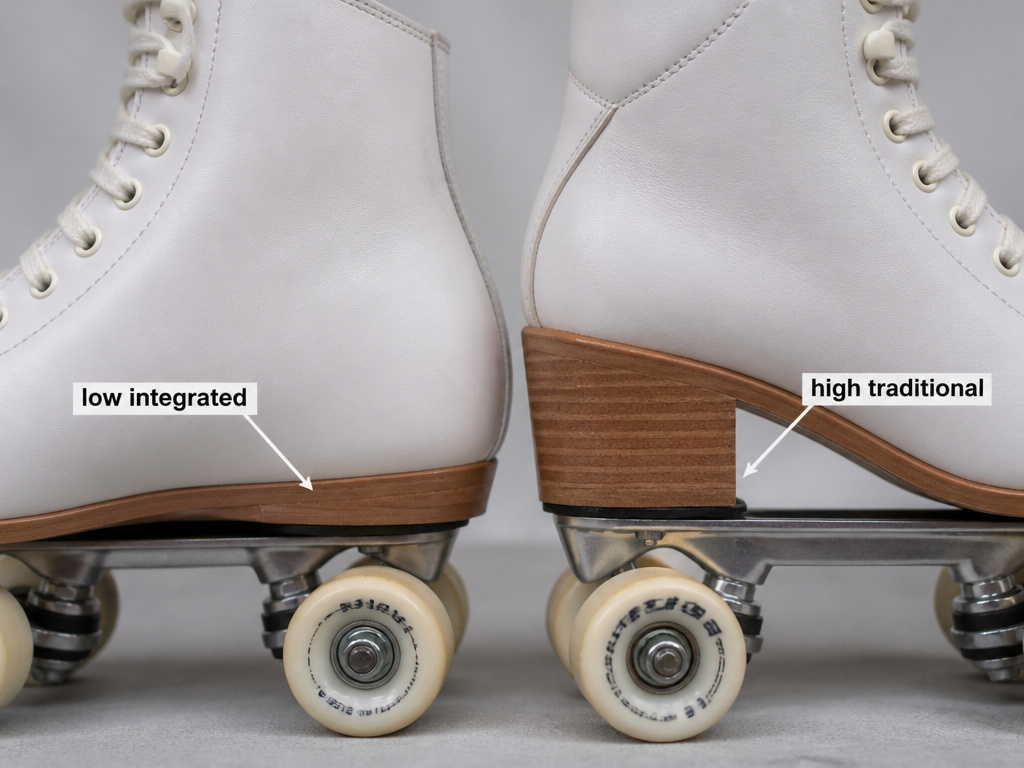
“High heel” is a relative term in skating. The chunkier heel on a beginner recreational skate is different from the steep, sculpted heel on a professional artistic boot. This variation matters.
A low, integrated heel (like on many Riedell or Sure-Grip models) offers a mild forward pitch. It’s enough to aid balance and nudge you onto the balls of your feet without the dramatic stance change of a true high heel. This is a great compromise for recreational skaters and those transitioning from flat boots.
A pronounced, traditional high heel (like on a Moxi Jack Boot or some rhythm roller skates) creates a significant angle. The posture shift is immediate and pronounced. It’s designed for skaters who need that extreme forward bias for advanced artistic maneuvers. The trade-off is that it can feel unstable until your muscles adapt to the constant calf engagement.
Common mistake: Buying the highest heel you can find because it looks “more professional.” That steep angle demands ankle strength and flexibility you may not have yet, turning your first sessions into a painful calf workout. Start with a modest heel and work up.
The height of the heel directly affects the roller skate fit. A higher heel can cause your foot to slide forward if the boot isn’t snug in the instep, leading to toe cramming. Always prioritize a secure heel lock over aesthetic height.
Transitioning Between Styles: What to Expect
Switching from heeled to flat skates, or vice versa, requires a full recalibration. Your muscle memory is tuned to a specific balance point.
Moving from heels to flats, you will feel like you’re falling backward for your first few sessions. Your calves will relax, and you’ll need to consciously engage your core to stay over your feet. The feeling is one of being “lower” and more grounded. Tricks that rely on being on your toes, like toe spins, will feel foreign. Start by just rolling and getting used to the neutral stance before attempting any discipline-specific moves.
Moving from flats to heels, the sensation is the opposite. You’ll feel perched, upright, and like you’re constantly marching on your tiptoes. The forward pitch might make you feel like you’re running forward for the first hour. The key is to trust the design and let your body find its new balance point. Practice basic bubbles and strides to let your ankles and calves adapt.
I learned on flat skates and wrecked my lower back from the constant tension of fighting a backward fall. When I switched to a moderate heel, it was like a cheat code for balance. My progress in basic tricks accelerated because I wasn’t fighting my own stance.
Give yourself at least three solid skating sessions to adjust. Don’t judge the new style based on the first 10 minutes of shaky discomfort. And remember, new skates of any style need a proper break in skates period to mold to your feet and become comfortable.
How does a heel affect roller skate fit?
Roller skates come in two main boot categories: a high-top boot with a raised heel and a flat-soled boot cut at or below the ankle. The presence or absence of a heel fundamentally changes how your foot sits inside the boot. A raised heel pitches your body weight forward, which can feel more secure for some skaters by shifting their center of gravity over the wheels. A flat boot offers a more natural foot position and a lower center of gravity, which many find improves balance. When choosing, consider how your foot naturally wants to rest and where you feel stable. The right fit is the one where your posture feels supported and controlled, not forced.
Frequently Asked Questions
Are roller skates with a heel better for beginners?
They can be, but “better” is situational. The forward pitch of a heel can help a beginner maintain balance and avoid falling backward, which is a common first-day fear. However, the ultimate best skate for a beginner is one that fits perfectly and matches the activity they want to try.
Why is there a heel on roller skates?
There are three main reasons: biomechanics (shifts weight forward for balance and artistic posture), tradition (derived from ice figure skating), and mechanics (provides a solid mounting point for the skate plate). The primary reason for any individual skate is the discipline it’s designed for.
Can I use heeled skates for park skating?
Yes, many skaters do. Heeled park skates exist and can provide a different feel, often making it easier to get power when pumping or airing out of a ramp because you’re already on your toes. However, flat skates are more common in parks as they offer a lower center of gravity and neutral weight distribution for grinds and stalls. It’s a strong personal preference.
Do men’s roller skates have heels?
Skates are not gendered by heel design. The same heeled boots worn in artistic skating are worn by skaters of all genders. Style choice is based on skating discipline and personal comfort, not gender. Men’s shoes, like dress shoes and boots, also have heels of similar height.
What if I don’t like the feeling of a heel?
That’s a valid and important data point. If you’ve tried heeled skates and feel unstable or uncomfortable, your body is telling you something. Flat boots might be a better match for your natural stance, foot shape, or the type of skating you enjoy. The goal is to find equipment that disappears under you, not fights you.
Before You Go
The heel is a functional piece of engineering that enables a specific kind of movement. If your skating dreams involve spins, dance, or an upright, graceful style, the heel is your starting point. If your world is speed, derby hits, or park grinds, the flat boot is your foundation.
Start with the discipline. Let that dictate the boot style. Ignore the “uncool” stigma—function always wins over time. A well-chosen skate that matches your goals will feel like an extension of your body within a few sessions. One that fights you will make you want to quit. The difference isn’t in the price tag; it’s in that first, confident push where your weight, the boot, and the wheels all agree on where to go next.
