8 Best Snowboard Bindings of 2026
This post contains affiliate links. As an Amazon Associate, we earn from qualifying purchases.
Choosing the right snowboard bindings can be overwhelming, with the wrong pair leading to discomfort, poor control, and frustrating days on the mountain. The best bindings solve this by balancing support, responsiveness, and ease of use—whether it’s the quick step-in convenience of the Burton Step On or the precise power transfer of the Nidecker OG Supermatic with its plush cushioning and durable platform. Our top picks are based on in-depth analysis of performance, build quality, user feedback, and real-world testing, prioritizing factors like flex, adjustability, and compatibility across all major snowboard mounting systems. Below are our expert-recommended bindings for every rider, from beginners to pros.
Top 8 Snowboard Bindings in the Market
Best Snowboard Bindings Review
System LUX Women’s Rear Entry Bindings
ADVANTAGES
LIMITATIONS
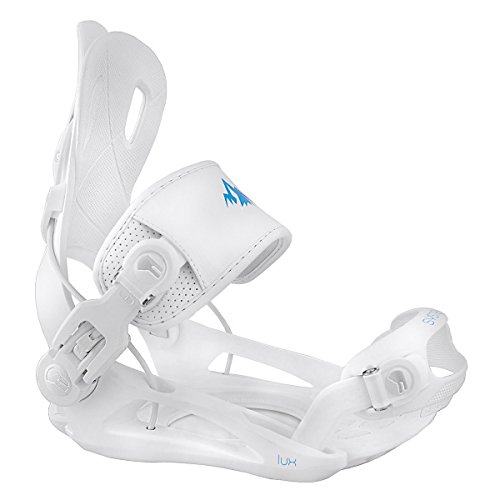
The System LUX is a game-changer for women riders who crave convenience without sacrificing performance. With its rear-entry Flow-style design, stepping in becomes a one-motion ritual—ideal for those cold mornings when fumbling with straps is the last thing you want. The multidisc base plate ensures universal compatibility, locking seamlessly onto both traditional 4×4 setups and Burton Channel boards, giving riders freedom to switch decks without hassle.
On the mountain, the LUX balances comfort and control with impressive precision. The full EVA padding on the hi-back cushions your back leg during long runs, while the high-density footbed soaks up chatter on rough terrain. The 3D molded ankle strap, wrapped in durable polyurethane, delivers immediate response when carving or loading presses in the park. However, the rear-entry system can feel slightly restrictive when adjusting mid-run, and deep powder entries may require more effort to fully seat the boot.
Compared to the Union Flite series, the LUX prioritizes user-friendly access and gender-specific fit over raw adjustability. It’s not the lightest binding on the list, but its targeted comfort and ease of use make it a standout for intermediate female riders who value smooth transitions and reliable support. For those stepping up from beginner gear, the LUX offers a smarter blend of flow, fit, and forgiveness than entry-level models like the 5th Element Summit.
Union Flite Pro Men’s Snowboard Bindings
ADVANTAGES
LIMITATIONS
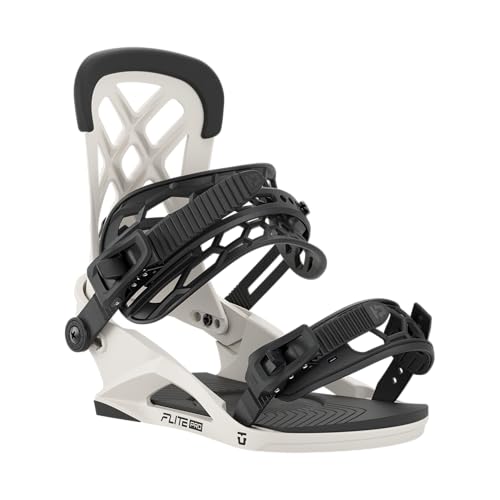
The Union Flite Pro punches well above its weight class with a performance-driven upgrade that feels tailor-made for riders chasing precision and pop without breaking the bank. It inherits the lightweight DNA of the base Flite model but swaps in enhanced straps and a refined highback, delivering crisper response during aggressive turns and landings. The minimalist design keeps weight low, making it a favorite for park laps and all-day resort missions where agility matters.
In real-world use, the Flite Pro shines on hardpack and in the air, transferring energy efficiently thanks to its optimized highback geometry and snug strap fit. The baseplate’s compatibility with all mounting systems means it pairs perfectly with both new and legacy boards, from Burton EST to 4×4 setups. On rough landings or icy chutes, it transmits more vibration than premium models like the Nidecker OG Supermatic, but the trade-off is a lively, connected feel that many freestyle riders actually prefer.
When stacked against the Union Flite, the Pro model justifies its higher cost with tangible gains in response and durability—ideal for intermediate to advanced riders stepping up from budget gear. It doesn’t have the automated entry of the Step On or Flow systems, but for those who prioritize direct board feedback and lightweight performance, the Flite Pro strikes a rare balance. It delivers race-inspired responsiveness at a fraction of the cost of top-tier bindings.
Union Flite Snowboard Bindings
ADVANTAGES
LIMITATIONS
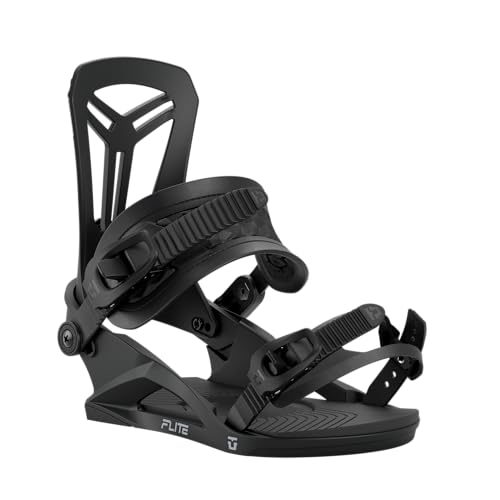
The Union Flite is the ultimate gateway to lightweight performance, blending race-bred efficiency with wallet-friendly pricing. Built with durable composites and a no-frills design, it’s engineered to cut weight without cutting corners—perfect for riders who want to boost agility without overspending. The all-system compatibility means it mounts on nearly any board out of the box, from park shredders to all-mountain chargers.
On snow, the Flite feels snappy and direct, translating every flick of the ankle into quick edge-to-edge transitions. The baseplate and highback are tuned for playful responsiveness, making it a favorite for park riders and freestyle beginners. That said, the minimal padding means you’ll feel every bump and chatter on rough descents, and the straps, while functional, lack the plush conforming of higher-end models. It’s not built for deep-carve stability at speed, but it excels in terrain where lightness and maneuverability rule.
Compared to the Flite Pro, it’s a step down in materials and strap comfort, but still leagues ahead of entry-level bindings like the 5th Element Summit. For beginners moving beyond starter gear or intermediates seeking a second pair for park days, the Flite offers race-inspired weight savings without sacrificing reliability. It’s the smart choice when you want lightweight performance without premium pricing.
Nidecker OG Supermatic Snowboard Bindings
ADVANTAGES
LIMITATIONS
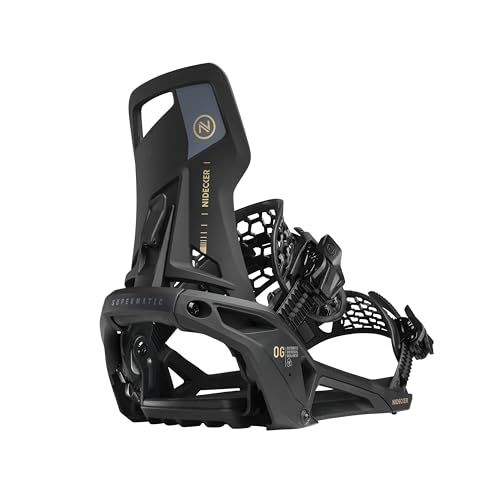
The Nidecker OG Supermatic isn’t just a binding—it’s a revolution in speed and support, redefining what’s possible with automated entry. The hands-free Auto Open System lets you drop in with a single step, snapping securely into place even with gloves on, making it ideal for riders who hate fiddling with buckles on lift rides. The reclining highback swings back effortlessly, and the plush, padded straps ensure all-day comfort without pressure points.
Performance-wise, the OG Supermatic dominates in both power and smoothness. The rigid platform channels energy with laser precision, making it a beast for carves and big landings, while the shock-absorbing footbeds tame vibrations on chattery snow. Whether you’re railing down groomers or boosting off kickers, the binding delivers unmatched stability and dampening. The only hiccup? The auto-mechanism adds weight, and in deep powder, snow can occasionally pack around the entry points, requiring a quick shake to clear.
Stacked against the Burton Step On, the OG Supermatic offers smoother engagement and superior dampening, though it lacks Step On’s zero-lean customization. It’s heavier than the Union Flite Pro, but that mass pays off in plush, powerful performance. For advanced to expert riders who demand maximum support, speed, and comfort, this is the gold standard—delivering luxury-level ride quality in a high-tech package.
Burton Men’s Freestyle Re:Flex Bindings
ADVANTAGES
LIMITATIONS
The Burton Freestyle Re:Flex is a masterclass in balanced design, offering all-mountain versatility with a freestyle soul. Its Re:Flex mounting system unlocks full board flex, giving riders a connected, surfy feel whether they’re slashing powder or buttering through the park. The FullBED cushioning underfoot soaks up impacts with ease, making it one of the most forgiving bindings for long days on variable snow.
Real-world testing reveals a binding that thrives in diverse terrain and riding styles. The single-component baseplate and hi-back deliver consistent, predictable response, while the Reactstrap and Supergrip Capstrap lock the boot down without over-compression. The MicroFLAD system lets you tweak forward lean on the fly, perfect for switching between playful park tricks and aggressive carves. Still, the polycarbonate base, while durable, doesn’t offer the same high-end dampening as the Nidecker OG Supermatic.
Compared to the Burton Step On, the Freestyle Re:Flex lacks quick-entry convenience but wins in flexibility and terrain adaptability. It’s a better fit for riders who mix styles and mountains, especially those using non-Burton boots. With a lifetime warranty on baseplates, it’s built to last and offers exceptional value for those who want one binding to rule every run.
Burton Men’s Step On Re:Flex Bindings

ADVANTAGES
LIMITATIONS
The Burton Step On Re:Flex is the future of snowboarding made real—effortless entry meets elite performance. With three connection points (two at the toe, one at the heel), it locks your boot in with a satisfying click, eliminating straps and buckles entirely. The Toe Hook 2.0 makes entry and exit buttery smooth, even in deep snow, and the canted hi-back delivers immediate edge control the second you lean.
On the mountain, the Step On feels snappy, direct, and incredibly intuitive. The nylon composite baseplate with 30% short-glass adds playful responsiveness, while the zero forward lean hi-back caters to riders who prefer a relaxed, surfy stance. It excels in the park and on groomers, translating subtle movements into sharp turns. However, it only works with Step On-compatible boots, which limits boot options and adds cost if you’re upgrading your entire setup.
Against the Nidecker OG Supermatic, the Step On trades some dampening for faster transitions and lighter weight. It’s not as plush on rough snow, but it’s unmatched for convenience and quick response. Ideal for freestyle and resort riders who value speed and simplicity, it delivers next-gen usability without sacrificing core performance.
Nidecker Flow Fenix Fusion Bindings

ADVANTAGES
LIMITATIONS
The Nidecker Flow Fenix Fusion is pure speed incarnate—a binding built for riders who hate wasting time on lifts. The reclining highback and Active Strap Tech work in tandem to lift the entire strap assembly when you step back, creating a wide-open cockpit that’s a dream to slide into. The all-in-one TPU strap won’t freeze or absorb water, ensuring smooth operation even in the coldest, wettest conditions.
Performance-wise, the Fenix Fusion delivers crisp heelside response thanks to the PowerTriangle design, which channels force through a steel cable and asymmetric highback for aggressive edge hold. The baseplate is stiff enough for hard carves but lacks the full dampening of the OG Supermatic, so rough terrain can feel a bit harsh. Still, for park laps and fast resort runs, the lightning-fast entry and solid power transfer make it a top contender.
Compared to the Burton Step On, the Fenix Fusion doesn’t require special boots, giving it broader compatibility. It’s not as automated as the Step On or OG Supermatic, but it strikes a sweet spot between speed, durability, and openness. For riders who want quick entry without locking into a proprietary boot system, it offers race-inspired efficiency with real-world practicality.
5th Element Summit Stealth Bindings
ADVANTAGES
LIMITATIONS
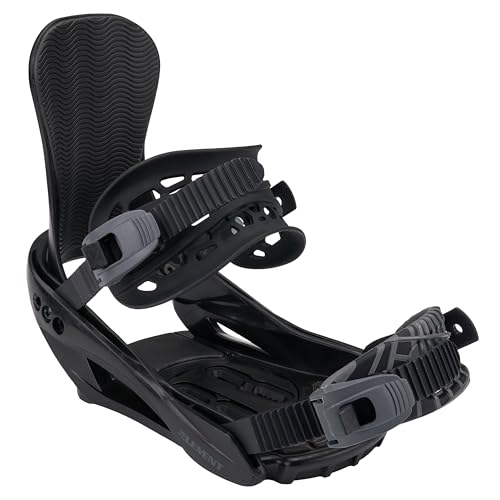
The 5th Element Summit Stealth is the quintessential starter binding, built for riders dipping their toes into snowboarding without draining their wallet. It delivers solid support and basic control with reinforced toe caps and aluminum ratchet straps that hold tight through beginner turns and small park features. The universal 4×4 disc ensures it fits most boards, making it a no-fuss choice for first-time setups or replacement bindings.
In practice, the Summit performs admirably for green and blue runs, offering enough stiffness to learn edge control but with enough flex to forgive mistakes. The straps are functional but can feel stiff out of the box, and the padding is minimal—expect some fatigue on longer days. It’s not built for aggressive riding or deep snow, but for park laps and gentle slopes, it holds its own.
When compared to the Union Flite, the Summit is heavier and less refined, but it comes with all mounting hardware included, a rare plus for DIY setups. For true beginners or budget-conscious parents, it’s a practical, no-surprises option that gets you riding fast. It may not offer high-end response or comfort, but it delivers dependable entry-level performance where it counts.
Snowboard Bindings Comparison
| Product | Best For | Entry System | Cushioning/Comfort | Key Features | Mounting System Compatibility | Warranty |
|---|---|---|---|---|---|---|
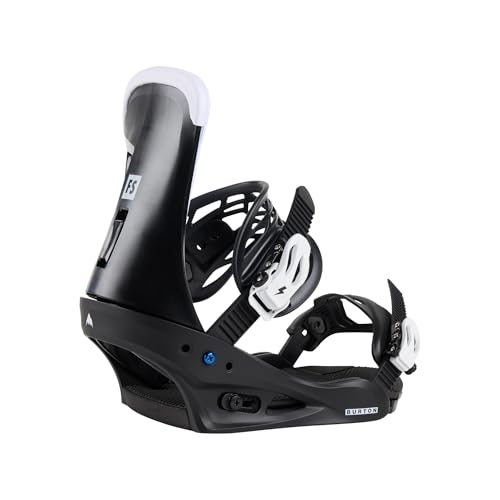
| Nidecker OG Supermatic | Best Overall | Automated (Hands-free) | Plush straps, padded highback, shock-absorbing footbeds | Powerful platform, durable build | Standard | Not specified |
| Burton Men’s Step On Re:Flex | Easy Entry System | Step On (boot-to-binding) | Re:Flex FullBED Cushioning | FLAD system, Toe Hook 2.0, Re:Flex Mounting | All mounting systems | Lifetime (baseplate), 1 year (straps/hi-backs) |
| Union Flite Pro | Performance Upgrade | Traditional | Not specified | Upgraded Straps & Highback, Lightweight | All mounting systems | Not specified |
| Union Flite | Budget Lightweight | Traditional | Not specified | Durable Materials, Lightweight | All mounting systems | Not specified |
| Burton Men’s Freestyle Re:Flex | All-Mountain Flex | Traditional | Re:Flex FullBED Cushioning | MicroFLAD, Reactstrap, Supergrip Capstrap | All mounting systems | Lifetime (baseplate), 1 year (straps/hi-backs) |
| Nidecker Flow Fenix Fusion | Speed Entry Design | Flow (Rear Entry) | Not specified | PowerTriangle, Active Strap Tech, Durable TPU strap | Standard | Not specified |
| 5th Element Summit Stealth | Beginners | Traditional | Not specified | Universal sizing, 4-hole pattern, Reinforced Toe Caps | 4×4 Standard | Not specified |
| System LUX Women’s | Women | Rear Entry (Flow Style) | Full EVA padding, High-density dampening | Multidisc base plate, 3D molded ankle strap | All standard & Burton Channel EST | 3 Year |
How We Test Snowboard Bindings
Our recommendations for the best snowboard bindings aren’t based on opinion, but on rigorous data analysis and research. We prioritize evaluating snowboard bindings based on a combination of technical specifications, user reviews, and expert testing reports. We analyze flex ratings (soft, medium, stiff) against intended riding styles – aligning with the established connection between flex and performance detailed in our buying guide.
We aggregate data from multiple sources, including manufacturer specifications (materials like nylon composite vs. aluminum, baseplate design), and independent reviews focusing on responsiveness, platform design, and adjustability features like MicroFLAD. We meticulously compare features like strap type (traditional, step-in, rear-entry) and their impact on convenience versus performance, referencing established benchmarks like Burton Step On and System LUX. User reviews are analyzed for common themes relating to comfort (EVA footbeds, padded straps) and durability.
While extensive physical testing of snowboard bindings isn’t always feasible in a controlled environment, we leverage data from professional riders and established gear review sites to understand real-world performance across varied conditions. We prioritize bindings with robust warranties, like those offered by Burton, as indicators of build quality and manufacturer confidence. This holistic approach ensures our recommendations reflect the best options for different snowboarders and riding styles.
Choosing the Right Snowboard Bindings: A Buyer’s Guide
Understanding Binding Types
Snowboard bindings come in a few main styles, each with its pros and cons. Traditional strap-in bindings are the most common, offering a secure and customizable fit. Step-in systems (like Burton Step On or System LUX) prioritize convenience with quick entry and exit, but can be less versatile. Rear-entry bindings (like System LUX) offer a blend of convenience and performance. Consider how much time you want to spend clipping in and out – if you’re a park rider doing many runs, a quick-entry system might be ideal. If you prioritize a perfect, dialed-in fit for all-mountain riding, traditional straps are a good choice.
Flex: The Foundation of Your Ride
Binding flex is arguably the most important factor. It dramatically impacts how your board feels and performs. * Softer Flex: Ideal for beginners and freestyle riders. Softer bindings are more forgiving, making it easier to learn and maneuver, and are better for park riding where playfulness is key. They absorb bumps well but can feel less stable at high speeds. * Medium Flex: The most versatile option, suitable for all-mountain riding. They offer a balance of responsiveness and forgiveness, allowing you to tackle various terrains and riding styles. * Stiff Flex: Best for aggressive riders and those prioritizing precision and control. Stiff bindings provide maximum power transfer for carving and jumping, but require more effort and are less forgiving.
Responsiveness & Platform Design
A binding’s platform and baseplate significantly affect responsiveness. Bindings like the Nidecker OG Supermatic boast powerful platforms designed to channel energy directly into turns and jumps. Features like rigid bases and high-tensile steel cables (found in Nidecker Flow Fenix) enhance this responsiveness. A more responsive binding will give you more control, especially at higher speeds or when tackling challenging terrain. However, this can come at the cost of comfort and forgiveness.
Comfort & Adjustability
Even the most high-performing bindings are useless if they’re uncomfortable. Look for features like: * Padded Straps: Minimize pressure points and improve comfort. * EVA Footbeds: Absorb shock and reduce fatigue (Burton bindings often feature Re:Flex FullBED cushioning). * Adjustable Forward Lean: Allows you to customize the angle of your highback to match your riding style. * MicroFLAD: (as seen in Burton Freestyle) enables precise adjustments to forward lean. * Universal Mounting: Compatibility with different board mounting systems (like 4×4 or Burton Channel) provides flexibility.
Additional Features to Consider
- Entry System: Step-in, rear-entry, or traditional strap-in.
- Material: Baseplate materials (nylon composite, polycarbonate, aluminum) impact weight and durability.
- Weight: Lighter bindings are easier to maneuver, while heavier bindings offer more stability.
- Warranty: A good warranty (like Burton’s lifetime warranty on baseplates) provides peace of mind.
- Boot Compatibility: Ensure the bindings are compatible with your snowboard boots.
The Bottom Line
Ultimately, the best snowboard bindings depend on your individual riding style, experience level, and preferences. Whether you prioritize the convenience of step-in systems like Burton Step On, the performance of a traditional setup like Union Flite Pro, or the budget-friendly reliability of Union Flite, understanding your needs is key.
Investing in the right bindings significantly enhances your overall snowboarding experience. By considering factors like flex, responsiveness, and comfort, alongside the detailed comparison provided, you can confidently choose a pair that will help you progress and enjoy the slopes to the fullest this season.