10 Best Snowboard Googles in 2026
This post contains affiliate links. As an Amazon Associate, we earn from qualifying purchases.
For clear vision and reliable performance, we chose the Smith Squad Snow Goggles with ChromaPop Lens as the best overall. Its excellent lens clarity and anti-fog system make it a top choice. The Anon M5 Toric is best for magnetic lens swaps, while the OutdoorMaster Ski Goggles PRO offers great budget value.
Choosing the right goggles means balancing lens technology, fit, and ventilation to match your riding conditions. Fogged lenses or poor visibility can ruin a day on the mountain.
Top 10 Snowboard Goggles in the Market
Certain content that appears on this site comes from Amazon. This content is provided "as is" and is subject to change or removal at any time.
The Best Snowboard Goggles, Reviewed
Smith Squad Snow Goggles with ChromaPop Lens

What We Like
- ChromaPop lens enhances definition and natural color
- Excellent anti-fog performance for clear vision
- Secure, adjustable fit with silicone-backed strap
Trade-offs
- Single included lens; extra lenses are a separate purchase
- Optimized for Smith helmets; integration with other brands varies
The Smith Squad’s ChromaPop lens technology delivers sharp optics and enhanced contrast, which means you can spot changes in terrain and light conditions with exceptional clarity. This, combined with what Smith calls its best anti-fog tech and a comfortable, secure fit, makes these goggles a reliable choice for riders who face variable mountain weather and demand consistent performance. They are designed for smooth integration with Smith helmets, maximizing comfort and ventilation.
The main trade-off is that you only get one lens in the box, so adapting to drastically different light conditions requires buying a spare. For a similar premium experience but with a lens included for variable light right out of the gate, consider the Anon M5 Toric goggles. The Squad excels when your priority is optical clarity and fog resistance in a well-ventilated, comfortable package.
Anon M5 Toric Ski & Snowboard Goggles

What We Like
- Quick magnetic lens swaps with Magna-Tech
- Includes MFI mask for integrated face coverage
- Wide field of view with reduced distortion
- Roomier frame fits over most prescription eyewear
Trade-offs
- At 1.3 lb, heavier than many rivals like the Dragon NFX2
- Frame fits medium/large faces, not smaller ones
- No low-light lens included in this bundle
The Anon M5’s standout feature is its Magna-Tech magnetic lens system, which makes swapping lenses on the mountain a matter of seconds without compromising a secure seal. This is perfect for riders who face changing light conditions and want to adapt quickly without fumbling. The goggle also integrates a magnetic face mask to seal out cold air, and its generous frame comfortably fits over glasses, making it a strong choice for all-day comfort and versatility.
The Anon M5 Toric goggles weigh 1.3 pounds, which is more than the 0.2-pound Dragon NFX2. This difference in mass can be felt during extended wear. For a buyer who values the fastest lens change available, the M5 provides that feature with added weight. Those prioritizing a minimalist setup may find a lighter model like the 0.5-pound Smith Blazer a better match.
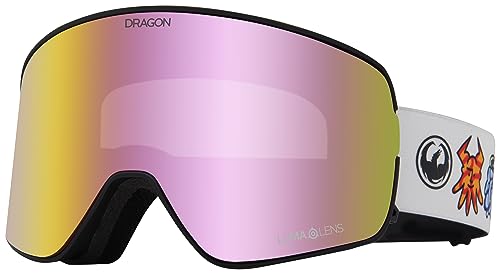
Dragon Alliance DRG1636 Snowboard Google
What We Like
- Patented frameless design for wide field of view.
- Swiftlock system for quick lens changes.
- Includes two Lumalens lenses for different conditions.
- Triple-layer face foam with hypoallergenic lining.
Trade-offs
- At 1.0 pound, it's heavier than the Smith Squad.
- 54% VLT lens is specifically for low light only.
- No high VLT lens included for bright sun.
With a 54% VLT rating, the Dragon NFX2’s Lumalens Pink Ion lens is designed for low-light conditions, providing the necessary contrast when visibility drops on stormy days. Its patented frameless design removes the frame from the peripheral view, which can help riders maintain a wider sightline for spotting terrain features. The goggle includes a triple-layer face foam with a hypoallergenic fleece lining for a secure seal against the face.
The included Lumalens Midnight replacement lens is also tuned for low light, so both lenses serve similar light conditions rather than offering a range. This means a rider could need a separate, higher VLT lens for bright sun if conditions change. Among the listed products, the NFX2 weighs 1.0 pound, which is heavier than options like the Smith Blazer at 0.5 pounds or the Dragon Alliance NFX2 Snow Goggles (Switch/Amber) at 0.2 pounds.
Product photos
Smith Blazer Snow Sport Goggle

What We Like
- Wide field of view for scoping terrain
- Cylindrical lens for clarity and impact resistance
- Silicone-backed strap stays put with easy adjustment
- Moisture-wicking foam for a fog-free fit
Trade-offs
- Designed for Smith helmet integration, limiting optimal use with other brands.
The Smith Blazer Snow Sport Goggle uses a cylindrical Carbonic-X lens in a slim frame for a wide field of view, which helps riders scope features and find their line. This design prioritizes situational awareness on the mountain. Its two-layer DriWix face foam wicks moisture while the ultra-wide silicone-backed strap adjusts easily, working together for a secure, fog-free fit.
The focus on Smith helmet integration means you won’t get the full venting and comfort benefits if you’re wearing a different brand. For a similar wide-view experience without the brand-specific ecosystem, the Anon M5 Toric offers a comparable toric lens design and its own integrated system, though it comes in heavier at 1.3 pounds.
Product photos
OutdoorMaster Ski Goggles PRO

What We Like
- Frameless spherical lens for unobstructed view
- OTG design accommodates prescription glasses
- Includes protective case and carrying pouch
Trade-offs
- Weight of 0.7 lbs is heavier than some competitors
- Extra lenses sold separately
This makes it a strong contender for riders who want the flexibility to switch lenses for different conditions without stepping into premium pricing. Its OTG design and universal helmet compatibility mean it works for a wide range of adults and teens, offering solid value by focusing on the essentials many snowboarders need.
To build a set of lenses for varying conditions requires purchasing them separately, adding to the total cost. The included protective case and carrying pouch offer convenient storage for the goggles and any extra lenses you acquire. For riders who prioritize a wide field of view and basic lens-swapping capability, this model covers those fundamentals.
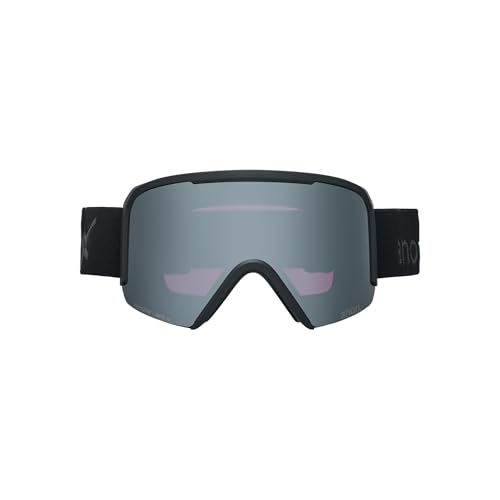
Anon Nesa Snow Goggles
What We Like
- Magnetic face mask integration for gapless seal
- Over-the-glass frame fits prescription eyewear
- Two Perceive lenses for variable light conditions
- Full perimeter vent channel maximizes anti-fog airflow
Trade-offs
- At 0.9 lbs, it's heavier than the 0.5 lb Smith Blazer
- Medium frame may not fit larger faces well
- Requires compatible Anon hoods for full MFI benefit
The magnetic face mask integration creates a sealed barrier against wind and snow without any awkward gaps or straps. This is the core advantage for riders who prioritize total facial coverage. Combined with the over-the-glass design and two included Perceive lenses, the Anon Nesa is a focused choice for someone who wants a clean, integrated setup. It works with eyewear and adapts to changing light across a full day on the mountain.
You do carry a bit more weight on your head for that feature, and the fit is geared toward small to medium faces. If the integrated mask isn’t a priority and you want a much lighter package, the Smith Blazer is a stark contrast at nearly half the weight. You’ll be giving up the magnetic seal and the extra lens, however.
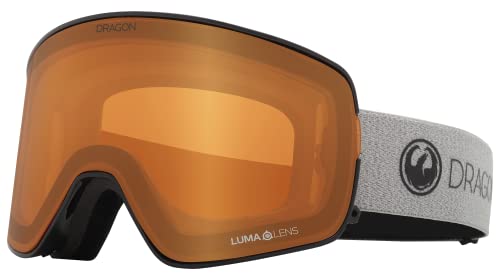
Dragon Alliance NFX2 Snow Goggles
What We Like
- Lumalens photochromic lens adapts to all light
- Swiftlock system allows quick lens changes
- Extremely lightweight at 0.2 pounds
Trade-offs
- Lightest weight in the list, may feel insubstantial
- Only cylindrical lens shape is specified
The Dragon NFX2’s Lumalens photochromic technology is its defining feature, automatically adjusting lens tint to match changing light from flat overcast to bright sun. This eliminates the need to stop and swap lenses, a major advantage for riders who encounter variable conditions on a single run. Combined with the Swiftlock lens system, it offers versatile performance in a notably lightweight package. These goggles are built for the rider who prioritizes adaptive visibility and minimal weight over maximum heft.
That lightweight design, however, means the frame has less bulk than models like the Anon M5 Toric, which could affect durability in a heavy crash. The cylindrical lens shape also provides a different field of view compared to toric or spherical alternatives. For someone seeking a dedicated photochromic solution without the fuss of lens swaps, the NFX2 excels. If you need a guaranteed over-the-glasses fit or prefer a heavier, more sturdy feel, other options in the guide will serve you better.
Oakley Line Miner Snow Goggles

What We Like
- Excellent peripheral and downward vision
- Prizm lens enhances contrast and visibility
- Durable, impact-tested Oakley lens construction
- Includes protective soft case for storage
Trade-offs
- Weighs 0.8 pounds, heavier than many rivals.
- Frame notches are only compatible with most eyewear.
Oakley’s Line Miner uses a cylindrical design pulled close to the face for uninhibited peripheral vision, including downward and side-to-side sightlines. The Prizm lens technology is designed to control light transmission for enhanced contrast and visibility. Durability testing under extreme circumstances and an included soft case aim to provide protection on and off the slopes.
The goggle weighs 0.8 pounds and measures 11.3 inches in length, which is larger and heavier than some streamlined options like the 0.5-pound Smith Blazer. Its size may feel substantial, while the 1.3-pound Anon M5 Toric is heavier still.
Product photos
InnerKing EN174 Ski Goggles

What We Like
- EN174 anti-fog certification for reliable performance
- Twice the measured clarity of standard lenses
- Spacious OTG fit for most prescription glasses
- Lightweight design with helmet-ready stability
Trade-offs
- Weighs 0.3 pounds, lighter than most listed competitors
The InnerKing EN174 goggles deliver a concrete, tested advantage with HD28 lens clarity, which means you see terrain details with significantly sharper definition than a standard goggle. This measured performance is backed by a rigorous anti-fog certification, making them a strong mid-range choice for riders who prioritize visual fidelity and fog-free reliability over a flashy feature set. They suit anyone from focused intermediates to experts who want their gear to perform predictably, letting them react with confidence at speed.
You get exceptional clarity for the price, but you’re locked into one light condition. For riders who stick to similar weather or value simplicity, this is a minor point. For those who need versatility across a full day from flat light to bright sun, a model like the Anon M5 Toric with its easy-change technology might be a more practical long-term choice.
Product photos
VOZAPOW HD Lens Ski Goggles

What We Like
- Anti-fog coating and professional ventilation system
- OTG design compatible with most prescription glasses
- Lifetime warranty with unique serial number
Trade-offs
- Cylindrical lens may not suit all helmet and face profiles
For riders who prioritize visual clarity above all, especially in variable light where glare reduction and UV400 protection matter, these goggles deliver. A triple-layer foam face seal and a soft TPU frame provide a comfortable, adaptable fit for long days. The OTG design also means you don’t have to choose between clear vision and wearing your glasses.
The trade-off is in the fixed lens system and the specific fit. Unlike the OutdoorMaster Ski Goggles PRO with its magnetic interchangeable lenses, you’re committed to the HD lens it comes with. For the rider who wants a single, exceptionally clear lens and values a secure, comfortable OTG fit with strong anti-fog performance, these are a solid, well-supported choice.
Product photos
How We Evaluated Snowboard Goggles
Our evaluation focused on manufacturer specifications, expert round-up recommendations, and patterns in owner feedback. We prioritized optical clarity, anti-fog performance, and fit because these factors most directly impact safety and enjoyment on the slopes. A great lens enhances terrain definition, while proper ventilation and sealing prevent vision-obscuring fog.
Our research into the best magnetic snowboard goggles shows how quick-change systems add convenience for variable weather. We also considered frame design and helmet compatibility, as a secure, integrated fit is crucial for comfort and performance. This is a research-led evaluation; we did not physically test these products. Our findings are based on documented features, professional reviews, and consistent reports from users.
What To Look For In Snowboard Goggles
The right pair protects your eyes while delivering a clear, comfortable view of the terrain ahead. Key factors include lens technology, frame fit, and ventilation design.
Prioritize lens clarity and anti-fog coatings for safety in variable conditions. Ensure the frame seals well to your face and helmet. Consider if you need features like a magnetic lens system or over-the-glasses (OTG) fit.
Lens Technology and Visibility
Lens quality dictates what you see. Technologies like Smith’s ChromaPop or Oakley’s Prizm enhance contrast and color definition, helping you read snow texture and terrain changes. Visible Light Transmission (VLT) percentage indicates how much light passes through; a lower VLT (e.g., 5-20%) is for bright sun, while a higher VLT (e.g., 50-80%) is for flat light and storms. Some riders prefer a versatile photochromic lens that adapts automatically. For maximum peripheral vision, look for a spherical or frameless lens design. Our comprehensive review of snowboard goggles details how these optical technologies perform.
Fit and Helmet Compatibility
A proper fit prevents gaps that let in cold air and cause fogging. The frame should seal comfortably around your face without pressure points. Check if the goggle is designed to integrate with your specific helmet brand for a gap-free seal. Many models offer silicone-backed straps for a secure, non-slip hold. If you wear prescription glasses, confirm the goggle has an OTG (over-the-glasses) design with enough interior space. Our guide on OTG goggles explains what to look for in a compatible fit.
Ventilation and Anti-Fog Performance
Fog forms when warm, moist air from your face meets the cold lens. Effective ventilation systems use passive channels and exhaust ports to manage this airflow. Look for dual-pane lenses with an anti-fog coating applied to the inner surface. Some premium models, like those highlighted in our guide to anti-fog snowboard goggles, feature advanced venting architectures. A good face foam that wicks moisture also contributes to a clear view.
- Check for multiple vent channels across the top and sometimes sides of the frame.
- Ensure the face foam is multi-layered and breathable.
- Verify the lens has a treated anti-fog coating, not just a claimed property.
- Look for certifications like EN174, which indicates tested anti-fog performance.
- Consider if you need a completely integrated system with a face mask for a gap-free seal.
A well-ventilated goggle with a proper facial seal is your best defense against fog.
Snowboard Goggles Compared
The following table compares key specifications across all ten picks to help you see the differences at a glance.
| Product | Lens Technology | Lens Shape/Design | Anti-Fog Tech |
|---|---|---|---|
| Smith Squad Snow Goggles with ChromaPop Lens | ChromaPop | Semi-rimless, oversized cylindrical | Smith's best anti-fog tech |
| Anon M5 Toric Ski & Snowboard Goggles | Perceive Lens Technology | Toric | Anti-Fog |
| Dragon Alliance DRG1636 Snowboard Google | Lumalens | Cylindrical | Super Anti-Fog coating |
| Smith Blazer Snow Sport Goggle | Carbonic-X | Cylindrical | N/A |
| OutdoorMaster Ski Goggles PRO | N/A | Frameless spherical | Anti-fog coated |
| Anon Nesa Snow Goggles | Perceive high-contrast lens | Cylindrical, semi-frameless | N/A |
| Dragon Alliance NFX2 Snow Goggles | Photochromic | Cylindrical | Super Anti-Fog |
| Oakley Line Miner Snow Goggles | Prizm Black Iridium | Cylindrical-style | N/A |
| InnerKing EN174 Ski Goggles | N/A | N/A | SGS-tested EN174 |
| VOZAPOW HD Lens Ski Goggles | N/A | N/A | Anti-fog |
Frequently Asked Questions
Which goggles are best for snowboarding?
The best goggles for snowboarding match your typical light conditions and fit your face and helmet well. For overall performance, the Smith Squad with its ChromaPop lens offers excellent clarity and reliable anti-fog. Riders who frequently swap lenses for changing weather might prefer the magnetic Anon M5 Toric. Budget-conscious riders should consider the OutdoorMaster Ski Goggles PRO.
What are some good brands of snowboard goggles?
Smith, Oakley, Anon, and Dragon are consistently recognized for their lens technology and build quality. Smith is known for ChromaPop clarity and helmet integration, while Oakley’s Prizm lenses are praised for contrast. Anon leads in magnetic lens and face mask integration systems, and Dragon offers popular frameless designs.
How to pick snowboard goggles?
Start by identifying your most common riding light conditions to choose an appropriate lens VLT or a photochromic option. Ensure the frame size fits your face for a secure seal, and verify it works with your helmet. Prioritize models with proven anti-fog ventilation and coatings. If you wear glasses, look for a confirmed OTG fit. Consider if quick lens-swapping is a priority for you.
What is the most important feature in snowboard goggles?
Lens clarity and anti-fog performance are the most critical features. A high-quality lens allows you to see terrain details and changes in snow texture clearly, which is essential for safety. Effective anti-fog ventilation and coatings ensure that clarity is maintained throughout your ride, regardless of weather or exertion level.
Are expensive snowboard goggles worth it?
Higher-priced goggles often invest more in advanced lens technologies for better contrast, wider fields of view, and more durable anti-fog coatings. They may also offer more comfortable, adjustable fits and better integration with helmets and masks. For frequent riders who encounter variable conditions, the optical and comfort benefits can be worth the investment. For occasional riders or those on a strict budget, many affordable models perform very well.
The Bottom Line
The Smith Squad Snow Goggles with ChromaPop Lens is our best overall pick for riders seeking premium optical clarity and dependable anti-fog in a comfortable, well-integrated package. It’s an excellent choice for most snowboarders and skiers. If you need to swap lenses quickly for changing light, choose the Anon M5 Toric by name.
For a solid budget-friendly option that doesn’t sacrifice a frameless view, look to the OutdoorMaster Ski Goggles PRO. Ultimately, the single most important factor is finding a goggle that provides a clear, fog-free view all day long, so prioritize lens technology and ventilation above all else.
