10 Best Womens Snowboarders in 2026
This post contains affiliate links. As an Amazon Associate, we earn from qualifying purchases.
Our best overall women’s snowboard is the Rossignol Soulside All Mountain Snowboard for its stable, forgiving ride that excels across the entire mountain. The Burton Hideaway Rocker is the best for beginners, while the Rome Royal wins for freestyle. Finding a snowboard that matches your skill level and preferred terrain is crucial for progression and fun.
A beginner’s board will feel unstable for an expert, while an advanced board can be intimidating for a newcomer. We compiled this list through research into specifications, expert round-ups, and patterns in owner feedback to help you make an informed choice.
Top 10 Women’s Snowboards in the Market
Certain content that appears on this site comes from Amazon. This content is provided "as is" and is subject to change or removal at any time.
The Best Women’s Snowboards, Reviewed
Rossignol Soulside All Mountain Snowboard

What We Like
- AmpTek rocker-camber blend for catch-free turns
- Directional flex aids stability at speed
- Wood core provides strength without excess weight
- Fiberglass layers balance rebound and forgiveness
Trade-offs
- At 59.1 inches, it requires a taller, stronger rider
Rossignol’s AmpTek Auto Turn rocker blends rocker and camber for effortless turn initiation and a catch-free ride across varying terrain. This profile is described as forgiving and great for riders developing skills across the full mountain. The board’s directional flex is softer up front for smooth turn entry and stiffer through the rear foot for added control and stability.
The trade-off for that stable, forgiving feel is a bit of heft; at 5.0 pounds, it’s not the lightest board in the guide. That weight contributes to its damp, reliable feel, but a rider prioritizing ultra-light, playful freestyle maneuvers might prefer something like the Rome Royal True Twin. For the developing all-mountain rider who wants one board to handle everything from green circles to moderate blacks, the Soulside’s design philosophy delivers a balanced, confidence-inspiring platform that excels across varied terrain.
Product photos
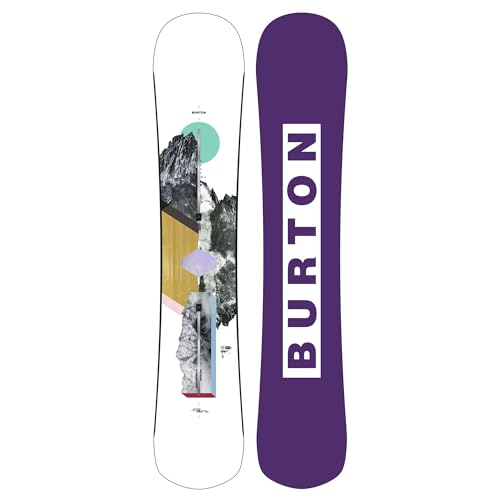
Burton Hideaway Rocker Snowboard
What We Like
- Flat Top bend for stability and balance.
- Forgiving Biax fiberglass flex.
- Dualzone EGD for increased edge hold.
- Low-maintenance extruded base.
Trade-offs
- The directional shape is less versatile for switch riding than a true twin.
A Flat Top bend provides a stable, balanced platform and continuous edge control, which translates directly to a predictable and forgiving ride for someone still building foundational skills. The symmetrical Twin Flex and a soft, jib-friendly torsion make the board easy to maneuver and quick to correct, ideal for a rider focusing on linking turns and building confidence on green and blue runs. Its directional shape with a slight taper keeps the board intuitive and engaged when pointing downhill.
The Burton Hideaway Rocker Snowboard weighs 1.0 pound, making it significantly lighter than alternatives like the Rossignol Soulside (5.0 pounds) or the Arbor Swoon (5.0 pounds). This low weight translates to a board that is easier to carry and maneuver, especially for newer riders. Its Flat Top Bend and symmetrical Twin Flex are designed to provide a stable, balanced, and forgiving feel for learning.
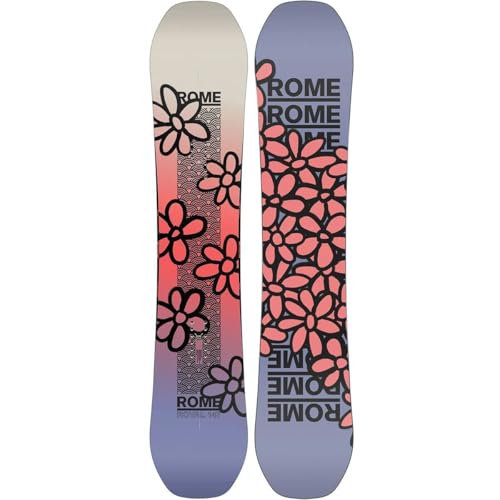
Rome Snowboards ROMEW-ROYAL Womens Snowboarder
What We Like
- Forgiving 3/10 flex aids progression
- True twin shape ideal for freestyle
- Contact Rocker profile is smooth and pressable
- Durable Impact Base is fast and easy to repair
Trade-offs
- Soft 3/10 flex lacks high-speed stability.
- Extruded base, while durable, is slower than sintered alternatives.
With a soft 3/10 flex, the Rome Royal is built for playful, low-effort manipulation, making it a fantastic tool for learning presses and butters without fighting the board. Its true twin shape and Contact Rocker profile create a symmetrical, catch-free ride that forgives mistakes and feels natural when riding switch, which is why it excels for park and freestyle progression. This board suits riders focused on building foundational freestyle skills in a low-pressure environment.
This forgiving feel means the board lacks high-speed stability and powerful edge hold, so it’s not the best choice for charging down hard-packed groomers. Compared to a more versatile all-mountain board like the Burton Feelgood Camber, the Royal trades precision and power for its easy-going, park-ready personality. Its durable construction is built to withstand the impacts of learning, not for exploring the entire mountain at a fast pace.
Product photos
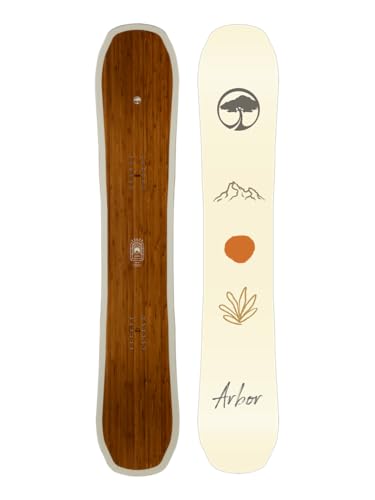
Arbor Swoon Snowboard
What We Like
- Real Wood Powerply core for a lively, responsive feel.
- Sintered base provides a fast, durable riding surface.
- Bio-Plastic topsheet is an eco-conscious material choice.
Trade-offs
- The 148cm length may limit options for very short or tall riders.
- Freeride focus offers less versatility than a true twin shape.
The Arbor Swoon snowboard features a Real Wood Powerply core and a Bio-Plastic topsheet. These materials are listed among its construction features.
That solid wood core does add heft, resulting in a board that weighs five pounds. The trade-off is a dampening effect and power transmission that lighter boards can’t match. If your priority is a lively, eco-conscious board for charging down the mountain, the Swoon’s material choices deliver. If you’re seeking a playful, weightless feel for butters and spins, a lighter freestyle model will be a better fit.
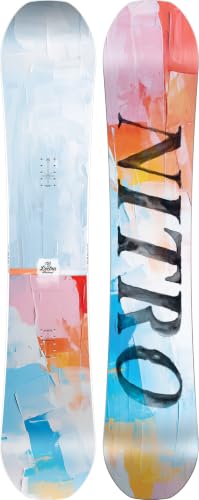
Nitro Lectra Directional Twin Snowboard
What We Like
- Directional Twin shape for versatile all-mountain riding.
- Forgiving Cam-Out camber profile aids progression.
- Easy-maintenance extruded base for casual riders.
- Reliable radial sidecut for predictable turns.
Trade-offs
- The 4/10 flex limits high-speed stability for experts.
The directional twin shape offers the best of both worlds, giving you a slightly set-back stance for powder while keeping switch riding accessible. It’s a solid choice for someone graduating from beginner terrain who wants a single board for groomers, light freeriding, and park exploration.
That easy-going nature does have a cost in terms of weight and flex. While the camber profile provides good edge hold, the softer flex can let the board get bounced around in choppy, high-speed conditions where a stiffer, more premium all-mountain board would feel planted.
Product photos
Roxy Raina All-Mountain Snowboard

What We Like
- Magne-Traction edges excel on icy terrain
- Soft-medium flex forgives mistakes for learners
- Eco-friendly construction with FSC wood cores
- Low-maintenance extruded base for easy care
Trade-offs
- The 5.2-pound weight is heavier than the 1.0-pound Burton Hideaway
- Directional twin shape is less versatile for switch riding than a true twin
The Roxy Raina’s Magne-Traction serrated edges deliver predictable grip where many boards start to chatter, making it a confident choice for tackling hardpack and icy mornings. Its soft-medium flex and directional twin shape offer comfortable control that’s ideal for beginners building confidence or intermediate riders who prioritize stability over pop. This board is built for the rider who wants to feel secure from edge to edge without fighting the board.
At 5.2 pounds, the Roxy Raina has a noticeable heft compared to the one-pound Burton Hideaway, which may affect swing weight during spins. Its Magne-Traction edges and directional twin shape prioritize predictable grip in variable snow over a freestyle-specific feel. This combination suits all-mountain riding where control in mixed conditions is the primary goal.
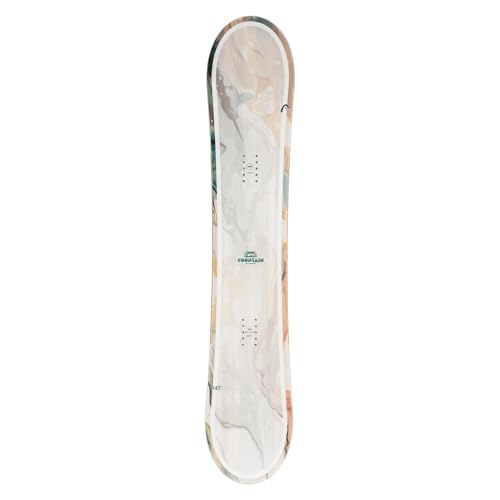
HEAD Fountain True Twin Snowboard
What We Like
- Catch-free Rocker profile for easy turning
- Soft 3 flex for playful, manageable control
- Durable extruded base requires minimal maintenance
- True Twin shape ideal for learning switch riding
Trade-offs
- Soft flex rating of 3 limits high-speed stability
- Extruded base requires more frequent waxing for peak speed than sintered bases
A soft 3 flex rating makes this board exceptionally forgiving and easy to press, which is exactly what a newer rider needs to build confidence and control. The True Twin shape and Rocker profile create a versatile, catch-free platform that’s perfect for practicing turns and learning to ride switch, providing a solid foundation for progression across the whole mountain. This combination of accessible design and durable, low-maintenance construction delivers reliable performance without complexity.
With a soft flex rating of 3, the HEAD Fountain is exceptionally manageable for easy presses and playful control, making it a forgiving board for skill development. This focus on accessibility means it trades high-speed stability and aggressive carving power for its beginner-friendly feel. It’s built for confidence-building laps on varied terrain at moderate speeds, not for charging hardpack or launching massive park jumps.
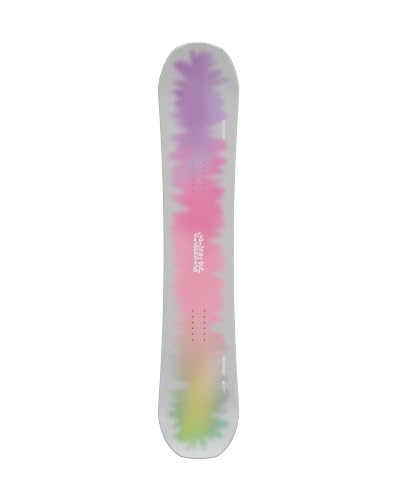
Bataleon Feelbetter All-Mountain Snowboard
What We Like
- Urethane FlexWalls dampen vibrations for a smoother ride.
- Sintered Hyper Glide S base provides a fast, durable surface.
- Beech stringers in the poplar core increase pop and strength.
- Bi-Ax laminate keeps the board playful and snappy.
Trade-offs
- The 12.0-inch width may be less nimble for riders with smaller feet.
- Weighs 8.0 pounds.
The Bataleon Feelbetter’s urethane FlexWalls replace classic ABS sidewalls, which directly translates to a noticeably smoother and quieter feel underfoot on choppy terrain. This design choice makes it a strong match for riders who prioritize comfort and reduced fatigue over long runs or variable snow conditions. Its full poplar core with hardwood beech stringers adds a backbone for solid pop, while the sintered base ensures speed is maintained with proper waxing.
That smoothness comes with a trade-off in weight. This extra mass can make quick, flickable maneuvers feel a bit more deliberate. For a rider who values dampening and stability over ultra-light playfulness, this board’s construction delivers a uniquely composed ride.
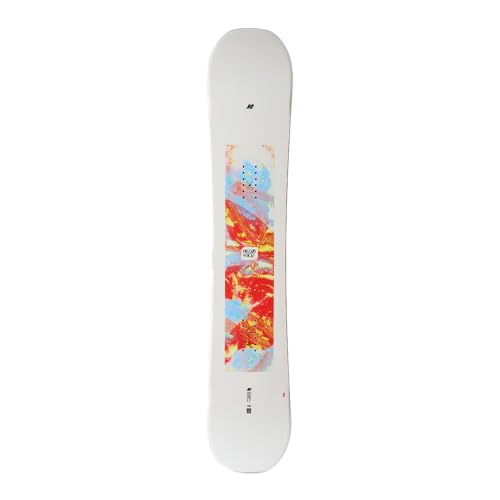
K2 Dreamsicle All-Mountain Snowboard
What We Like
- Eco-friendly HYBRITECH construction reduces plastic waste
- Sustainably harvested Rhythm Core reduces weight
- Forgiving, versatile all-mountain and freestyle ride
- Low-maintenance extruded base for easy repair
Trade-offs
- The 149cm length may be too long for petite riders
- Weighs 5.7 pounds
K2’s HYBRITECH construction defines the Dreamsicle by removing excess plastic in the tip and tail, a process that reduces thousands of pounds of plastic during manufacturing. This approach appeals to riders who prioritize eco-friendly gear. The board combines this with a women’s-specific Rhythm Core, which uses sustainably harvested timber to reduce weight while aiming to retain strength and liveliness for maneuverability.
The Dreamsicle weighs 5.7 pounds. Its HYBRITECH construction is described as reducing swing weight by removing material and adding a 3D capped edge. The board’s ICG 10 Biax Glass integrates carbon fiber stringers to increase snap without adding unnecessary rigidity, and it uses a low-maintenance Extruded 2000 Base for smooth gliding.
Product photos
Burton Feelgood Camber Snowboard

What We Like
- Carbon I-Beam for increased pop and longitudinal snap
- Dualzone EGD for enhanced edge-hold and response
- WFO sintered base for ultra-durable, all-season riding
- Directional shape with twin flex for versatile terrain handling
Trade-offs
- The camber profile demands active, precise footwork to control.
- Its powerful, poppy nature can feel unforgiving for a first-timer.
The Burton Feelgood Camber packs a serious punch from its Carbon I-Beam backbone, delivering a snappy, energetic response that launches you out of turns and off lips. This board is built for a rider who wants to charge the whole mountain with confidence, from groomed runs to park features, and values a powerful, precise feel underfoot. The directional shape provides stability when pointing it downhill, while the symmetrical flex keeps things balanced for switch riding and presses.
The Burton Feelgood Camber Snowboard’s camber bend advocates powerful turns and poppy precision, distributing weight evenly across the board. This design demands active, precise footwork to harness its energy, making it less forgiving than a softer, rocker-dominant board like the Burton Hideaway Rocker. For intermediate to advanced riders stepping up their all-mountain game, it rewards aggressive, technical riding.
How We Evaluated Women’s Snowboards
Our evaluation is research-based, drawing from manufacturer specifications, expert gear round-ups, and consistent patterns in owner feedback. We focused on criteria that define a board’s ride: its shape and flex pattern, its core construction and base material, and its intended use case for different rider levels.
These factors determine how a board initiates turns, handles speed, and forgives or demands precision. The limitation of this approach is that we cannot replicate the subjective feel of riding each board on snow, which is why we emphasize matching specifications to documented rider experiences.
What To Look For In Women’s Snowboards
Choosing a snowboard is about aligning its design with your current ability and riding goals. Key specifications like flex, profile, and shape dictate how the board will behave under your feet.
Look for a flex that matches your skill: softer for beginners, stiffer for experts. A rocker-dominant profile is more forgiving, while camber offers power. Match the board’s shape, twin, directional, or directional twin, to your preferred terrain.
Flex Rating
Flex, rated on a scale (often 1-10), indicates how stiff or soft a board is. A softer flex, like the Rome Royal’s 3/10, is more forgiving and easier to press, making it ideal for learning and park progression. A stiffer flex, such as that found in the Burton Feelgood, provides greater stability at high speeds and more powerful energy transfer for aggressive carving, but requires more precise input from the rider.
Matching flex to your skill level is critical; an overly stiff board can feel unmanageable, while a too-soft board will chatter and feel unstable as you progress.
Profile (Camber/Rocker)
The board’s profile, the curve of its base from tip to tail, fundamentally changes its ride. Traditional camber provides powerful edge hold and pop but can feel catchy. Rocker or flat profiles, like on the Burton Hideaway, lift the contact points off the snow for a more forgiving, catch-free ride that aids beginners.
Many modern boards, including our top pick the Rossignol Soulside, use hybrid blends (like AmpTek rocker-camber) to combine the benefits of both for versatile all-mountain performance. Your choice here should balance forgiveness with the level of engagement you desire.
Shape & Intended Use
The board’s shape dictates its natural stance and terrain strengths. A true twin shape, symmetrical from nose to tail like the HEAD Fountain, is designed for freestyle and switch (backwards) riding. A directional shape, with a longer nose and set-back stance like the Arbor Swoon, is optimized for powder and freeriding. A directional twin offers a compromise, versatile for all-mountain riding like the Nitro Lectra. Consider where you’ll spend most of your time: park riders need a twin, while all-mountain and powder enthusiasts benefit from directional designs.
- Check the sidecut radius: a shorter radius means quicker, tighter turns; a longer radius favors faster, wider carves.
- Note the waist width relative to your boot size to avoid toe or heel drag.
- Consider weight: lighter boards are easier to maneuver, while heavier ones can feel more stable and damp.
- Look for specialized tech like Magne-Traction (Roxy Raina) for icy grip or vibration-dampening materials (Bataleon Feelbetter) for a smoother ride.
Your first board should prioritize forgiveness and match your most common terrain to build confidence and skills.
Women’s Snowboards Compared
The table below compares key specifications across our top picks to highlight their differences at a glance.
| Product | Core | Base | Weight |
|---|---|---|---|
| Rossignol Soulside All Mountain Snowboard | Vertically laminated wood | N/A | 5.0 pounds |
| Burton Hideaway Rocker Snowboard | Super Fly 800G wood | Extruded | 1.0 pounds |
| Rome Snowboards ROMEW-ROYAL Womens Snowboarder | Bamboo HotRods, StompCore | Impact Base (extruded) | N/A |
| Arbor Swoon Snowboard | Real Wood Powerply | Sintered Base | 5.0 Pounds |
| Nitro Lectra Directional Twin Snowboard | Powercore 100% Woodcore | Premium Extruded FH | 5.5 pounds |
| Roxy Raina All-Mountain Snowboard | FSC wood cores | extruded | 5.2 pounds |
| HEAD Fountain True Twin Snowboard | poplar wood | Extruded | N/A |
| Bataleon Feelbetter All-Mountain Snowboard | Full poplar with beech stringers | Sintered Hyper Glide S | 8.0 pounds |
| K2 Dreamsicle All-Mountain Snowboard | Rhythm Core | Extruded 2000 Base | 5.7 Pounds |
| Burton Feelgood Camber Snowboard | Super Fly II 700G | WFO Base (sintered) | 5.2 Pounds |
Frequently Asked Questions
Who is the best female snowboarder of all time?
Identifying a single “best” snowboarder is subjective, as riders excel in different eras and disciplines. Pioneers like Shannon Dunn-Downing and Tina Basich were influential in earlier decades, while modern icons like Chloe Kim and Jamie Anderson have dominated the halfpipe and slopestyle circuits, respectively. The sport’s history is rich with athletes who have pushed its boundaries. You can explore more about the history of snowboarding’s best athletes on our site.
What should I look for in a beginner snowboard?
A beginner snowboard should have a softer flex for forgiveness, a rocker or flat profile to prevent catching edges, and a user-friendly shape. Boards like the Burton Hideaway Rocker are designed specifically for this, offering stability and easy turn initiation to help build fundamental skills. Avoid overly stiff or camber-dominant boards at this stage, as they require more precise control.
What is the difference between a freestyle and an all-mountain snowboard?
Freestyle snowboards, like the Rome Royal, are typically true twin shapes with softer, more playful flexes optimized for park features, jumps, and switch riding. All-mountain boards, like the Rossignol Soulside or Nitro Lectra, are more versatile directional twins or directional shapes designed to handle a variety of terrain across the entire resort, from groomers to powder.
Who are some famous female snowboarders?
Legendary figures include Olympic pioneers like Karine Ruby and Kelly Clark, X Games stars like Torah Bright and Chloe Kim, and influential freeriders like Victoria Jealouse. Contemporary pros like Mia Brookes and Reira Iwabuchi are pushing the sport forward with groundbreaking tricks. Our resource on the best women’s skateboarders also highlights athletes in a related board sport.
Why is a twin shape important for freestyle riding?
A true twin shape is symmetrical from nose to tail, meaning the board rides identically whether you are facing forward or backward (switch). This predictability is essential for park riding, where you regularly take off and land in both stances, and for performing presses and butters that require balanced flex. The Rome Royal is a prime example of a board built for this purpose.
The Bottom Line
The Rossignol Soulside All Mountain Snowboard is our top recommendation for the intermediate rider seeking a stable, forgiving board that performs reliably everywhere on the mountain. If you’re just starting out, the Burton Hideaway Rocker is the clear choice to build confidence, while park enthusiasts should look directly at the Rome Royal.
For those prioritizing eco-friendly materials or need superior grip on ice, the Arbor Swoon and Roxy Raina are excellent respective picks. Ultimately, matching the board’s flex and shape to your current skill level and most-ridden terrain is the single most important factor for a satisfying purchase.
