Can You Ride an Electric Scooter on the Sidewalk?
This post contains affiliate links. As an Amazon Associate, we earn from qualifying purchases.
The legality of riding an electric scooter on a sidewalk depends entirely on your specific city, county, or state laws. There is no single national rule. In places like Portland, Oregon and Charlottesville, Virginia, it is explicitly prohibited, while other jurisdictions like Washington State University allow it conditionally, and the Federal Highway Administration’s model regulations recommend permitting it. The only way to know for sure is to check your local municipal code.
That patchwork of rules is the whole game. A single wrong turn from a city street onto a sidewalk can shift you from a legal rider to someone facing a fine, because the authority to make these rules is often delegated from the state down to your local city council. The Federal Highway Administration might recommend a framework for states, but your hometown ordinance is what the police enforce.
What follows is a breakdown of how these laws actually work, a step-by-step method to check your own local rules, and a look at the real-world consequences, both legal and practical, of getting it wrong.
Key Takeaways
- Sidewalk riding laws are hyper-local. State law might grant local authorities the power to regulate it, but your city or campus can enact a stricter ban. Always verify rules for your exact location.
- Penalties are real. Violating a local ordinance, like in Virginia, can carry a civil penalty of not more than $50.
- Enforcement is inconsistent but consequential. While you might not see police ticketing often, if an accident occurs while you’re riding illegally on a sidewalk, you assume full liability for any injuries.
- Check your city’s transportation website first. Municipal pages, like Portland’s, provide the most direct and authoritative source for local e-scooter rules, including maps of prohibited areas like parks.
- When in doubt, the road or bike lane is the default. Municipalities that ban sidewalk riding, like Portland, direct riders to streets, bike lanes, or multi-use paths.
Where Are E-Scooters Allowed on Sidewalks? A Patchwork Map
You can’t answer “yes” or “no” to can you ride an electric scooter on the sidewalk without a map. The rules change at city limits, and sometimes at the edge of a university campus. The confusion exists because regulatory authority is layered.
At the top, you have federal guidance. The Federal Highway Administration’s model regulations suggest that states should permit Personal Transportation Device use on both streets and sidewalks, with local flexibility. But that’s just a recommendation. States then set their own frameworks. Virginia’s state law doesn’t ban sidewalk riding outright but grants localities the authority to create their own prohibitions. Instead, Virginia Code § 46.2-904 explicitly grants towns and cities the power to create their own prohibitions. This is why you can look up the official state legal text and still not know the answer to can you ride an electric scooter on the sidewalk in your neighborhood.
The real answer to can you ride an electric scooter on the sidewalk lives at the local level. Cities like Portland, Oregon, cut through the ambiguity with a blunt, city-wide ban: “Using an electric scooter on the sidewalk and in crosswalks is prohibited.” Their rules direct riders to streets, multi-use paths, and bike lanes. Charlottesville, Virginia, takes a similar hard line, prohibiting e-scooters and e-bikes from sidewalks entirely via city code.
Then there are special jurisdictions, like university campuses, which operate under their own legal codes. Washington State University’s administrative rule, WAC 504-15-930, creates a unique environment. It states that micromobility devices may be ridden on sidewalks, but only when a bike path is not provided. However, it simultaneously bans these same devices from roadways, a rule stricter than the surrounding city of Pullman’s laws. This creates a scenario where the sidewalk might be your only legal option on campus under WSU rules, while the rules may differ off-campus. You need to know both sets of rules.
Common mistake: Assuming your state’s law is the final word. In most cases, your city or county ordinance is the enforceable rule you must follow, and it can be more restrictive.
| Jurisdiction | Sidewalk Riding Allowed? | Key Condition or Alternative | Governing Rule |
|---|---|---|---|
| Portland, Oregon | No | Ride on streets, bike lanes, or multi-use paths. | City Ordinance / Oregon Vehicle Code |
| Charlottesville, Virginia | No | Ride on streets or shared-use paths. | City Code Sec. 15-246 |
| Virginia (Statewide) | Varies | Localities may prohibit via ordinance. | Virginia Code § 46.2-904 |
| Washington State University | Conditionally Yes | Only if a bike path is not provided. Not allowed on roadways. | WAC 504-15-930 |
| FHWA Model | Recommended | States should permit, with local flexibility to restrict. | Federal Guidance |
How to Check Your Local Laws in 10 Minutes
You don’t need a law degree. You need a search strategy. Relying on forum anecdotes or a friend’s experience in another city is how you get a ticket. Here’s a coach’s playbook for finding your actual, enforceable rules.
First, go straight to the source. Your city or county’s official website will have a “Transportation” or “City Code” section. Use the search bar on that site. Terms like “electric scooter ordinance,” “motorized scooter,” or “micromobility” will usually get you there. Portland’s “Rules of the road for e-scooters” page is a perfect example, clear, direct, and updated.
If that fails, your second stop is your state’s legislative website. Search for the statute that grants local authority. In Virginia, that’s § 46.2-904. Reading this won’t tell you your local rule, but it will confirm that your city has the power to make one, which underscores why you must find it.
Don’t forget about micro-jurisdictions. Are you riding on a university campus, through a park, or on a historic downtown mall? These areas often have their own governing bodies. For example, Portland’s code also states that motorized wheeled devices are prohibited in Parks, except on roads. A campus like WSU has its own legally binding campus electric scooter rules that override general city street laws within its borders.
Worth knowing before you start: Bookmark the official page once you find it. Laws change, and an ordinance passed next month could flip the rules for your daily commute.
The Real-World Consequences: Fines, Liability, and Enforcement

The law on paper is one thing. The consequence on pavement is another. We will examine what actually happens if you’re caught riding an e-scooter on a prohibited sidewalk.
The most straightforward penalty is a fine, separate from any e-scooter license requirement. Under the Virginia statute, a violation of a local ordinance adopted pursuant to it is punishable by a civil penalty of not more than $50. But the financial hit doesn’t stop there.
Then there’s liability. This is where it gets serious. If you strike a pedestrian while riding on a sidewalk where it’s prohibited, you are almost certainly at fault. You’ve violated the law and created the hazardous situation. Your personal liability for the pedestrian’s medical bills could dwarf any city fine. The U.S. Consumer Product Safety Commission’s general safety advice, to follow local traffic laws, isn’t just about avoiding tickets; it’s about avoiding life-altering lawsuits.
Enforcement is mixed. And if you are involved in any incident, even a near-miss, the fact that you were riding illegally will be the first thing noted in the report. It shifts the entire narrative against you.
What to Do When There’s No Safe Alternative
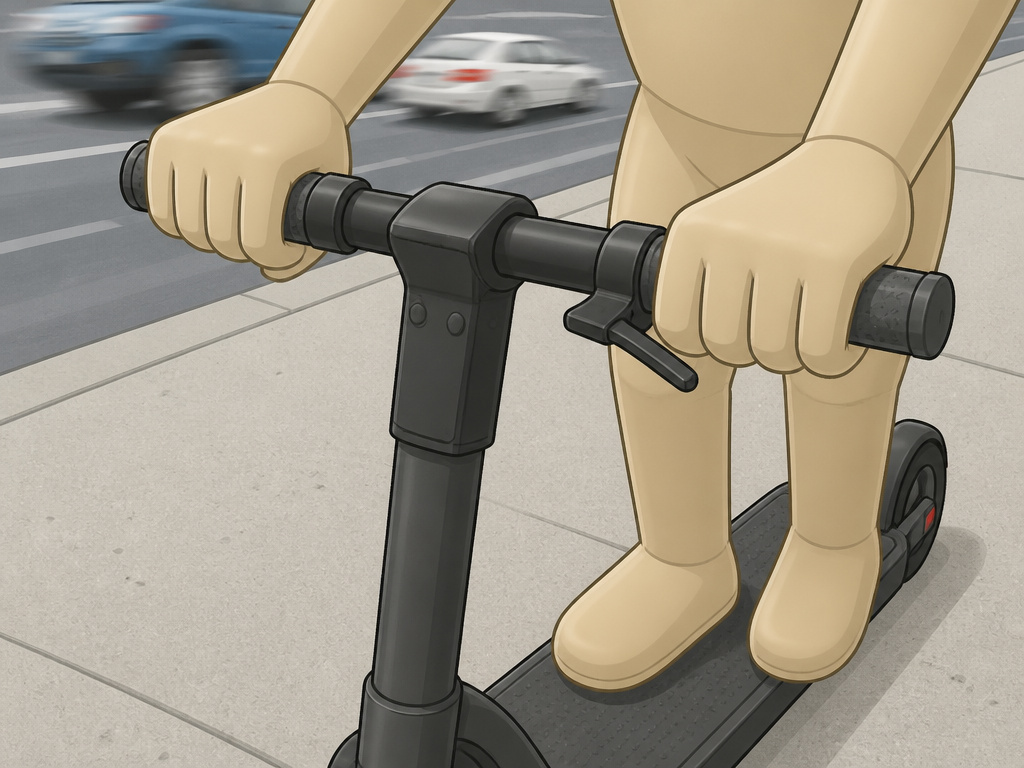
This is the dilemma every pragmatic rider faces. The law says “no sidewalks,” but the street is a 40 mph zone with no bike lane. What now? The legal answer is simple: you still cannot ride on the sidewalk. The practical answer requires a different kind of strategy.
First, re-evaluate your route. Can you take parallel streets that are quieter, have lower speed limits, or possess bike lanes? A few extra minutes on a calmer route is always better than a confrontation with a law or a car. Use cycling maps or apps; they often highlight bike-friendly roads you might have missed.
Second, claim your lane. On roads where you are permitted but there is no bike lane, you have a right to the lane. Ride in a predictable, visible position, usually just to the right of the center. This feels counterintuitive, but it often forces drivers to see you and pass safely, rather than squeezing by too closely.
If neither of those is viable, the only legal recourse is to dismount and walk your scooter on the sidewalk until you reach a safer riding environment. It’s not ideal, but it keeps you legal and safe. Think of it like carrying your skateboard through a crowded plaza (similar to skateboard sidewalk rules), sometimes the tool isn’t right for the space, and the fundamentals of sharing public space come first.
Sidewalk Riding Etiquette (If Your Local Law Allows It)
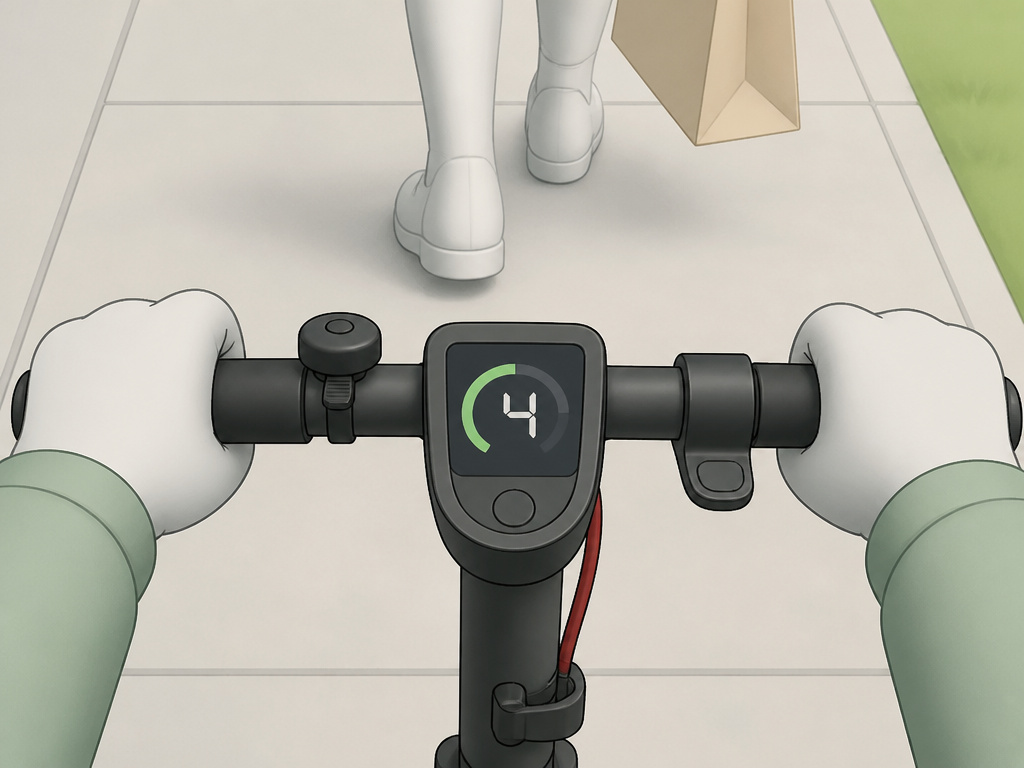
In the places where sidewalk riding is conditionally permitted, like Washington State University’s rule when a bike path is absent, your behavior must change completely. You are no longer a vehicle; you are a guest in a pedestrian space.
Speed is the first thing to kill. Drop to a walking pace, or barely above it. The WAC rule mandates operators “move at a safe speed and yield to pedestrians at all times.” This means if you can’t pass a pedestrian safely without them moving, you slow down and follow until you can. Your electric motor is for gentle assistance here, not for speed.
Audible signals are required. Virginia’s state law, which applies where sidewalk riding is allowed, requires riders to “give an audible signal before overtaking and passing any pedestrian.” A simple “passing on your left” spoken clearly works. A bell is better. Never assume a pedestrian hears you coming.
Finally, parking is part of etiquette. Never block a sidewalk curb ramp, bus stop, building entrance, or fire hydrant. An improperly parked scooter isn’t just an eyesore; it’s a tripping hazard and an accessibility barrier. Park it like you’d want someone to park in front of your driveway.
What are the state laws for riding an e-scooter on the sidewalk?
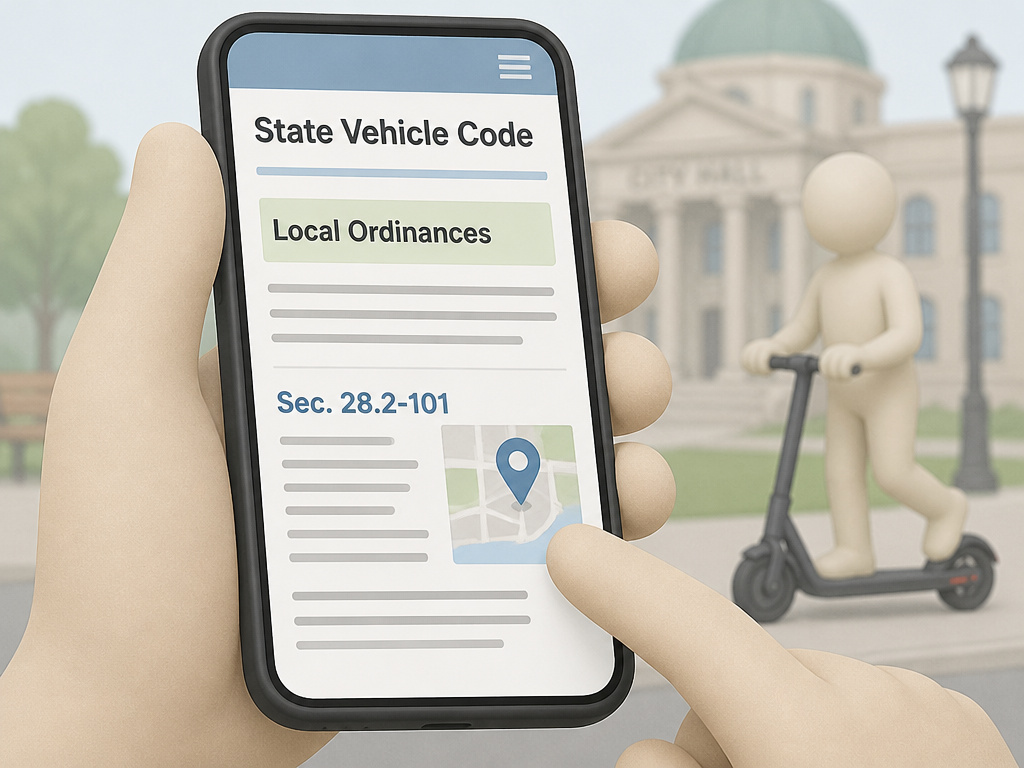
State laws set the framework, but they often delegate the final say to local cities and towns. For example, Virginia state law grants counties and cities the authority to pass ordinances that prohibit riding motorized scooters on specific sidewalks or crosswalks. If a locality allows sidewalk riding under state law, riders must yield to all pedestrians and give an audible signal before passing. The Federal Highway Administration’s model regulations advise states to set complete regulations, but give local governments flexibility to create limits based on local conditions. This layered approach means your first stop should be your state’s vehicle code to see what authority it grants to your city, a process similar to checking electric skateboard legality.
How do city ordinances affect where I can ride my e-scooter?
City ordinances are where the rubber meets the road, and they vary dramatically. In Portland, Oregon, using an electric scooter on the sidewalk or in a crosswalk is explicitly prohibited. In Charlottesville, Virginia, city code also bans e-scooters from sidewalks and trails. This patchwork means the rule can change when you cross a city or even a campus boundary. Always check your specific city’s transportation or municipal code before you ride.
Are there speed limits for electric scooters on sidewalks?
The fact sheet does not provide specific speed limit numbers for public sidewalks. However, the general principle across jurisdictions is that you must operate at a safe speed, especially in areas shared with pedestrians. Campus policies, for instance, state that operators must move at a safe speed and yield to pedestrians at all times. Some systems, like on a campus, may implement automatic controls that restrict speed or shut off motorized assist based on location, time of day, or weather. When sidewalk riding is permitted, your speed should always allow you to stop safely and yield right-of-way to anyone on foot.
Frequently Asked Questions
Is it illegal to ride an electric scooter on the sidewalk everywhere?
No, it is not illegal everywhere. It is illegal in many major cities like Portland and Charlottesville, but other jurisdictions permit it under certain conditions. The rule changes from one town to the next, and even on university campuses. You must check your specific local laws.
What happens if you get caught riding an e-scooter on the sidewalk?
You could face a fine, which in places like Virginia can be not more than $50 per violation under the state’s civil penalty structure. More significantly, if you cause an accident or injury while riding illegally, you will be held liable. Your scooter could also be impounded if parked illegally as a result.
Do the same rules apply to rental scooters and personal e-scooters?
Yes, in almost all cases. Local ordinances regulating “motorized scooters” or “electric scooters” apply to the device itself, regardless of who owns it.
Can I ride my e-scooter in the street if I can’t use the sidewalk?
In most municipalities that ban sidewalk riding, you are directed to ride on the street, where you must obey all standard traffic laws as a vehicle (related to e-scooter vehicle classification). However, some special zones like university campuses may have rules that prohibit e-scooters from roadways, so you must check the specific rules for where you are riding.
Are electric scooters allowed in bike lanes?
Generally, yes. Most cities that have regulated e-scooters, including Portland, explicitly allow them in bike lanes. Bike lanes are considered a preferred and safer alternative to both sidewalks and general traffic lanes for micromobility devices.
What’s the difference between an e-scooter and a mobility scooter on sidewalks?
This is a critical distinction. Mobility scooters (and electric wheelchairs) are medical mobility aids, not recreational vehicles. They are almost universally permitted on sidewalks under the Americans with Disabilities Act (ADA). E-scooters are considered personal transportation devices and are subject to local vehicle laws, which often prohibit sidewalk use.
The Bottom Line
Knowing the law is the easy part. The hard part is accepting that the safe, legal path might not be the most convenient one on your map. If your local ordinance says “no sidewalks,” that’s the line. Riding there anyway isn’t just a minor risk; it’s a choice that puts your financial liability and a pedestrian’s safety in direct conflict with your commute time.
Your first move shouldn’t be on a scooter. It should be on your city’s website. Find the actual ordinance. Then, plan your route around what’s legal, not what’s fast. Sometimes that means walking your scooter for a block. Sometimes it means taking a longer, calmer street.
And if the laws in your area feel outdated or unsafe, the solution isn’t to break them. It’s to contact your local transportation department or city councilor. Advocate for protected bike lanes and clearer micromobility policies. Change the map, don’t just ignore it.
