Can You Roller Skate While Pregnant?
This post contains affiliate links. As an Amazon Associate, we earn from qualifying purchases.
Whether you can roller skate while pregnant is a subject of differing medical advice, hinging on your trimester, skill level, and specific pregnancy. Health authorities like HealthLink BC and the European Board of Obstetrics and Gynaecology (EBCOG) advise avoiding it due to a significantly increased risk of falling and blunt abdominal trauma, while others like ACOG permit continuation for habitually active women with uncomplicated pregnancies.
That “increased risk” isn’t a vague warning. It’s quantified. The EBCOG position paper notes blunt abdominal trauma, from falls, car accidents, or assaults, occurs in about 207 cases per 100,000 births in high-income countries. While most are from vehicles, the physiological changes of pregnancy make a simple fall from roller skates a genuine threat to the placenta and fetus. Many people ask, can you roller skate while pregnant? This guide explains the risk for each trimester, shows why sources like ACOG and HealthLink BC can appear to conflict, and provides a clear framework for making the safest choice for you and your pregnancy.
What follows: the exact numbers behind the risk, a trimester-by-trimester breakdown of why balance fails, the one question to ask your OB, and a list of safer, equally effective ways to hit the recommended weekly activity goals.
Key Takeaways
- The core risk is blunt abdominal trauma from a fall, linked to serious complications like placental abruption; the EBCOG cites an overall rate of blunt abdominal trauma from all causes (including car accidents and falls) of 207 cases per 100,000 births.
- Joint laxity and a shifting center of gravity, starting in the second trimester, dramatically increase your fall risk even if you’re an expert skater.
- Some sources, like HealthLink BC, note that in the early stages of pregnancy, some women can continue pre-pregnancy routines including roller-skating, making the first trimester the least risky period if approved by a doctor. However, other sources like EBCOG advise avoiding such activities altogether due to fall risk.
- Always consult your obstetrician or midwife, they can assess your specific pregnancy, skill level, and any complications.
- For continued activity, consider safer alternatives like swimming, stationary cycling, or prenatal yoga to safely meet weekly activity goals.
The 207 Per 100,000 Statistic That Changes Everything
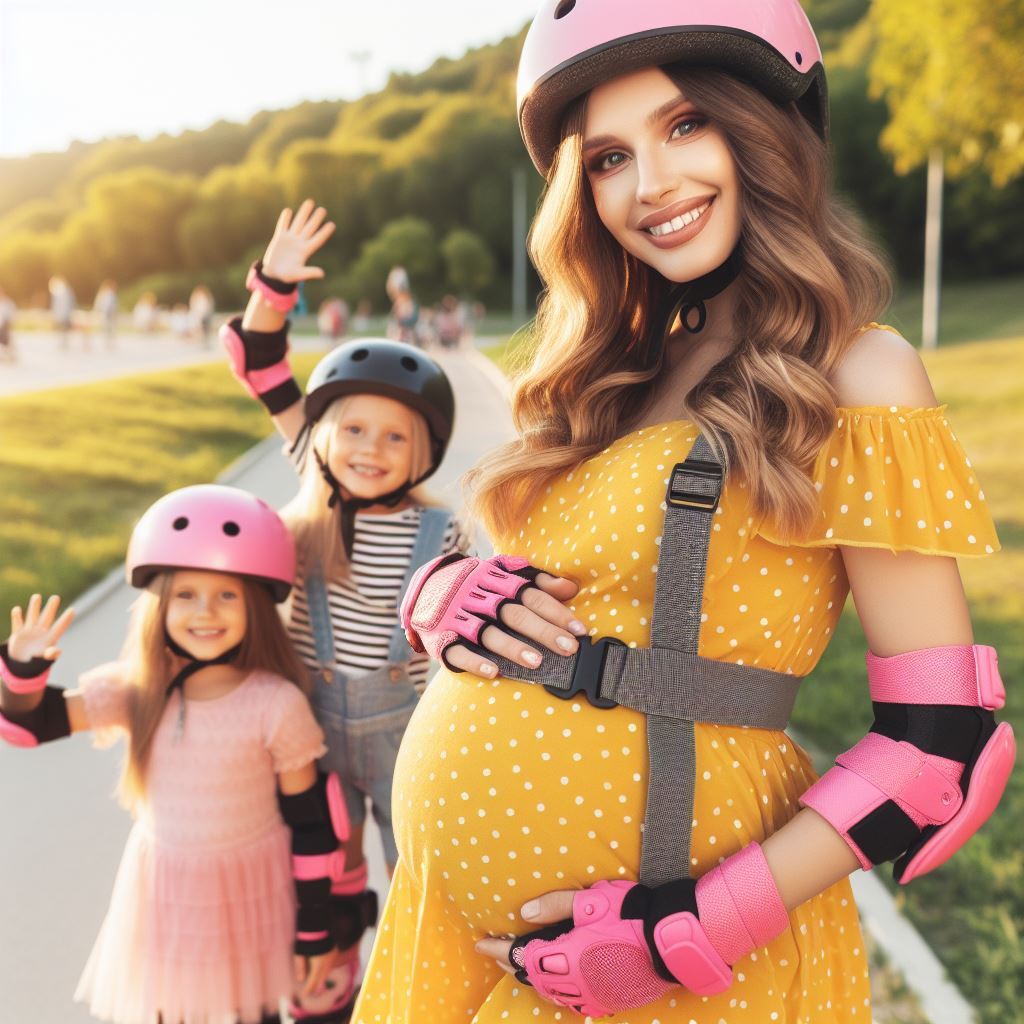
We should be direct about the word “risk.” In skating, we talk about calculated risks for tricks. In pregnancy, the calculation uses different numbers. The European Board and College of Obstetrics and Gynaecology (EBCOG) puts a figure on it: blunt abdominal trauma happens in about 207 cases per 100,000 births in developed countries.
Blunt abdominal trauma has been shown to contribute to serious obstetric emergencies such as spontaneous miscarriage, placental abruption, preterm labour and delivery, and uterine rupture, all of which are associated with significant mortality and morbidity to both mother and child. . EBCOG Position Paper on High-Intensity Exercise During Pregnancy
This statistic encompasses all causes, car accidents, falls, assaults. But the “falls” part is where roller skating enters the equation. A fall onto your side or back can transmit force directly to the uterus, especially after the first trimester. The placenta, which is not elastic, can shear away from the uterine wall. That’s a placental abruption, a direct cause of preterm labor and fetal distress.
Why does a pregnant body fall more easily? Two physiological changes are the main culprits. First, the hormone relaxin increases, causing joint laxity. Your ankles, knees, and hips become less stable. Second, your center of gravity shifts forward as your abdomen expands. This combination means your finely-tuned skating balance is literally working against a new, less stable biomechanical setup. You might not feel different, but your body’s response time and stability are altered.
The data here is clear, which is why the can you roller skate while pregnant question is answered by authorities like HealthLink BC with explicit advice to avoid “exercises that might cause you to fall, such as skiing or roller-skating,” particularly as pregnancy advances.
How Major Health Authorities Weigh In (And Where They Differ)
You’ll find seemingly conflicting advice if you look at different sources. This isn’t a flaw; it’s a reflection of how medical guidelines weigh individual circumstances against population-level risks. Here’s how three key players line up.
| Authority | Stance on Roller Skating | Key Rationale / Context |
|---|---|---|
| HealthLink BC | Advises avoidance, especially later in pregnancy. | “As your pregnancy advances… Unstable joints, an expanding abdomen, and an altered centre of gravity can make you more unstable on your feet. Avoid exercises that might cause you to fall…” |
| American College of Obstetricians (ACOG) | Does not explicitly prohibit it for previously active women. | “Women who habitually engaged in vigorous-intensity aerobic activity or who were physically active before pregnancy can continue these activities during pregnancy…” |
| European Board (EBCOG) | Recommends avoiding activities with high fall risk. | “Sports activities that place the individual at increased risk of falling and sustaining a blunt abdominal trauma, such as… Ice skating… Should be similarly avoided.” |
The disagreement is more about framing than fact. ACOG’s stance is one of empowerment and continuation for healthy, already-active pregnancies. It doesn’t list specific banned activities, instead providing warning signs to stop exercise (like dizziness or vaginal bleeding). HealthLink BC and EBCOG are more prescriptive, naming skating as a high-risk activity based on the biomechanical changes they detail.
The through-line is individual assessment. Even ACOG’s permissive guideline hinges on a woman being “habitually engaged” in the activity pre-pregnancy and having an uncomplicated pregnancy. A beginner skater would not fit that description. This is why the blanket rule from forums, “my doctor said it was fine!”, is incomplete. The real question for your OB is: “Given my specific skating skill level and my specific pregnancy, is the risk acceptable?”
Trimester-by-Trimester Breakdown: When the Risk Shifts
The danger of skating isn’t static; it evolves with each trimester. Understanding these phases is more useful than a simple yes/no.
First Trimester (Weeks 1-12): The “Safest” Window, With Caveats
In early pregnancy, the uterus is small and tucked behind the protective ring of the pelvic bones. A minor fall onto your back or side is less likely to transmit direct force to the uterus. HealthLink BC notes that in the early stages of pregnancy, some women can continue their pre-pregnancy exercise routines (including… Roller-skating…), but also advises avoiding exercises that might cause you to fall, such as roller-skating, especially as pregnancy advances.
Common mistake: Assuming “first trimester is safe” means you can skate as aggressively as before. Your ligaments are already beginning to soften, and fatigue or nausea can impair judgment and reaction time.
This is the only period where an experienced skater, with a doctor’s clearance, might reasonably continue very controlled, recreational skating on a smooth, private surface. The moment you introduce unpredictable elements, like a crowded rink, uneven pavement, or park skating, the risk outweighs any benefit.
Second & Third Trimesters (Weeks 13-40): When the Advice Solidifies to “No”
By the second trimester, everything changes. The uterus rises above the pelvis, the abdomen expands, and relaxin peaks. The EBCOG paper directly links this period to increased fall risk from “greater joint laxity and increased body weight.” Your center of gravity is now visibly forward.
This is when the recommendation becomes unambiguous. HealthLink BC states it clearly: “Avoid exercises that might cause you to fall.” The potential consequence, blunt force to an unprotected abdomen, is too great. Even if you feel balanced, a trip, a wheel catch, or a minor collision could have serious consequences. This is also the period when the ACOG pregnancy exercise guidelines list “muscle weakness affecting balance” as a red flag to stop activity.
If You Choose to Skate: The Absolute Non-Negotiables
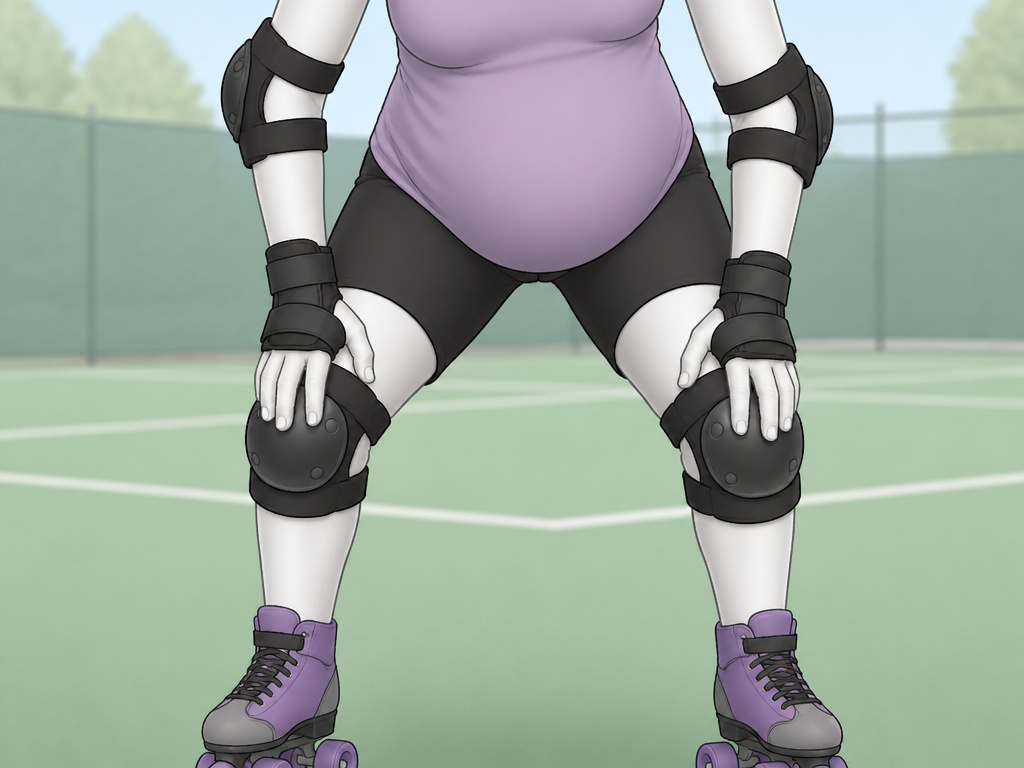
Some highly experienced skaters, after a detailed conversation with their care provider, may choose to skate cautiously in the first trimester. If that’s you, these rules are not suggestions.
- Get Explicit, Written Approval From Your OB/Midwife. Don’t rely on a verbal “should be okay.” Discuss your exact skill level, where you’ll skate, and for how long. This creates a shared understanding.
- Skate Only in a Controlled, Private Environment. A empty tennis court, smooth garage floor, or closed track. No rinks with other skaters, no parks with obstacles, no street skating with curb cuts and debris.
- Wear Full Protective Gear. Every Time. This means a certified helmet, wrist guards, knee pads, and elbow pads. Your protective gear is no longer just for you; it’s the primary buffer for the fetus in a fall.
- Stick to Simple, Forward Motion. No backwards skating, no crossovers, no spins, and certainly no jumps or tricks. The goal is gentle, steady cardio, not skill development.
- Have a “Spotter” Present. Another adult should be with you, on foot, ready to assist if you feel dizzy or unstable.
- Listen to the First Sign of Fatigue and Stop Immediately. Pregnancy fatigue comes on suddenly. The moment you feel tired, lightheaded, or simply “off,” your session is over.
Skip this if: You are a beginner or intermediate skater, your pregnancy has any complications, or you lack a perfectly smooth, private space. The calculus changes completely, and the only safe answer is to choose an alternative activity.
Safer, Recommended Alternatives to Meet Your Activity Goals
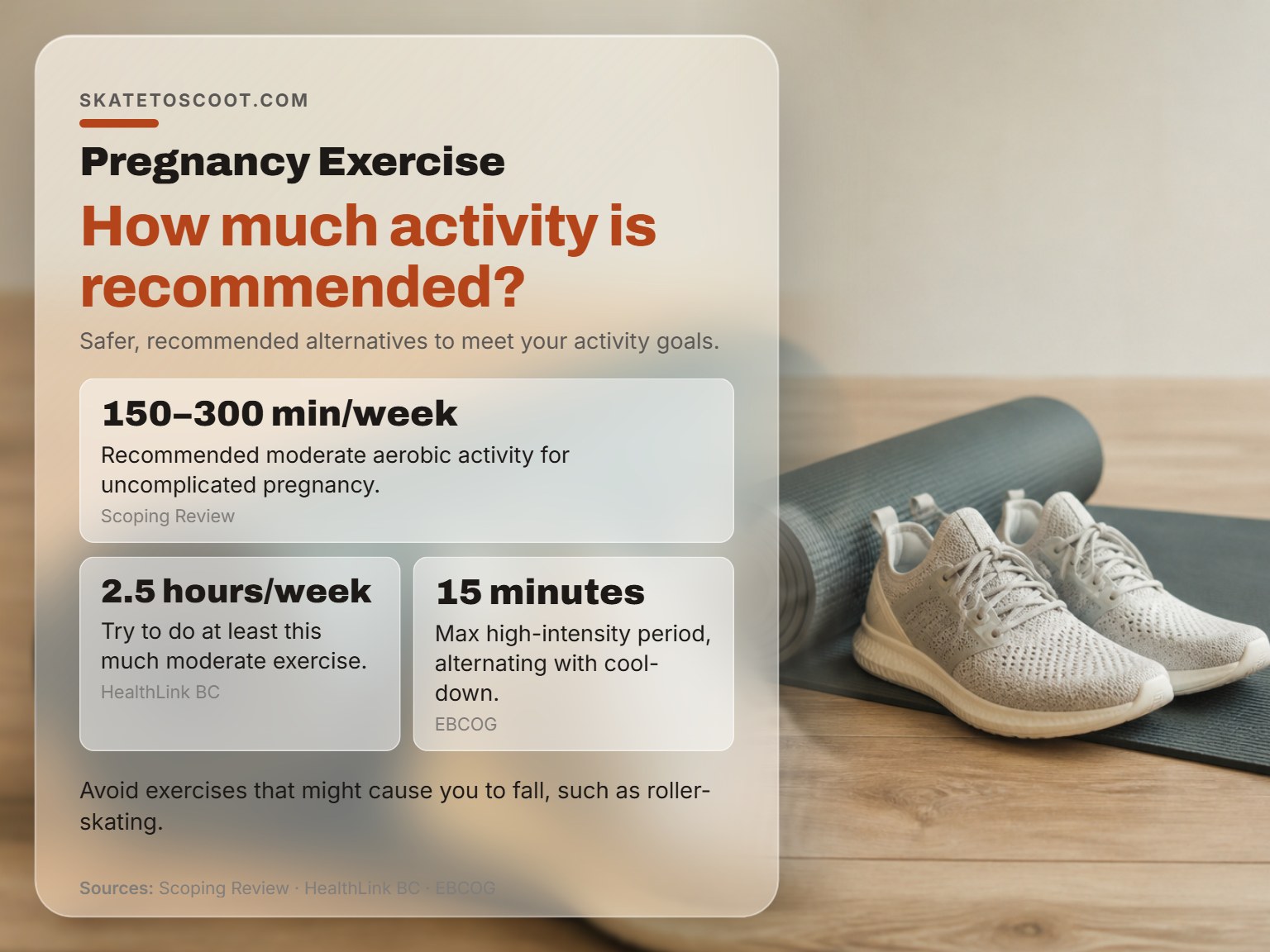
The good news is that the 150-300 minutes per week of moderate activity recommended by the global pregnancy activity guidelines review is not only achievable but highly beneficial, you just need to shift your mode. These activities provide excellent cardiovascular and mental health benefits with minimal fall risk.
- Swimming & Water Aerobics: The gold standard. Water supports your weight, cools you, and provides resistance. It’s joint-friendly and eliminates fall risk.
- Stationary Cycling: A recumbent bike is ideal as it provides back support. It builds leg strength and cardio without balance challenges.
- Walking: Simple, effective, and easily modifiable. Use a treadmill with handrails for added stability if needed.
- Prenatal Yoga or Pilates: Focuses on strength, flexibility, and breathing. Choose classes specifically for pregnancy, as they avoid poses that compress the abdomen or require lying on your back after the first trimester.
- Light Strength Training: Using bodyweight, resistance bands, or light dumbbells while seated or fully supported. Maintains muscle tone, which supports your joints and back.
The goal is to keep moving, not to maintain your pre-pregnancy skating routine.
What to Do If You Fall While Pregnant
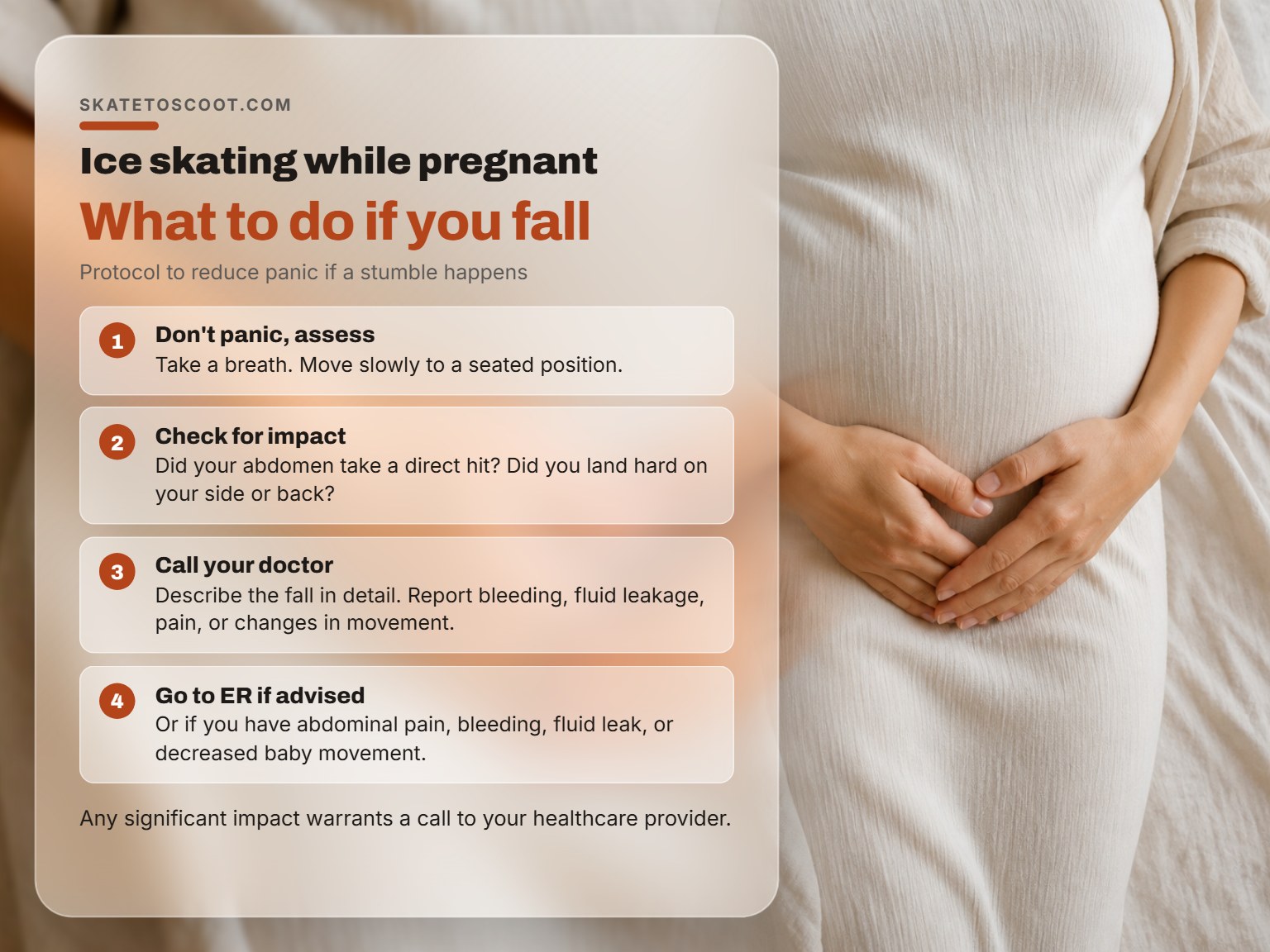
Even with the best precautions, a stumble can happen. If you take a fall while pregnant, skating or otherwise, don’t panic, but do take it seriously.
- Stay Calm and Assess. Don’t jump up quickly. Take a moment to check yourself for pain, especially abdominal pain.
- Check for Immediate Red Flags. Contact your care provider immediately or go to the emergency room if you experience:
- Vaginal bleeding or fluid leaking
- Severe abdominal pain or cramping
- Contractions
- Decreased fetal movement (later in pregnancy)
- Dizziness, blurred vision, or headache
- Monitor Closely for the Next 48 Hours. Even if you feel fine after a minor fall, watch for the signs above. Sometimes placental issues develop hours later.
- When in Doubt, Get Checked. It’s always better to have a monitoring session and fetal heart rate check for peace of mind. Never feel like you’re “bothering” your care team with this concern.
What other pregnant skaters say online
Reading forum posts and personal stories reveals a common split. Some experienced skaters report continuing to skate recreationally in their first trimester, citing their pre-pregnancy skill and comfort level. They often mention skating more cautiously, sticking to smooth surfaces, and avoiding tricks. By the second trimester, many of these same individuals describe a noticeable shift. They talk about feeling their balance change, their center of gravity altering, and a new sense of instability that made them hang up their skates. These anecdotes suggest the decision is personal, but many report the physical changes of advancing pregnancy make the activity feel riskier.
Frequently Asked Questions
Can I go roller skating at a rink while pregnant?
The rink is one of the riskiest environments. You cannot control other skaters, and collisions are common. Even if you are an expert, someone else could easily knock into you. The combination of a hard floor and unpredictable traffic makes it a hard “no” from a safety perspective, regardless of trimester.
I’m only 8 weeks pregnant and a great skater. Why should I stop?
You might not need to stop completely, but you must drastically modify. The first trimester is the least risky period, but the hormone relaxin is already loosening your ligaments, affecting ankle stability. The recommendation is to skate only in a controlled, private setting (like an empty tennis court) with full protective gear and your doctor’s explicit approval. It’s about managing risk, not eliminating activity.
What about inline skating or ice skating while pregnant?
The risk profile is identical to roller skating. Inline skates can be less stable for some, and ice carries the added hazard of a slippery surface. The EBCOG position paper specifically names “ice skating” as an activity to avoid due to fall risk. The principles of joint laxity, shifting center of gravity, and risk of blunt trauma apply equally.
Are there any roller skates that are safer for pregnancy?
No skate design can mitigate the core physiological risks of pregnancy, joint laxity and a shifting center of gravity. A more stable outdoor roller skate with a wider wheelbase might feel more secure than a speed skate, but it does not change the fundamental recommendation to avoid activities with a high risk of falling. Your focus should be on finding safer alternative exercises, not safer skates.
How soon after having the baby can I start skating again?
This depends on your delivery and your body’s recovery. Consult your care provider for guidance on when you can safely resume skating after having the baby. If you had a cesarean section or any complications, the timeline will be longer. The key is to rebuild your core and pelvic floor strength first, activities like walking and gentle postpartum yoga are better starting points. When you do return, start slowly; your ligaments will still be relaxed for several months.
The Bottom Line
A point often missed is this: the hardest part about skating and pregnancy isn’t the physical restriction, it’s the mental shift. You’re used to assessing risk for yourself. Now you’re assessing it for two.
The data from primary sources is consistent on the mechanism: pregnancy alters your balance and stability, increasing fall risk. The consequence of a fall, blunt abdominal trauma, is a real, quantified obstetric emergency. Therefore, for the vast majority of pregnant people, the safest choice is to pause skating and channel that energy into approved, non-balance-dependent exercise.
If you are a highly skilled skater in an uncomplicated first trimester, the door isn’t completely shut, but it’s open only a crack, under strict, controlled conditions and with your doctor’s full partnership. For everyone else, the clearest path is to hang up the skates for now. They’ll be waiting for you, and you’ll have the best reason imaginable to get back on them.
