Chicago Skates Review: Which Model Is Right for You?
This post contains affiliate links. As an Amazon Associate, we earn from qualifying purchases.
Chicago skates are a budget-friendly entry point best suited for casual, smooth-surface skating, but their stock components, particularly plastic wheels and low-grade bearings, present immediate safety and performance limitations that often necessitate upgrades within the first few hours of use.
That price tag looks tempting, especially when the brand’s history stretches back to 1905. But the gap between a company’s legacy and the actual product in the box is where most buyer’s remorse lives. The official specs tell one story; the chorus of user reviews after a few weeks on asphalt tells another.
What follows is a breakdown of the major Chicago models, the specs that actually matter, and the real-world consequences of skating them stock. We’ll also walk through the bare-minimum upgrades that separate a frustrating toy from a functional starter skate.
Key Takeaways
- Chicago skates are not safe for park or aggressive skating; the stock plastic wheels chunk quickly, and loose, wobbly trucks can lead to loss of control.
- Most models, like the 800/805, run large and wide; sizing down is a common necessity, so check return policies before buying.
- The stock wheels and bearings are the first thing to replace for outdoor use; swapping them for proper 78A-82A outdoor wheels makes the experience go from punishing to possible.
- For pure indoor rink skating on perfectly smooth floors, a basic model like the “Classic” can work, but expect a stiff, unpadded break-in period.
- Investing in a slightly more expensive complete skate from another brand often costs the same as buying Chicago skates and immediately upgrading the critical components.
Where the Brand Legacy Meets the Box
The Chicago Roller Skate Company was founded in 1905 by brothers Ralph and Walter Ware. By its 50th anniversary in 1955, it was the largest roller skate manufacturer in the US, with 200 employees producing an estimated 3,250 pairs of skates per day. That’s a serious industrial legacy.
But a heritage of volume manufacturing doesn’t automatically translate to a heritage of quality in every product line today. When you see “Chicago” on a box, you’re buying into that history of accessibility, not a guarantee of high-end components. The company’s own timeline states they produced “26,000 wheels every day” in the 1950s. That focus on mass production is still in the brand’s DNA.
The official product page for the Chicago Skates CRS900 “Lifestyle” model lists its specs as “58mm hi-rebound urethane 100A hardness wheels,” an “electric plated aluminum alloy plate,” and “semi-precision bearings.” This is the technical baseline the brand presents.
The disconnect happens when you take that spec sheet to the real world. A wheel hardness of 100A is extremely hard, designed for ultra-smooth indoor rinks. The manufacturer markets the CRS900 as suitable for “indoor and outdoor skating,” but user experiences starkly contradict this, with some reviewers finding them extremely difficult to use on rough outdoor surfaces. One reviewer on Zappos noted their Chicago “Precision Rink Skate” was “extremely difficult on the old asphalt outdoors.” Another detailed YouTube review showed the stock plastic wheels chunking and denting quickly on pavement.
The lesson from any Chicago skates review is that the brand’s definition of “outdoor suitable” and a skater’s definition are often worlds apart.
The Chicago 800 vs. 805 vs. “Classic” Breakdown
Searchers are often confused by the model numbers. Here’s the straight talk.
The Chicago 800 and 805 are essentially the same skate. The difference is marketing: the 800 is typically sold as a women’s model, the 805 as a men’s model. They feature a leather heeled boot and a polished aluminum plate and trucks. These are the “classic rink skate” look you’ll see most often in reviews.
The “Classic Roller Skates” (often listed on aggregator sites like Good Housekeeping) are another tier. Chicago Skates ‘Classic Roller Skates’ (via Good Housekeeping) list 60mm, 88A hardness wheels and an aluminum plate. The 88A hardness is a hybrid rating, firmer than true outdoor wheels but softer than the CRS900’s 100A.
Then there are models like the CRS900 “Lifestyle“ and the Adjustable In-Line Skate sold at Target, which has 70mm, 82A wheels and ABEC-3 bearings. This variety is why a simple “Chicago skates review” is almost meaningless, you have to know which model you’re looking at.
| Model | Wheel Specs | Plate Material | Best Use Case | Common User Complaint |
|---|---|---|---|---|
| 800 / 805 Series | Varies. | Polished aluminum. | Smooth indoor rinks only. | Boot is stiff and unpadded; runs large. |
| “Classic Roller Skates” | 60mm, 88A (per Good Housekeeping). | Aluminum. | Indoor rinks, very smooth outdoor surfaces. | Wheels too hard for rough asphalt. |
| CRS900 “Lifestyle” | 58mm, 100A hi-rebound urethane. | Electric plated aluminum alloy. | Professional-grade indoor rinks. | 100A wheels are punishing outdoors. |
| Adjustable In-Line (Target) | 70mm, 82A high-rebound urethane. | Not specified. |
The short version: If you’re skating indoors, the 800/805 or “Classic” might survive. If your sidewalk has pebbles, cracks, or texture, none of these stock setups are ideal. The wheel hardness is the single biggest predictor of your comfort and safety outdoors.
Sizing, Fit, and the Break-In Period
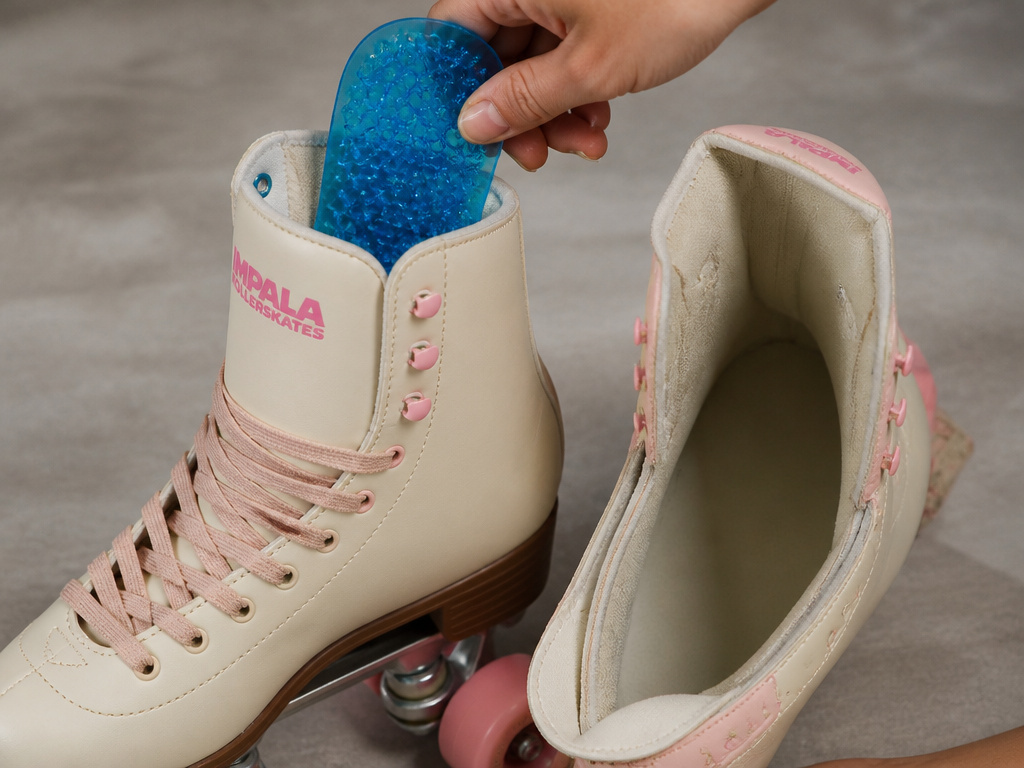
Common mistake: Ordering your regular shoe size. Chicago skates, particularly the 800/805, consistently run large and wide.
A review of the Chicago “Precision Rink Skate” on Zappos stated plainly: “They also run large and wide.” This isn’t a one-off. The boot is a stiff, structured vinyl or leather with minimal internal padding. Your foot needs to fill that space precisely to control the skate. Too much room, and your foot slides, causing blisters and killing your ability to steer or push effectively.
The break-in period is real. There’s no plush memory foam here. You’re breaking in a stiff shell to the shape of your foot, not the other way around. Expect a few short, uncomfortable sessions before the pressure points ease. Wearing thicker socks to compensate for a too-big size only makes this worse, it adds bulk but not the precise fit you need for control.
For a proper fit, you should be able to stand up in the skates laced tightly and feel your toes just brushing the front of the boot. No more than a thumbnail’s width of space. If you have to crank the laces extremely tight to achieve this, the skate is too big.
The Non-Negotiable Upgrade Path
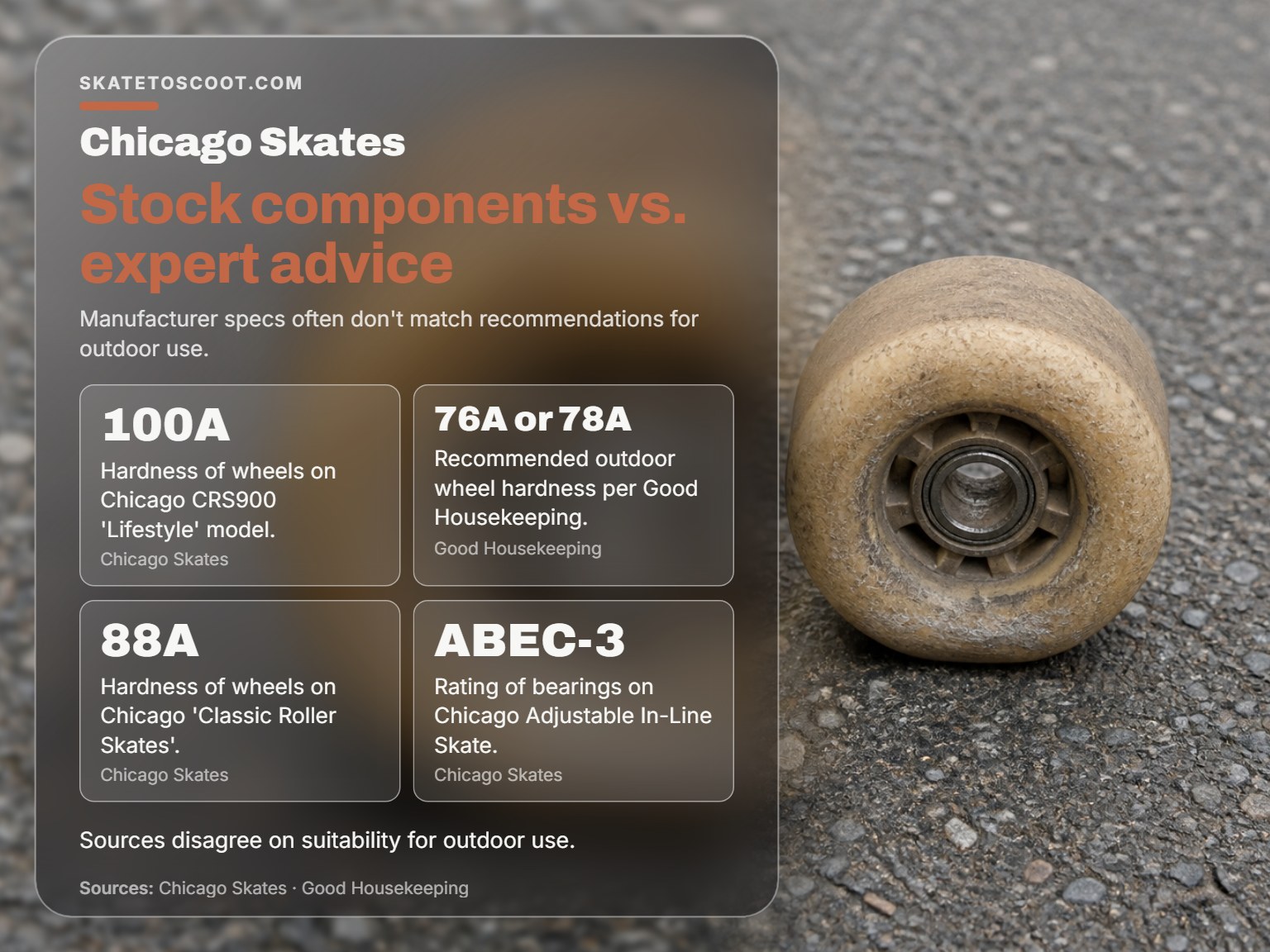
Here is where the rubber literally meets the road. The manufacturer’s manual for one Chicago series states the skates “need very little adjustment or special care,” but many user reviews in a typical Chicago skates review contradict this, stating components require immediate replacement. The stock components are where Chicago skates show their budget nature, and upgrading them is often a safety fix.
1. Wheels First. Always.
The stock wheels on most basic Chicago models are hard. On asphalt, they don’t grip; they slide and transmit every vibration directly to your feet and knees. They also wear down quickly, developing flat spots and chunks.
- What to buy: Look for proper outdoor wheels in the 78A to 82A durometer range. According to Good Housekeeping, beginner skaters should look for wheels sized 57 mm to 62 mm.
- Why it matters: Softer urethane absorbs shock and grips uneven surfaces. This one change reduces fatigue, increases control, and makes skating actually enjoyable outdoors. It’s the difference between feeling every pebble and gliding over them.
2. Bearings Are a Close Second.
Stock bearings can be low-grade; a review of the Chicago ‘Precision Rink Skate’ noted bearings arrived very rusted. Slow, gritty bearings force you to push harder to maintain speed.
- What to buy: A basic set of ABEC-5 or ABEC-7 bearings. You don’t need ceramic racing bearings; you need smooth, consistent rolls.
- Why it matters: Good bearings make your energy transfer efficient. You’ll glide farther with each push, which is crucial for building confidence as a beginner.
3. Toe Stops and Cushions.
The stock toe stop is often a hard plastic nub that offers little friction for stopping. The cushions (the rubbery parts in the trucks) are frequently very hard, making the skate feel twitchy and unstable.
- What to do: A softer, gummy toe stop is a cheap and immediate improvement for stopping power. Softer cushions can be added later as you fine-tune your responsiveness.
Where this goes sideways: Trying to learn in a park or on rough trails with stock components. User reviews indicate components like trucks can become loose and wheels can chunk quickly. That’s a loss-of-control scenario waiting to happen.
Following this upgrade path, wheels first, then bearings, will incur additional costs. This is the core of the value argument: a $50 Chicago skate plus $60 in mandatory upgrades puts you at $110. For that price, complete skates from brands like Impala skates or Chaya skates often come with better-out-of-the-box components designed for outdoor use.
Safety and Performance Limitations
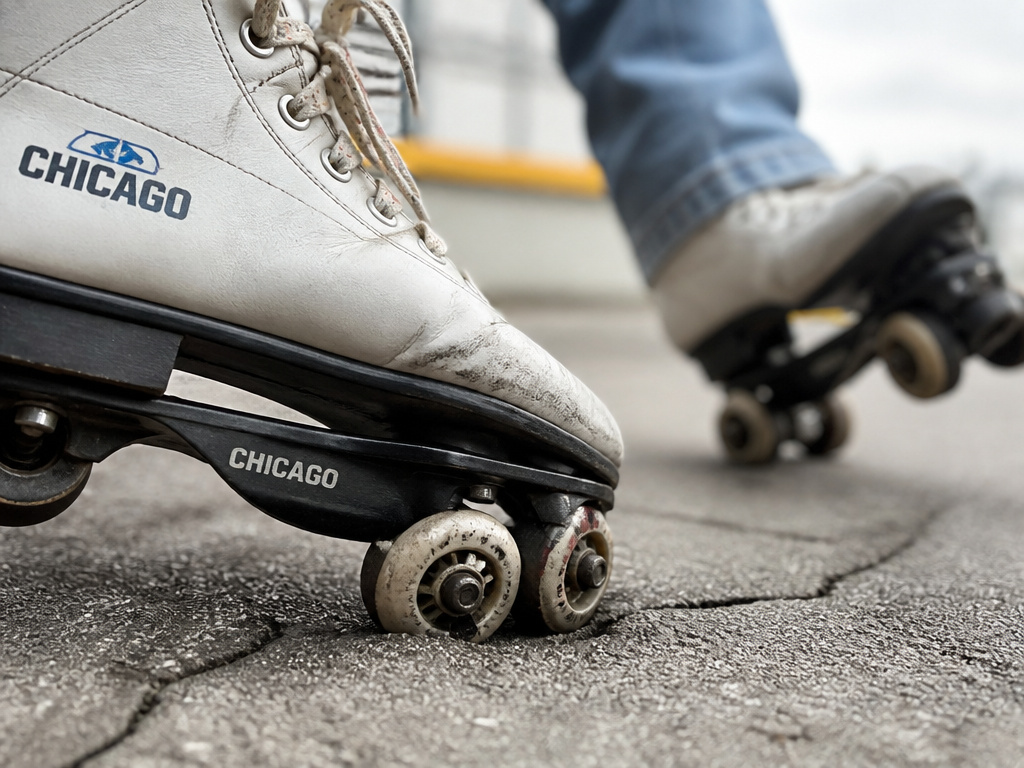
We should be blunt about what Chicago skates are not.
They are not park skates. The trucks cannot handle the lateral forces of grinds or the impact of landing from a ramp. The plastic plates on some budget models can flex or crack. A reviewer on YouTube specifically warned, “if you ever wanted to try park skating… Do not get these. I would be terrified.”
They are not high-performance outdoor skates. Even the hybrid-wheel models struggle on anything but pristine pavement. According to Good Housekeeping, outdoor roller skate wheels should be sized 62 mm to 65 mm and have a 76A or 78A rating. Most Chicago models ship with harder, smaller wheels.
They have a low performance ceiling. The boot’s stiffness plateau quickly. If you progress beyond casual skating, you’ll outgrow these skates functionally long before they wear out physically. This makes them a poor long-term investment for a dedicated beginner.
For a dedicated beginner, investing in a better-built starter skate from another brand is often a wiser financial and safety decision. You start with a tool that matches your intent.
Are They a Waste of Money?
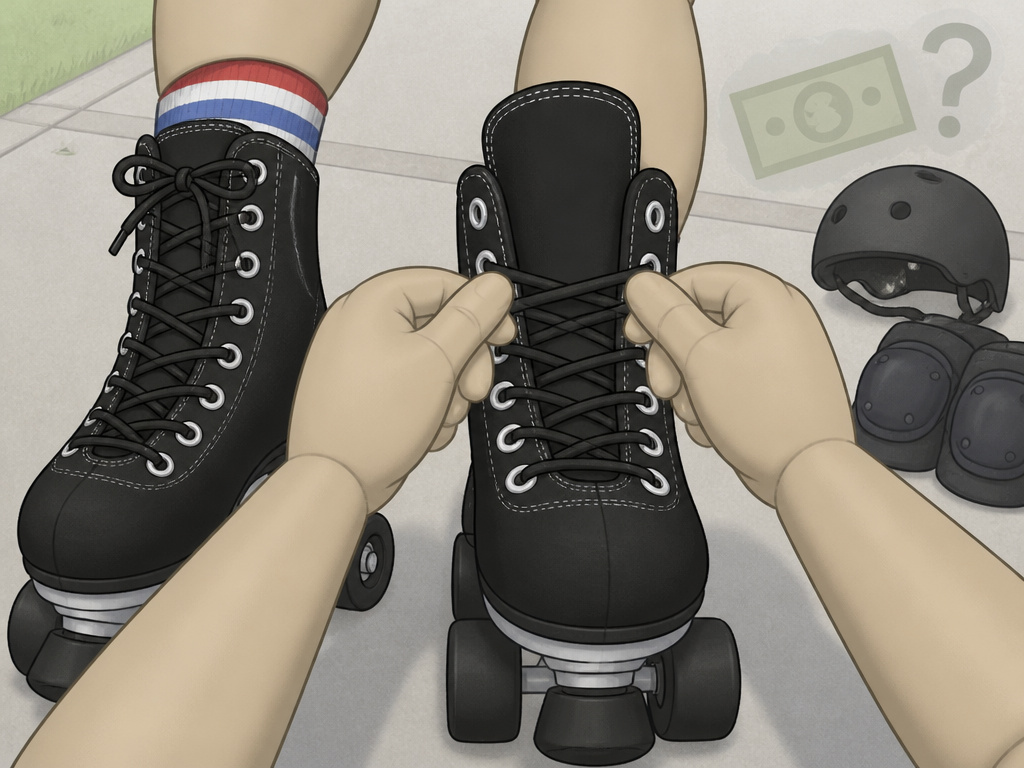
It depends entirely on your goal and your willingness to tinker.
If your goal is to roll around a smooth basement, driveway, or indoor rink a few times a month, a basic Chicago model can work. You’ll endure a break-in period and accept limited performance.
If your goal is to learn to skate outdoors, commute, or eventually try tricks, then yes, buying the cheapest Chicago skate is likely a waste. The required upgrades bring the total cost into the range of better pre-built options, and you still have a subpar boot and plate.
The most compelling case for Chicago skates is for a parent buying for a child whose interest is uncertain. The low initial cost is a low-risk experiment. But even then, be prepared to buy pads and a helmet, the stock setup is unforgiving, and falls are guaranteed.
Frequently Asked Questions
Are Chicago skates good quality?
They are of entry-level, mass-produced quality. The materials (aluminum plates, leather boots on some models) are decent for the price, but the critical wear components, wheels and bearings, are low-grade and need immediate replacement for serious use. Their quality is sufficient for their intended role as a low-cost entry point, not as a performance tool.
Who makes Chicago skates?
The Chicago Roller Skate Company, founded in 1905 by Ralph and Walter Ware, manufactures them. The brand has changed hands over the decades but retains its name and long history in the skating industry.
Do Chicago skates run big or small?
They predominantly run large and wide. Multiple user reviews across different models note this. Sizing down from your street shoe size is a common and necessary practice to get a snug, controllable fit.
Which brand of skates is the best?
There is no single “best” brand, it depends on your skating style and budget. For street and outdoor skating, brands like Sure-Grip, Chaya, and Moxi offer better out-of-the-box setups for beginners. For pure rink skating, Riedell is a professional standard. The best skate is the one that fits your foot correctly and is built for the type of skating you actually want to do.
The Bottom Line
Chicago skates are a historical brand selling a modern reality: you are buying a platform, not a finished product. The boot and plate are your foundation. The rolling parts, the pieces that determine safety and fun, are where the brand cuts corners to hit a price point.
If you proceed, buy a size smaller than you think you need. Before you even step outside, budget for and install a set of proper outdoor wheels. View the bearings as a mandatory week-two upgrade. This approach turns a questionable purchase into a functional learner skate.
Otherwise, take that total projected cost and put it toward a better-reviewed complete skate from a brand that designs for outdoor use from the start. Your knees, your progress, and your enjoyment level will thank you by the end of your first real session. The right tool matters.
