Chaya Vintage Skates Review: A Coach’s Breakdown
This post contains affiliate links. As an Amazon Associate, we earn from qualifying purchases.
Chaya Vintage skates are a complete package of retro-styled boots, outdoor-ready 78A wheels, and durable plates designed for casual cruising and street skating. The line splits into two tiers: models with aluminum plates (Voyager, Cappuccino, Pink Laser) for more response, and models with glass-fiber reinforced plastic (GFRP) plates (Sketch, Sunset Beach) for a lighter, budget-friendly ride.
That split is the whole game. It’s not just about looks, the plate material decides how the skate feels under your foot and what kind of skating it can handle long-term. Most reviews, like any typical chaya vintage skates review, talk about comfort and style, which these skates have in spades. They skip the part where a 15° truck angle on the Voyager carves differently than a 10° angle on the Cappuccino, or why a GFRP plate has a different failure mode than aluminum.
What follows is a breakdown of the specs that matter, the sizing debate you need to navigate, and where each model actually shines, going beyond a simple chaya vintage skates review. By the end, you’ll know which Vintage model matches the skating you want to do this season.
Key Takeaways
- The aluminum-plated models (Voyager, Cappuccino) use A356 aluminum for durability and a more direct feel, while the GFRP-plated models (Sketch) are lighter and cheaper but flex more under hard carving.
- Sizing is contentious: Retailers like EasternSkatingSupply say they run fairly true to shoe size, advising to size up only for very wide feet, while multiple customer reviews insist on sizing up due to a narrow fit.
- The 10° truck angle on the Cappuccino and Sketch offers stable, predictable turns ideal for beginners, while the Voyager’s 15° angle provides quicker, more responsive carving for confident cruisers.
- All models come with 78A outdoor wheels and Wicked ABEC-7 or ABEC-9 bearings, making them immediately ready for pavement without needing a wheel swap.
- These are cruising and street skates, not park skates; the stock setup and plate options are not designed for aggressive grinding or high-impact jumps.
Comfort & Fit: The Sizing Debate Nobody Agrees On
Open the box and the first thing you notice is the padding. It’s substantial, not just a thin lining. The synthetic PU leather and built-in mesh liner feel plush, not cheap. That comfort is real, but it hits a wall if the skate doesn’t fit.
Here’s where the advice splits. EasternSkatingSupply, a major retailer, states: “Based on our experience, all of the Chaya skates are running fairly true to the shoe size.” They only recommend sizing up for very wide feet. Then you read the customer reviews. One for the Cappuccino says, “Order a size larger. I ordered EU 43 which is like a 9.5 mens. The main issue is that they are very narrow…” Another simply states, “Very comfey material, smooth riding, but i followed the sizing guide and the boot is still just a little too tight.”
The retailer is describing the design intent. The customers are reporting the on-foot reality. That gap is where frustration lives.
Common mistake: Following the size chart blindly if you have wide feet. The narrow fit is the most consistent complaint across actual owner feedback.
My stance? Trust the crowd on this one. If your foot is even moderately wide, or if you prefer a sock with some thickness, plan to size up. A skate that’s too tight won’t break in, it’ll just hurt. The goal is a snug heel with a little room for your toes to wiggle, not a vise grip across the ball of your foot.
Boot Construction & Materials: Vegan-Friendly Doesn’t Mean Flimsy
Chaya markets the Vintage line as vegan-friendly, which means no animal-based leathers or glues. The upper is synthetic PU leather, which has a consistent look and is easy to clean. The outsole is glass-fiber reinforced plastic (GFRP), a composite that’s stiff and light.
The boot height on a size 41 Voyager is 23cm, which classifies it as a mid-cut. It offers more ankle support than a low-cut sneaker-style skate but less than a high-top aggressive boot. The support is in the right place for casual cruising, enough to feel secure, not so much that it restricts your ankle’s natural movement.
The interior is where you feel the quality. The mesh liner and built-in padding are plush. You can’t remove them, but they provide decent moisture wicking and cushioning right out of the box. There’s no heat-molding capability, so what you get on day one is what you’ll have forever. The break-in period is usually short because of the generous padding, but that break-in only affects comfort, not the boot’s actual shape.
Plate & Truck Specs: Aluminum vs. GFRP – The Performance Split
This is the most important section in this chaya vintage skates review. The Vintage line isn’t one skate; it’s two distinct builds hiding under the same retro aesthetic. Your choice here affects weight, feel, and long-term durability.
Aluminum Plate Models (Voyager, Cappuccino, Pink Laser)
- Plate: Cast A356 aluminum (Galaxy or Galaxy Evo).
- Weight: Heavier. The Voyager (size 41) is 1210g; the Cappuccino (size 41) is 1275g.
- Feel: Direct, stiff, and responsive. You get a solid connection to the ground.
- Durability: High. Aluminum can bend under extreme impact, but it won’t snap like plastic.
GFRP Plate Models (Sketch, Sunset Beach)
- Plate: Glass-fiber reinforced plastic (Aja plate).
- Weight: Lighter. GFRP plates are lighter than aluminum, though an exact weight for the GFRP models is not provided in the fact sheet.
- Feel: Slightly flexier. They absorb more vibration but can feel less precise during powerful pushes or sharp carves.
- Durability: Good for intended use. GFRP is strong, but it’s still a composite. Under the repeated stress of park skating or heavy impacts, it has a different failure profile than metal.
| Plate Material | Best For | Trade-Off |
|---|---|---|
| A356 Aluminum (Voyager, Cappuccino) | Skaters wanting a responsive, durable feel for street cruising. | Added weight and higher cost. |
| GFRP Composite (Sketch) | Beginners or casual skaters prioritizing light weight and a lower price. | Less direct power transfer, not for park skating. |
The 10° vs 15° Truck Angle Difference
The truck angle is the kingpin’s tilt, and it changes how the skate turns. A lower angle is more stable; a higher angle is more agile.
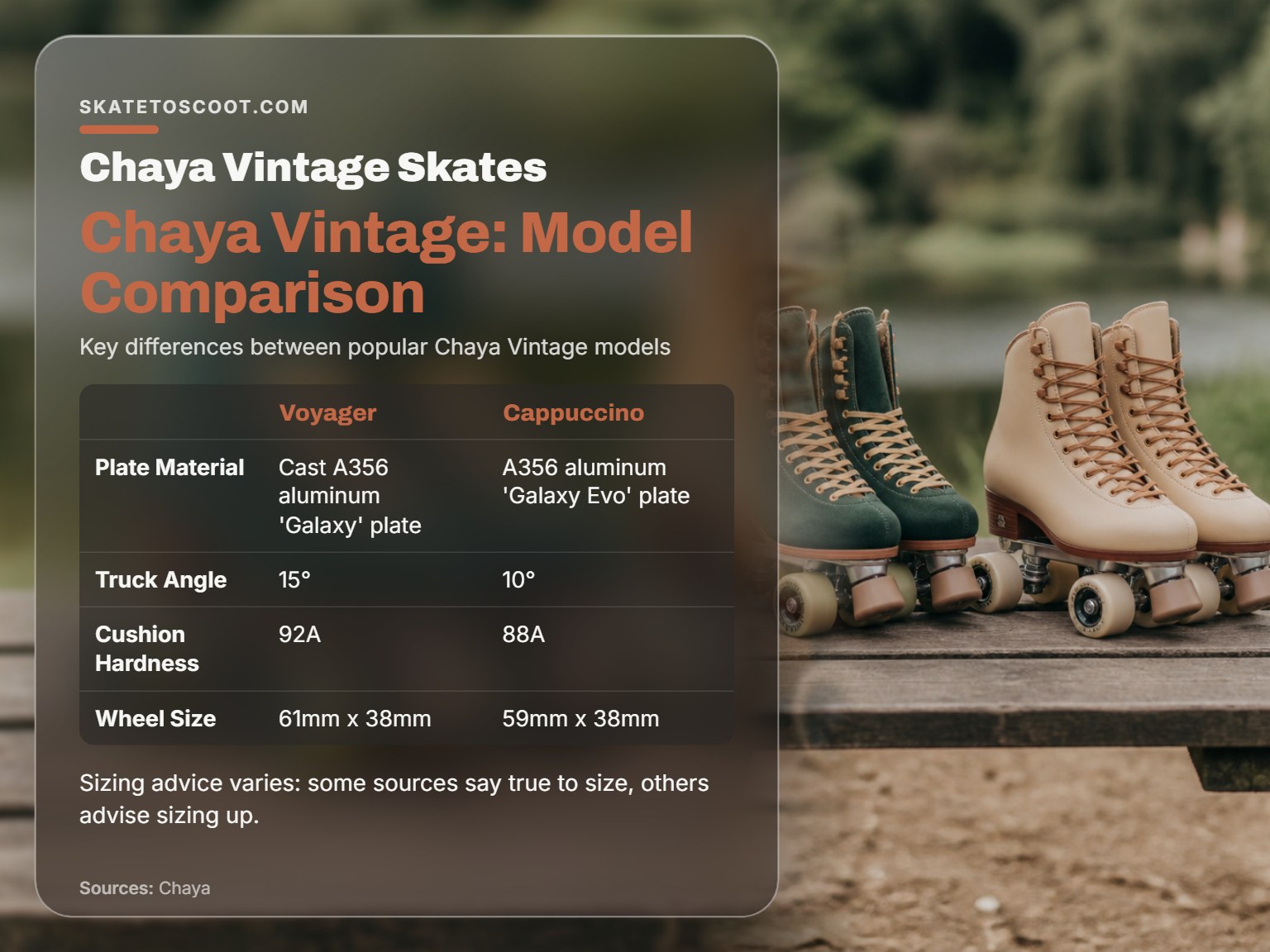
The Chaya Vintage Cappuccino and Sketch models have a 10° truck angle. When you lean, the trucks turn gradually. It’s predictable and forgiving, which is why it’s perfect for beginners. You’re less likely to over-correct and wobble.
The Chaya Vintage Voyager has a 15° truck angle. This makes the trucks more responsive. A small lean gives you a quicker turn. It feels livelier and is better for carving through turns or navigating tighter spaces on the street. It requires a bit more ankle strength and control.
A 10° truck angle is training wheels for your balance. A 15° angle is the confident cruiser’s choice. You feel the difference on the first corner.
Wheels, Bearings & Stock Setup Performance
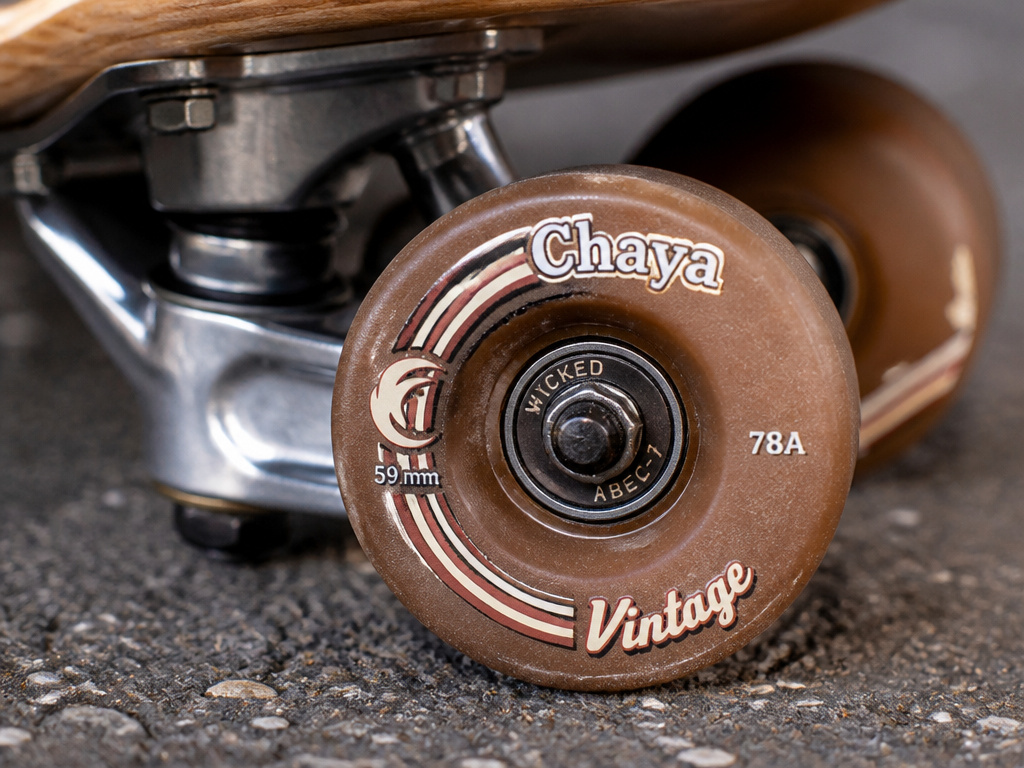
Every Chaya Vintage model ships ready for the pavement. You don’t need to buy new wheels on day one, which is a huge plus.
- Wheels: They all use 78A hardness wheels, the standard for outdoor skating. The Voyager uses 61mm x 38mm Propel wheels, and the Pink Laser uses 61mm Propel wheels. The Cappuccino uses 59mm x 38mm Spectrum wheels, and the Sketch uses 59mm x 38mm Spectrum wheels. The 2mm difference is negligible in practice; both are soft, grippy, and soak up cracks and rough asphalt.
- Bearings: The Cappuccino and Sunset Beach models come with Wicked ABEC-7 bearings. The Voyager and Pink Laser use Wicked ABEC-9 bearings. For recreational skating, the difference between ABEC-7 and ABEC-9 is academic. Both will roll smoothly and require the same maintenance. Don’t get hung up on the rating.
The stock setup is quiet and smooth. The soft wheels hum on smooth concrete and mute the sound on rougher asphalt. You’ll hear the bearings whirring, not the road. This is a skate you can unpack, lace up, and roll out your door with. No upgrades are necessary to enjoy them.
Intended Use & Limitations: Cruising, Not Crushing
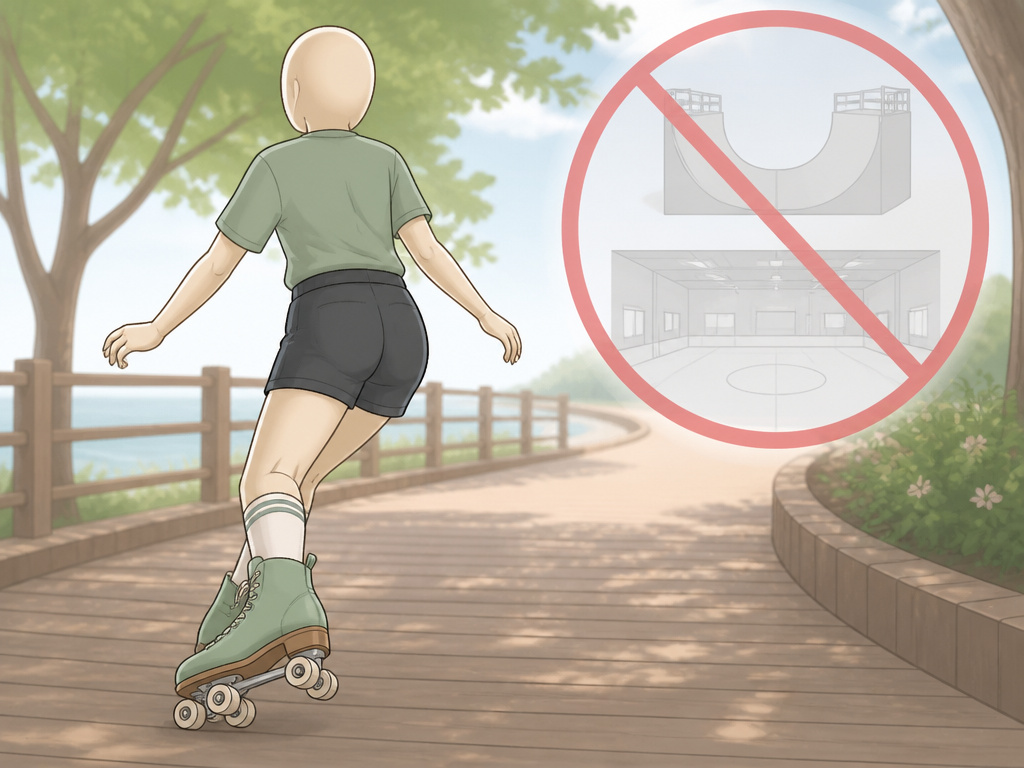
Chaya Vintage skates have a specific job: looking good while rolling comfortably outdoors. They excel at that.
They are not designed for:
- Skatepark Aggressive Skating: The plates, especially the GFRP ones, are not built for the impacts of grinding coping or landing jumps from height. The trucks aren’t wide enough, and the stock wheels are too soft and grippy for slides.
- Indoor Rink Speed Skating: The soft, wide outdoor wheels have too much grip and resistance on polished wood or concrete.
- Artistic or Dance Skating: The boot’s stiffness and ankle support level aren’t optimized for the deep edges and intricate footwork of dance skating.
Their home is the boardwalk, the bike path, the smooth parking lot, and the street festival. They’re for flowing around, not for technical tricks. If your goal is to eventually hit the park, you’ll outgrow these skates. That’s fine, it’s what they’re designed for.
Modification & Upgrade Potential
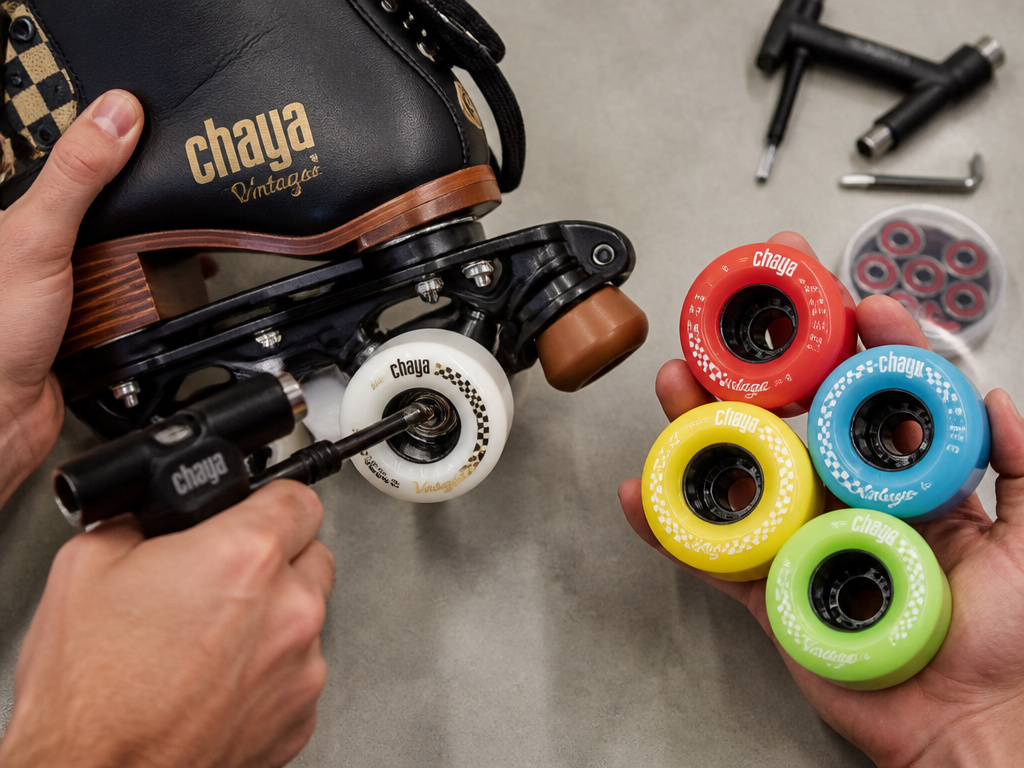
One of the best features of any complete skate is its ability to evolve with you. The Chaya Vintage line is a solid platform for upgrades.
- Wheels: The 608 standard axles accept any universal quad skate wheel. If you want to try a hybrid wheel for smoother surfaces, or a harder wheel for indoor use, swapping them is a 10-minute job.
- Bearings: The stock Wicked bearings are serviceable, but you can easily upgrade to any standard 608 bearing for a different roll feel or maintenance preference.
- Toe Stops: The models come with either a fixed or adjustable toe stop. The adjustable ones (like on the Cappuccino) give you control over height. You can swap in any toe stop with a standard imperial thread.
- Cushions: The cushions (or bushings) are polyurethane and come in different hardnesses (92A on Voyager/Sketch, 88A on Cappuccino). Softer cushions make turning easier; harder cushions provide more stability. You can buy replacement cushions from Chaya or other brands to fine-tune the truck action.
The upgrade path stops at the plate. While you could drill new mounting holes, it’s rarely worth the cost and effort. You buy a Chaya Vintage for the complete package it is, not as a boot to build upon. For that, you’d look at a different brand altogether.
How They Compare to Other Retro Skates
The retro skate market is crowded. Here’s how Chaya Vintage stacks up against two common alternatives.
Chaya Vintage vs. Impala Skates
Impala skates dominate the entry-level, social-media-friendly space. They’re often cheaper. The key difference is construction: Impalas frequently use a plastic plate and have a history of heel separation issues under stress. Chaya’s aluminum or GFRP plates and reinforced outsoles are a step up in durability for not a huge jump in price. If you’re choosing between an Impala skate and a Chaya Vintage, the Chaya is the more reliable tool.
Chaya Vintage vs. Moxi Beach Bunny
The Moxi Beach Bunny is another popular beginner cruiser in a similar price bracket. It has a similar retro vibe but uses a plastic Powerdyne Thrust plate. The Beach Bunny boot is famously stiff, requiring a longer break-in. The Chaya Vintage boot, with its plush padding, is comfortable immediately. The choice here is about feel: do you want immediate comfort (Chaya) or a stiffer boot that might offer more support later (Moxi)? For pure out-of-the-box comfort, Chaya wins.
For a deeper look at how other brands stack up, our Impala skates review breaks down their pros and cons in detail.
Long-Term Durability & Common Wear Points
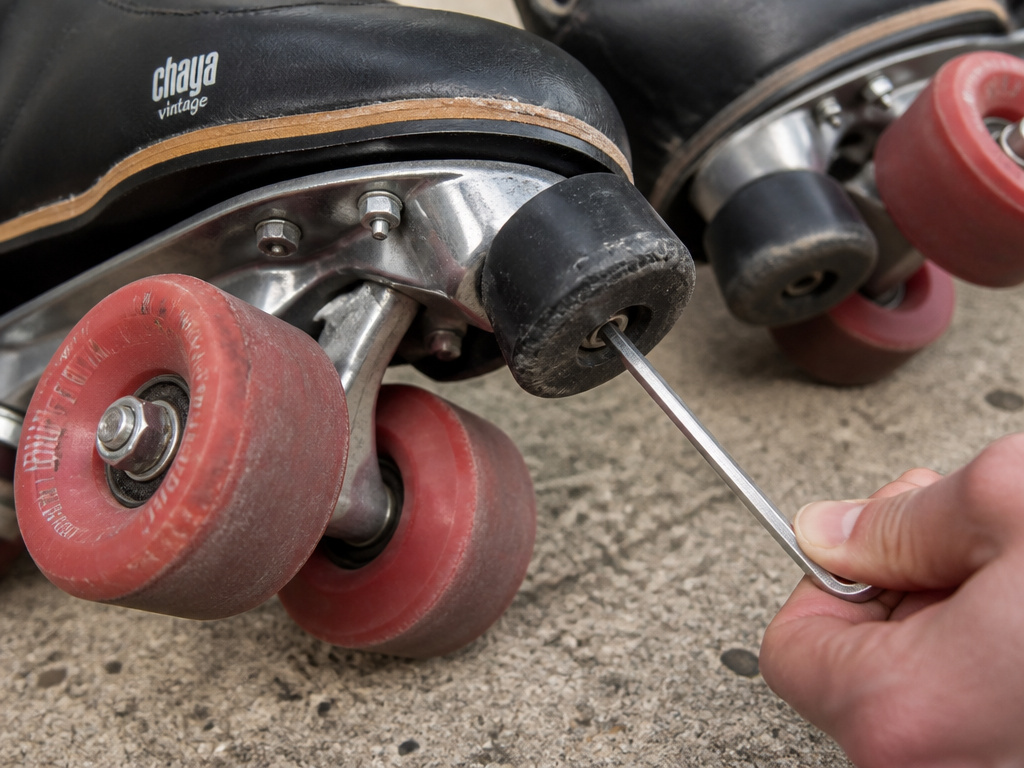
These aren’t disposable skates. With proper care, they’ll last for seasons of casual use. The wear follows a predictable pattern.
With regular outdoor skating, you’ll see the most wear on the outside edges of the wheels. This is normal and just means you’re carving turns. Rotate your wheels every few sessions to even it out. The PU leather upper is scuff-resistant but will show marks from concrete, that’s just patina.
The first component that might need replacing is the toe stop, especially if you do a lot of toe-dragging to slow down. The stock rubber is durable, but it will eventually wear down. Keep an eye on it.
The bearings will need cleaning and lubrication after skating in wet or dusty conditions. If they start sounding gritty or don’t spin freely, that’s your cue. The plates and trucks, assuming you’re using them within design limits, should hold up for years. With proper care, the plates and trucks should hold up for years of casual use.
How does the Vintage compare to other Chaya models?
The Chaya Vintage line is distinct from models like the Melrose, which are built for park skating with a focus on durability and impact resistance. The Vintage series prioritizes a classic aesthetic and a smooth, comfortable ride for cruising and dance. Key differences come down to the plate. Vintage models use either a cast aluminum ‘Galaxy’ plate or a glass-fiber reinforced ‘Aja’ plate, offering different flex and weight characteristics. In contrast, a park-focused model would typically feature a sturdier, often lower-profile plate designed to withstand repeated impacts from jumps and grinds.
Frequently Asked Questions
Are Chaya Vintage skates good for beginners?
Yes, they are excellent for beginners. The combination of a comfortable boot, stable 10° trucks (on most models), soft outdoor wheels, and a complete, ready-to-skate package removes all the guesswork. You can focus on learning to skate, not on assembling gear.
Can you use Chaya Vintage skates at a skatepark?
You can, but you shouldn’t, especially not aggressively. The stock setup is all wrong for park skating: the wheels are too soft and grippy for slides, the trucks aren’t wide enough for stability on grinds, and the plates aren’t designed for high impacts. If you want to skate parks, look at dedicated park skates like the Chaya Karma or other specialized models.
What size Chaya Vintage skates should I buy?
If you have narrow to medium-width feet, consider your normal shoe size. If you have wide feet, or if you’re between sizes, size up. The overwhelming anecdotal evidence from owners points to a narrow fit. It’s better to have a skate slightly too large (you can wear thicker socks) than one that’s painfully tight.
Are Chaya skates better than Impala?
When you compare construction and durability for the price, generally yes. Chaya uses more robust plate materials (aluminum or GFRP vs. Plastic on Impala) and has a better track record with boot integrity. For a dedicated cruiser who will skate regularly, the Chaya is a more reliable investment. For a very casual, occasional skater, the difference may be less critical.
Do Chaya Vintage skates have adjustable toe stops?
It depends on the model. The Cappuccino, for example, has an adjustable toe stop system. The Sketch and Voyager have fixed toe stops. Check the product specifications for the model you’re interested in. An adjustable stop is nice for dialing in your stance, but a fixed stop is one less thing to worry about loosening.
The Bottom Line
Chaya Vintage skates deliver exactly what they promise: a stylish, comfortable, and performance-ready package for outdoor cruising. The line’s secret is its two-tier offering, pick aluminum for a responsive, durable ride, or GFRP for a lighter, more affordable entry point.
Ignore the generic sizing advice. Plan to size up if your feet aren’t narrow. The narrow fit is the most common point of failure for new owners.
For the skater who wants to hit the pavement without a second thought, these are a top contender. They’re not the only option, suede roller skates from other brands offer a different feel, and dedicated street roller skates exist for more aggressive urban skating. But for a blend of retro looks, modern comfort, and out-of-the-box readiness, the Chaya Vintage series is hard to beat. Just know what you’re buying: a fantastic cruiser, not a park skater in disguise.
