Can You Skateboard Barefoot? Risks, Rules and Alternatives
This post contains affiliate links. As an Amazon Associate, we earn from qualifying purchases.
You cannot skateboard barefoot safely. Every manufacturer’s manual, from Razor to Evolve, explicitly warns against it, while the U.S. Consumer Product Safety Commission (CPSC) underscores the need for protective gear like helmets and wrist guards. The risks, severe lacerations from grip tape, crushed toes from impacts, and a complete lack of braking power, far outweigh any perceived benefit in board feel.
That unanimous “no” from the rulebooks is the starting line, not the finish. The manuals are written for liability and the broadest possible user, but the question persists because the sensation of riding without shoes is undeniably different. Some skaters chase that pure connection, while others have found middle-ground footwear that bridges the gap. Many beginners wonder, can you skateboard barefoot?
This breakdown explains why the rule exists, what happens if you ignore it, and the gear that provides a barefoot feel while protecting your feet.
Key Takeaways
- Every major skateboard and electric skateboard manufacturer, Razor USA LLC and Evolve Skateboards, explicitly states “never ride barefooted or in sandals” in their official manuals.
- The U.S. CPSC highlights wrist guards as especially important and also recommends helmets and other protective gear, with their safety sheet built on the assumption you are wearing closed-toe shoes; barefoot skating introduces a whole new category of foot-specific injuries.
- For a near-barefoot feel, barefoot-style shoes from brands like Splay or Whitin offer wide toe boxes and thin soles, but their canvas uppers shred quickly on grip tape during flip tricks.
- If you attempt to skate barefoot, limit it to slow, controlled cruising on smooth surfaces; attempting ollies or flip tricks will quickly abrade the side of your foot.
- The real compromise isn’t between barefoot and bulky shoes; it’s finding a durable, foot-shaped shoe with a reinforced ollie pad, which only a few niche brands currently make.
What Do Skateboard Manufacturers Say?
Razor USA LLC and Evolve Skateboards are unequivocal in their owner’s manuals: “Always wear athletic shoes (lace-up shoes with rubber soles). Never ride barefooted or in sandals.” This is not a suggestion; it’s a condition of use stated in the safety warnings section, placing the responsibility for foot protection squarely on the rider.
Open the manual for any Razor product, from the electric RazorX Cruiser to the simpler Ripsurf, and you’ll find the same directive. Evolve’s manual for their high-end Hadean board mirrors it verbatim. They don’t spend time explaining why because their primary concern is limiting liability, they’ve identified a clear hazard (exposed feet near moving parts and abrasive surfaces) and prescribed the simplest mitigation (wear shoes).
The logic is mechanical. A lace-up shoe with a rubber sole does three things shoesless feet cannot: it provides a consistent, high-friction interface with the grip tape for control; it armors the toes and metatarsals against direct impact with the board or ground; and it creates a sacrificial layer that wears down instead of your skin. When these companies test their products and write their warranties, they assume this layer is in place.
Common mistake: Thinking “athletic shoes” means any sneaker. The manuals specify lace-up shoes with rubber soles. Slip-on Vans or elastic-top shoes can come off in a crash, leaving your foot exposed. The lace-up design is a safety feature, not a style choice.
The Physics and Risks of Riding Shoeless
Here is what happens when you remove that protective layer. It’s not just about “it might hurt.” Specific failure modes have predictable and ugly consequences.
First, grip tape is not sandpaper; it’s aluminum oxide, a synthetic abrasive often used in grinding wheels. It’s designed to tear material. Your shoe’s outsole is that material. Without it, the tape treats the skin on the ball and side of your foot the same way. During an ollie, you drag the side of your foot upward across this coarse grit. Repeatedly sliding your foot across grip tape will quickly wear through the epidermis, as reported by skaters trying Whitin barefoot shoes. Now imagine that force applied directly to bare skin. The result isn’t a blister; it’s an open abrasion.
Second, your foot has zero crush protection. A failed landing, the board flipping up into your shins, or simply kicking the board away in a bail, all of these can bring the hardwood deck or the hard plastic of an electric skateboard’s battery case directly onto your toes. The difference between a stubbed toe and a fracture is the quarter-inch of foam and rubber in a shoe sole.
Finally, and most critically for anything beyond a parking lot cruise, you lose all effective braking power. The foot-brake, where you plant your rear foot on the ground to slow down, is a fundamental safety skill. Doing this barefoot on asphalt is a guaranteed way to burn off layers of skin. Without it, your only stops are running off or crashing.
| Risk | Mechanism | Likely Outcome | Timeline |
|---|---|---|---|
| Abrasion Injury | Dragging foot across aluminum-oxide grip tape. | Open wound on foot’s side/ball. Infection risk. | Within 1-2 sessions of trick practice. |
| Crush/Impact Injury | Board or ground impacting unprotected toes/foot. | Bruising, fracture, or dislocation. | Any fall or mishap. |
| Loss of Control | Reduced friction between foot and board. | Inability to steer or brace effectively, leading to worse falls. | Immediate. |
| Inadequate Braking | No sole to sacrifice for friction on pavement. | Severe road rash on sole of foot or inability to slow down. | First emergency stop attempt. |
The Barefoot Board Feel (And Why Some Skaters Seek It)
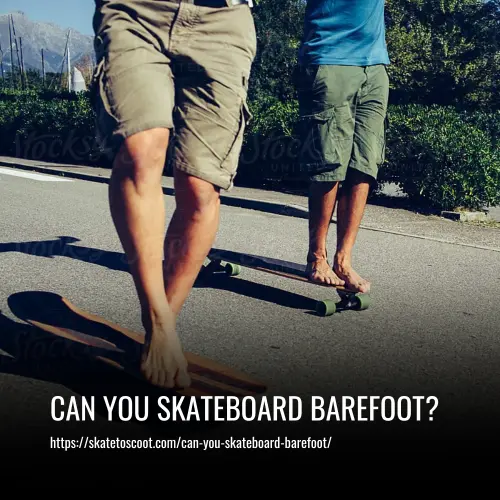
So why would anyone even consider it? The answer is sensory feedback. Surfing, the ancestral cousin of skateboarding, is traditionally done barefoot. The connection between your foot and the board is direct and unmediated. Some skaters, especially those focused on longboarding and carving, chase that same feeling, a sense of reading the road vibrations through their feet, of using minute toe and heel pressures to guide the board rather than forcing it with shoe torque.
There’s also a historical precedent. Early skateboarding in the 60s and 70s, emerging directly from surf culture, often featured barefoot riders. The activity was more about sidewalk surfing than technical street tricks. That tactile connection is a real, visceral experience you cannot get with thick-soled cupsoles.
However, this pursuit hits a hard wall when speed and technical tricks enter the picture. The U.S. CPSC skateboarding safety fact sheet provides general safety advice, highlighting wrist guards as especially important and checking trucks for tightness, but does not address barefoot-specific hazards. The moment you go barefoot, you’re playing a different game on the same field, as the can you skateboard barefoot debate reveals a whole new set of vulnerabilities the standard safety advice doesn’t cover.
Where this goes sideways: Chasing board feel by going fully barefoot for high-speed or trick-oriented skating. The initial sensitivity is quickly overridden by pain, injury, and the urgent need to stop safely, things proper footwear is specifically designed to handle.
Barefoot Shoes as a Compromise: Do They Work?
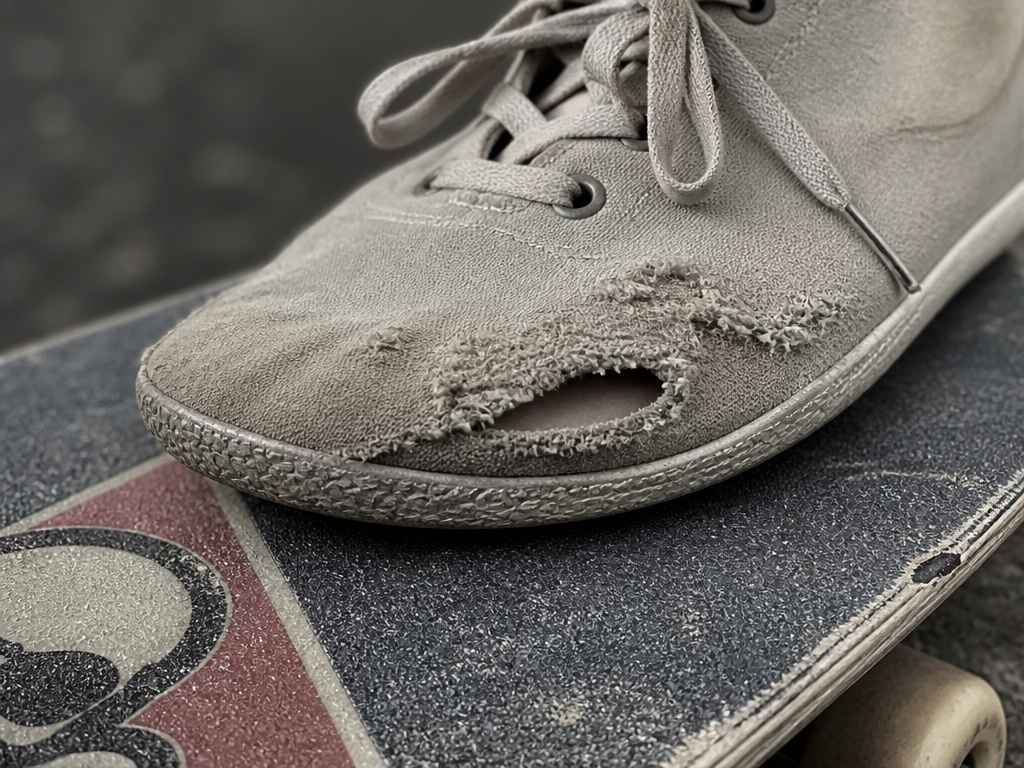
This is where the real community debate lives, as seen in Reddit forums like r/BarefootRunning. Skaters who prefer minimalist footwear want the wide toe box, zero-drop heel, and thin sole of a barefoot shoe but need it to survive the sport. The short answer is: for cruising, maybe. For tricks, not yet.
Brands like Whitin, Splay, and Lems make popular barefoot-style shoes. Their thin, flexible soles offer fantastic board feel, and the wide toe boxes are a revelation for foot splay. The problem is durability. The canvas or thin synthetic uppers are no match for the abusive, lateral friction of grip tape during flip tricks. As one Reddit user reported, holes quickly appear on the side of minimalist shoes like Whitins from repeated heelflip attempts.
The sole isn’t the main issue; it’s the upper. Traditional skate shoes like Vans or Etnies have reinforced “ollie pads”, double or triple layers of material exactly where the shoe rubs against the grip tape. Most barefoot shoe brands don’t incorporate this because it adds stiffness and weight contrary to their design philosophy.
A few niche companies are trying to bridge the gap. Filii, a German brand, offers a skate-specific model. Weak Shoes has a “Ripton” model made with durable Cordura fabric. These are steps toward a solution, but they remain specialty items with limited availability and higher price points.
| Footwear Type | Board Feel | Durability vs. Grip Tape | Protection | Best For |
|---|---|---|---|---|
| Traditional Skate Shoes | Moderate | Excellent (Reinforced Ollie Pads) | Excellent | Street skating, technical tricks, park riding. |
| Barefoot-Style Shoes | Excellent | Poor (Canvas Uppers Shred) | Low (Thin Sole) | Cruising, carving, light flat-ground practice. |
| True Barefoot | Maximum | None (Your Skin is the Sacrificial Layer) | None | Historical context, slow pushes on perfect surfaces. |
If You Try It Anyway: Damage Control
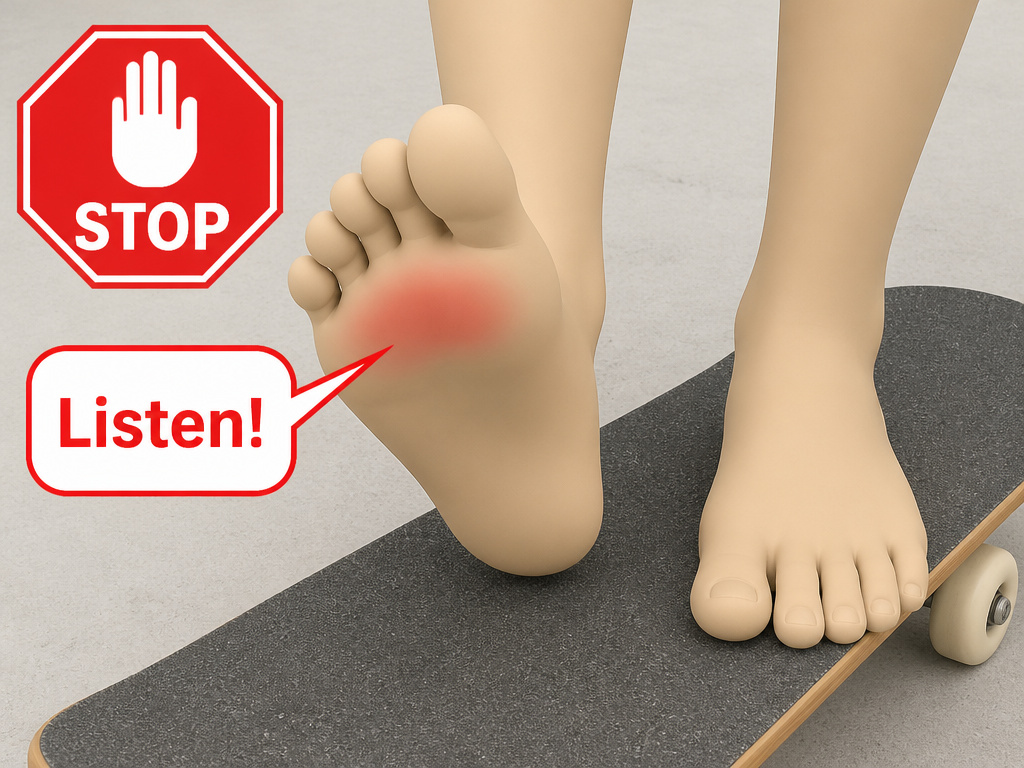
I’ve seen this common mistake a hundred times. Someone gets the idea, figures they’ll just try a few pushes, and ends up with raw feet and a banged-up board. If you’re determined to feel the board directly, here’s how to limit the carnage. This isn’t endorsement; it’s harm reduction.
Session Limits and Surface Selection: Keep sessions very short on your first attempt. Your foot skin is not conditioned for this. The ground must be absolutely smooth, fresh concrete, polished asphalt, or a clean tennis court. Any gravel, pebbles, or cracks become major hazards.
Post-Session Foot Care is Non-Negotiable: As soon as you’re done, wash your feet with soap and water. Inspect for any cuts, abrasions, or embedded grit. Grip tape leaves microscopic abrasive particles that can irritate skin. Moisturize after drying. This isn’t vanity; it’s preventing cracks and infections that will sideline you from all skating.
Trick Ban: Ollies, kickflips, heelflips, shuvits, forget them. The mechanics of these tricks rely on sliding the foot, which is exactly what shreds skin. Stick to pushing, turning, and gentle carving. The moment you think, “I wonder if I can ollie,” you’ve crossed from experimentation into injury territory.
Listen to Your Feet: A hot spot or sting is your body’s warning. A “tough it out” mentality here leads directly to broken skin. Stop immediately. This is the single most important rule: pain is not a challenge to overcome; it’s the circuit breaker telling you the system is overloaded.
What to Wear Instead: The Realistic Options
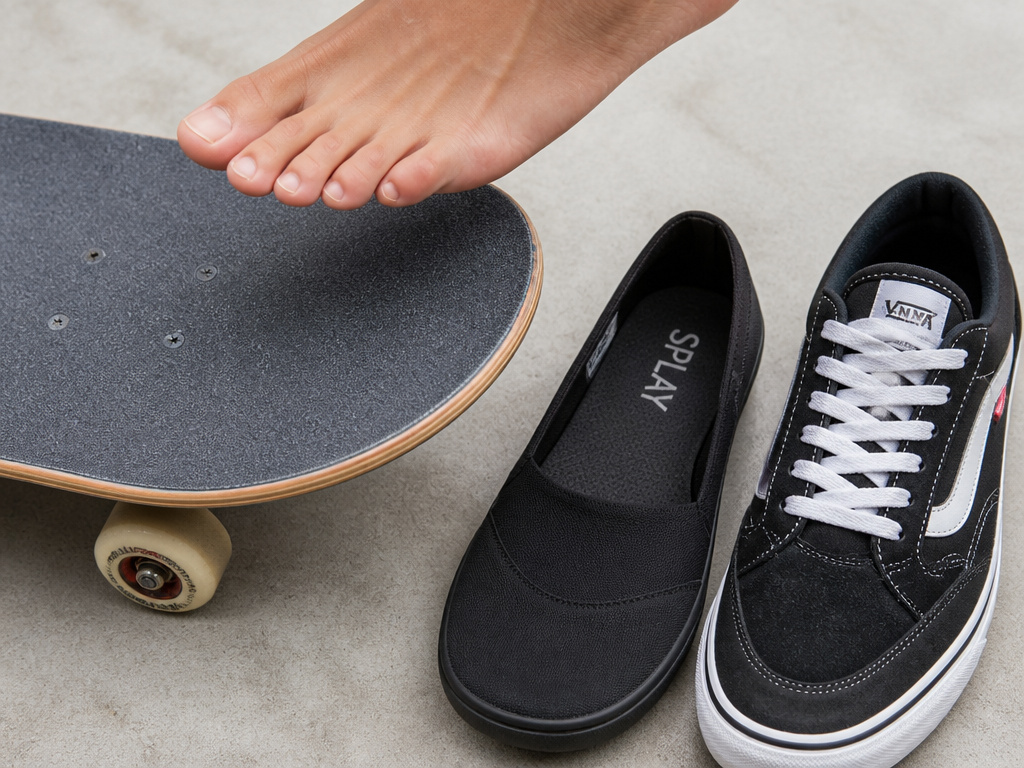
So, you want better board feel without the emergency room visit. Your choices aren’t just “bulky cupsole or barefoot.” Here are the available options.
For the closest legal and safe experience, you need a proper skate shoe. This doesn’t mean the biggest, puffiest model. Many skaters prefer the thinner, board-feel-focused lines from companies like Etnies (Joslin model) or Vans (Pro Skate line). These have the necessary ollie pad reinforcement but are designed to be more flexible and low-profile than bulky basketball-style sneakers.
If you’re committed to the barefoot philosophy, your hunt is for a durable barefoot shoe. Look for models that explicitly mention reinforced uppers or abrasion-resistant materials. The Splay Rev is marketed towards skaters, and the Filii SKATER ONE is built for it. These are your best bets for merging the two worlds, though they remain a compromise on pure minimalist design.
Don’t overlook the gear you can add to your existing shoes. DKL Rubber Griptape is a product that replaces standard abrasive tape with a non-abrasive, rubberized alternative. It’s controversial among purists for its different feel, but it dramatically increases shoe life, especially for delicate barefoot-style models. It’s a direct solution to the “shredded uppers” problem.
Bottom line: Your best skateboarding shoes for board feel are not the ones with the most tech; they’re the ones that balance a thin, responsive sole with just enough durability at the high-wear points. Sometimes, the right gear is what allows you to feel the board longer, not just more sharply.
Has Anyone Ever Skated Barefoot?
While the official manuals from manufacturers like Razor and Evolve Skateboards explicitly state you should never ride barefooted or in sandals, the history of skateboarding is full of informal, off-label experimentation. You might see videos of someone casually pushing a board barefoot on smooth concrete or carpet. However, these instances are almost always low-speed, controlled demonstrations, not actual riding. The consistent, high-friction interface needed for proper control and the protection for your toes and metatarsals against impact are absent without athletic shoes. Major manufacturers explicitly document warnings against barefoot skating because their testing and liability assessments are built on the assumption that proper footwear is worn.
Frequently Asked Questions
Is it possible to ride a skateboard barefoot?
Technically, yes, you can place your bare feet on a skateboard and push. Functionally, it is wildly inadvisable for anything beyond a few slow, careful pushes on a perfect surface. The lack of protection, grip, and braking ability makes it dangerous, and every equipment manufacturer explicitly prohibits it in their safety warnings.
Are barefoot shoes like Vibrams safe for skateboarding?
Vibrams or similar toe-separated minimalist shoes offer slightly more protection than true barefoot but introduce new risks. The thin soles provide almost no impact cushioning, and the individual toe slots can catch on grip tape or the board itself during a bail, potentially leading to joint injuries. They are not designed for the lateral forces and abrasion of skating.
Why do some longboarders skate barefoot?
Some downhill or carving longboarders pursue a “surf-like” feel, wanting direct sensory feedback from the board to their feet for precise leans and turns. However, even in this discipline, the high speeds and need for reliable foot braking make it an extremely high-risk choice not practiced by the majority of serious longboarders.
Can I just wear thick socks instead?
Thick socks offer negligible protection. They provide no meaningful abrasion resistance against grip tape, zero impact protection, and minimal thermal insulation from friction burns during foot braking. They will wear through quickly and leave you with the same injuries as going barefoot, just with some fabric embedded in the wound.
Before You Go
Consider the reality of the ‘can you skateboard barefoot’ question. It’s not a secret technique or a purity test. It’s a trade-off where the downsides, documented by manufacturers and evident in the scars of those who’ve tried it, overwhelm the single upside of heightened sensation.
The real progression isn’t in removing safety gear; it’s in finding gear that gets out of your way. Your search should be for the most minimal, foot-shaped skate sneaker you can find that still has a reinforced ollie patch, or for experimenting with alternative grip tapes that are kinder to minimalist footwear. That’s the practical path forward.
Chasing the barefoot feel by actually going barefoot is, in the bluntest coaching terms, a distraction. The energy spent managing pain, preventing infection, and nursing wounds is energy not spent on building muscle memory, balance, and skill. Your feet are your foundation. Protect them like the essential equipment they are.
