Cosmic Skates Review: The Good, Bad, and What to Upgrade
This post contains affiliate links. As an Amazon Associate, we earn from qualifying purchases.
Cosmic skates are budget recreational quad and inline skates sold under various brand names, built with entry-level components like 82A urethane wheels and ABEC 5-9 bearings. They serve as a low-cost entry point, but their 30-day warranty that excludes bearings and a history of sizing inconsistencies mean they’re a short-term solution at best.
That 30-day window is the whole story. It’s not just a number; it’s a manufacturer’s confidence interval. A skate built to last will carry a warranty measured in years, not weeks, a point well-illustrated by the Cosmic Skates review.
What follows is a breakdown of the specific models, the components that give out, the sizing trap that leaves beginners with ill-fitting gear, and the one upgrade that changes everything. By the end, you’ll know exactly what you’re buying and what you’ll likely need to replace.
Key Takeaways
- Cosmic skates are entry-level recreational gear, not performance equipment. Treat them as a trial pair.
- Sizing is notoriously inconsistent; the “Chain 2 Piece” set runs large despite the brand’s “true to size” claim.
- The official 30-day warranty excludes wheel bearings, the most common wear item to fail.
- The stock wheels on many Cosmic models are 82A urethane, a jack-of-all-trades compromise for indoor and outdoor use, though some models like the Sure-Grip Rincon and VNLA Freestyle Cosmic use harder 90A or 92A wheels.
- Your first upgrade should be better bearings, as the stock ABEC 5, 7, or 9 units are entry-level.
What Are Cosmic Skates, Really?
One point is crucial to understand. “Cosmic” isn’t a single manufacturer with a unified quality standard. It’s a brand name applied to a range of products made by different factories. You’ll find Cosmic Skates’ own branded quads, Cosmic wheels on Sure-Grip Rincon packages, and even Cosmic-labeled components on skates from other companies like VNLA.
The Cosmic is a comfortable quad skate with a classic figure skate design. A suede inner and vinyl outer holds your foot in place. A retailer description mentions an aluminum frame and 82A wheels.
This description from a retailer is the commodity baseline. It mentions the 82A wheel hardness and aluminum plate, which are real specs.
The common thread across all Cosmic products is their position in the market: affordable. They are the answer to “I’m not sure I’ll like skating and don’t want to spend $300.” That’s a valid need. The problem is when these skates are marketed as durable long-term solutions.
The Cosmic Model Lineup: Bling, Chain, Hi-top, and More
You’ll see Cosmic skates under many names. The Amazon listing for the “Hi-top Spider Web” model specifies a steel plate, 58mm 82A urethane wheels, and ABEC 7 bearings, while the SkatePro listing for Cosmic Quad Roller Skates describes an aluminum plate.
Here’s the breakdown of key models and their advertised specs:
| Model Name | Wheel Spec | Bearing Spec | Plate Material | Notable Feature |
|---|---|---|---|---|
| Hi-top Spider Web | 58mm, 82A urethane | ABEC 7 | Steel | High-top boot design |
| Chain 2 Piece | 58mm, 82A PU | Not specified | Not specified | Sold as a complete set with shoes |
| Sure-Grip Rincon | 62x42mm, 90A | ABEC 7 | Not specified | Sold as a complete skate package |
| VNLA Freestyle Cosmic | Cosmic Super Fly 62/42mm, 92A | VNLA ABEC 9 | “Gorilla” plate | Lifetime plate warranty |
Notice the bearing spec inconsistency? The Hi-top uses ABEC 7, the Sure-Grip Rincon uses ABEC 7, but the Cosmic Quad Roller Skates sold by SkatePro list ABEC-5 bearings. There is no “Cosmic standard.” Each manufacturer sources what fits the price point.
The Cosmic Skates Sizing Trap
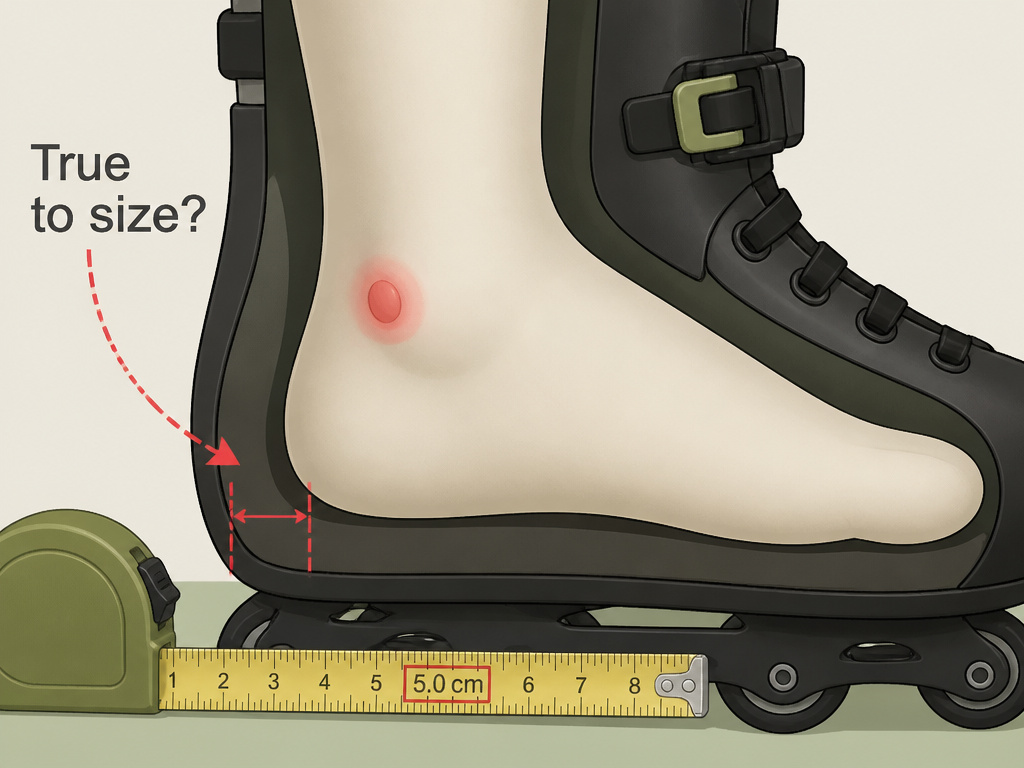
This is where most negative reviews originate. The sizing advice is contradictory, and getting it wrong means a skate that blisters your heel or fails to provide ankle support.
The Cosmic Skates “Chain 2 Piece” product page advises “True to size.” A customer review on the same page directly contradicts this: “they do run big… I would recommend ordering your regular size shoe.” This isn’t a one-off complaint. The VNLA Freestyle Cosmic product page explicitly states its skates are listed in men’s sizes and advises women to size down one.
Common mistake: Trusting the “true to size” label on Cosmic skate listings. Ordering your regular shoe size often results in a boot that’s too long, causing your foot to slide and your heel to blister.
The fix is to measure your foot in centimeters and compare it directly to the brand’s specific size chart, if one exists. If it doesn’t, assume you need to size down. A skate boot should fit like a firm handshake, not a relaxed sneaker.
Build Quality: The 82A Wheel Compromise and Plate Debate
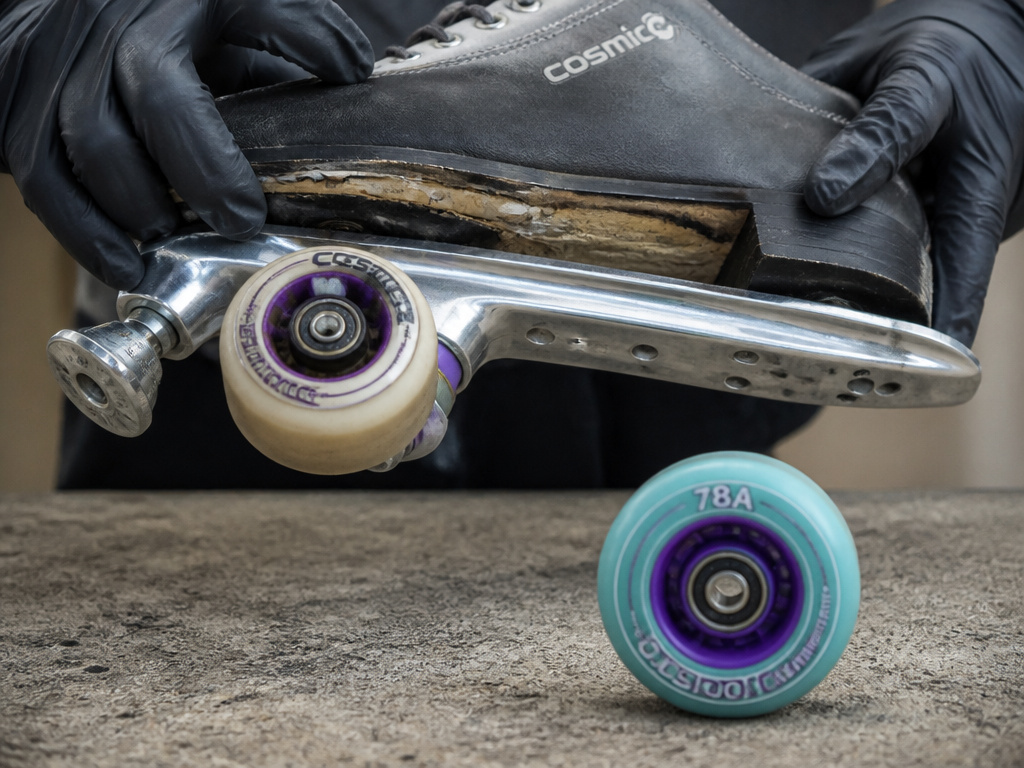
The stock 82A durometer wheel is the default for a reason. It’s soft enough to absorb some vibration from rough pavement but hard enough to maintain speed on a smooth rink floor. It’s a master of neither. For dedicated outdoor skating, you’d want a softer wheel (78A-80A) for shock absorption. For indoor speed, you’d want a harder wheel (88A+).
The plate material is another point of confusion. The Amazon listing for the “Hi-top Spider Web” specifies a steel plate. The SkatePro listing for “Cosmic Quad Roller Skates” describes an aluminum plate. This isn’t a disagreement in the sources; it’s evidence that different factories are producing different products under the same Cosmic branding. Aluminum is lighter; steel is more rigid. Neither is inherently “better,” but the inconsistency means you can’t know what you’re getting until it arrives.
The real issue isn’t the plate bending, it’s the boot-to-plate connection. On the cheapest models, this is where glue fails.
The 30-Day Warranty and What It Actually Covers
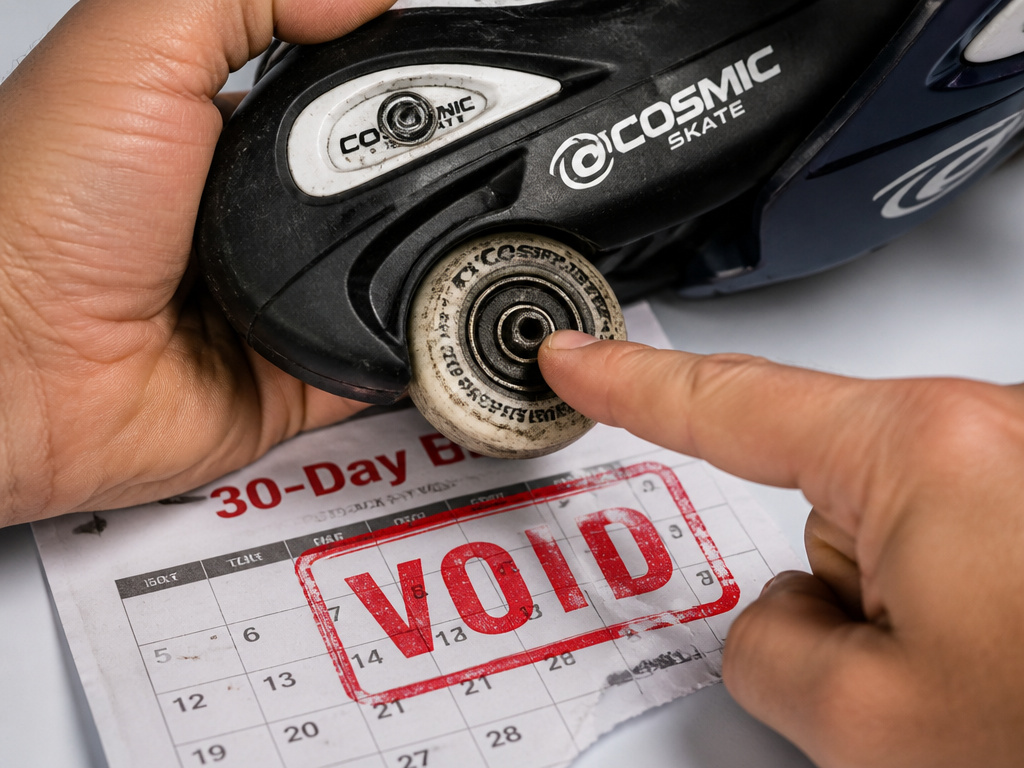
The official Cosmic Skates warranty, as detailed in any Cosmic Skates review, is 30 days from the date of purchase for manufacturing defects. This is a critical data point. It explicitly excludes wheel bearings from coverage and also excludes “wear and tear.”
Think about that. Bearings are the highest-wear component on any skate. Excluding them is like a car warranty excluding the tires. It tells you the manufacturer has zero confidence in that part’s longevity. The 30-day window is just long enough for you to discover a true factory defect, a cracked plate, a ripped seam, but not long enough to see how the components hold up under real use.
This warranty structure shifts the risk entirely to you, the buyer. It frames the skate as a short-term, almost disposable product. If you’re still skating on them after two months, any failure is your problem.
Are Cosmic Skates Good for Beginners?
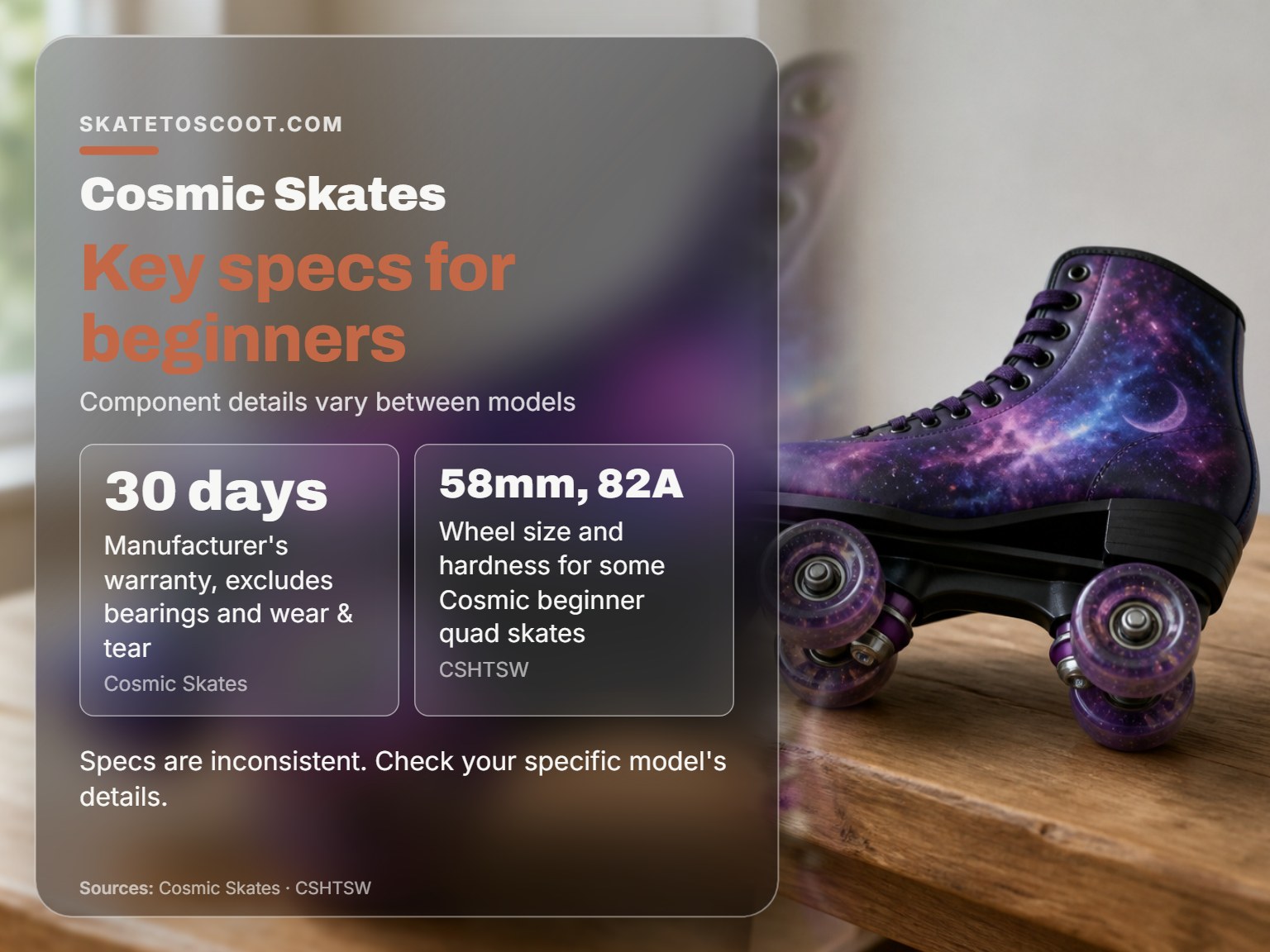
For an absolute beginner who needs confirmation they enjoy the activity before investing, Cosmic skates can serve that purpose. They roll, they stop, they look flashy. The low price is the main attraction.
But “good for beginners” has two meanings. Does it work? Yes. Does it teach proper technique and set you up for success? Often, no. A boot that doesn’t fit correctly teaches you to compensate with bad posture. Wheels that are too hard for outdoor surfaces transmit every pebble shock to your knees, making the experience unpleasant. A short warranty means your first mechanical issue could happen just as you’re building confidence.
Here’s a quick pros and cons breakdown:
| Pros | Cons |
|---|---|
| Low upfront cost | Inconsistent sizing |
| Visually appealing designs | 30-day warranty excludes bearings |
| Includes all necessary hardware | Stock components are low-tier |
| Gets you rolling immediately | Boot materials lack support and breathability |
If you proceed, go in with the mindset that these are temporary skates. Your first goal isn’t to master advanced moves; it’s to determine if you like the sensation of rolling. Your second goal should be to budget for your next, better pair, or for the upgrades this pair will need.
The Upgrade Path: What to Replace First
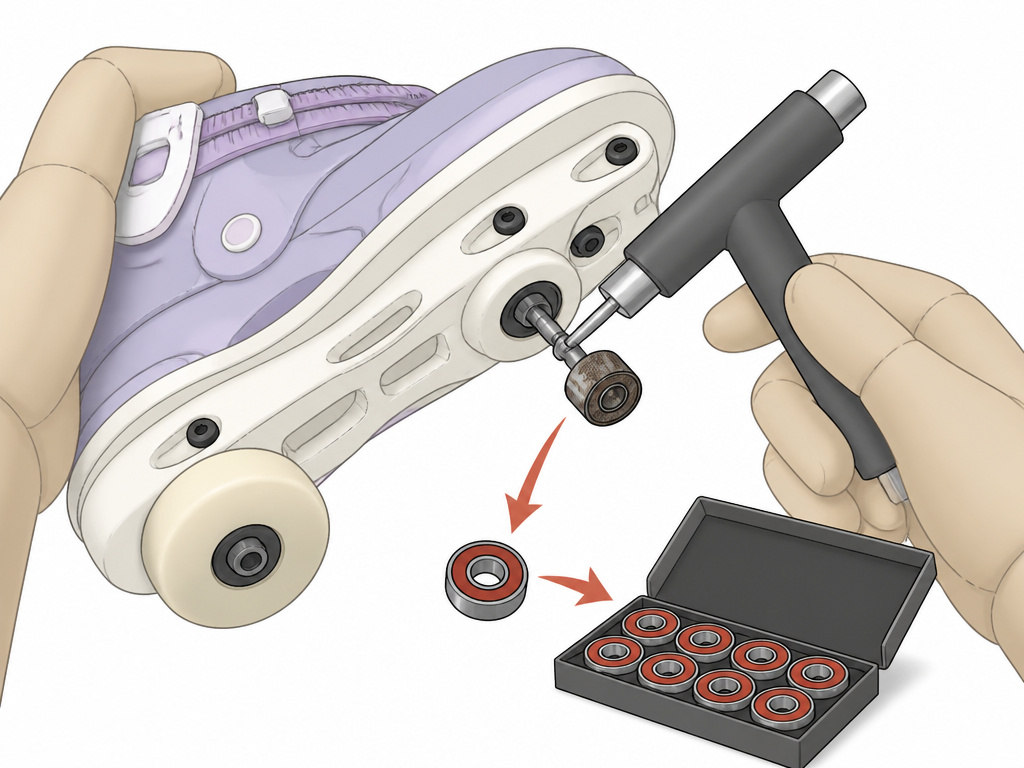
Owners don’t throw away Cosmic skates when a part fails; they upgrade that part. This is the skate’s real value, a modular learning platform. The upgrade order is almost universal.
- Bearings. The stock ABEC 5 or 7 bearings are serviceable but collect dirt and lose their spin quickly outdoors. Swapping in a set of Bones Reds or similar quality bearings costs less than a movie ticket and dramatically improves the roll. You’ll notice the difference in your first push.
- Wheels. The 82A stock wheels are a compromise. If you skate outdoors 80% of the time, switch to a dedicated soft outdoor wheel like Radar Energies (78A). If you’re mostly at the rink, a harder wheel like RollerBones Team (98A) will give you more speed. This swap changes the skate’s character completely.
- Cushions/Bushings. This is an advanced upgrade, but changing the urethane cushions in the trucks can refine the skate’s turning responsiveness. Stock cushions are often very hard.
- Plate/Boot. At this point, you’re essentially building a new skate. If you’ve upgraded everything else and still love the boot, you could replace a broken plate. But most people find that by the time the boot is worn out, they’re ready for a professionally built setup from a brand like Riedell or Sure-Grip.
Where this goes sideways: Upgrading the wheels but not the bearings. The new, better-rolling wheels magnify the drag and grit in the old bearings. You’ll spend more energy for less speed. Always upgrade bearings and wheels as a pair.
Safety and Longevity: A Note on Standards and Recalls
Safety in skating equipment is governed by standards. The European standard DIN EN 13843 for inline skates defines equipment classes based on user mass (Class A: >20kg to 100kg). There is no indication Cosmic skates are tested to this or any other formal safety standard. They are designed and sold as recreational toys.
The history of roller sports includes safety actions. In 1994, the CPSC announced a recall of about 18,000 Atomic Ski USA Oxygen Krypton inline skates because the rear wheel could detach during use. No injuries were reported at the time of the recall, but the hazard was real. This CPSC inline skate recall notice is a matter of public record and underscores why component security matters.
For Cosmic skates, the safety concern is less about catastrophic failure and more about performance failure, a sticky bearing causing a stumble, a too-hard wheel losing traction on a damp surface, a poorly fitting boot compromising ankle stability. These are the risks you accept with budget gear.
How do Cosmic Skates compare to other budget brands?
Comparing Cosmic Skates to other budget brands, as a typical Cosmic Skates review will note, shows a field of similar compromises. Like many entry-level options, Cosmic uses standard components such as urethane wheels and common bearing ratings, which are adequate for casual use but not built for high performance or durability. Their official warranty period is 30 days and explicitly excludes wheel bearings from coverage. The key difference lies in the branding itself; ‘Cosmic’ is not a single manufacturer but a name applied to various products, meaning quality and specifications can vary significantly even within the same brand label, more so than with more consolidated budget competitors.
Frequently Asked Questions
Are Cosmic skates good?
Cosmic skates are good for one thing: providing a functional, low-cost entry into skating to see if you like it. They are not good as long-term, performance-oriented skates. Their short warranty and lower-tier components mean they have a limited lifespan under regular use.
Which brand of skates is the best?
There is no single “best” brand; it depends on your discipline and budget. For serious artistic or jam skating, brands like Riedell and Vanilla Skates are highly regarded. For roller derby, brands like Antik and Bont are standards. For recreational outdoor skating, brands like K2 and Rollerblade dominate. Cosmic sits at the very entry-level of this spectrum.
What is the best brand of roller skates for beginners?
The best beginner brand is one that offers a properly sized boot with decent support and a clear upgrade path. Many coaches recommend the Riedell R3 or the Sure-Grip Fame as true beginner skates because their quality is consistent, and they are built to last through the learning phase. Brands like Foxy Skates or Cosmic are more fashion-focused and less durable.
Is it better for roller skates to be too big or too small?
It is unequivocally better for skates to be slightly too small than too big. A skate that is too big will never break in to fit your foot correctly. Your foot will slide, causing blisters and eliminating precise control. A skate that is slightly too small may be uncomfortable during the break-in period but can mold to your foot. However, “slightly” is key, they should not cause pain or numbness.
Before You Go
The math is simple. With regular use, the stock bearings in a Cosmic skate may feel gritty and slow, and the wheels may wear unevenly. That’s the realistic timeline you’re working with.
Your decision point is this: are you buying a disposable trial product, or are you buying the foundation of a new hobby? If it’s the former, Cosmic skates fit the bill. Accept the sizing gamble, enjoy them for a season, and move on.
If it’s the latter, take the total cost of a Cosmic skate plus the inevitable bearing and wheel upgrades. You’ll often find that sum brings you within striking distance of a proven beginner skate from Riedell or Sure-Grip, skates that come with a one-year warranty, predictable sizing, and components that won’t hold you back. That’s the upgrade path that makes sense.
Start slow, stay low. And invest in gear that allows you to do both safely.
