Vanilla Skates Review: Sizing and Durability Guide
This post contains affiliate links. As an Amazon Associate, we earn from qualifying purchases.
Vanilla (VNLA) skates are built for performance, but their fit and comfort are the deciding factors. They run true to size in length, offer a standard-to-wide fit in the forefoot, and have a notoriously stiff, high-cut ankle that requires a dedicated break-in period or modification for many skaters.
A pair of skates shouldn’t draw blood, but a documented review of the Vanilla 360 Jam Skate reported ankle abrasion to the point of bleeding after multiple sessions of rink skating. That’s not a break-in; it’s a design conflict.
What follows is a look inside the brand’s construction, from the leather on the Vanilla 360 to the heat-moldable carbon fiber on the Spyder. We’ll match the specs to the skating style they’re built for, explain where the common pain points actually originate, and give you the maintenance rules straight from an official roller skate manual.
Key Takeaways
- Vanilla skates run true to size in length but have a high, stiff ankle collar that causes the most reported discomfort.
- The break-in process is real and can be painful; one reviewer documented ankle bleeding after eight sessions, rejecting the idea that discomfort is normal.
- Component quality varies dramatically: junior jam skates come with ABEC-9 bearings and 95A wheels, while the Vanilla 360 uses a nylon plate and ABEC-7 bearings.
- Carbon fiber models like the Spyder and Blackmail require specific heat-molding per the manufacturer’s instructions; skipping this step risks a poor fit.
- Always cross-reference skate sizing with your actual foot measurements in millimeters, as “wide-foot friendly” claims are model-specific, not universal.
How Do Vanilla Skates Fit? Sizing and Width Guide
Forget shoe size. Your Vanilla skate size should be your foot length in millimeters, measured from heel to longest toe. The brand’s sizing chart is built on that metric, and it’s accurate. In length, they run true to size. The common complaint isn’t about length; it’s about volume and that ankle.
Where this goes sideways: Buying a half size up for “room to grow.” A skate that’s too long creates dead space in the toe box. Your foot slides forward on every push, blisters form on your heels, and you lose all control trying to compensate. A proper fit should feel snug, not roomy.
The forefoot area on models like the Parfait and A La Mode is generous. They’re often recommended for wider feet, and user reviews back that up. But “wide-foot friendly” doesn’t mean “universally comfortable.” The VNLA Parfait, for instance, is noted by owners as being much stiffer than a Sure-Grip Boardwalk or a Riedell 135. That stiffness provides support but demands a break-in.
Here’s how the fit translates across a few popular models:
| Model | Reported Fit | Best For | Key Consideration |
|---|---|---|---|
| VNLA Parfait | Standard-to-wide forefoot, very stiff ankle. | Beginners, wide feet, outdoor cruising. | Stiffness is comparable to a Moxi Beach Bunny, not a flexible suede boot. |
| VNLA A La Mode | Similar to Parfait, slightly more refined upper. | Beginners looking for a high-top, wider feet. | Often ships with a basic nylon plate owners call “the cheapest available.” |
| Vanilla 360 Jam Skate | Snug forefoot and heel, aggressively high ankle collar. | Jam and rhythm skaters prioritizing ankle support. | The ankle design is the primary source of documented discomfort. |
| Vanilla Spyder/Blackmail | Performance fit; requires heat-molding for carbon fiber models. | Inline speed skating. | Not a plug-and-play fit. You must follow the specific heat-molding process outlined by Vanilla. |
If you’re between sizes, size down. The interior padding will compact. If you have a notably narrow heel, even a correct length might feel sloppy. In that case, look into Riedell skates, which offer width options, or consider aftermarket heel pads.
Boot Comfort: The Break-In Battle
Manufacturers say “break-in.” Some owners say “modification.” This is the core tension in any Vanilla skates review. The break-in period is the time it takes for the boot’s internal padding to compress and the materials to soften around your unique ankle bones. For some, it’s a few hours. For others, it’s a war of attrition.
A long-term Vanilla skates review of the Vanilla 360 Jam Skate put numbers to the struggle. The skater reported persistent ankle digging that led to abrasion and bleeding after nearly eight sessions. His conclusion was blunt: “I shouldn’t have to modify the boot to make them work.” He planned a future post on modifications, which signals that for some, breaking in isn’t enough, you have to break them down.
This isn’t just a 360 problem. The carbon fiber Vanilla Spyder inline skate received a “D” grade for comfort in the same reviewer’s system. Carbon fiber doesn’t stretch; it’s meant to be heat-molded. If you don’t follow that process, it won’t break in, it will just hurt.
So, what actually happens during a break-in?
- Padding Compression: The foam inside the heel and ankle collar flattens, creating space.
- Material Flex: Leather and suede soften and develop creases at your flex points.
- Ankle Molding: The stiff cuff begins to articulate around your ankle bones instead of pressing into them.
You can accelerate it safely: wear them indoors on carpet for short periods, use a hairdryer on low heat to warm and flex specific spots (avoid this on carbon fiber), and always lace them properly, snug over the forefoot, tight at the ankle, secure at the top.
I learned this the hard way with a different brand. I wore skates a full size too big for a month, convinced they’d “pack out.” All I packed out was my confidence from constant foot slippage. Now I measure first, and if a skate doesn’t feel secure in the shop, it never will on the rink.
If pain is localized to a specific pressure point, that’s a break-in candidate. If the entire ankle cuff feels like a vice, that might be a design mismatch for your anatomy. In that case, a model with a lower cut or different construction, like many street roller skates, might be a better fit.
Component Quality: Plates, Wheels, and Bearings
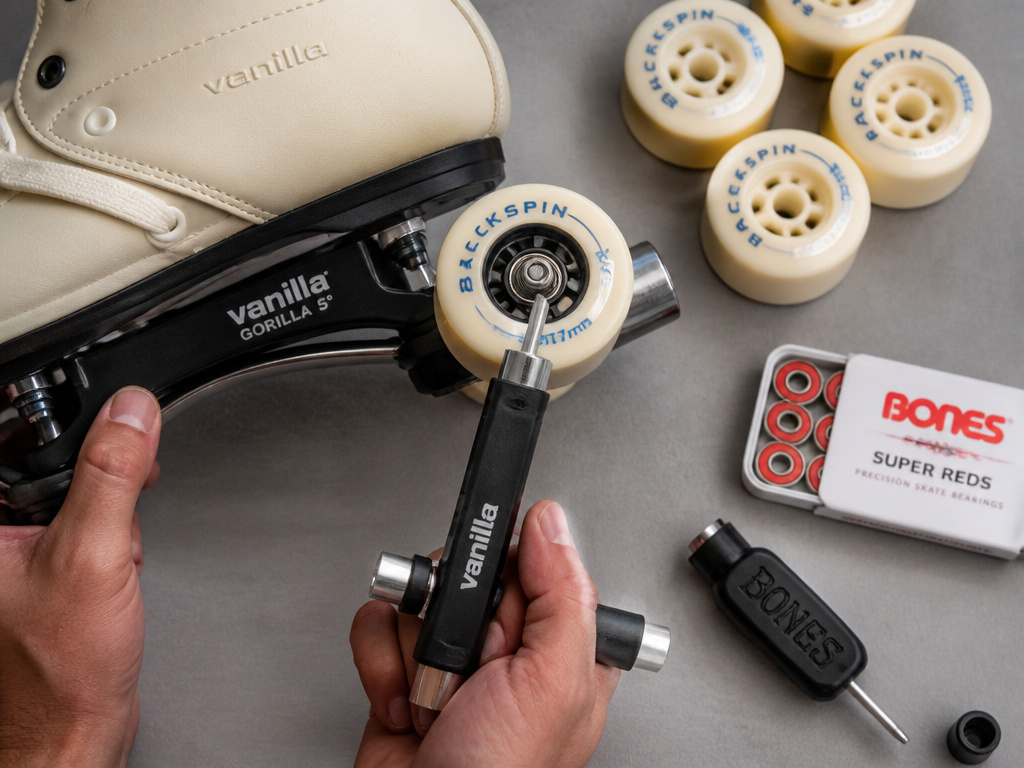
When you buy a complete skate, you’re buying a system. With Vanilla, that system has a split personality. Their high-end components are legit; their entry-level parts are where corners get cut.
Plates: This is the biggest divider. The Vanilla Gorilla Plate is a nylon plate with a 5° kingpin angle and a lifetime warranty against breakage. It’s stiff and responsive. Conversely, the nylon plate on the VNLA A La Mode is described in owner forums as “the cheapest nylon plate available from FoxPro in China,” while retailers may list it as “VNLA Gorilla High Impact Nylon,” highlighting the confusion. The takeaway? Not all nylon plates are equal. A metal plate, like an Avanti, offers more control and less flex, but it’s an upgrade.
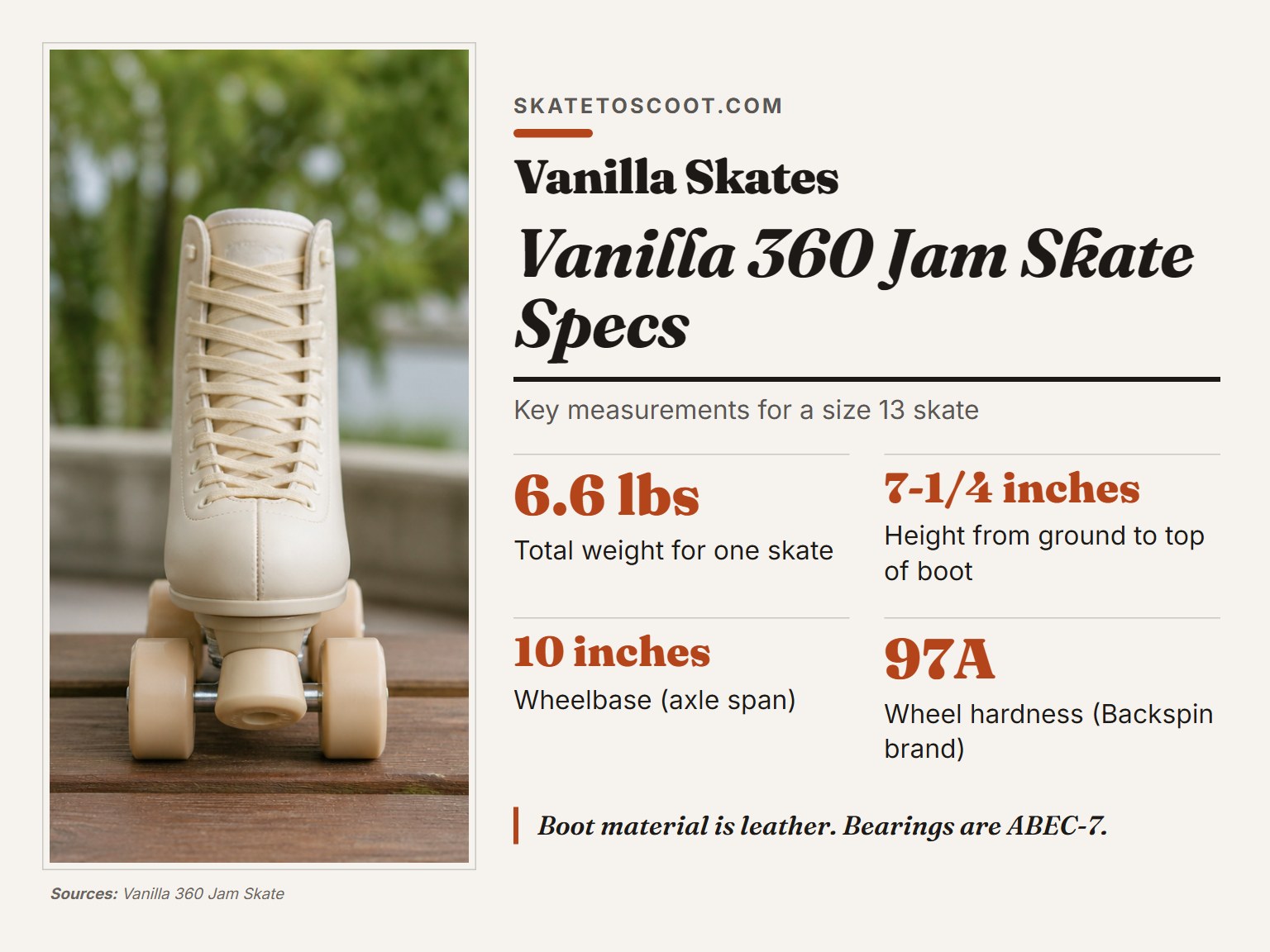
Wheels and Bearings: The spec sheets don’t lie, but they don’t tell the whole story. The Vanilla 360 Jam Skate comes with Backspin 97A wheels and ABEC-7 bearings. A VNLA Junior Stealth Jam Skates includes Backspin 95A wheels and Reaction ABEC-9 bearings. The higher ABEC number on the junior model doesn’t necessarily mean it’s better; it’s a tolerance rating, not a speed guarantee. One community reviewer uses a “Clean Bearing Roll Test” (timing a wheel spin) to gauge performance, a practical metric that differs from the ANSI/ABMA/ISO standards which grade bearings based on manufacturing tolerances, not roll time.
This is why the manual for brands like Riedell, Moxi, and Antik stresses maintenance. It’s also why, after a bearing failure, the Vanilla skates review for the 360 recommended aftermarket Bones Super Reds and a Bones Bearing Puller, sometimes the stock solution isn’t the best one.
| Component | Entry-Level (e.g., A La Mode) | Performance-Level (e.g., Junior Stealth) | Pro-Tier (Aftermarket) |
|---|---|---|---|
| Plate | Basic nylon plate. | Vanilla Gorilla nylon plate (5° angle, lifetime warranty). | Aluminum or magnesium plates (e.g., Reactor, Arius). |
| Wheels | Often a generic indoor wheel (e.g., 93A). | Branded wheels matched to discipline (e.g., Backspin 95A). | High-performance urethane (e.g., RollerBones, Komplex). |
| Bearings | ABEC-7 or generic. | ABEC-9 (e.g., Reaction bearings). | Swiss-grade or ceramic bearings (e.g., Bones Reds/Swiss). |
For a beginner, the stock components on a model like the Parfait are more than enough. For a skater pushing into rhythm or jam, planning for a plate or wheel upgrade down the line is smart. It’s the difference between a skate you grow into and a skate you grow out of.
Durability and Safety: What the Manuals Say
Durability isn’t just about how long the suede lasts. It’s about how the skate handles impact, how the parts wear, and what the manufacturer expects you to do about it. Vanilla’s own Vanilla Gorilla Plate boasts a lifetime warranty against breakage, a strong claim. But safety extends beyond the plate.
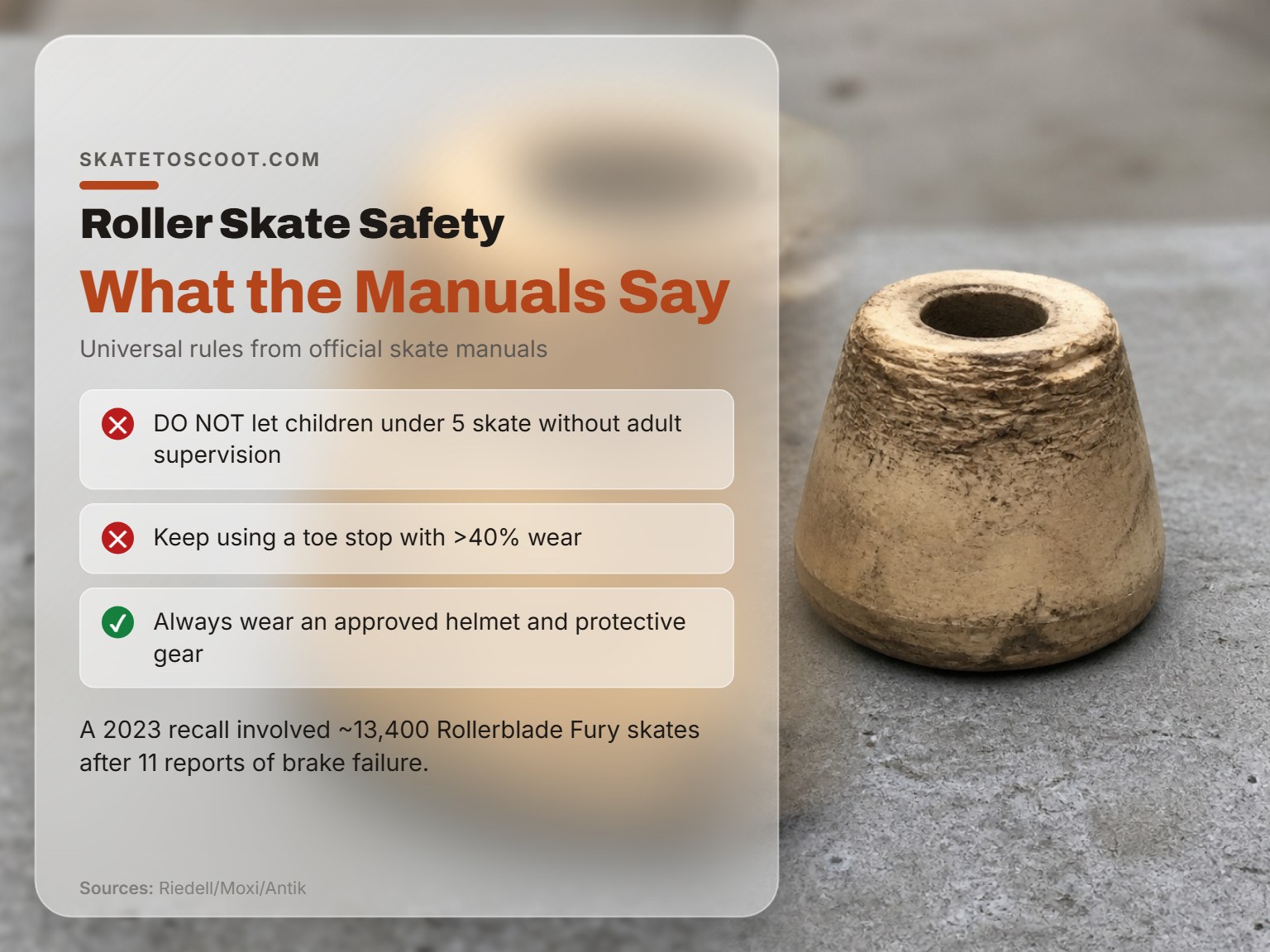
The official Riedell/Moxi/Antik Roller Skate Owner’s Manual lays out universal rules that apply to any skate, including VNLA:
- Protective Gear: Always wear an ANSI, SNELL, CPSC or ASTM approved helmet plus wrist guards, knee pads, etc.
- Toe Stop Wear: “If the toe stop is showing more than 40% wear it needs to be replaced.”
- Surface Warnings: “DO NOT use roller skates on wet and uneven surfaces with rocks or gravel… DO NOT use at dusk or night or in wet, icy conditions… DO NOT use on steep slopes.“
- Supervision: “All children and preteens should always have adult supervision while skating.”
These aren’t suggestions. A government recall for fall hazard in 2023 involved about 13,400 Rollerblade Fury youth skates after 11 reports of the brake support fracturing. It shows that component failure happens, even to major brands. Checking your gear before each session, axle nuts, toe stops, plate integrity, is non-negotiable.
The Riedell/Moxi/Antik manual states the product “is not suitable for children under the age of 5 without appropriate adult supervision.” This underscores a key point: good outdoor roller skates for adults might be entirely wrong for a small child, regardless of brand.
Vanilla vs. Other Brands: Where They Stand
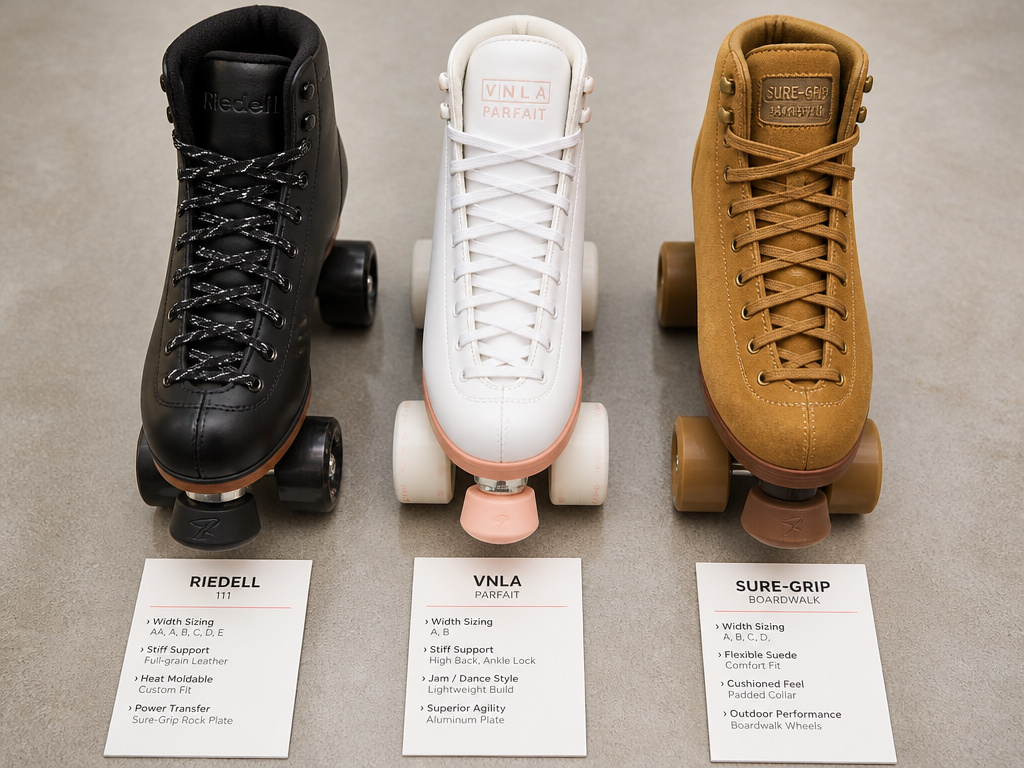
You don’t buy a skate in a vacuum. You’re choosing between ecosystems. So how does VNLA stack up against common alternatives like Riedell, Sure-Grip, or Impala skates?
VNLA vs. Riedell: Riedell is the heritage brand. They offer width sizing (narrow, medium, wide) on many models, which is a huge advantage for a precise fit. Their boots, like the 135, are known to be more flexible out of the box than a stiff VNLA Parfait. VNLA fights back with modern styling, models specifically tuned for jam skating, and often a lower entry price for a complete setup. If you have a standard foot, it’s a style and feel choice. If you have a narrow heel or wide forefoot, Riedell’s sizing system might solve your problem before you even lace up.
VNLA vs. Sure-Grip: Sure-Grip Boardwalks are the gold standard for a flexible suede boot. They break in quickly and mold to the foot. A VNLA Parfait is stiffer, offering more support but requiring more patience. It’s a trade-off: immediate comfort versus structured support.
VNLA vs. Budget Brands (e.g., Impala, Chicago): This is where VNLA’s performance heritage shows. While a Chicago skate might use a plastic plate and basic parts, even VNLA’s entry-level completes usually include an aluminum truck and branded wheels. You’re paying for skate-specific engineering, not fashion-first construction. That said, the basic nylon plate on the A La Mode closes the gap with budget brands, always check the spec sheet, not just the brand name.
The bottom line: VNLA owns the jam skate aesthetic and provides stiff, supportive boots for powerful, controlled movement. Riedell offers precision fit. Sure-Grip offers supple comfort. Choose the tool for the job you’ll actually do.
Maintenance and Upgrades: Making Them Yours
A skate is a starting point. Maintenance keeps it running; upgrades change its personality. Here’s what that looks like for a VNLA skate.
Immediate Setup (First 10 Minutes):
- Loosen Everything: The wheels and trucks are almost always overtightened from the factory. Use a skate tool to loosen each axle nut until the wheel spins freely but doesn’t wiggle side-to-side.
- Adjust Trucks: Cranked-down trucks make a skate stable but un-turnable. Loosen the kingpin nut a half-turn at a time until you can lean into a turn without fighting the skate.
- Check Toe Stops: Ensure they’re tight. The manual’s 40% wear rule is visual: if the stop is visibly worn down by half, replace it.
Common Upgrade Paths:
- First Upgrade (Wheels): Match the wheel to your surface. The 78A wheels on the Parfait are great for rough outdoors. For a rink, a 92A-97A wheel like the Backspin models will slide and pivot better.
- Second Upgrade (Bearings): If your wheels don’t spin freely, clean or replace the bearings. You don’t need expensive ceramics; a solid mid-tier bearing like Bones Reds makes a noticeable difference.
- Third Upgrade (Plate): This is a major job, often requiring a skate shop. You’d do this if the stock nylon plate is flexing too much or if you want a different kingpin angle for more agility.
Easy to miss: The cushions (bushings) around the trucks. These urethane cylinders control how easily your skate leans. Softer cushions make steering easier; harder ones provide stability. Swapping them is cheap and changes the feel dramatically.
Remember the Chaya vintage skates? They’re another brand where the stock setup is good, but a wheel swap can transform them for a specific use. The principle is universal: buy the skate for the boot that fits you, and tailor the parts underneath to your style of skating.
Frequently Asked Questions
Are Vanilla skates good for beginners?
Yes, models like the VNLA Parfait and A La Mode are designed with beginners in mind. They offer a stable, supportive boot and a complete setup. However, their stiffness means a longer break-in period compared to a more flexible boot like a Sure-Grip Boardwalk. A true beginner might value immediate comfort more.
Do Vanilla skates run big or small?
They run true to size in length when you use the manufacturer’s millimeter-based sizing chart. The issue is rarely length; it’s the volume and ankle fit. They accommodate a standard-to-wide forefoot well, but the high ankle collar is consistently noted as tight and stiff.
What is the difference between VNLA Parfait and A La Mode?
The Parfait is often cited as being very stiff, with a wider forefoot and outdoor-style wheels (78A). The A La Mode is also a high-top boot but often comes with a basic nylon plate that owners criticize. Both are beginner-friendly, but the Parfait’s component spec is often better.
How long does it take to break in Vanilla skates?
There is no single answer. It depends on the model (carbon fiber requires heat-molding, not breaking in), your foot shape, and your pain tolerance. One documented case with the Vanilla 360 Jam Skate saw significant discomfort persisting after multiple sessions. Plan for several hours of active skating over multiple sessions for leather/suede models.
Can you use Vanilla skates outdoors?
Yes, if you choose a model with outdoor wheels. The VNLA Parfait comes with 78A soft outdoor wheels. The Vanilla 360, with its 97A hard wheels, is strictly for smooth indoor surfaces. Always match the wheel hardness (durometer) to the terrain, softer for rough ground, harder for smooth rinks.
Before You Go
Vanilla skates are a commitment. You’re buying into a specific type of support and a community-driven design ethos. They won’t pamper you from day one, and for some feet, they might never feel “comfortable” without modification.
The one rule that overrides all brand loyalty: the boot must fit your foot, not the other way around. Measure your feet. Read the spec sheet to know what plate and wheels you’re actually getting, because the “Vanilla” name on the side guarantees a look, not a uniform level of quality across all models. If you want a stiff, high-support boot for dance or rhythm and are willing to endure the break-in, VNLA has your skate. If you want to step into immediate comfort, look at the more flexible alternatives.
Finally, trust the manual over the marketing. The safety rules about helmets, toe stops, and wet surfaces are written because people got hurt. Your first upgrade should always be a full set of protective gear. The skate can be replaced. You can’t.
