Does Razor Hovertrax 2.0 Have Bluetooth? The Real Specs
This post contains affiliate links. As an Amazon Associate, we earn from qualifying purchases.
The Razor Hovertrax 2.0 does not have Bluetooth functionality. Official manuals and the product page list no Bluetooth feature, and its FCC compliance is for unintentional radiators, not a Bluetooth radio. Instead, it focuses on core specs: a 36V battery, 135-watt cruising motors, UL2272 safety certification, and Razor’s EverBalance self-leveling technology.
That lack of Bluetooth isn’t a missing feature; it’s a design choice that defines this model’s era and purpose. The Hovertrax 2.0 was engineered for fundamental stability and safety, not for connected app control or a built-in speaker, which is why the does razor hovertrax 2 0 have bluetooth question has a definitive answer. Its feature set tells you exactly what Razor prioritized when this board hit the market.
What follows: a breakdown of the real specs that matter, the one calibration trick every owner should know, and a clear map of where the Hovertrax 2.0 sits in the wider world of Razor scooters and hoverboards.
Key Takeaways
- The Razor Hovertrax 2.0 has no Bluetooth for music or app connectivity, its official sources never mention it.
- Its electrical system is UL2272 certified by ACT Lab LLC, a critical safety standard for hoverboard batteries and motors.
- Conflicting manuals list the battery as either 2.0Ah (U.S. Manual) or 2.5Ah (global manual), but both agree on a 36V system and a 176 lb rider weight limit.
- The 15-20 second calibration hold (power on until it beeps) fixes most wobbling or self-driving issues.
- This model is for smooth surfaces only and shouldn’t be charged in temperatures at or below freezing (32°F/0°C).
The Short, Direct Answer
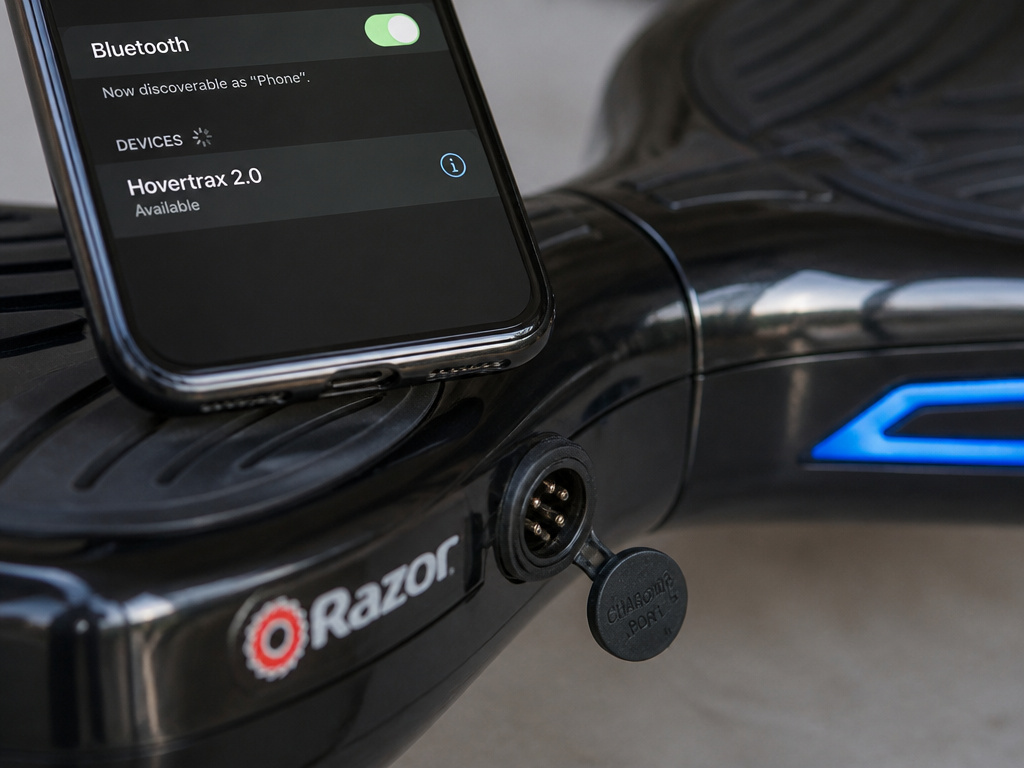
No, the Razor Hovertrax 2.0 does not have Bluetooth. You cannot pair it with your phone for music, and there is no companion app for stats or control.
I’ve pulled the owner’s manual, the global manual, and the official product page to definitively answer does razor hovertrax 2 0 have bluetooth. Not one mentions Bluetooth as a feature. The device does have an FCC compliance statement, but that’s for Part 15 rules governing unintentional radiators, common for any digital device, not for an intentional transmitter like a Bluetooth radio.
This hoverboard complies with Part 15 of the FCC Rules. Operation is subject to the condition that this device does not cause harmful interference. This is a standard compliance for many electronic devices and is unrelated to Bluetooth functionality.
If you bought one expecting a speaker or app, you got a board from a different generation. The Hovertrax 2.0 is from the period where hoverboards were proving they wouldn’t catch fire, not that they could stream your playlist.
What’s Under the Hood (The Real Specs)
Since the answer to does razor hovertrax 2 0 have bluetooth is no, let’s talk about what actually powers the ride. The specs reveal a board built for stability over flash.
The dual hub motors deliver 135 watts of cruising power, with a 350-watt peak when you need a boost. That’s enough for smooth acceleration on flat ground, not for hill climbing. The heart of the system is a 36V lithium-ion battery pack. Here’s where the manuals disagree: the U.S. Manual states a 2.0Ah capacity, while the global version lists 2.5Ah. Both cite the same model name, so we have to present the conflict clearly.
| Specification | U.S. Manual Value | Global Manual Value |
|---|---|---|
| Battery Voltage | 36V | 36V |
| Battery Capacity | 2.0Ah | 2.5Ah |
| Motor Power (Cruising) | 135 watts | 135 watts |
| Motor Power (Peak) | 350 watts | 350 watts |
| Max Rider Weight | 176 lb (80 kg) | 176 lb (80 kg) |
Why does this matter? Capacity affects runtime. It’s a frustrating bit of inconsistency, but the voltage and weight limit, the specs that affect safety and basic operation, are locked in.
The essential specification is the UL2272 certification. The board’s electrical system is certified compliant by ACT Lab LLC. After the spate of hoverboard fires in the mid-2010s, this stamp means the battery management, wiring, and motors have been tested to not overheat or short circuit. It’s the difference between a toy and a certified vehicle.
Why No Bluetooth? Context and Comparisons
The Hovertrax 2.0 arrived when the hoverboard market was in survival mode. The primary engineering goal wasn’t connectivity; it was passing UL2272 and proving the platform was fundamentally safe. Adding Bluetooth, another radio, another battery-draining circuit, was likely seen as an unnecessary risk and cost for a product proving its basic viability.
This puts it in stark contrast to later Razor models and other brands. Many modern hoverboards include Bluetooth speakers as a standard feature. Some, though fewer, offer app connectivity for speed metrics, battery monitoring, or custom riding modes.
If you’re looking for a Razor product with Bluetooth, you’d step up to a different line. Our guide on Bluetooth hoverboards covers the models that include speakers or app features. The Hovertrax 2.0 isn’t one of them. It’s a foundational model. Think of it like the difference between a basic skateboard and one with Bluetooth-connected wheel lights, the core ride is the same, but the extras define the experience.
The Critical Owner’s Guide: Safety and Calibration
The manual isn’t light reading, but it has lines you ignore at your peril. These aren’t suggestions; they’re the conditions under which the board was certified to operate.
First, the 176 lb (80 kg) weight limit includes everything you’re carrying. Go over it, and you risk overloading the motors and damaging the frame. The board is also not for riders under 8 years old. Razor’s wording is firm: “Razor recommends that children under the age of 8 not be permitted to use this product.” It’s a maturity and skill call, not just size.
The terrain rule is absolute: “Only use indoors or on completely smooth surfaces.” Gravel, cracks, or slopes can cause a loss of traction and a sudden fall. This isn’t an all-terrain vehicle.
Where this goes sideways: Charging the board in a cold garage. The manual states, “Do not charge at or below 32º F (0º C).” Doing so can permanently damage the lithium-ion cells, killing your battery pack within a handful of cycles.
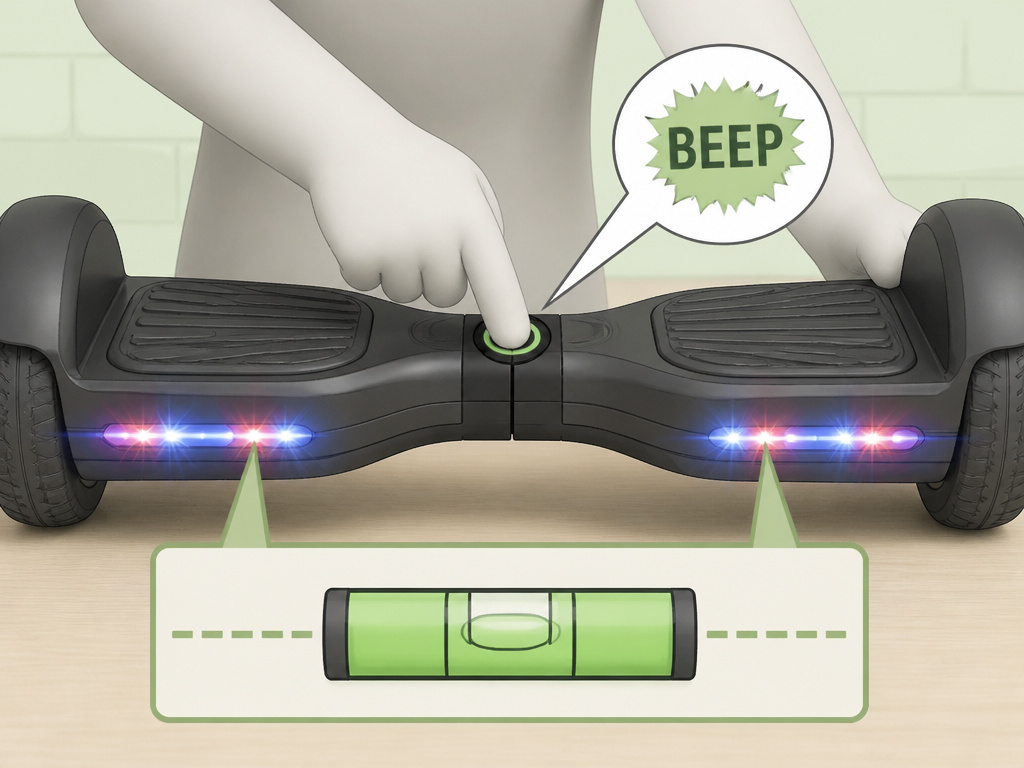
Now, for the most common operational fix: calibration. If your Hovertrax 2.0 drifts on its own or feels persistently off-level, it needs a recalibration. The process is in a separate service bulletin, not the main manual.
- Place the board on a completely level floor.
- Manually adjust the foot platforms so they are level to the ground.
- While holding them level, press and hold the power button. Keep holding for 15-20 seconds until the board beeps and the lights flash.
- Turn the power off. The calibration is now set.
Skip step 2, just holding the button while the board is tilted, and you’ll calibrate the tilt right into the system. The board will then think “level” is actually crooked, making the problem worse. Every time.
How does the Razor Hovertrax 2.0 compare to other hoverboards?
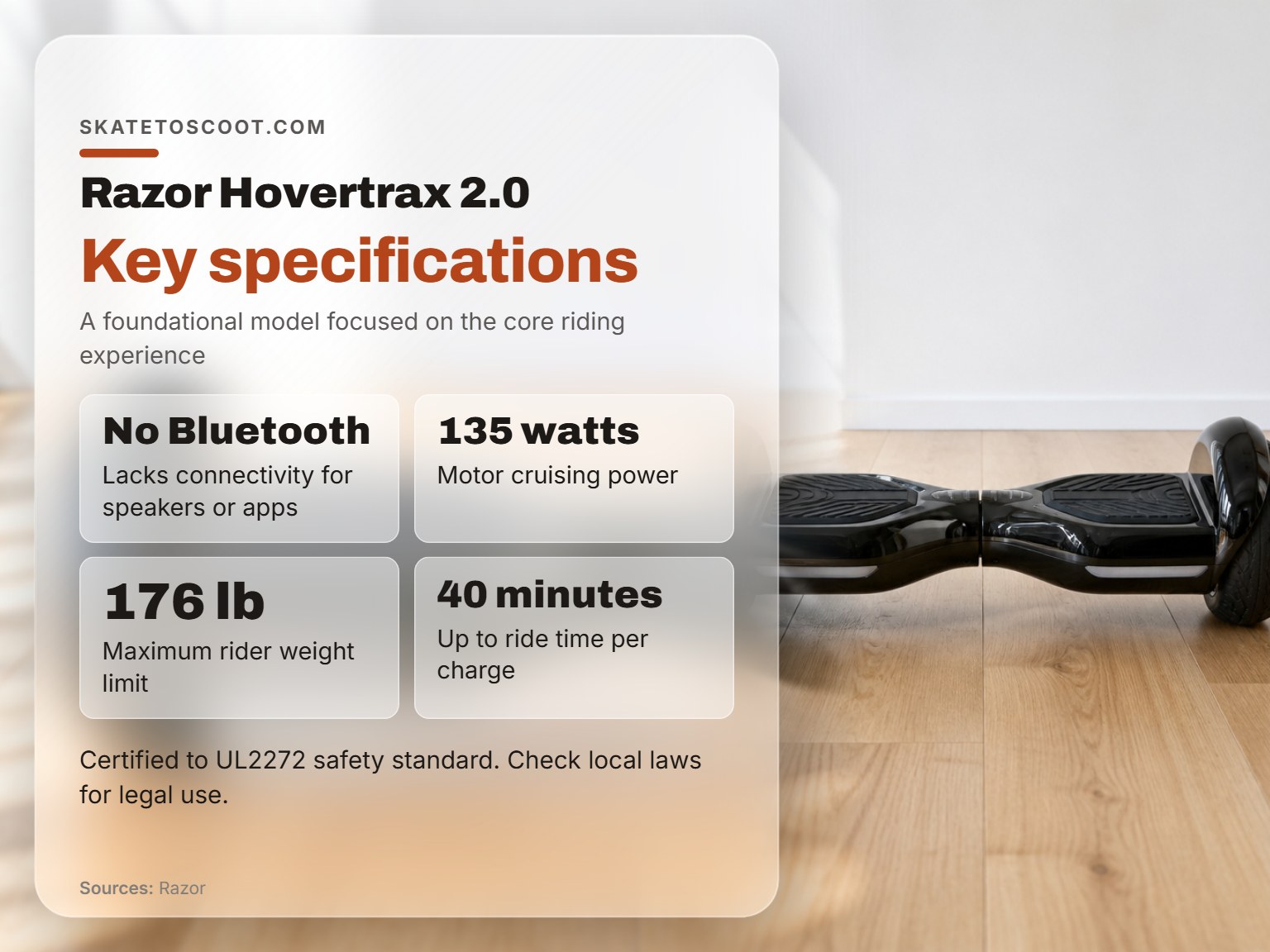
The Hovertrax 2.0 occupies a specific niche. Unlike many modern hoverboards and self-balancing scooters from other brands, it does not include Bluetooth connectivity for features like speaker systems or app pairing. Its specifications, such as a 135-watt cruising power motor and a rider weight limit of 176 pounds, position it as a foundational model. When comparing, the key differentiator is its lack of digital features; it’s a pure ride device. Other models may offer more tech, but the Hovertrax 2.0 focuses on the core riding experience with Razor’s established safety standards. It’s best compared to other entry-level or basic models that prioritize straightforward operation over connected gadgetry.
How well is the Razor Hovertrax 2.0 built?
The build quality of the Hovertrax 2.0 is underscored by its adherence to specific safety standards. Its electrical system is UL2272 certified, a critical benchmark for battery and fire safety in personal mobility devices. The construction is designed to support riders up to 176 pounds on smooth surfaces. While the exact materials aren’t detailed in the manuals, the operational guidelines emphasize durability through proper care: always perform a pre-use inspection, use only the specified charger, and avoid charging in freezing temperatures. These protocols suggest a build that is robust within its intended use parameters but requires user diligence to maintain its integrity over time.
Frequently Asked Questions
How do I connect my hoverboard to Bluetooth?
You can’t connect a Razor Hovertrax 2.0 to Bluetooth, as it lacks the hardware. For hoverboards that do have Bluetooth, the process typically involves putting the board in pairing mode and selecting it from your phone’s Bluetooth menu. We have a full guide on how to pair a hoverboard for compatible models.
Does any Razor hoverboard have Bluetooth?
Yes, later Razor models like the Hovertrax Prizma and Lux include Bluetooth speakers. The Hovertrax 2.0, from an earlier generation, does not. For a comparison of features across models, check our review of Razor scooter features.
How fast does a Razor Hovertrax hoverboard go?
The Hovertrax 2.0 isn’t built for top speed; it’s built for controlled balance. Its dual 135-watt motors provide smooth acceleration suitable for learning and casual riding on smooth surfaces, not for high-speed runs.
Is the Razor hoverboard good for beginners?
The Hovertrax 2.0’s design makes mounting easier, which is a plus for beginners. However, its strict smooth-surface-only rule and lack of a beginner speed mode mean it’s best for learners in very controlled environments like a clean garage or indoor hall.
Before You Go
The Hovertrax 2.0 is a snapshot of a specific moment in hoverboard history. It answered the question, “Is this thing safe?” with a UL2272 stamp, not “Can it play my music?” If you own one, your job is to respect its limits: the weight cap, the smooth terrain, and that freezing-temperature charging ban.
Before you ride, do the 30-second check. Is the battery charged? Are the tires intact? Are you on a smooth, level surface? That ritual matters more than any missing feature. For everything else, the calibration, the battery specs, the safety rules, the manual is your first and last resort. It’s all there because they learned the hard way.
If you are shopping now, knowing the Hovertrax 2.0 lacks Bluetooth helps you identify your priority. Is it the certified-safe ride, or is it the connected experience? That choice splits the entire Razor lineup, from the foundational best Razor models to the latest feature-packed releases. Pick the tool for the job you actually have.