Electric Scooter Review: The Safety Data You Won’t See
This post contains affiliate links. As an Amazon Associate, we earn from qualifying purchases.
Consumer Reports tested 13 electric scooters and does not recommend any of them. The independent tester cites a near eightfold increase in injuries and higher risks of traumatic brain injury compared to motorcycles, alongside scooters that are now significantly faster than models from just a few years ago.
That verdict from a major consumer watchdog is the necessary starting point for the conversation. If you’re still considering a scooter after seeing those numbers, your next job is to cut through marketing claims and find a model you can trust for your specific needs. This means matching verified performance data, understanding real-world limitations, and knowing exactly where the physical and regulatory risks lie.
What follows is a breakdown of the current landscape: the safety statistics that should inform every purchase, a side-by-side look at how tested models actually perform, the critical specs most reviews gloss over, and a framework for spotting a trustworthy review in a sea of sponsored content.
Key Takeaways
- Injury data is sobering. E-scooter injuries grew from roughly 10,500 in 2017 to nearly 80,000 in 2024, with most being single-vehicle incidents.
- Speed has doubled. The most common top speed is now 20 mph, with some tested models hitting 22 mph and 28 mph.
- Look for UL 2272. This independent safety standard for batteries and electrical systems is your best defense against fire risk; CR encourages choosing a compliant model.
- Real range varies wildly. Manufacturer claims often assume perfect conditions. The UT5 Ultra X tested at 24.9 miles, while the Gotrax GXL V2 managed 10.0 miles.
- Temperature matters, and manufacturers disagree. Charging temperature limits range from 32°F (0°C) for Lime to 14°F (-10°C) for the Razor C35 SLA, while the Razor E Prime III manual lists 32°F (0°C) as its minimum, a critical detail for four-season riders.
The Safety Data You Won’t See in Ads
One point is clear. The fun, portable image of electric scooters is backed by a stark and growing body of evidence on their dangers. This is the predictable outcome of putting people on small wheels at increasing speeds with a high center of gravity.
The Consumer Product Safety Commission tracks the blunt numbers: e-scooter injuries ballooned from about 10,500 in 2017 to nearly 80,000 in 2024. Peer-reviewed studies dig into the nature of these accidents, finding that 80 to 90 percent are single-vehicle incidents, riders hitting potholes, catching a wheel on a curb, or losing balance, not collisions with cars. The standing posture is a key culprit. A 2026 analysis in Scientific Reports found that electric scooter riders are more likely than motorcycle riders to suffer a traumatic brain injury in an accident, citing low helmet use and that unstable upright stance as partial causes.
Where this goes sideways: Assuming a bike helmet is enough. The standing fall from a scooter is biomechanically different from a seated bicycle fall, often leading to a forward pitch. A full-face skate-style helmet provides better jaw and temple protection for the type of impact the data shows is common.
The machines themselves have gotten riskier. Bernie Deitrick, the engineer overseeing Consumer Reports’ scooter testing, notes a dramatic speed increase. “Almost all of the e-scooters we tested in 2022 had lower top speeds. The most common top speed for e-scooters now is 20 mph,” he says. One recently tested model hits 22 mph, another 28 mph. That’s not just faster; it changes the physics of a crash. Hitting a pavement irregularity at higher speeds, such as 28 mph versus the previously common lower speeds, multiplies the force of an ejection.
How We Separate Hype from Horsepower
If you’re going to ride, you need a scooter whose advertised specs you can trust. This starts with understanding how proper reviewers test and what they actually measure. Forget the “up to” range claims on the box. Real-world testing involves specific courses, rider weights, and sometimes even instruments like a VBox to verify speed.
Car and Driver’s testing provides a clear snapshot of the performance spectrum. Their methodology puts numbers to the experience gap between a budget commuter and a high-performance machine.
| Model | Tested Top Speed | Tested Range | Charging Time (0-100%) | Weight |
|---|---|---|---|---|
| UT5 Ultra X | 45 mph | 24.9 mi | 6 hr 25 min | 87 lb |
| Gotrax GXL V2 | 14 mph | 10.0 mi | 3 hr 50 min | 27 lb |
| Unagi Model One Voyager | 12 mph | 17.0 mi | 3 hr 40 min | 34 lb |
The table shows more than specs; it shows trade-offs. The UT5 Ultra X is thrilling but heavy and slow to charge, it’s a vehicle. The Gotrax GXL V2 is portable and quick to power up, but its 10-mile range and 14 mph top speed define a very short, slow commute. The Unagi Voyager finds a middle ground on range and charge time, but its lack of suspension and airless tires, as testers noted, make for a “jarring ride on longer stints.”
Here’s the physics of it. A scooter like the UT5 Ultra X has the motor power and battery capacity to deliver high speed and range, but that adds weight (87 lb), which kills portability. The lightweight Gotrax achieves its 27-pound frame partly by using a smaller battery, which directly limits range. You can’t have it all. Your choice starts by deciding which column matters most: portability, range, or speed.
The Deep-Dive on Two Critical Specs
Beyond speed and range, two often-overlooked specifications have outsize impacts on safety, longevity, and where you can even use the scooter: brake type and temperature tolerance.
Brakes: More Than a Stopping Power Stat
Most spec sheets will list “disc” or “drum” brakes. The real question is the mix and how they feel. The Lime Gen 2.5 manual specifies an electronic front brake and a drum rear brake. This combination is common. The electronic brake offers precise motor control for regenerative braking, while the mechanical drum brake provides a physical, friction-based backup. The problem surfaces in some owner reviews, where warnings about aggressive braking or a lack of assisted braking at higher speeds can lead to loss of control. The feel isn’t consistent. Some regenerative brakes are aggressive even on low settings; others, like those on the Unagi Voyager, are the only stopping system on the scooter, which demands getting used to.
The Charging Temperature Disagreement
Manufacturers can’t even agree on a basic operating rule. Straight from their own manuals. The Lime Gen 2.5 manual states: “Do not charge at temperatures below 0 degrees Celsius (32 degrees Fahrenheit).” Meanwhile, the Razor C35 SLA manual lists its charging range as 14°F to 122°F (-10°C to 50°C). The Razor E Prime III manual lists a charge temperature range of 32°F to 113°F (0°C to 45°C). This isn’t a minor detail. If you live in a climate with cold mornings and plan to charge in a garage, one scooter’s battery management system might refuse to charge while another’s will. Ignoring this can lead to a battery that never fully charges or, worse, one that is damaged.
The part nobody mentions: Storing a scooter in freezing conditions can be more damaging than charging it in the cold. The Razor C35 SLA manual explicitly warns, “never store the product in freezing or below freezing temperatures! Freezing will permanently damage the battery.” This is stricter than its own charging guidelines.
Spotting a Trustworthy Review in a Crowded Field

When every YouTube video and blog post seems to feature a “best scooter” with affiliate links, how do you find an electric scooter review you can trust? The answer lies in what the reviewer prioritizes and what they’re willing to criticize.
First, look for reviews that discuss long-term ownership and failure points. That’s a more valuable data point than an unboxing video. Did the reviewer mention customer service? A review that covers post-purchase support is thinking beyond the sale.
Second, credible reviews address performance gaps, not just praises. Car and Driver’s take on the Gotrax GXL V2 is a masterclass: they praise its portability but crucially note its cruise control “failed to disengage, even after applying the brakes. Yikes.” They also call out the lack of suspension, turn signals, and brake lights. That balance signals they’re not reading from a press release.
| Review Element | Trustworthy Signal | Marketing Signal |
|---|---|---|
| Performance Claims | Cites specific, third-party test data (e.g., VBox-verified speed). | Uses only manufacturer-provided “up to” numbers. |
| Critiques | Details specific flaws (brake feel, software glitches, poor customer service experiences). | Vague downsides like “not for everyone” or “a bit pricey.” |
| Longevity | Mentions tire wear, battery degradation, or component loosening over weeks/months. | Focuses solely on out-of-box experience. |
| Safety | Discusses standards like UL 2272, brake performance, and real-world hazard scenarios. | Only says “wear a helmet.” |
Finally, check if the reviewer has a stated methodology. Do they test range on a set loop with a consistent rider weight? Do they measure braking distance? Transparency here separates a thorough electric scooter review from a glorified advertorial.
Real-World Ownership: The Recall and Repair Reality
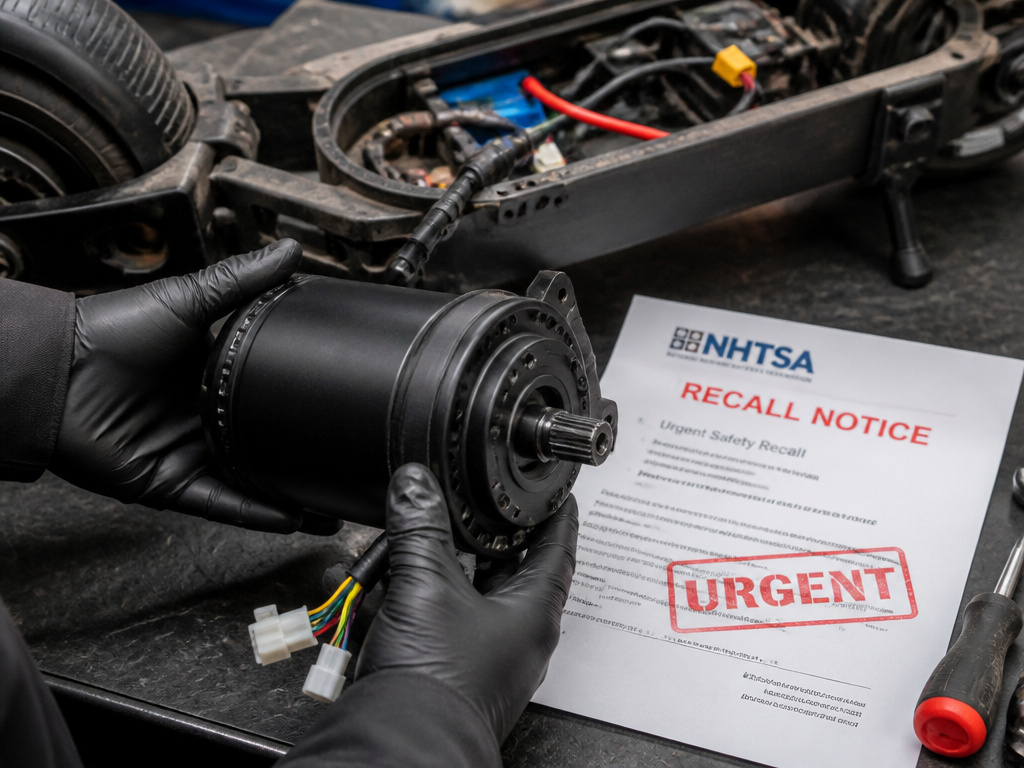
Your relationship with a scooter doesn’t end at checkout. It extends into firmware updates, part replacements, and, sometimes, federal recalls. This is where brand reputation shifts from abstract to critically important.
Take the 2022 NIU MQiGT EVO. The NHTSA electric scooter recall report (22V-597) details a firmware defect causing “loss of motor power without warning” and “excessive handlebar vibration.” Only 38 units were affected, but the chronology is instructive: Genuine Scooters received 8 complaints of motor fault code 123 and 3 complaints of vibration before working with NIU on a recall. The remedy? A new motor with new firmware, revised chassis parts, or a full refund. For consumers willing to wait, there was a $500 payment.
This incident highlights two things. First, problems can be purely digital, a firmware bug can strand you as surely as a flat tire. Second, a brand’s response matters. A company that issues a recall, offers a clear remedy, and compensates customers for inconvenience demonstrates a level of support you won’t find with fly-by-night Amazon brands.
On forums, this translates to discussions about part availability. A common refrain among owners of some established brands is that replacement parts are easier to source. When your deck cracks or your throttle fails, this is the difference between a week’s downtime and a paperweight.
How to Choose: Matching a Scooter to Your Actual Life
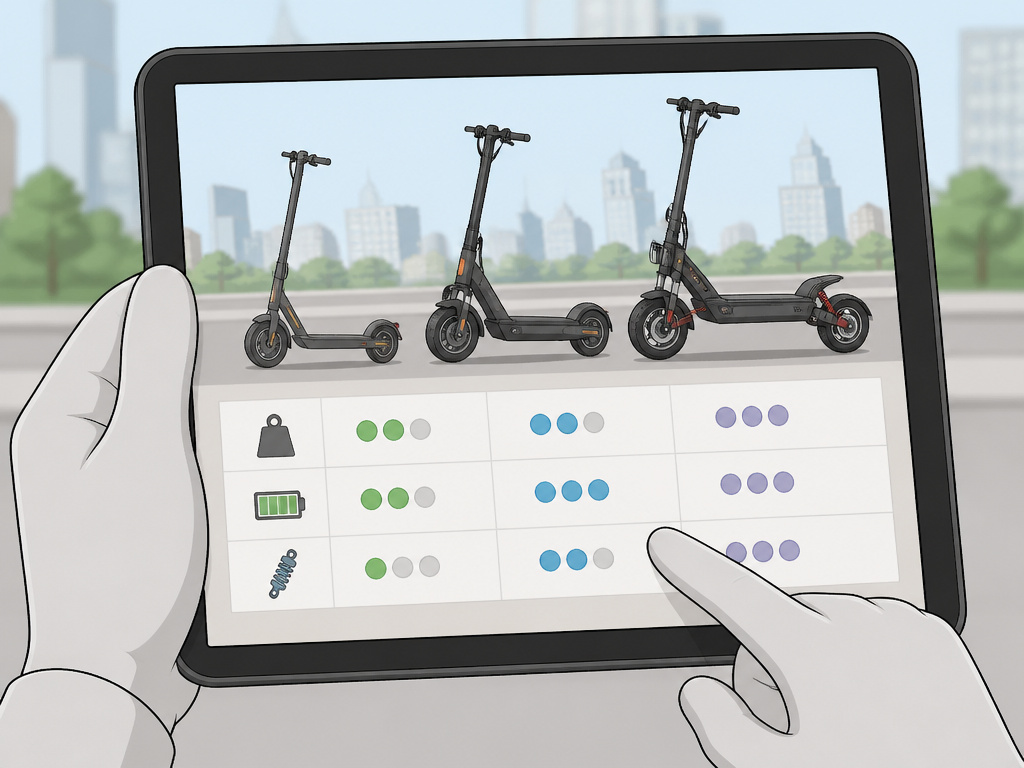
With all this data, how do you actually pick one? You start by rejecting the idea of a “best overall” scooter. There are only best scooters for specific situations. We can match profiles to models.
The Urban Commuter (Sub-3 Miles, Multimodal)
You need a scooter to bridge the gap from the train station to the office. Portability and weight are king. You’ll be carrying it on transit and storing it under a desk.
- Priority Specs: Weight (<30 lbs), folding mechanism, compact footprint.
- Model Example: The Gotrax GXL V2 (27 lbs) fits this niche. Its 10-mile range and 14 mph speed are adequate for short hops. The trade-off, as reviews note, is a rough ride from small, solid tires and no suspension.
- Reality Check: Test the fold in person if you can. A mechanism that feels flimsy or is awkward to carry will annoy you every single day.
The Last-Mile Warrior (5-10 Mile Range, Mixed Terrain)
You’re replacing a bus or a long walk. You need reliability, decent range, and enough comfort to handle imperfect city streets.
- Priority Specs: Real-world range (15+ miles), suspension, pneumatic tires, water resistance rating.
- Model Example: The Unagi Model One Voyager offers a tested 17-mile range and a relatively light 34-pound frame. Its dual motors help with hills, but the airless tires and lack of suspension mean you feel every crack in the pavement. Its subscription model ($79/month) is also a unique alternative to buying.
- Reality Check: “Up to” range is your enemy. Subtract at least 20% from any manufacturer’s claim for real-world results with hills, stops, and your body weight.
The Performance Rider (Speed and Distance Focused)
You’re treating the scooter as a legitimate vehicle for longer trips or recreational riding. Budget and portability are secondary to capability.
- Priority Specs: Top speed (25+ mph), range (20+ mi), dual motors, superior braking, suspension.
- Model Example: The UT5 Ultra X dominates here with a tested 45 mph top speed and 24.9-mile range. It also weighs 87 pounds and takes over six hours to charge. This is a vehicle that demands protective gear and serious road awareness.
- Reality Check: At these speeds, the CPSC micromobility products report categorizes mechanical, electrical, and human-factor hazards. Your margin for error is zero. This category overlaps with “hyper scooters” (up to 75 mph), which Consumer Reports explicitly does not recommend.
Best electric scooter picks
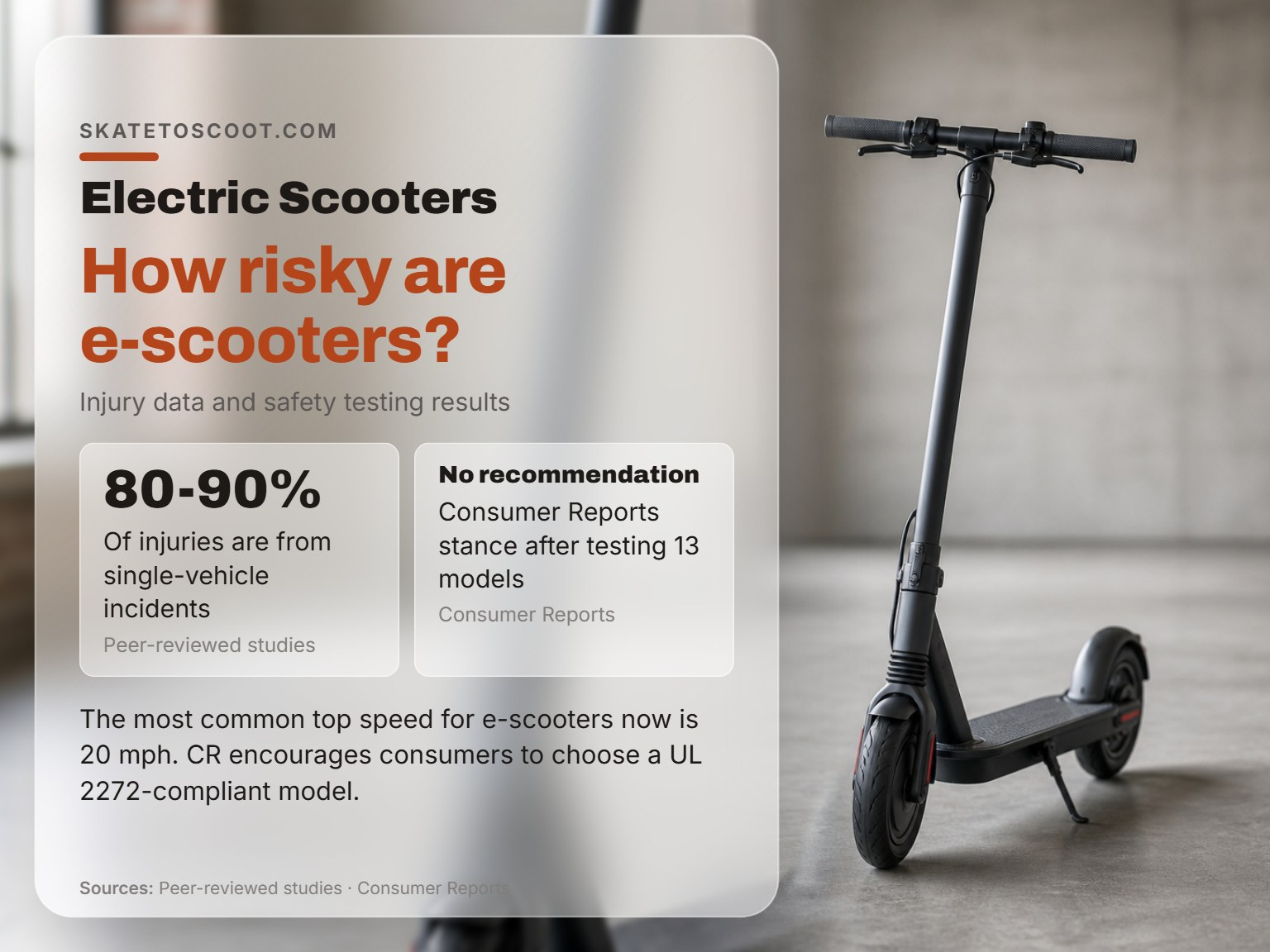
Consumer Reports does not currently recommend any electric scooters after its testing. This stance reflects broader safety concerns, as e-scooter injuries grew from roughly 10,500 in 2017 to nearly 80,000 in 2024. When looking for a model, practical guidance suggests prioritizing safety certifications. Choose a UL 2272-compliant model to address electrical fire risks. Given that most injuries are from single-vehicle incidents, your pick should have reliable brakes and a stable platform suitable for your local terrain, regardless of its top speed.
Electric scooter comparison table
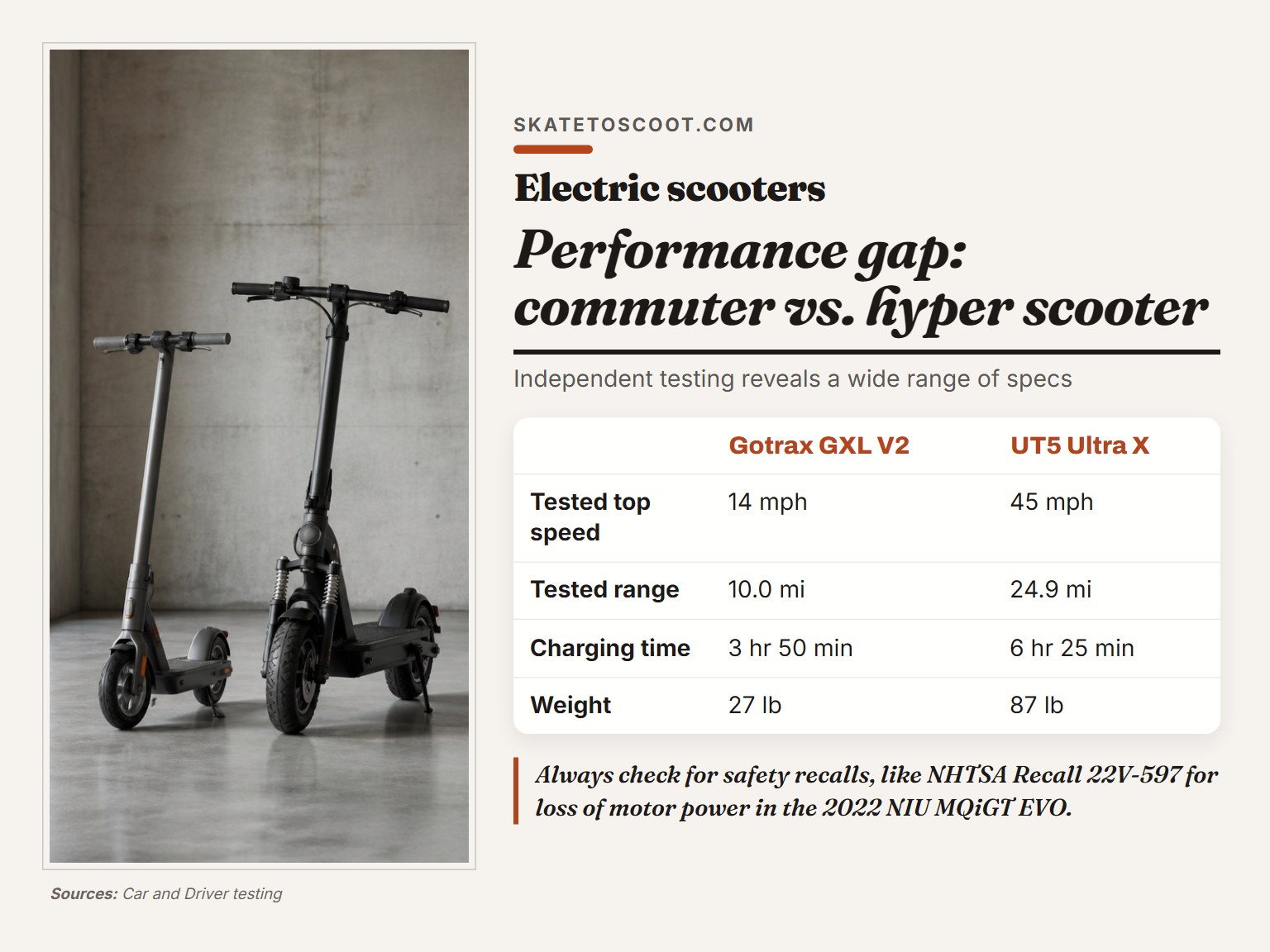
Independent testing reveals a wide performance gap between models. One tested hyper scooter reached 45 mph with a 24.9-mile range, while a popular commuter model topped out at 14 mph with a 10-mile range. Charging times varied from under four hours to over six. Weight and load capacity are also critical comparison points, with some models weighing 27 pounds and others 87 pounds. Always check if a model you’re comparing has been subject to any safety recalls, like the one involving loss of motor power in a specific 2022 production run.
Comparing scooter brands
Brands differ in their performance and the specific hazards associated with their products. Testing shows one brand’s model achieved a 45 mph top speed, while another’s consumer model reached 14 mph. Pay close attention to manufacturer guidance, as recommendations on charging and storage temperatures can vary significantly between brands and even between models from the same manufacturer. Before choosing a brand, research whether its models have a history of firmware or mechanical issues leading to power loss or other failures, and verify their compliance with safety standards like UL 2272.
Frequently Asked Questions
Are electric scooters safe?
The safety data is concerning. Injuries have increased dramatically, and the standing riding posture makes riders more susceptible to serious injuries like traumatic brain injury compared to seated cyclists or motorcyclists. Safety depends heavily on rider behavior (wearing a full helmet, respecting speed limits) and choosing a scooter with reliable brakes, good tires, and compliance with the UL 2272 electrical safety standard.
How long do electric scooters last?
Durability varies wildly by brand, model, and maintenance. Shared fleet models like the Lime Gen 2.5 are built for toughness. Consumer models from reputable brands can last several years with proper care, but components like tires (especially solid ones), batteries, and brake pads are consumables. User reports indicate durability varies widely, with some scooters showing significant wear after just 500 miles.
Can I ride an electric scooter in the rain?
Most scooters have some degree of water resistance, but very few are fully waterproof. Riding in heavy rain or through deep puddles can damage electronics, the motor, and the battery, potentially voiding the warranty. Check the scooter’s IP (Ingress Protection) rating. An IPX4 rating means it can handle light splashing, but it’s not suitable for wet conditions.
What is the most important thing to look for when buying?
Beyond your specific needs for speed and range, the single most important factor is verifiable safety certification. Choose a model that is UL 2272 certified. This independent standard tests the battery, charger, and electrical system for fire risk. It’s a tangible safeguard that many cheaper models skip.
Are more expensive scooters worth it?
Higher price typically buys better build quality, more consistent performance, superior brakes, suspension, and better customer support. It also often correlates with safer, name-brand batteries. However, diminishing returns set in quickly. A $1,500 scooter isn’t necessarily twice as “good” as a $750 one. The value is in the details: smoother power delivery, more precise braking, and a company that will answer the phone if something goes wrong.
The Bottom Line
The electric scooter market is a split screen. On one side, you have exhilarating performance machines and convenient urban tools. On the other, you have a government safety recall document detailing firmware failures and a non-profit tester refusing to recommend any model due to injury statistics.
If you choose to ride, your decision process must bridge that gap. Start with the safety fundamentals: a UL 2272-certified scooter and a high-quality full-face helmet. Then, ruthlessly match a scooter’s verified specs, not its marketing copy, to your actual use case. Trust reviews that talk about long-term wear, customer service hiccups, and real-world range shortfalls.
Ultimately, a scooter is a responsibility you operate. The data shows the stakes are real. Your buying choice is the first step in managing that risk.
