Five Forty Snowboard Review: How to Choose
This post contains affiliate links. As an Amazon Associate, we earn from qualifying purchases.
Five Forty snowboards are budget-friendly, entry-level gear built for beginners and casual riders, with specific models like the Snowjam 99cm snowblades offering a complete package including Tyrolia SP 10 bindings. Their performance is adequate for learning and groomed runs, but long-term durability and advanced terrain capability are limited compared to established brands.
The specs tell a clear story. A board’s sidecut, flex, and core materials dictate where it excels and where it struggles. For a brand like Five Forty, those numbers point towards one specific use case, not universal mastery. This is the central premise of the five forty snowboard review.
What follows is a breakdown of the exact specs, a look at the safety standards that apply to all bindings, and a straight answer on who this board works for, and who should look elsewhere, according to the five forty snowboard review.
Key Takeaways
- Five Forty boards like the Snowjam 99cm are complete beginner packages; they get you on the snow affordably but have a performance ceiling.
- The included Tyrolia SP 10 bindings are adjustable for a wide boot size range (263mm to 391mm), but you must follow the ISO 11088 snowboard binding standard for safe setup.
- A 2014 rental-fleet study found binding systems with two seasons of use had a high rate of serious safety deviations, a critical data point for judging any used or rental-grade gear.
- For progressing beyond basics, your money is better spent on a known brand from our best value snowboards list, where construction and resale value are significantly higher.
- If you already own a Five Forty setup, ride it and learn; but plan your next board around your developed riding style, not just the lowest price.
Five Forty Snowjam 99cm Snowblades: The Full Spec Sheet
We’ll begin with the hardware. The Five Forty Snowjam 99cm snowblades represent the brand’s most documented product, and the specs pulled from its listing paint a precise picture.
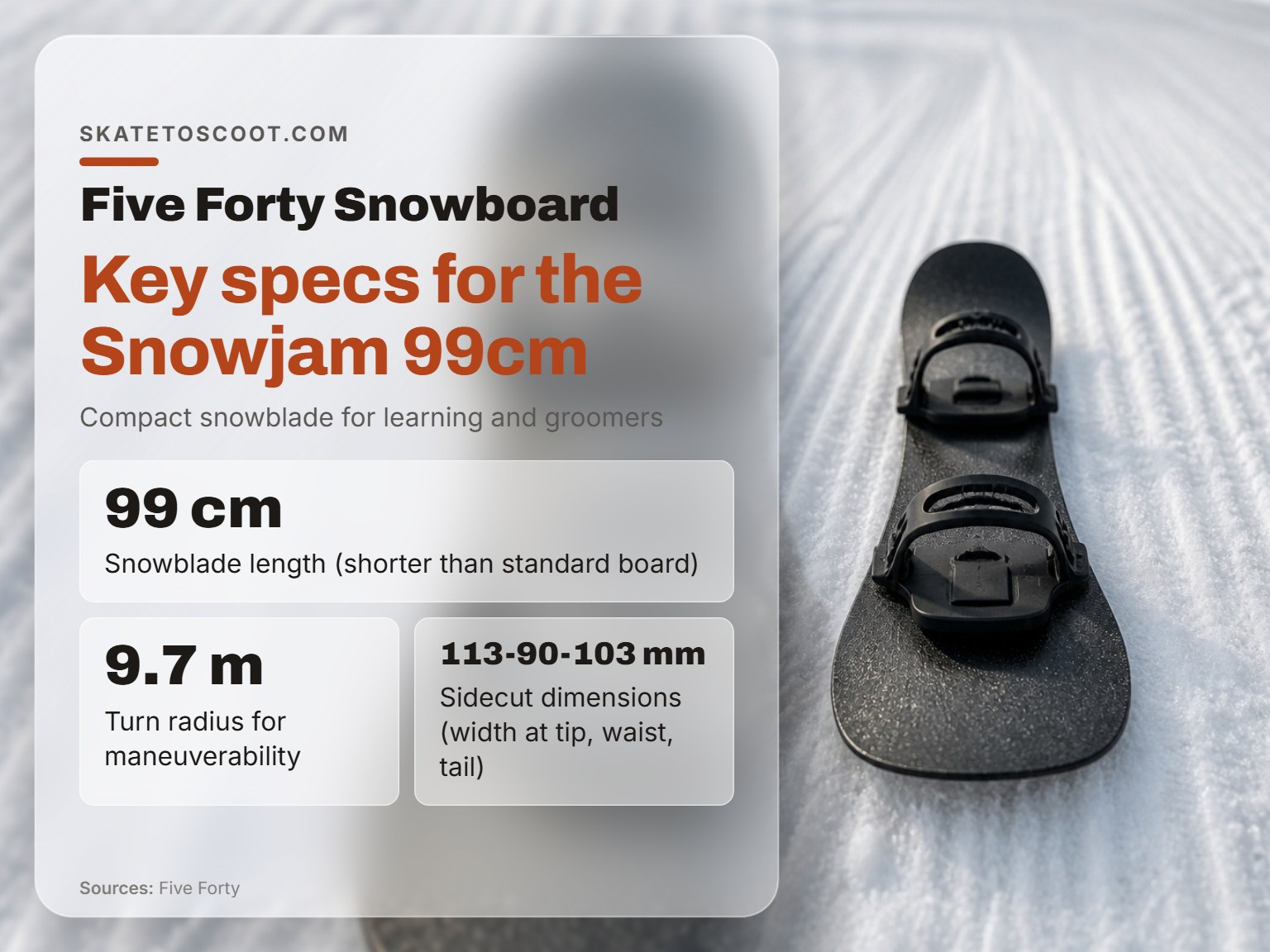
The sidecut dimensions are 113-90-103 mm, yielding a turn radius of 9.7 meters. That’s a relatively short, quick-turn radius suited for maneuverability on groomers, not for high-speed stability. The core is White Birch, a common and cost-effective material that provides a predictable, medium flex. The base is a Stone Ground sintered material, which is a step above basic extruded bases for better wax retention and glide. The top sheet is Polymide, a durable plastic layer.
This 50-60 word technical summary covers the key construction elements of the Five Forty Snowjam model, detailing its sidecut profile for quick turns, wood core type, sintered base material for improved glide, and durable plastic top sheet, providing a snapshot of its intended on-snow behavior.
The package includes Tyrolia SP 10 releasable track bindings. The critical spec here is the boot sole length (BSL) range: 263mm to 391mm (sizes 6 to 16). This wide adjustability is a hallmark of rental and entry-level bindings, designed to fit many, not to optimize performance for one.
So what does this spec sheet actually mean for your ride? A short-turn radius board with a medium-flex birch core is forgiving. It will initiate turns easily, feel playful at low speeds, and be less punishing when you catch an edge. The sintered base is a genuine plus at this price point. The bindings will get your boots attached securely, but the “track” system and broad adjustability mean they lack the micro-adjustability and precise feel of dedicated freestyle snowboard boots paired with higher-end models.
The Safety Conversation: Bindings, Standards, and Real-World Wear
Any discussion of budget gear must include safety, specifically bindings. A binding’s job is to release during a crash to prevent injury. A cheap binding that doesn’t release, or one that’s worn out, is a liability.
There are two key reference points here. The first is the ISO 11088 snowboard binding standard, which outlines assembly, adjustment, and inspection procedures for shops before equipment leaves for the customer. The second is a 2014 peer-reviewed study by Costa-Scorse, Hopkins, and Bahr that applied these tolerance tests to rental fleet equipment already in use, demonstrating a different inspection philosophy from the ISO standard.
| Inspection Philosophy | ISO 11088:2015 Standard | Costa-Scorse et al. (2014) Study |
|---|---|---|
| When it applies | Condition before leaving the ski shop. | Equipment already in use (rental fleet). |
| Key Finding | Procedures not intended to judge condition once in use. | Rental bindings with two seasons of use had a 48% rate of Class II deviations (needing immediate action). |
| Implication | A shop-set binding is only guaranteed correct at that moment. | Real-world wear degrades safety faster than many assume; a 3–4 season retirement policy may be inadequate. |
This disagreement isn’t academic. It’s a public health line. The ISO standard defines the correct starting point. The study shows how quickly real use, especially in a rental environment, can push a system out of that safe tolerance. Heel pieces with two or more seasons of use were far more likely to be out of tolerance than those with one season.
Where this goes sideways: Assuming a used or older binding is still safe because it “looks fine.” The 2014 data shows dangerous deviations are often invisible without a torque screwdriver and gauge.
This is why recalls happen. In 2006, the CPSC issued a recalled bindings fall hazard notice for about 230 Quechua “Rn’x7FX” bindings because the plastic base could break during use. Although not a Five Forty product, this example shows that binding failure is a real, documented risk with real consequences, in that case, a free pair of self-heating gloves as a remedy.
For any binding, new or used, the lesson is the same: proper setup by a qualified shop per the standard is the bare minimum. For used gear, especially from unknown brands, extreme caution is warranted. Your first upgrade from a Five Forty setup should be to a set of snowboard bindings from a known manufacturer.
Who Should Ride a Five Forty Snowboard?
The forums and Reddit threads are blunt. One user called it a “decent beginner board, maybe a step up from rentals.” Another said it’s “adequate.” The consensus in the five forty snowboard review is that it’s a budget brand you find at big-box retailers or Amazon, not at core snowboard shops.
We should be honest about the ideal rider for this gear.
The Five Forty rider is a first-timer. Someone who isn’t sure they’ll stick with the sport and wants the lowest possible financial entry point. They plan to ride a handful of days each season, mostly on green and blue groomed runs. For this person, a complete Five Forty package works. It removes the complexity of buying a board, bindings, and boots separately. It gets them on the snow. The board’s forgiving nature helps them learn to link turns without fighting the equipment.
The Five Forty rider is not an aggressive carver, a park rat, or a powder hound. The construction and materials lack the damping and response for high speeds. The twin-tip shape (if present) and flex won’t match the pop and precision of dedicated best trick snowboards. It won’t have the float or setback stance of a true powder board.
I’ve seen this scenario a hundred times. A keen beginner buys the ultra-cheap package, learns the basics, and within a season or two, hits a hard performance wall. The board feels dead, chatters at speed, and holds them back. At that point, they need to spend again, but now they have a clearer idea of what they want. That first Five Forty board has zero resale value.
If your budget is tight but you’re committed to learning, the smarter play is to hunt for last season’s model from a brand on our best value snowboards list. You’ll get better technology, known durability, and a setup you can grow with, not out of.
How Five Forty Stacks Up Against the Competition
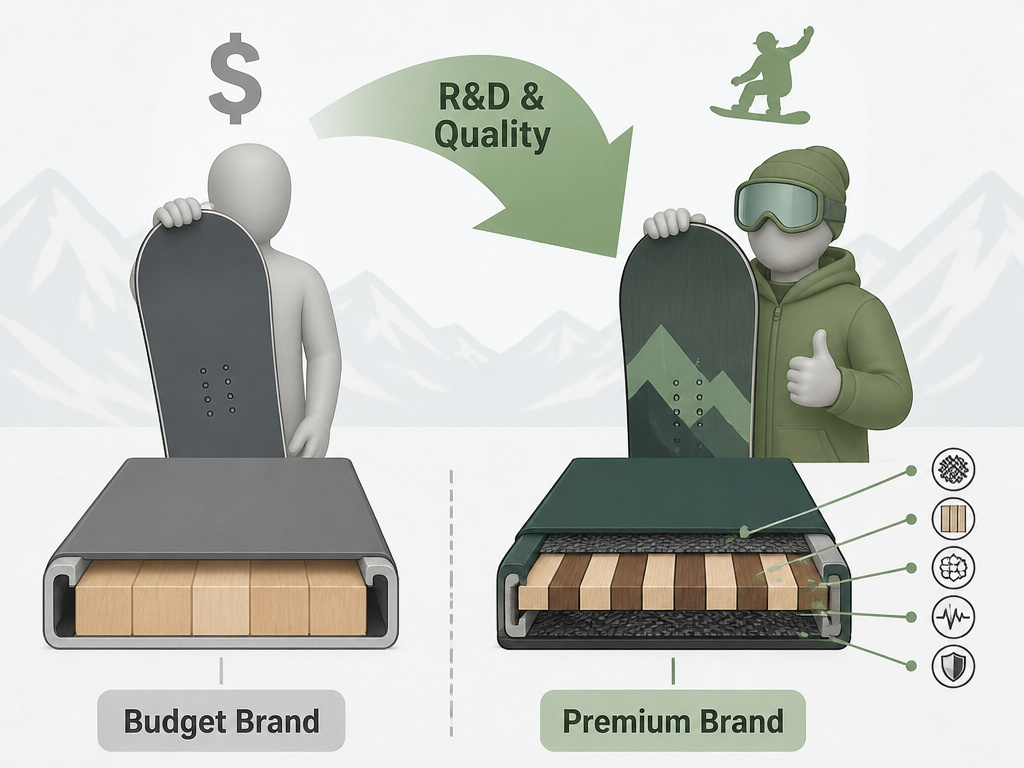
Comparing Five Forty to established brands isn’t a fair fight on performance, but it’s essential for context. You’re not just buying a plank; you’re buying into a company’s R&D, quality control, and rider-driven design.
| Aspect | Five Forty / Similar Budget Brands | Established Brands (Burton, Salomon, Capita, etc.) |
|---|---|---|
| Target Rider | Absolute beginner, price-sensitive, low-commitment. | All levels, from beginner to pro; design caters to specific riding styles. |
| Construction & Materials | Cost-focused: common wood cores, basic sintered bases, generic sidecuts. | R&D-intensive: multi-material cores (e.g., poplar/paulownia), high-tech bases (sintered variations), engineered flex patterns. |
| Performance Ceiling | Low. Adequate for learning, poor for progression into advanced terrain. | High. Boards are tuned for specific disciplines (park, all-mountain, freeride) within a brand’s lineup. |
| Resale Value | Negligible. Consider it a consumable cost. | Good. Last year’s high-end model often holds significant resale value. |
| Community & Support | Minimal. Limited team riders, sparse detailed reviews. | Strong. Sponsored athletes, extensive media reviews, robust warranty support. |
The “value” argument for Five Forty rests entirely on upfront cost. For a complete setup under $400, it exists. The value argument for a brand like Capita, Rome, or Yes is spread over years of reliable performance, higher fun factor, and a supported upgrade path. When you’re ready to move past the basics, you’ll be shopping from our best snowboards guide, not the budget aisle.
Sizing, Pairing, and Making a Five Forty Work For You
If you already own a Five Forty board or are considering one because it’s your only financial option, here’s how to maximize it.
First, size it right. While the old “chin-to-nose” rule is a rough guide, weight is more critical. REI provides a rider weight to snowboard size chart; for example, a 158cm board might have a recommended rider weight of 150-200 lbs. The Five Forty Snowjam is a 99cm snowblade, a different category entirely, shorter and more maneuverable, but less stable. Match the board’s intended length to your weight and the type of riding you’ll do most.
Second, understand the binding limitations. The Tyrolia SP 10 track bindings are adjustable, but “adjustable” doesn’t mean “optimized.” Take the time to center your boot perfectly over the board. A misaligned stance on a forgiving board can still lead to muscle fatigue and wonky turns. If the bindings feel loose, sloppy, or don’t secure your boot heel snugly, consider them the first component to upgrade.
Third, set realistic expectations. This board is for cruising groomers and learning fundamentals. Don’t take it into deep powder, don’t expect it to lock into icy carve, and don’t be surprised if it feels underwhelming on bigger side hits. Its job is to teach you what you like and don’t like about snowboarding so your next purchase, perhaps one of our top freestyle decks, is an informed one.
Five Forty Snowjam Snowblades
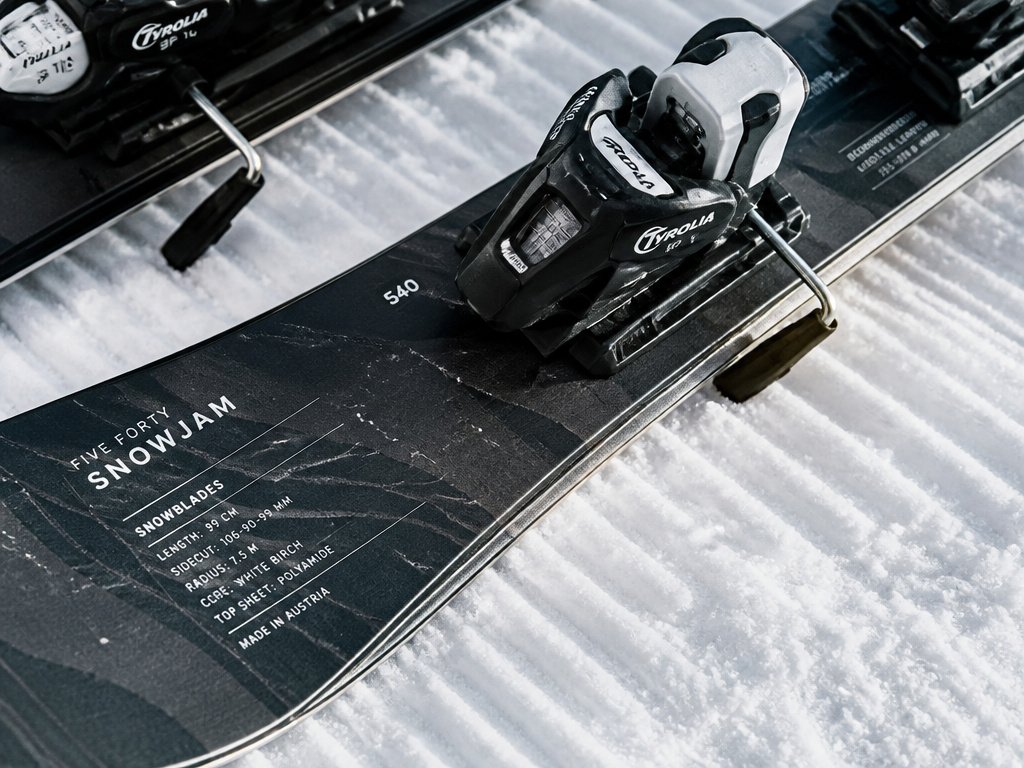
The Five Forty Snowjam 99cm Snowblades are a specific model with clear specs. They feature a sidecut of 113-90-103 mm, which creates a turn radius of 9.7 meters. This design favors quick, snappy turns on groomed runs. The board uses a White Birch core for a consistent flex pattern and a Stone Ground sintered base for improved glide over basic models. The top sheet is made from durable Polymide. They come equipped with Tyrolia SP 10 releasable track bindings, adjustable to fit boot sole lengths from 263mm to 391mm.
Frequently Asked Questions
What are the top 3 best snowboard brands?
This depends heavily on riding style, but for overall consistency, innovation, and range, Burton, Salomon, and Capita are consistently top-tier. Burton dominates in accessibility and ecosystem integration, Salomon excels in all-mountain and freeride precision, and Capita is a leader in park and freestyle culture. Dozens of other excellent brands like Jones, Never Summer, and Lib Tech specialize in specific niches.
Is a 20 year old snowboard still good?
For casual riding, maybe. For performance or safety, almost certainly not. Core materials fatigue, plasticizers in sidewalls leach out making them brittle, and base materials oxidize. Most critically, binding technology and safety standards have evolved dramatically. A 20-year-old binding is a significant liability, regardless of the brand. The board might be a fun nostalgia piece, but don’t rely on it.
Are 5150 boards good?
5150 is another value-oriented brand, often positioned similarly to Five Forty. The feedback is parallel: acceptable for a complete beginner’s first season or two, especially if found at a deep discount, but not a board you’d choose for progression or specific performance traits. They fill the same market niche.
What is the average lifespan of a snowboard?
With proper care, a snowboard from a brand can last for many seasons. The base and edges will show wear, but the core should remain intact. Bindings have a shorter functional lifespan due to plastic fatigue and spring wear; consider replacing them before the board if you’re logging many days. The 2014 study suggesting rental bindings are often unsafe after multiple seasons of use is a stark data point for high-use scenarios.
The Bottom Line
Five Forty snowboards serve a narrow, specific purpose: getting a total novice onto the snow with minimal financial risk. The Snowjam 99cm with its Tyrolia bindings is a known quantity, a short-turn, forgiving tool for the first dozen days on the mountain.
The moment you start craving more, more speed, more pop, more float, more precision, you’ve outgrown it. That’s not a failure; it’s progression. Your next board shouldn’t be another budget unknown. It should be a deliberate choice from a brand that engineers for the type of riding you now know you love.
If you’re standing in the store holding a Five Forty box, ask yourself one question: am I buying this to try snowboarding, or am I buying it to become a snowboarder? For the former, it might work. For the latter, your money is better spent almost anywhere else.
