Flow Snowboard Review: What Happened to the Brand?
This post contains affiliate links. As an Amazon Associate, we earn from qualifying purchases.
Flow snowboards are a brand with a split identity: they made both boards and their signature rear-entry bindings, but today they are primarily a binding brand owned by Nidecker. Their bindings are known for convenience but carry a documented history of recalls and durability issues, while their snowboards were well-regarded for park and freestyle before production largely ceased.
The real question isn’t just about performance. It’s about navigating a legacy of government recalls, ISO safety standards that define how bindings should hold, and forum reports of baseplates breaking after 30 days. A review in 2025 has to account for all of it, the engineering, the failures, and what’s actually still on the market. A thorough Flow snowboard review must weigh these factors.
What follows is a breakdown of the brand’s current state, the two major recalls every owner should check, the ISO specs that decide if a binding is safe, and where Flow fits against modern competitors. By the end, you’ll know exactly what you’re buying into.
Key Takeaways
- Flow is now primarily a binding brand under Nidecker; their snowboard production is minimal, making new Flow boards rare finds.
- The brand has two documented CPSC recalls for binding pin failures, one in 2005 (MK series) and another in 2015 (Flite series).
- ISO standards 14790 and 10958-2 dictate binding strength and insert specs; a binding failing below these thresholds is a manufacturing defect.
- Forum users report NX2 Carbon baseplate failures in as little as 30 days, highlighting ongoing durability concerns.
- For most riders seeking a rear-entry system, Nidecker’s Supermatic binding is the evolved, more reliable successor to Flow’s design.
What Are Flow Snowboards?
First, we should clarify one point. When someone says “Flow snowboard,” they could mean one of two things: the actual board, or the binding system mounted on it. This confusion is the root of most online debate. Historically, Flow produced both. Their snowboards, like the popular Drifter, were known as stiff, aggressive, full-camber park sticks. They were tools for precision, not forgiveness.
Today, that’s mostly history. Flow’s parent company, Nidecker, focuses the Flow brand almost exclusively on their rear-entry hybrid bindings. Finding a new, current-year Flow snowboard is difficult. What you’ll find on the secondhand market are boards from the mid-2000s to early 2010s, often great deals for a skilled park rider, but aging equipment. The plastics and resins in a 15-year-old board degrade, even in a basement. You flex it hard a few times before you ride; if it doesn’t crack, it might still have life. But it’s a wall-hanger more often than not.
The part nobody mentions: A board from 2007 might ride fine, but the binding inserts it relies on are 20-year-old metal threads. The ISO 10958-2 standard requires a minimum screw engagement of 2.0 threads and an insert retention strength of at least 4,500 N for riders with a mass of 45 kg or more. An old board’s inserts can fatigue unseen.
Flow Snowboards vs. Flow Bindings: The Critical Split
This is where most online Flow snowboard review gets tangled. People critique the binding’s complexity but praise the board’s pop. They are reviewing two different products under one name. You need to separate them to make any sense of the feedback.
Flow Snowboards (The Boards): These were typically camber-dominant, with a reputation for being unforgivingly precise. They were tools for riders who valued response over ease. In the era of the Burton Custom and the Lib Tech Skate Banana, Flow boards were a niche, park-rat favorite. Comparing them to modern best freestyle snowboards means acknowledging they lack the latest rocker profiles and carbon stringers. They were pure, simple, and demanding.
Flow Bindings (The System): This is what the brand is known for now. It’s a rear-entry hybrid system where a cable-driven highback closes over your heel. The appeal is convenience, step in, flip the lever, and go. The downside is complexity: more moving parts, more potential failure points, and a specific setup required to avoid snow pack under your boot. The ISO 14790 standard requires snowboard bindings to close with a snow pack of 2 mm between the boot sole and the binding. It’s a test many rear-entry systems struggle with silently.
If you’re looking at a used package deal based on a Flow snowboard review, you’re likely getting a dated board with potentially problematic bindings. For new gear, you’re almost certainly looking at Flow bindings mounted on a different brand’s board. This split explains the polarized “love them or hate them” stance you see everywhere.
The Two Flow Binding Recalls You Need to Know About
The convenience of Flow bindings comes with a documented safety record. The U.S. Consumer Product Safety Commission (CPSC) has issued two specific recalls. These aren’t rumors; they’re public, government-recorded events with model numbers and dates.
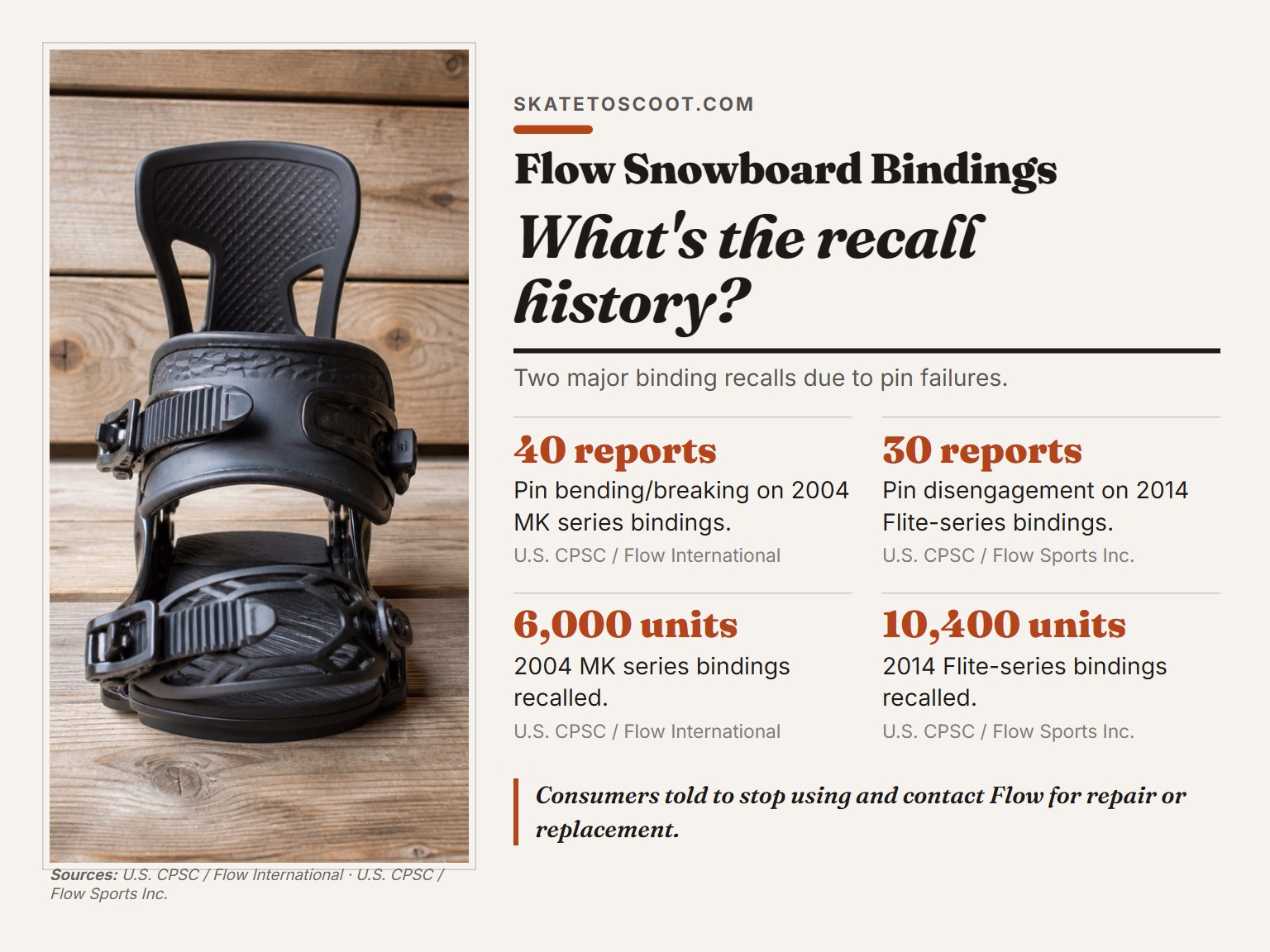
The first, announced in January 2005, involved the 2004 Flow MK series (models MK03, MK04, MK05, MK110). The CPSC and Flow International received 40 reports of the axle pins bending or breaking, posing a fall hazard. About 6,000 units were recalled. The remedy was a free replacement pin from a dealer or a mailed repair kit. You can read the full 2005 Flow binding recall announcement for the official language.
A decade later, in March 2015, a second recall was announced for the 2014 Flow Flite-series (Flite, Haylo, Micron Youth, Flite LTD, Flite MTN). This time, the hazard was pin disengagement. Flow Sports had received 30 reports. Approximately 10,400 bindings were sold between July 2014 and February 2015. The official CPSC snowboard binding recall notice instructs consumers to stop using them immediately and contact Flow for a free repair or refund.
| Recall | Models Affected | Hazard | Units Recalled | Official Remedy |
|---|---|---|---|---|
| 2005 MK Series | MK03, MK04, MK05, MK110 | Pins bending/breaking | ~6,000 | Free replacement pin or mailed repair kit |
| 2015 Flite Series | Flite, Haylo, Micron Youth, Flite LTD, Flite MTN | Pin disengagement | ~10,400 | Free repair or return for replacement/refund |
Two recalls a decade apart for similar pin-related failures in the rear-entry mechanism is a pattern. It’s the mechanical reality behind the online anecdotes of bindings “falling apart.” If you own older Flow bindings, checking these model names isn’t just prudent, it’s a safety check.
Flow Binding Durability: What Owners Report
Beyond the recalls, there’s the day-to-day wear. Flow’s own repair manual states, “Flow recommends that any and all service and repairs to your bindings be done by a trained, professional mechanic.” That’s a telling instruction. It acknowledges the system’s complexity.
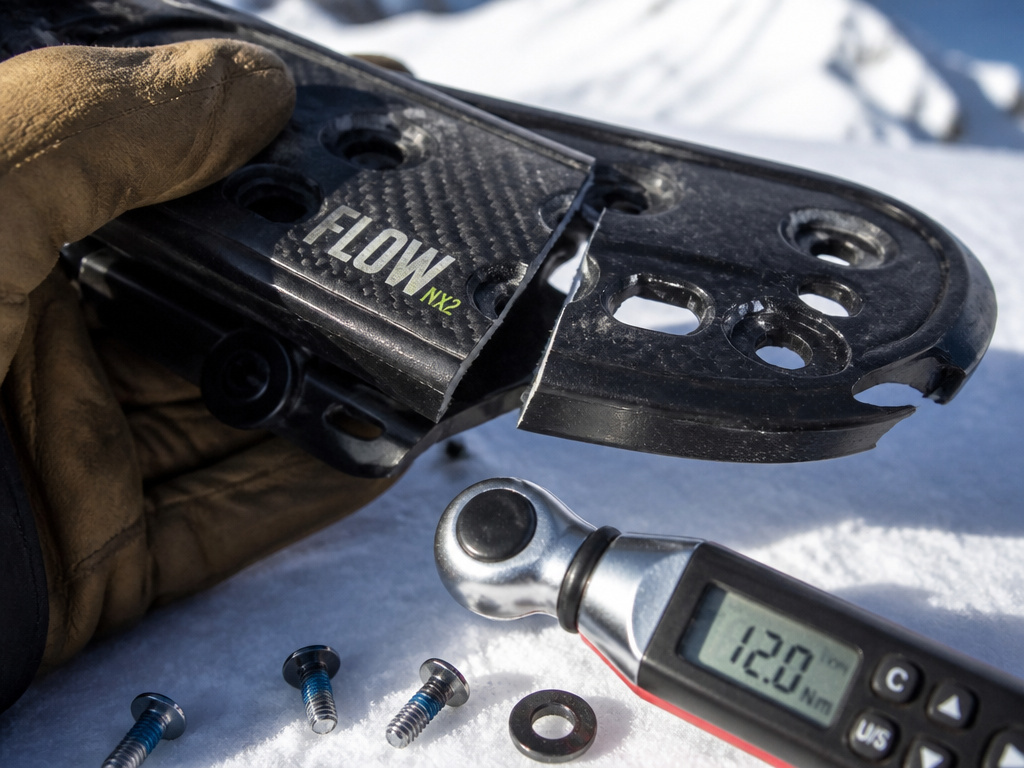
The community reports back this complexity as high maintenance. A February 2025 forum thread titled “Flow nx2 carbon broke today” is a case study. One user reported a baseplate failure after only 30 days of riding. Another chimed in: “I’ve had two of these base plates fail like that. One with around 30-40 days and another well over 100. Flow NX2 bindings are high maintenance.”
The photos accompanying these posts often show clean breaks across the carbon composite. Forum users immediately scrutinize the mounting hardware, “Shouldn’t there be washers under those screws?”, highlighting how a single non-OEM component can void warranties and shift blame. This is the lived experience: a binding that might work perfectly until it doesn’t, with a failure mode that leaves you stranded on the mountain.
Where this goes sideways: Ignoring the factory torque specs on binding screws. Over-tightening can stress the baseplate material, creating a hairline crack that propagates over a few hard carves. The break happens on the lift line, not in your workshop.
When you compare this to the reliability expected from traditional strap bindings, the trade-off for rear-entry convenience becomes stark. It’s why many instructors, when asked, still recommend standard bindings for their simplicity and proven reliability.
Flow NX2 & Current Models: A Technical Look
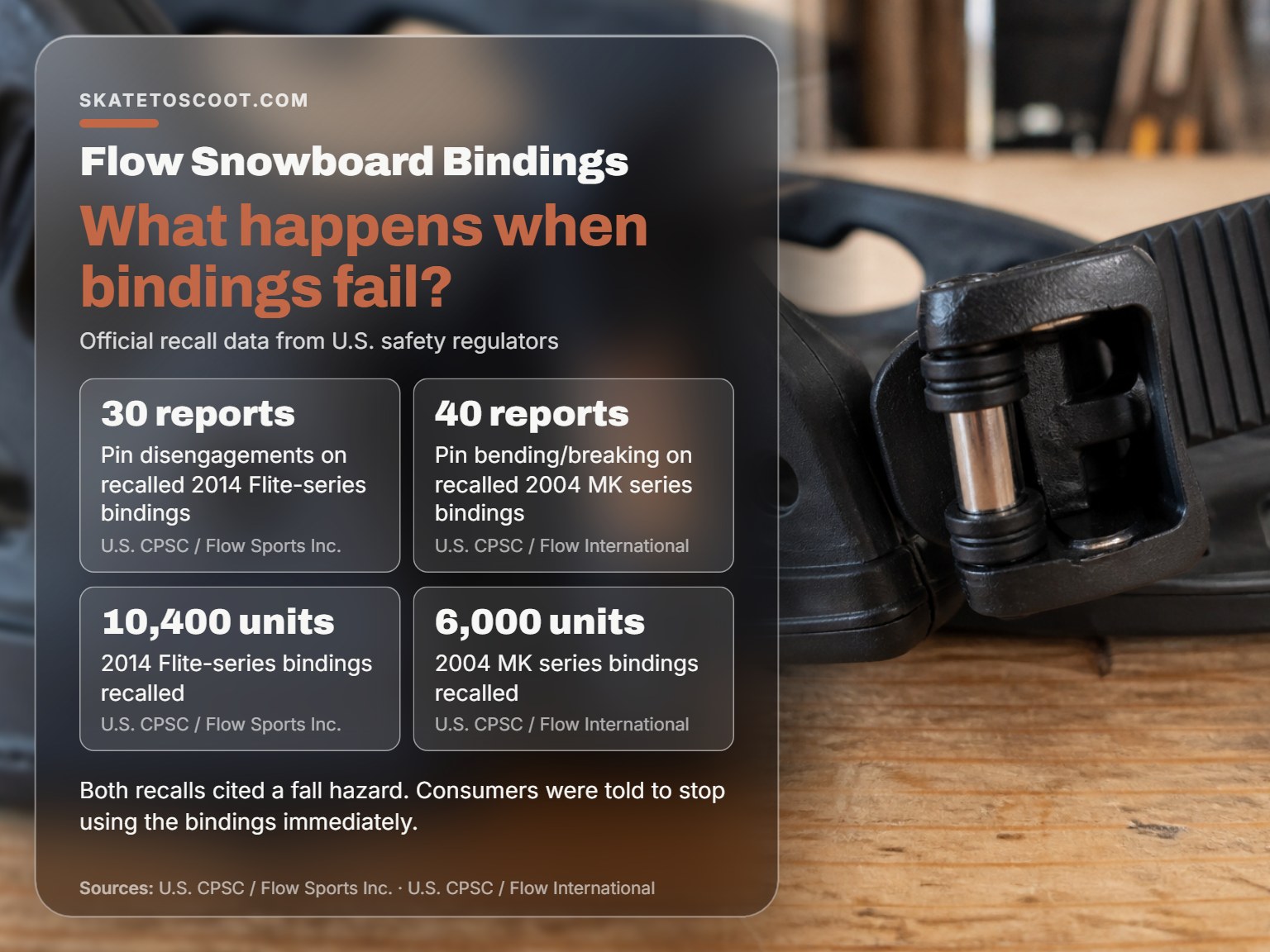
If you’re considering new Flow bindings, you’re likely looking at the NX2 series or the Fuse. These are the modern iterations. We can examine the information from the OEM manuals and specifications.
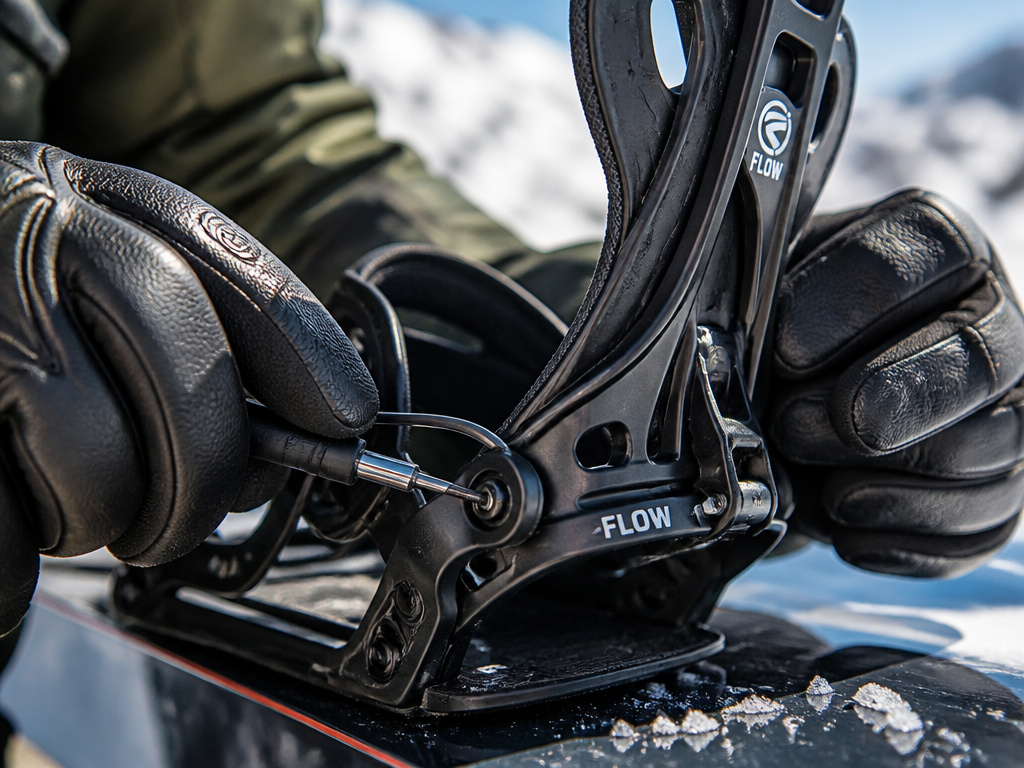
The repair instructions are precise. Replacing a buckle attached by a rivet requires a 1/4” drill-bit. If it’s screwed, you need a Philips #2 screwdriver. For hiback replacement on Flite, Micron, H and AXIS-series UniBack, Fuse and NX2-series Asym Uniback + ModBack, a Philips #3 screwdriver is specified. For hiback replacement on Fuse-GT and NX2-GT series Aluminum ModBack, use an Allen-key Hex#4. These aren’t suggestions; using the wrong tool can strip heads or crack composite materials.
Flow’s OEM repair instructions state that when replacing a snaplock, you must hammer the Pin in the direction of the O-clip teeth and ensure the O-clips fully engage the grooves in the Pin. A snaplock that isn’t fully seated is a recall hazard waiting to happen. For NX2-series bindings, ladderstraps have a specific bottom shape and attachment pins. For FUSION HYBRID, FUSE, AXIS & H-series bindings, ladderstraps have a specific bottom shape and require original hardware. Mixing parts is a direct path to failure.
| Task | Tool Required | Critical Step | Risk If Skipped |
|---|---|---|---|
| Buckle Replacement (Rivet) | 1/4” drill-bit | Removing old rivet cleanly | Damaged strap webbing |
| Buckle Replacement (Screw) | Philips #2 Screwdriver | Making screw flush with T-nut | Buckle pivots loosely |
| Hiback Replacement (Most Models) | Philips #3 Screwdriver | Re-tightening cable-termination bolt | Highback slop and reduced response |
| Snaplock Replacement | Hammer, Philips #3 | O-clips fully engaged in Pin grooves | Snaplock lever disengages during ride |
| Ladderstrap Compatibility | N/A | Using model-specific strap shape | Improper fit and strap failure |
The Flow Design User Manual instructs to orient the mounting disk according to your snowboard’s insert type (4×4 or Channel) and flip it 180° to reduce toe or heel overhang. The Flow Design User Manual instructs to mount the binding using the supplied screws, with ratchets on the outside of your foot. This attention to detail matters. A binding mounted even a few degrees off can feel fundamentally wrong.
How Flow Compares to Other Snowboard Brands
So where does this leave Flow in the broader market? It’s a brand with a dedicated niche, but one that has been eclipsed in key areas.
Flow vs. Traditional Strap Bindings (Union, Burton Cartel): This is the core debate. Traditional bindings have fewer parts, easier DIY repair, and a decades-long track record of durability. The trade-off is the time it takes to strap in. For riders who prioritize reliability and a direct connection, especially in park and all-mountain boards, the traditional binding still wins. The sentiment from many seasoned riders is simple: “Don’t be lazy. Strap in like everyone else.”
Flow vs. Modern Step-On/Rear-Entry (Burton Step-On, Nidecker Supermatic): This is where the market has moved. Burton’s Step-On system and Nidecker’s own Supermatic binding have taken the convenience concept and refined it. The Supermatic, notably, is the spiritual successor to Flow’s design, built by the same parent company but with lessons learned. It features a more robust mechanical engagement and has, so far, avoided the recall history. If rear-entry is your goal, the Supermatic is the current-generation answer; Flow feels like the prototype.
Flow Snowboards vs. Modern Decks: Any Flow board is a period piece. Compared to today’s best snowboards, which use multi-radius sidecuts, hybrid camber profiles, and advanced materials, a classic Flow board is a raw, demanding tool. It can be fun for a purist, but it won’t offer the same blend of playfulness and stability that modern boards for tricks provide.
The brand’s identity is now firmly anchored to its binding system, a system with known issues and stiff competition. When evaluating binding options today, Flow represents a specific choice: you accept potential complexity and check your model against recall lists for the sake of a particular entry style.
Who Are Flow Snowboards and Bindings For?
Given the history, the recalls, and the durability reports, who is this brand actually for now?
Flow Bindings might fit you if: You are an intermediate-to-advanced rider who values quick in-and-out above all else, perhaps for frequent traverses or cat track sections. You are meticulous about maintenance, follow OEM instructions to the letter, and don’t mind the possibility of more involved repairs. You also accept that you are buying into a system with a known failure history and plan to inspect it regularly.
You should avoid Flow Bindings if: You are a beginner (the setup is too finicky), a rider who prefers bombproof reliability, or someone who doesn’t want to think about gear maintenance on the mountain. If the idea of a binding recall makes you nervous, choose a simpler system.
As for Flow Snowboards, they are effectively a vintage category. They are for the rider who seeks out older, classic park boards for their specific feel, understands the risks of aging materials, and likely has the skills to handle a demanding, unforgiving deck. Pairing them with modern snowboard boots for freestyle can create a weird mismatch in technology and performance.
Common mistake: Buying a “great deal” on a used Flow package without checking the binding model numbers against the 2005 and 2015 CPSC recall lists. You could be buying a known hazard.
Frequently Asked Questions
What happened to Flow snowboards?
Flow primarily exists as a binding brand today. Their snowboard production was significant in the 2000s and early 2010s, producing well-regarded park-focused boards like the Drifter. However, under parent company Nidecker, the brand’s focus shifted almost entirely to their rear-entry hybrid binding systems. New Flow snowboards are exceedingly rare; the brand’s current identity and product lineup are centered on bindings.
Are Flow bindings worth it?
It depends entirely on your priorities. If the convenience of rear-entry is your top priority and you are willing to perform diligent maintenance and accept a higher potential for failure, they can be worth it. However, given the documented recall history and newer alternatives like the Nidecker Supermatic (from the same company), many riders find traditional strap bindings or modern step-on systems to offer a better balance of convenience and reliability.
Is a 20 year old snowboard still good?
20-year-old snowboard may be physically ridable if it has been stored well and shows no cracks or delamination. However, the materials degrade over time. The core can become brittle, the sidewalls can crack, and the binding inserts can fatigue. Crucially, board technology has advanced significantly in two decades. While it might be fun for a nostalgic ride, a modern board will offer better performance, easier handling, and greater safety.
What are the top 3 best snowboard brands?
This is highly subjective and depends on riding style. However, for overall innovation, range, and market presence, Burton, Lib Tech (and its parent brand Mervin Manufacturing), and Jones Snowboards are consistently top-tier. Burton dominates in accessibility and park technology, Lib Tech leads in alternative shapes and edge-hold, and Jones is a benchmark for all-mountain and freeride performance. Other notable brands include Yes, Capita, and Rome SDS.
The Bottom Line
Flow presents a clear choice with defined edges. Their snowboards are relics of a specific era in park riding, demanding, precise, and now collectible. Their bindings are a lesson in engineering trade-offs: convenience purchased with complexity and a non-zero risk of mechanical failure.
The data points are unambiguous. Two government recalls. ISO standards that define minimum safety thresholds. Forum reports of broken baseplates on short timelines. This isn’t about brand loyalty; it’s about informed risk assessment.
If you’re drawn to the rear-entry concept, look first at Nidecker’s Supermatic, it’s the evolution of this idea, built by the same hands but with the benefit of hindsight. If you find a great deal on an old Flow board, flex it, check the inserts, and ride it with respect for its age. But for your primary, trust-your-life-to-it gear, the simpler path is often the wiser one. Progress in snowboarding isn’t just about new shapes; it’s about learning from what broke, and building something stronger.
