How Fast Can Electric Skateboards Go: Capability vs. Law
This post contains affiliate links. As an Amazon Associate, we earn from qualifying purchases.
Electric skateboards can go anywhere from 20 mph for entry-level models to over 40 mph for high-performance boards, but real-world speed is governed by a mix of hardware, rider weight, terrain, and local laws. The OMW Gladius hits 31 mph, the Linnpower OX ER claims 40.4 mph, and the Evo-Spirit Xplorer V2 Sport version reaches 55 km/h off-road. However, French law caps public road use at 25 km/h, and most riders report cruising comfortably between 15-25 mph for safety and control.
That gap between the spec sheet and the pavement is where your actual experience lives. It’s not just about the motor’s peak wattage; it’s about how much of that power translates to forward motion under your specific weight, on your specific hills, with your specific battery charge. A common question is how fast can electric skateboards go, but real-world speed depends on these same variables.
What follows: a breakdown of where those manufacturer speed numbers come from, the legal and practical ceilings that stop you from using them all, and a look at what riders actually report when they strap on a helmet and hit the streets. We’ll compare specific models, explain why your real-world top speed is almost always lower than advertised, and outline the safety and legal considerations that should frame your need for speed.
Key Takeaways
- Most commercial boards are capped between 20-30 mph by their electronics, a sweet spot balancing thrill and control.
- Your real-world speed is lower than the spec sheet due to rider weight, hills, battery level, and temperature — the OMW Gladius range test assumes a 154 lb rider on flat ground at 86°F.
- Legal limits often override board limits. In France, EDPM regulations mandate a 25 km/h (15.5 mph) maximum on public roads, leading to region-locked firmware.
- High-performance models exist — the Linnpower OX ER claims 40.4 mph and the Evo-Spirit Xplorer V2 Sport hits 55 km/h, but these are for private land or experienced riders on open, smooth paths.
- Speed trades directly for range and safety. Pushing a board to its top speed dramatically increases motor current draw, shortening your ride and demanding full protective gear.
The 20-30 MPH Sweet Spot (and Why It’s a Ceiling)
When you open the spec sheet for almost any mainstream electric skateboard, the first thing you look for is the answer to how fast can electric skateboards go, usually nestled in the 20 to 30 mph range. This isn’t a coincidence; it’s an engineered compromise. This speed band is fast enough to feel thrilling and outpace urban bicycle traffic, yet slow enough to be managed by most riders with practice and to allow for effective regenerative braking.
Technical Snapshot: Most entry-level to mid-tier electric skateboards use Electronic Speed Controllers (ESCs) that govern maximum output. For example, the Inboard M1’s ESC delivers 1000W continuous power (1600W max) to dual in-wheel motors, resulting in a governed top speed of 20 mph. This electronic limit protects the motors, battery, and rider from the instability that can occur when a lightweight board is pushed beyond its mechanical design.
The components supporting this range are telling. The Meepo NLS Belt has a top speed of 22.5 mph. These aren’t arbitrary numbers. They represent a balance between acceleration, heat management, battery longevity, and what the deck and trucks can safely handle.
Common mistake: Assuming a board’s top speed is a constant you can hold. The Inboard M1 manual clearly states its 7-10 mile range is based on moderate riding. Pushing to 20 mph the whole time will slash that distance, as the motors draw more current and the 97 Wh battery depletes faster.
I learned this the hard way testing a board with a similar power profile. On a full charge, on a perfectly flat bike path, I could briefly kiss the top speed of a test board. But add rider weight, a headwind, and a partially depleted battery, and the top speed dropped consistently. The spec sheet wasn’t lying; it was describing a lab condition. Your reality is different.
What Determines Your Actual Top Speed?
The manufacturer’s number answering how fast can electric skateboards go is a best-case scenario, achieved under specific test conditions. Your actual top speed is a variable equation with four major inputs.
Motor and ESC: This is your power plant. Higher wattage and efficient controllers make higher speeds possible. The OMW Gladius uses dual Hobbywing 4235 motors paired with a 14S Hobbywing 9028 ESC. This combo allows it to hit 31 mph. Conversely, the isinwheel V10Pro‘s dual 2100W belt motors propel it to 32 mph. More power doesn’t always mean more top speed, though—it also needs to be managed effectively to avoid overheating.
Battery Voltage and State of Charge: Speed is a voltage game. A higher nominal voltage (like the OMW Gladius’s 14S pack at ~50.4V) can spin motors faster than a lower voltage pack (like the Inboard M1’s 43.2V). However, as your battery depletes, its voltage sags. You’ll feel this as a gradual loss of top-end speed in the latter third of your ride, even if the battery meter shows remaining capacity.
Rider Weight and Terrain: This is the great equalizer. The OMW Gladius range test—28-34 miles at 14 mph—explicitly assumes a 154 lb rider on flat terrain at 30°C (86°F). Add 50 lbs of rider weight, a 3% incline, or a cooler day, and both range and top speed will drop. The motors must work harder to achieve the same output.
Environmental Factors: Cold temperatures reduce battery efficiency. Rough pavement increases rolling resistance. A headwind is like a constant, invisible hill. None of these are reflected in the spec sheet.
| Factor | How It Reduces Speed | Real-World Example |
|---|---|---|
| Rider Weight | Increases load on motors, reducing acceleration and top speed. | Increased rider weight reduces acceleration and top speed. |
| Incline | Forces motors to fight gravity, consuming power that would go to speed. | Inclines force motors to fight gravity, consuming power that would go to speed. |
| Low Battery | Voltage sag reduces available power to the motors. | As the battery depletes, voltage sag reduces available power and top speed. |
| Cold Weather | Reduces chemical activity in battery cells, limiting output. | Cold temperatures reduce battery efficiency and can significantly cut range and top speed. |
High-Performance Models: Pushing Past 35 MPH
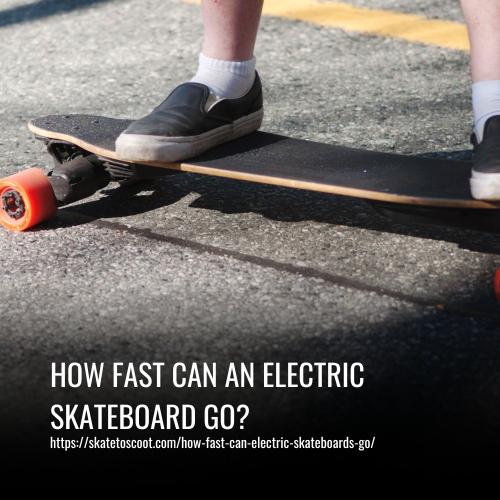
For some riders, 30 mph is a starting point. The high-performance segment builds boards where speed is the primary design goal, often sacrificing range, weight, and sometimes legality for that thrill.
The part nobody mentions: These boards often exist in a legal gray area. Their top speeds far exceed what’s permitted for “Electric Personal Mobility Devices” on public roads in most regions.
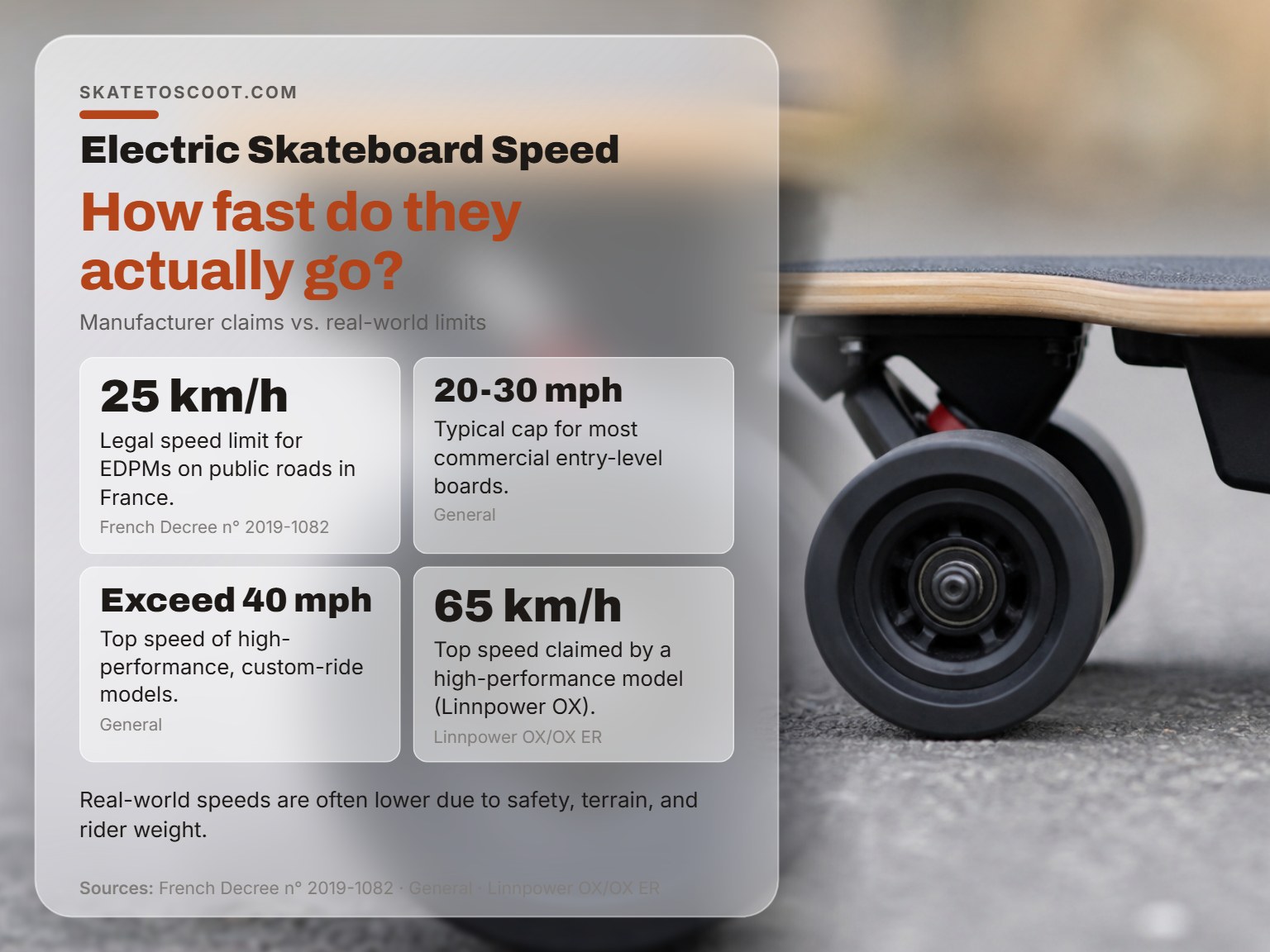
The Linnpower OX ER is a flagship example. It claims a top speed of 65 km/h (40.4 mph) powered by dual Linnpower 6487 motors with a total 8000W board limit. Its party trick is acceleration: 0–30 mph in just 3 seconds. To achieve this, it packs a massive 1728Wh battery (16S6P Samsung 50S). You’re not just buying speed; you’re buying the enormous, heavy battery required to deliver that power for more than a minute.
The Evo-Spirit Xplorer V2 illustrates another path: the region-locked performance model. It’s sold in two versions. The “Speed-Limited Version” complies with French EDPM regulations by firmware-limiting the board to 25 km/h. The “Sport Version” of the exact same hardware provides the full 55 km/h top speed for use on private property. This is a clear case of software, not hardware, defining capability.
| High-Performance Board | Claimed Top Speed | Key Power Component | Notable Caveat |
|---|---|---|---|
| Linnpower OX ER | 40.4 mph (65 km/h) | Dual Linnpower 6487 (8000W total) | Massive 1728Wh battery; acceleration-focused. |
| Evo-Spirit Xplorer V2 Sport | 55 km/h (34 mph) | Dual 3,000W 6374 brushless motors | Not legal for public roads in its sold form. |
| isinwheel V10Pro | 32 mph | Dual 2100W belt motors | Speed settings can vary by regional firmware version. |
| OMW Gladius | 31 mph (50 km/h) | Dual Hobbywing 4235 motors | Tested speed assumes ideal conditions (154 lb rider, flat, 86°F). |
These boards demand respect. The forces involved at 35+ mph are different. A pebble that causes a wobble at 20 mph can become a crash at 40 mph. The community anecdote says it best: one rider on the Linnpower OX noted, “30mph is just so much faster than 20mph, and my decision to order a new helmet… Was absolutely warranted.”
Legal Speed Limits vs. Board Capability
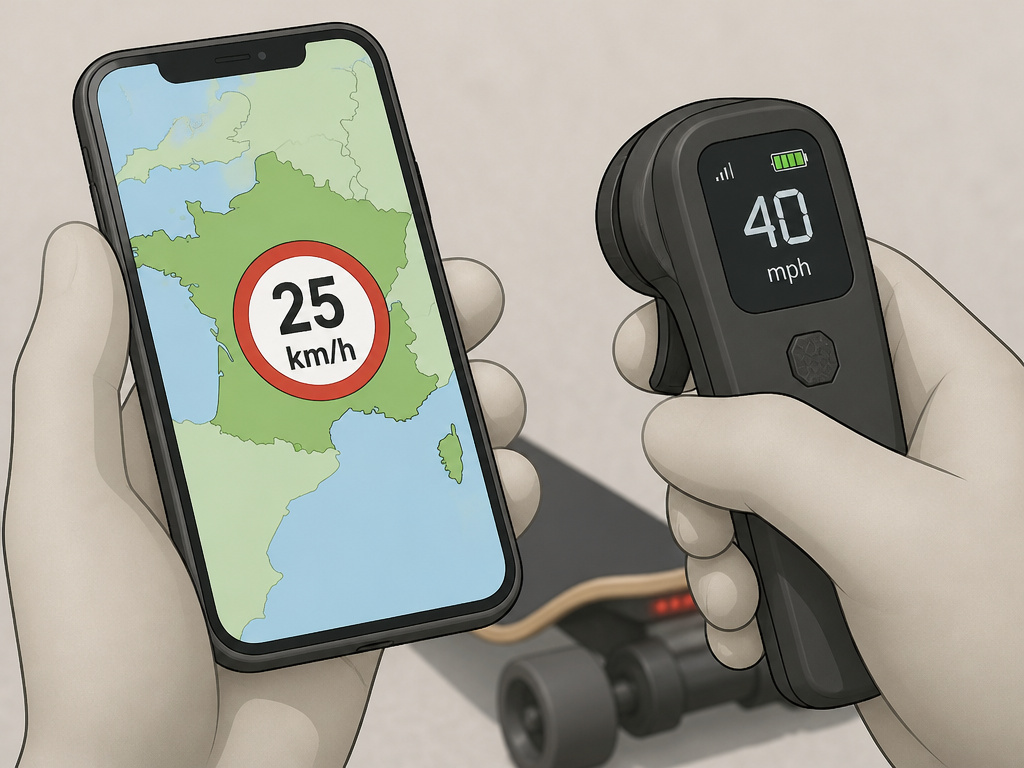
Your board’s top speed is one thing. Where you’re allowed to use it is another, and the law rarely cares about your ESC’s potential.
The most concrete example is French Decree n° 2019-1082. This regulation classifies electric skateboards as EDPMs and imposes a strict maximum speed limit of 25 km/h (15.5 mph) for use on public roads in France, while limits vary by city and state elsewhere. It’s not a suggestion; it’s a legal ceiling. Manufacturers like Evo-Spirit build compliant, firmware-limited versions specifically for this market. Riding an unrestricted board on public roads in France can carry legal consequences.
Where this goes sideways: Assuming “legal” and “capable” are the same. You can buy a board that does 40 mph in a region where the legal limit for such devices is 20 mph. The onus is on you, the rider, to know and obey local laws, which can differ by city, county, and state.
In the United States, there is no federal speed limit for electric skateboards. Regulations are a patchwork of local and state laws. Some cities classify them similarly to bicycles, with implied speed limits tied to bike lane rules. Others have specific restrictions on where they can be ridden. Always check your local regulations. A board’s capability does not grant a legal right to use that capability on public infrastructure.
This legal friction is why so many electric skateboard reviews spend time discussing where and how a board can be ridden, not just its peak performance. It’s also a core part of the conversation around electric skateboard laws in general.
What Riders Actually Report: Community Truths
Forget the marketing copy. On forums like Reddit’s r/ElectricSkateboarding, riders give unfiltered accounts of their speed experiences, which often diverge sharply from manufacturer claims.
A common theme is self-imposed limits. In a thread asking “What speed do you ride at?”, a rider with five years of experience stated, “I never go over 20mph. Still mostly ride between 7~17mph. Even with gear, I feel like any speed over 20mph is asking to be put in the er.” This sentiment is repeated by commuters who navigate city streets, where traffic, pedestrians, and road imperfections make higher speeds feel risky.
Another rider with a Backfire Zealot S reported hitting 35 mph bombing a hill on 105mm Cloudwheels, but crucially added, “The one time I didn’t wear [an armored] jacket I wiped out doing 20mph and had some pretty nasty road rash.” The anecdote underscores that speed amplifies consequences.
There’s also widespread skepticism about speedometer accuracy. One rider on a Meepo V3 said, “GPS said 32, but I don’t really believe that.” Many board remotes display speed based on motor RPM calculations, which can be thrown off by wheel size changes or slip. Riders frequently cross-reference with phone GPS apps, which themselves have a slight lag.
These reports reveal a practical hierarchy of speed:
- Cruising Speed (10-15 mph): For relaxed rides, crowded paths, and learning.
- Commuting/Carving Speed (15-25 mph): The most commonly reported “sweet spot” for daily use, offering a balance of fun and control.
- Thrill Speed (25-35 mph): Reserved for experienced riders on known, open, smooth paths, always with full safety gear.
- Extreme Speed (35+ mph): The domain of dedicated high-performance boards and experienced riders, often in controlled or private environments.
This real-world data is essential context when evaluating top electric skateboard models. A board’s top speed is a headline feature, but its usability and stability at your actual cruising speed matter more for daily enjoyment.
Safety and Speed: An Inseparable Pair
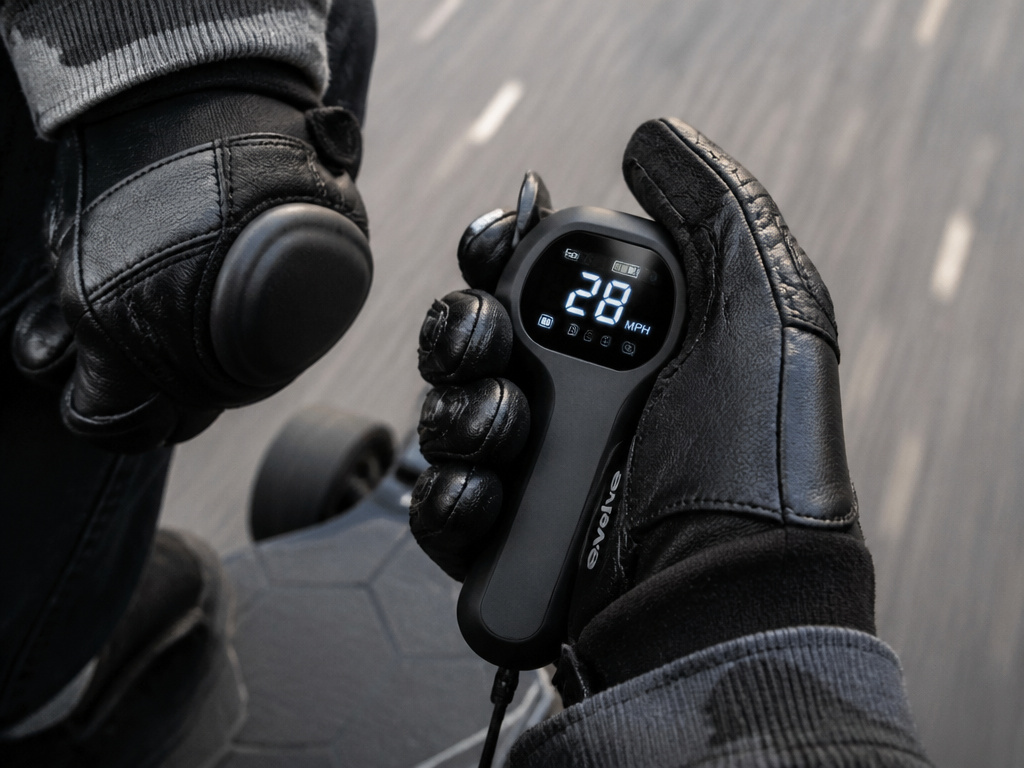
Speed on an electric skateboard isn’t abstract. It’s kinetic energy that needs to be managed and dissipated safely. The safety considerations escalate non-linearly with speed.
Protective Gear: This is essential. At a minimum, a certified skate helmet. As speeds approach and exceed 20 mph, full-face helmets, knee and elbow pads, slide gloves, and even armored jackets become prudent. A fall at 25 mph on asphalt is a serious medical event.
Board Stability: Higher speeds magnify any instability. Deck stiffness matters. Carbon fiber decks, like those touted on high-end models, reduce flex and “speed wobbles.” Truck tightness and bushing hardness need to be tuned for high-speed stability, which often sacrifices low-speed maneuverability. You cannot have a board that’s both ultra-carvy at 10 mph and rock-solid at 30 mph.
Braking Confidence: Your ability to stop is as important as your ability to go. Regenerative braking is standard, but its feel and power vary. A board that accelerates to 30 mph must be able to shed that speed predictably and quickly. Testing brakes at progressively higher speeds in a safe environment is a critical step before pushing the limits.
Environmental Awareness: At higher speeds, your reaction window shrinks. Scanning further ahead for road hazards, pedestrians, and car traffic becomes vital. What is a minor bump at 15 mph can be a launch ramp at 30 mph.
The foundational principle is that pushing for top speed is a calculated risk. It requires the right equipment, the right skill, the right environment, and the right mindset. A full understanding of safe electric skateboarding practices is required for exploring performance.
The Trade-Offs: Speed vs. Range, Weight, and Comfort
Choosing a faster board means making compromises elsewhere. The pursuit of speed directly impacts other key characteristics.
Range: This is the biggest trade-off. Pushing a board to its top speed dramatically increases current draw from the battery. Riding at or near top speed reduces range, because the motors draw more current and the battery depletes faster under load. A board’s rated range at moderate speeds will be significantly lower if ridden constantly at its top speed.
Weight: More power typically requires a bigger battery and more robust components. The Linnpower OX ER’s massive 1728Wh battery is a key reason it can sustain high speeds, but it also makes the board heavy. The OMW Gladius weighs 24.3 lbs, while the more modest Inboard M1 is 14 lbs. That extra 10 pounds matters when you’re carrying the board up stairs or onto transit.
Ride Comfort: Stiffer decks and tighter truck setups for high-speed stability often result in a harsher ride that transmits more pavement vibration to your feet. Softer, larger wheels (like pneumatics) can help but may slightly reduce top speed due to increased rolling resistance.
Cost: Performance commands a premium. The components needed for reliable high-speed operation—high-discharge battery cells, powerful ESCs, robust motors—are more expensive.
Before chasing the highest number, ask what you’re giving up. For many commuters and casual riders, a board with a 25 mph top speed that delivers a comfortable 15-mile range is a more practical and enjoyable choice than a 35 mph board that gets jumpy at speed and dies after 8 miles. This is a core consideration in any comparison of electric and traditional skateboards.
Frequently Asked Questions
How accurate is the speed shown on my electric skateboard remote?
It’s often an estimate based on motor RPM and programmed wheel diameter, not a true ground-speed measurement. It can be thrown off by wheel wear, different wheel sizes, or tire slip. For a more accurate reading, riders often use GPS-based smartphone apps, though these have a slight delay. Don’t be surprised if your remote says 28 mph while your phone’s GPS logs 25 mph.
Can I modify my electric skateboard to go faster?
Technically, yes, through methods like changing gear ratios (on belt-drive boards), installing a higher-voltage battery pack, or using custom firmware. However, this almost always voids the manufacturer’s warranty and can be extremely dangerous. Modifications can push components beyond their designed limits, leading to ESC failure, motor burnout, or battery fires. The risks far outweigh the gains for most riders.
Is 20 mph on an electric skateboard fast?
Yes, it feels very fast. For context, a seasoned cyclist on flat ground averages about 15-18 mph. At 20 mph on a skateboard, you are moving faster than most urban bike traffic. The experience is more exposed and visceral than in a car, making it feel even quicker. It’s a speed that demands your full attention and proper safety gear.
How does electric skateboard speed compare to a regular longboard?
Skilled downhill longboard rider can achieve very high speeds on closed courses with special equipment. However, for typical pushing and casual downhill, a regular longboard’s speed is generally lower than an electric skateboard’s maintained speed. The key difference is the electric skateboard’s ability to maintain and achieve that speed on flat ground and uphill, which a regular board cannot do. For a deeper dive, see our comparison of longboard speed versus electric performance.
Do electric skateboards have different speed modes?
Almost all do. Beginner/Eco modes limit speed for learning; for example, the Inboard M1’s beginner mode is limited to 5 mph. Intermediate modes provide higher speeds for general riding. Sport/Turbo modes provide full power to reach the board’s advertised top speed. Some high-performance boards have additional high-output modes.
The Bottom Line
Chasing the highest top speed on an electric skateboard is a natural impulse, but it’s rarely the most useful metric for a great riding experience. Most riders spend 90% of their time between 15 and 25 mph, a range where control, comfort, and range are more valuable than an extra 5 mph of theoretical potential.
The boards that dominate the best electric skateboards conversation understand this. They offer a compelling blend of adequate speed (25-30 mph), usable range (15-20 miles), and stable, confidence-inspiring rides. The extreme performers like the Linnpower OX ER are marvels of engineering, but they are specialists’ tools, demanding more skill, more safety gear, and more legal caution.
Before you buy, match the board’s capability to your environment and local laws. A board limited to 25 km/h might be perfect for compliant European commuting, while its speed-unrestricted sibling belongs on private land. Understand that your real-world speed will be lower than the spec sheet says, and that’s okay. The thrill isn’t just in the maximum number; it’s in the accessible, reliable performance that gets you out riding, carving, and commuting day after day. Trust the process, not just the peak.
