How Much Does an Electric Skateboard Cost: Price Guide
This post contains affiliate links. As an Amazon Associate, we earn from qualifying purchases.
Electric skateboards cost from a few hundred dollars to over two thousand, with the price driven by battery size, motor type, and construction. Most riders will find capable boards between $400 and $800, while high-performance models start above $1,500. Your final cost also includes mandatory safety gear and ongoing maintenance.
That range is wide for a reason. The difference between a $300 board and a $1,500 board isn’t just about luxury features; it’s about range, reliability, and what happens when you hit a pothole at 25 miles per hour. A common question is how much does an electric skateboard cost. The battery is the single biggest cost driver, followed by the motor system and the quality of the deck and trucks.
What follows is a breakdown of the three main price tiers, what each one gets you in real-world terms, and the often-overlooked costs that come after you click “buy,” which helps answer how much does an electric skateboard cost. We’ll look at specific models from brands like Backfire and Meepo to ground the numbers, and give you a framework to match a price point to your actual riding needs.
Key Takeaways
- Expect to spend $400 to $800 for a reliable beginner or commuter board with a range of 10-20 miles and dual hub motors.
- The battery is your biggest cost driver; upgrading a Verreal F1 Max from a 4Ah to a 15Ah battery adds $240, but it significantly increases your range.
- Safety gear is essential and adds at least $100 to your upfront cost, a helmet is the bare minimum.
- Ownership costs add up: plan for replacement batteries ($100-$700), wheels, and belts over the board’s 1-3 year battery lifespan.
- Mid-tier boards ($800-$1,500) offer the best value jump, trading hub motors for smoother, more powerful belt drives and significantly better battery packs.
The 3 Electric Skateboard Price Tiers Explained
We should be realistic about price tiers. Manufacturers and reviewers draw the lines in different places, but after sorting through the specs, three clear categories emerge. They’re defined by what fails first when you push them.
The Technical Snippet: Electric skateboard prices are segmented by battery capacity (watt-hours), motor type (hub vs. Belt-drive), and deck construction. Entry-level boards (under $500) use hub motors integrated into the wheels and smaller batteries (150-200Wh). Mid-range boards ($800-$1,500) feature belt-drive systems for more torque and larger batteries (350-700Wh). Sources disagree on the definition of high-performance boards: Verreal categorizes boards over $1,000 as high-end, while Ecomobl defines the high-end range as $1,500 to $3,000. These boards prioritize maximum range (1000Wh+), advanced materials, and sophisticated ESCs.
Under $500: The Commuter & Beginner Zone
This is where you find boards like the Ownboard C1S at $339 and the Apsuboard V3 at $299.99. You’re getting a functional vehicle, not a performance machine. The motors are typically hub motors, meaning the motor is built inside the rear wheels, which keeps costs down but provides less torque for hills and a rougher ride. Batteries are modest. For example, the Ownboard C1S offers a 4.0Ah battery for an estimated 9.5-12 miles.
The ride feel is the giveaway when you compare a how much does an electric skateboard cost. These boards get you from A to B on smooth pavement. Hit a patch of rough asphalt and the vibration travels straight up through the deck to your feet.
$800 to $1,500: The Sweet Spot for Most Riders
Entering the mid-range tier is where the experience changes fundamentally. You’re now looking at boards like the Backfire G5 ($649) and the Meepo Flow ($699). These boards almost universally switch to belt-drive systems. A belt-drive motor is external, connected to the wheel by a rubber belt. This provides more torque for acceleration and hill climbing, and it allows for the use of softer, larger wheels that absorb road vibration.
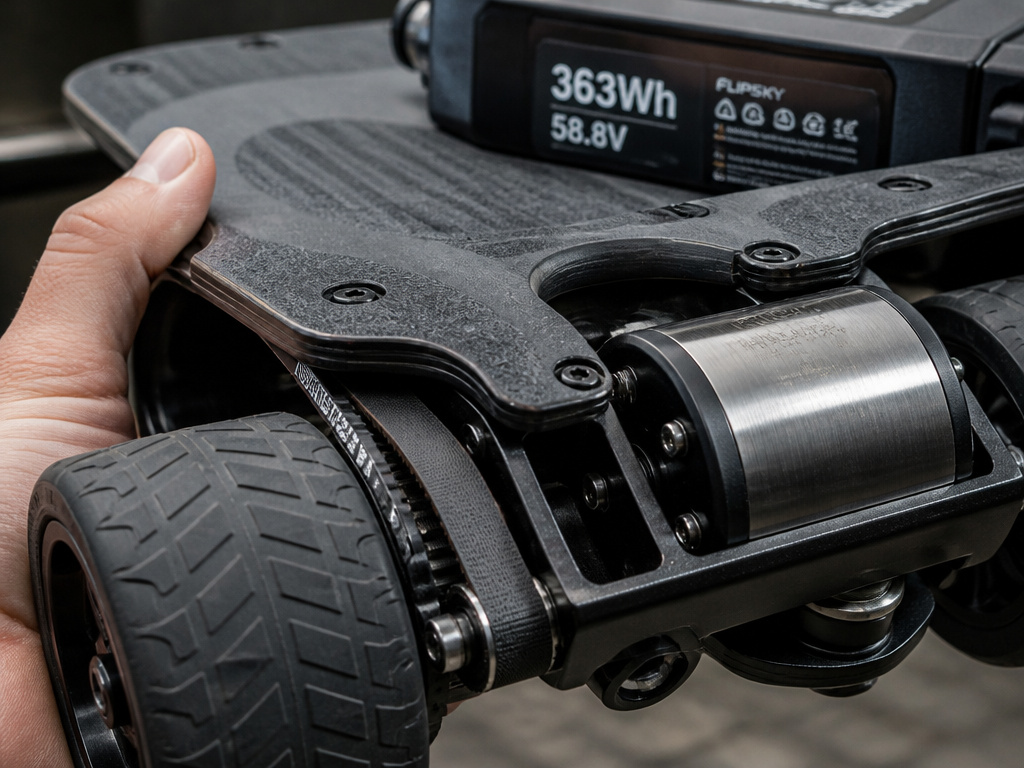
The batteries also get serious. The Backfire G5 uses a 363Wh (58.8V 7.2Ah) pack. This isn’t just about more miles; it’s about sustained power delivery. The deck materials often improve too, using composites or more flexible woods for better dampening. If you’re using your board for daily commuting or weekend fun, this tier delivers the most noticeable improvement per dollar spent.
Over $1,500: The High-Performance & Niche Tier
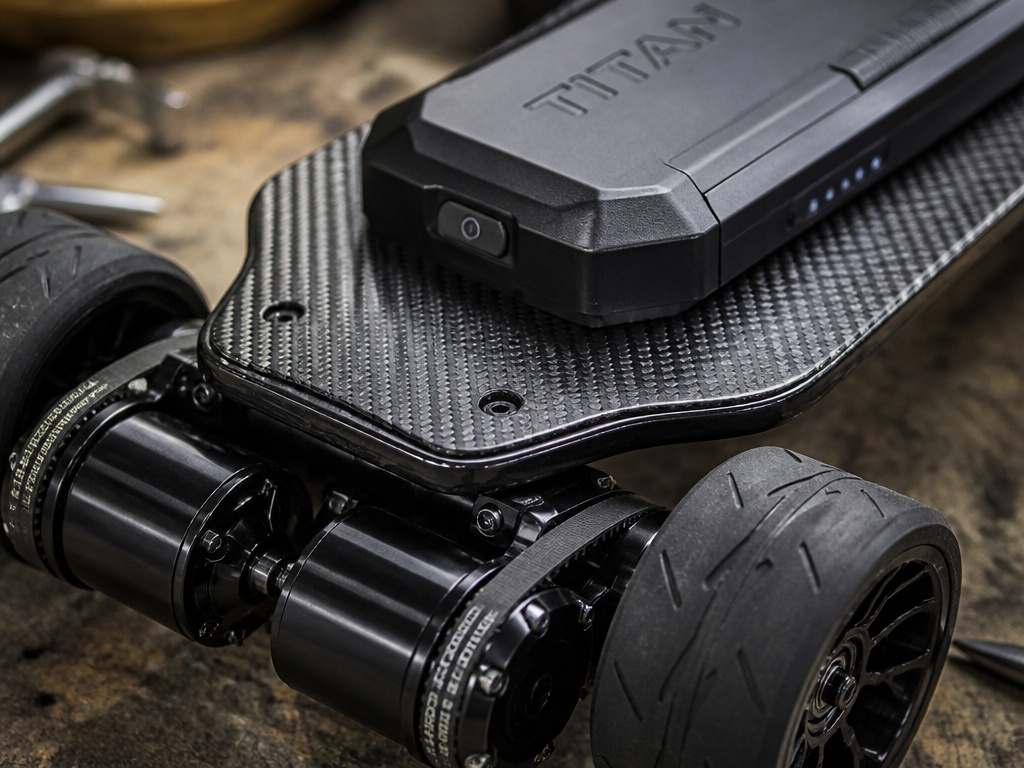
Here, you’re paying for extremes: extreme range, extreme power, or specialized capabilities like all-terrain riding. The Verreal RS Ultra starts at $1,199, with a list price of $1,499. Boards in this category boast battery packs that can exceed 1000 watt-hours, offering 40+ miles of range. They use high-discharge cells that can deliver immense current to powerful dual motors, some exceeding 2500 watts each.
You also pay for refinement and durability. Components like the electronic speed controller (ESC), the brain of the board, are more advanced, offering smoother acceleration and braking curves. Decks might be carbon fiber for a stiff, responsive feel, or specially designed for off-road suspension.
| Price Tier | Battery (Typical) | Motor Type | Best For | Example Model & Price |
|---|---|---|---|---|
| Budget (< $500) | 150-200 Wh, 4-6 Ah | Hub Motors (integrated) | Short commutes, beginners, testing the waters | Ownboard C1S ($339) |
| Mid-Range ($800-$1,500) | 350-700 Wh, 7-12 Ah | Belt-Drive (external) | Daily commuting, longer rides, smoother feel | Backfire G5 ($649) |
| High-Performance (> $1,500) | 700+ Wh, 12+ Ah | High-Torque Belt or Gear Drive | Long-range touring, off-road, maximum power | Verreal RS Ultra (from $1,199) |
What Actually Drives the Price? Battery, Motors & Build
You can’t see the most expensive parts. The battery, motors, and speed controller are hidden inside the deck, but they account for the bulk of the cost. Understanding these three components explains why one board costs twice as much as another.
Battery Capacity: You’re Buying Range
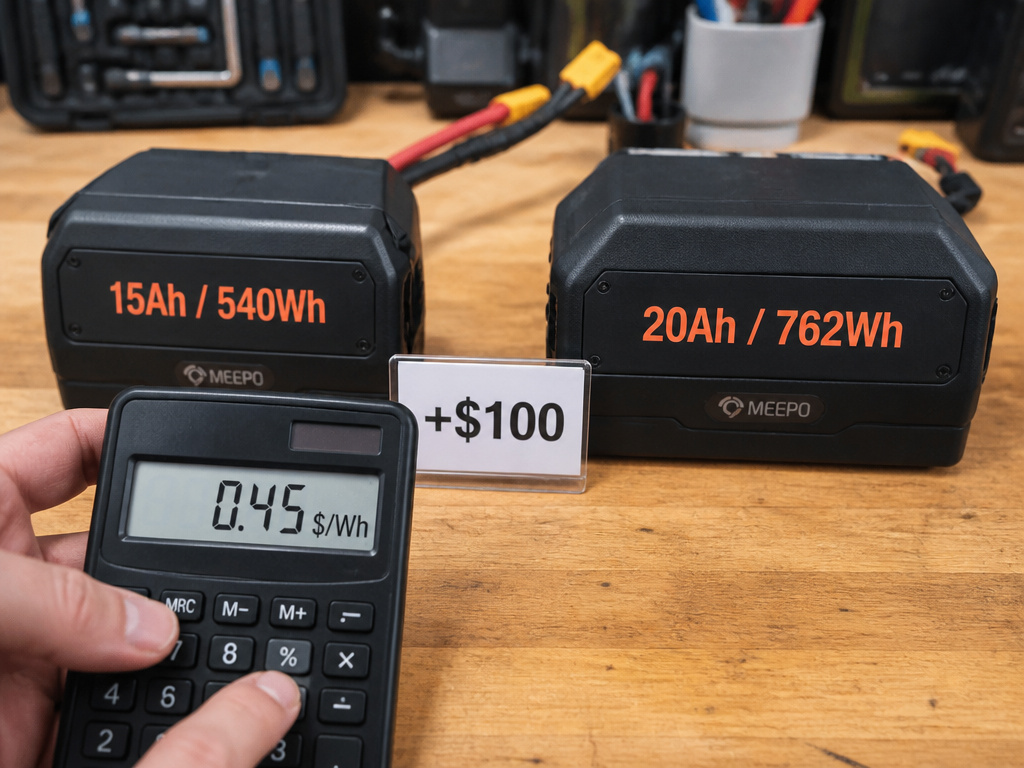
Watt-hours (Wh) are the currency of range. It’s a direct measure of how much energy the battery holds. A bigger Wh number means more miles, period. The cost per extra watt-hour is surprisingly transparent when you look at upgrade options.
Verreal’s pricing shows this clearly. Upgrading a Verreal RS Pro from a 15Ah to a 20Ah battery adds 222 Wh of capacity and costs $100. That works out to about $0.45 per extra watt-hour. This is why a higher-priced board can offer better range value.
Common mistake: Choosing a board based on its advertised “max range” of 25 miles. Manufacturers calculate that under ideal conditions: a light rider on perfectly flat, smooth ground at a slow, constant speed. In the real world, hills, stop-and-go riding, and rider weight can cut that number by 30-50%. Always look at the watt-hour (Wh) rating for a better comparison.
Motor & Drivetrain: Hub vs. Belt-Drive
The choice between hub motors and belt-drive motors is a major cost and performance divider.
- Hub Motors: The motor is built into the wheel. This design is simpler, quieter, and has fewer moving parts. It’s also less powerful, provides less torque for hills, and transmits more road vibration. Replacing a worn-out hub motor often means replacing the entire wheel. They dominate the under-$500 category.
- Belt-Drive Motors: The motor is mounted to the deck and drives the wheel via a rubber belt. This system is more expensive but delivers significantly more torque and acceleration. The big advantage for ride quality is that you can use any standard longboard wheel, including soft, large-diameter wheels that soak up bumps. Belts are a wear item and need occasional replacement, but they’re cheap and easy to swap.
Deck, Trucks, and the “Feel”
The deck is the soul of the board. A cheap deck is often stiff and unforgiving. More expensive boards use materials like bamboo, fiberglass, or carbon fiber to create a deck that flexes appropriately, absorbing shock without feeling mushy. Trucks, the metal T-shaped parts that hold the wheels, also improve with price. Better trucks use higher-grade aluminum, more precise machining, and higher-quality bushings for stable, predictable turning.
The Real Cost of Ownership (Beyond the Sticker Price)
The purchase price is just the entry fee. I’ve watched too many new riders get blindsided by the costs that kick in after the first few months. Budget for these from the start.
Mandatory Safety Gear
This isn’t optional. A skateboard helmet will run you at least $50. Wrist guards are another $30-$50. If you plan on riding at speed or in traffic, knee and elbow pads are a wise investment. Set aside a minimum of $100 for protection before you even look at board prices.
Wear Parts and Maintenance
Electric skateboards are mechanical devices. Parts wear out and break.
- Wheels: Especially on belt-drive boards, wheels are a consumable. Soft wheels wear down faster. A set of four quality wheels can cost $60-$150.
- Belts: On belt-drive boards, these rubber belts will snap eventually. A pair of belts costs $10-$25, and you should keep spares.
- Battery Replacement: This is the biggest future cost. The industry consensus, from sources like Ecomobl, is that lithium-ion batteries in these boards last 1 to 3 years before their capacity degrades noticeably. A replacement battery pack can cost $100 to $700, depending on its size and quality. Verreal charges $399 for a 15Ah 666Wh replacement pack for the RS Pro.
- Bearings & Bushings: These smaller parts affect ride smoothness and turning. They’re relatively cheap ($20-$50 for a set) but need servicing or replacement over time.
Where this goes sideways: Buying a board with a non-removable or proprietary battery. When that battery degrades in two years, your entire board becomes a paperweight unless you can find a specialist to rebuild the pack. Prioritize brands that sell official replacement battery packs.
Shipping, Duties, and the No-Returns Reality
Many direct-to-consumer electric skateboard brands ship from China. Shipping can add $50-$150 to your cost. If you’re outside the United States, you may also be responsible for import duties and taxes, which can be a significant percentage of the board’s value.
Crucially, most boards cannot be returned. Verreal states this explicitly: due to shipping restrictions on lithium-ion batteries over 99 Wh, they do not accept returns. You must be confident in your choice before ordering. This makes researching reviews and owner experiences critical.
Is a More Expensive Board Worth It? A Value Analysis
Stepping up in price isn’t just about getting more stuff. It’s about getting a more reliable, safer, and more enjoyable experience. The value jump isn’t linear.
The $300 to $700 Jump: The Biggest Upgrade
This is where your money has the most impact. You’re moving from a basic, vibration-heavy hub-motor board to a smoother, more capable belt-drive system with a much better battery. The difference in ride comfort and confidence is night and day. If you have the budget, starting in this mid-range bracket saves you money in the long run.
The $700 to $1,500 Jump: Refinement and Range
Here, you’re paying for more nuance. The power might be similar to a $700 board, but the acceleration and braking will feel smoother due to a better ESC. The deck will absorb shock more effectively. The battery will be larger, giving you more range and reducing “range anxiety.” This is the tier for the dedicated commuter or enthusiast who rides regularly.
Diminishing Returns Past $1,500
Above $1,500, you’re typically paying for one of two things: exceptional range (40+ miles) or specialized off-road capability. Unless you have a specific need for marathon range or plan to tackle mountain trails, the value proposition drops.
How to Choose Based on Your Budget & Needs
Stop looking at boards. Start looking at your life. Match the tool to the job.
For the First-Time Rider / Campus Commuter
You need reliability and simplicity. Look for a board in the $400-$600 range from Meepo or Ownboard. A hub-motor board is fine here, as it’s lower maintenance. Prioritize a battery that gives you at least 10 miles of real-world range, double your daily commute distance. The Meepo V5, at $399, is a classic example.
For the Daily Urban Commuter (5-15 miles)
Your board is your primary transport. Invest in comfort and reliability. The $600-$900 range is your target. You want a belt-drive board for the smoother ride and hill-climbing ability. Ensure the battery spec (in watt-hours) is robust enough to handle your distance with buffer, accounting for hills and stops.
For the Enthusiast or Long-Distance Rider
You ride for fun and distance. Your budget should start at $900 and go up based on how far you want to go. Focus on belt-drive systems with large battery capacities. Look for features like swappable battery packs or fast chargers if you plan long days.
A Word on Used and Refurbished Boards
The used market can offer good value, but it’s risky. Batteries degrade with time and use, not just mileage. A three-year-old board with a “great” battery might only hold 60% of its original charge. If you go used, prioritize boards from known brands where you can easily source a replacement battery pack. Factor the cost of a new battery into your offer price. A refurbished board directly from a manufacturer is often a safer bet, as they typically install a new battery.
How much do different types of electric skateboards cost?
Electric skateboards come in three main styles, each with a typical price profile. Longboards, the most common type, offer stability for commuting and can span all price tiers, with some starting just over three hundred dollars. Mini boards are shorter and more portable, often marketed as airline-friendly due to smaller batteries, and they generally occupy the lower end of the price spectrum. All-terrain boards, built with larger wheels for rougher surfaces, represent more specialized and often higher-performance builds, which pushes their cost upward. The style you choose sets the baseline for what you’ll pay, as the deck form dictates the potential for battery size and motor power.
Frequently Asked Questions
What is the average price of an electric skateboard?
There isn’t one true “average,” as prices span from $300 to $3,000. However, the most common price bracket for a reliable, new electric skateboard suitable for an adult rider is between $400 and $800. This gets you a board with a usable range of 10-20 miles and decent performance for commuting or recreation.
Is an electric skateboard worth it?
It depends on your use case. For short-distance urban commuting (under 5 miles), an electric skateboard can be faster than a car in traffic, cheaper than ride-sharing, and more portable than an e-bike. For pure recreation, they offer a unique and fun riding experience. However, they are less practical in wet weather, on very rough roads, or for carrying cargo. They require a learning curve and a commitment to safety gear.
What is the best electric skateboard for the money?
Value is subjective, but the best value for most people is found in the $600 to $900 range. In this bracket, you escape the limitations of the cheapest boards (harsh ride, weak batteries) without paying for the extreme performance of high-end models. Boards like the Backfire G5 or Meepo Flow offer an excellent blend of performance, comfort, and reliability for the price, making them the sweet spot.
How fast will an electric skateboard go?
Speed correlates with price but plateaus quickly. Most boards in the $400-$800 range have top speeds between 20 and 30 mph. Higher-priced boards may reach 35-40 mph, but very few riders ever cruise at those speeds due to safety and stability concerns. For context, 25 mph on a skateboard feels very fast, and many local laws limit the speed of such vehicles.
The Bottom Line
Your budget should start at $400 and stretch to what your daily needs, not daydreams, require.
If you just need to get to class or the train station a couple miles away, a board like the Ownboard C1S is a legitimate tool. If you’re commuting across town daily, step up to the $600-$900 tier for the belt-drive comfort and battery peace of mind. The ultra-high-end boards are for a specific rider with a specific goal, not for someone trying to decode value.
One final, essential rule: the board’s cost is the second check you write. The first is for a certified helmet. Everything else, the thrill, the convenience, the savings on gas, is built on that foundation. Choose that first. Then choose your board.
