How to Clean a Longboard Deck: Step-by-Step
This post contains affiliate links. As an Amazon Associate, we earn from qualifying purchases.
To clean a longboard deck, focus on the grip tape and the deck surface separately, using methods that match your board’s material. For standard maple decks, brush the grip tape with a soft-bristle brush or a specialized belt cleaner, wipe the deck with a damp cloth, and let everything dry completely before riding. Acrylic or carbon decks need brand-specific cleaners to avoid cracking.
That’s the short version. The long version is where most guides stop and real riders start asking questions. You don’t just clean a board; you maintain a system. The grip tape, the deck wood, the trucks, the bearings — they each collect grit and wear in their own way, and a one-size-fits-all spray-and-wipe misses the failures that happen a month later. A key part of this is knowing how to clean a longboard deck correctly.
What follows is a breakdown of the methods the manufacturers actually publish on how to clean a longboard deck, where they disagree, and the one field test that reframes the whole routine. By the end, you’ll know exactly what to do for your specific deck, from a quick post-ride wipe to a deep, component-level scrub.
Key Takeaways
- Match your cleaning method to your deck material. Acrylic decks (like Ghost Boards) crack if cleaned with alcohol; carbon decks (like Evolve) can handle car polish for scratches.
- For grip tape, sources disagree on the best method: Skateboards.com recommends a soft-bristle brush with soap, the Concrete Waves Handbook recommends a belt sander cleaner, and Evolve Skateboards recommends a nylon brush and grip gum.
- Never use WD-40 on bearings. The Concrete Waves Handbook and multiple OEMs state it’s a solvent that dries them out and attracts more dirt. Use a dedicated lubricant like Bones Speed Cream instead.
- After any cleaning involving water, let all components dry thoroughly before reassembly. A damp deck left sealed against trucks can warp or delaminate over time.
- Regular truck and wheel nut checks prevent “death wobble” and flickering wheel lights. Tighten them as part of your cleaning routine.
The Grip Tape Cleaning Debate: Brush, Soap, or Belt Cleaner?
Open three different manufacturer guides and you’ll get three different answers. This isn’t a case of one being right and the others wrong. It’s a case of three different tools for three different levels of grime.
The generic advice from Skateboards.com is the baseline: use a soft-bristle brush to remove dirt and debris. For stubborn stains, lightly scrub with mild soap and water. It’s safe, it’s simple, and for everyday dust, it works. The risk here is over-wetting. If you soak the grip tape, you’re pushing water into the adhesive layer and the deck wood beneath. That moisture takes days to fully evaporate, and in that time, it can soften the glue or swell the wood’s top ply.
Where this goes sideways: Soaking the grip tape with a sopping-wet brush. The water seeps under the tape edges, weakening the adhesive. Two weeks later, you’ll notice the tape peeling at the nose or tail.
Now look at the hardware-store approach from the Concrete Waves Handbook: clean your grip tape with Belt Sander Cleaner. This is a dense rubber eraser meant for cleaning abrasive sanding belts. You rub it across the grip tape, and the sticky rubber grabs the dirt particles lodged between the grit. The advantage is obvious — no water. It’s a dry method that pulls debris to the surface without risking moisture damage. It’s also the most effective method for the fine, powder-like dust that gets ground deep into the tape after a session on dry pavement. The grit comes up grey, and the tape regains its sharp, toothy feel.
Evolve Skateboards splits the difference. They recommend starting with a toothbrush or nylon brush to loosen dirt, then using a product called grip gum, dabbing it over the dirty area for about 10 seconds. This is essentially a more targeted, less aggressive version of the belt cleaner method. It’s great for spot cleaning.
So which do you pick?
| Method | Best For | Risk If Skipped |
|---|---|---|
| Soft-bristle brush & soap | Light, fresh dirt and mud | Scrubbing too hard can wear down the grit prematurely. |
| Belt Sander Cleaner stick | Deep, dry dust and restoring grip | Can leave rubber residue if not brushed off afterwards. |
| Nylon brush & grip gum | Spot cleaning and maintained boards | Less effective on heavily caked, old grime. |
Your choice on how to clean a longboard deck depends on the dirt. For a quick clean after a dusty cruise, the brush and a damp cloth are fine. If your board looks permanently grey and feels slick, the belt cleaner is your reset button.
Step-by-Step: A Deck-Only Clean (Without a Full Teardown)
You don’t need to strip your board to the bolts every time. This routine is for cleaning the deck and grip tape without removing wheels or trucks. It takes five minutes and keeps surface grime from building up.
Grab a soft-bristle brush, a microfiber cloth, and a bowl of warm water with a drop of dish soap.
- Brush the grip tape dry. First, go over the entire grip tape surface with the dry brush, using firm, straight strokes. This knocks loose the surface dust that hasn’t been embedded. Do this over a trash can or outside.
- Dampen the cloth, not the board. Wring out your microfiber cloth in the soapy water until it’s just damp, not dripping. Wipe down the exposed deck surfaces—the sides, nose, and tail. Avoid dragging the wet cloth onto the grip tape.
- Address stubborn grip tape spots. If a patch of grip tape is stained (from mud or grass), dip just the tips of the brush bristles in your soapy water. Scrub that specific spot in a circular motion, then immediately blot it dry with a dry part of your cloth. The goal is localized moisture that evaporates in minutes, not a general soak.
- Dry everything, completely. Use a dry towel to blot any damp areas on the grip tape. Then let the board sit in a dry, airy space until completely dry. You should be able to run your hand over the grip tape and feel no coolness from residual moisture.
Skip this if: You’ve ridden through deep puddles or thick mud. In that case, you need a full disassembly to dry the truck axles and bearing spacers. Surface water is one thing; water forced into mechanical components is another.
When Your Deck Isn’t Standard Maple
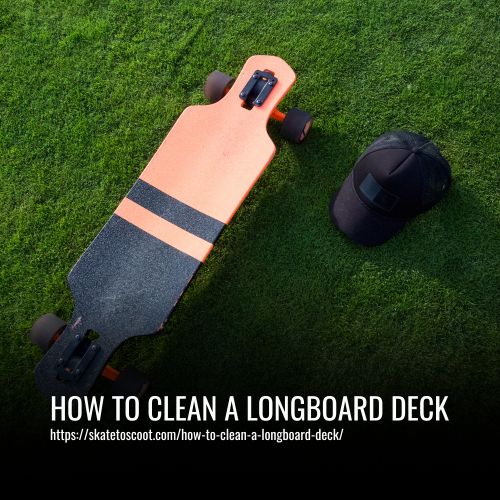
A maple deck with black grip tape is the default. But if you ride something else, the standard advice can break your board.
Acrylic Decks (Ghost Boards): These decks are essentially clear plastic. Ghost Boards specifies a proprietary 3-in-1 acrylic cleaner (#1 Cleaner, #2 Fine Scratch Remover, #3 Heavy Scratch Remover). The warning is absolute: do not use alcohol or Windex, as they can cause cracking. For dirt, they instruct you to use a towel soaked in hot water. For scratches, Ghost Boards instructs using a dime-size drop of the #3 Compound (Heavy Scratch Remover). It’s a multi-step polish, not a wipe-down.
Carbon Composite Decks (Evolve): These decks can handle more. Evolve says for scratches on their Carbon series, use car polishes like ScratchX. For cleaning, a slightly damp rag is fine, and for a deep clean, Evolve Skateboards recommends using a pressure cleaner on the deck after disassembling the board entirely. The key difference is the sealant and material; water won’t swell a carbon/bamboo composite like it will wood, but you still don’t want to leave it wet around metal hardware.
The “Can I Wet My Board?” Conflict: Here’s where sources directly disagree. CURFBOARD, a surfskate manufacturer, says “It’s ok to get your board wet, as long as you leave it to properly dry afterwards.” They even recommend a full scrub with soapy water every few months. Skateboards.com, representing the general wood-deck consensus, cautions “do not soak the deck; a damp cloth is sufficient.” Sources disagree on deck wetting: CURFBOARD says it’s okay to get your board wet and even dump water on it for a clean, while Skateboards.com cautions not to soak the deck and recommends only a damp cloth.
The Bearings and Trucks: What Not to Do
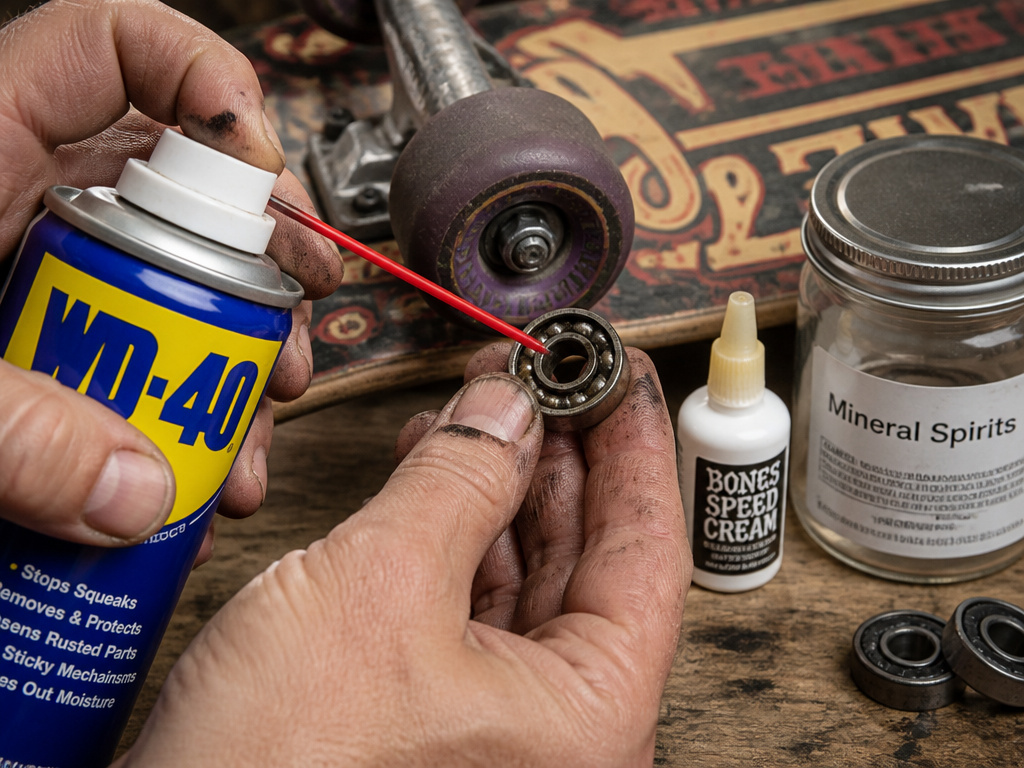
Deck cleaning often leads to a full maintenance check. Two things here will ruin parts if you follow the internet’s bad advice.
First, bearings. The Concrete Waves Handbook is crystal clear: clean bearings with mineral spirits or citrus cleaner. Do not use WD-40. It’s a solvent, not a lubricant, and will dry them out. After cleaning, let the bearings dry completely, then lubricate with a dedicated product like Bones Speed Cream. WD-40 might make them spin fast for a day, but the thin solvent film evaporates and leaves the bearings dry, attracting more dirt and leading to a gritty, slow spin within a week.
Common mistake: Using WD-40 on bearings. The initial flush feels successful, but the bearing races are left without a protective lubricant film. They rust and grind themselves apart faster than if you’d left the old, dirty grease in place.
Second, trucks and bushings. Ghost Boards recommends applying a small amount of lithium grease to squeaky bushings and pivot cups. CURFBOARD says to grease the back truck’s rubber bushing to prevent squeaking, adding that you can use wax if you don’t have grease handy. But both warn against using general oil. Ghost Boards states that applying oil to trucks or bearings can cause squeaks and trap dirt inside components, causing premature wear. Sources disagree on lubrication: Ghost Boards recommends lithium grease for bushings and pivot cups, while CURFBOARD recommends grease or wax for the back truck’s bushing but warns against oil.
Cleaning a Deck with a Graphic or Artwork
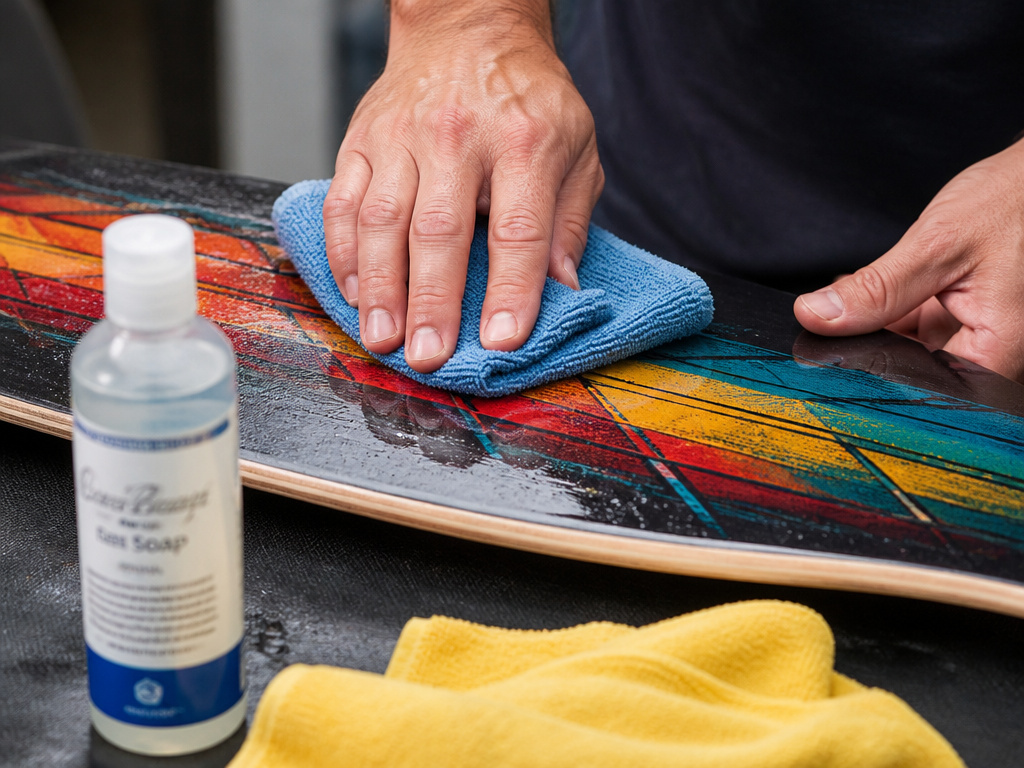
That beautiful printed graphic on the bottom of your deck isn’t just under the clear coat; it’s often on top of it. Scrubbing with anything abrasive will haze or scratch the artwork. The safe method is the most gentle one. Use a soft, damp microfiber cloth with a tiny amount of mild soap. Wipe in the direction of the graphic, not in circles. Dry immediately with another soft cloth. Never use a scrub pad, magic eraser, or any cleaner not labeled as safe for automotive clear coat. Think of it like cleaning a car’s paint job. If you wouldn’t use it on your car, don’t use it on your graphic. For removing stubborn tar or sap, a small drop of citrus-based cleaner (like Goo Gone) on a cloth can work. Test it on a small, hidden edge of the graphic first, then wipe clean and dry. The solvents in these products can dull the clear coat if left on too long.
How to fix chips and cracks on a longboard deck
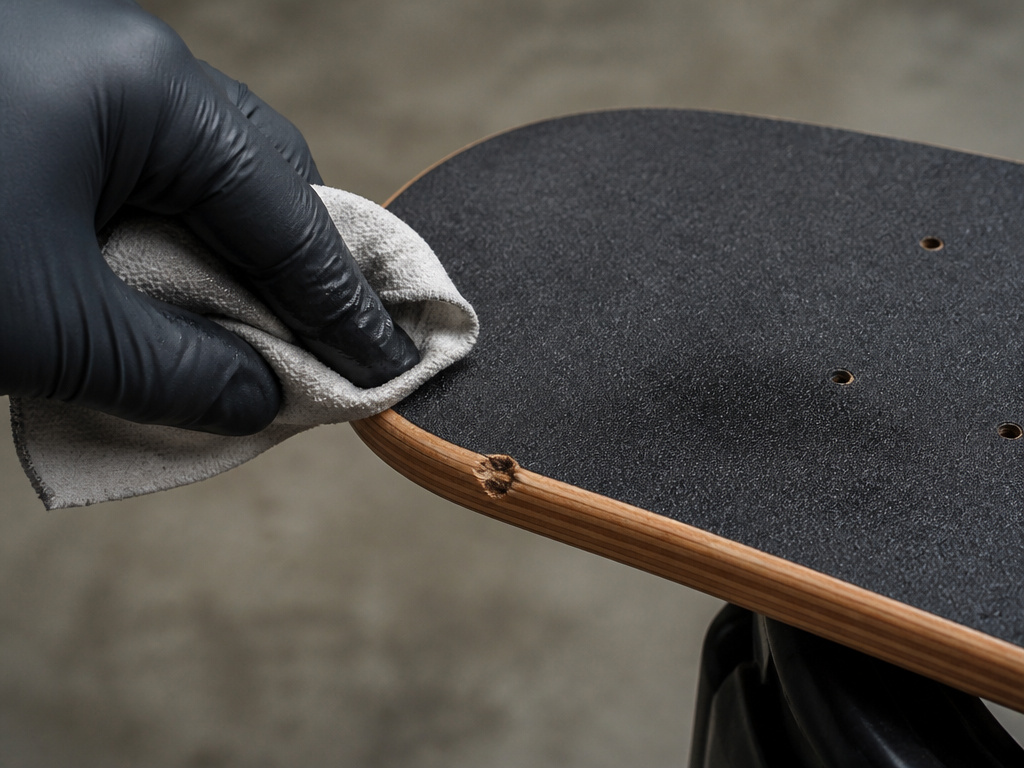
The fact sheet provides no specific guidance on repairing physical damage like chips, cracks, or delamination. For practical care, focus on preventing further damage. Keep the deck clean and dry after use, as moisture can worsen existing issues in the wood or composite layers. Avoid storing the board in damp conditions or under heavy weight. If damage is severe, the safest course is to consult a professional skate shop for repair assessment, as a compromised deck can affect ride safety and performance.
Best way to store a longboard
Proper storage protects your board from warping and damage. The best way to store a longboard is to hang it up on a wall-mounted rack. This keeps it off the ground, away from potential moisture, and prevents anything from being stacked on top of it. Ensure the storage area is dry. Before storing, make sure the deck and all components are clean and dry to prevent any corrosion or material degradation over time. This simple step significantly extends the life of your board.
Frequently Asked Questions
Is WD-40 good for cleaning skateboard bearings?
No. Manufacturers like those cited in the Concrete Waves Handbook explicitly warn against it. WD-40 is a solvent and water displacer, not a lubricant. It will dissolve the existing grease, leave the bearings vulnerable to rust, and attract more dirt. Use a dedicated bearing cleaner like mineral spirits or citrus cleaner, followed by a lubricant like Bones Speed Cream.
How do you clean a skateboard deck without damaging it?
For a standard maple deck, use a dry brush on the grip tape and a damp cloth on the deck wood. Avoid soaking any part of the board. Let it dry thoroughly before riding. For acrylic or carbon decks, follow the manufacturer’s specific instructions—using the wrong cleaner can cause cracks or haze the finish.
Will water ruin your longboard?
It depends on the deck and how wet it gets. A little splash from a puddle won’t ruin a sealed maple deck if you dry it off. Soaking the deck, especially around the truck mounts, can lead to wood swelling, delamination, and rusted hardware. The safest rule is to avoid riding in the rain and to dry your board completely if it does get wet.
Can you use rubbing alcohol to clean skateboard bearings?
You can, but it’s not the best choice. Isopropyl alcohol is a solvent that will clean but can also dry out the rubber bearing shields if used repeatedly. Most bearing-specific cleaning kits use mineral spirits or citrus-based cleaners that are less harsh on the seals. If you use alcohol, follow it immediately with proper lubrication.
The Bottom Line
Cleaning a longboard deck isn’t about making it look brand new forever. It’s about preventing the slow, mechanical failures that happen when grit acts as grinding paste in your bearings and when moisture swells the wood around your trucks. The one rule that overrides all the product debates: let it dry. Whether you use a damp cloth, a pressure washer, or just a dry brush, the final step is always to let every component dry completely before you put weight on it again. A board reassembled damp is a board that’s rusting and warming from the inside. Everything above assumes a deck that’s still structurally sound. If you’re cleaning a deck with deep cracks or delamination, the cleaning is cosmetic. The real fix involves wood glue, clamps, and a frank assessment of whether it’s time for a new deck.
