How to Clean Roller Skate Wheels: Step-by-Step
This post contains affiliate links. As an Amazon Associate, we earn from qualifying purchases.
To clean roller skate wheels, you need a dry or damp cloth, mild dish soap, and about five minutes per skate. Wipe the rolling surface to remove dirt and debris; for stubborn rink gunk, a damp cloth with a drop of dish soap works. Sources disagree on what cleaning agents are safe: Riedell/Antik/Moxi advise against alcohol or ammonia-based cleaners on wheels, while Sure-Grip recommends soaking bearings in isopropyl alcohol or a specialized cleaner.
That basic method covers 90% of routine maintenance. The real question isn’t how to wipe dirt off, it’s when a simple wipe isn’t enough, and what you use when you cross that line. Using the wrong cleaner voids warranties, while skipping a deep clean ruins your wheels’ grip and roundness. A key part of this is knowing how to clean roller skate wheels properly.
What follows is a breakdown of the tools, the step-by-step methods from a dry cloth to a full bearing-out soak, and the manufacturer warnings most guides gloss over in their how to clean roller skate wheels advice. By the end, you’ll know exactly how to match the cleaning method to the mess on your wheels.
Key Takeaways
- Start with a dry rag wipe-down after every session; this prevents abrasive dirt from grinding into the wheel surface.
- For sticky rink gunk, sources offer similar advice: Riedell/Antik/Moxi recommend wiping with a damp cloth, while Derby Warehouse suggests a damp rag and a spot of dish soap.
- Rotate your wheels every 10-15 hours of skating using a diagonal swap pattern to prevent uneven wear and conical shaping.
- Never use a hair dryer or heat to dry wheels or bearings; trapped moisture inside the bearing hub can lead to rust.
- If your wheels develop flat spots or visible cracks, cleaning won’t restore them; it’s time for a new set.
The 5-Step Cleaning Process for Wheels (Without Removing Bearings)
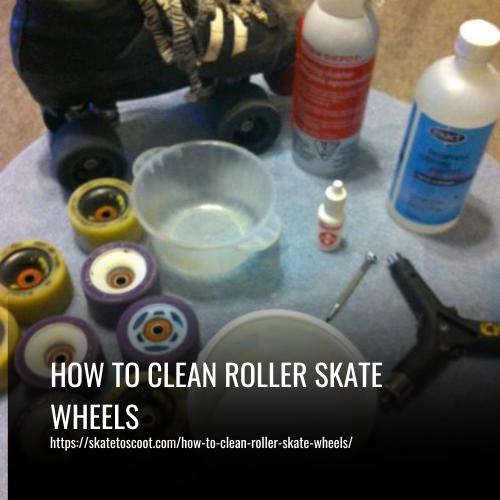
You don’t always need to pull your wheels apart. For routine dirt, dust, or light rink residue, this five-minute process keeps your setup rolling clean.
Gather a dry rag, a second damp cloth, and a small drop of mild dish soap like Dawn. A skate tool or 1/2″ wrench is handy for loosening axle nuts if you want to spin the wheels freely, but you can often clean them while they’re mounted.
Before you start: Avoid alcohol, ammonia, or industrial cleaners. The Riedell, Antik, and Moxi owner’s manual explicitly warns they “may damage or dissolve some components or soften the material.” This isn’t a suggestion, it’s a warranty condition.
- Loosen the axle nuts. Use your skate tool or wrench to back off the axle nuts a quarter-turn. This allows the wheel to spin freely from the truck, so you can clean the whole outer edge. If the nut spins by hand, the Derby Warehouse guide says it’s time for a replacement.
- Dry-wipe the entire wheel. Use a dry rag to wipe away loose dirt, hair, and debris. Pay special attention to the area around the axle where hair and string love to wrap. Skipping this grinds grit into the urethane every time you skate.
- Address stubborn spots with a damp, soapy cloth. Dampen a corner of your second cloth with water and add a tiny drop of dish soap. Gently scrub any discolored or sticky patches on the wheel’s running surface. The Derby Warehouse method notes this is safe for “something yucky” without harming the wheel.
- Wipe away soap residue. Use a clean, damp section of your cloth to wipe off any soapy film. Leaving soap on can attract more dirt.
- Dry thoroughly and re-tighten. Spin the wheel and use the dry rag to absorb all moisture. Ensure the wheel and axle are completely dry before tightening the axle nut back to a snug fit. The wheel should spin freely without side-to-side wobble.
This method is your weekly maintenance. It preserves your bearings from unnecessary exposure to water and gets your wheels clean enough for most indoor and outdoor sessions.
When to Do a Deep Clean (Removing Bearings)
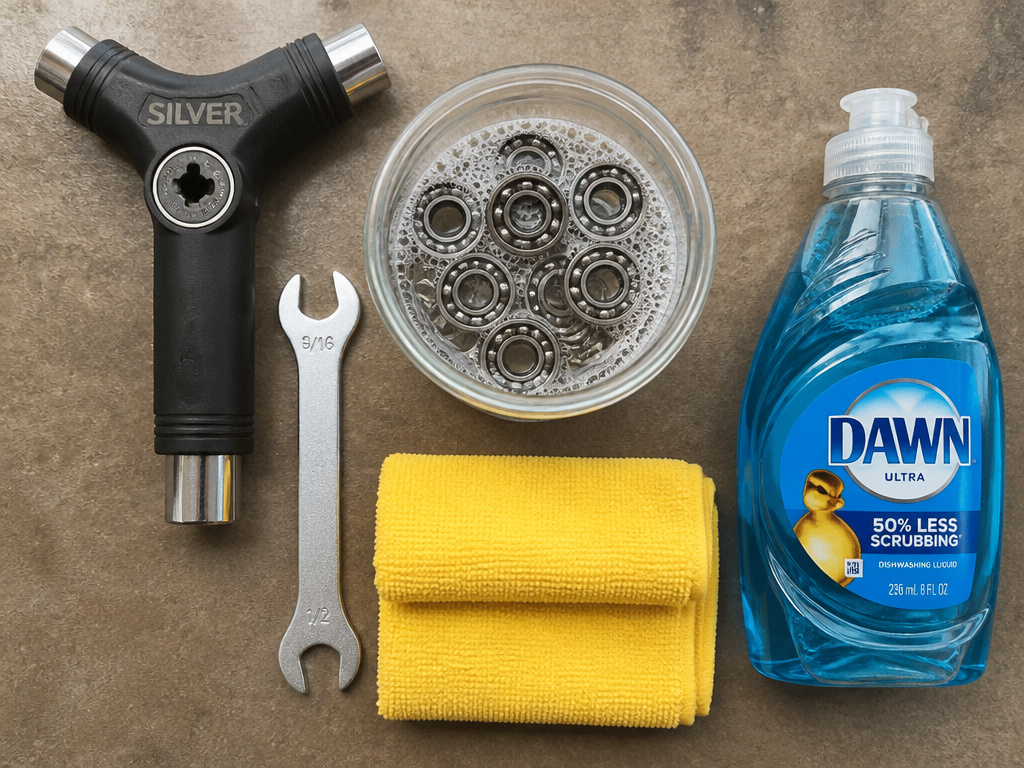
A surface wipe hits its limit with three specific problems: embedded debris like gravel or tar, pervasive rink gunk that changes wheel color, and any time you suspect moisture has reached the bearing. That’s when you take the wheels off.
The process shifts from cleaning to a careful disassembly. You’ll need your skate tool, a bearing removal tool (or a spare axle to pry with), a small container, isopropyl alcohol (for bearings only), lubricant, and a clean workspace.
I developed the rule ‘new wheels, same bearings’ after wasting an entire session breaking in new bearings that were noisier and slower than my seasoned, smooth ones. Now, I only deep-clean bearings when performance drops, not every time I wash wheels.
Step 1: Remove wheels and bearings. Unscrew the axle nuts completely and slide the wheels off. Use a bearing puller or gently press the bearings out from the backside using a spare axle or a dedicated tool like the Bont bearing press (compatible with wheels up to 70mm). Keep track of any spacers that sit between the bearings inside the wheel hub, the Impala guide stresses you must “put spacer back between bearings before putting the wheels back in the frame.”
Step 2: Clean the wheels. With bearings removed, you can safely use more water. Soak the wheels in warm water with a few drops of dish soap. Scrub with a soft brush or a Magic Eraser to lift embedded dirt. Rinse thoroughly.
Step 3: Clean the bearings. This is where sources disagree. Sure-Grip recommends soaking bearings in isopropyl alcohol or a specialized bearing cleaner for 15-30 minutes. However, the Riedell manual’s alcohol warning likely applies to wheel material, not the metal bearings. For safety, follow your bearing manufacturer’s advice. If they have removable shields, pop them off first. After soaking, agitate the container, remove the bearings, and let them air dry for at least one hour.
Step 4: Lubricate and reassemble. Once bone-dry, add one or two drops of lubricant per bearing as per Sure-Grip’s guide. Spin the bearing to distribute the oil. If you removed shields, snap them back on. Press the bearings back into the clean, dry wheels, reinstall the spacer, and mount the wheels back on your skates.
| Cleaning Scenario | Best Method | Risk If Skipped |
|---|---|---|
| Light dust/debris | Dry cloth wipe | Abrasive wear on wheel surface |
| Sticky rink gunk | Damp cloth + dish soap | Loss of grip, uneven staining |
| Embedded dirt/tar | Remove bearings, soak & scrub wheels | Permanent wheel damage, vibration |
| Grinding/sluggish bearings | Remove, soak in alcohol, re-lube | Bearing seizure, potential axle damage |
Tools and Supplies: What You Actually Need
You don’t need a pro workshop. Your cleaning kit breaks into two tiers: the essentials for weekly care and the upgrades for quarterly deep cleans.
The Essential Kit (Under $20):
- Skate Tool or 1/2″ Wrench: Required for removing axle nuts. A Y-shaped skate tool includes socket sizes for axles and toe stops.
- Microfiber Cloths: Two or three. They’re lint-free and absorbent. Use one dry, one damp.
- Mild Dish Soap: Like Dawn or similar. A drop goes a long way for cutting through grease and rink residue.
- Small Container with Lid: A old jar or plastic tub for soaking bearings.
The Deep-Clean Upgrades:
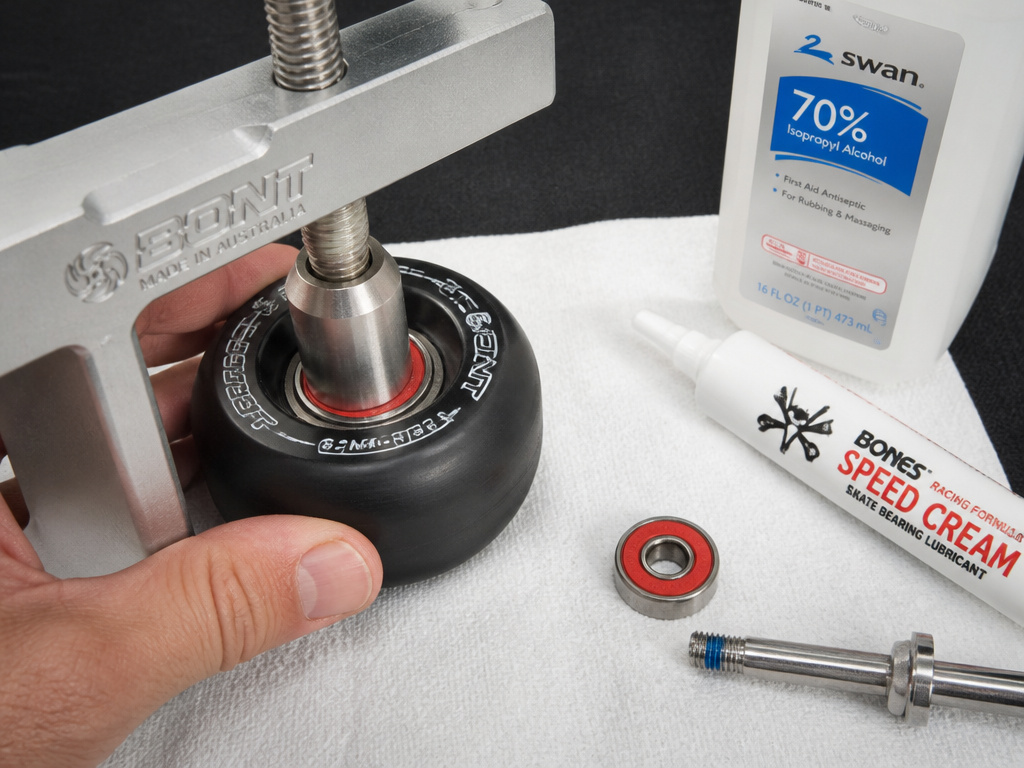
- Bearing Removal Tool: A simple bearing press or puller saves frustration and prevents damage. The Bont press is designed for quad wheels up to 70mm.
- Isopropyl Alcohol (91% or higher): The solvent of choice for degreasing bearings. Remember the disagreement: fine for bearings, potentially bad for wheels.
- Bearing Lubricant: Don’t use WD-40. Use a light oil or silicone-based lubricant made for skate bearings, like Bones Speed Cream.
- Blue (Removable) Thread Lock: The Impala guide recommends “one small drop” on the axle threads during reassembly to prevent nuts from vibrating loose. This is a brand-specific tip others don’t mention.
Common mistake: Using a hair dryer to dry wheels or bearings. The Skatepro guide is adamant: “Never use a hair dryer or other heating devices.” Heat can warp plastic wheel hubs and deform bearing shields, creating worse problems than the moisture you’re trying to remove.
Wheel Rotation: Why and How It Prevents Wear
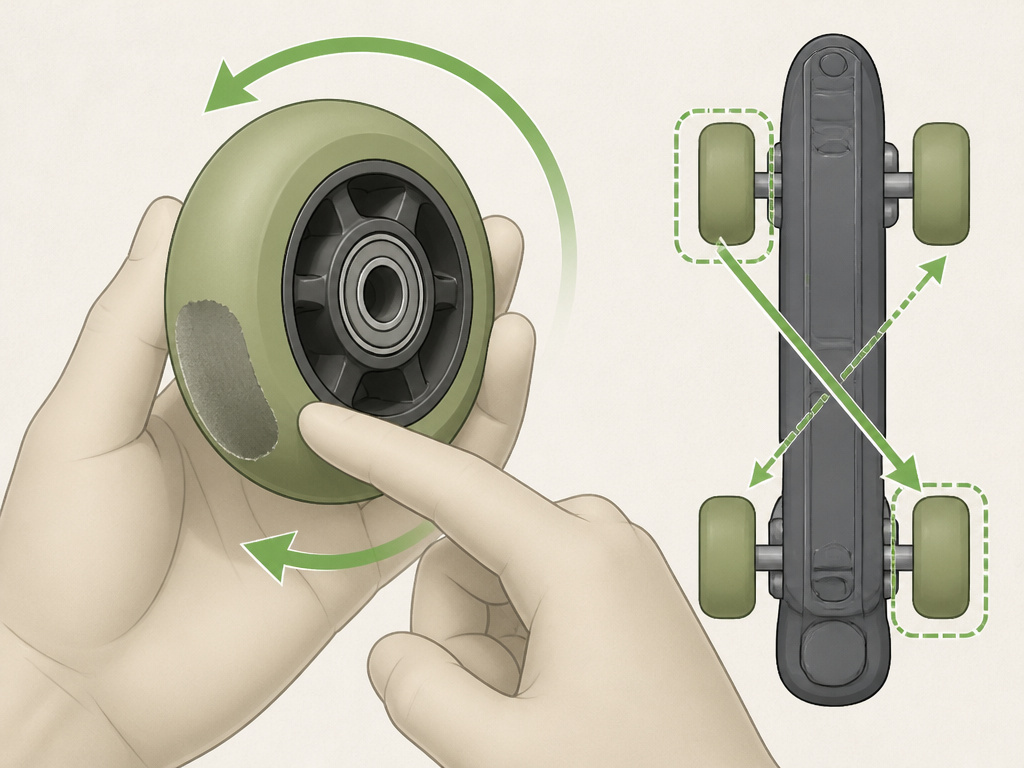
Cleaning maintains the surface; rotation manages the shape. Your weight and pushing style wear wheels unevenly, leading to conical shaping or flat spots that feel like a flat tire. Rotating them spreads the wear.
Sources recommend different rotation patterns: Riedell/Antik/Moxi advise a diagonal swap pattern for quad skates, while Skatepro recommends a cross pattern (1-3 / 2-4) for inline skates.
For inline skates, Skatepro recommends a different pattern: label wheels 1-4 on each skate and rotate in a 1-3 / 2-4 cross pattern.
How often? The Derby Warehouse guideline is solid: rotate every 10-15 hours of skating. If you skate two hours a week, that’s about once a month. A wheel with a flat spot won’t roll smoothly, no matter how clean it is.
| Wheel Position | Wear Pattern | Rotation Fix |
|---|---|---|
| Front Left (Quad) | Inside edge wears from turning/crossovers | Swap to Right Back position |
| Back Right (Quad) | Outside edge wears from pushing | Swap to Left Front position |
| Wheel 1 (Inline – Front) | Rear edge wears from braking | Swap to Wheel 3 (Back) position |
| Wheel 3 (Inline – Back) | Front edge wears from acceleration | Swap to Wheel 1 (Front) position |
Troubleshooting Common Wheel Problems
Sometimes cleaning isn’t the answer, replacement is. Here’s how to diagnose the difference.
The wheel is discolored and slightly tacky. This is classic “rink gunk,” a mix of floor finish, dirt, and who-knows-what. It’s a surface issue. A Magic Eraser (used damp, with no cleaner) or a scrub with dish soap will usually lift it. If the grip feels reduced, a light scuff on concrete can restore texture.
The wheel has a flat spot or vibration. You’ll feel a rhythmic thump-thump-thump while rolling. Cleaning won’t fix this. The wheel has lost its roundness due to a lock-up slide or extreme wear. It’s time to replace it. Check your other wheels for similar wear and consider a more frequent rotation schedule.
The wheel is cracked or has chunks missing. This is a safety issue. Urethane can become brittle or crack from impact. Stop using the wheel immediately. This is beyond cleaning or rotation; you need a new set. When choosing new wheels, match the hardness (durometer) to your skating surface.
The wheel spins roughly or not freely. The problem might be the bearing, not the wheel. Remove the wheel and try spinning the bearing by hand. If it’s gritty or seized, you need to clean your bearings or replace them. A clean wheel with a bad bearing is useless.
Where this goes sideways: Overtightening the axle nut after cleaning. The Riedell manual warns, “Avoid tightening the axle nut too much as you could damage the bearings.” Overtightening crushes the bearing races, causing them to spin poorly and voiding the warranty. Tighten until the wheel has no lateral play, then stop.
How to take off roller skate wheels
Start by using a skate tool or a wrench that fits your axle nuts. Turn the nuts counter-clockwise to loosen them. Once loose, you can slide the axle out completely or just enough to pull the wheel free from the truck. If your wheels have a spacer between the bearings, be sure to keep track of it as it will need to go back in later. Place each wheel in order so you remember its original position, which is helpful if you plan to rotate them. This simple removal gives you full access to the wheel surface and the bearings inside for a thorough cleaning.
Putting wheels back on and setting the right tightness
Slide the wheel back onto the axle, ensuring any spacer is reinstalled between the bearings inside the wheel. Hand-tighten the axle nut until it makes contact, then use your tool to secure it. Avoid tightening the axle nut too much as you could damage the bearings. Overtightening the bearings could lead to breakage. A properly tightened wheel should spin freely without any side-to-side wobble. Some skaters use a small drop of blue thread lock on the axle threads to prevent nuts from loosening, but always follow your skate’s specific guidelines if available.
Frequently Asked Questions
Is Dawn dish soap a good wheel cleaner?
Yes, for the wheels themselves. A drop on a damp cloth effectively cuts through rink gunk and dirt without damaging urethane, as noted by Derby Warehouse. However, Dawn is not a bearing cleaner. Water and soap will rust bearings quickly. For bearings, use a dedicated solvent like isopropyl alcohol.
Can I use WD-40 to clean wheels or bearings?
No. WD-40 is a water-displacing penetrant, not a lubricant. It will temporarily free a seized bearing but attracts dirt and gunk, making the problem worse long-term. It can also degrade wheel plastic. For bearing lubrication, use a product designed for the task, like those in our guide to skate bearing lubricants.
What is the best way to clean extremely dirty wheels?
Remove the bearings first. Soak the wheels in warm, soapy water. Use a soft-bristle brush or a Magic Eraser to scrub embedded debris. Rinse thoroughly and air-dry completely before reassembly. For the bearings, a soak in isopropyl alcohol followed by re-lubrication is the standard method.
How often should I clean my wheels versus my bearings?
Clean your wheels with a dry or damp cloth after every session to prevent dirt buildup. Deep-clean wheels (with bearing removal) only when they are visibly dirty or lose grip. Bearings need cleaning less often, only when they feel gritty, sound noisy, or spin sluggishly. Bearings need cleaning less often, only when they feel gritty, sound noisy, or spin sluggishly.
Before You Go
The one rule that reframes all the others: wheels are consumables. You can clean and rotate them to extend their life, but they will eventually wear out. No amount of Dawn or isopropyl alcohol will fix a cracked hub or restore a round shape to a coned wheel.
Your first move after reading this should be a simple five-minute inspection. Check your axle nuts for tightness, wipe your wheels down with a dry rag, and give them a spin. Listen for grinding and look for flat spots. That tells you whether you’re in maintenance mode or replacement territory.
If you’re skating outdoors and picking up tar or deep grime, consider a dedicated set of outdoor wheels that are easier to clean and cheaper to replace. Keep your indoor wheels pristine for the rink. And remember, the goal isn’t spotless wheels, it’s smooth, predictable rolls. A little dirt is fine. A wheel that doesn’t spin is not.
