How to Do a Pivot on a Longboard: Step-by-Step
This post contains affiliate links. As an Amazon Associate, we earn from qualifying purchases.
To do a pivot on a longboard, shift your weight onto the nose to lift the rear wheels and rotate your shoulders to spin the board 180 degrees on its front axle.
That weight-on-the-nose move is a nose manual, and the 180-degree spin turns it into a pivot. It’s the first real trick most riders learn because it builds the balance and board control you need for everything else. A key foundation is learning how to do a pivot on a longboard. Get this one down, and shove-its, big spins, and even some dance moves become possible.
What follows is the full breakdown: the exact foot positions sourced from coaching guides, the two distinct pivot styles (one whippy, one smooth), and how to practice safely so you’re not chasing your board down a hill. We’ll also settle the rear-foot debate and show you how to use a pivot for more than just showing off.
Key Takeaways
- Place your front foot just before the front axle screws on the nose, heel hanging off slightly for added control.
- Initiate the spin with your shoulders and upper body, not just your hips; your arms provide the counter-rotation momentum.
- Practice the motion stationary in grass first to build muscle memory without the risk of rolling away.
- Learn both the “whipping” pivot (more nose weight, less control) and the “sliding” pivot (less nose weight, more control) to build skills for advanced tricks.
What a Pivot Actually Is (And Isn’t)
A pivot is a 180-degree turn balanced on your longboard’s front wheels. It starts as a nose manual, you lift the back trucks by shifting weight forward, and finishes with a spin. You land riding switch, meaning your opposite foot is now forward. This isn’t just a flashy move. It’s a fundamental skill. It teaches you precise weight distribution, upper-body coordination, and how to recover when your board starts to slide out from under you.
Think of it as the longboard equivalent of a three-point turn in a car, which is essentially the core of how to do a pivot on a longboard. Sure, you could awkwardly shuffle back and forth, but the pivot is the efficient, controlled way to change direction in a tight space. On a trail or in a parking lot, a clean pivot lets you reverse course without putting a foot down.
A pivot is a nose manual coupled with a 180º spin of your longboard on your front wheels. You start from your normal riding stance by moving your front foot up to the nose of the board, and your rear foot toward the center of the board.. Longboards USA
That tells you the wheels are sliding just enough, not locking up. Getting that sound right means you’ve managed the pressure on the nose.
The Gear That Makes a Difference
You can attempt a pivot on any board, but your setup decides how hard you’ll fight for it. For freestyle, where pivots are a core trick, the specs get specific. According to Longboards USA, a freestyle longboard needs a rigid board (often made of Canadian maple to avoid flex), a high nose and tail for better control, and lateral concavity to lock your feet in during slides. Moonshine MFG adds that a tail longer than 3 inches and a generous width are key for supporting your foot and the momentum you generate.
Then there are the pivot cups. These are the small urethane inserts inside your truck’s baseplate where the pivot pin sits. They’re not just spacers; they’re a suspension component. A worn or wrong-sized cup adds slop and deadens the turn response, making your pivot feel vague and sticky. The whyienjoy.com source lists three standard sizes: Size S (10mm x 12mm) for Penny-style trucks, Size M (10mm x 16mm) for regular skateboard trucks, and Size L (12mm x 18mm) for larger longboard trucks. Their durometer typically ranges from 90a to 93a. A harder cup (higher durometer) offers more stability and a quicker rebound, which can make the pivot feel snappier.
| Board Feature | Ideal for Pivots | Why It Matters |
|---|---|---|
| Deck Material | Canadian Maple | Provides rigidity, prevents unwanted flex during the nose manual. |
| Tail Length | > 3 inches | Gives your rear foot a solid platform to push from during the rotation. |
| Pivot Cup Durometer | 90a-93a | Affects rebound and steering precision; fresh, correctly sized cups eliminate slop. |
| Nose/Tail Height | High | Offers more leverage when you press down to lift the opposite wheels. |
If your board feels unresponsive, check the pivot cups before you blame your technique. A $10 set of replacements can transform a sluggish truck.
The Step-by-Step Pivot Guide
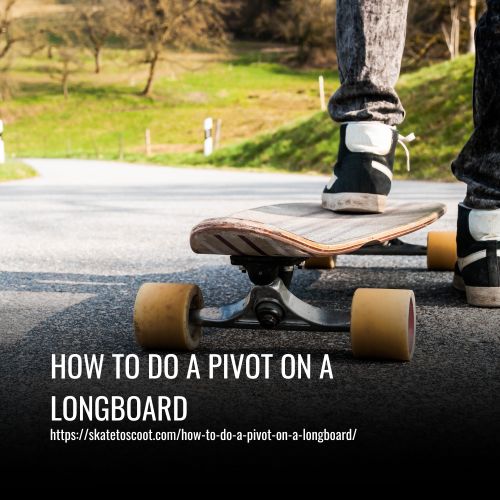
We will break this down step by step. Forget the vague advice. These positions come straight from the Titus and Moonshine MFG guides.
- Set Your Stance. Start rolling at a slow, comfortable speed. Your shoulders should be parallel to the board.
- Place Your Front Foot. Slide your front foot up the deck until the ball of your foot is “shortly before the axle screws on the nose,” as Titus specifies. Let your heel hang off the edge a bit. A common mistake is standing too far forward on the tip of the nose, which makes balancing unnecessarily hard.
- Place Your Rear Foot. Here’s where sources disagree. Titus says Titus says the rear foot should be about a shoulder’s width from the nose. Longboards USA and Moonshine MFG advise moving the rear foot toward the center of the board. What many don’t mention is that both are correct for different reasons. The center-of-the-board position gives you more power to swing the board around. The shoulder-width position offers more stability over the front axle. Try both.
- Shift Weight onto the Nose. Carefully shift your weight forward onto that front foot. You want the rear wheels to almost lose contact with the ground, not launch sky-high. Keep it low.
- Initiate the Rotation. This is the core move. Don’t just twist your hips. As Titus describes, lift your rear foot slightly and use your shoulders and upper body to start the turn. Your rear shoulder should move forward in the direction you want to spin. Your arms go up for balance.
- Follow Through and Land. Let the board swing 180 degrees beneath you. Your rear foot becomes your new front foot as you land in a switch stance. Absorb the impact with your knees.
- Ride Away. The trick isn’t done until you’ve rolled away cleanly. This is where practicing your basic balance pays off.
Whipping vs Sliding: The Two Speeds of a Pivot
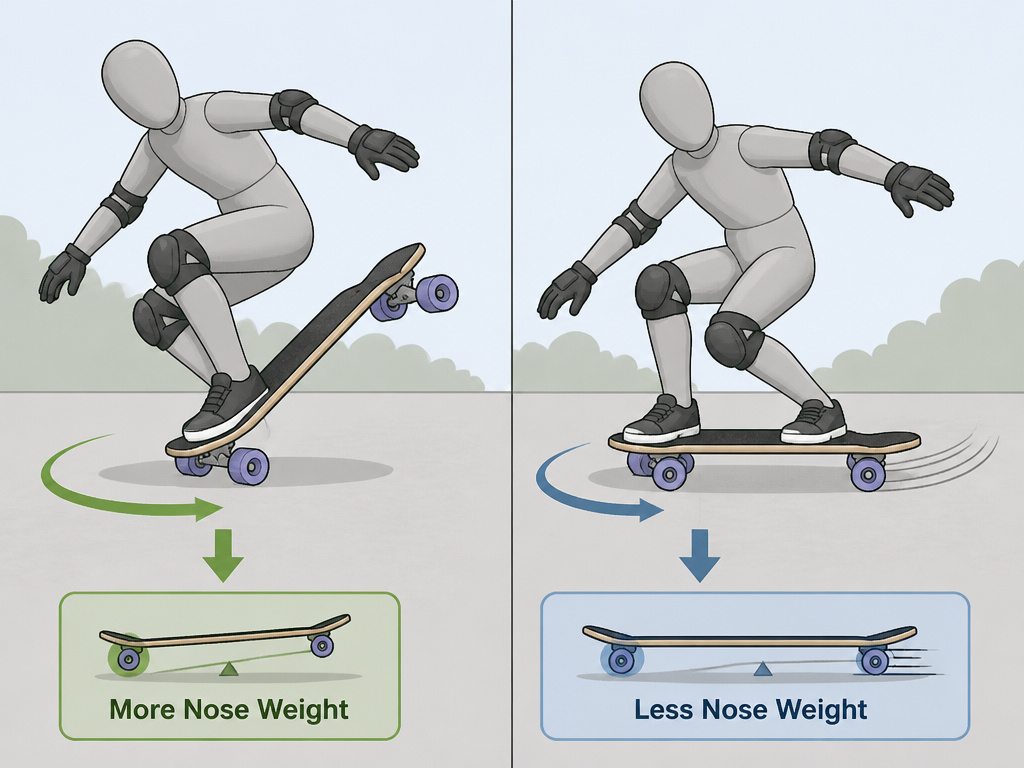
Not all pivots are created equal. Moonshine MFG’s guide makes a crucial distinction that most tutorials miss: the amount of weight you put on the nose creates two different tricks.
The “Whipping” Pivot happens when you put more weight on the nose. The rear wheels come up higher and the board rotates with less wheel contact. It feels easier to initiate because the board is more airborne, but you have less control. It’s a quick, snappy 180. This is the one you learn first.
The “Sliding” Pivot uses less weight on the nose. The rear wheels stay closer to the ground, dragging and sliding through the rotation. It requires more core tension and precise shoulder control, but it gives you far more control at higher speeds. This is the version experienced riders use to link tricks together smoothly.
| Pivot Type | Nose Weight | Feel & Control | Best For |
|---|---|---|---|
| Whipping | More | Easy to initiate, less controlled, board feels “whipped” around. | Learning the motion, low-speed practice. |
| Sliding | Less | Requires more technique, offers high control, wheels slide/skid. | High-speed riding, linking into other tricks like shove-its. |
You should learn both. The whipping motion builds the basic muscle memory. The sliding motion develops the fine control and board feel you need for everything more advanced, like setting up for a 180 turn with more style. Trust the process, not just the outcome. Mastering the slide is what turns a beginner trick into a useful riding tool.
How to Practice Safely (And Actually Get It)
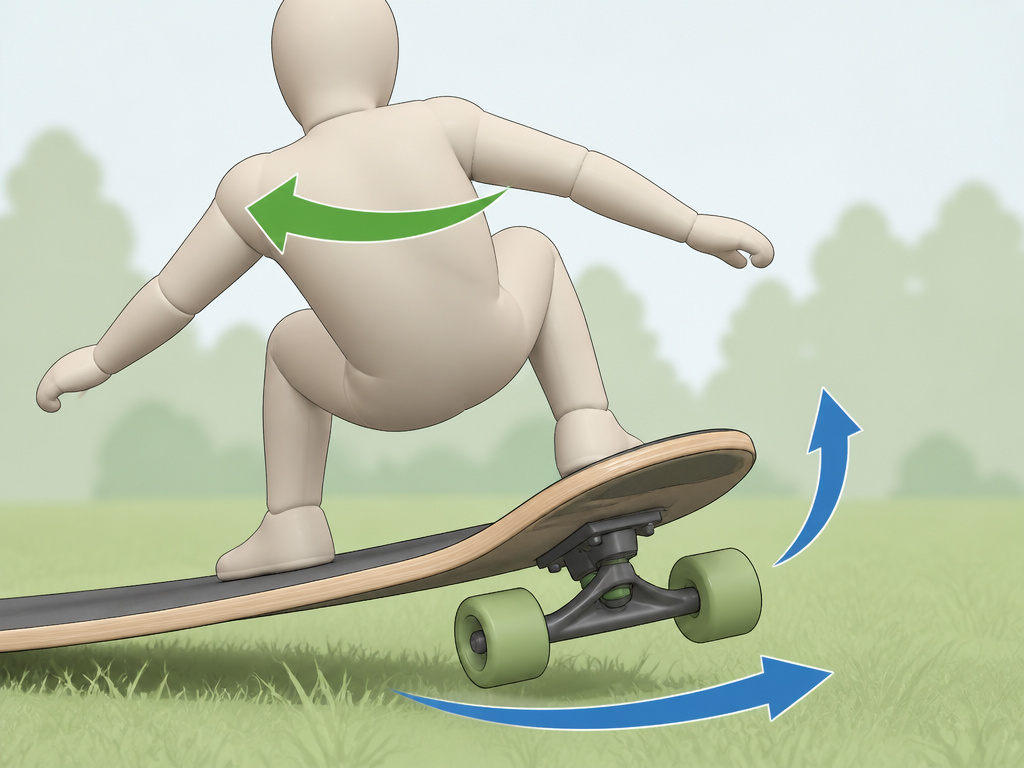
The “just send it” approach leads to scraped palms and a runaway board. Here’s a smarter progression.
First, Do It Stationary. Titus explicitly recommends this: “Practice the pivot motion while stationary, with the board in grass to prevent rolling.” This is your zero-risk lab. Get the foot placement drilled. Feel the weight shift onto the nose. Practice the shoulder rotation without worrying about balance. It feels silly, but it builds the neural pathways.
Second, Find a Gentle Slope. A barely-inclined parking lot or a smooth, empty bike path is ideal. You want just enough momentum to keep the board rolling smoothly, not enough to terrify you. This is where you link the stationary motion with forward motion.
Third, Start with the Whipping Pivot. Use more nose weight. Don’t try to be stylish; just get the board around 180 degrees. The goal is to land it, however messy. Commit to staying on the board, even if you land awkwardly.
Fourth, Refine into the Sliding Pivot. As you get comfortable, focus on pressing lighter on the nose. Listen for the wheels sliding. Try to keep your body more centered over the front truck. This is where your turning technique fundamentals come back into play, it’s all about controlled weight distribution.
Where this goes sideways: Practicing at high speed before mastering the weight shift. The board will either refuse to spin or will spin too fast, bucking you off. Speed amplifies errors; learn the move slow.
Protective gear is essential here.
Using Pivots for More Than Tricks
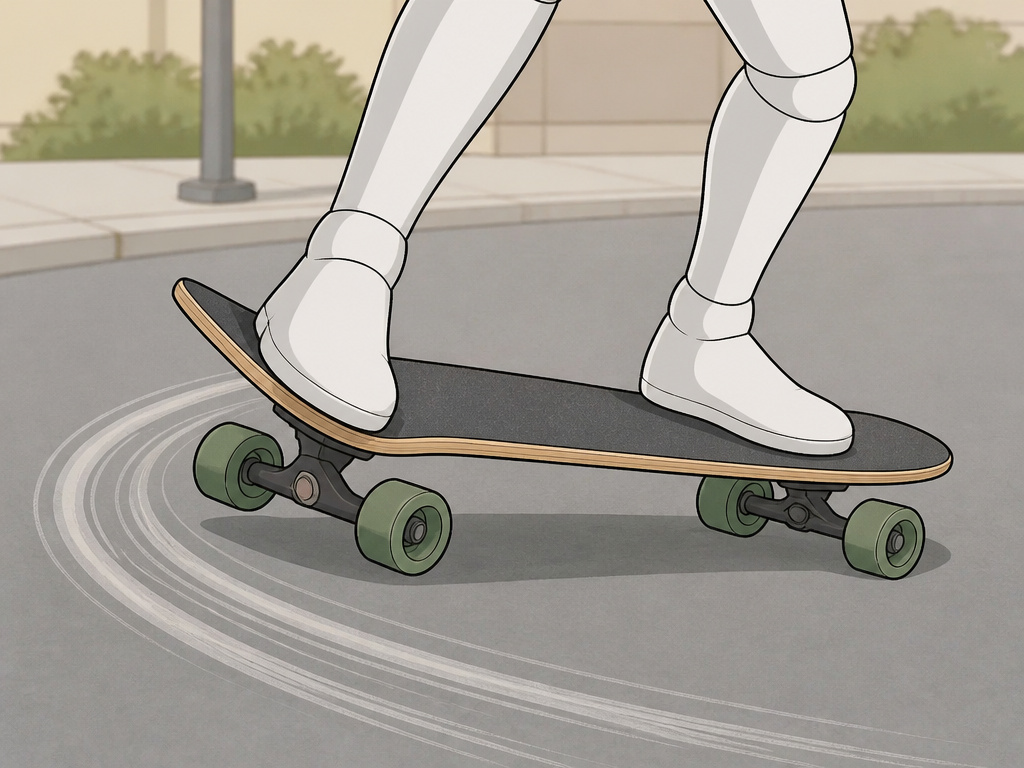
Once you own the pivot, which begins with learning how to do a pivot on a longboard, it stops being just a trick and starts being a tool. It’s your quick-turn button.
Frequently Asked Questions
Are pivots easier on a longboard or a skateboard?
What’s the difference between a nollie and a fakie pivot?
Nollie pivot uses your natural front foot on the nose. A fakie pivot uses your natural back foot on the nose (so you’re riding switch, then pivot to regular). Moonshine MFG recommends learning all four variations (nollie/fakie, frontside/backside) as soon as possible, as they are fundamental for building a complete trick vocabulary.
Can I learn a pivot if my longboard has a kicktail?
Before You Go
The pivot feels impossible until it clicks. And it will click. Focus on the shoulder lead, not the foot swing. Manage your nose weight to choose between a whipping learning tool and a sliding precision instrument. And for the first ten tries, use the grass.
Now go find some flat ground and start turning.
