How to Fix Electric Scooter Fuse or Circuit Breaker
This post contains affiliate links. As an Amazon Associate, we earn from qualifying purchases.
To fix an electric scooter fuse or circuit breaker, you must first safely cut all power, locate the component (usually under the deck or near the battery), and test it with a multimeter. A blown fuse must be replaced with an identical amperage rating. Sources disagree on how to reset a tripped circuit breaker or BMS: the Levy Electric guide recommends waiting 10-15 minutes for cooling before resetting, while a Reddit anecdote suggests it can be reset by applying a charge from a charger.
The difference between a one-time fix and a recurring headache is often a missed step in that process. Skipping the cooling wait or using the wrong fuse amperage sends you right back to a dead scooter. A key part of this is knowing how to fix electric scooter fuse or circuit breaker.
What follows is the sequence that actually works for the how to fix electric scooter fuse or circuit breaker question, pulled straight from service manuals and the mistakes I’ve watched people make. It covers how to find the part, how to test it, and what to do when the fix doesn’t stick.
Key Takeaways
- Always cut power first. The Invacare Cetus service manual states you must turn off the battery before any maintenance to avoid shock risk. This is an absolute requirement.
- Wait 10–15 minutes before resetting. If a breaker tripped from overheating, the Levy Electric guide specifies this cooling period; resetting it hot causes an immediate re-trip.
- Replace fuses with the exact same amperage. Using a higher-rated fuse bypasses the protection and can lead to controller or motor damage.
- Check individual battery cell voltages. A Reddit-sourced diagnostic rule: if any cell group reads below 2.5V, the battery is likely damaged and unsafe to revive.
- Repeated trips mean a deeper problem. If a breaker resets but trips again quickly, the issue is usually a short circuit, failing motor bearing, or a faulty controller that needs professional repair.
Safety First: The Non-Negotiable Rules
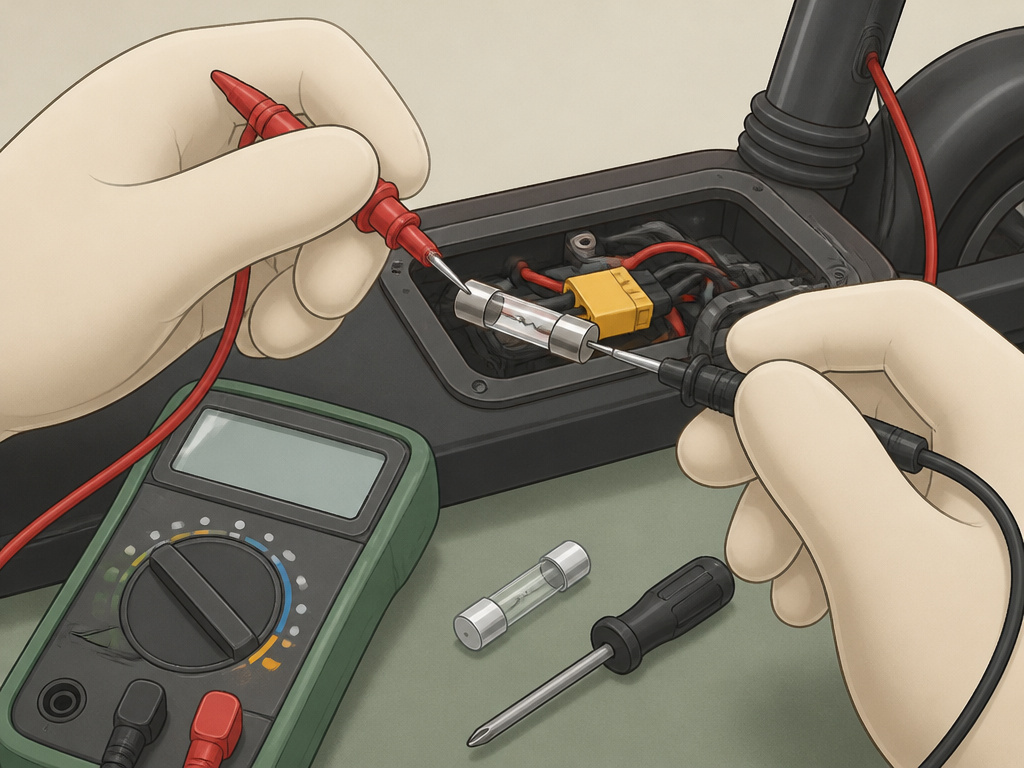
This isn’t about being overly cautious. It’s about following the procedures printed in OEM service manuals that exist because people got hurt.
Before you start: Working on a live electrical system can cause severe shock or start a fire. The motor will generate heat during running and can remain hot enough to cause a scald burn after use. Always have a second person present for complex steps, as recommended in the Invacare Cetus manual.
Turn the scooter off and disconnect the charger. Do not just switch it off at the throttle, physically disconnect the battery if your model allows it. The Invacare manual is explicit: it is strictly prohibited to disassemble and repair the scooter when it is powered on.
Park on a flat, open surface and set the gearshift to “D” or engage the parking brake. This prevents the scooter from rolling. Your hands must be completely dry, and you should use insulated tools if you need to remove any fasteners. Working in a damp garage or right after a ride is asking for trouble.
What You’re Actually Looking For
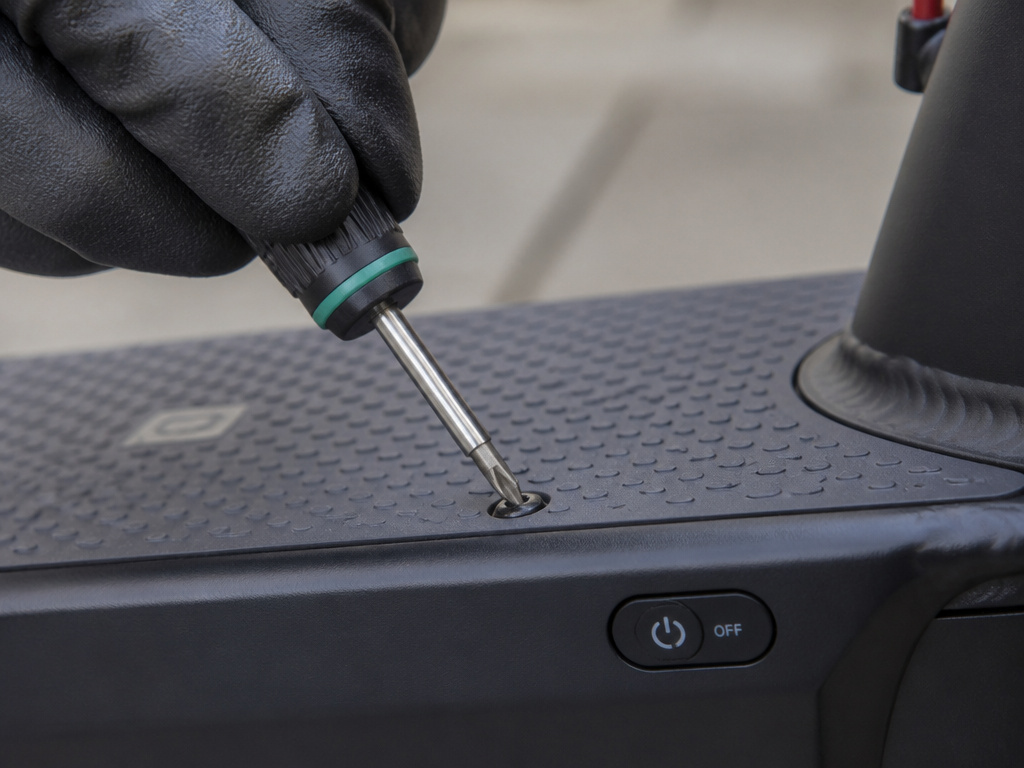
Sources disagree on the nature of overcurrent protection in modern scooters: the Levy Electric guide describes user-serviceable circuit breakers, while a Reddit anecdote states modern electronics often integrate protection into a solid-state Battery Management System (BMS) that is not user-serviceable.
A fuse is a one-time device. When too much current flows, a thin metal strip inside melts, breaking the circuit. You must replace it. A circuit breaker performs the same function but uses a mechanical switch that trips open; you can reset it once the fault is cleared.
Where to look: The most common location is underneath the deck plate. You’ll need appropriate tools to remove the fasteners. Some scooter models place fuses in boxes attached directly to the battery. The Levy Electric guide also notes the breaker can sometimes be found near the battery compartment itself.
| Protection Type | Physical Sign It’s Blown/Tripped | Action Required |
|---|---|---|
| Glass or Blade Fuse | Blackened/melted interior, broken filament | Replace with identical rating |
| Circuit Breaker | Button popped out or toggle switched to “OFF” | Reset after cooling |
| BMS (Solid-State) | No physical sign; scooter simply has no power | Often requires professional diagnosis |
The Tools You Actually Need
You can’t fix what you can’t diagnose. A basic multimeter is the most important tool here. You don’t need a $200 model; a simple $20 digital multimeter that can measure DC voltage and test continuity is perfect.
The other tools are determined by your scooter’s fasteners, such as Allen keys and screwdrivers. Needle-nose pliers are helpful for pulling fuses, and a small flashlight is essential for peering into dark compartments.
A quick photo of the internal layout before you disconnect anything can save you a huge headache during reassembly. The Levy Electric guide calls this a “pro tip” for a reason, it works.
Step-by-Step Diagnostic and Repair
Step 1: Cut Power and Access the Component
Turn off the scooter. Disconnect the charger. If your model has a removable battery, take it out. This is your first and most critical step. Refer to your scooter’s manual for the exact deck removal procedure; forcing panels can break plastic clips.
Once inside, locate the small, colored component (often red, blue, or black) with a button or toggle, or the clear/opaque cylinder containing a fuse. The Levy Electric guide describes the breaker as a “small, compact unit with distinctive coloring.”
Step 2: Visual Inspection
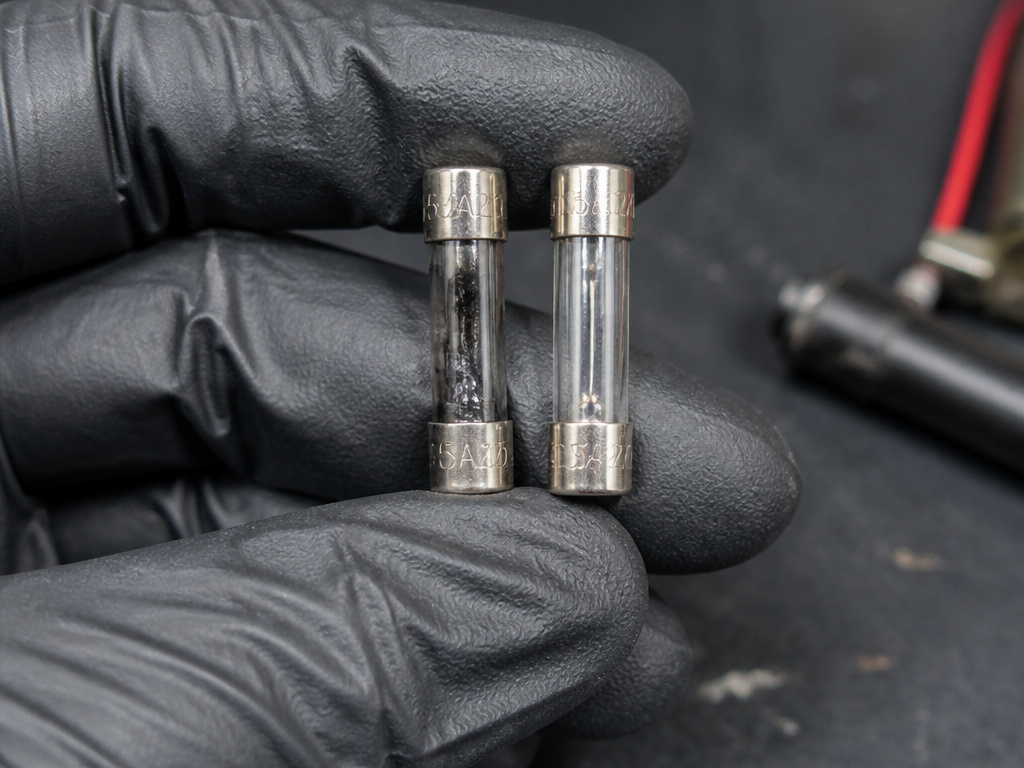
Before testing, look closely. Is the fuse window blackened or the metal strip inside melted? Is the circuit breaker’s button visibly popped out? Check for any obvious corrosion, burnt smells, or melted wire insulation around the component. These are clear visual cues.
Step 3: Identify and Test the Component
This is where the multimeter earns its keep.
For a Fuse:
Set your multimeter to the continuity setting (the symbol that looks like a sound wave). Touch one probe to each metal end of the fuse. A fuse that is not blown will show continuity (a beep or a reading near 0 ohms). No beep means the fuse is blown.
For a Circuit Breaker:
You need to check for voltage. Set the multimeter to DC Volts, matching your scooter’s system voltage. With the scooter powered ON (but wheels off the ground!), carefully measure the voltage on the input and output terminals of the breaker. If you have voltage going in but nothing coming out, the breaker is tripped or faulty.
Step 4: Fix or Replace
Replacing a Fuse:
You must use a new fuse with the exact same amperage (A) rating. It will be printed on the fuse itself or listed in your manual. Using a higher-amperage fuse is dangerous, it won’t blow when it should, allowing excessive current to fry your controller or motor.
Resetting a Circuit Breaker:
First, address why it tripped. Were you climbing a steep hill? Carrying extra weight? The Invacare Cetus manual notes that climbing or loading can cause a trip and recommends moving to flat ground first. If overheating was the cause, the Levy Electric guide says to wait 10–15 minutes for the system to cool.
Then, firmly push the button back in or flip the toggle to the “ON” position. You should feel or hear a distinct click.
Step 5: Reassemble and Test
Reconnect any connectors, ensuring they are fully seated. Different connectors are often different shapes and colors to prevent mistakes, as noted in the Invacare manual, don’t force them. Reinstall the deck plate.
Turn the scooter on. Does the display light up? Gently test the throttle. If it works, you’ve solved it. If the fuse blows again immediately or the breaker re-trips, you have a deeper electrical fault.
When the Fix Doesn’t Stick: Troubleshooting Deeper Issues
A single trip or blown fuse can be a fluke. Repeated failure is a symptom.
Common mistake: Just resetting the breaker or replacing the fuse over and over. This doesn’t fix the root cause and risks a fire.
Follow a logical diagnostic chain. Start with the simplest, most common causes before tearing the whole scooter apart.
| Symptom | Likely Cause | Next Diagnostic Step |
|---|---|---|
| Blows fuse immediately on power-up | Direct short circuit in wiring | Visually inspect all wiring for pinches, cuts, or melted insulation. Disconnect the motor and test again. |
| Trips breaker only when accelerating hard | Excessive current draw from motor or controller | Check motor bearings for roughness. Ensure you’re not exceeding the scooter’s weight limit. |
| Trips breaker after a period of riding | Overheating due to high ambient temp or poor ventilation | Allow full cool-down. Check that air vents on deck are not blocked. |
| No power, but fuse/breaker tests good | Failed controller, dead battery, or BMS lockout | Test battery pack voltage. Check for problems with the wiring at major connectors. |
The issue could be a failing battery where cell groups have dropped below a critical voltage. As noted in a Reddit discussion, a cell group below 2.5V is considered damaged.
For issues where the scooter experiences a sudden shutdown while riding, the culprit could be a faulty speed controller or a loose high-current connection that breaks under vibration.
Why This Happens: Common Causes Explained
Understanding the “why” helps you prevent it next time. The Levy Electric guide breaks down the common causes clearly.
Thermal Overload: This is the slow trip. Riding up long hills, carrying heavy loads, or operating in hot weather causes components to heat up gradually. The internal bimetallic strip in the breaker bends until it snaps the circuit open. This is a protective shutdown.
Magnetic Trip: This is instant. A sudden massive current surge, like from a direct short circuit, creates a strong magnetic field in the breaker’s solenoid that slaps the switch open. It’s the electrical equivalent of a emergency stop.
Other Culprits: Water ingress can cause corrosion and short circuits. Worn motor bearings increase friction, making the motor draw more current. A faulty charger can also send incorrect voltages back into the system, confusing the BMS.
When to Call a Professional
This is the most important judgment call. If you see burned components, smell burning plastic, or see sparks, stop immediately. Do not attempt further repairs.
You should also call a pro if:
- The breaker trips multiple times in a row after a reset performed correctly.
- You cannot locate the fuse or breaker after consulting your manual.
- The reset button produces no click or feels mushy (indicating a broken mechanism).
- Your diagnostic steps point to a complex issue like an internal short in the motor or a failed controller.
A good troubleshooting guide can get you far, but know your limits. Paying a technician is cheaper than buying a new scooter or a trip to the ER.
Scooter has no power at all
Start by parking on flat ground and ensuring the scooter is completely off and unplugged from any charger. The first step is to check all connectors, as a common cause of electrical faults is a loose or disconnected plug. Look under the deck and near the battery compartment for a small, compact unit with distinctive coloring; this is likely your circuit breaker or protection system. See if its button has popped out or its switch has flipped. If the scooter recently faced a steep hill, heavy load, or rapid acceleration, the system may have tripped. Before attempting any reset, wait for the motor and components to cool down. If the breaker resets with a click but power doesn’t return, or if you see any damage, stop and seek professional help.
Frequently Asked Questions
Where is the fuse on my electric scooter?
The most common location is under the deck plate. Some models have specific fuse boxes attached to the batteries. Always check your owner’s manual first.
Can I use a higher amp fuse if I keep blowing them?
No. Never use a fuse with a higher amperage rating than specified. The fuse is sized to protect your scooter’s wiring. A larger fuse won’t blow when it should, allowing excessive current to flow and potentially causing a fire or destroying your motor controller.
What’s the difference between a fuse and a circuit breaker?
Fuse is a one-time-use safety device; when it blows, you must replace it. A circuit breaker is a resettable switch; when it trips, you can turn it back on after addressing the cause. Both serve the same function: breaking the circuit during an overcurrent event.
My circuit breaker just clicks and won’t reset. What does that mean?
Clicking breaker that won’t stay reset usually indicates an ongoing short circuit or a severely overloaded motor. The breaker is doing its job by immediately tripping again. You need to find and fix the underlying electrical fault before it will reset properly.
How do I know if my electric scooter battery is dead?
Use a multimeter to measure the voltage at the battery’s main terminals. If it’s significantly lower than the rated voltage (e.g., 24V battery reading 10V), the battery is deeply discharged or damaged. For a more precise diagnosis, a professional can test the voltage of individual cell groups within the pack.
The Bottom Line
Fixing a fuse or breaker is often the simplest repair on an electric scooter when you compare a how to fix electric scooter fuse or circuit breaker procedure, but it’s a symptom solver, not a cure-all. The real skill is knowing when the blown fuse is the problem and when it’s just the messenger.
Trust the click. If a reset breaker holds, you likely corrected the condition (like moving off a steep hill). If it trips again within minutes, the scooter is telling you there’s a deeper electrical fault. That’s your cue to stop DIY repairs and consult a professional technician. Your goal isn’t just to get moving again, but to ride safely without the nagging fear of the next sudden shutdown.
