How to Turn Off Hoverboard: Step-by-Step
This post contains affiliate links. As an Amazon Associate, we earn from qualifying purchases.
To turn off a hoverboard, press and hold the power button for 3–5 seconds until all lights shut off. Most models, like the Jetson Stereofly and V8 Sport, will also automatically shut down after 10 minutes of inactivity. If it won’t turn off, you likely need to recalibrate it or, as a last resort, physically disconnect the battery.
That 10-minute auto-shutoff isn’t just a convenience feature. It’s a critical safety timer that kicks in when the internal gyroscopes detect no movement, preventing a runaway board if you forget to power it down. But that timer relies on the board’s logic board being functional. Knowing how to turn off hoverboard manually is therefore a vital backup.
What follows is a breakdown of the standard method, the brand-specific quirks that change it, and the step-by-step escalation path when the board refuses to listen. This isn’t about guessing which wire to pull; it’s about matching the symptom, including the how to turn off hoverboard question, to the documented fix, from software reset to hardware intervention.
Key Takeaways
- The standard off command is a press-and-hold on the power button until lights die.
- Models like the Jetson Stereofly and V8 Sport auto-shutoff after 10 minutes of inactivity as a safety backup.
- If the board stays on, recalibrate it on a level surface; this may require 3 consecutive attempts to take effect.
- A hoverboard with a kart attachment may not power off due to sensor pressure; you must remove the seat first.
- The final, warranty-voiding fix for a persistent “on” state is a physical battery disconnect, necessitating specific tools.
The Standard Power-Off Procedure
You press a button. It should be simple. And for the majority of hoverboards, it is.
The power button is usually a single, circular button located on the top deck, between the footpads or near the edge. To turn the board off, you press and hold that button. The trick isn’t the force, it’s the timing for the how to turn off hoverboard command.
Hold the button until all indicator lights shut off. You’re waiting for a specific cue: all indicator lights on the board should shut off completely. A short press might just put it in standby or change a mode; the long press is the kill switch. You’ll often hear a descending beep or a click from the internal speaker as it powers down.
Technical Snippet: The standard power-off sequence for most hoverboards involves a sustained press of the central power button until all lights shut off, triggering a shutdown routine in the main logic board. This severs power from the battery to the drive motors and balancing gyroscopes, returning all surface LED indicators to an off state.
Where this goes sideways: Releasing the button too soon. If you release the button when the lights flash, you may have triggered a calibration sequence. Now the board is beeping and the wheels might spin. The fix is simple: press and hold again, and this time, watch the lights. Keep holding until every single one goes dark and stays dark.
How to Confirm It’s Actually Off
A board that looks off might still be sipping battery. The definitive sign is a complete lack of light from any LED, including any small charging port indicators. Touch the footpads; they should be completely inert, with no resistance or electronic hum. The speaker should emit no sound, not even a faint buzz. If you have a multimeter, you could check for voltage at the charging port, but for most users, visual and tactile silence is the confirmation.
Brand and Model Variations
Not all hoverboards read from the same script. While the press-and-hold is universal, the supporting features and failure states are brand-specific.
Take auto-shutoff. The Jetson Stereofly and Jetson V8 Sport manuals both state the board will automatically shut off after standing idle for 10 minutes. This is a programmed safety feature, not a battery-saving one. It’s for when a rider steps off and forgets, leaving a live board that could suddenly re-balance and take off.
Other models have protection functions that look like a shutdown but are different. The V8 Sport, for instance, will turn off the motor after 15 seconds if the battery is low but still in use, and its motor will shut down after 2 seconds if a wheel is blocked. These are error states, not a clean power-off, and the board may remain in a beeping, error-light mode afterwards.
| Model | Standard Off Method | Key Auto-Off / Protection Feature | What It Means |
|---|---|---|---|
| Jetson Stereofly | Hold power button 3-5 sec | Auto-shutoff after 10 min idle | Safety timer for forgotten boards. |
| Jetson V8 Sport | Hold power button 3-5 sec | Auto-shutoff after 10 min idle; Motor off after 15 sec on low battery | Two-tiered protection: inactivity and battery safety. |
| Hoverzon S/XLS | Hold power button (duration per manual) | Not explicitly stated in sourced manual. | Follow standard press-and-hold. |
| Generic Models | Hold power button 3-5 sec | May have similar 10-min timer. | Assume manual power-off is required. |
Then there’s app control. Many modern boards, including Jetson models that use the Ride Jetson App, allow you to power down the board directly from your phone. This is useful if the physical button is damaged or hard to press. The app typically has a “Power Off” or “System Off” button that sends the command via Bluetooth. Remember, this requires the board and phone to be paired and in range.
When the Standard Method Fails
The power button does nothing. The board stays on, beeping, lights flashing. This is where you move from standard operation to troubleshooting. The cause is almost always a software glitch in the balance system or a hardware fault.
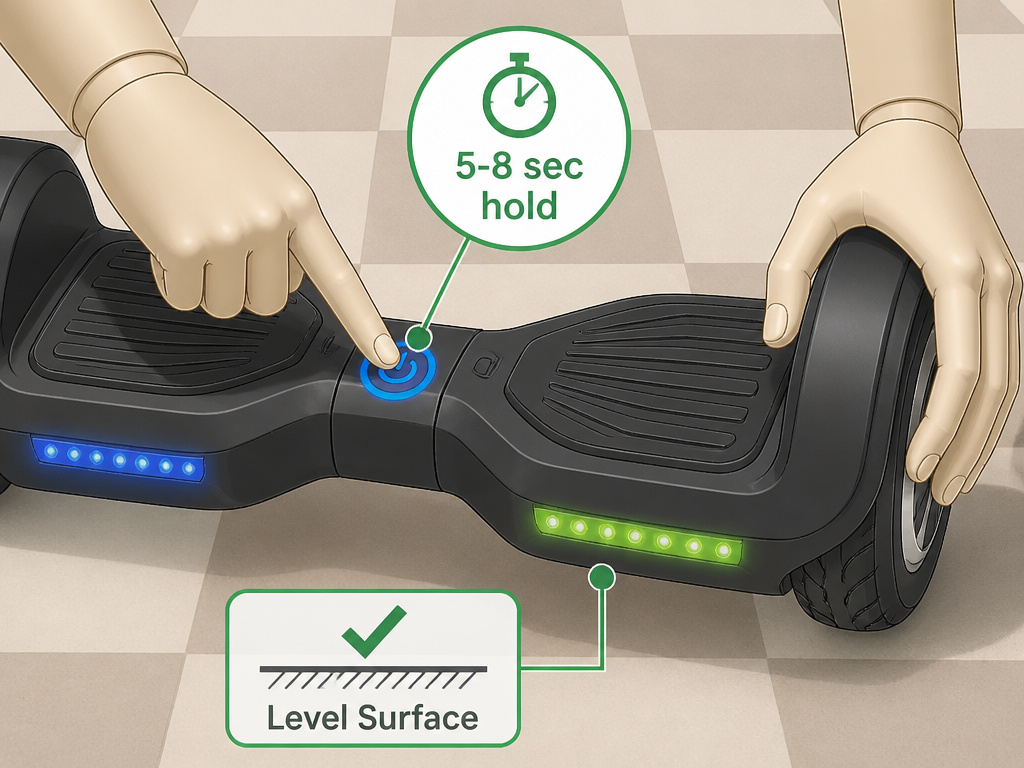
The first and most important step is recalibration. This resets the internal gyroscopes and sensors that tell the board it’s level. The process is specific:
- Place the hoverboard on a hard, perfectly level surface. A floor tile is good; a carpet or uneven driveway is not.
- Ensure the footpads are level with each other. You may need to physically adjust them.
- With the board on, press and hold the power button for 5–8 seconds until the lights flash.
- Release the button and let the lights flash for 20–30 seconds.
- Quickly press the power button once to turn the board off.
Here’s the part most guides skip: it might not work the first time. The Hoverboards.com troubleshooting guide notes you may have to repeat this process 3 times in a row before the calibration fully takes effect. For the Jetson Stereofly, successful recalibration is confirmed by the phrase ‘Calibration successful.’
If recalibration fails, perform a full power cycle. Turn the board off using the standard method, then disconnect it from any charger. Leave it powered down and disconnected for an extended period. This allows any residual charge in the capacitors on the motherboard to dissipate, performing a “cold boot” when you turn it back on. This fixes many transient electronic gremlins.
The Last-Resort Hardware Fix
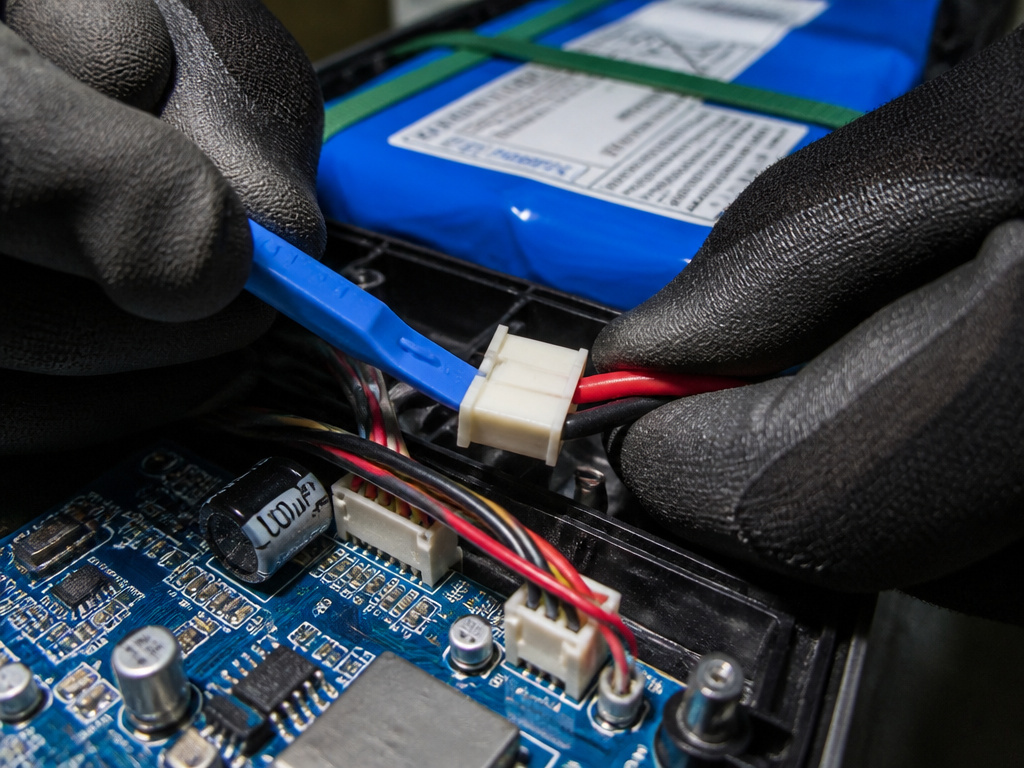
When software resets and power cycles do nothing, and the board is perpetually on—often with a continuous, maddening beep—the problem is hardware. The community-endorsed fix, documented by repair shops like StreetSaw, is a physical battery disconnect. This is a last resort because it voids warranties and requires opening the board.
Before you start: You are working with a lithium-ion battery pack that can deliver a significant shock and is a fire risk if punctured. You must have the correct tools: a Phillips head screwdriver (usually size #2), a plastic prying tool, and electrical tape. Do not use metal tools to pry near battery terminals.
The procedure is a mechanical override of a faulty motherboard:
- Place the hoverboard upside down on a non-conductive surface.
- Remove all screws from the bottom casing plate.
- Gently pry the casing open. You’ll see the battery pack (a large rectangular block) and the main logic board.
- Locate the main power connector running from the battery to the motherboard. It is usually a white plastic plug with two thick red and black wires.
- Firmly pull this connector straight out from the motherboard socket. You may need to wiggle it gently.
- Once disconnected, the board will instantly lose all power. All lights and sounds will stop.
- Wait a moment, then reconnect the plug firmly.
- Reassemble the casing and screws.
This severs the primary circuit. If the board powers up normally afterwards, the fault was likely a stuck relay or capacitor on the board. If the problem immediately returns, the motherboard itself is faulty and needs replacement—a common culprit is a failed TIP137 transistor or blown capacitors near the power stage, which keep the circuit latched on.
Hoverboard Attachments and Power Issues
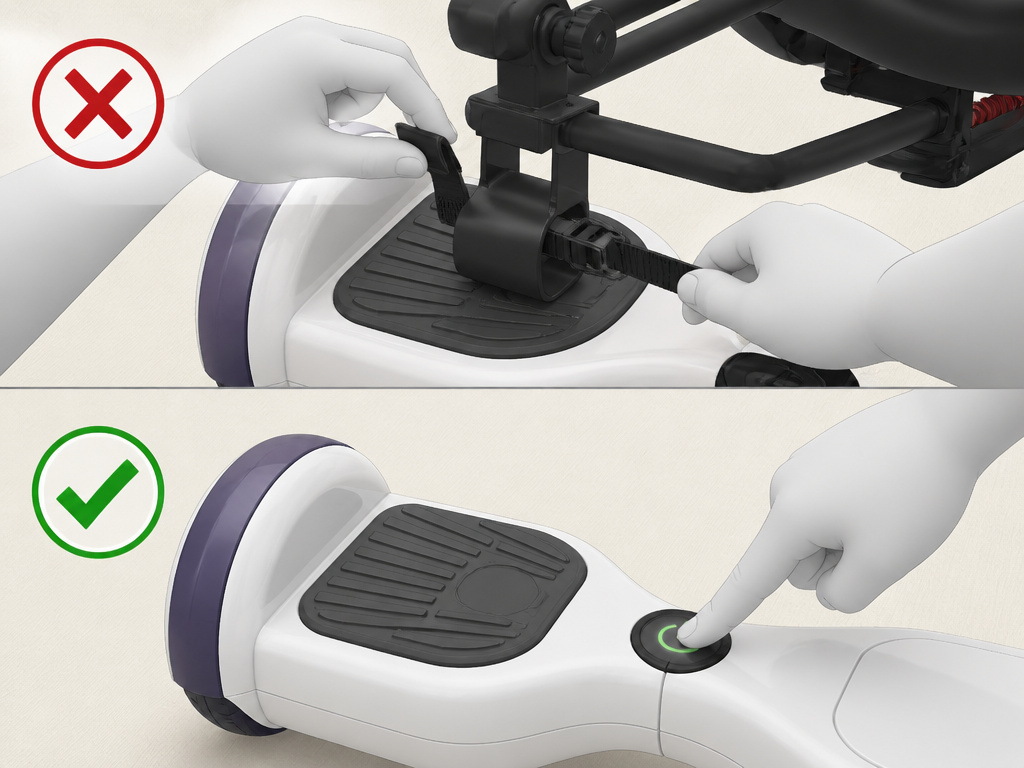
Karts, seats, and handlebar attachments add a layer of complexity. These accessories often clamp or strap over the footpads, applying constant pressure to the pressure-sensitive pads.
Many boards interpret this constant pressure as a rider standing on them. Therefore, the safety logic prevents shutdown because it “thinks” someone is aboard. Reddit threads are filled with owners of Hover-1 models and Swagtron boards who can’t turn their board off until they completely unstrap and remove the kart.
The fix is straightforward but inconvenient: you must fully detach the seat or kart to access a clean, unpressed footpad. Then the standard press-and-hold will work. Some owners, as noted in the Reddit discussions, simply let the battery drain or plug in the charger to force a shutdown, but this is hard on the battery long-term.
Preventive Maintenance to Avoid Problems
Most power-off issues are preventable. They stem from poor storage, physical damage, or ignoring early warning signs.
Start with storage. The manuals for the Jetson V8 Sport, Jetson Stereofly, and Hoverzon S/XLS all say to fully charge the battery before storing. Follow your manufacturer’s instruction to maintain warranty coverage, but know there’s a trade-off.
More critical is storage temperature. The V8 Sport manual warns not to charge if the ambient temperature is below 32°F (0°C), and to bring the unit above 50°F (10°C) first. The Hoverzon specifies a battery charging temperature range of 32°F ~ 104°F (0°C to 40°C). Storing or charging outside these ranges stresses the battery management system, which can corrupt its logic and lead to power-state errors.
Physically, keep the board dry. While many are water-resistant, submerging them or riding through deep puddles can short the power button contacts or corrode the motherboard. A board that has been wet may turn on but refuse to turn off because the button circuit is stuck closed.
Finally, listen to your board. A Jetson Stereofly that beeps because it’s approaching motor overload needs to cool down for 30–60 minutes, per its manual. Ignoring these warnings and pushing it can overheat components on the motherboard, leading to the persistent “on” failure you’re trying to avoid.
Replacing faulty components (power button, motherboard)
When a hoverboard refuses to turn off or on, a faulty power button or motherboard may be the cause. Official manuals (Jetson, Hoverzon, Hoverboards.com) prescribe software-based resets like recalibration, while a community-endorsed hardware fix documented by StreetSaw involves physically disconnecting the battery pack, a procedure not found in official manuals. Before replacing any internal component, ensure you have exhausted all software-based troubleshooting steps. If you proceed with a repair, be aware that some repair services offer a limited warranty on their work. Component replacement requires opening the board’s shell and should only be attempted with the proper tools and understanding of the risks involved.
Safety precautions during repair
Working on a hoverboard’s internal electronics carries risks. Always start by ensuring the device is powered off. If the board will not turn off via the button, a last-resort step is to disconnect the internal battery pack, but this should only be done with extreme caution. Before attempting any repair, let the board cool down completely, especially if the motor was recently under strain. When handling the battery or circuit boards, work in a dry, static-free area. Avoid charging or operating the board in extreme temperatures, as this can damage the battery and other components. Never force connectors apart or use metal tools near exposed circuitry without proper insulation.
Frequently Asked Questions
How do I turn off the beeping on my hoverboard?
The beeping is a safety alarm. To stop it, you must address its cause: slow down if it’s a speed warning, charge the board if it’s a low-battery alert, or recalibrate if it’s an error beep. Physically disabling the speaker, as some Reddit users suggest by opening the board and covering or disconnecting it, removes a critical safety feature and is not recommended.
Why won’t my hoverboard turn off with the kart attached?
The kart’s mounting mechanism presses down on the footpad sensors. The board’s logic interprets this constant pressure as a rider remaining on deck, so it disables the shutdown function for safety. You must detach the kart to turn the board off properly.
My hoverboard turns off by itself while riding. Why?
This is usually a battery or overheating issue. If the battery power drops below 10% (as specified in the V8 Sport manual), the device will automatically turn off for safety. Alternatively, if the motor is overloaded, the board may enter protection mode and shut down. Let it cool for 30–60 minutes and ensure it’s fully charged before riding again.
Can I turn off my hoverboard with a remote control or app?
Yes, if your model supports it. Apps like the Ride Jetson App have a software power-off function. This uses a Bluetooth signal to command the board to shut down. It’s a useful alternative if the physical button fails.
Is it bad to leave my hoverboard on the charger all the time?
Yes. All sourced manuals explicitly warn against leaving the hoverboard charging overnight or for extended periods. Overcharging can degrade the battery and stress the charging circuit, which can lead to broader power system failures.
Before You Go
The difference between a hoverboard that obeys the off command and one that doesn’t often comes down to one of three things: a software state needing a recalibration, a physical obstruction like a kart, or a failed component on the motherboard demanding a battery disconnect.
If your board ever refuses to turn off, start with the simplest fix: the recalibration sequence on a level floor, and be prepared to do it three times. That resolves most issues. For the rest, you now have the escalation path—from power cycle to the physical disconnect—and the knowledge of why each step works. Let that be your guide, not a random forum guess. And always store it charged, in a cool, dry place. That alone prevents a majority of the problems you never want to meet.