Phantom Gogo Scooter Review: A10, R1, and R1 Pro Compared
This post contains affiliate links. As an Amazon Associate, we earn from qualifying purchases.
The Phantom Gogo scooter lineup offers basic, budget-friendly electric mobility with top speeds around 15 mph, ranges between 15-28 advertised miles, and IPX5 water resistance for light rain, but real-world tests show range can be nearly half the advertised figure, and build quality is a common point of contention among owners.
That gap between the brochure and the road is where most reviews stop. They list the specs, maybe do a quick spin, and call it a day. The real story is in the details that break after a month: the battery care advice that contradicts itself, the solid tires that transmit every crack in the pavement straight to your spine, and the simple question of whether spending twice as much as an Amazon scooter gets you twice the scooter. This is the core of a true phantom gogo scooter review.
What follows is a breakdown of the three main models. A10, R1, and R1 Pro, with every spec traced to its source, real-world test data where it exists, and a frank look at what owners on Reddit and YouTube actually complain about. By the end, you’ll know exactly which Phantom Gogo fits a short, flat commute and which one to walk away from.
Key Takeaways
- Advertised range is a best-case fantasy. Independent testing shows the Phantomgogo A10 delivered 14.2 real-world miles, not its claimed 28.
- Solid tires mean a punishing ride. Every owner report on rough roads mentions joint pain; the lack of suspension amplifies this.
- Battery care advice conflicts between sources. The manual says store it fully charged; the website says store at 40%. This matters for longevity.
- The 15 mph speed cap is real. All models hover around this limit, making them strictly for short, flat commutes, not hills or thrill-seekers.
- Costco’s return policy is the best feature. Given the mixed reliability reports, buying from a retailer with a no-hassle return is a smart hedge.
What Are the Phantom Gogo A10’s Real-World Specs?
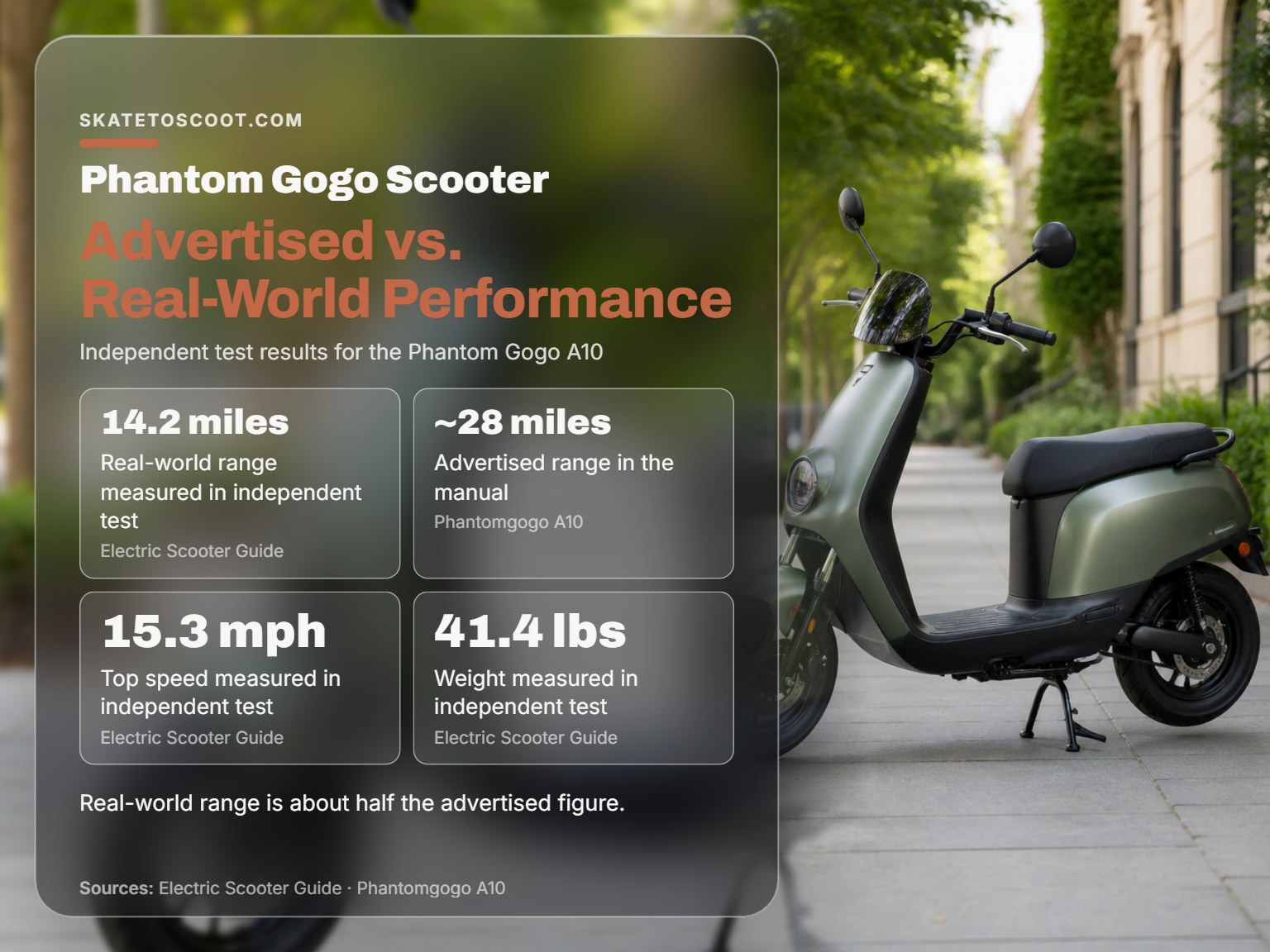
The Phantomgogo A10 is the brand’s most reviewed standing scooter, often found at Costco. Its manual lists a 400W motor, a 36.5V 365Wh battery, and a “General Range” of about 28 miles. It weighs 38 lbs and can carry up to 220 lbs. On paper, it’s a commuter workhorse.
The Phantomgogo A10, per its official user manual, has a 400W brushless rear hub motor, a 36.5V 365Wh lithium-ion battery, and an advertised range of approximately 28 miles. It features an IPX5 water resistance rating, a net weight of 38 lbs, a maximum load capacity of 220 lbs, and a charging time of roughly 6 hours.
But paper specs and pavement performance are two different things. An independent range test by the YouTube channel Electric Scooter Guide put the A10 through a standardized course. The result? 14.2 miles. That’s essentially half the advertised distance. The same test recorded a top speed of 15.3 mph (close to the manual’s 15 mph claim) and a hill climb speed of just 4.9 mph. The tester also weighed the scooter at 41.4 lbs, a bit over the manual’s 38 lbs.
That hill climb number is the tell. A 4.9 mph crawl up a test grade means any real-world incline with a rider near the weight limit will feel like a slog. You might need to kick.
The takeaway is simple: trust the real-world test over the manual for range. If your commute is 7 miles each way, the A10 might barely get you there and back on a single charge in ideal conditions. Add a hill, a headwind, or a backpack, and you’ll be pushing before you’re home.
Phantom Gogo R1 vs. R1 Pro: Which Commuter Scooter Wins?
If you want a seat, Phantomgogo offers the R1 and the more powerful R1 Pro. This is where the spec sheets get messy, and you need to read carefully.
The base Phantomgogo R1 is a confusing case. The product page lists a 280W motor, a 15-mile range, a 36V 7.65Ah battery, and a 6-hour charge time. However, a separate user manual for the R1 claims a 450W motor and a 20-mile range. This isn’t an upgrade; it’s a contradiction. Without a clear explanation, you must assume the lower, more conservative numbers, the 280W motor and 15-mile range, are what you’re actually buying. Its max load is 245 lbs.
The Phantomgogo R1 Pro steps up with stronger specs: a 500W motor, a 20-mile range, a 36V 8.0Ah battery, and a 4-hour charge time. It’s also heavier, at 51.4 lbs, but can only carry 220 lbs.
| Specification | Phantomgogo R1 (Product Page) | Phantomgogo R1 Pro |
|---|---|---|
| Motor Power | 280W | 500W |
| Max Speed | 15 mph | 15.5 mph |
| Advertised Range | 15 miles | 20 miles |
| Battery | 36V 7.65Ah | 36V 8.0Ah |
| Net Weight | 37.5 lbs | 51.4 lbs |
| Max Load | 245 lbs | 220 lbs |
| Charge Time | 6 hours | 4 hours |
The choice here is about power versus portability. The R1 Pro’s 500W motor will handle mild slopes better than the R1’s 280W, but you pay for it in heft. The Pro is over 50 lbs, which makes carrying it up stairs or onto a bus a significant task. The standard R1 is lighter but may struggle on anything beyond a perfectly flat path.
For a seated commuter scooter, the extra power of the Phantomgogo R1 Pro is usually worth the weight penalty. The 280W motor in the base R1 provides less power than the Pro model, which may affect hill-climbing ability.
Build Quality and Common Problems Owners Report
Phantomgogo and Apollo are distinct brands, and distinguishing them is critical. In 2023, the U.S. Consumer Product Safety Commission issued a recall for Apollo Phantom scooters (not Phantomgogo) due to a bolt failure causing the suspension to separate. Apollo received seven reports of the bolt failing, leading to three injuries. Those scooters were sold from June 2021 through May 2023.
Phantomgogo scooters are in a different, budget tier. Their issues are less about catastrophic failure and more about durability and component quality. Owner reports, especially from Reddit, paint a consistent picture:
- The Ride is Harsh. “Solid tires and no shocks. Mmmm $400 to feel every crack in the road.” This sentiment is universal. Without pneumatic tires or suspension, vibration travels straight into the deck and your joints.
- Inconsistent Performance. One Reddit user detailed a phantom drop in top speed: “I’m having speed issues too even with full charge. Goes great for first mile then it takes a minute to realize it’s slowing down.” Others suspect heat damage from storing the scooter in a car trunk degraded the battery prematurely.
- Mixed Reliability. Experiences vary wildly. One Costco buyer said, “We did return one after it kept glitching but they were cool about it and swapped it out. Second one has no issues.” Another simply stated, “I returned it after 2 weeks…”
Where this goes sideways: Buying based on specs alone. The advertised range and speed are measured under ideal lab conditions. Your commute, your weight, and the local road surface will all cut those numbers significantly.
The build is functional, not premium. The aluminum frame holds up, but the components, the solid tires, the basic drum brake, the plastic deck coverings, are chosen to hit a price point. It’s the definition of “you get what you pay for,” which for many is fine. For others, it’s a deal-breaker after the first pothole.
Battery Care and Water Resistance: What the Manuals Actually Say
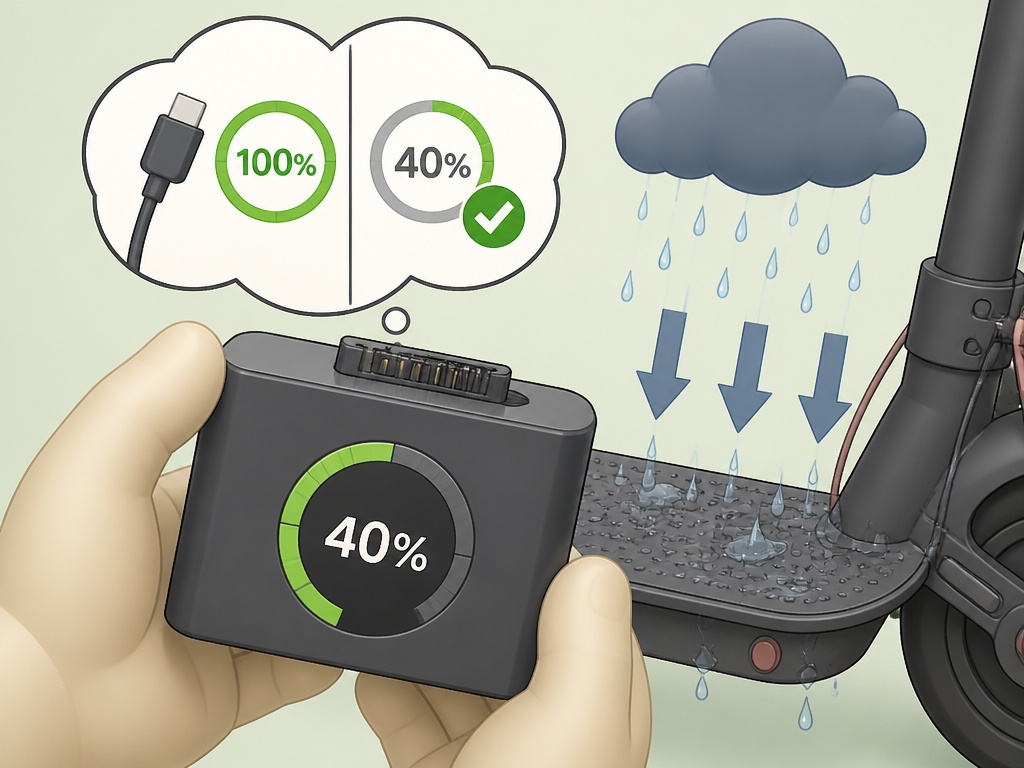
Here’s where owning a Phantom Gogo gets interesting. The manufacturer’s own sources give conflicting advice.
For long-term storage, sources provide conflicting advice: the official Phantomgogo FAQ says to “maintain a 40% charge level,” while the A10 user manual instructs to fully charge it first and then every 30 days. The FAQ’s 40% rule aligns with modern lithium-ion best practice to reduce stress, while the A10 manual’s “full charge” rule represents a different, older recommendation.
For daily charging, the FAQ advises to “charge before the battery drops below 20%.” The A10 manual warns to “avoid recharging after the battery is completely depleted, and try to charge as soon as possible.” They agree in spirit, but the manual’s language is more extreme. Letting a lithium battery hit 0% is bad; regularly draining it to 20% isn’t great either.
The IPX5 water resistance rating is clearly defined but often overstated. The FAQ states it protects against light rain, wet roads, and accidental splashes. It then explicitly warns: “Do not submerge any part of the scooter. Avoid riding through standing water. Never leave the scooter exposed to heavy rain.” IPX5 means it can handle a low-pressure water jet from a nozzle; it does not mean it’s waterproof. A deep puddle or a sudden downstorm can force water into the deck and fry the battery or controller.
Temperature is a silent killer. The A10 manual states performance decreases below 32°F (0°C), while the FAQ says cold below 50°F (10°C) can reduce battery performance and lifespan. Leaving the scooter in a hot car trunk or a freezing garage does more damage than most rides.
The lesson? Sources disagree on best practices. The FAQ offers modern guidance, while the manual provides different instructions.
How Does Phantom Gogo Compare to Other Budget Scooters?
The most telling comparison comes from that Electric Scooter Guide YouTube test. They pitched the Phantom Gogo A10 against a best-selling Amazon scooter in a price comparison. The results were sobering for the Phantom.
In an independent comparison, the tested Amazon scooter was reportedly faster than the A10. In an independent comparison, the A10’s tested range reportedly exceeded that of the tested Amazon scooter. That’s less than a 20% improvement for a 100% price increase. In an independent comparison, the A10’s hill climb speed reportedly exceeded that of the tested Amazon scooter.
The A10’s advantages were size and comfort. It’s bigger, with taller handlebars and a wider deck, which is better for taller riders. But at 41.4 lbs, it’s heavier than many budget scooters, making it less portable.
When you compare a phantom gogo scooter review to reviews of other established budget brands like Niu or Segway, the Phantom Gogo’s value proposition shrinks further. A scooter from a more established brand like Segway or Niu may offer features like pneumatic tires and a larger support ecosystem. Phantomgogo scooters may have fewer in-depth, long-term reviews compared to more established brands.
The Phantomgogo serves a specific purpose: a flat, short commute with the convenience of a Costco purchase and return policy. The Phantomgogo is a convenient box on a pallet, not a performance machine or a benchmark for build quality.
Practical Maintenance and Ownership Tips
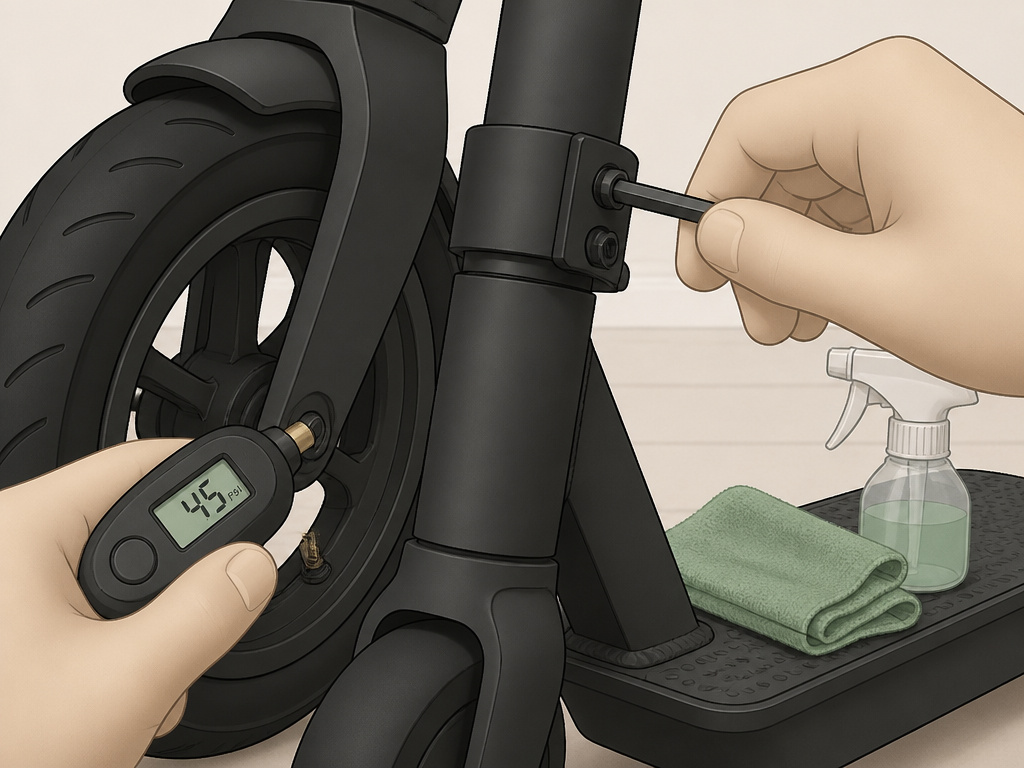
Owners who keep their Phantom Gogos running longest follow a strict, simple regimen. This isn’t advanced mechanics; it’s acknowledging the scooter’s budget nature and compensating for it.
- Tire Pressure is Everything (For R1 Pro). If you have the R1 Pro with air-filled tires, check the pressure weekly. Under-inflated tires kill range and increase the risk of pinch flats. A small digital gauge is a wise investment.
- Listen for New Noises. A new creak from the stem or a grinding sound from the motor isn’t “breaking in.” It’s a sign something is loosening or wearing. Tighten any visible bolts with the correct size Allen key, but don’t over-torque.
- Clean it the Right Way. The FAQ is adamant: “wipe it with a damp cloth. Do not hose it down.” Hosing forces water into seals that aren’t designed for that pressure. A mild all-purpose cleaner on the deck, wiped dry, is perfect.
- Charge Smart. Follow the FAQ’s 20% rule for daily use. For storage over a month, aim for that 40-50% charge level, not 100%. Store it indoors, away from temperature extremes.
- Plan for Parts. Spare parts for specific Phantomgogo models are listed on their website, but availability can be spotty. Before you buy, check if things like tires, tubes (for R1 Pro), and brake pads are actually in stock. Universal parts may not fit.
Easy to miss: The folding mechanism latch. Before you fold or unfold the scooter, make sure the red release button is fully engaged and the latch clicks solidly into place. A partially secured latch is a common point of failure and can lead to a collapse while riding.
These tips won’t turn a budget scooter into a tank, but they will extend its life from a single season to maybe two or three. The goal is to get your money’s worth before the inevitable component wears out.
What is the Phantomgogo warranty?
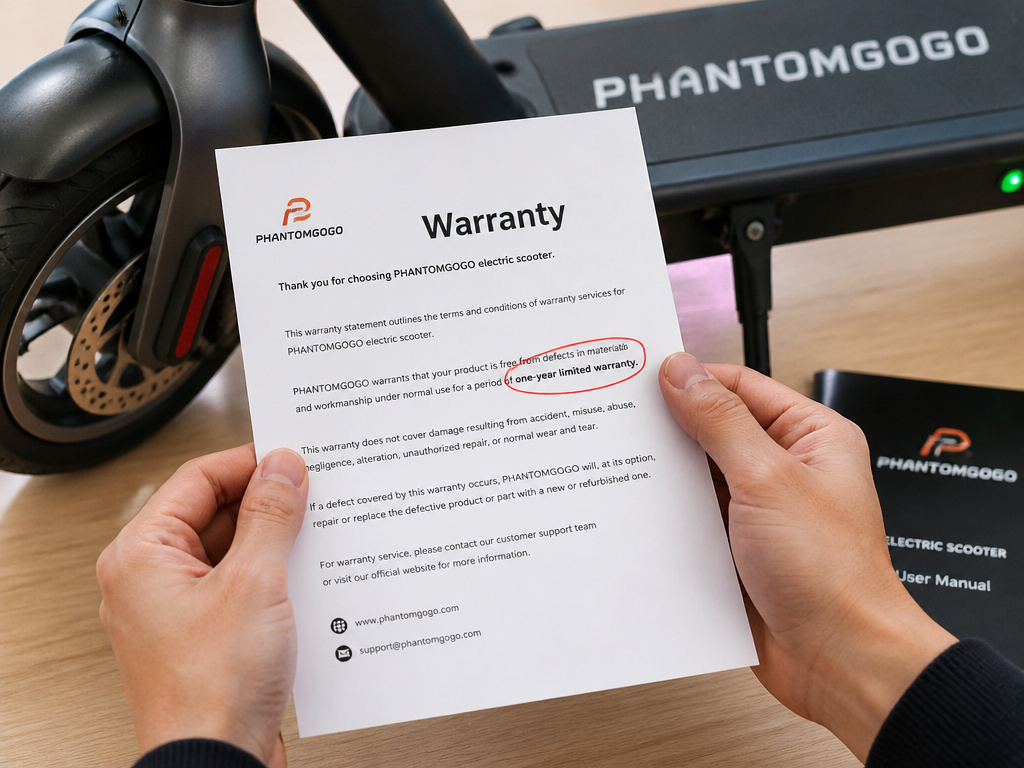
Phantomgogo offers a one-year warranty on new products for manufacturing defects. This is a standard timeframe for the industry. The provided review materials lack details on defect definitions and the repair process. Reviewing the official warranty and retailer return policy at purchase is crucial due to short return windows. Always inspect your scooter thoroughly upon arrival and report any issues immediately to ensure coverage.
Frequently Asked Questions
Are Phantom Gogo scooters good?
They are adequate for a very specific use case: short, flat commutes on smooth surfaces for riders under 220 lbs who value the convenience of buying from Costco above all else. They are not “good” for performance, comfort, or premium build. Think of them as functional transportation appliances, not enthusiast-grade vehicles.
How fast does a Phantom Gogo scooter go?
All current models. A10, R1, and R1 Pro, are electronically limited to a top speed between 15 and 15.5 mph. Real-world tests confirm this. No Phantom Gogo model is designed for speed.
Who makes Phantom Gogo scooters?
Phantomgogo is its own brand, distinct from Apollo Scooters (which makes the recalled Apollo Phantom). Phantomgogo products are designed and sold by Phantomgogo.com. Their scooters are typically manufactured by OEM factories in China, as is common for most budget electric scooter brands.
Is Phantom a good e-scooter brand?
Phantomgogo occupies the ultra-budget segment of the market. Compared to established brands like Segway, Niu, or even Xiaomi, it lacks widespread reviews, a long track record of reliability, and a deep spare parts inventory. Its main advantage is accessibility through retailers like Costco. For a first scooter with a safety-net return policy, it can be a low-risk experiment. For a primary daily commuter you depend on, most enthusiasts would recommend looking at more proven brands first.
The Bottom Line
Here is the blunt assessment: a Phantom Gogo scooter is what you buy when your priority is convenience and cost over everything else. The Phantomgogo A10 makes sense only if you find it at a deep discount at Costco and your commute is under 3 miles each way on a bike path. The Phantomgogo R1 Pro is the only model in the lineup with enough motor power to consider for seated commuting, but its 50+ lb weight makes it impractical for multi-modal trips.
The real competition for the Phantomgogo is the used market or a slightly more expensive scooter from a more established brand. The budget for an A10 might also accommodate a used scooter from a more established brand.
If you do buy one, buy it from Costco. Their return policy is the best warranty Phantomgogo offers. And wear a helmet. The scooter might be basic, but the pavement isn’t.
