Rossignol District Snowboard Review: The Bottom Line
This post contains affiliate links. As an Amazon Associate, we earn from qualifying purchases.
The Rossignol District is a soft (3/10 flex), true twin snowboard built around an 80/20 rocker-dominant AmpTek Auto Turn profile. It uses a 4×4 insert pattern, a standard extruded base, and is designed as a budget-friendly, forgiving deck for beginner-to-intermediate riders focused on park progression and playful, low-speed freestyle. Its specs, like a 250mm waist on the 155cm model, contribute to its overall feel.
That soft flex and rocker-forward shape are a specific tool. They make learning your first presses and 180s less punishing, but they also define where the board’s performance runs out of gas, as noted in the Rossignol District snowboard review.
What follows is a breakdown of its real-world specs, where it shines, where it struggles, and the exact type of rider who will get the most out of it before needing an upgrade. We’ll also clear up the conflicting weight recommendations and boot size limits you’ll find across different retailers.
Key Takeaways
- The District’s 3/10 flex and AmpTek profile make it exceptionally forgiving for learning park basics, but this same softness limits its stability for charging or advanced carving.
- Rider weight recommendations vary wildly by retailer—the 155cm board is listed for 110-165lbs, 120-175lbs, and 140-200lbs. If you’re at the top end of any range and plan to progress quickly, consider a stiffer board.
- Pair it with soft-to-medium flex bindings like the Union Flite Pro or Burton Flex. Stiff bindings will overpower the board’s soft core and deaden its playful feel.
- Its “Extruded 4400” or “1320 Extruded” base is slow but durable, perfect for learners who will scrape over rails and ice. Don’t expect glide for all-mountain cruising.
- The board’s progression ceiling is about one to two seasons for a dedicated rider. It’s a brilliant learner tool, but most will crave more pop and edge hold for intermediate all-mountain or advanced park riding.
The District’s Design: Specs and Intent
Forget marketing terms like “playful” and “forgiving” for a second. The District’s design is a checklist of beginner-friendly features. Each one solves a specific problem new riders face, but also introduces a trade-off.
The wood core is sourced from sustainably harvested forests. That flex is rated a 3 out of 10, which places it firmly in the “soft” category. This isn’t a bad thing.
The headline feature is the AmpTek Auto Turn profile. Rossignol describes it as an 80/20 rocker/camber blend. In practice, this means you have a subtle camber pocket underfoot for a touch of pop and edge contact, with significant rocker in the nose and tail.
The ISO 10958-2:2015 standard that governs snowboard inserts requires an M6×1 thread, a minimum screw engagement of 2.0 threads, and a retention strength of 4500 N for boards rated for riders 45kg and up. The District’s 4×4 pattern meets this spec.
The binding interface is a centered, 4×4 insert pattern. This is the universal standard, compatible with the vast majority of bindings on the market without needing disc adapters. The stance range for the 151cm-159cm boards is 54 to 62cm, offering plenty of adjustment for finding your sweet spot.
Key Specifications and Sizing
Pulling numbers from the spec sheet tells a clearer story than any marketing copy. Here are the hard dimensions for the 155cm non-wide District model, which is a common mid-length choice:
| Specification | Measurement (155cm Model) | What It Means For You |
|---|---|---|
| Waist Width | 250 mm | Standard width. Fits most boot sizes up to US 10.5. |
| Sidecut Radius | 7.5 m | A 7.5m sidecut radius. |
| Effective Edge | 1170 mm | An effective edge of 1170 mm. |
| Weight | 2800 g | A weight of 2800 g. |
| Stance Range | 54 – 62 cm | A stance range of 54 to 62 cm. |
Sizing is where things get messy. Different retailers publish different rider weight ranges for the same board length. For the 155cm District:
- Rossignol’s US site suggests 55-80kg (120-175lbs).
- Evo.com lists it for 140-200lbs.
- Alter Ego Sports recommends 110-165lbs.
There’s no single right answer here. If you’re at the upper end of any of these ranges and plan to ride aggressively, you’ll likely overpower the soft flex quickly. When in doubt, size down for more playfulness or consider a stiffer board altogether. Sources disagree on maximum boot length: the French page for the standard District suggests 29-29.5cm, while the US page for the District Color Wide specifies 29 MAX for the 146cm and 29.5 MAX for longer lengths.
On-Snow Performance and Limits
The District feels exactly like its specs promise: loose, friendly, and eager to pivot.
However, the soft tail lacks the snappy rebound needed for powerful ollies onto taller features, and the flex can feel squirly on faster approaches.
Where this goes sideways: Taking the District into deep powder or onto steep, icy terrain. The rocker profile provides some float, but the short effective edge and soft flex make it a chore to control in variable snow. On ice, it will chatter and lose grip quickly.
All-mountain performance is where the District’s trade-offs become stark. It’s a capable cruiser on green and blue runs. The easy turn initiation is fun for linking quick, surfy turns. But ask it to hold a carved edge at speed, and it begins to flap and feel unstable. The extruded base, whether called “4400” or “1320,” is durable against scrapes but is noticeably slower than a sintered base—you’ll be pedaling on cat tracks.
This leads to the District’s progression ceiling, a key point in any Rossignol District snowboard review. It’s the board you outgrow, not the board you ride into the ground. A common Reddit sentiment from an owner looking to move on was that swapping to a Salomon Sight would be a “lateral move.” They were advised to jump to something more capable, like a Jones Mountain Twin or Capita Mercury, to truly progress. The District teaches you the skills; a stiffer, more nuanced board lets you apply them with power and precision.
Binding Recommendations and Setup
You wouldn’t put racing slicks on a hatchback. Similarly, pairing bindings with the District requires matching its soft flex, a common note in a Rossignol District snowboard review. The goal is to complement its playful nature, not fight it.
Soft-to-medium flex bindings are mandatory. A stiff, responsive binding will feel disconnected from the board’s core; you’ll get direct input from the highback, but the board itself will noodle underneath, creating a dead, unresponsive feel. Look for bindings marketed as “park” or “freestyle” oriented, which typically prioritize flexibility and board feel over maximum response.
Good pairings include the Union Flite Pro or the Burton Flex. Both have lower-profile highbacks and flex patterns that allow the board to twist naturally, making butters and presses feel organic. The Ride C-4 binding is another excellent match, offering a blend of comfort and medium flex that won’t overwhelm the District.
Avoid stiff, all-mountain bindings like the Burton Malavita or Union Force with this board. You’ll lose the playful character you paid for.
Setup is straightforward thanks to the 4×4 insert pattern. Use the centered stance recommendation as a starting point. For a true twin, park-focused experience, set your bindings at equal angles (e.g., +12°/-12° or +15°/-15°). This makes riding switch feel identical to your regular stance, which is crucial for learning spins and landing switch. A narrow stance within the 54-62cm range can make the board feel even more nimble for pressing, while a wider stance adds a bit of stability for beginners still finding their balance.
Rossignol District vs. The Competition
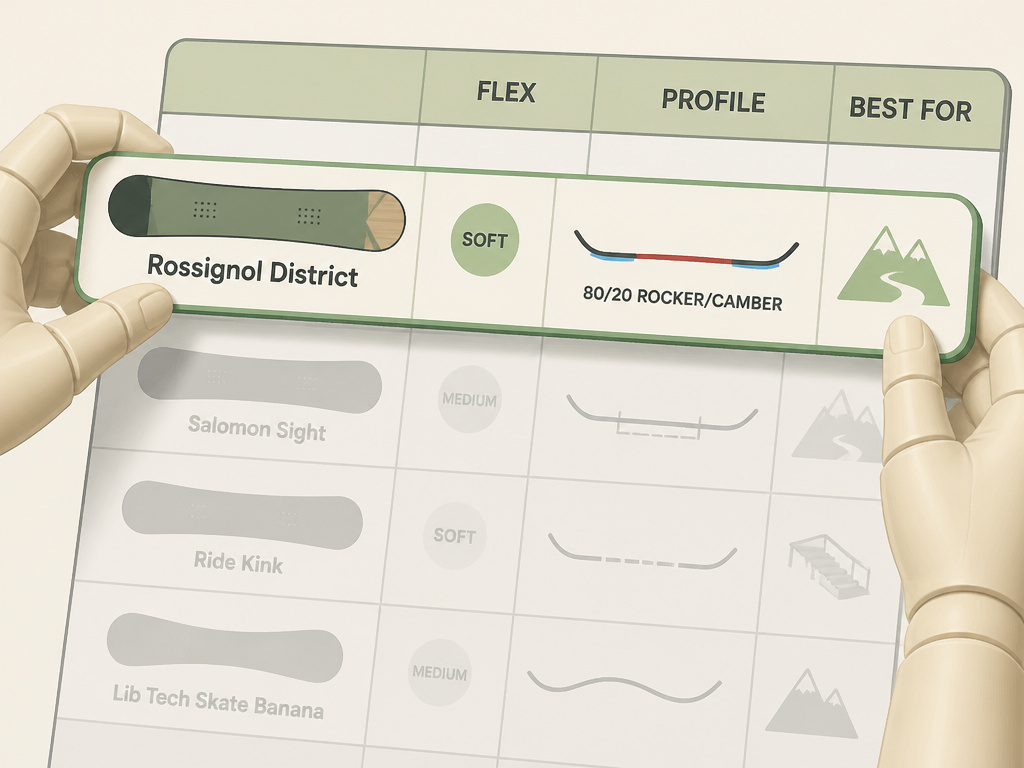
The beginner-friendly park board market is crowded. The District’s main value proposition is its price point and the trusted Rossignol name, which has a long history in the rental market. How does it stack up?
| Board | Flex | Profile | Best For | Where District Wins/Loses |
|---|---|---|---|---|
| Rossignol District | Soft (3/10) | 80/20 Rocker/Camber | First-time park riders, budget-conscious buyers. | Wins on price and forgivng rocker. Loses on pop and all-mountain versatility. |
| Salomon Sight | Medium-Soft | Flat-to-Rocker | Riders wanting a more stable beginner board that can handle all-mountain better. | The Sight has slightly more edge hold and stability. The District is more park-specific. |
| Ride Kink | Soft-Medium | Pure Camber | Beginners who want to learn proper camber feel and pop from day one. | The Kink has more pop and bite but is less forgiving. District is safer for total noobs. |
| Lib Tech Skate Banana | Medium | Banana (Rocker) | Surf-style riders who prioritize pressability and catch-free fun over precision. | The Skate Banana is more durable (Magnatraction) and has a surfier feel. District is often cheaper. |
The Burton Custom is in a different league—a do-it-all camber board for intermediates. Comparing the District to it isn’t fair; the Custom is a board you grow into, while the District is one you grow out of.
If your goal is purely to learn park fundamentals without breaking the bank, the District is a strong contender. If you suspect you’ll quickly want to explore steeps, carve, or hit medium/large jumps, investing in a more versatile board like the Sight or a used all-mountain Burton board from the start might save you money in the long run.
Brand Context, Warranty, and Safety
Rossignol is a legacy brand with deep roots in skiing, and its snowboard division has been active since 1987. They are a pillar of the rental market, especially in Europe, which means they understand how to build durable, user-friendly gear for the masses. The District is a product of that philosophy.
Their North American warranty is a standard one-year limited warranty from the date of purchase. If you buy the board with a Rossignol Group binding, the warranty extends by one additional year, for a maximum of two years. This is fairly typical for the industry. It covers defects in materials or workmanship, but not damage from normal wear, impact, or improper use.
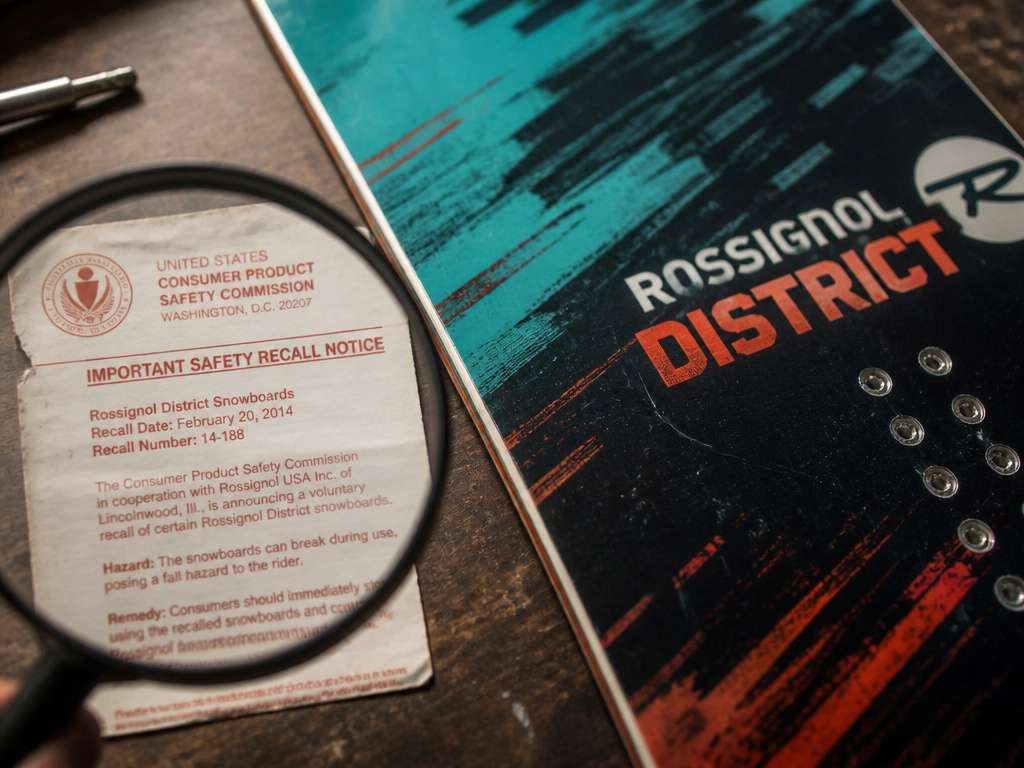
Rossignol’s history with binding recalls is documented by the Consumer Product Safety Commission. In 2005, a joint recall with Dynastar affected approximately 11,000 bindings due to baseplate breakage. In 2008, a separate recall involved 3,500 bindings due to t-nut detachment. No injuries were reported in either recall, and both involved specific, dated model years (2003/2004 and 2007). The 2005 notice explicitly stated it did not involve current products. These are not marks against the current District snowboard—it doesn’t include bindings—but they are part of the brand’s transparent safety record and show the importance of heeding official recall notices.
Frequently Asked Questions
Is the Rossignol District a good board for beginners?
Yes, it’s an excellent first board for someone focused on learning park and freestyle basics. Its soft flex, rocker-dominant profile, and catch-free design build confidence quickly. For a beginner who only wants to cruise groomers, a more all-mountain focused beginner board might be a slightly better fit.
How long will the Rossignol District last me?
For a casual rider progressing at an average pace, the District will feel appropriate for one to two seasons. A dedicated rider hitting the park frequently may find its limits within a single season. Its durability is good, but its performance ceiling is low by design.
Can the Rossignol District handle powder or all-mountain riding?
It can handle these conditions, but it’s not ideal. The rocker provides some float in powder, but the soft flex and short effective edge make it demanding to control in deep snow. For all-mountain riding, it lacks the stability and edge hold for confident carving at higher speeds. It’s a park board first.
What size Rossignol District should I get?
Use your weight and boot size as primary guides. Refer to the specific retailer’s size chart, as they differ. If you are between sizes or at the top of the weight range, sizing down can make the board more playful. Riders with boots over US 10.5 should look at the Wide version.
Is Rossignol a good snowboard brand?
Yes. Rossignol is a reputable, established brand with significant manufacturing experience. They are known for producing reliable, value-oriented gear, particularly in the beginner and intermediate segments. Their boards may not always have the latest boutique tech, but they offer consistent performance at a competitive price.
The Bottom Line
The Rossignol District is a well-executed, single-purpose tool. It’s a soft, rocker-forward park board built to make your first seasons of freestyle less intimidating and more fun. It excels at that job.
Its limitations are just as clear. The soft flex and extruded base won’t inspire confidence when you want to charge, carve, or explore the whole mountain. It’s the skateboard you learn ollies on before you need a stiffer deck for stairs and gaps.
If you are a first-time buyer dead-set on learning park tricks and want a trusted brand name at a low price, the District is a smart, safe bet. Buy it, ride it hard for a season or two, and then sell it to fund your next, more capable board. That’s the progression path it’s designed for. If your aspirations are broader or you progress quickly, skipping this step and buying a more versatile intermediate board might be the more efficient route.
