Roxy Raina Snowboard Review: Who Should Buy It?
This post contains affiliate links. As an Amazon Associate, we earn from qualifying purchases.
The Roxy Raina is a women’s all-mountain snowboard with a playful medium-soft flex, a directional twin shape, and a C2 hybrid camber/rocker profile. Its defining feature is Lib Tech’s Magne-Traction serrated edge, which provides extra grip on hardpack and ice. This board is built for progression, comfortably taking beginners into intermediate terrain while remaining forgiving enough for all-day fun.
That extra edge hold is the whole point. Most boards designed for beginners prioritize forgiveness over performance on ice, leaving East Coast riders frustrated when they graduate from greens. The Raina’s Magne-Traction tries to solve that, but it wraps that tech in a softer, more approachable package than its stiffer Lib Tech cousins.
What follows is a breakdown of where that package works, where it doesn’t, and who should grab it, as detailed in this Roxy Raina snowboard review. We’ll look at the exact specs, the feel of the flex, binding pairings that make sense, and the specific alternatives you should weigh it against before buying.
Key Takeaways
- The C2 Hybrid profile (camber/rocker/camber) offers a stable, catch-free ride that’s ideal for beginners learning to carve and intermediates building confidence.
- Magne-Traction edges provide legitimate bite on icy groomers, a rare feature in this flex range that makes the Raina a standout for East Coast conditions.
- Its playful medium-soft flex (per Snowboards.com) / medium flex (per Blue-Tomato) forgives mistakes but can feel chattery at high speeds or in chopped-up snow; it’s a progression board, not a charger.
- The directional twin shape means it rides slightly differently switch; it’s fine for learning, but dedicated park riders will want a true twin.
- For a proper setup, pair it with medium-flex bindings like the Burton Citizen Re:Flex; soft boots and bindings will make the board feel too vague.
The Roxy Raina Snowboard Specs & Profile Explained
We’ll look at this point by point. The Raina isn’t a mystery, it’s a Mervin Manufacturing board (the same factory as Lib Tech and GNU) with a specific recipe. You’re looking at a set of specs aimed at a particular rider, and missing one can throw the whole experience off.
The core is a sustainably harvested Poplar/Paulownia blend Roxy calls the Kind Hearted Core. In practice, this means a lighter, more damp wood core that absorbs vibration better than straight poplar, which contributes to the board’s forgiving feel. It’s wrapped around what they label a C2 HYBRID contour, a camber section underfoot, a rocker section between the feet and contact points, and camber again at the tip and tail. This profile gives you the pop and edge hold of camber where you need it, with the looseness and float of rocker in the middle to prevent catching edges.
The C2 profile is essentially a mellow, forgiving camber board. The rocker zones near your feet make initiating turns easier and reduce edge catch, while the camber underfoot and at the ends provides the stability and pop that pure rocker boards lack.
For the 147cm size, the key numbers are a 238mm waist width, a 1080mm (108cm) running length, and a 7m sidecut radius. That 7m sidecut is tight, which means the board will want to turn quickly and easily. The waist width of 23.8cm puts it firmly in the “Regular” width category.
| Spec | 147cm Size | What It Means For You |
|---|---|---|
| Waist Width | 238mm (23.8cm) | Fits most women’s boots; too narrow for very large feet. |
| Sidecut Radius | 7m | Quick, snappy turns; less stable at very high speeds. |
| Running Length | 108cm | Shorter effective edge than total length, adds playfulness. |
| Stance Setback | 12.7mm (approx. 1.3cm) | Slightly directional stance for better float in powder. |
The board uses a 2×4 insert pattern, which is compatible with almost all bindings on the market. The base is an Eco Sublimated Base, an extruded material that’s slower than a high-end sintered base but is notably durable and requires less frequent waxing, a good fit for a rider who might not be tuning their board every week.
Who Should Buy the Roxy Raina? (And Who Should Skip It)
I’ve seen this common mistake a hundred times: someone buys a board because it’s pretty or on sale, not because it fits their actual riding. The Raina has a clear ideal user, and a few groups who will feel held back by it within a season or two.
Buy the Roxy Raina if:
- You’re a true beginner looking for your first board to grow with over 2-3 seasons.
- You’re a low-intermediate rider (confident on greens, exploring blues) who wants more edge hold on icy days without stepping into a stiff, demanding board.
- You prioritize forgiveness and fun over raw power and speed. You like to play on the mountain, explore side hits, and aren’t trying to set land-speed records.
- You ride mostly on the East Coast or in other hardpack/icy conditions where edge grip is a daily concern.
Skip the Roxy Raina if:
- You’re an advanced rider who charges hard, carves aggressively, and needs a board that remains composed at high speeds. The softer flex will feel unstable and chattery.
- You spend most of your time in the terrain park. While the directional twin can ride switch, a true twin shape is better for consistent park performance.
- You ride deep powder frequently. The minimal 12.7mm setback and medium flex won’t provide the float and surfy feel a dedicated powder board offers.
- You already own a similar board. If you have a soft-to-medium flex all-mountain board, this isn’t a necessary upgrade.
Where this goes sideways: Buying the Raina as a “park board.” The directional shape and medium flex are fine for casual jumps, but the edge tech and profile are optimized for all-mountain cruising, not technical jibbing. You’ll be fighting its design intent.
The takeaway from this Roxy Raina snowboard review is the board is designed for lighter to average-weight riders. If you’re at the top end of that range or above, you’ll likely overpower the flex quickly and should size up or look at a stiffer model.
Key Technologies: Magne-Traction & The Eco Focus
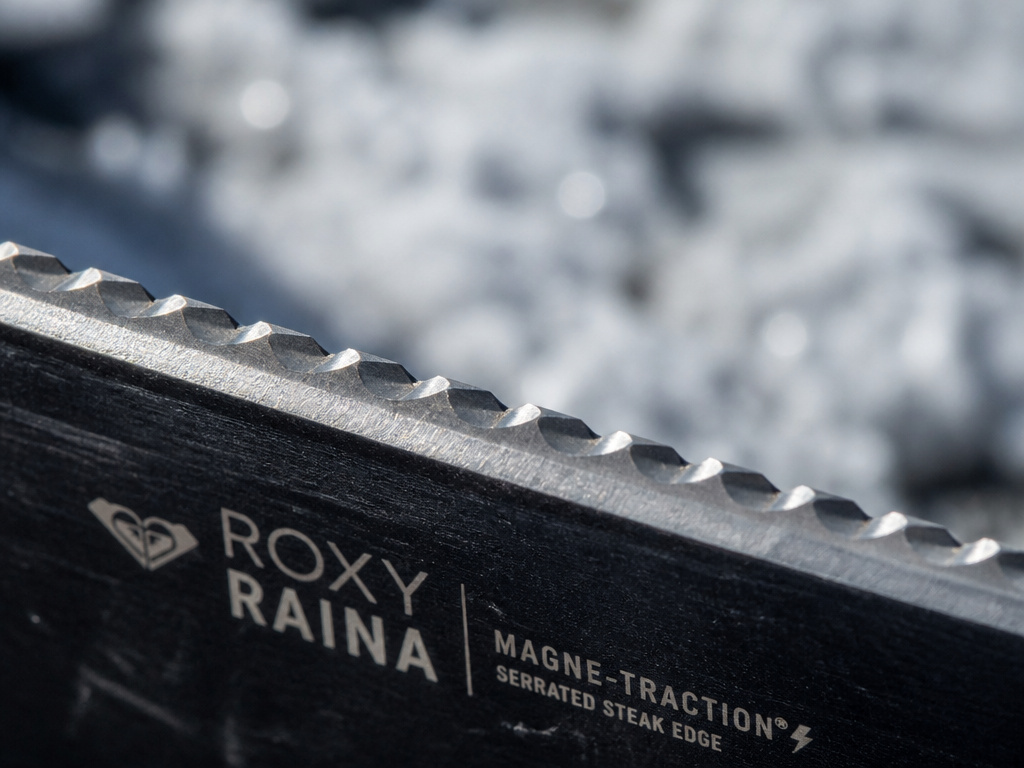
The marketing terms here, as noted in this Roxy Raina snowboard review, are “Magne-Traction®” and “Serrated Steak Knife Technology.” Here’s what that actually means. It’s not magic; it’s a wavy edge pattern that Lib Tech has used for years. Instead of one long, continuous edge, the steel is cut with a series of bumps (like a serrated knife). This creates multiple, shorter contact points that can each dig into hard snow or ice.
On bulletproof East Coast mornings, this works. You’ll feel the board hold where a straight-edged board would slip. The trade-off is that on very soft, hero snow, those same bumps can feel like they’re grabbing too much, making the board feel slightly hooky or less smooth in buttery turns. It’s a tool for a specific condition, and it excels there.
The eco-angle is part of Roxy’s brand identity. The Kind Hearted Core uses FSC-certified woods, and the Eco Sublimated Base is an extruded base that’s more environmentally friendly to produce than traditional sintered bases. In performance terms, this base is slower but more durable and low-maintenance. That’s a fair trade for the target rider, who likely values durability and ease of care over absolute, race-level speed.
On-Snow Performance & Feel
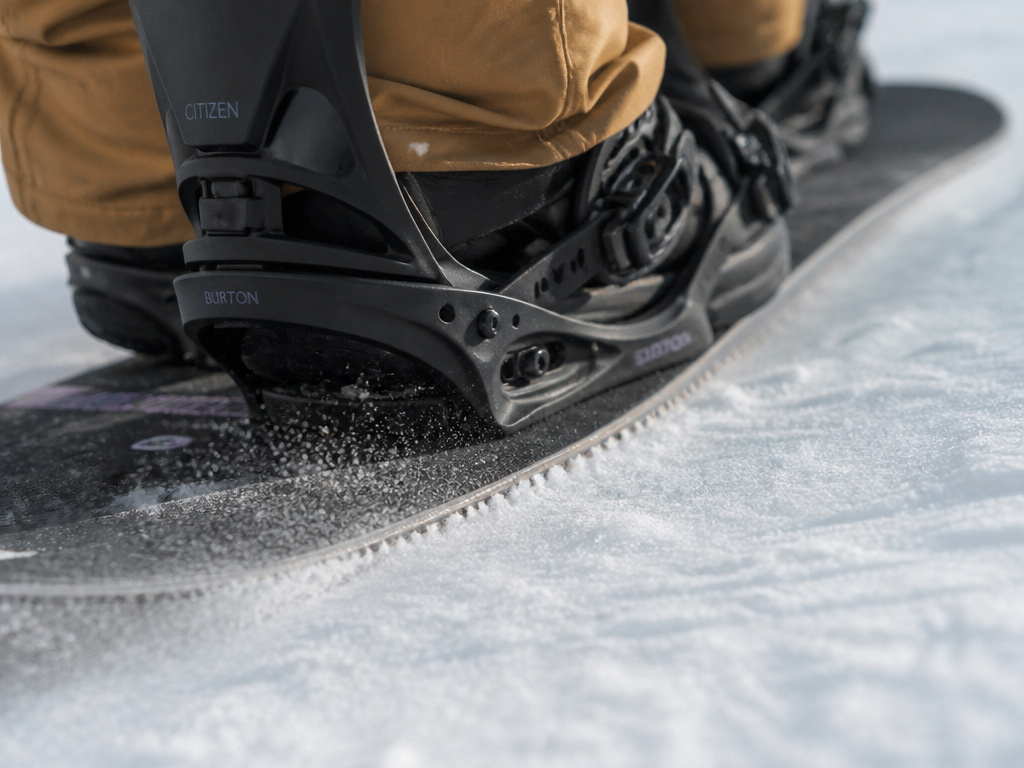
So how does all this translate under your feet? The first thing you’ll notice is the ease. The C2 profile and softer flex make the board incredibly easy to turn. It responds to subtle weight shifts, not forceful carves, which builds confidence quickly. It’s the kind of board that makes you feel like a better rider than you are, which is exactly what a progression-focused board should do.
The second thing is the edge hold. When you lean it over on a hardpack blue, the Magne-Traction engages with a quiet, confident scrape instead of a sudden slip. It offers a secure, forgiving grip that lets you focus on your form, rather than the locked-in carve of a stiff camber board.
Common mistake: Pairing this board with very soft boots and bindings. The Raina’s flex is already playful; adding a super-soft setup like the Burton Limelight BOA boots makes the whole package feel mushy and vague. You lose the board’s feedback. A medium-flex binding like the Burton Citizen Re:Flex provides the support the board needs to feel precise.
Now, the limitations. Take this board into chopped-up crud at the end of a busy day, or point it straight down a steep fall line, and you’ll feel the chatter. The softer flex and lighter core can’t damp out the vibrations as well as a stiffer, more damp board. It gets skittish. This is the clear sign you’ve progressed beyond what the Raina is built for. It’s telling you to either slow down or start shopping for your next board.
Binding Compatibility & Recommended Pairings
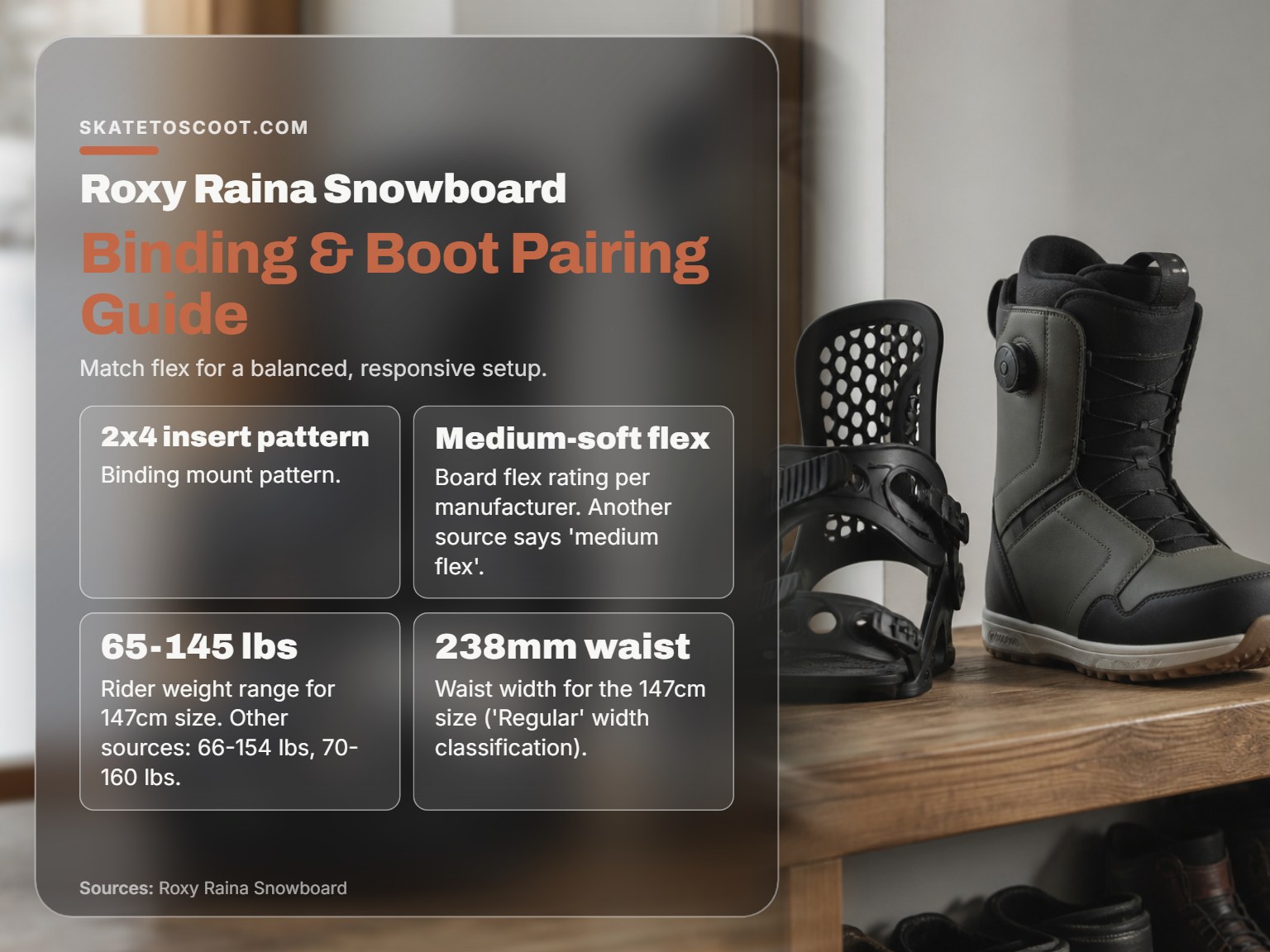
The Raina’s 2×4 insert pattern is universal, so you’re not limited by compatibility. The choice comes down to matching flex. Your goal is to create a balanced system: board, binding, and boot should have a similar flex rating to communicate energy cleanly.
A medium-flex binding is the sweet spot. It will support the board’s flex without overpowering it. The Burton Citizen Re:Flex is a classic choice here, it’s responsive, comfortable, and widely available. For a slightly softer, more surfy feel, the Union Juliet or the Burton Stiletto are good options. Avoid stiff, aggressive bindings meant for freeriding; they’ll make the soft board feel dead and unresponsive.
For boots, the same rule applies. A medium-flex boot like the Burton Felix or the ThirtyTwo STW Double Boa will pair well. The popular Burton Limelight BOA is on the softer end; if you choose it, make sure your bindings are on the more supportive side to balance it out. Remember, a soft boot on a soft board with soft bindings is a recipe for a lack of control.
How the Roxy Raina Stacks Up Against the Competition
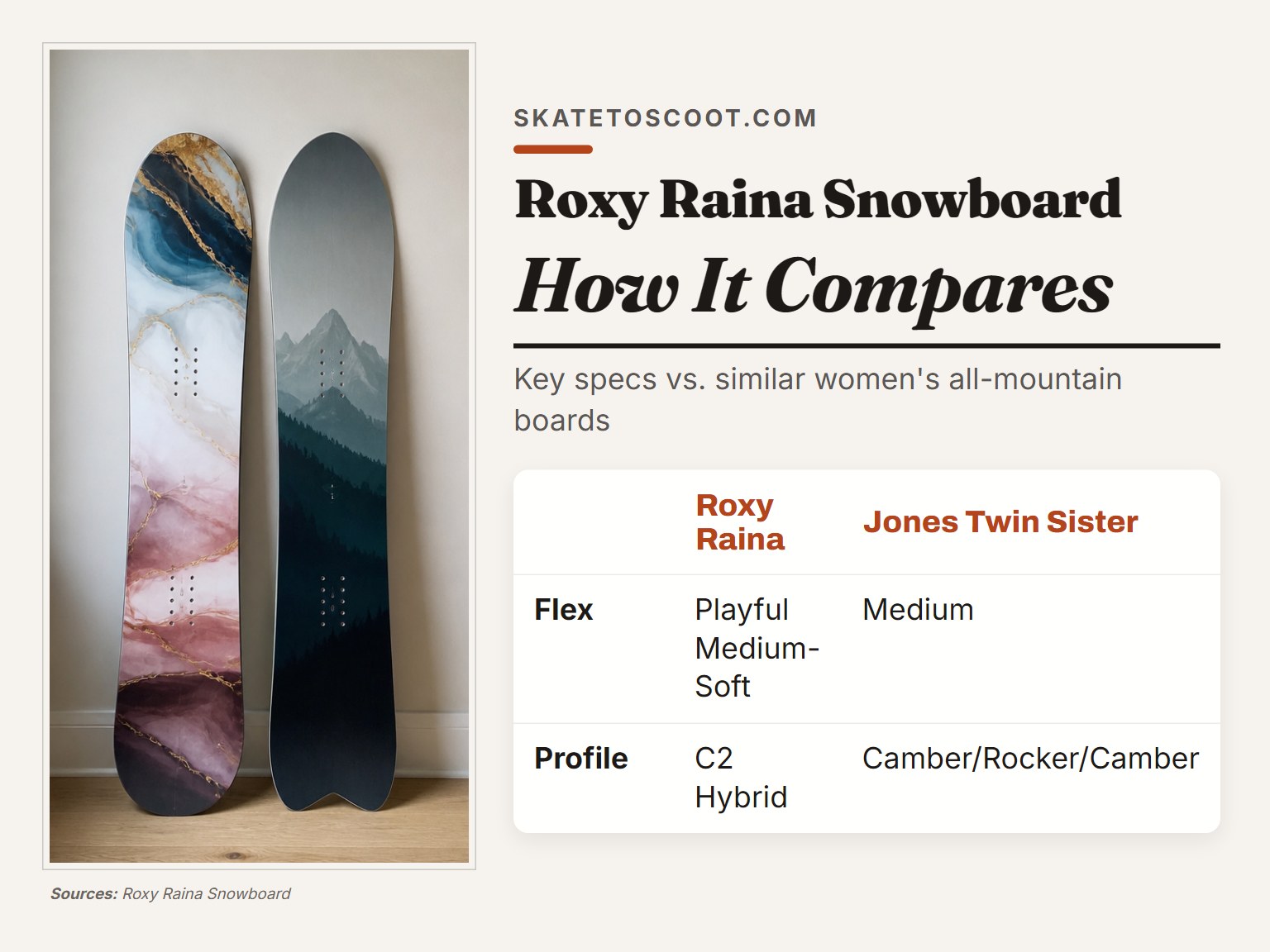
This is where most reviews stop. They’ll tell you about the board in a vacuum. But you’re choosing between this, a Salomon Bliss, a Jones Twin Sister, or a GNU Ladies Choice. How do they differ?
| Board | Flex | Profile | Edge Tech | Best For |
|---|---|---|---|---|
| Roxy Raina | Playful Medium-Soft | C2 Hybrid (Camber/Rocker/Camber) | Magne-Traction | Beginners to intermediates on hardpack/ice. |
| Jones Twin Sister | Medium-Stiff | Camber/Rocker/Camber | Traction Tech 3.0 | Intermediate to advanced riders who charge all-mountain. |
| Salomon Bliss | Soft-Medium | Pure Blend Camber (Flat to Rocker) | Quadratic Sidecut | First-time beginners wanting maximum forgiveness. |
| GNU Ladies Choice | Medium | C2 Hybrid (Camber/Rocker/Camber) | Magne-Traction | Intermediate+ riders wanting a lively, all-mountain twin. |
The Jones Twin Sister is the logical next step from the Raina. It’s stiffer, more stable at speed, and has a similar hybrid profile but with a more aggressive camber presence. If the Raina starts to feel unstable, the Twin Sister is where you look. The Salomon Bliss is softer and even more forgiving, but lacks the edge tech for ice, it’s a true beginner board you’ll outgrow faster. The GNU Ladies Choice is a true twin with more pop and energy, better suited for a rider who splits time between all-mountain and park.
Long-Term Durability & Maintenance Realities
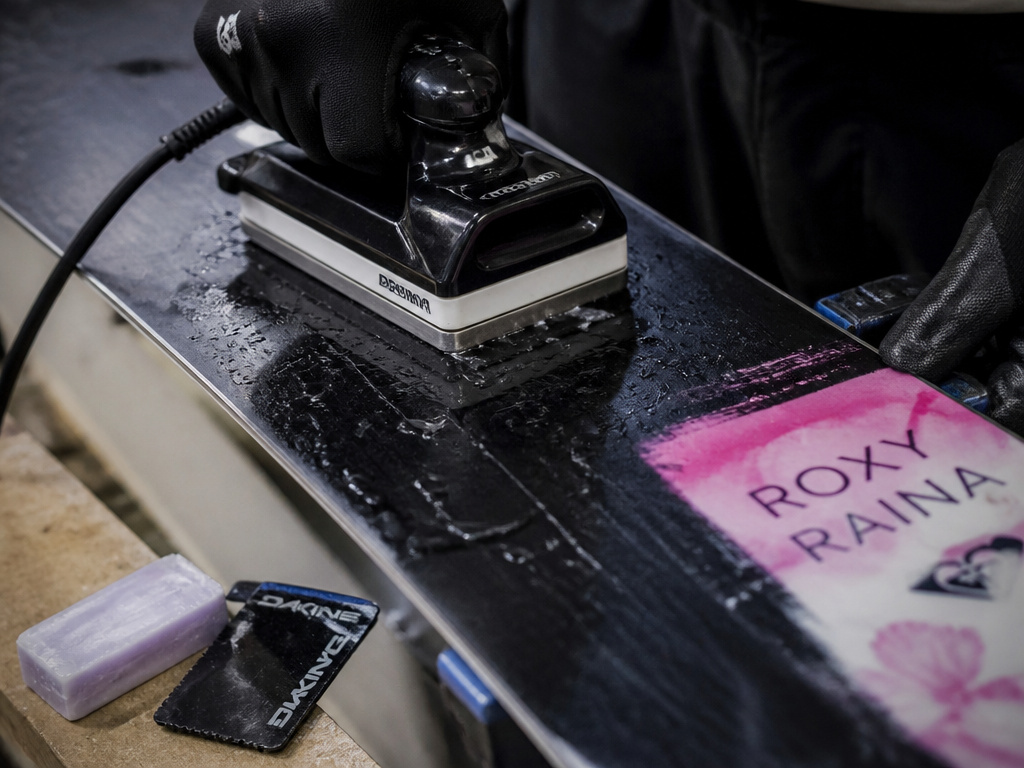
The eco-friendly construction isn’t just a marketing point; it has practical implications. The extruded Eco Sublimated Base is tough. It resists scratches and gouges from rocks and rails better than a high-maintenance sintered base. The trade-off is speed, it won’t glide as fast, especially in wet spring snow, unless it’s freshly waxed.
One important fact is often omitted: the factory tune is basically a placeholder. Retailer Blue-Tomato explicitly states, “this so-called factory-tuning is not very durable and your new snowboard should be properly waxed after a few days.” Plan on taking it to a shop for a hot wax before your second or third day on it. After that, regular waxing is needed to keep the base healthy and performing.
The warranty is standard but has specific exclusions worth noting. According to Snowboards.com, it excludes “excessive abuse or misuse by riding things other than snow, impacts due to your steering problems,” and “modifications you made.” Translation: hitting park features hard, collisions with other skiers or objects, or grinding down the base too much during a tune can void your coverage. It’s a warranty for manufacturing defects, not for the wear and tear of aggressive riding.
Frequently Asked Questions
Is the Roxy Raina a good board for beginners?
Yes, it’s an excellent choice for a true beginner. The C2 hybrid profile is forgiving and reduces edge catches, while the medium-soft flex makes it easy to turn and control. Its added edge grip from Magne-Traction also gives beginners a safety net on icy patches that most beginner boards lack.
Can intermediate riders use the Roxy Raina?
Absolutely. The Roxy Raina is designed as a progression board. It will comfortably take a rider from their first turns on green runs into confident cruising on blue terrain. However, an intermediate who starts charging aggressively, seeking high-speed stability, or riding more advanced black runs will likely find the board’s limits and feel ready for something stiffer.
How does the Roxy Raina perform on ice?
The Magne-Traction edges provide noticeably better grip on hardpack and ice than a traditional straight edge on a similarly flexed board. It won’t grip like a dedicated, stiff carving board, but for its flex category, it’s one of the best options for icy East Coast conditions.
What size Roxy Raina should I get?
Focus on the rider weight recommendations. For the 147cm, manufacturers suggest a range of approximately 65-145 lbs (Snowboards.com), 30-70 kg (Blue-Tomato), or 70-160 lbs (Gatesandboards). Your height is less important than your weight and boot size. If you have larger feet, check the waist width; the 147cm has a 238mm waist, which may be too narrow, prompting you to look at the 151cm size.
Is the Roxy Raina good for park riding?
It’s acceptable for small jumps and side hits, but not ideal for dedicated park or jibbing. The directional twin shape isn’t a true twin, and the flex is tuned more for all-mountain cruising than for pressuring rails or landing switch. If park is your primary focus, look at a true twin like the GNU Ladies Choice or the Burton Feelgood.
Who makes Roxy snowboards?
Roxy snowboards are designed and manufactured by Mervin Manufacturing, the same company behind the Lib Tech and GNU snowboard brands. This means the Raina shares construction technologies like the C2 profile and Magne-Traction with those highly regarded brands.
The Bottom Line
The Roxy Raina is a well-executed, progression-focused board that fills a specific niche. It takes Lib Tech’s proven edge-hold technology and packages it in a softer, more accessible flex for riders who need that grip but aren’t ready for a demanding, stiff board. It’s a fantastic choice for a beginner’s first board or an intermediate’s daily driver on icy mountains.
Its ceiling is its soft flex. When you start to push speed or tackle rougher, choppy snow, you’ll feel it. That’s not a flaw, it’s a design boundary. This board gets you competent and confident. The day it starts to feel sketchy is the day you thank it for its service and move up to something like the Jones Twin Sister.
For most women stepping off rentals and looking for a reliable, fun board to learn and grow with for multiple seasons, the Roxy Raina is a smart, performance-minded pick. Just make sure you pair it with the right bindings, get it waxed properly from the start, and understand that its job is to eventually be outgrown.
