Skate 3 Review: The Cult Classic’s Last Stand
This post contains affiliate links. As an Amazon Associate, we earn from qualifying purchases.
Skate 3 is a generally favorable skateboarding game released in 2010, scoring an 80 Metascore from critics and an 8.6 user score. It refines the series’ realistic “Flickit” controls, adds team-based career progression, and is set in the sprawling, skater-built city of Port Carverton. Its lasting popularity stems from a blend of polished gameplay, deep creation tools, and a famously chaotic “Hall of Meat” bail mode.
That critical score from a skate 3 review tells you it was well-received, but it doesn’t tell you why people are still playing it fourteen years later. The answer lives in the specific ways its systems encourage both mastery and messing around.
What follows is a look at the mechanics that made it work, the new city it built, and the exact reasons it developed a cult following that outlasted its official support. We’ll also cover how to play it today and where it stands against the looming shadow of its successor.
Key Takeaways
- The game’s “Flickit” analog stick controls map stick movements directly to skateboard tricks.
- Port Carverton’s open layout is the game’s new city setting.
- The team-building career mode lets players form teams and sell boards to become a skate industry mogul.
- Community efforts include the RPCS3 emulator and an Android port.
Gameplay and the “Flickit” Foundation
Forget button-mashing combos. Skate 3’s identity is built on the “Flickit” control scheme, where each flick, scoop, and rotation of the right analog stick maps directly to a specific skateboard trick. A 360-degree push might be a kickflip; a half-circle a heelflip. This isn’t just a gimmick, it’s a commitment to simulation that creates a unique physical connection between player and pixelated skater.
The feel is gritty and deliberate. Building speed requires actual pumping on transitions, not holding a button. Landing a trick demands precise timing and a centered stance. When you mess up, you know exactly why, your stick flick was sloppy, your approach angle was off. That cause-and-effect clarity is what turns frustration into focused practice.
Common mistake: Rushing into complex lines before mastering basic ollies and grinds. The game includes an all-new Skate. School tutorial.
How Do the Three Difficulty Modes Change the Game?
This is where Skate 3 secretly becomes three different games. The choice isn’t just about challenge; it alters the fundamental physics.
| Difficulty | Core Change | Best For | Risk If Skipped |
|---|---|---|---|
| Easy Mode | Magnetized grinds, automatic catch, lenient landing physics. | New players or those just wanting to explore and film cool lines without frustration. | Players will hit a hard skill ceiling if they ever try Normal or Hardcore, as none of the required timing is learned. |
| Normal Mode | The balanced, intended experience. Grinds require alignment, tricks must be caught manually, but landings are forgiving. | Most players. It provides a satisfying challenge without being punishing. | It can feel like a crutch. Moving to Hardcore later requires unlearning the game’s subtle assists. |
| Hardcore Mode | Full simulation. No landing assist, precise grind alignment, faster speed loss on flats. | Series veterans and players seeking the most authentic and demanding skateboarding experience. | The steep difficulty can overwhelm new players and turn a fun session into a repetitive bail fest. |
I learned this the hard way. I spent my first dozen hours in Easy Mode, laughing at the chaotic Hall of Meat bails and landing impossible lines. Switching to Hardcore felt like I’d never played a skating game before. My timing was completely off. The game I thought I knew was gone. It was a reset, and honestly, a better game because of it.
The Port Carverton Playground
Port Carverton is a skater’s open-world wishlist, a city designed first and foremost for finding lines. From the university campus to the industrial docks and downtown plazas, every curb, bench, and staircase is an invitation.
This design philosophy feeds the game’s greatest strength: “sessioning.” You’re not just traveling from mission marker to mission marker. You’ll spot a perfect six-stair with a handrail, set a respawn marker, and spend twenty minutes trying to nail a noseslide to kickflip out. That organic, self-directed play is what fuels YouTube montages and keeps the game installed years later.
Some players missed the cheeky rebellion of previous games. But as a canvas for creativity, it’s unmatched in the series.
Team Building and Board Sales
The career mode frames your progress around a straightforward goal: build a skate team and become a board-selling mogul. You recruit pros and create-a-skaters, complete challenges, and watch a meter tick toward one million boards sold. It’s a tangible, if sometimes grindy, progression system.
The game features a co-op mode where teammates complete challenges together. When it works, it’s brilliant.
Where this goes sideways: Attempting to grind to one million boards solo. Without engaging in the online community features, uploading parks, sharing videos, the final push feels like a tedious chore.
The Skate. Feed social network was an innovative touch for 2010. Seeing clips from friends pop up in-game added a layer of living competition. It was a precursor to the shareable content loops that define games today.
Creation Tools and Community Legacy
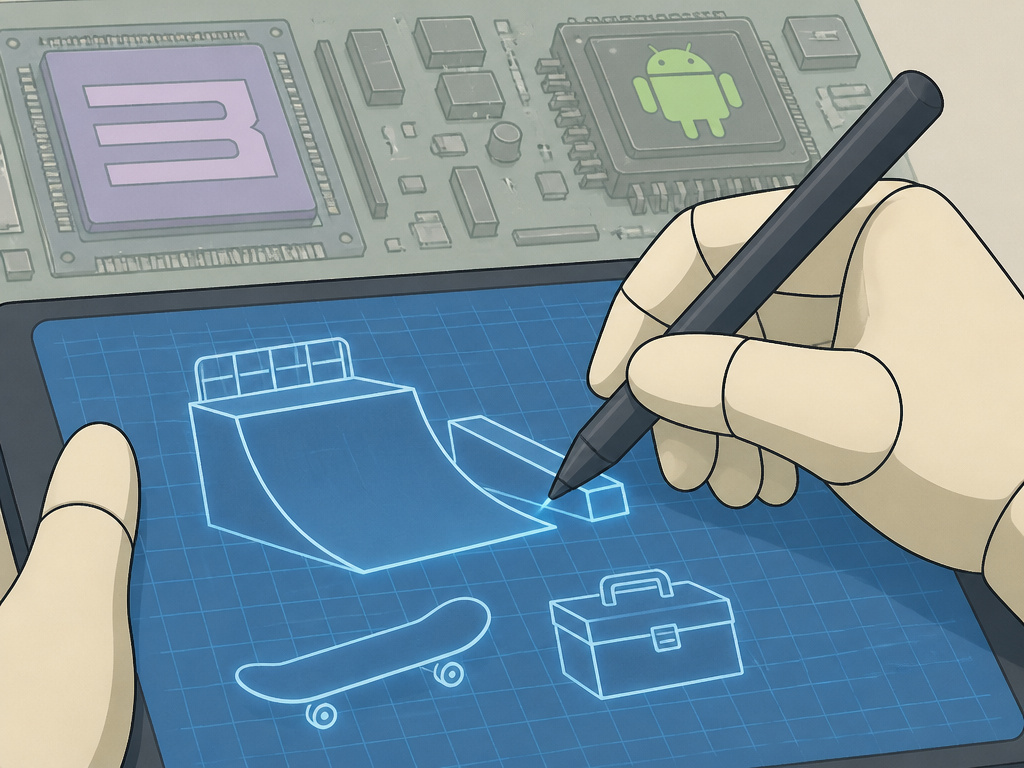
Skate 3 didn’t just give you a playground; it gave you the tools to build new ones. The game includes creation tools for building parks. You could spend hours crafting the perfect mini-ramp combo or an absurd mega-ramp to the moon, then share it online.
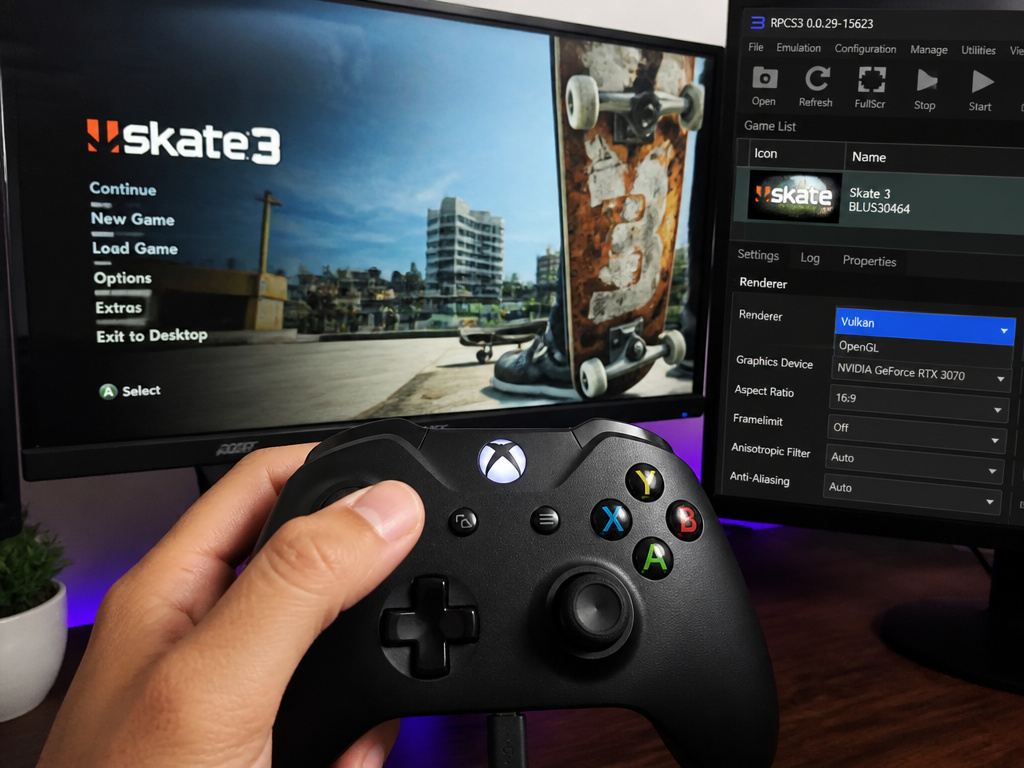
The community’s dedication went far beyond official tools. The discovery of a December 2009 prototype build on preservation sites like Hidden Palace offers a fascinating glimpse into development, including a cut “Grind-Vision” graphic setting. More practically, the emulation community has kept the game alive on modern PCs. Configuring the PS3 emulator RPCS3 for Skate 3 involves specific tweaks, like switching the SPU decoder to avoid crashes on certain CPUs, a testament to player investment long after EA moved on.
In a stunning display of reverse engineering, there’s even a native Android port. This isn’t cloud streaming; it’s the game running locally on phones, a clear indicator of its enduring technical intrigue. These efforts show a game that outgrew its original hardware, sustained by fans who refused to let the experience die.
Hall of Meat and the Cult of Chaos
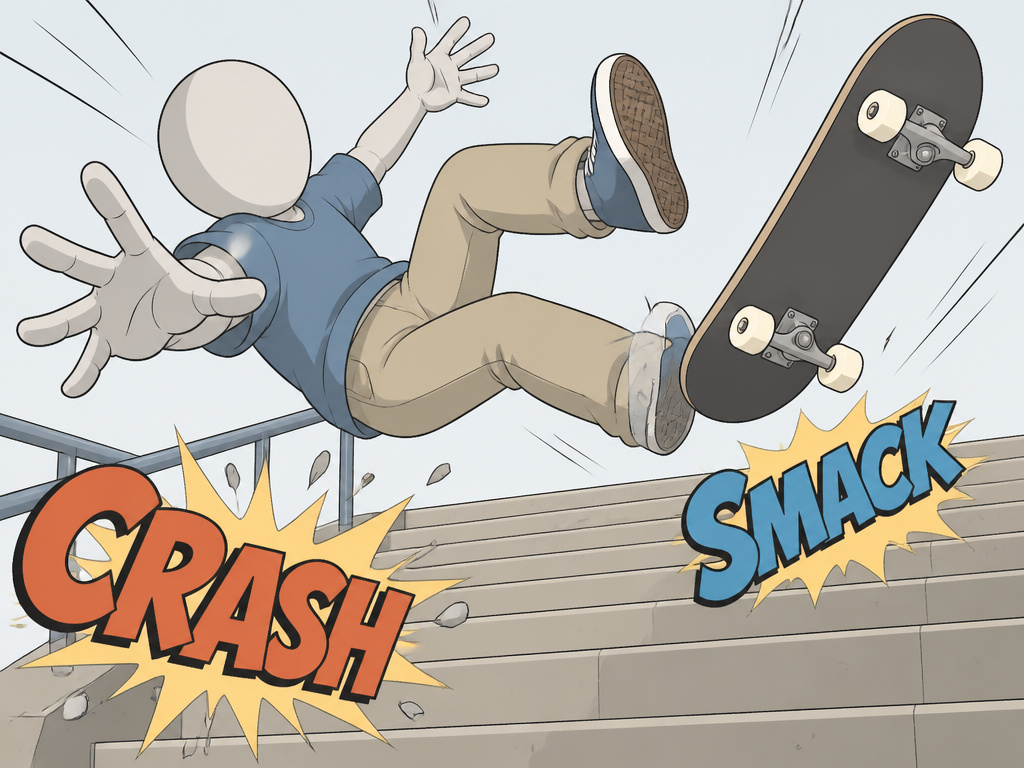
For every player meticulously building parks, there’s another gleefully hurling their skater down a massive staircase. The Hall of Meat mode, a bail-scoring minigame, evolved from a side feature into a cultural phenomenon. It tapped into the same “fail” humor that dominated early YouTube gaming channels.
This embrace of chaos is a core part of the Skate 3 legacy, securing its place among the best skateboarding games. While a game like Tony Hawk’s Pro Skater 5 was panned for its bugs, Skate 3‘s jank was celebrated as part of the charm. It created a shared language of hilarious misfortune that fueled its meme status and lasting appeal.
Performance and Playability Today
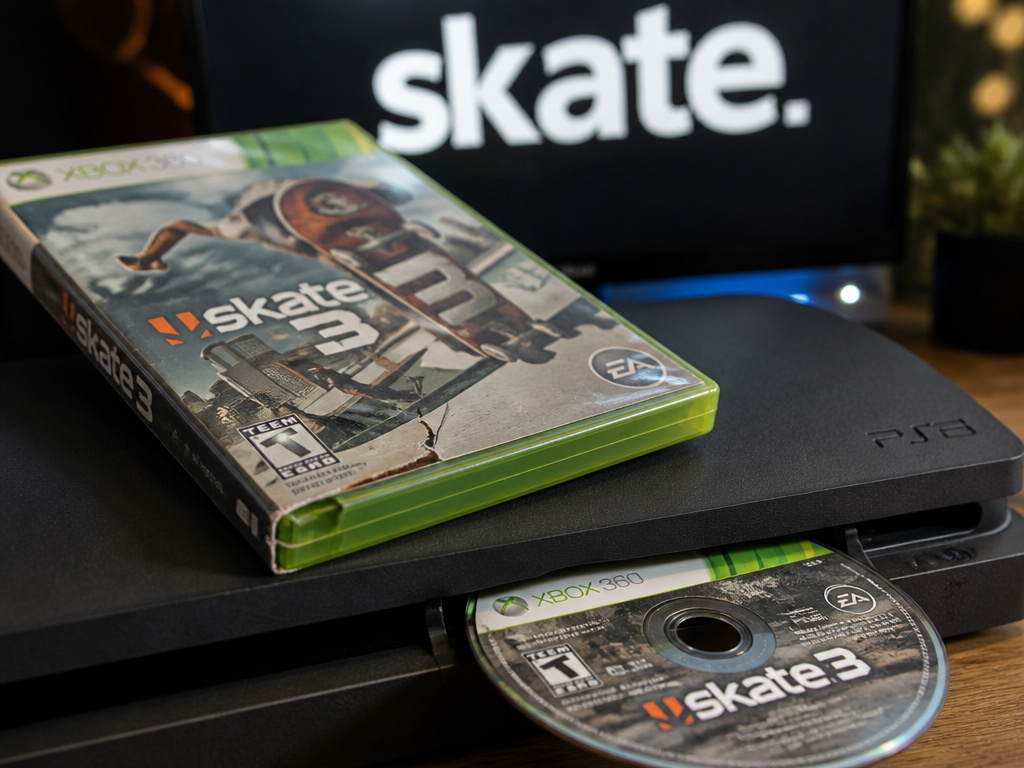
Officially, Skate 3‘s journey ended when EA updated its status to “Limited Support” on October 13, 2019, though modern players can explore the best skateboarding games PS5 has to offer. The servers for sharing content are long gone, but the core experience is very much accessible.
Skate 3 was re-released for Xbox One in 2016 and is playable via backward compatibility.
For PC players, the RPCS3 emulator is the only route. According to anecdotal reports from the RPCS3 community, Vulkan may offer better performance but more frequent crashes for some users, while OpenGL is often more stable but slower.
Skate 3 vs. The Future
The shadow looming over any Skate 3 discussion is the upcoming reboot, simply titled Skate.
The core question isn’t just which game has better graphics, it’s which philosophy better captures the feeling of skateboarding, a challenge also taken up by titles like Session: Skate Sim. Skate 3‘s legacy is that it set a very high bar for that specific, tactile feel.
Multiplayer and online features
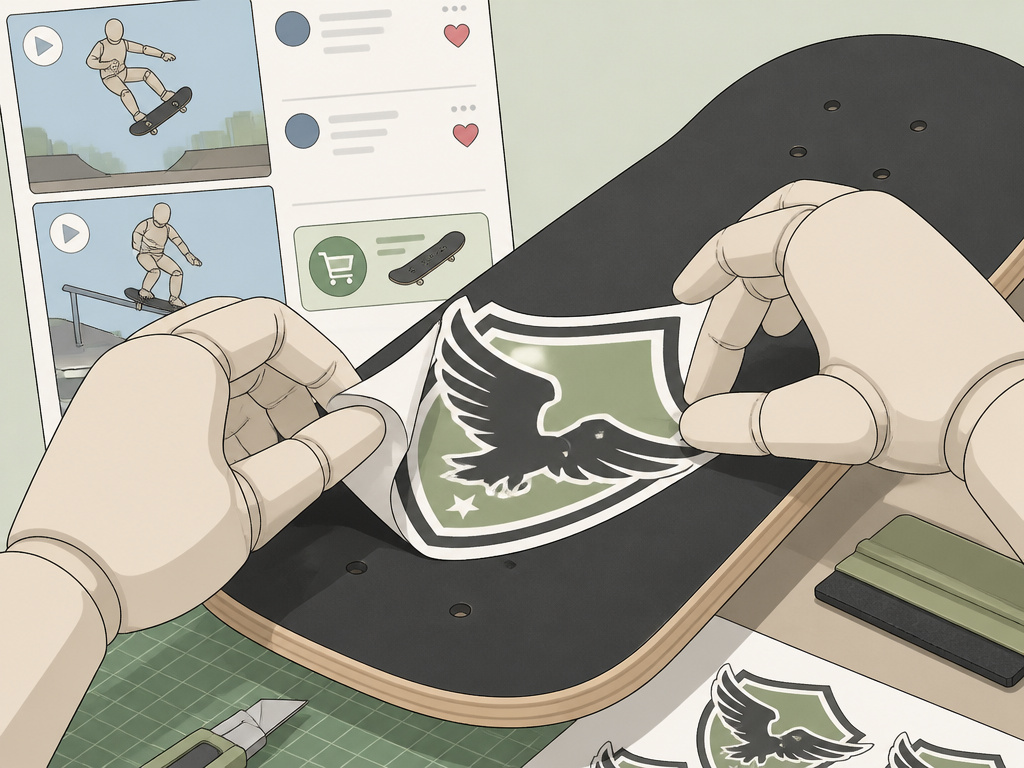
The game’s co-op mode is a highlight, letting teammates tackle challenges together. Beyond that, Skate 3 encourages you to form a team and work together to sell boards, building a virtual skate brand. The Skate. Feed social network feature keeps you connected to your crew’s activities. While official online support has been limited for some time, these features were designed to create a shared, goal-oriented experience where you could build something with friends, not just compete against them.
Frequently Asked Questions
Was Skate 3 a good game?
Yes, by both critical and player metrics. It holds an 80 Metascore based on 65 reviews, with 89% being positive. Its user score is even higher at 8.6. It successfully refined the groundbreaking controls of the first game and added meaningful team-based and creation features that gave it incredible longevity.
Why is Skate 3 so popular years later?
Its popularity is sustained by three pillars: the deep, satisfying “Flickit” control scheme that no other game has replicated perfectly; a robust park and video editor that empowered user creativity; and a famously chaotic physics engine that made for perfect YouTube and streaming content. It became a meme and a staple of “game jank” compilations, introducing it to new audiences.
Is Skate 3 or Skate 4 (the new Skate) better?
It’s an unfair comparison for now. Skate 3 is a known, polished quantity, a complete simulation-focused game. The new Skate is a free-to-play live-service title still in development, aiming for a different, more social experience. Skate 3 is arguably the pinnacle of the old format; whether the new game surpasses it will depend on how it evolves post-launch.
Is Skate 3 or Skate 2 better?
This splits the fan base. Skate 2 has a grittier atmosphere, a more interconnected city (San Vanelona), and a story involving reclaiming spots from security. Skate 3 has better core mechanics, more polished graphics, superior creation tools, and the beloved Hall of Meat mode. For pure gameplay and creativity, Skate 3 is generally considered the superior game. For mood and world-building, some prefer Skate 2.
The Bottom Line
Skate 3 is more than a game from 2010 with an 80 Metascore. It’s a platform. A platform for simulation purists on Hardcore mode, for creative minds in the park editor, and for chaos enthusiasts laughing in Hall of Meat. Its 80 Metascore got it in the door, but its specific, player-driven ecosystems are what kept it alive.
If you want a polished, complete skating simulation and have an Xbox or don’t mind configuring an emulator, it remains arguably the best in its class among the best skate games. Play it to understand why the conversation in a skate 3 review around the new Skate is so charged, this is the standard it’s being measured against. The community has already voted with its time, keeping it relevant for over a decade. That’s the strongest review of all.
