Swagtron vs Hover 1: Which Brand Fits Your Ride?
This post contains affiliate links. As an Amazon Associate, we earn from qualifying purchases.
In the Swagtron vs Hover 1 choice, Swagtron leans into higher-speed electric scooters for commuters, while Hover-1 focuses on budget-friendly, portable options for short trips. For most riders on smooth pavement, the Hover-1 Pioneer offers the best value, but if you need a bit more speed and suspension, the Swagtron Swagger 5 is the stronger pick.
That gap between “commuter” and “budget” is where the whole swagtron vs hover 1 decision lives. One brand pushes a 300W motor and 18.6 mph top speed; the other sells a 300W motor scooter that weighs 10 pounds less. The specs look similar on paper, but the riding experience and where each one fails aren’t in the brochure.
What follows: a side-by-side tear-down of their flagship models, the safety recalls that actually happened, the real-world range tests that cut the advertised numbers in half, and the one question you should ask before you buy either.
Key Takeaways
- Real-world range is roughly 30% less than advertised for both brands, plan for 7-8 miles, not 11-12.
- UL 2272 certification is essential for battery safety; both brands have had CPSC recalls, but current models are certified.
- The Hover-1 Pioneer wins on portability (27 lbs) for short urban hops, while the Swagtron Swagger 5 handles bumps better with its dual suspension.
- Hill climbing is a weak spot for both; neither brand’s entry models handle slopes over a 10% grade well with an adult rider.
- Long-term durability questions linger, particularly around Hover-1’s stem latch and Swagtron’s older battery issues, check the warranty terms closely.
The Core Difference: Commuter Focus vs. Budget Portability
Swagtron markets its Swagger 5 as a “commuter electric scooter.” Hover-1 calls its Pioneer a “budget commuter.” The difference isn’t just marketing copy. It’s in the weight, the suspension, and the top speed. The Swagger 5 carries a 300W motor to hit 18.6 mph and weighs 37 lbs, built with a suspension system to take the edge off city bricks. The Pioneer also uses a 300W motor but sheds weight down to 27 lbs by using a simpler, rigid fork.
Think of it like choosing between skate wheels. The Swagger 5 is like a set of larger, softer wheels for rough pavement, they roll smoother but add weight. The Pioneer is like a hard, fast wheel for perfect asphalt, light and quick, but every crack transmits right to your feet. Your daily route decides which trade-off makes sense.
Where this goes sideways: Buying a “commuter” scooter for a route with a steep hill. Both the Swagger 5 and Pioneer struggle on inclines steeper than a 10% grade with a 165 lb rider, despite Hover-1 claiming a ’15° hill grade’ capability for the Pioneer. You’ll hear the motor whine, feel the speed plummet, and risk overheating the battery on a long climb.
Key Specs Face-Off: Swagtron Swagger 5 vs. Hover-1 Pioneer
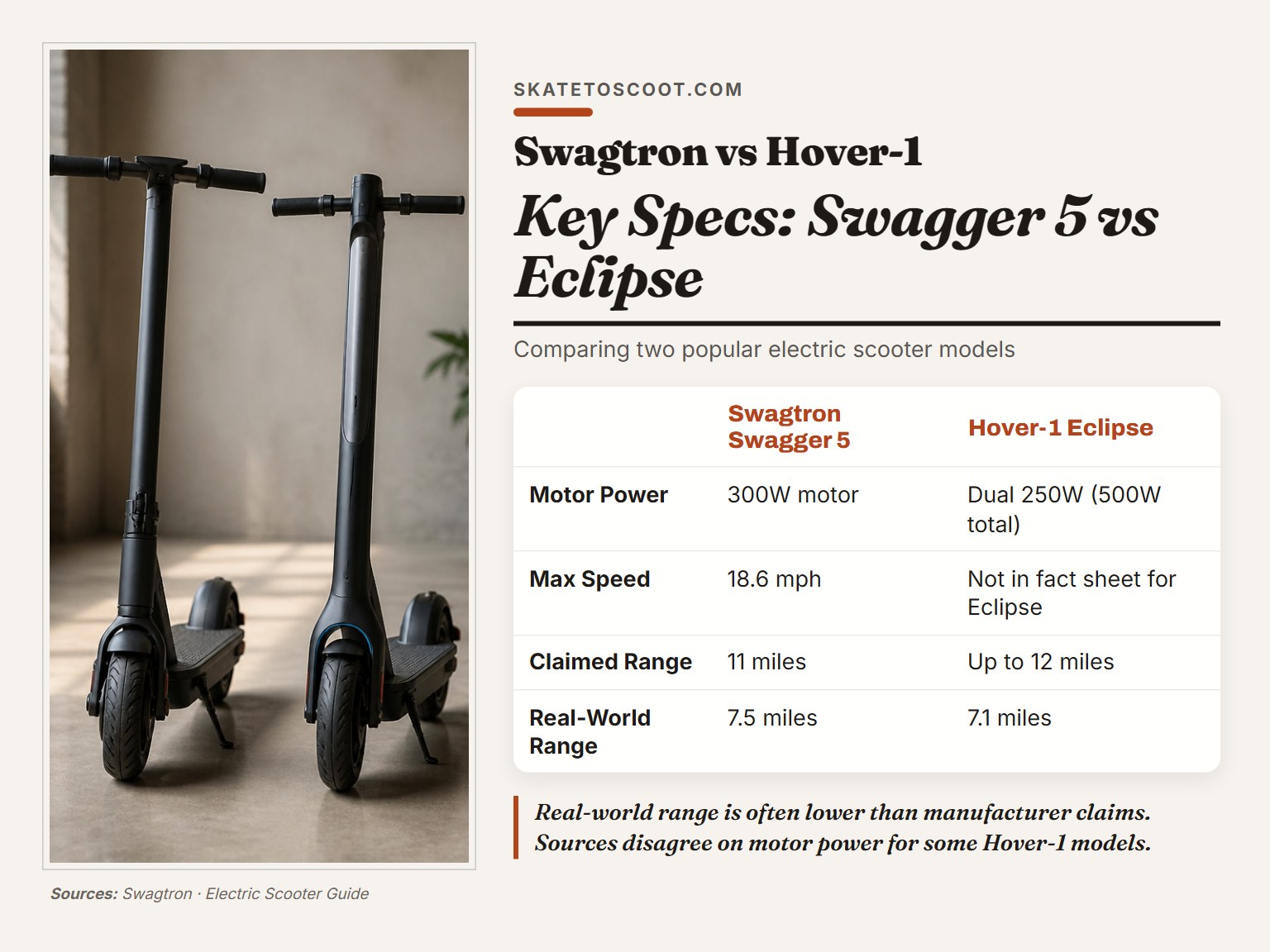
Here are the numbers. These are the two most directly comparable models: both are popular, both have a 300W motor, and both target the urban rider. The table below uses manufacturer specs, but keep reading, the next section shows where those numbers meet reality.
| Specification | Swagtron Swagger 5 (T6) | Hover-1 Pioneer |
|---|---|---|
| Motor Power | 300W | 300W |
| Max Speed | 18.6 mph | Not specified |
| Claimed Range | 11 miles | Not specified |
| Real-World Range (Independent Test) | 7.5 miles | 7.1 miles |
| Weight | 37 lbs | 27 lbs |
| Max Load | 220 lbs | 220 lbs |
| Tires | 8.5-inch pneumatic | 9-inch pneumatic |
| Suspension | Dual spring | None |
| Water Resistance | Not specified | IPX4 |
| Key Feature | Dual suspension, higher speed | Lightweight, IPX4 rating |
The takeaway here is simple. If your priority is a softer ride and higher top speed, the Swagger 5’s suspension is worth the extra 10 pounds. If you’re carrying it up stairs or onto a bus, the Pioneer’s 27-pound frame is the obvious winner. Neither will deliver the range on the label.
Advertised vs. Real-World Performance: Why Specs Lie
Manufacturers test under ideal conditions: a light rider on a perfectly flat track at a constant speed. Real life has stops, starts, hills, wind, and your actual weight. This is where independent testing from sources like Electric Scooter Guide cuts through the noise.
For the Swagtron Swagger 5, Swagtron claims an 11-mile range. In controlled real-world testing, the figure was 7.5 miles. That’s a 32% drop. For the Hover-1 Eclipse, independent testers recorded a real-world range of 7.1 miles. The Pioneer follows a similar pattern.
Why does this happen? Battery chemistry and motor efficiency are only part of it. The bigger factor is riding style. Accelerating from a stoplight consumes a huge burst of energy. A hill that seems mild can halve your remaining range. So when you see a range figure, mentally apply the “real-world rule”: take 30% off. Plan your commute accordingly.
The part nobody mentions: That “up to” range is a best-case scenario you’ll never hit. The battery gauge on these scooters isn’t linear. The first two bars might get you four miles; the last two might get you one. Running it down to empty repeatedly also shortens the overall battery lifespan.
Safety First: Certifications and Recall Histories
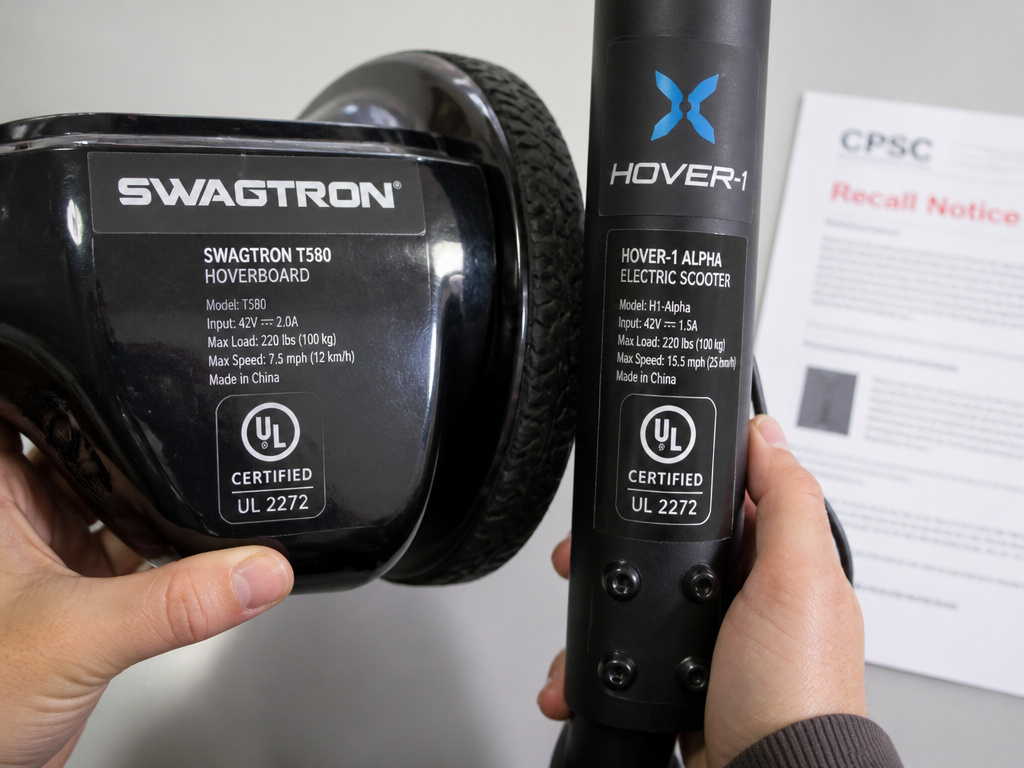
This isn’t scare talk. It’s documented history. Both Swagtron (formerly Swagway) and Hover-1 have issued recalls with the U.S. Consumer Product Safety Commission (CPSC) for battery fire hazards.
- Swagtron: Recalled about 267,000 self-balancing scooters in July 2016, and another 15,900 units in October 2016, due to lithium-ion battery packs overheating.
- Hover-1: Recalled its Ultra Self-Balancing Scooters/Hoverboards in 2020 for the same reason. The affected units were sold at Walmart from August 2019 to January 2020.
These recalls are for older models. The critical question for any scooter or hoverboard you buy today is: Is it UL 2272 certified? This standard, developed by UL Solutions, tests the entire electrical system, battery, charger, motor, for safety. Any current model from either brand should have this certification. Look for the UL 2272 certification mark on the product itself or its packaging. It’s your best guarantee against the failure modes that triggered those recalls.
UL 2272 certification means the battery, motor, and charger have been tested as a system to not overheat, catch fire, or electrocute the user under a range of fault conditions. It’s the single most important spec on the box.
Durability and Long-Term Ownership: Where They Wear Out
Spec sheets don’t talk about what breaks after six months. Forum threads and teardown reports do. Here’s what owners and technicians flag.
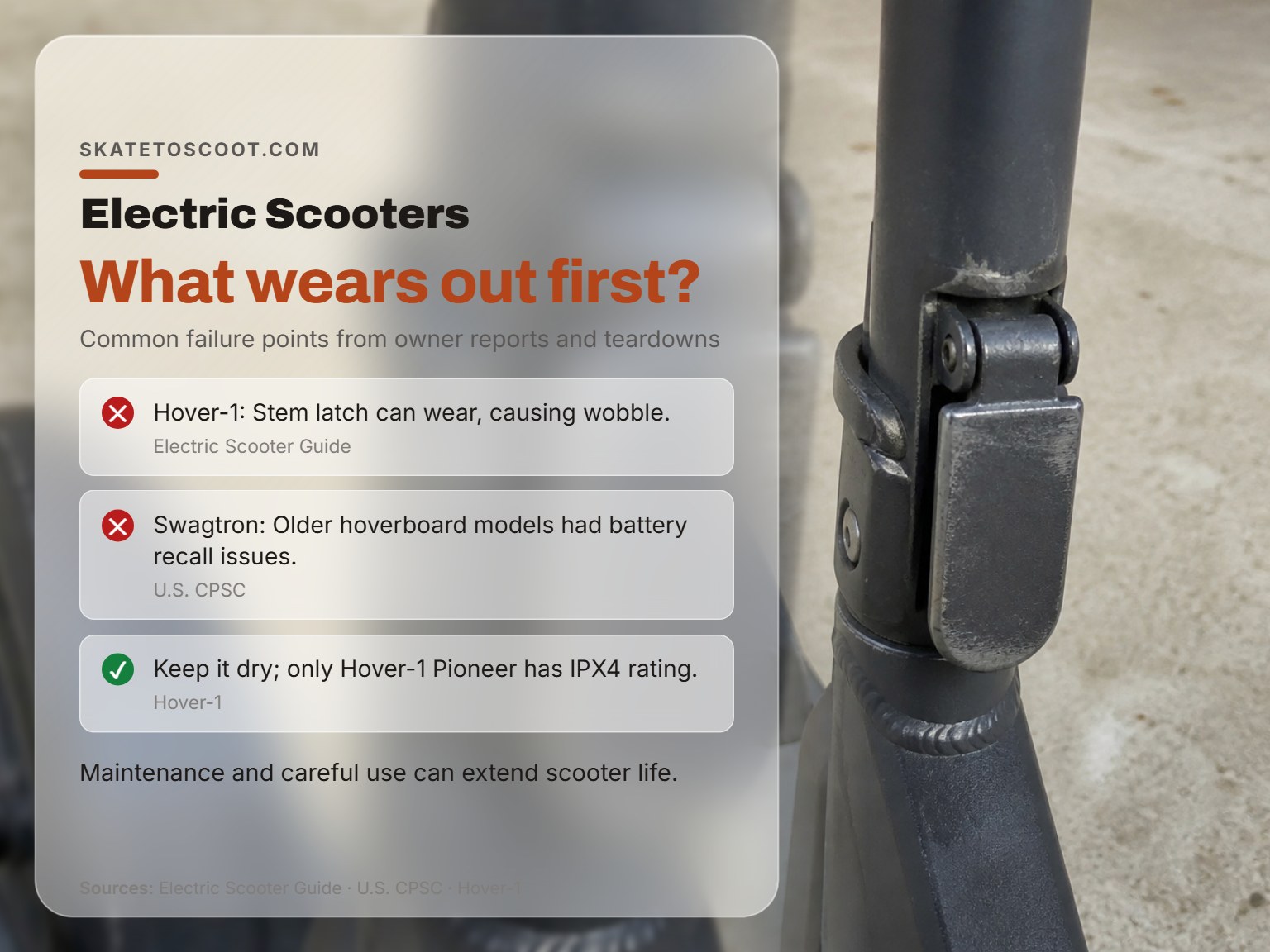
For Hover-1, a teardown analysis of the Eclipse model pointed to the stem folding mechanism. The latch that locks the stem upright can wear prematurely under heavy use, leading to a wobble or “play” that feels unsettling at speed. It’s not a universal fault, but it’s a known stress point. For Swagtron, the historical concern is battery health, stemming from the older recalls. While new models are certified, the brand’s name is still associated with those early failures in the minds of some buyers.
Three things will extend the life of either brand:
- Avoid curb drops. Those 8.5-inch pneumatic tires can handle cracks, but a full-on curb impact can bend a wheel or damage the fork.
- Keep it dry. The Pioneer’s IPX4 rating provides some water resistance. The Swagger 5’s rating isn’t specified, so assume it has none.
- Listen to the motor. A high-pitched whine under normal load is a sign of strain, often from a dirty or dry bearing, or a misaligned brake rubbing.
Choosing Your Ride: A Decision Checklist
Forget which brand is “better” in a swagtron vs hover 1 debate. Ask which one is better for you. Use this list.
Choose the Swagtron Swagger 5 if:
- Your commute has uneven pavement, brick roads, or cobblestones.
- You want the highest possible top speed (18.6 mph) in this class.
- You don’t need to carry the scooter frequently.
- You value the shock absorption of dual suspension.
Choose the Hover-1 Pioneer if:
- You need to carry your scooter up stairs, onto a train, or into an office.
- Your commute is short on smooth, paved paths.
- You ride in drizzly conditions (thanks to the IPX4 rating).
- Your budget is the absolute primary concern.
Avoid both and look elsewhere if:
- Your route has sustained hills over a 10% grade.
- You need a real-world range over 10 miles.
- You plan to ride in heavy rain or on loose gravel.
For most new riders on flat city streets, the Hover-1 Pioneer is the default pick. The weight savings is real, the price is right, and the IPX4 rating adds a peace-of-mind layer the Swagtron lacks. But if your streets are rough and you want that suspension, the Swagtron Swagger 5 is the clear alternative.
Which Swagtron or Hover-1 model should I buy?
Your choice depends on your daily route. For a rider needing more speed and a smoother ride over rougher pavement, the Swagtron Swagger 5 is a strong candidate with its 300W motor, 18.6 mph top speed, and 8.5-inch pneumatic tires. For a lighter, more portable scooter focused on short, flat commutes, the Hover-1 Pioneer, also with a 300W motor but weighing only 27 lbs, fits the bill. If you need a scooter for a younger rider or very casual use, models like the Swagtron Swagboard T580 offer a maximum speed of 8 mph and 6.5-inch wheels. Always check the scooter’s maximum load capacity against your own weight.
Are Swagtron and Hover-1 scooters safe from battery fires?
Both brands have used lithium-ion batteries in past models that were subject to safety recalls due to overheating and fire hazards. While some models, like the Hover-1 Journey, are certified to UL 2272, the underlying battery chemistry matters. Lithium-ion batteries are common but require careful management. When shopping, look for the specific UL 2272 certification on the product itself, not just the brand’s website. Follow all manufacturer charging instructions, never leave a scooter charging unattended or overnight, and store it in a cool, dry place away from flammable materials.
Frequently Asked Questions
Is Swagtron or Hover-1 better?
For a lightweight, portable scooter for short trips, Hover-1 is generally the better value. For a slightly more robust commuter scooter with suspension for rougher pavement, Swagtron has the edge. “Better” depends entirely on your route and whether you prioritize portability or comfort.
Are Swagtron hoverboards safe?
Current Swagtron hoverboards that are UL 2272 certified are safe, as the certification tests the electrical system. However, Swagtron (as Swagway) had major recalls in 2016 for battery fires in older models. Always verify the UL 2272 certification on the product you’re buying.
Is Hover-1 a good brand?
Hover-1 is a brand for budget-conscious buyers who need a basic scooter for smooth, flat terrain. Their models like the Pioneer are lightweight and simple. However, they are not known for high performance, long-range, or rugged durability compared to more expensive brands.
How long do Swagtron scooters last?
With proper care, avoiding hard impacts, keeping the battery charged between 20-80%, and storing it indoors, a Swagtron scooter can last 1-3 years of regular use. The battery is typically the first component to degrade over time and with use.
Can Hover-1 scooters go uphill?
Hover-1 scooters like the Pioneer can handle mild inclines, but they struggle on slopes steeper than a 10% grade (about 5.7°) with an average adult rider. The 300W motor is sufficient for flat urban commuting but is not a powerful hill-climber.
The Bottom Line
Here’s the one thing to remember: neither brand is selling a forever machine. You’re buying a tool for a specific job, short, flat urban travel. The Hover-1 Pioneer excels at that job by being light and cheap. The Swagtron Swagger 5 tries to do the same job with more comfort and speed, for more money and weight.
Before you click buy, measure your longest regular trip and subtract 30% from the advertised range. That’s your real range. Then, ask yourself how many stairs are on your journey. The answer to those two questions will tell you which scooter is sitting in your hallway next month.
If you’re still torn, the safer bet for a first scooter is the lighter one. It’s easier to carry when you’re tired, and it’s less of a financial hit if you decide scooting isn’t for you. You can always upgrade to a more powerful, suspended model later. The goal is to start riding, not to own the perfect machine right out of the gate.
