Vans Snowboard Boots Review: Which Model Is Right for You?
This post contains affiliate links. As an Amazon Associate, we earn from qualifying purchases.
Vans snowboard boots are known for a surfy, comfortable feel right out of the box, but the best model for you depends on matching your riding style to the right flex, closure system, and intended use. The Hi-Standard OG is the soft, classic lace-up for park riders, the Infuse offers customizable stiffness for all-mountain versatility, the Encore Pro delivers a balanced medium-flex with superior warmth, and the Viaje Range is built for cold-weather backcountry missions.
That “surfy” feeling is the whole point, but it means different things across the lineup. A soft boot isn’t just for beginners, and a stiff boot isn’t just for experts. The difference is in how the boot translates your ankle movement to the edge of your board, and Vans gives you four distinct ways to dial that in. For a detailed breakdown, see our Vans snowboard boots review.
What follows: a breakdown of the four core models, the specs that actually matter, and where each one shines, or falls short. We’ll cut through the marketing to match you with the boot that fits your foot and your riding, not just the hype.
Key Takeaways
- The Vans Infuse is the most customizable, with a stiffness rating from 5 to 9 out of 10 thanks to removable tongue stiffeners.
- For cold resort days, the Vans Encore Pro provides superior warmth with a merino-lined interior and a medium-flex profile that balances comfort and response.
- The Vans Viaje Range is the specialist, designed for backcountry and snowmobile use with an integrated walk mode and double-BOA closure for long, freezing days.
- Vans boots generally fit larger in both length and volume than competitors like Burton or Salomon, so you may need to size down or adjust your bindings.
The Vans Boot Lineup Decoded
You don’t choose a Vans boot by stiffness number alone. The real choice is between a philosophy of feel. Do you want a boot that disappears on your foot and lets you feel the snow, or one that acts as a precise, supportive lever for your board? Vans covers the entire spectrum.
Vans Hi-Standard OG (Model VN0A3TFJ6RT): Flex rating 4-5, skill level beginner-intermediate. Features V1 UltraCush Liner with dual-density heat-moldable core, V1 Harness, Instep Flex Zone, PleasureCuff, Heat Retention 360° (200g toe insulation), V1 PopCush Footbeds, and V1 Waffle Lug Outsole with All-Trac cold weather rubber. (Source: Vans Product Page).
That’s the official spec sheet. What it means on snow is a boot that breaks in almost immediately. The traditional laces and internal harness give you a locked-in heel, while the soft flex around the ankle lets you tweak grabs and butter with minimal effort. It’s the benchmark everything else is measured against.
| Boot Model | Best For | Flex (1-10) | Closure | Key Tech | MSRP |
|---|---|---|---|---|---|
| Hi-Standard OG | Park, All-Mountain, Beginners | 4-5 | Traditional Laces | V1 UltraCush, Heat Retention 360° | Varies |
| Infuse | All-Mountain, Advanced Riders | 5-9 (Adjustable) | Hybrid (Laces, BOA, Strap) | Removable Stiffeners, V3 UltraCush | $530 |
| Encore Pro | Resort Riding, Cold Conditions | Medium (Approx. 6) | Dual-Zone BOA | Merino Lining, 360° Thermal Barrier | $310 |
| Viaje Range | Backcountry, Snowmobiling | Medium-Stiff (Approx. 7) | Double-BOA | Integrated Walk Mode, Rear Cuff | $465 |
The prices are manufacturer’s suggested retail. You’ll often find them lower, especially for previous season’s models. The important thing is the job each boot is built to do.
Vans Hi-Standard OG: The Benchmark
Six months into coaching, I watched a student struggle with a stiff, high-end boot. He could carve, but his butters were forced and his landings rigid. We swapped him into a pair of Hi-Standard OGs. The change wasn’t subtle. His posture relaxed, his board started to talk back less, and he landed his first clean 180 that afternoon. The boot got out of his way.
That’s the Hi-Standard’s gift. It has a 4 out of 10 flex rating. On a scale where 10 is a race boot, that’s firmly in the soft, playful category. The V1 Waffle Lug Outsole provides traction on icy walkways.
Where this goes sideways: Assuming soft means unsupportive. The internal web harness does a remarkable job of locking your heel down. The lack of support is in the ankles, which is intentional for park and freestyle riding. If you’re charging steep, variable terrain, you’ll feel that softness as a lack of precision on your heel edge.
The build is straightforward: no BOA, no gimmicks. That also means no mechanical parts to fail. One reviewer who spends 80% or more of winter splitboarding notes that this soft, torsionally forgiving flex is perfect for low-angle touring and natural, surfy turns in deep snow. For the best-selling Vans boot of all time, it earns its title by doing one thing very well and staying out of the spotlight.
Vans Infuse: The Customizable Performer
If the Hi-Standard is a dedicated tool, the Infuse is a Swiss Army knife. Vans rates its stiffness from 5 to 9 out of 10. That’s not a typo or a range of opinions, it’s because the boot comes with removable stiffeners you can take in and out of the tongue.
This boot is a five to nine on the stiffness for a reason… There’s so many ways to customize the stiffness of this boot… You got a left and a right tongue stiffener.
Start with them in for a stiffer, more responsive feel for carving or big mountain lines. As the liner packs in over time, pull the stiffeners out to regain that softer, playful flex without losing the boot’s structure. It’s a clever solution to the age-old problem of boots getting softer over time.
The closure is a hybrid system: a BOA dial for the lower ankle, traditional laces for the upper cuff, and a power strap over the tongue. It sounds complex, but the sequence is logical. The BOA secures your ankle to eliminate heel lift, the laces customize calf volume, and the strap fine-tunes forward flex.
Common mistake: Sizing these like other brands. Vans boots generally fit larger. One GearJunkie reviewer wears an 8.5 in Salomon and Burton but found Vans roomier. Sources disagree on sizing: a GearJunkie reviewer notes Vans boots fit larger, while the Airtime Podcast suggests to downsize half a size. The heat-moldable V3 UltraCush liner will pack out to form a custom fit.
For a rider who does a bit of everything, park laps, groomer carving, side-country exploration, the Vans Infuse is the one to beat. It’s why it consistently ranks among the best snowboard boots for versatility.
Vans Encore Pro & Viaje Range: The Specialists
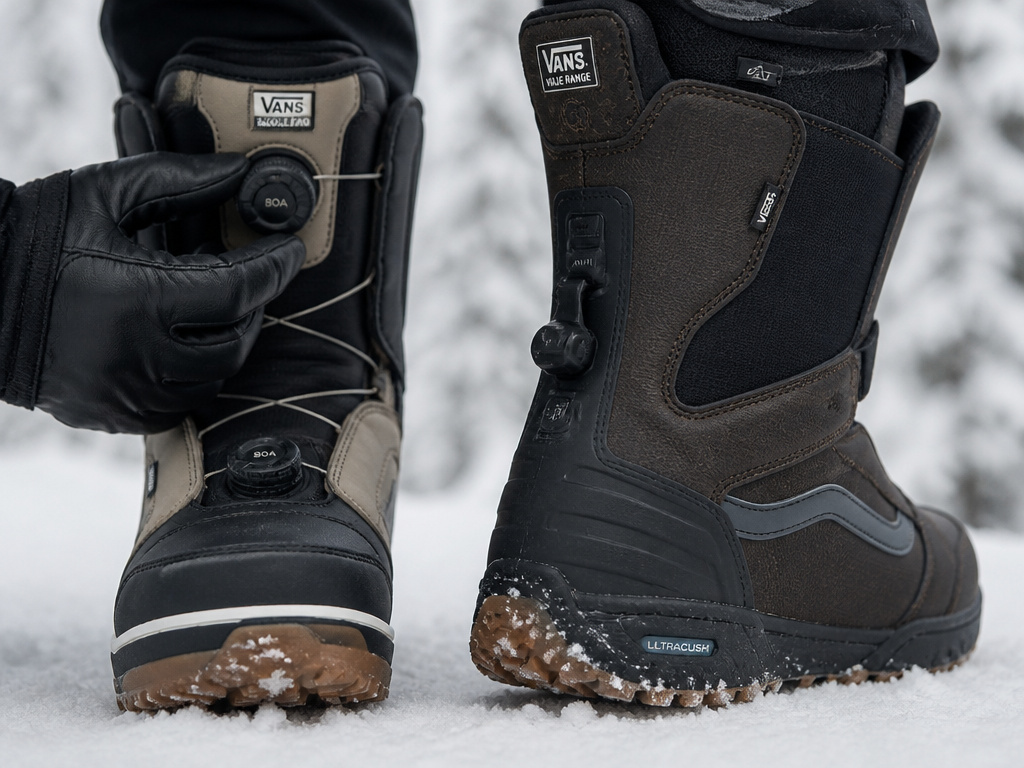
Not every boot tries to do everything. The Encore Pro and Viaje Range target specific conditions: bitter cold and deep backcountry, respectively.
The Vans Encore Pro was tested in conditions at 15 degrees or less and provides superior warmth. That’s not marketing fluff. The merino-lined interior and 360-degree thermal barrier are the reasons. You get a medium-flex profile and a dual-zone BOA closure that’s easy to adjust on the lift. If your bindings are already at the upper end of their strap length, you may need to crank them down significantly or consider a different model.
The Vans Viaje Range is in another league. Designed for backcountry missions where you might also ride a snowmobile, its updated model includes a rear cuff and integrated walk mode. In theory, this makes hiking more comfortable. In practice, one long-term tester found the walk mode “gimmicky,” relying on a power strap to open the cuff with limited real benefit. Where this boot earns its $465 MSRP is in pure, unfiltered warmth and durability for long days. The original 2020 version showed a slight dip in power after 3 seasons and support and warmth began to fade after 5 seasons, which is actually a strong longevity report for a boot used that hard.
Here’s how they compare for specific uses:
| Use Case | Encore Pro | Viaje Range | Why? |
|---|---|---|---|
| Resort Day < 20°F | Excellent | Overkill | Encore Pro’s targeted warmth is sufficient and it’s less bulky for riding lifts. |
| Backcountry Touring | Not Recommended | Excellent | Viaje Range’s walk mode and hiking-specific outsole are built for it. |
| All-Mountain Freestyle | Good | Poor | The Viaje Range’s stiffness and weight hinder playfulness. |
| Longevity in Hard Use | Good (3-4 season expected) | Very Good (5+ season reported) | The Viaje Range’s materials and construction are burlier. |
For most resort riders facing cold conditions, the Encore Pro is the smarter play. For anyone venturing beyond the rope, the Viaje Range is a dedicated tool worth the investment. It’s a top pick among all-mountain boots designed for aggressive use.
Fit, Sizing, and Binding Compatibility
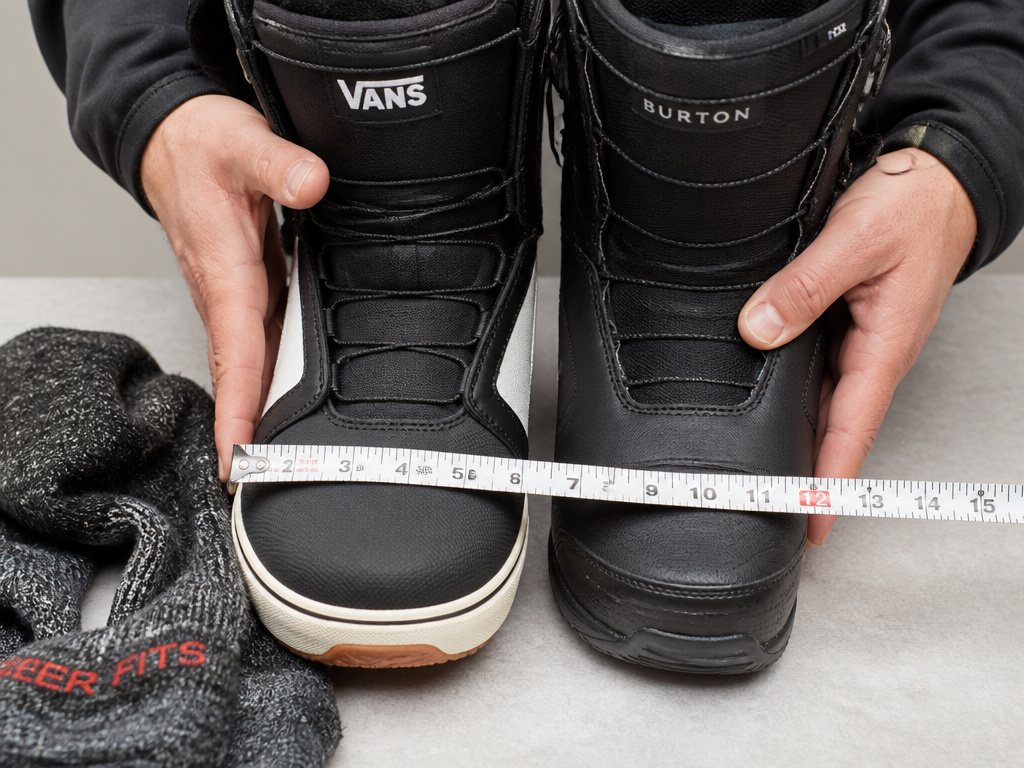
This is where first-time Vans buyers get tripped up. The consensus from reviewers is clear: Vans boots fit larger, both in length and volume, than other brands. Someone who wears an 8.5 in Burton or Salomon will likely find a Vans 8.5 too roomy.
The advice conflicts, though. The Airtime Podcast suggests to downsize half a size, while a GearJunkie reviewer notes the roomier fit is comfortable and allows for thicker socks in a Vans snowboard boots review. There’s no single rule.
- If you have a narrow foot and hate any slop, size down.
- If you have a wider foot or run cold and wear heavy socks, your regular size might work.
Easy to miss: The roomier toe box and rounder shell profile mean your bindings need attention. Check that your ankle and toe straps have enough length to secure the boot snugly. A loose strap over a bulky boot is a fast track to sloppy control.
The break-in period is famously short, especially for the Hi-Standard OG. That “comfort out of the box” feeling is real, but it comes from softer materials that will pack out faster. A boot that feels perfect on day one might feel slightly loose over time. That’s not a defect; it’s the nature of the comfort-first design. For riders who prefer the micro-adjustability and modern feel of lace-up boots, Vans’ traditional models are a great starting point.
Vans vs. The Competition: Where They Stand
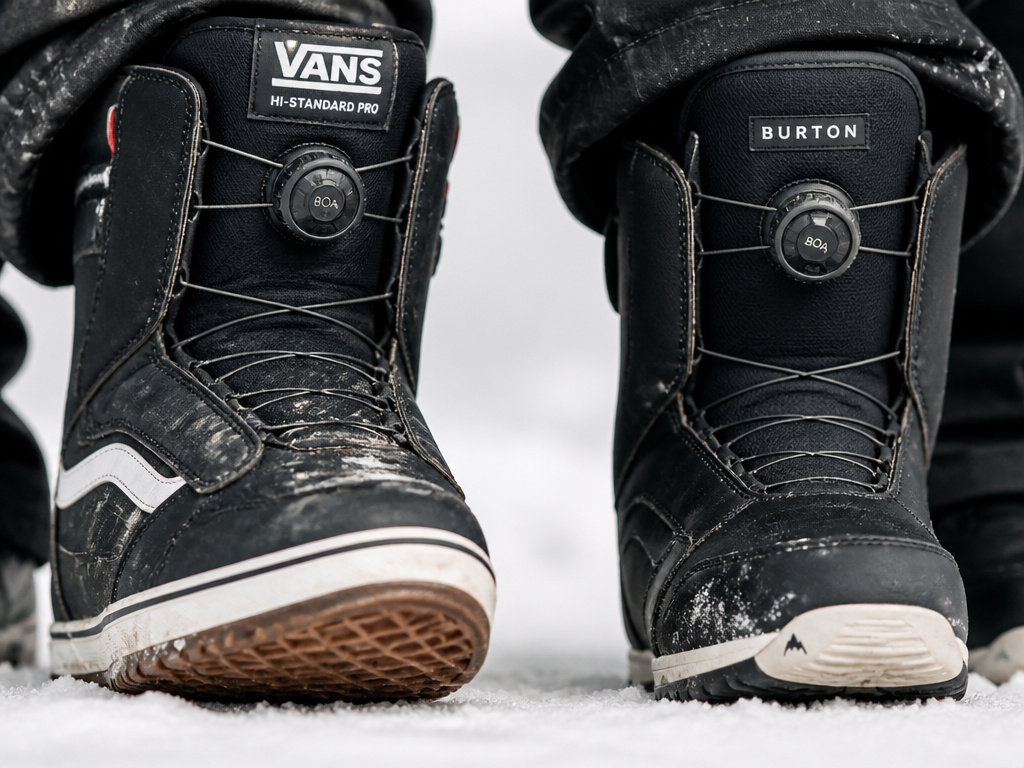
Vans doesn’t exist in a vacuum. The closest competitor is Burton, the other heritage brand known for comfort and innovation. The difference often comes down to philosophy.
Burton’s focus is on integrated ecosystem tech (like the Step On system) and often a more athletic, narrow fit. Vans leans into traditional surf and skate culture, resulting in a wider, more forgiving fit and a focus on board feel. A stiff Vans boot will still have a more progressive, forgiving flex than a similarly rated stiff Burton boot.
The Vans will be softer and more forgiving. The Infuse wins on customization and comfort for wider feet in a Vans snowboard boots review; the Burton models often win for precision and a lower-profile fit.
Are Vans high quality? The durability data from long-term tests says yes. The original Viaje Range showed support and warmth began to fade after 5 seasons of hard backcountry use. They are not the absolute lightest or most high-tech shells on the market, but they are reliably well-built. For riders seeking performance without breaking the bank, they remain one of the top value boots available.
How is the shock absorption and board feel?
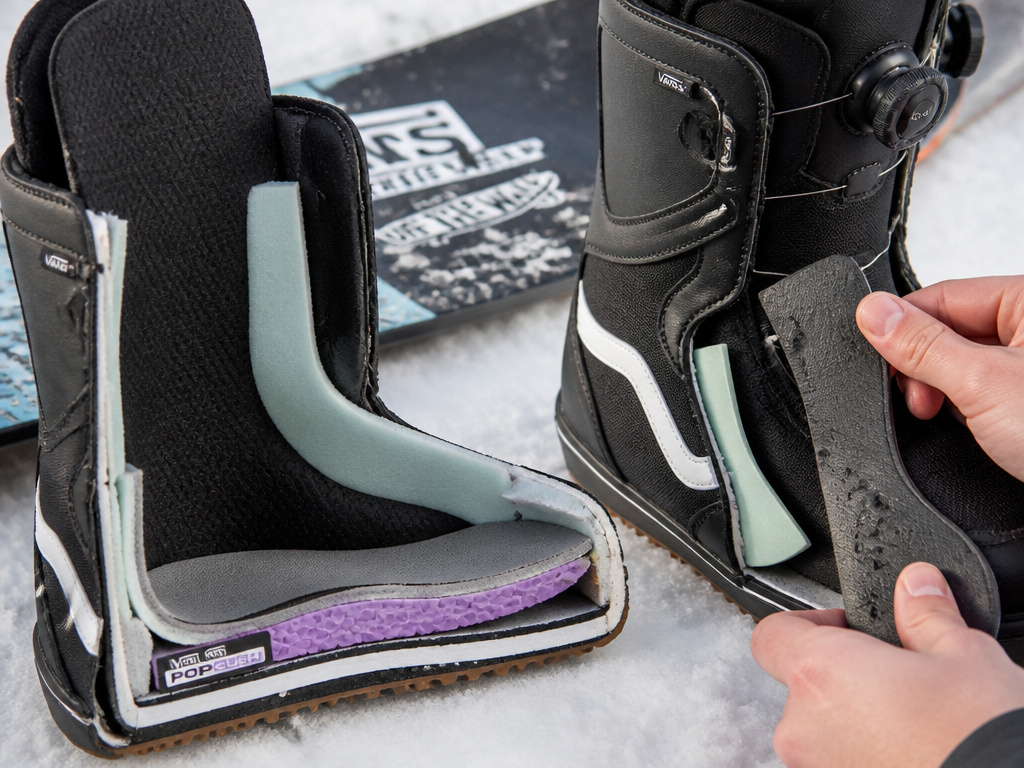
Vans uses specific cushioning systems to manage impact while trying to preserve a connection to your board. Many models feature PopCush footbeds or midsoles, which are designed to absorb shock from landings. The Hi-Standard OG uses a V1 UltraCush liner with a dual-density core, aiming to cushion your foot without creating a dead, disconnected feel. For riders seeking customizable stiffness, models like the Infuse come with removable stiffeners, allowing you to tune the flex to your preference. Softer boots generally offer more direct board feel, suitable for park tricks, while stiffer models trade some of that sensitivity for stability at higher speeds.
Frequently Asked Questions
Are Vans snowboard boots high quality?
Yes, based on long-term field tests. Reviewers have reported getting 5+ seasons out of backcountry-focused models like the Viaje Range with only a gradual softening. The materials, stitching, and closures (BOA and traditional) are durable and withstand regular resort and park use. They may not have the racing pedigree of some brands, but their construction is solid for recreational and advanced riding.
Which Vans snowboard boot is best?
There is no single “best” boot. The Hi-Standard OG is the best for park riders and beginners due to its soft flex and instant comfort. The Infuse is the best for versatile riders who want one boot that can do it all, thanks to its adjustable stiffness. The Encore Pro is the best for cold resort days, and the Viaje Range is the best for backcountry and snowmobile access.
Which snowboard boots are better, Vans or Burton?
It depends on your foot and priorities. Burton boots typically have a narrower, more performance-oriented fit and are deeply integrated with Burton bindings. Vans boots have a wider, more comfortable fit out of the box and prioritize a surfy, connected board feel. If you have wide feet or value immediate comfort, Vans is often better. If you have narrow feet and want a precise, athletic fit, Burton might be the choice.
Are Vans Hi Standard Pro snowboard boots good?
The Hi-Standard Pro is a stiffer version of the classic Hi-Standard OG. It’s a boot for riders who love the traditional lace feel and fit of the Hi-Standard but want more responsiveness for carving and all-mountain riding without jumping to a fully stiff boot. Its performance level is between the OG and the Infuse.
The Bottom Line
Forget searching for the perfect stiffness number. Your Vans snowboard boot choice is a question of how you want to communicate with your board. Pick the Hi-Standard OG for a whispered conversation in the park, the Infuse for a detailed debate across the entire mountain, the Encore Pro for a warm, reassuring chat on icy chairlifts, or the Viaje Range for a shouted, durable dialogue in the backcountry.
They all share that foundational Vans comfort. The rest is just matching the tool to the terrain. Start with the feel you want, and the right model reveals itself.
