Where to Donate Mobility Scooter Near Me: Step-by-Step
This post contains affiliate links. As an Amazon Associate, we earn from qualifying purchases.
To donate a mobility scooter near you, start with a local charity that explicitly accepts “durable medical equipment.” National veterans’ groups, community loan closets, and state-run reutilization programs are your best bet. The scooter must be in “gently used” condition, clean, charged, and fully functional, to be accepted. Many organizations offer free pickup if you have multiple items or if the scooter is too large to transport.
That “gently used” clause is where most donations get turned away. A scooter with a dead battery or a torn seat isn’t just inconvenient for the charity; it’s a liability they can’t afford to store or repair. The difference between a successful donation and a frustrating trip back home often comes down to a 10-minute inspection you can do in your driveway, which is why it’s wise to search for “where to donate mobility scooter near me” before you load it up.
What follows is a field guide to the donation process. This guide explains how to vet your scooter, find a local or national charity, handle pickups and paperwork, and what to do if your scooter isn’t fit for donation.
Key Takeaways
- “Gently used” means fully functional. A scooter must drive, steer, stop, and hold a charge. Organizations like Assist M.E. require a working battery for any power chair or scooter donation.
- Pickup is often available for multiple items. If you have 10 or more items, charities like Assist M.E. Offer free pickup within a 25-mile radius, scheduling as soon as two business days.
- State boundaries and space limits are real. Wheelchair Recycler Inc. operates only in Massachusetts and Florida, and groups like ReCARES list electric/power chairs and scooters on their ‘Never accepted items’ list.
- Prepare for a potential title transfer. Donating a large, motorcycle-style mobility scooter may require you to sign over the vehicle title to the charity, depending on your state’s laws.
- If donation fails, responsible recycling is the next step. A scooter that’s broken, rusty, or not accepted can often be broken down by an e-waste or metal recycling facility.
What Counts as “Gently Used”?
This isn’t a vague suggestion. For a charity, “gently used” is a safety and liability standard. They need to redistribute equipment they can trust, not inventory they have to fix. Your assessment starts with three things: power, mechanics, and cosmetics.
First, the battery. Charge it fully. A scooter that won’t hold a charge is useless to the next user. Assist M.E. States it plainly: power chairs and scooters cannot be accepted without a working battery. If the battery won’t hold a charge, you’re already looking at recycling, not donation.
Next, the drive. Does it move forward and backward smoothly? Do the brakes engage without grinding? Turn the steering all the way left and right; any stiff spots or clicking mean bearing wear. A charity will test this, and if it fails, they’ll say no on the spot.
Finally, give it a wipe-down. Dirt is fine; ingrained grime or torn, stained upholstery is not. A quick clean with a damp cloth and mild soap makes a world of difference. It shows respect for the next user and the organization’s volunteers.
Common mistake: Assuming “used” is good enough. A scooter with a dead motor or cracked frame isn’t gently used, it’s broken. Donating it anyway wastes everyone’s time and forces the charity to handle disposal.
The Donation Checklist (Do This First)
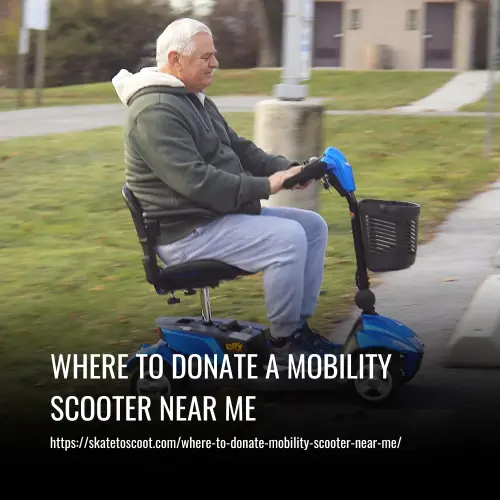
Before you call a single charity, run through this list. It takes five minutes and saves a half-day of phone calls.
- Power Test: Fully charge the battery. Drive the scooter to test its range. Does it hold power, or does it slow and die?
- Mechanical Check: Test forward, reverse, and turning. Listen for unusual whines or clicks. Squeeze the brake levers, do they stop the scooter firmly?
- Visual Inspection: Look for major cracks in the body, a torn or heavily stained seat, or significant rust on the frame.
- Gather Accessories: Find the charger, the key, and any removable baskets or cushions. A complete package is far more valuable.
If you check all four, your scooter is a prime donation candidate. If you fail one, especially the power or mechanical test, you need to call ahead. Sources disagree on acceptance of equipment needing repair. Wheelchair Recycler Inc. Accepts repairable items, while ReCARES never accepts broken items, and Assist M.E. Requires a working battery for power chairs and scooters. Knowing where you stand changes your entire strategy.
Finding the Right Local Charity
Your best local options typically fall into one of three categories: state-affiliated programs, community-focused nonprofits, and national organizations with local chapters. Their rules vary wildly, so your first call when you compare a where to donate mobility scooter near me should always be to confirm they accept scooters and that they have space.
State and University Programs are often your most reliable bet. They have structured systems. For example, Oklahoma ABLE Tech runs a device reutilization program with specific drop-off hours in Oklahoma City: Monday through Thursday, 9:00 AM to 12:00 PM and 1:00 PM to 3:00 PM. Massachusetts lists REquipment as a donation outlet for durable medical equipment, though they note they do not currently accept beds, walkers, commodes, crutches, or canes. The upside with these programs is clear guidelines; the downside is they may be restricted to state residents.
Community Nonprofits and “Loan Closets” are hyper-local. These are often run out of senior centers, churches, or independent charities like ReCARES. They directly serve people in immediate need. The catch is space. ReCARES states they have “limited space to store items, and occasionally have to reject items due to lack of space.” Always call before you load up the scooter. Their “Always accepted items” list includes wheelchairs and transport chairs, but their “Never accepted items” list includes electric/power chairs and scooters. It’s a frustrating but real limitation.
National Veterans’ Groups and Disease-Specific Charities like the Paralyzed Veterans of America or the Multiple Sclerosis Society often have regional chapters that accept equipment. They may offer pickup services. The key here is to find the local chapter’s contact number, not the national helpline. A local volunteer can tell you their current need and process.
| Organization Type | Best For | Key Limitation to Ask About |
|---|---|---|
| State Program (e.g., OK ABLE Tech) | Reliable, structured donation | State residency requirements |
| Community Loan Closet (e.g., ReCARES) | Direct, immediate local impact | Storage space; may reject large items |
| National Charity Chapter | Potentially broader pickup network | May have specific condition rules |
Navigating Pickups, Paperwork, and Tax Deductions
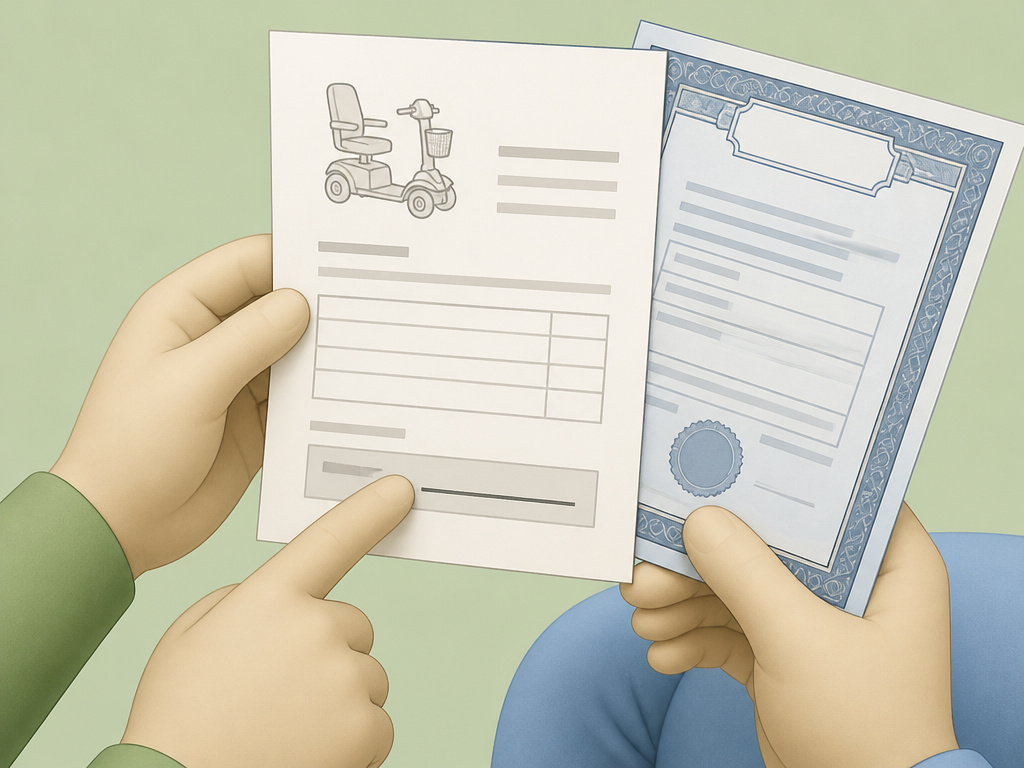
You’ve found a charity that wants your scooter. Now you have to get it to them. This is where details from the fact sheet are essential.
Free Pickup Services exist, but with strings attached. Assist M.E. Offers free pickups for 10 or more items within a 25-mile radius of their location. They schedule pickups as soon as two business days out, Monday through Friday, 8 AM to 5 PM. If you have fewer than 10 items, you might not qualify. Always ask.
The Paperwork has two parts: the donation receipt and, sometimes, a title.
- Donation Receipt: Always get one. It should describe the donated item (e.g., “one powered mobility scooter”) and include the charity’s EIN. You’ll need it for your taxes. You cannot claim a deduction without it.
- Title Transfer: For larger, motorcycle-style mobility scooters, you may need to sign over the vehicle title to the charity, if your state requires titles for such devices. This is a less common edge case, but one that SeniorsMobility.org specifically mentions.
The Tax Deduction is a benefit, not a profit. You can deduct the fair market value of the scooter. That’s not what you paid for it, nor is it a made-up number. Check a site like eBay or Craigslist for similar models in similar condition to establish a value. Keep that research with your receipt.
When Selling Makes More Sense
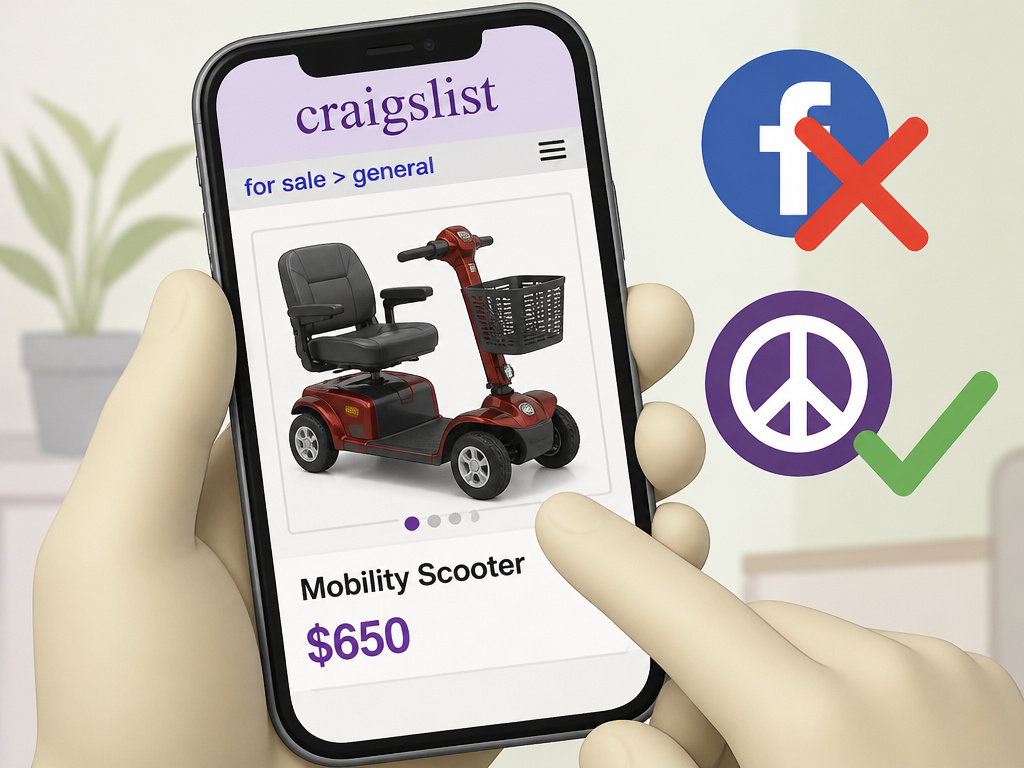
Donation isn’t the only path. Sometimes selling is the more practical choice, especially if your scooter is high-end or you need to recoup some cost. The landscape here is defined by platform rules.
Facebook Marketplace famously prohibits the sale of mobility scooters, classifying them as used medical equipment. That leaves Craigslist, eBay, and local classifieds as your main avenues. The process takes longer and involves meeting strangers, but the payoff can be meaningful.
Selling shines when your scooter is newer, has desirable features, and you have time. It fails when you need it gone quickly or when the scooter has minor issues a buyer would haggle over but a charity would reject outright.
Where this goes sideways: Trying to sell a scooter with a known, undisclosed problem. A buyer will test it, discover the faulty brake or weak battery, and you’re back to square one with a frustrated person in your driveway. Honesty saves the hassle.
The choice between donating and selling often comes down to urgency versus compensation. Need it gone this week to clear a room? Donate. Have a month and want a few hundred dollars back? Sell.
What If No One Will Take It?
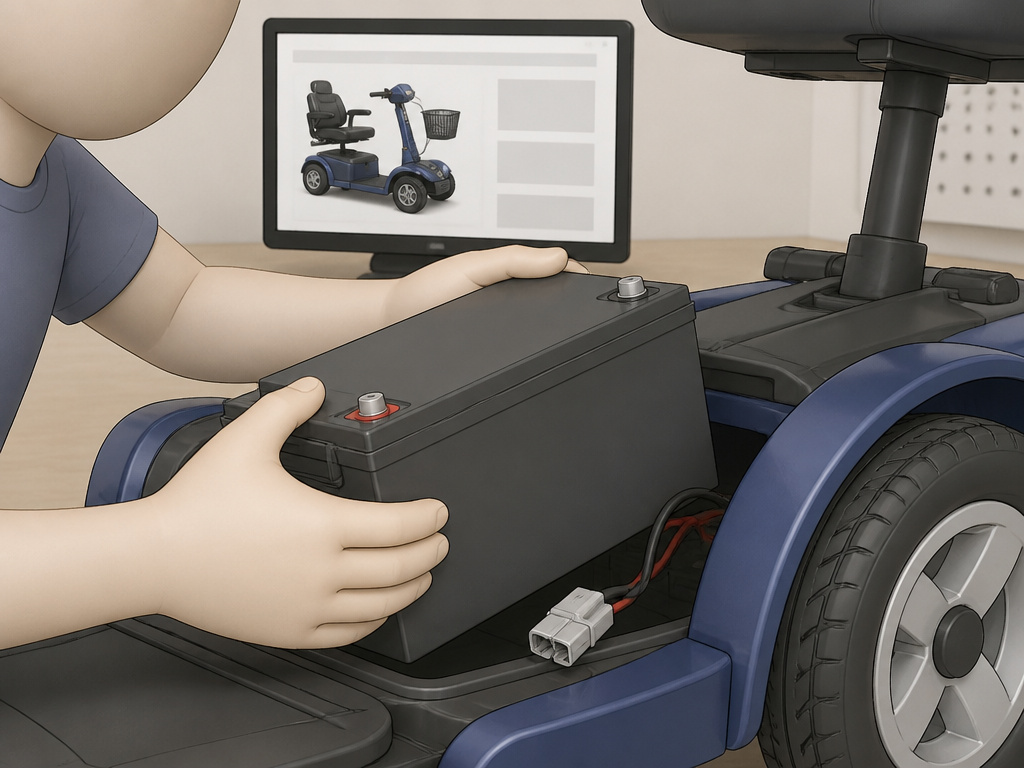
This is the reality the forums talk about. You’ve called the veterans group, the state program, the local church. They all said no. Maybe your scooter has a bad motor, or it’s just too old. Now what?
First, recycle it responsibly. A mobility scooter contains a battery, metals, and plastics. An e-waste recycling facility or a scrap metal yard can often take it. You might have to pay a small fee, and you’ll likely need to transport it yourself. This isn’t donation, but it’s responsible disposal.
Second, part it out. If the scooter is broken but the battery, tires, or seat are good, list those parts for free or cheap online. Other scooter owners are always hunting for replacements. It’s more work, but it ensures nothing goes to waste.
Finally, consider a last-resort free listing on Craigslist or a “Buy Nothing” group. Be brutally honest: “Free mobility scooter for parts, motor is shot, needs a trailer to move.” You’d be surprised who might take it, a tinkerer, a theater group for a prop, a vocational school. This mirrors the diligence you’d use understanding a complex equipment purchase, like researching Medicare coverage for scooters or Medicaid coverage for mobility aids. It’s about matching a specific need with a specific resource.
How to use online search tools to find a donation place
Start with a simple search for the where to donate mobility scooter near me question plus your city or state. This often surfaces local charities, community foundations, or specific reutilization programs. Look for official state government websites, like a ‘.gov’ domain, as they may list vetted organizations. When you find a potential recipient, visit their website directly. Check their ‘Donate’ or ‘Give’ section for specific acceptance policies. Some groups only accept certain items or operate in specific regions. For instance, some charities accept repairable items while others require equipment to be in working condition. Others may have lists of items they always or never accept. This direct research ensures your scooter matches their needs before you make contact.
Frequently Asked Questions
Can I donate a mobility scooter to Goodwill?
Goodwill’s acceptance policy varies drastically by location. Some stores take “durable medical equipment,” while many do not due to space and testing limitations. You must call your specific local Goodwill donation center. Do not assume. National veterans’ organizations or dedicated medical equipment charities are often more reliable options.
Who buys old mobility scooters?
Individuals are the primary buyers. Platforms like Craigslist and eBay are where most used scooters are sold. Some used medical equipment stores also buy them for resale, but they will offer far less than private sale value as they need to refurbish and resell for a profit.
What do I do with a broken mobility scooter?
Recycle it. Contact local e-waste recyclers, scrap metal yards, or your municipal waste department’s bulky item pickup program. There may be a fee. Do not donate a non-functional scooter unless a charity like Wheelchair Recycler Inc., which explicitly accepts repairable items, confirms they will take it.
Is it hard to donate a wheelchair or walker?
It can be, but for different reasons. Walkers and manual wheelchairs are smaller, so space isn’t as big an issue. However, high supply and lower demand can make it tough. Insurance often only covers a walker or wheelchair once every five years, as noted in a Reddit discussion, so many people already have one. Community “loan closets” or senior centers are your best shot.
The Bottom Line
Donating a mobility scooter works when you treat it like a transaction with clear rules. The scooter must work. The charity must have space and a need. Your job is to make the connection as frictionless as possible.
If your scooter passes the “gently used” test, start with state programs and veterans’ groups, they have the systems. If it doesn’t, pivot immediately to recycling or parting it out. Wishing a broken scooter into a donation just creates a problem for someone else.
The process involves phone calls and coordination to complete. The reward is knowing a piece of essential equipment gets a second life with someone who needs it, and that’s worth far more than any tax deduction. For more on finding assistance for those in need, explore options for a free mobility scooter through charity programs.
