Why Is My Hoverboard Beeping? The 6 Main Reasons
This post contains affiliate links. As an Amazon Associate, we earn from qualifying purchases.
Your hoverboard beeps because it’s talking to you. The beeps are a safety language warning about six main things: a low battery, an overloaded motor, a need for recalibration, a blocked wheel, a lifted-off-ground sensor error, or an internal hardware fault. The first five are owner-fixable; the last means it’s time for professional repair.
That language is final. A hoverboard’s sensors and gyroscopes work in a tight feedback loop, and a beep is their only way to say the loop is broken. If you’re wondering “why is my hoverboard beeping,” know that ignoring it is how you end up with a board that drifts, shuts off, or, in the worst historical cases documented by the U.S. CPSC, becomes a fire hazard.
What follows is a translator. We’ll break down each beep cause by the evidence from OEM manuals, show you the exact fix (including the critical difference between a 5-second and a 15-second recalibration), and walk you through a diagnostic flowchart. By the end, you’ll know whether you need a charger, a flat surface, or a screwdriver.
Key Takeaways
- A low battery warning is the most common cause; the board may also announce “low battery” if it has a speaker.
- An overload beep sounds when you exceed the weight limit or ride on too steep a slope, straining the motor.
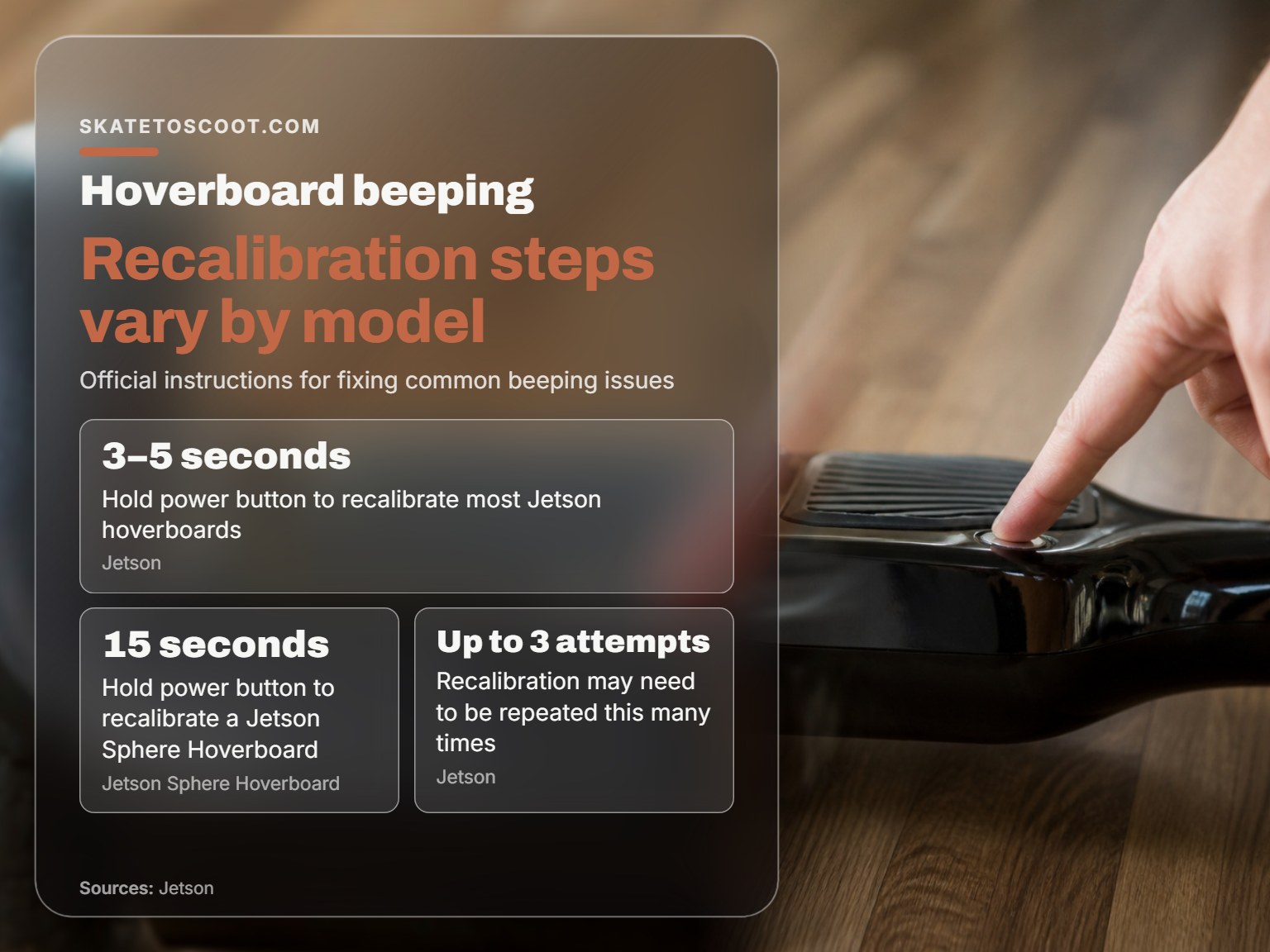
- Recalibration fixes sensor drift; for most Jetson models, hold the power button 3–5 seconds, but for the Jetson Sphere, hold for 15 seconds.
- Persistent beeping after three recalibration attempts usually signals a hardware fault, not a software glitch.
- Always check for the UL 2272 certification on any hoverboard; the U.S. CPSC considers non-compliant boards defective.
The 6 Main Reasons Your Hoverboard Beeps (and How to Fix Each)
Manufacturers design beeps as distinct alerts. According to Jetson’s official support guide, the board uses beeps as “its voice” to communicate specific states. Treating every beep as the same problem is like thinking a car’s check-engine light and fuel warning mean the same thing.
Here’s what each beep pattern is most likely telling you, in order of frequency and fixability.
1. “I’m Running Out of Power” – The Low Battery Beep
This is the hoverboard equivalent of a fuel gauge hitting E. The board beeps to preserve enough charge for a safe, controlled stop. On Jetson models with a built-in Bluetooth speaker, it may even announce “low battery” verbally.
You may see the battery indicator lights flashing or a specific pattern, such as the red and green LEDs flashing quickly on a Mattel DLV45. The Mattel DLV45 toy hoverboard, for instance, indicates a low battery by its red and green LEDs flashing quickly.
The fix is straightforward: plug it in. Use the manufacturer’s charger and a wall outlet. The Razor Vector manual adds a critical, often-missed edge case: do not charge at or below 32°F (0°C). Charging a frozen lithium battery can cause internal plating and short circuits.
Common mistake: Letting the battery drain to absolute zero regularly. Lithium-ion batteries have a finite number of deep-discharge cycles. Consistently riding until the beeps start cuts the pack’s lifespan.
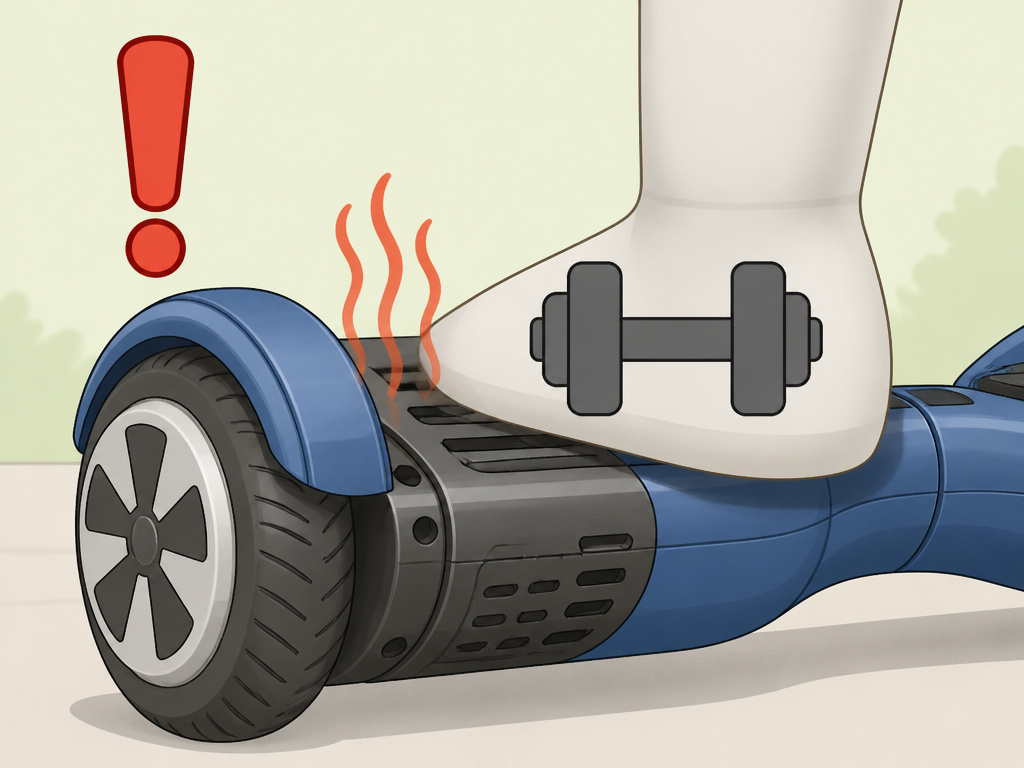
2. “You’re Too Heavy / This Slope is Too Steep” – The Overload Warning
Hoverboard motors have a rated wattage. Exceed their capacity, and they overheat, strain, and can burn out. The beep is a thermal protest.
Jetson lists two triggers: carrying weight beyond the recommended limit, or riding on an incline that overworks the motor. This isn’t a gentle suggestion. Pushing past this beep risks damaging the motor windings or the motor driver on the control board.
First, get off and let the board cool for 10 minutes. Then, reduce the load. Check your manual for the recommended weight limit and avoid steep inclines. Check your manual for the exact weight limit.
3. “My Balance is Off” – The Recalibration Alert
This is where most DIY fixes live, and where brand-specific details matter most. The gyroscope and tilt sensors can drift, especially after a bump or a long storage period. The board beeps because it can’t find its “level” zero point.
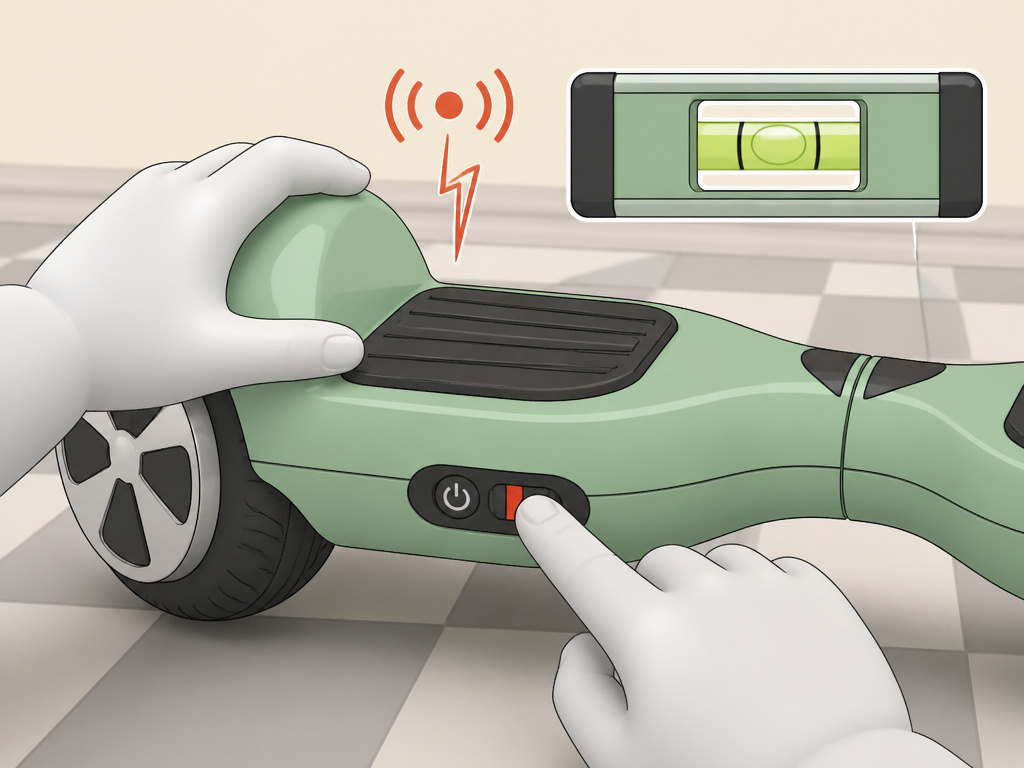
A common first step is to power the board off and place it on a perfectly flat, hard surface. Carpet or slanted garage floors won’t work. Make sure no weight is on the footpads.
Here’s where the manuals disagree on timing:
| Brand/Model | Recalibration Step | Success Signal |
|---|---|---|
| Most Jetson Hoverboards | Hold power button for 3–5 seconds. | Lights flash or you hear “recalibration complete.” |
| Jetson Sphere Hoverboard | Hold power button for 15 seconds. | Lights flash or a beep sounds. |
| Generic Advice (Hoverboard.com) | Process varies; ensure wheels are aligned before power-on. | Beeping stops and board feels stable. |
The Jetson guide also notes it can take up to three recalibration attempts to get everything back in alignment. If it doesn’t work after three tries, the problem is likely hardware.
4. “Something’s Stuck in My Wheel” – Debris Obstruction Warning
A pebble, stick, or chunk of mud jammed in the wheel housing triggers a safety sensor. The board beeps to prevent motor burnout from the blockage.
Power off the board completely. Tilt it and spin each wheel by hand. Listen for grinding and look for visible debris wedged between the wheel and the frame. Use a flashlight. Clear anything you find with a stiff brush or a pick, not a metal screwdriver that could damage the tire.
Hoverboard.com adds a pre-ride tip: align the hoverboard’s wheels before turning it on. A visibly misaligned wheel can make the sensors think there’s an obstruction even when there isn’t.
5. “I’m Not on the Ground” – Lifted-Off-Ground Sensor Error
This is a quirk of the self-balancing system. If you power on the board and then lift it, the gyroscopes detect unexpected motion and may beep or spin the wheels frantically.
It’s not a fault, just a confused state. Put it back on a level surface and power it off, then on again. If you need to transport it, always power it off first. This beep is a good reminder that these are not toys you can casually swing around while they’re on.
6. “Something Inside is Broken” – Internal Hardware Fault
When beeping persists after you’ve addressed battery, load, calibration, and debris, you’re likely dealing with a component failure. This is where error codes from brands like Razor become invaluable.
The Razor Vector manual provides specific error beeps/flashes:
- E1: Faulty throttle
- E2: Faulty battery
- E4: Faulty controller
- E5: Faulty motor
Other brands aren’t as specific. Community data from mobility scooters (like the Hoverflys T4/T5 table) shows how precise beep sequences can diagnose failures, three beeps means controller failure. However, mainstream consumer hoverboard manuals (like those from Jetson and Razor) typically describe beeping as a general alert rather than providing such coded sequences.
Where this goes sideways: Assuming repeated recalibration will fix a hardware problem. Jetson advises up to three attempts, but community forums are full of reports where persistent beeping after multiple recalibrations meant a failed gyroscope or damaged wiring. At that point, you’re not troubleshooting; you’re diagnosing a repair.
Step-by-Step Diagnostic Flowchart
- Does the battery indicator show red/low? → YES: Charge fully. If beeping stops, cause was low battery. → NO: Go to step 2.
- Are you on a steep slope or over the weight limit? → YES: Move to flat ground, reduce load. Wait 10 minutes. If beeping stops, cause was overload. → NO: Go to step 3.
- Is anything visibly stuck in a wheel? → YES: Power off, clear debris. If beeping stops, cause was obstruction. → NO: Go to step 4.
- Recalibrate on a hard, level floor. Use your model’s specific button-hold time (3-5 seconds for most, 15 seconds for Jetson Sphere).
- Did the beeping stop? → YES: Sensor drift was the cause. → NO: Attempt recalibration up to two more times (max three total).
- Still beeping? → Check for error light patterns (E1-E5 on Razor, flashing sequences on others). If present, you have a component fault. If no code, the beeping is a generic hardware failure alert.
Why Calibration Isn’t a Cure-All
Recalibration is a software reset. It tells the gyroscope, “This is level. This is stationary. Remember these values.” It cannot fix physical damage.
A gyroscope module that’s been cracked in a fall will never read correctly. Water-damaged sensor contacts will send erratic signals. A motor with a burnt winding will struggle regardless of what the software thinks. This is why the “three attempts” rule exists in the Jetson guide, it’s the line between a confused board and a broken one.
If you’ve recalibrated three times on a verified flat surface and the beeping continues, or the board drifts uncontrollably, stop. You now need hoverboard repair that likely requires part replacement.
UL 2272: The Safety Standard Behind the Beeps
The beep is also a legacy of a safety crisis. In 2015-2016, hoverboard fires linked to faulty lithium-ion batteries caused over $2 million in property damage in just 52 reported incidents, leading to bans by more than 60 airlines and 20 colleges.
The response was the ANSI/CAN/UL 2272 standard. Unlike battery-only standards, UL 2272 takes a system-wide approach to the electrical safety of the entire device. The U.S. CPSC explicitly states it considers hoverboards without this certification defective.
Why does this matter for beeping? When you compare a why is my hoverboard beeping scenario, a board with poor electrical design might beep erratically due to safety issues that a UL 2272-certified board is tested to avoid. Before you dive deep into troubleshooting a beeping hoverboard, check the underside or manual for the UL 2272 mark. If it’s not there, the beep might be the least of your worries.
Brand-Specific Beep Decoders
Generic advice on why is my hoverboard beeping hits a wall with brand-specific features. Here’s how to adjust your diagnosis.
Razor Vector: As noted, it gives you clear error codes (E1-E5). An E2 beep pattern means a faulty battery, which leads you directly to researching a hoverboard battery replacement.
When to Stop DIY and Call a Pro
You’ve charged it. You’ve recalibrated it three times on a concrete garage floor. You’ve checked the wheels. The beeping continues, or it’s now accompanied by a hoverboard shaking sensation or the board pulling to one side.
At this stage, further DIY risks causing more damage. Your best move is to contact the manufacturer’s support if under warranty, or seek a repair shop experienced with hoverboard electronics. The problem is now a component failure, a fix for an off-balance hoverboard caused by a bad gyro, for example, requires part sourcing and soldering.
Frequently Asked Questions
How do I fix a hoverboard that keeps beeping?
Follow the diagnostic flowchart. Start with the simple causes: charge the battery, ensure you’re not overloaded, clear wheel debris, and recalibrate on a flat surface using your model’s correct button-hold duration. If beeping continues after three recalibration attempts, a hardware fault is likely and professional repair is needed.
How do I reset a hoverboard?
Reset (or power cycle) is different from a recalibration. To reset, simply turn the hoverboard off, wait a moment, and turn it back on. This clears temporary electronic glitches. For a full recalibration, which resets the gyroscope’s zero point, you must hold the power button for a specific duration (3-5 seconds for most, 15 seconds for a Jetson Sphere) while the board is on a level surface.
Why does a hoverboard beep when you go fast?
This is a deliberate speed warning beep. Jetson states its boards beep as a “safety indicator and a warning to slow down” when reaching maximum speed. Some models have adjustable speed modes; switching from beginner to advanced mode can raise the speed threshold before the beep triggers.
Why is my Hover-1 beeping?
Hover-1 beeps for the same six reasons as any hoverboard: low battery, overload, need for calibration, wheel obstruction, lifted-off-ground error, or internal fault. Since the reset procedure can be model-specific, consult your manual or try a Hover-1 reset by power cycling before attempting recalibration.
Before You Go
A beeping hoverboard is rarely broken. It’s communicating. The sequence from “charge me” to “I’m stuck” to “my gyro is confused” is a logical, fixable progression. Start with the simplest, most common cause, the battery, and work down the list.
Trust the three-attempt rule for recalibration. If the beep doesn’t stop after three honest tries on a truly flat surface, you’ve done your job. The problem is inside, and your next tool should be a phone call to support, not a bigger screwdriver. That’s the line between maintenance and repair, and knowing where you stand saves time, money, and frustration.
Finally, let that initial beep serve as a reminder. These devices pack complex electronics and powerful batteries into a small package. That warning sound is the result of a hard-learned safety lesson from an industry that saw what happens when warnings are ignored. Listen to it.
