Burton Hideaway Snowboard Review: How to Choose
This post contains affiliate links. As an Amazon Associate, we earn from qualifying purchases.
The Burton Hideaway snowboard is a soft, forgiving, and stable board designed for beginners making their first turns. Its Flat Top Bend profile and directional twin shape offer a catch-free ride that excels on groomers and provides surprising float in powder, though its very soft flex limits edge hold on hard-packed or icy snow.
That description covers the basics, but the real question is whether this board will last you through your first full season and beyond. Most beginner boards feel great for a week and then hold you back. The Hideaway tries to split the difference, as noted in the burton hideaway snowboard review.
What follows is a breakdown of the specs that matter, how it feels underfoot, and who should actually buy it. We’ll clear up the conflicting information about its base, give specific sizing advice based on rider weight, and compare it to other boards in the Burton lineup like the Burton Ripcord and Stylus in this burton hideaway snowboard review. By the end, you’ll know if the Hideaway is a smart first purchase or a board you’ll outgrow too fast.
Key Takeaways
- The Hideaway’s 2/10 flex rating makes it incredibly forgiving for first-day linking turns, but it will feel like a “wet noodle” when you try to carve aggressively on hard snow.
- Choose your size based on the rider weight chart, not your height. A 54kg rider should look at the 148cm length, while someone at 68kg could ride the 152cm or 155cm.
- The board’s directional twin shape and 5mm taper give it legitimate float in powder, a rare feature for a beginner-focused model.
- Burton’s official specs are contradictory, with the U.S. Site listing a sintered base and the EU site listing an extruded base; third-party reviews also disagree on this point.
- For a pure beginner who stays on groomers, the true-twin Burton Stylus or Burton Ripcord might be a better fit; the Hideaway is for the learner who already dreams of tree runs and soft snow.
The Burton Hideaway Snowboard Specs: A Detailed Breakdown
We’ll start with the numbers. These aren’t marketing terms; they’re the blueprint for how the board behaves. The 2024-2026 Burton Hideaway comes in five lengths: 140cm, 144cm, 148cm, 152cm, and 155cm.
For the common 148cm size, the detailed specs are:
- Effective Edge: 114.5 cm
- Sidecut Radius: 7.2 m
- Waist Width: 240 mm
- Stance Width: 530 mm
- Setback: -2.5 cm
The recommended rider weight ranges are the most critical sizing tool here. They’re not suggestions.
| Board Length (cm) | Recommended Rider Weight (kg) |
|---|---|
| 140 | 36-54 |
| 144 | 45-68 |
| 148 | 54-82 |
| 152 | 68-91+ |
| 155 | 68-91+ |
The part nobody mentions: Picking a board at the very bottom of your weight range (e.g., a 54kg rider on a 148cm) will make it feel even softer and more forgiving. Picking at the top of the range (an 82kg rider on that same 148cm) will make it feel slightly more responsive and stable at speed. It’s a subtle tuning knob most beginners ignore.
The core is Burton’s Super Fly 800G Core with Dualzone EGD, which uses a mix of hard and soft woods to keep weight down. The Biax Fiberglass wrap is what delivers the soft, torsionally forgiving flex that beginners need. It’s all built around The Channel mounting system, which is compatible with all major bindings, though you’ll need the specific Channel-compatible discs.
Now, about that base. Here’s where things get messy.
Burton’s own U.S. Product page currently calls the Hideaway’s base “Sintered.” Its EU product page and older, respected reviews from outlets like Whitelines consistently call it “Extruded.” Third-party retailers like Evo also list it as Extruded.
This isn’t a minor detail. An extruded base is tougher, requires less frequent waxing, and is slower. A sintered base is faster, holds wax better, but is more porous and can be less durable. For a beginner board built to take park abuse, an extruded base makes far more practical sense. Until Burton clarifies, plan for and expect the durability of an extruded base.
Who Is the Burton Hideaway Snowboard Really For?
The marketing says “all-mountain,” and that’s technically true. But “all-mountain” for a beginner means something specific.
This board is for the first-time buyer who is done with rentals. You’re comfortable on green runs, maybe linking turns on blues, but the thought of a black diamond still puckers your spine. You want a board that feels safe, that won’t punish every small mistake with a sudden edge catch and a face full of snow.
The Hideaway’s Flat Top Bend profile is the key here. This gives you the stability of a flat base, a platform to stand on without feeling wobbly, while the lifted tips make initiating turns easier and drastically reduce the chance of catching an edge. It’s a brilliant profile for building confidence.
But it’s also for the beginner with ambition. Maybe you’re planning a trip out West. You’ve seen videos of powder runs and want a board that won’t sink the moment you leave the groomer. The Hideaway’s directional twin shape and 5mm taper mean the nose is slightly longer and wider than the tail. When you lean back in powder, that nose plane lifts you up. It’s a real feature, not just a shape for looks.
If your entire world is the local midwest ice-coast resort, your priorities are different. Edge hold becomes paramount. That’s where the Hideaway’s greatest weakness shows up.
How Does the Hideaway Actually Ride?
The first thing you’ll notice is the silence. A camber board hooks up and hums. The Hideaway, with its flat profile and soft flex, glides without that locked-in feeling. For a new rider, that silence is freedom. You aren’t fighting the board; it’s going where you point it.
That 2/10 flex means it’s torsionally soft. When you twist the board, it responds without much effort. This makes steering intuitive. You lean, the board bends, and you turn. It’s predictable in the best way.
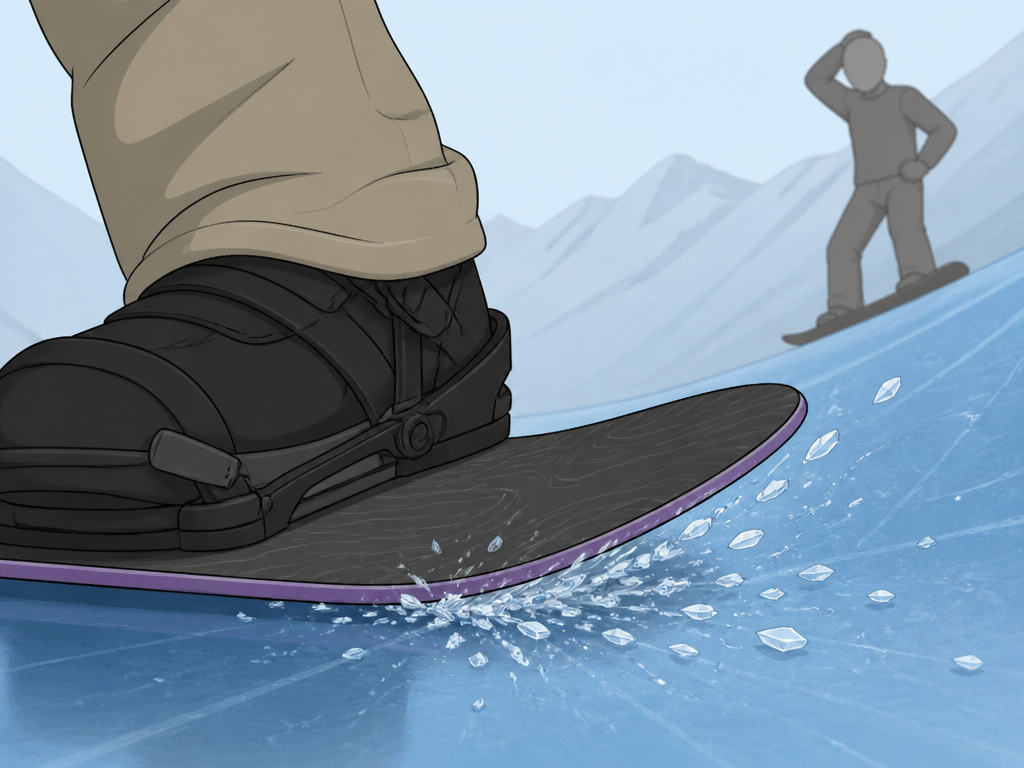
Push it into a carve on a soft groomer, and it holds okay. But take that same carve onto a hard, scraped-off blue run later in the day, and the story changes. The board will start to chatter. The edge will feel vague, like it’s skimming over the ice rather than digging in. This is the trade-off. The softness that forgives your errors also limits your precision when the snow gets firm.
Where this goes sideways: Trying to ride the Hideaway aggressively on hardpack. The edge hold simply isn’t there, and you’ll find yourself sliding out when you try to lay over a hard carve. This is the number one complaint from intermediate riders on forums, the board feels like a “wet noodle” when you need grip.
Now, find some fresh snow. That directional shape comes alive. The nose floats without you having to fight for it. The board feels longer, more planted, and strangely competent. It won’t rival a dedicated powder board, but for a beginner accidentally finding themselves in the trees, it’s a safety net that other starter boards don’t provide.
The twin flex means you can ride switch, but that directional shape makes it awkward. The nose drags behind you, feeling elongated and clumsy. If learning switch is a top priority from day one, a true twin like the Burton Stylus is a more logical choice in the Burton snowboard lineup.
The Hideaway vs. Other Burton Beginner Boards
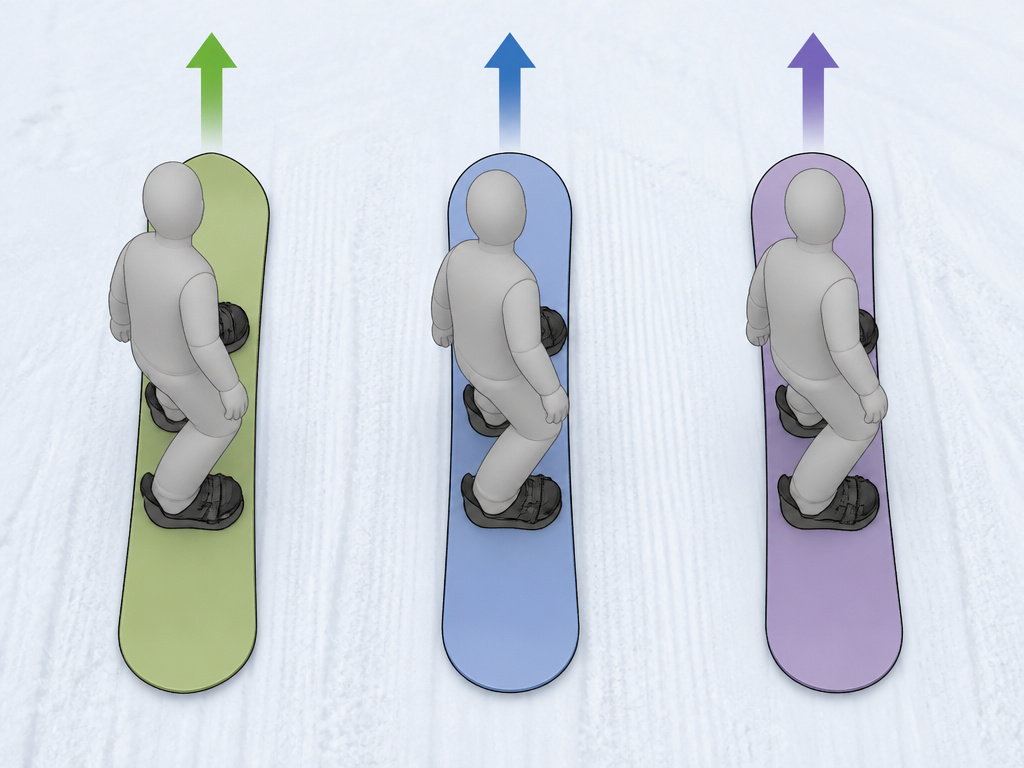
Burton doesn’t have just one beginner board; it has a ladder. Choosing the right rung matters. Here is a comparison of the Hideaway with its closest siblings.
| Feature | Burton Hideaway | Burton Stylus | Burton Ripcord |
|---|---|---|---|
| Shape | Directional Twin (5mm taper) | True Twin | True Twin |
| Best For | Beginners aiming for all-mountain & powder exploration | Beginners focused on groomers & learning switch riding | Beginner men (similar profile to Hideaway, often stiffer) |
| Switch Riding | Possible, but less natural due to longer nose | Excellent, symmetrical design | Excellent, symmetrical design |
| Key Differentiator | Directional float, slightly more advanced all-mountain feel | Pure simplicity and balance for foundational learning | Often a slightly stiffer, more durable construction |
The Burton Stylus is the purest beginner tool in the box. It’s a true twin, designed solely for mastering basics on groomed runs. If your goal is to link turns, then learn 180s and ride switch, the Stylus is the more focused trainer.
The Hideaway offers a directional shape with powder capability, a key point in every burton hideaway snowboard review, unlike the true-twin Stylus. The comparison is less about which is “better” and more about which beginner you are: the dedicated student of the resort, or the explorer who glances at the ungroomed trail with curiosity.
For a broader look at how these fit into the brand’s offerings, our guide to the best Burton snowboards breaks down the entire range from park to powder.
What Are the Burton Hideaway’s Limitations?
Every board has a ceiling. Understanding the Hideaway’s keeps you from expecting magic it can’t deliver.
First, park progression. The soft flex and extruded base can handle small jumps and jibs. You can press the nose or tail. But the moment you step up to larger kickers or want serious pop off the tail, the board lacks the snap. It’s designed to be forgiving, not explosive. You’ll outgrow it for park-specific tricks faster than you think.
Second, speed stability. This is a light, soft board. When you point it straight down a steep run, it will feel nervous. It might start to vibrate or feel less secure at speeds where a stiffer board would feel planted. This isn’t a flaw; it’s a design limit that keeps beginners from getting into trouble they can’t handle.
Finally, the edge hold issue bears repeating. If you live where hard, icy conditions are the norm for most of the season, the Hideaway will frustrate you as you progress. Your skills will advance to where you want that locked-in carve, and the board will refuse to give it to you. In those conditions, a board with camber underfoot or a hybrid profile will serve you better in the long run.
Long-Term Durability and Support
Burton backs the Hideaway with a 3-year warranty for boards with The Channel mounting system (2014 and newer). That’s a strong vote of confidence for a beginner board. It covers defects in materials and workmanship, not the dings and scratches of learning.
The durability question is less about breaking and more about wearing out its welcome. The components, the Biax glass, the 800G core, are quality. The board won’t delaminate because you rode it 30 days in a season. But the very soft flex that was a blessing on day one might feel like a limitation by day 30. That’s not the board failing; that’s you succeeding.
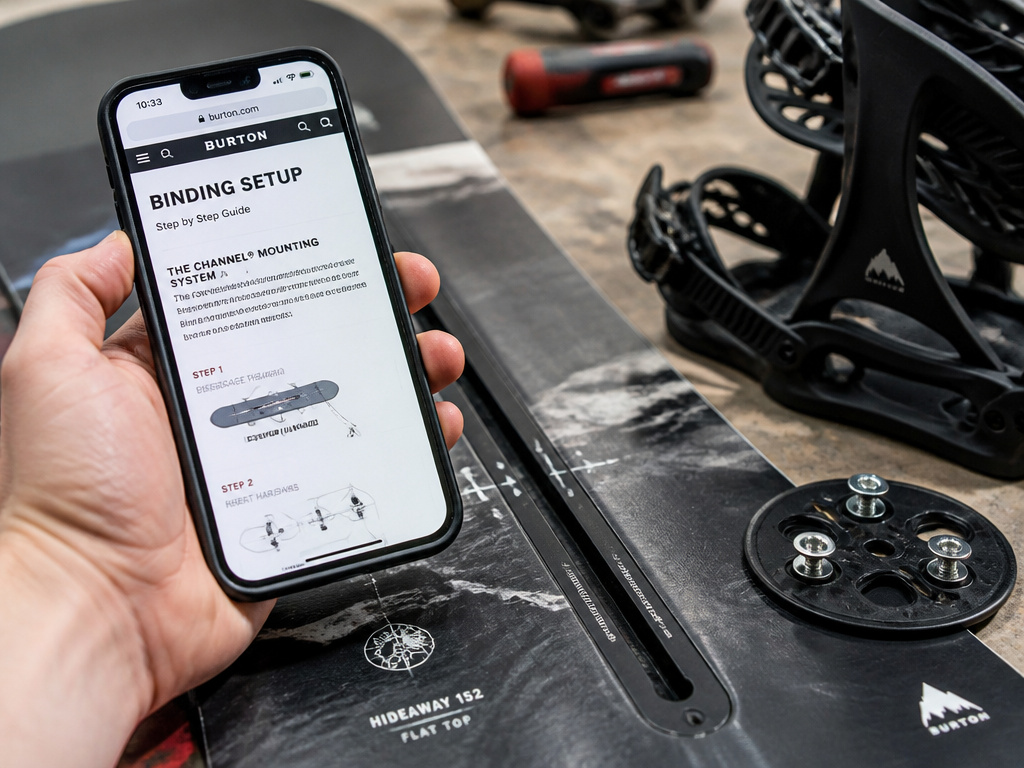
One practical note: Burton, for environmental reasons, does not print product manuals. You download binding setup guides from their website. For a first-timer mounting their own bindings, a five-minute YouTube search for “How to set up Burton Channel bindings” is more valuable than any printed leaflet would be.
Frequently Asked Questions
Is the Burton Hideaway good for a complete beginner?
Yes, it’s designed specifically for that role. The Flat Top Bend profile and very soft flex make it one of the most forgiving boards to learn on. It reduces edge catches and makes turning intuitive, which is exactly what someone on their first day needs.
Can I use the Burton Hideaway in powder?
It’s surprisingly capable in powder for a beginner board. The directional shape with its longer nose and 5mm taper helps the nose plane up in soft snow. It won’t match a dedicated powder board, but it will handle a foot of fresh snow far better than a true twin beginner board.
What size Burton Hideaway should I get?
Use the weight chart, not a height-based formula. Match your weight to the recommended range for each length. If you’re between sizes (e.g., 68kg), sizing up (to a 152cm) will give a slightly more stable ride; sizing down (to a 148cm) will make it even more playful and forgiving.
Is the Burton Hideaway a good park board?
For very small park features, learning to ride boxes, small jumps, it’s fine. The soft flex is forgiving on landings. However, its lack of pop and softness will limit you as you progress to larger features. It’s a park trainer, not a park specialist.
How does the Hideaway compare to the Burton Feelgood?
The Burton Feelgood is a much more advanced board. It features camber, a stiffer flex, and is built for intermediate-to-advanced female riders who charge aggressively. The Hideaway is its polar opposite: soft, flat, and beginner-focused. They are for completely different stages of a rider’s journey.
Before You Go
The Burton Hideaway isn’t trying to be everything. It’s trying to be the perfect first chapter. It gets you standing up, turning, and exploring the mountain with a safety net built from its shape and flex.
If you’re the type of learner who stares down the fall line with a mix of fear and excitement, and if your local hill gets even a dusting of powder, this board is a thoughtful choice. It will support those early explorations in a way a pure groomer-board won’t.
But if your season is 90% hardpack and your immediate goal is mastering switch riding and park fundamentals, a true twin like the Stylus, or even looking at the wider world of the best snowboards for beginners, might be a sharper fit. The Hideaway’s special trick is float, and if you won’t use it, you might prefer a board better suited for switch progression.
Your first board should build confidence, not frustration. The Hideaway builds confidence by being forgiving and capable off the groomed path. As your skills progress to aggressive carving, you may find the Hideaway’s soft flex limiting.
