Can You Do Tricks on a Longboard? A Realistic Guide
This post contains affiliate links. As an Amazon Associate, we earn from qualifying purchases.
Yes, you can do tricks on a longboard, but they are fundamentally different from skateboard tricks. A longboard is bigger, heavier, and has softer wheels, which changes what’s possible. The best board for tricks has at least one functional kicktail and a symmetrical shape, but optimal length is contested: LongboardHub suggests 28 to 42 inches for freestyle, while Longboards USA specifies 44 to 48 inches for dancing longboards. Tricks like manuals, pivots, shove-its, and footwork are all achievable, while high-flying flip tricks are much harder and not the board’s strength.
That weight and wheel softness are the physical constraints that define the entire discipline. A longboard isn’t a bad skateboard; it’s a different tool built for a different kind of play. People often ask, can you do tricks on a longboard? The tricks that work rely on its stability and rolling momentum, not its ability to snap into the air.
What follows is a breakdown of the gear that actually works, the first tricks worth your time, and the progression path that builds skills instead of frustration. We’ll also clear up the common myths and pinpoint where most beginners stall out.
Key Takeaways
- A functional kicktail is essential for most tricks; without one, manuals, pivots, and shove-its are off the table.
- Start learning with grounded balance tricks like kickturns, riding switch, and manuals before attempting any board rotation.
- The optimal board length is contested: LongboardHub states the best longboard for tricks is about 28 to 42 inches, while Longboards USA states dancing longboards (for footwork tricks) range from 44 to 48 inches.
- Land with bent knees every time; a straight-legged landing transfers all the impact to your joints and will shake the board out from under you.
- Footbraking is your essential safety skill; being able to stop reliably is more important than any trick on your first ten sessions.
What Makes a Longboard Trick-Friendly?
Look at the tail. If it’s flat or gently curved, you have a cruiser. If it angles up sharply, you have a kicktail, the single most important feature for tricks. Pressing down on that upturned end is the first movement in manuals, pivots, and shove-its. According to LongboardHub, the best longboard for tricks has at least one kicktail. Two kicktails on a symmetrical board let you perform tricks in both directions, which is a huge advantage as you progress.
Length is the next variable, and here’s where sources disagree. LongboardHub states the best trick board is about 28 to 42 inches, with shorter boards (28-34″) suiting pivots and manuals, and longer ones (36-42″) for a mix. However, Longboards USA specifies that dedicated dancing longboards, a discipline built on footwork tricks, range from 44 to 48 inches. The takeaway? For freestyle tricks involving pops and spins, stay in the 28-42″ range. For cross-steps and deck walks, you need the longer platform.
Common mistake: Choosing a board without useful kicks. The equipment cannot create pop where the deck provides no tail leverage.
Wheel choice matters, but there’s no universal spec. The Longboard Bible notes that smaller, lighter wheels can make tricks easier to initiate, while larger wheels roll over rough pavement better. The key is checking for wheelbite, ensure your wheels don’t contact the deck when you turn or lean hard. A board that bites mid-trick will stop dead.
Longboard vs. Skateboard for Tricks: The Real Difference
A skateboard is a precision flick-tool. A longboard is a momentum-based balance platform. This isn’t a value judgment; it’s a design fact that answers the can you do tricks on a longboard question. A longboard is, as LongboardHub puts it, too heavy and too soft-wheeled for flip tricks like the ones you see in a skatepark. The mass makes it hard to flick, and the grippy, large-diameter wheels want to stay stuck to the ground.
The trade-off is comfort and flow. A longboard’s smooth ride and stable platform are perfect for tricks that emphasize style and continuous motion over explosive pop, which is the core of the can you do tricks on a longboard discussion. If your goal is kickflips down a stair set, buy a skateboard. If you want to add stylish pivots, manuals, and footwork to your cruising, a trick-oriented longboard is the right tool. The disciplines don’t compete; they complement.
The First Tricks Worth Learning (and the Order That Actually Works)
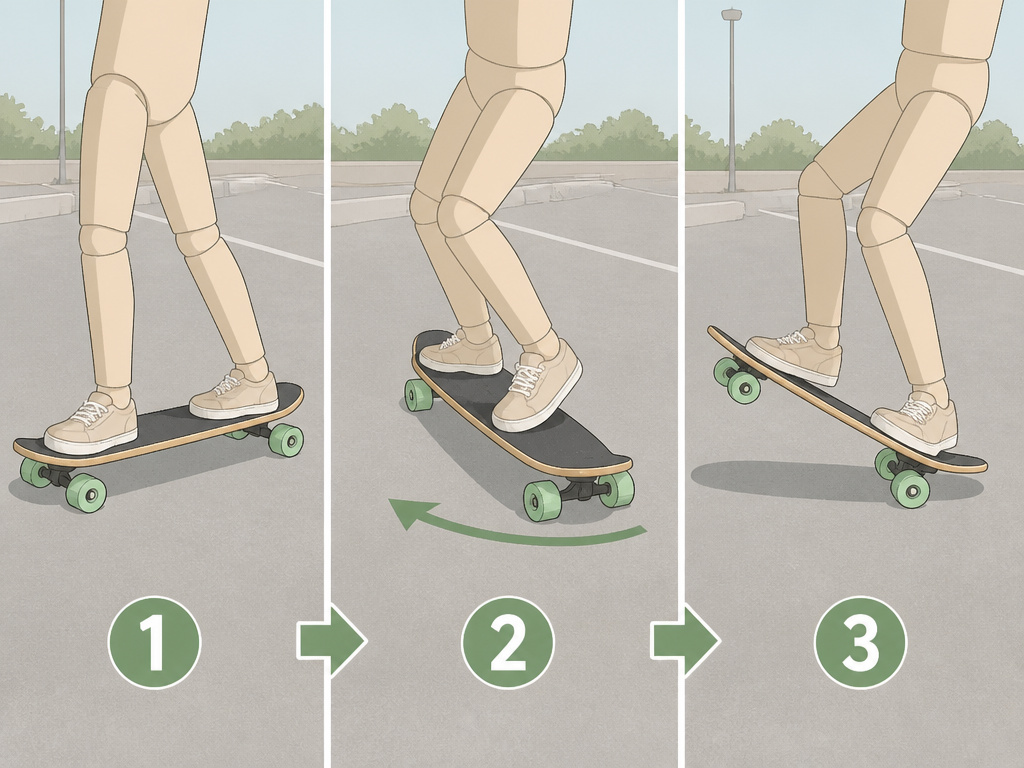
Jumping straight into a shove-it is how you sprain an ankle. Progression is everything. Both LongboardHub and the Longboard Bible outline a logical skill ladder. Start on smooth, flat ground at a walking pace.
- Tic-Tacs & Kickturns: This is simply lifting the nose by pressing the kicktail and turning the board back and forth while stationary or rolling slowly. It teaches you the feel of the tail and how to unweight the front truck.
- Riding Switch: Being comfortable riding with your non-dominant foot forward is crucial. Many tricks will land you in switch stance, and if you can’t ride out of it, the trick isn’t complete.
- Manuals: Rolling on the back wheels only. Start with a one-second hold. The goal is control, not distance. Skip this if your board lacks a kicktail, it’s physically impossible without one.
- Pivots: A 180-degree spin on the back wheels. It’s a kicked-up kickturn. This teaches you to control rotation without leaving the ground.
- Shove-its: After pivots feel reliable, you graduate to rotating the board 180 degrees beneath you with a small jump. The Longboard Bible lists this as a key step before attempting ollies.
This order builds each skill on the last. Attempting a shove-it before you can manual is like trying to write a novel before you know the alphabet.
Building a Safe Progression Path
A clean ride-away is part of every successful trick. Rushing ahead undermines that. The Longboard Bible’s freestyle progression path is a six-step framework that respects fundamentals:
- Stable riding and braking
- Kick turns and pivots
- Manuals
- Step-off and no-comply movements
- Shuvits
- Ollies (only on a board with a functional kicktail)
Notice that ollies, the foundational skateboard jump, are step six. They require a functional kicktail and consistent landing mechanics. This path forces you to master balance and board control before asking for air.
Where do most people jump the line? They see a cool trick like a ghost ride kickflip, which Outuro.com argues is arguably the easiest flip trick on a longboard, and try to mimic it without the prerequisite balance. The board flips, they miss the catch, and the runaway deck becomes a hazard. This is why your practice area is critical.
Use a dry, clean, traffic-free area with enough space for the rider and an escaped board.
I’ve coached skaters who could only perform certain tricks going fakie, which meant their entire trick map was lopsided. We had to backtrack to switch riding drills for a month to rebalance their foundation. Trust the process, not just the trick.
Essential Safety Gear and Practice Setup
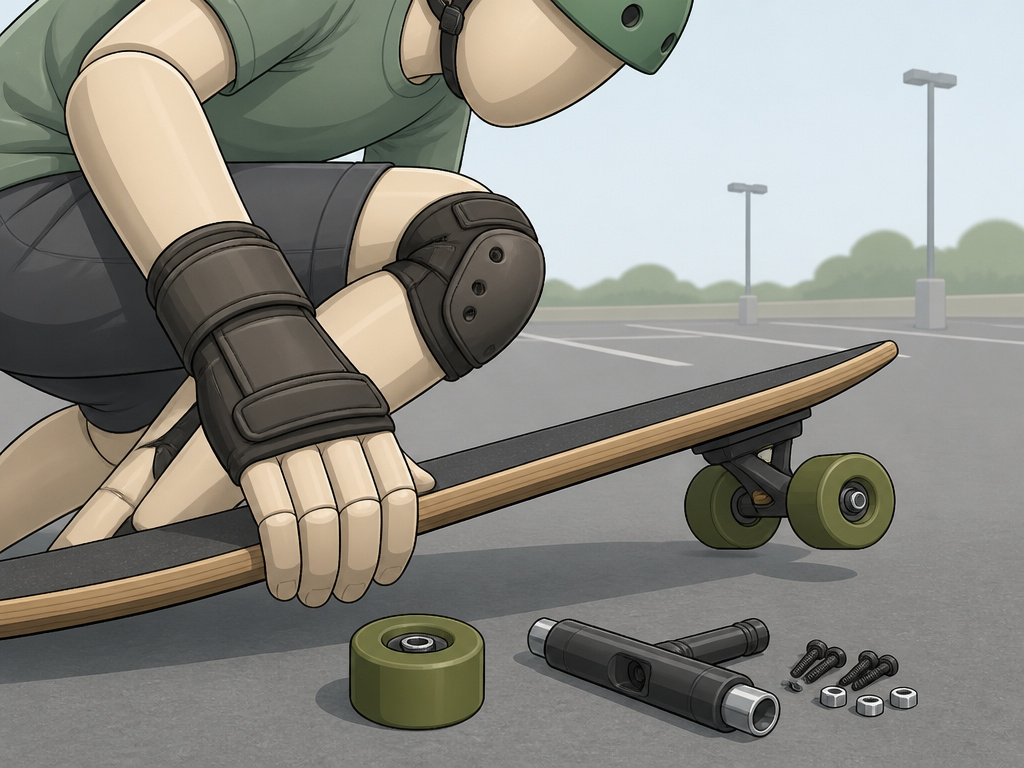
Your helmet is the most important piece of gear. The Longboard Bible insists on a properly fitted skateboard helmet. Wrist guards are also highly recommended for beginners, as instinct will have you putting your hands out during falls. Knee and elbow pads turn a session-ending slam into a quick brush-off.
Before any practice, do a board check. Look at the deck, especially around the kicks and mounting holes, for stress cracks. Ensure your hardware, trucks, and wheels are tight and roll freely. A loose truck or a chipped wheel can fail mid-maneuver.
Your practice surface matters as much as your gear. Find a smooth, empty parking lot or a flat stretch of new pavement. Bumps and debris will catch your wheels and toss you. The space needs to be large enough that if your board gets away from you at a slow roll, it won’t hit a car, a curb, or a pedestrian.
Can You Modify a Cruiser for Tricks?
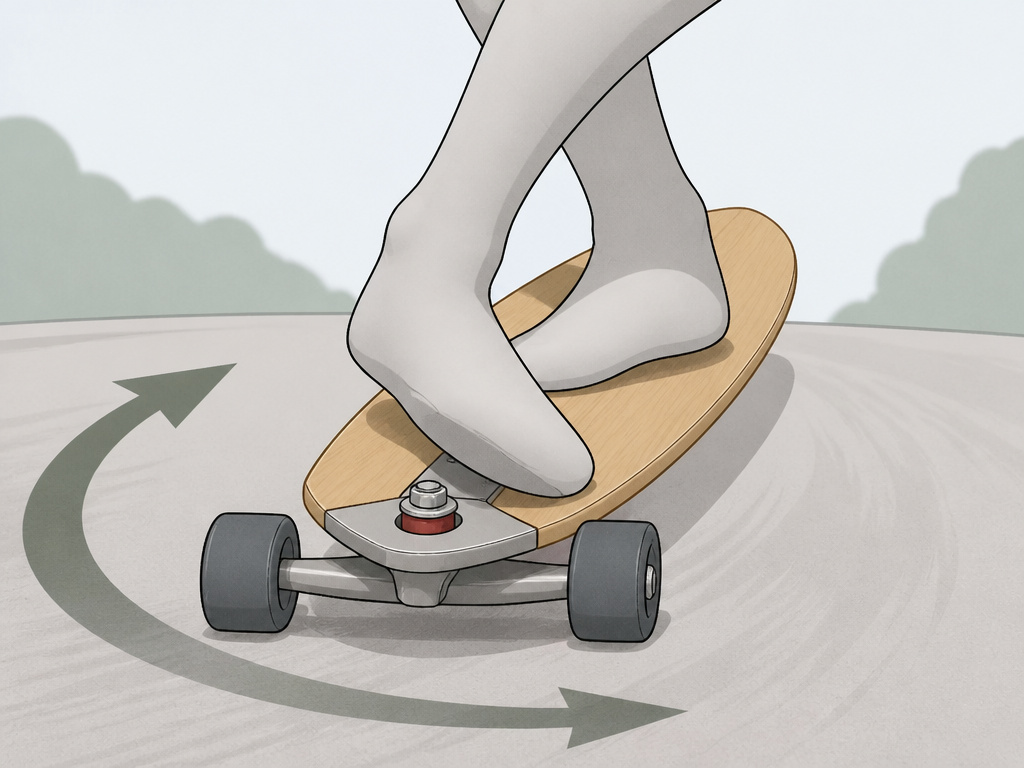
You own a pintail cruiser with no kicktail. Can you learn tricks on it? The answer is yes, but within strict limits. Without a kicktail, manuals, pivots, and shove-its are mechanically impossible. What’s left? You can practice footwork like cross-steps, carving hard, and basic dance steps that don’t require popping the board.
Landing pivots and shove-its on a cruiser without a kicktail is much harder and not recommended; learning on a board suited for tricks is more efficient. The modification path is limited: you could try smaller, harder wheels to reduce weight and inertia, and tighten your trucks for more stability during foot maneuvers. But you’re essentially fighting the board’s design.
Electric Longboard Limitations for Tricks
Electric longboards are built for cruising and commuting, not for freestyle tricks. Their design inherently clashes with the needs of trick riding. Electric longboards are heavier than standard longboards, which makes them difficult to pop or maneuver for tricks like manuals and shove-its. The added weight and the presence of a motor and battery also affect the board’s flex, which can make pop and landings inconsistent. Also, the soft wheels commonly used for a smooth ride are not ideal for flip tricks. For learning tricks, a standard, lighter board designed specifically for freestyle is the practical choice.
Frequently Asked Questions
Can you ollie on a longboard?
It is possible on shorter boards with a steep kicktail, but it is much harder than on a skateboard because a longboard is heavier and has softer wheels. Most longboard tricks stay close to the ground. You need a functional tail and should follow a full progression path, as detailed in our guide on how to ollie on a longboard.
What is the easiest flip trick on a longboard?
According to Outuro.com, the Ghost Ride Kickflip is arguably the easiest. You step off the board as it rolls, use your back foot to flip it, then jump back on. It’s easier because you’re not trying to flip the board while staying over it.
Is a longboard or skateboard better for learning tricks?
Skateboard is better for learning ollies, flips, and grinds due to its lighter weight, harder wheels, and twin-tail design. A longboard with a kicktail is better if you want to mix simple tricks like manuals and pivots with comfortable cruising and want a gentler learning curve for balance-based moves.
Do I need a special longboard for dancing?
Yes. Dancing involves cross-steps and deck walks that require a long, stable platform. Brands like Loaded, Dusters, and Omen make decks specifically for this, typically 44 to 48 inches long with symmetrical shapes and medium-soft flex, like the Loaded Bhangra V2 (48″) or the Dusters Wanderlust (47″).
How do I stop my longboard when learning tricks?
Learn the footbrake first. This is the essential skill of dragging your pushing foot on the ground to scrub speed. No trick progression matters if you can’t control your speed and stop safely. It’s the foundation all other skills are built on.
The Bottom Line
Longboarding tricks are about finesse, not force. They reward patience and clean technique over raw power. The board specs are your starting point, 28 to 42 inches with a kicktail for freestyle, 44 to 48 inches for dancing, but your progression path is what decides success.
Spend your first ten sessions mastering the footbrake, kickturns, and riding switch. That foundation will save you months of backpedaling later. Remember, the goal is to explore what this unique, flow-focused tool does best, not to replicate skateboarding on a longer deck. Start grounded, build slowly, and the tricks will come as a natural extension of your control.
