Can You Ride an Electric Scooter on the Road?
This post contains affiliate links. As an Amazon Associate, we earn from qualifying purchases.
In the UK, riding a privately owned electric scooter on public roads is illegal, but rented scooters from official trial schemes are legal on roads and cycle lanes in certain areas. In Singapore, e-scooters are prohibited on all roads and footpaths, permitted only on cycling paths. In New York State, you can ride on roads with a speed limit of 30 mph or less, while in British Columbia, it’s allowed on roads with a limit of 50 km/h or less, but only within designated ‘pilot communities’. The answer is entirely location-dependent.
That split between private and rental scooters in the UK is the most common point of confusion. It’s not a grey area; it’s two completely different legal categories. The government draws a bright line: your personal scooter is for private land only. A key question many ask is, can you ride an electric scooter on the road? The rental trials are a controlled experiment with their own set of rules, and they don’t extend to anything you own.
What follows is a breakdown of the law in four major jurisdictions that represent the spectrum of regulation. The article explains the UK’s unique split, Singapore’s strict path-only model, New York’s road-speed framework, and British Columbia’s community-based pilot. By the end, you’ll know how to read your own local laws, including the answer to can you ride an electric scooter on the road, and understand the three questions that decide your legal standing every time you roll out.
Key Takeaways
- The UK bans private e-scooters on all public land, but rented scooters from official schemes are legal on roads and cycle lanes in trial areas.
- Singapore permits e-scooters only on cycling paths, prohibits them on all roads and footpaths, and requires a UL2272 fire-safety certification.
- Check your scooter’s motor wattage and top speed against local definitions; in British Columbia, a legal “electric kick scooter” must not exceed 500 watts and 24 km/h.
- Road legality often hinges on the posted speed limit; New York allows riding only on roads with a limit of 30 mph or less.
- Sidewalk riding regulations vary: Singapore and the UK prohibit it, British Columbia allows it conditionally within pilot communities if the rider yields to pedestrians, and New York State prohibits it except as authorized by local law.
The UK’s Private vs. Rental Split
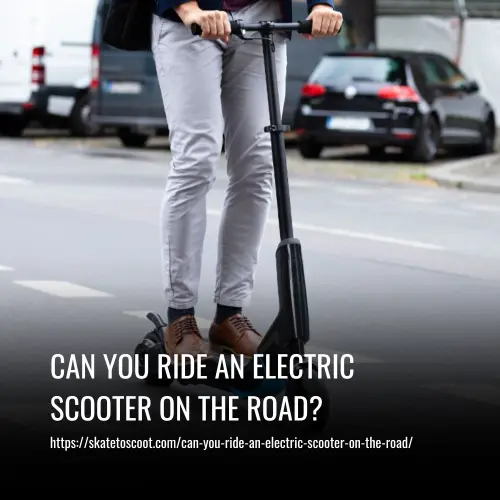
The UK’s rules aren’t just strict; they’re binary. Your ownership status changes everything.
It is illegal to ride a privately owned electric scooter on public roads, pavements, or parks in the UK. You can only ride a rented electric scooter on public roads (including cycle lanes) through official rental schemes in certain UK areas.
This isn’t a recommendation—it’s the law as published by the UK Government. The police can issue a fine, add penalty points to your driving licence, and seize the scooter. The logic is that rental schemes are tightly controlled trials. The scooters are insured, limited in speed, and geo-fenced to certain areas. Your personal scooter has none of those safeguards. I’ve seen this confusion firsthand with new riders who buy a scooter online, assuming what they see in city centres applies to them. It doesn’t.
Where this goes sideways: Assuming rental scheme rules apply to your personal scooter. You’ll see branded rental scooters on the road and think, “It’s legal.” For your own, it’s not. The consequence is immediate confiscation and a fine, with no warning needed.
This creates a stark postcode lottery, a point of frustration many riders mention in online forums. For a deeper look at where sidewalk use might come into play, even in these limited contexts, review the specific sidewalk rules.
| Scooter Type | Where You Can Ride | Legal Status on Public Roads |
|---|---|---|
| Privately Owned | Private land only | Illegal |
| Rented from Official Scheme | Public roads & cycle lanes in trial zones | Legal (under scheme rules) |
The Singaporean Model: Paths Only
Singapore provides the clearest example of a government drawing hard boundaries. Here, the question isn’t about roads; it’s about dedicated infrastructure.
Electric scooters can only be ridden on cycling paths. They are prohibited from all footpaths and roads. Full stop. This is the policy of the Singapore Land Transport Authority (LTA), and it’s enforced with significant penalties. First-time offenders using a non-compliant e-scooter on public paths face a fine of up to $5,000 and/or up to 3 months imprisonment.
The system is built on verification. Every e-scooter for use on public paths must be registered with the LTA, cannot weigh more than 20kg, cannot be wider than 70cm, and must have a maximum motorised speed of 25 km/h. Most critically, it must be UL2272 certified. This is an electrical fire-safety standard. From 1 June 2026, it will be an offence simply to keep a non-UL2272 certified e-scooter in Singapore.
This creates a closed ecosystem. Your device is registered, inspected every two years, and its registration mark must be visibly affixed. It turns the scooter from a consumer gadget into a regulated vehicle for a specific, state-managed network. This level of control is why you won’t see e-scooters mixing with car traffic in Singapore. For a device to even qualify for this system, understanding its legal classification is the first step.
North American Frameworks: New York and British Columbia
Across North America, the approach is more permissive regarding road use, but the rules are granular and packed with specific numbers. Two jurisdictions illustrate the range: New York’s state-wide law and British Columbia’s pilot-project regulation.
New York State: The Speed Limit Rule
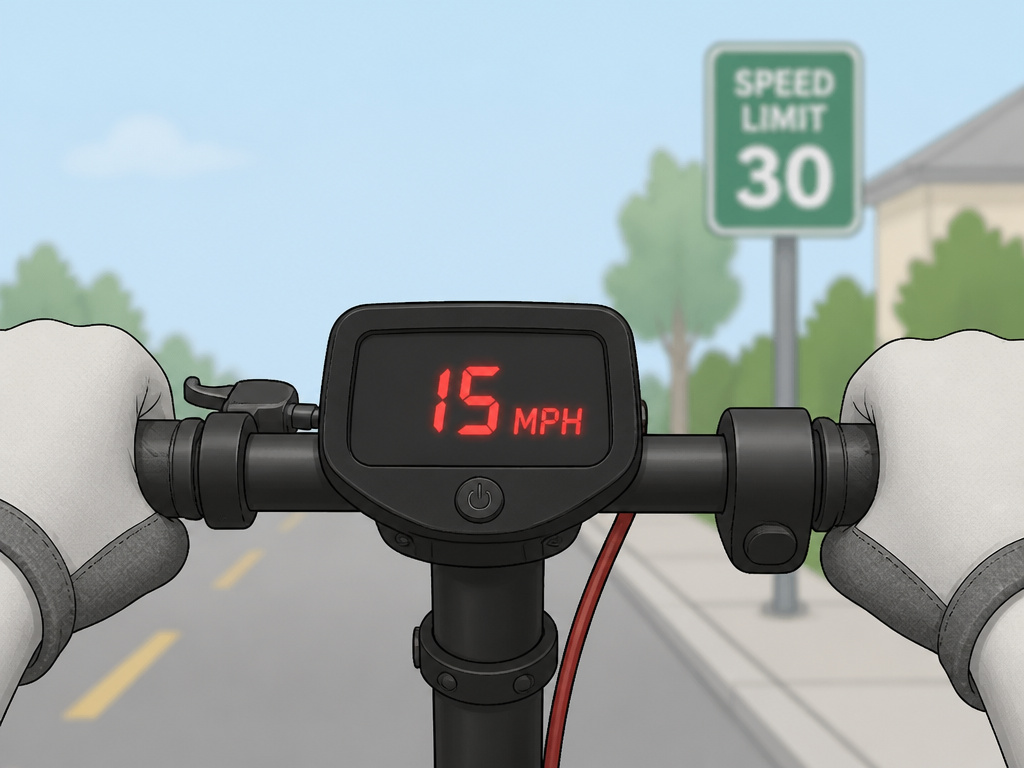
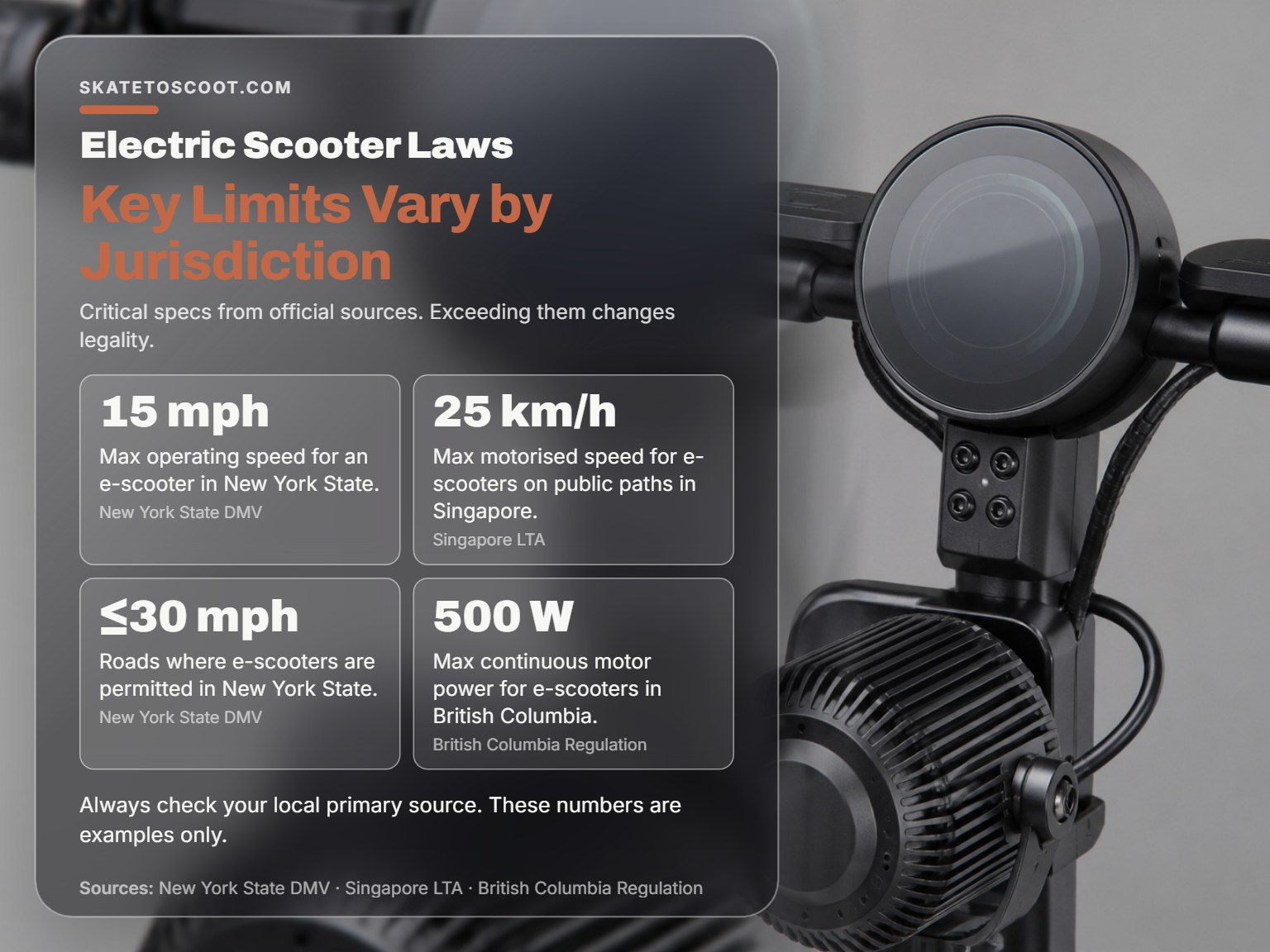
New York law defines an electric scooter and says where it can go. The definition includes a maximum speed capability of 20 mph, but the operational rule is stricter: it is illegal to operate an electric scooter in excess of fifteen miles per hour.
The bigger restriction is location. You can operate an electric scooter only on roads with a posted speed limit of 30 mph or less. This rule, from the New York DMV scooter rules, effectively keeps riders off arterials and highways. It also implies you are a vehicle on the roadway, expected to follow all standard traffic laws. You can’t ride on sidewalks “except as authorized by local law.”
The state also mandates a specific safety step for lithium-ion batteries: a red tag on the charging cord stating ‘UNPLUG WHEN NOT IN USE’. It’s a small, physical reminder of the fire risk that has shaped much of the regulatory conversation.
British Columbia: The Pilot Community Specification
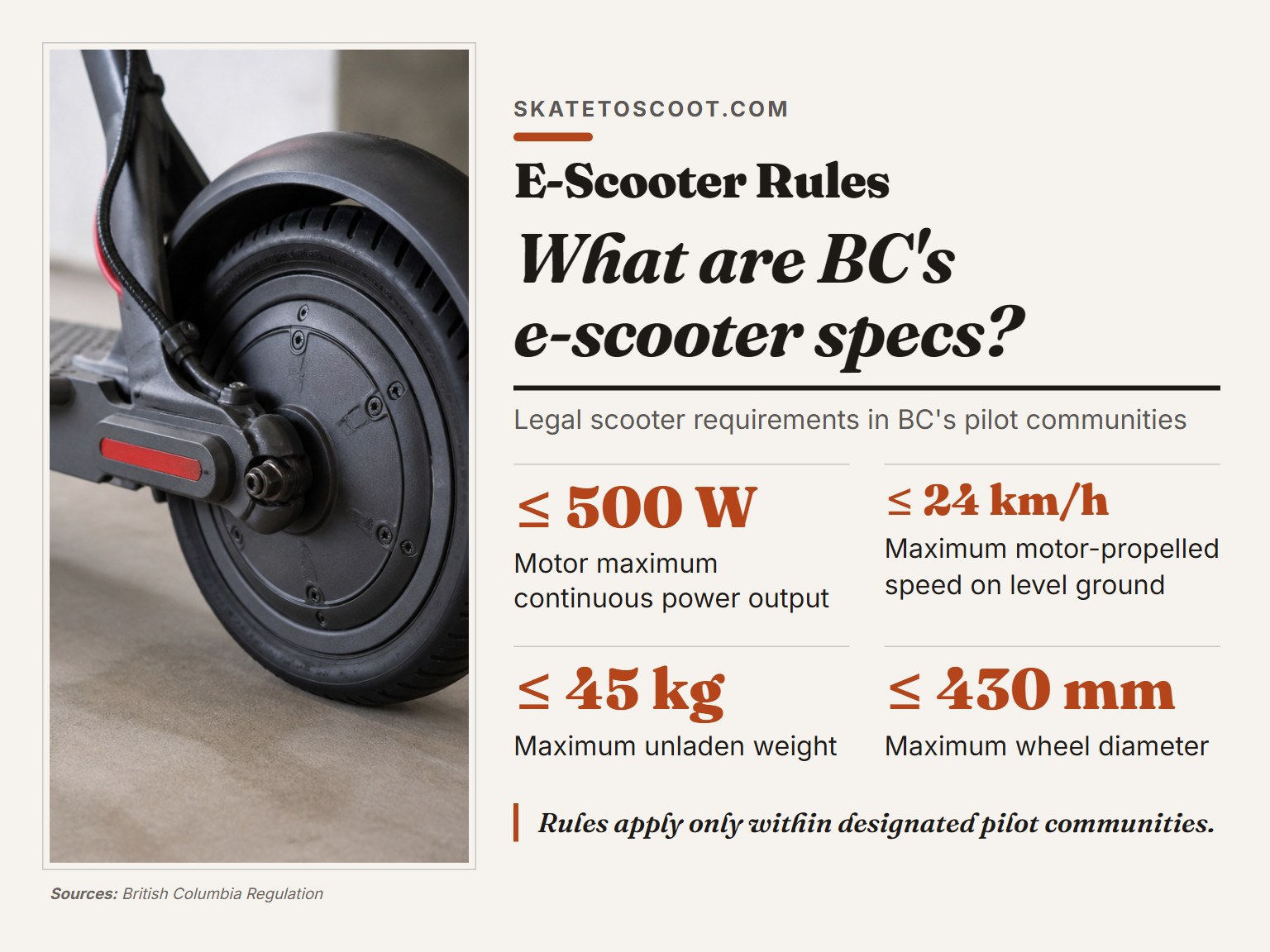
British Columbia’s rules are arguably the most detailed, but they come with a major caveat: they only apply within “pilot communities” that have adopted a permitting bylaw. The enabling regulation (B.C. Reg. 90/2021) itself was scheduled for repeal on April 5, 2024, indicating a temporary, experimental approach.
Within a pilot community, the law defines a legal “electric kick scooter” down to the millimeter and watt:
- Motor: ≤ 500 watts continuous power output.
- Speed: Motor cannot propel it above 24 km/h on level ground.
- Weight: ≤ 45 kg unladen.
- Wheels: ≤ 430 mm in diameter.
- Braking: Must stop from 24 km/h within 9 meters.
If your scooter meets these specs and you are within a designated pilot community, you can ride on highways (roads) with a speed limit of 50 km/h or less. If the road has a limit greater than 50 km/h, you can only ride if there is a designated cycle lane. This nuanced distinction between road types is a key detail many riders miss when considering the can you ride an electric scooter on the road question. For clarity on where high-speed roads fit in, see our explainer on riding on highways.
In British Columbia’s pilot communities, sidewalk use is not outright banned; a rider on a sidewalk or path used by pedestrians must yield the right-of-way and sound their bell when passing.
How to Actually Check Your Local Laws
Most articles tell you to “check local laws.” Here’s how to do it, step-by-step. This method will give you an answer you can trust, not just a guess.
- Find Your Primary Statute. Search for “[Your State/Province] electric scooter law” or “[Your City] micromobility regulations.” Look for .gov or .gc.ca domains. The FHWA model state regulations provide a framework many states use, so referencing them can help you understand the categories your local law might employ.
- Identify the Definition. Laws work by defining a vehicle class. Find the section that defines “electric scooter,” “personal transportation device,” or “electric kick scooter.” Note the exact specs: maximum wattage, speed, and weight. If your scooter exceeds any of these, it likely falls into a different (often prohibited) category.
- Map the Permitted Areas. Look for phrases like “may be operated on…” or “prohibited on…”. Note any speed limit restrictions for roads (e.g., “roads under 30 mph”) and any outright bans on sidewalks/footpaths.
- Check for Pilot or Trial Status. See if the rules are limited to certain cities or have an expiry date (like BC’s pilot). Your location might not be included.
- Verify Equipment Requirements. Note any mandatory gear: helmet (often by age), bell, lights, reflectors. The CPSC micromobility safety center is an excellent resource for federal safety guidelines that often underpin these local rules.
Common mistake: Relying on second-hand summaries from retail websites or non-local news articles. These frequently conflate rules from different countries or states, creating a false sense of what’s allowed. Go to the primary source.
Sharing the Road: A Practical Guide
Knowing it’s legal is one thing. Doing it safely is another. When you’re on the road, you’re the smallest, most vulnerable vehicle. Act like it.
- Claim Your Lane. Don’t hug the curb. Ride about a meter out. This makes you visible to drivers and prevents them from trying to squeeze past you in the same lane.
- Signal Everything. Use clear hand signals for turns and stops. Your scooter doesn’t have brake lights, so a raised left hand for a stop is critical.
- Assume You Are Invisible. Drivers look for cars, trucks, and motorcycles. They do not instinctively look for scooters. Make eye contact with drivers at intersections before proceeding.
- Watch for Door Zones. When passing parked cars, leave enough space for a door to swing open suddenly. A collision with a car door is a common and serious hazard.
- Plan Your Route. Use apps like Google Maps in “bicycle” mode to find routes with lower speed limits and bike lanes. Avoid roads with high traffic speeds and no shoulder.
These tactics aren’t just good practice; in many places, they’re embedded in the official guidance for riding safely. Treating your ride like a skilled exercise in awareness is the best protection you have.
What to Do If You Are Stopped by Police
Your heart rate jumps. Lights flash. Here’s how to handle it without making things worse.
Stay calm and pull over safely. Turn off your scooter if possible. Have your ID ready. The officer will likely want to know if you know the law and if your scooter is compliant. Answer questions politely. “I was under the impression they were legal on roads under 30 mph, officer,” is better than “It’s legal!”
Do not argue on the roadside. If you receive a citation, note the exact violation code. You can contest it later with research. The officer’s primary concerns are safety (no helmet, reckless riding) and compliance (is this a banned high-power scooter?).
Being prepared reduces anxiety. Know your local license requirements—in most places, you don’t need one for a low-speed scooter, but having a driver’s license on you can be helpful. Ensure your scooter meets all local equipment rules (bell, lights if at night). This preparation shows you’re a responsible rider, not a risk.
Do you need a license, registration, or insurance for an electric scooter?
The requirements depend entirely on where you ride. In the UK, only rented scooters from official schemes are permitted on roads, and these come with their own insurance; private scooters cannot be registered or insured for road use. In Singapore, e-scooters must be registered and undergo a mandatory inspection every two years. Jurisdictions like New York State and British Columbia do not mention a driver’s license or vehicle registration for e-scooters in the provided facts. You should always follow local traffic laws, which may include specific insurance mandates for certain types of use.
How do electric scooter rules compare to e-bikes and mopeds?
Electric scooters are typically regulated under distinct, often stricter rules than other motorized vehicles. For instance, in Singapore, e-scooters are banned from roads entirely and confined to cycling paths, whereas e-bikes may have different road access. In the UK, privately owned e-scooters are illegal on all public land, unlike e-bikes which are generally treated as bicycles. Mopeds almost always require registration, insurance, and a driver’s license. The key difference is that e-scooter legality frequently hinges on specific device specifications, approved use areas, and local pilot programs, making their rules less universal than those for e-bikes or mopeds.
Frequently Asked Questions
What cities have banned electric scooters?
Very few cities have an outright ban on all e-scooters. More common are bans on private e-scooters (like across the entire UK) or restrictions that confine them to specific areas or rental schemes. Some cities have banned them from sidewalks but allow them on roads or bike lanes. You must check your specific city’s transportation bylaws.
What happens if you get caught on an electric scooter illegally?
Penalties vary wildly. In Singapore, fines reach $2,000 for footpath riding and $5,000 for using a non-compliant device, with possible jail time. In the UK, police can issue a fine, add penalty points to your driving licence, and seize the scooter. In many US jurisdictions, you might get a traffic citation similar to a bicycle violation. Repeated offenses or riding a device classified as a motor vehicle without a license can lead to more serious charges.
Is it illegal to drive an electric scooter on a sidewalk?
In most major jurisdictions, yes, it is illegal. Singapore and the UK (for rentals) explicitly prohibit sidewalk riding. New York State prohibits it except where authorized by local law, which is rare. British Columbia allows it conditionally within pilot communities, but the rider must yield to pedestrians. The default assumption should be that sidewalks are for walking.
Can cops pull you over on a scooter?
Yes, absolutely. Police can stop you for any traffic violation, just like a bicycle or car. Common reasons include riding on a sidewalk, running a stop sign/red light, not having lights at night, or reckless riding. They can also stop you to check if your scooter complies with local power and speed limits, which determines its legal classification.
Before You Go
One threshold decides everything: the posted speed limit of the road you’re on. In regulated places, that’s the line. Below it, you’re likely a permitted vehicle; above it, you’re almost certainly not. Your scooter’s specs are the other half—a machine built for 30 mph doesn’t fit a law written for 15 mph devices.
The single most useful step you can take this week is to look up your scooter’s motor wattage and its maximum speed. Then, find your local government’s transportation website and search for “electric scooter” or “kick scooter.” Match your numbers to their definitions. That ten-minute check is the difference between a legal commute and an expensive encounter with the law. If your scooter doesn’t fit, your search shifts to finding compliant street-legal scooters that do.
All this assumes a stable regulatory environment. It’s not. Pilot programs sunset, like in BC. Certification deadlines loom, like Singapore’s 2026 UL2272 rule. Your local laws aren’t a document you read once; they’re a channel you need to monitor.
