Solite Scooter Review: Folding, Safety, and User Feedback
This post contains affiliate links. As an Amazon Associate, we earn from qualifying purchases.
The Journey So Lite Scooter is a 44.5 lb folding mobility scooter with a 5 mph top speed, a 275 lb user capacity, and an FAA-approved 240Wh lithium battery. It targets users who need a portable, stable four-wheel scooter for smooth indoor and outdoor surfaces, with strict manufacturer prohibitions against rough terrain, slopes over 8 degrees, and bad weather.
That weight and those limits are the whole story. Get them wrong, and the scooter becomes a frustration or a hazard instead of a tool for independence. This isn’t a rugged off-roader; it’s a pavement specialist built for portability, as noted in the Solite scooter review.
What follows is a breakdown of every spec that matters, the safety systems that make it work, and the real-world trade-offs you accept for that lightweight frame. By the end, you’ll know exactly where the So Lite fits—and where it doesn’t.
Key Takeaways
- The 44.5 lb total weight (with battery) is its biggest advantage for car travel, but the 275 lb user capacity rules it out for some.
- Its Electronic Stability Control (ESC) and anti-tip wheels provide crucial safety for new riders, but the 8-degree max slope and 4-inch ground clearance limit outdoor use.
- For air travel, the FAA-approved 240Wh battery must be removed and carried in the cabin; notify your airline 48–72 hours in advance.
- Manufacturer rules are strict: no use in rain, snow, or below 14°F, and no driving in deserts, on beaches, or on muddy, frozen, graveled, or bumpy roads.
- Charge after every daily use; for weekly use, charge once a week for no more than 12–14 hours to preserve the lithium battery.
The Core Specs That Define Its Use
Forget marketing fluff. Your decision starts with three numbers from the OEM manual: weight, slope, and clearance. These specs fence in where the So Lite can actually go.
The scooter weighs 40.8 lbs without its battery and 44.5 lbs with the 24V 10Ah lithium pack installed. That’s the weight you’ll lift into a car trunk. For comparison, many standard mobility scooters weigh over 100 lbs. This is the So Lite’s raison d’être—portability you can manage alone.
But portability trades off with capability. The manual states a maximum climbing gradient of 8 degrees. It also lists a maximum mid-frame ground clearance of 105 mm, which is about 4 inches. That’s enough for a standard curb cut or a smooth driveway transition, but not for a grassy field or a gravel path.
The Journey So Lite Scooter (Model 08474) has a maximum speed of 5 mph (8 km/h), a user weight capacity of 275 lbs (125 kg), and a minimum turning radius of 1150 mm (45 inches). Its front tire is a 150 mm (6 inch) solid wheel, and the rear tire is 250 mm (10 inches). Braking is handled by an automatic electromagnetic system.
Those numbers paint a clear picture. This scooter is built for paved sidewalks, shopping mall floors, and smooth park paths.
If your daily routes include any significant hills, rough pavement, or unpaved sections, these specs give you a hard no, as emphasized in every Solite scooter review. They aren’t suggestions; they are the engineering limits of a lightweight, small-wheeled design.
Safety Systems: ESC, Anti-Tippers, and the Rules You Can’t Ignore
Safety on a mobility scooter isn’t just about not falling over. It’s about the systems that prevent a fall and the rules that keep those systems working. The So Lite packs two important features: Electronic Stability Control (ESC) and wheeled anti-tippers.
ESC works by automatically slowing the scooter when you turn. It’s a useful aid for new riders who might crank the tiller too hard. The anti-tippers are small wheels at the rear that contact the ground if the scooter starts to tip backward, preventing a full flip.
But the manufacturer’s safety warnings, a key focus of any Solite scooter review, are extensive and must be followed. According to the manual, you must not drive in rain, snow, fog, or strong winds. You cannot operate it in temperatures below 14°F (-10°C) or above 104°F (40°C). The prohibition extends to terrain: no deserts, beaches, muddy, frozen, graveled, or bumpy roads.
Where this goes sideways: Ignoring the terrain rules. Those 4-inch solid wheels have almost no suspension.
The rules get personal, too. You cannot modify the scooter. You must not extend your arms or lean out while driving. You must obey pedestrian traffic rules. Do not operate under the influence of alcohol, drugs, or fatigue, and check with your doctor about medication interactions. These aren’t just liability waivers; they’re the conditions under which the scooter’s design is safe.
A scooter is a vehicle. Apply the same logic here.
Folding and Storage: The Two-Touch Reality
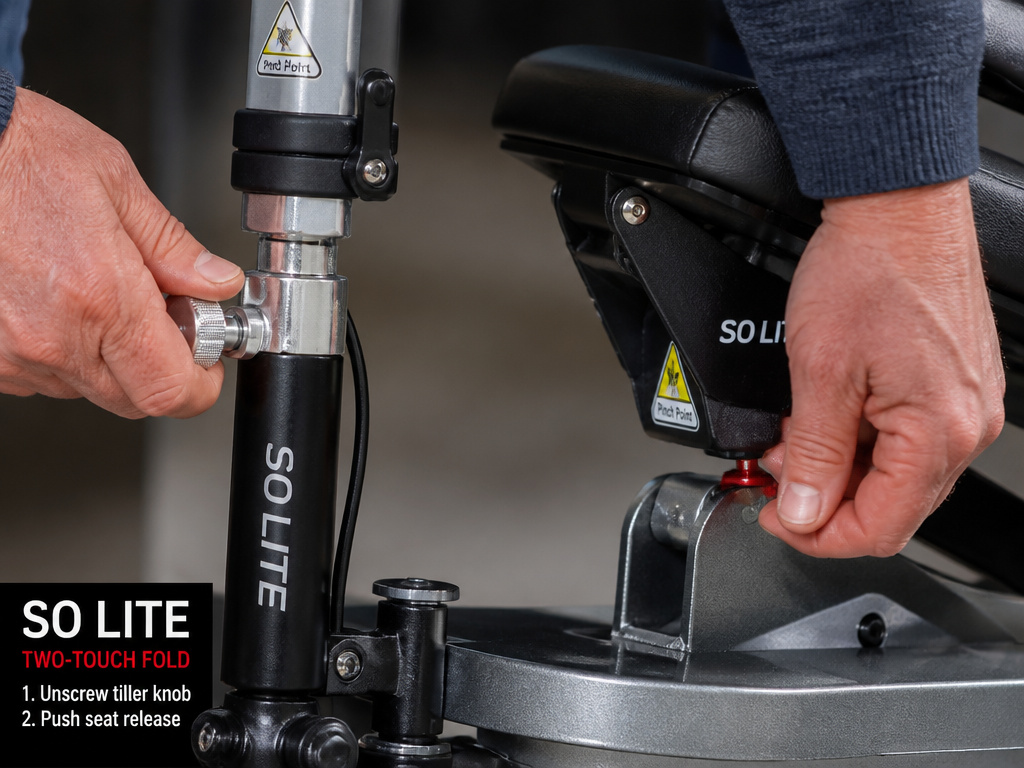
The So Lite uses what the manufacturer calls a “two-touch fold.” You push one knob to fold the seat down, then unscrew one knob on the tiller to fold the steering column. No tools are required, and there are no multiple pieces to reassemble like on some older folding scooters.
When folded, the scooter’s height is 430 mm, or about 17 inches.
The manual has a specific warning here: do not put your fingers between the parts of the scooter when folding or unfolding. Pinch points are real, and the mechanisms can snap shut with force. It’s a reminder to go slow, especially when you’re learning the process.
For storage, the manual specifies an ambient temperature range of -13°F to 104°F and a relative humidity of 80% or less. That distinction trips people up. The battery can handle colder storage, but the electronics and your own safety cannot handle cold operation.
Battery Care and Charging: The Non-Negotiables
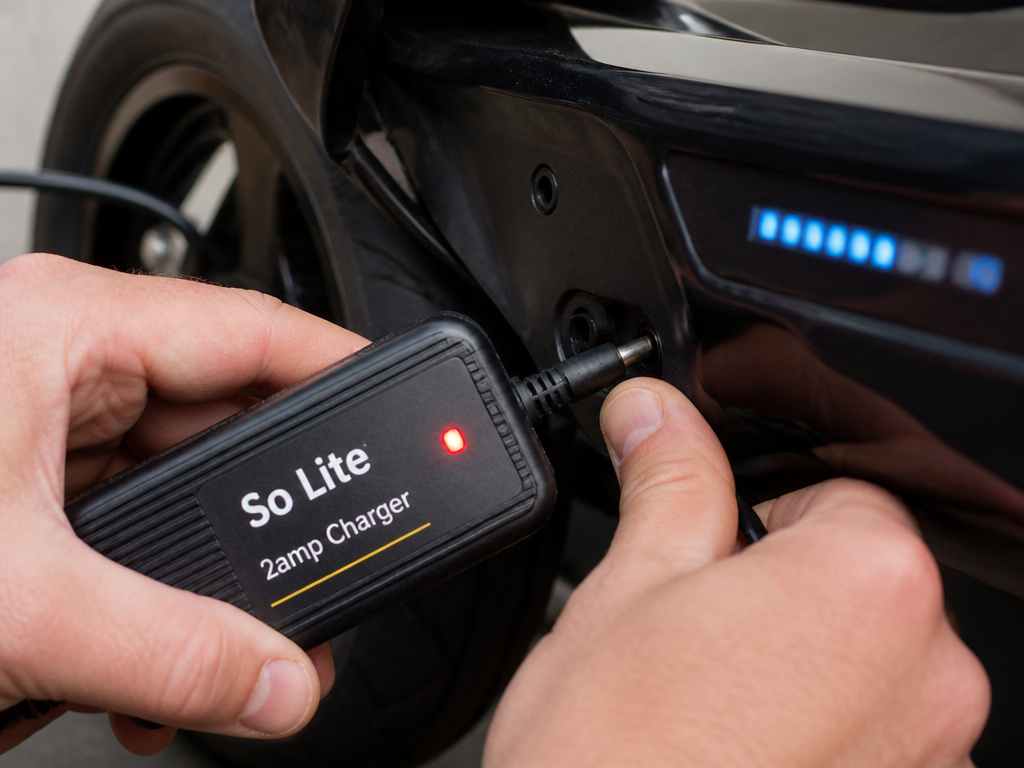
The lithium battery is the most expensive and safety-critical part of the scooter. The So Lite uses a single 24V 10Ah battery, which gives it a watt-hour rating of 240Wh. That’s important because it’s under the 300Wh per-battery limit for airline travel.
But lithium chemistry demands respect. The manual’s charging instructions are precise and differ based on your usage.
If you use the scooter every day, charge it as soon as possible after each use. A full charge takes 8-12 hours with the 2-amp charger. If you use it infrequently—once a week or less—you must charge it at least once a week, and that charge should not exceed 12-14 hours.
Common mistake: Using the scooter’s LED charge indicator bar as proof of a full charge. The manual explicitly states this LED bar is not reliable. You must wait for the charger’s own indicator light to turn green.
The “do not” list for the battery is severe. Never place it near fire or immerse it in water. Do not let it overheat above 113°F. Avoid violent vibration, collision, or short-circuiting. Do not charge it for more than 20 hours at a time. After its lifespan of 2–3 years (or 300–500 charge cycles), you must contact the dealer or manufacturer for disposal—do not throw it in the trash.
Cold weather reduces battery life, a point called out in the troubleshooting guide. And never store the scooter with a fully depleted battery; it damages the cells.
Travel Range and Real-World Performance
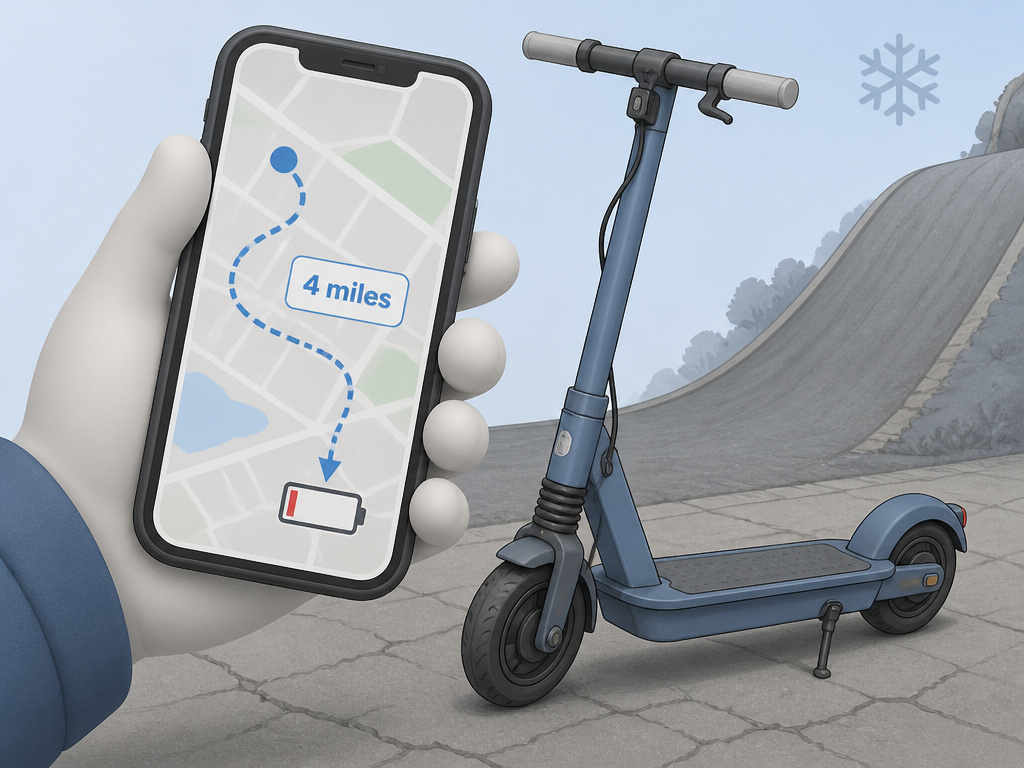
Here’s where sources disagree, and you need to know both sides. The OEM manual does not publish an official travel range. The OEM manual does not specify a travel range, but some retailers and review sites claim “up to eight miles on a single charge.”
Treat that eight-mile figure as a best-case scenario. It assumes a flat, smooth surface, a user at or below the weight capacity, moderate temperatures, and a fully charged, healthy battery. In the real world, range is the first thing to drop. Cold weather, hills, frequent starts and stops, and higher user weight can cut that range in half.
The scooter’s performance is defined by its limits. The 5 mph speed is steady but slow. The automatic electromagnetic brakes bring you to a smooth, predictable stop.
It will struggle on anything other than pavement or very smooth indoor flooring. Grass, gravel, and sand will stop it dead.
This isn’t a weakness of the So Lite; it’s the trade-off for its light weight and simple design.
Is the Journey So Lite Scooter Right for You?
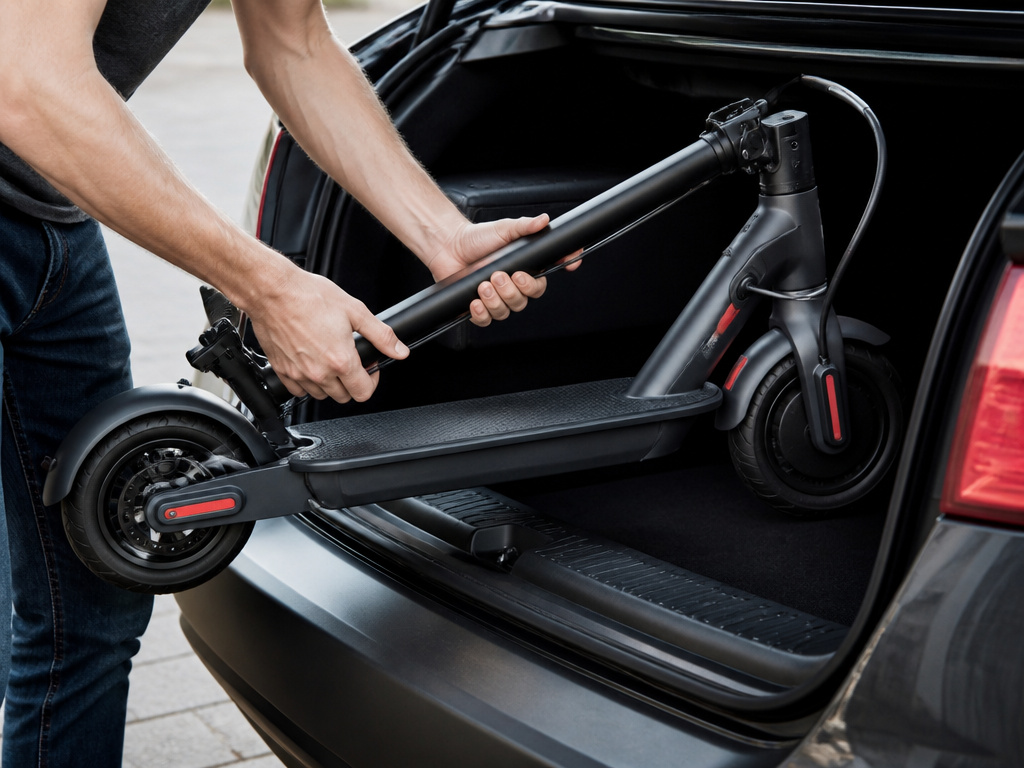
The So Lite is an excellent tool for a specific set of needs.
Choose the So Lite if: Your primary need is a scooter you can lift in and out of a car by yourself. Your daily routes are on smooth, paved surfaces with no steep hills. You value stability (four wheels, ESC) and plan to use it in fair weather. Air travel is a occasional requirement.
Look at other scooters if: You need to traverse grass, gravel, or any uneven terrain regularly. You face slopes steeper than a standard ramp. Your weight is near or above the 275 lb limit. You need a longer range or faster speed.
Compared to heavier, more powerful electric scooters, the So Lite makes a clear choice: portability over power. It sits firmly in the category of lightweight, travel-ready commuter scooters.
For a broader look at options, our scooter buying guide compares weights, ranges, and use cases across several models.
What accessories come with the scooter?
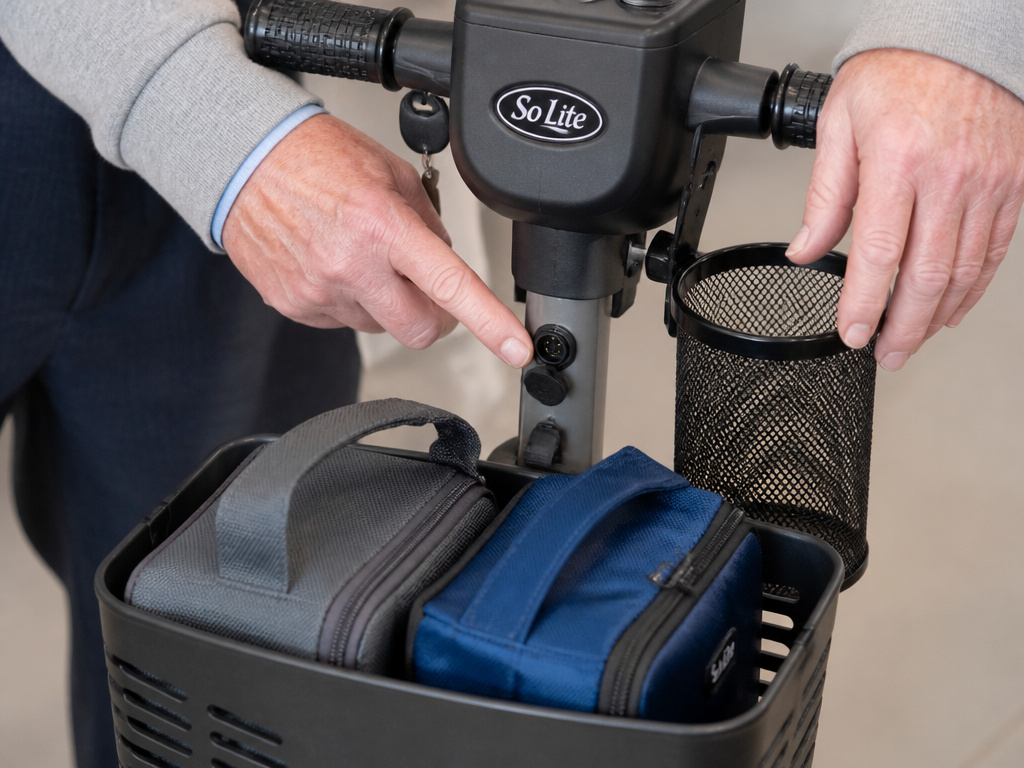
The So Lite scooter arrives fully assembled, so you can start using it right away. It includes two well-made storage bags and a mesh, expandable drink holder for your personal items. The charging port is conveniently located on the tiller, so you never have to lift or remove the battery to plug it in. For transport, the scooter features a simple two-touch folding mechanism; you push one knob to fold the seat and unscrew another on the tiller. This design means there are no multiple pieces to reassemble later, making setup and stowaway straightforward.
How does it compare to other scooters?
The So Lite’s defining feature is its weight. At 44.5 pounds with the battery, it is significantly lighter than many standard mobility scooters, which often weigh over 100 pounds. This makes it a practical choice for solo loading into a car. Its two-touch fold system also sets it apart from models that require disassembling multiple pieces. While its top speed and weight capacity are suited for standard daily use, its compact folded dimensions and FAA-approved battery offer specific advantages for travel that bulkier scooters cannot match. It trades some heft and size for this portability.
What do users say about it?
Users frequently highlight the scooter’s lightweight design and easy folding as its biggest strengths, a major benefit for solo travel and errands. The simple two-step fold and the fact it comes fully assembled are consistently praised for eliminating setup hassle. The Electronic Stability Control, which automatically slows the scooter during turns, and the anti-tipper wheels are noted for providing a secure feel. Practical feedback emphasizes following the safety guidelines, like practicing in a safe area first and being mindful of the manufacturer’s operating temperature limits to ensure reliable performance.
Frequently Asked Questions
What is the actual weight of the So Lite Scooter?
The scooter weighs 40.8 lbs (18.5 kg) without its battery. With the 24V 10Ah lithium battery installed, the total weight is 44.5 lbs (20.2 kg). This is the weight you must lift for car transport.
Can you take the So Lite Scooter on an airplane?
Yes, the So Lite is FAA-approved for air travel because its battery is 240Wh, under the 300Wh limit. The procedure is specific: you must remove the battery at the jetway and carry it in the cabin. The scooter (without battery) travels in cargo. Always notify your airline 48–72 hours before your flight and provide the battery’s voltage, amp-hour, and watt-hour ratings.
How long does the battery last, and how do you charge it?
With proper care, the lithium battery lasts 2–3 years, or approximately 300–500 full charge cycles. For daily use, charge it for 8-12 hours after each use. For infrequent use (once a week or less), charge it at least once a week for no more than 12-14 hours. Always wait for the charger’s light to turn green, not just the scooter’s LED bar.
What are the biggest limitations of the So Lite Scooter?
The main limitations are terrain and weather. The manufacturer prohibits use on grass, gravel, sand, mud, or bumpy roads. You cannot use it in rain, snow, or temperatures below 14°F. Its maximum slope is 8 degrees, and it has only 4 inches of ground clearance. It’s designed strictly for smooth, paved surfaces in good weather.
Is the So Lite Scooter good for seniors?
It has senior-friendly features like electronic stability control, anti-tip wheels, a simple two-touch fold, and a tiller-mounted charging port so you don’t have to lift the battery. However, the 275 lb weight capacity and 45-inch turning radius may not suit all seniors. It’s best for active seniors who travel on smooth paths and need a portable option.
The Bottom Line
The Journey So Lite Scooter does one thing exceptionally well: it gets out of your way. It folds small, lifts light, and stores easily. For someone who needs a reliable pavement cruiser for errands, travel, and smooth outdoor excursions, it’s a compelling tool.
But its manual is a contract. Break the rules on terrain or weather, and you void the warranty and assume real risk. This scooter demands that you match your environment to its design. Do that, and it delivers on its promise of lightweight independence. Ask it to be something it’s not, and you’ll be disappointed.
For most buyers, the choice comes down to a single question: is portability your top priority? If yes, the So Lite is a top contender. If you need more ground clearance, hill power, or all-weather capability, our review of versatile scooters will point you toward models that trade a few pounds for a lot more capability.
