Can You Skateboard With Converse? Which Should You Buy?
This post contains affiliate links. As an Amazon Associate, we earn from qualifying purchases.
You can skateboard with Converse shoes, but only if they are from the dedicated CONS or Pro skate line, which feature reinforced toe caps, impact cushioning like CX or Nike Zoom Air, and the proprietary CONS traction rubber outsole. Classic canvas Chuck Taylors lack these protections and will shred within a week of consistent trick practice.
The “CONS traction rubber” spec isn’t marketing, and it’s central to the can you skateboard with converse question. It’s a compound and tread pattern designed to grip the board’s sandpaper-like surface without feeling sticky on concrete. That’s the difference between a shoe that works and one that just looks the part.
What follows: a breakdown of the hidden tech inside skate-ready Converse, the real durability numbers from third-party wear tests, the confusing sizing advice you need to navigate when you compare a can you skateboard with converse, and a direct comparison to the other iconic option.
Key Takeaways
- Skate only with Converse CONS or Pro models (e.g., Chuck Taylor All Star Pro, Louie Lopez Pro). Classic canvas Chucks have zero impact protection and tear fast.
- Look for three key specs: CONS traction rubber outsole, a reinforced toe cap (suede/rubber), and either CX cushioning or a Nike Zoom Air unit.
- Sizing advice varies by model. The Converse product page for the Chuck Taylor All Star Pro states it runs large and to order half a size down, while a review of the Louie Lopez Pro 2 claims it fits true to size but has a slightly narrower, snug feel.
- Expect a few weeks of life from a Pro model with regular skating, based on documented wear tests. Canvas models can blow out quickly.
- For beginners, a well-padded cupsole skate shoe from another brand often offers more forgiveness and longer life while you’re learning.
The Difference Between Classic Converse and Converse CONS Skate Shoes
A classic Chuck Taylor All Star is a canvas sack with a thin rubber sole. A Converse CONS skate shoe is a technical piece of footwear. Treating them as the same thing is how you end up with sore feet and a hole in your shoe after one afternoon.
The brand highlights various technologies across its skate line, which can include an OrthoLite® sock liner, a Nike Zoom Air bag, CONS traction rubber outsoles, and reinforced toe caps.
The Converse CONS line incorporates specific performance technologies not found in lifestyle models, which can include features like an OrthoLite® sock liner, Nike Zoom Air cushioning, CONS traction rubber outsoles, and reinforced toe caps.
Classic Chucks have none of that. The canvas upper provides no abrasion resistance. The standard rubber sole is thin and hard, offering minimal shock absorption. The toe is a single layer of canvas with a decorative rubber strip that does nothing to stop wear.
The moment you start practicing ollies or kickflips, the grip tape acts like a belt sander on that canvas toe. The shoe isn’t broken in; it’s broken.
How to Spot a Converse Skate Shoe: Labels and Specs
Don’t just trust the look. A high-top silhouette doesn’t mean it’s skate-ready. You need to read the label and know the keywords.
First, look for the “CONS” branding. This is Converse’s sub-label for its skateboarding (and formerly basketball) lineage. The shoe’s name will often include it: “CONS Chuck Taylor All Star Pro.” The product page or box will list the technical features mentioned above.
Second, check the materials. A skate-ready model will almost always use suede or heavy-duty canvas in high-wear areas. The product description will explicitly mention “reinforced toe” or “abrasion-resistant suede.”
Regional differences add a twist. The Japanese market models have their own naming conventions. According to the Converse Japan spec page, they feature a STABLE LAST, which is a last with a low toe spring for better ground feel, and a REACT SK insole, a high-density foam cup insole with an E.V.A. Heel cup. You won’t see those terms on the U.S. Site, but they point to the same design intent: stability and impact protection.
Here’s a quick reference table to separate the skate shoes from the lifestyle models:
| Feature | Converse Skate Shoe (CONS/Pro) | Classic Converse (Lifestyle) |
|---|---|---|
| Outsole | CONS traction rubber | Standard rubber |
| Toe Cap | Reinforced suede or rubber | Decorative rubber strip |
| Cushioning | CX, Nike Zoom Air, or OrthoLite insole | Basic foam insole |
| Primary Upper Material | Suede or reinforced canvas | Standard canvas |
| Labeling | “CONS” or “Pro” in product name | “Chuck Taylor All Star” |
When you’re shopping online, filter for the “Skate” category on Converse’s site. Don’t browse the general “Chuck Taylor” section. That small step filters out 95% of the shoes that won’t work.
Specific Models and What They Offer: Chuck Taylor Pro vs. Louie Lopez Pro

Two models define the Converse skate line: the evolution of the classic and the modern team shoe. Understanding their construction tells you what you’re buying.
The CONS Chuck Taylor All Star Pro Suede (SKU 159574C) is the direct upgrade. It takes the iconic silhouette and adds skate-specific tech. According to its product page, it features CX cushioning and a CONS traction rubber outsole. The suede upper is the reinforcement. It’s the choice if you want the Chuck Taylor look with actual performance.
The Louie Lopez Pro shows how the line has evolved. The 2019 version, reviewed by Tactics, had vulcanized construction and an OrthoLite insole with a Zoom Air unit in the heel and softer foam in the forefoot. The 2025 Louie Lopez Pro 2, according to Weartested.com, switched to a slim cupsole paired with a tapered CX foam insole. This is a significant change: vulcanized soles offer better board feel, while cupsoles generally provide more support and durability.
Common mistake: Buying a Louie Lopez Pro model for its name without checking the year. The 2019 version (vulcanized) and the 2025 Pro 2 (cupsole) have different constructions that feel and perform differently underfoot.
Your preference here is personal. The Chuck Taylor Pro is for the purist who wants the classic feel, upgraded. The Louie Lopez models represent Converse’s modern skate engineering, with the Pro 2 leaning more towards the support and durability that many skaters prefer for daily driving.
The Louie Lopez Pro Durability Test (2019)
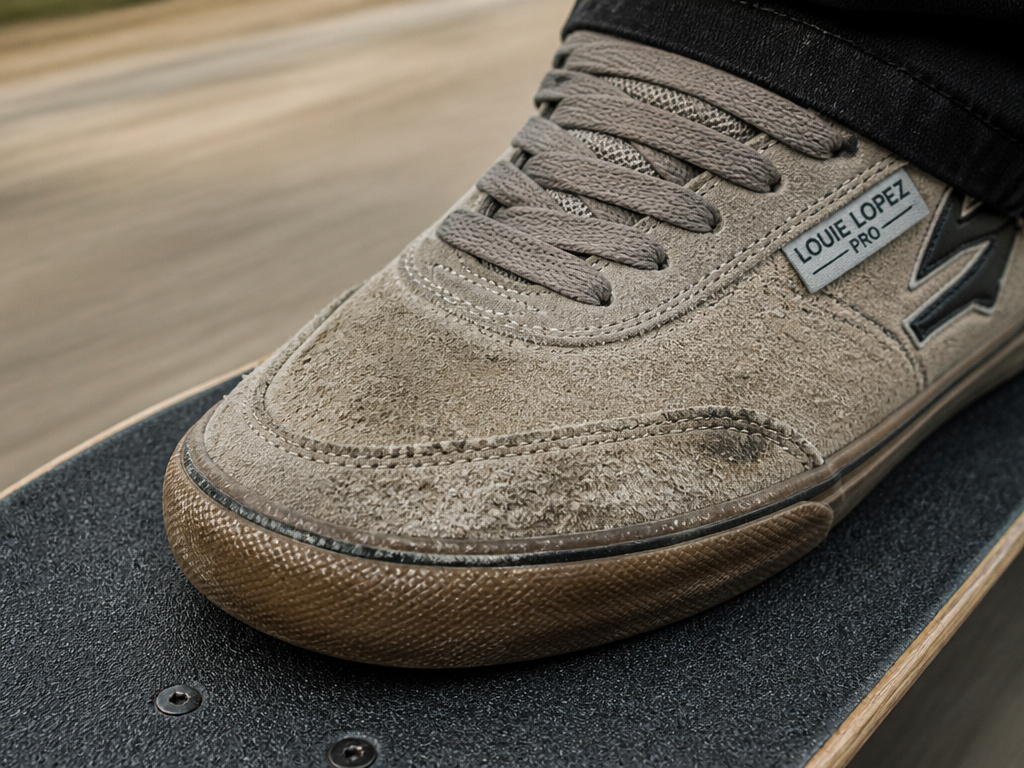
We have a rare, documented timeline for a Converse skate shoe’s lifespan. A wear-test review on Tactics from 2019 followed a pair of Louie Lopez Pros over two weeks of regular skating.
After two weeks, the reviewer noted visible wear on the toe and ollie area, but no holes. Based on the rate of wear, they projected the shoes would last another 3-4 weeks of skating before a complete failure. That’s a total projected lifespan of about 5 to 6 weeks for that specific pro model under consistent use.
That number deserves honesty. For a dedicated skater, going through a pair of shoes every month and a half adds up. It’s not abnormal for vulcanized shoes, but it’s a concrete data point many brand pages won’t give you. It tells you what “durable” actually means in skateboarding: not indestructible, but resilient enough to be a tool, not a consumable.
Compare that to the anecdotal reports on classic Chucks. On Reddit, user opinions vary: some state canvas Chucks “will get shredded by the grip in less than 1 week of consistent sessions”, while others report skating in them with the caveat of little protection. The difference in material, suede versus canvas, is the difference between a shoe that wears and one that disintegrates.
The Sizing Quirk You Must Get Right
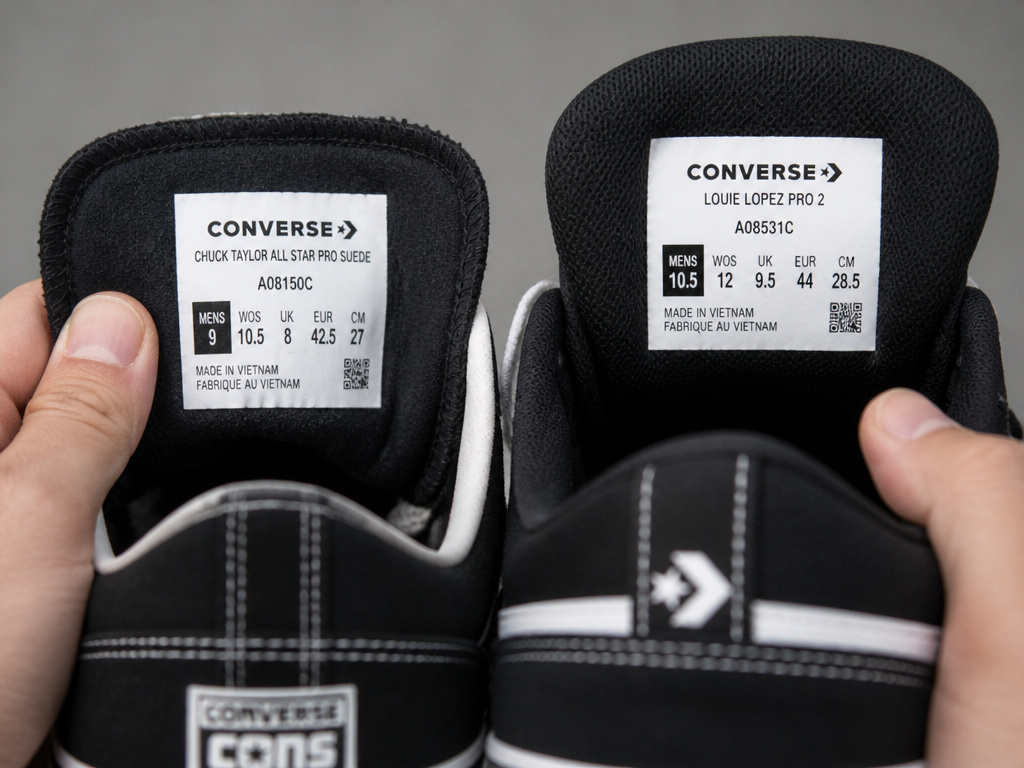
Here is where the sources disagree, and you need to pay close attention.
The product page for the Chuck Taylor All Star Pro Suede states clearly: “This style runs large. Order a half size down.”
However, the 2025 review of the Louie Lopez Pro 2 on Weartested.com claims it “fits true to size but has a slightly narrower, snug feel.” This suggests the newer, cupsole model follows a different last, the foot mold around which the shoe is built, than the Chuck Taylor-based Pro model.
Where this goes sideways: Assuming all “Converse skate shoes” fit the same. Ordering a half size down in a Louie Lopez Pro 2 based on the Chuck Taylor Pro advice will likely leave you with painfully tight shoes.
The safest path? If you can’t try them on, read the specific sizing notes for the exact model you’re buying. Look for recent reviews. And remember, Converse offers a 30-day free returns policy on its website (exclusions apply). Use it. It’s better to swap a size than to break in a shoe that will never fit right.
Converse vs. Vans for Skateboarding
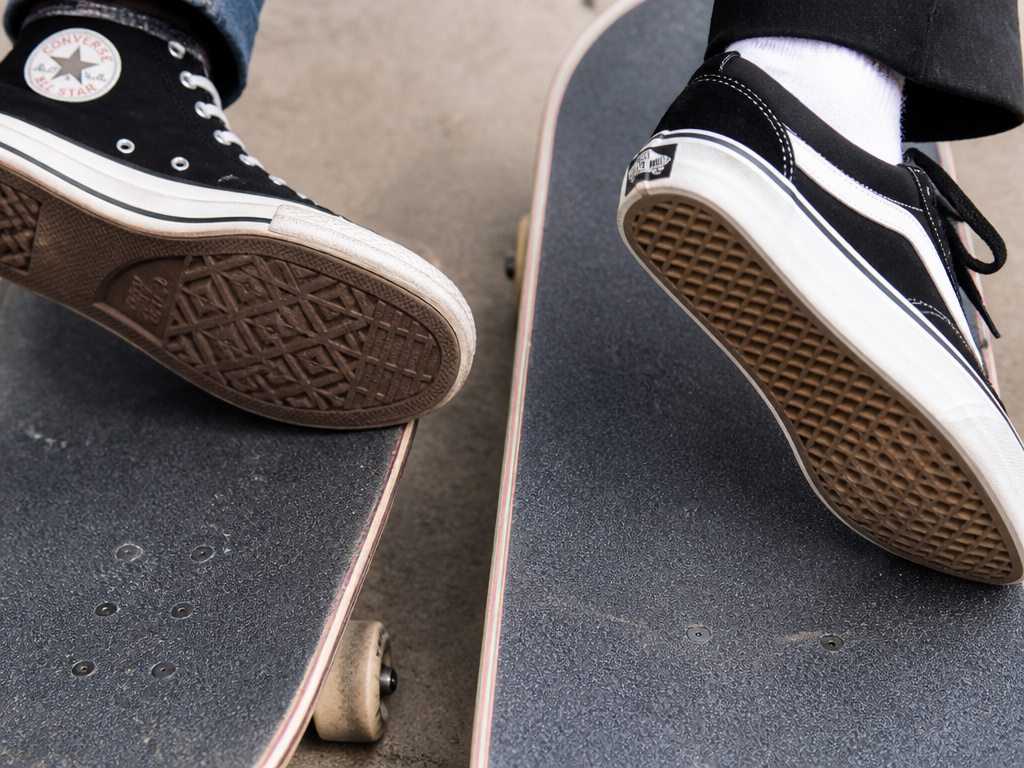
This is the classic head-to-head. Both are iconic casual brands with deep skate heritage. Which one wins for the board?
It comes down to construction philosophy. Converse’s CONS line leans heavily on Nike-derived tech (Zoom Air, CX foam) inserted into familiar silhouettes. The feel can be a hybrid: classic profile with modern cushioning.
Vans, through its Pro Skate line, often employs its PopCush or UltraCush foam formulas and Duracap rubber reinforcement under the toe. Vans’ patterns, like the Wafflecup, are designed specifically for skateboarding from the ground up, not adapted.
For a beginner, a Vans Old Skool Pro or Sk8-Hi Pro might be a more forgiving choice. The cushioning is consistently plush, and the reinforced uppers are very durable. The Converse Chuck Taylor All Star Pro offers a unique, flatter board feel that some skaters prefer for flip tricks, but its thinner cushioning can be less kind to new skaters still learning to absorb impact.
The short version: Vans Pro models are often the more consistent, cushioned, and durable “tool for the job.” Converse CONS models are for the skater who prioritizes a specific board feel and loves the Chuck Taylor silhouette, accepting that they might trade a bit of padding and some longevity for it.
Can a Beginner Use Their Old Chucks to Try Skateboarding?
You have a pair of classic canvas Chucks in your closet. The board is in the garage. Should you lace up and give it a go?
You can. But set the right expectations. Those shoes are not protecting your feet. You will feel every pebble you roll over. The lack of cushioning means your heels and knees will take more of a beating just from pushing around. The moment you start trying to drag your foot for an ollie, the canvas will start fraying. It might not blow out in one go, but it will be a short relationship.
If you’re just seeing if you enjoy standing on a board and pushing, it’s fine for a session or two. Think of it as a diagnostic test. If your feet are killing you after 30 minutes, that’s your signal that proper skate shoe cushioning matters. If you catch the bug and want to learn tricks, your very first purchase, before new trucks or better bearings, should be a pair of actual skate shoes. Your body and your progress will thank you.
Starting with the wrong gear teaches you to move incorrectly. You’ll develop a timid pop because slamming your foot down in thin shoes hurts. You’ll avoid certain motions to save your shoes. It’s a barrier you don’t need.
Frequently Asked Questions
Is it okay to skate with Converse?
It is okay to skate with Converse CONS or Pro model shoes designed for skateboarding. It is not recommended to skate in classic canvas Chuck Taylor All Stars, as they lack the necessary cushioning, support, and abrasion resistance, leading to fast wear and potential discomfort.
Is Converse for skating?
Converse makes shoes specifically for skating under its CONS line. These are engineered with features like CONS traction rubber, reinforced toe caps, and impact cushioning. The broader Converse brand includes many lifestyle shoes not suitable for skating.
Can I wear any shoes to skateboard?
Technically, yes. But wearing shoes not designed for skateboarding (like running shoes, boots, or casual canvas sneakers) increases your risk of injury due to poor board feel, inadequate cushioning for impacts, and rapid wear that can lead to sudden failure mid-trick.
Are Converse or Vans better for skateboarding?
Both make excellent professional-grade skate shoes. Vans Pro Skate models often provide more consistent, high-level cushioning and durability right out of the box. Converse CONS models offer a unique, often more minimal board feel favored by some skaters. For beginners, Vans is frequently the more forgiving and supportive choice.
Before You Go
The question isn’t really “can you skateboard with Converse?” It’s “which Converse can you skateboard with?” The answer lives in three letters: C-O-N-S.
Forget the canvas ghosts of the past. The modern tool is the Chuck Taylor All Star Pro for the classic feel, or the Louie Lopez Pro 2 for a more supported, cupsole experience. Check the sizing notes for your specific model twice. And go in knowing that no skate shoe is immortal, even the reinforced ones have a finite life measured in weeks of sessions.
If you’re holding a pair of classic Chucks and feeling the urge, go push around the driveway. Feel how thin the sole is. That sensation is your body telling you what it needs. Listen to it. Then get a pair of Converse skate shoes.
