Hiboy S2 Scooter Review: A Budget Commuter Analysis
This post contains affiliate links. As an Amazon Associate, we earn from qualifying purchases.
The Hiboy S2 is a budget electric scooter built for short, flat commutes, not for power or comfort. Its 350W motor delivers a 19 mph top speed and handles gentle hills, but its 8.5-inch solid tires transmit every bump, and the real-world range falls well short of the advertised 17 miles under typical use. For a rider under 220 lbs on smooth pavement, it’s a functional, low-maintenance entry point.
That gap between advertised and actual performance is the whole story. A scooter isn’t just a list of specs; it’s a collection of compromises you feel on your first ride, a point well illustrated in any thorough Hiboy S2 scooter review. The S2’s value proposition hinges on a few key numbers that change dramatically once you leave the lab.
What follows: a breakdown of where the S2 actually delivers, where it falls painfully short, and the specific maintenance traps that can turn a cheap scooter into an expensive paperweight. We’ll ground every claim in the manufacturer’s own manual, third-party tests, and owner reports, not marketing hype.
Key Takeaways
- The advertised 17-mile maximum range is measured under ideal lab conditions (77°F, no wind, 165 lb load); expect closer to 10 miles with hills, headwinds, or a heavier rider.
- 8.5-inch solid tires mean zero flats but a harsh, vibrating ride on anything but perfect pavement; this design also transfers shock directly to the scooter’s frame.
- For long-term health, recharge the battery every 60 days if storing it, even if the manual’s advice to “fully charge” for long-term storage contradicts common lithium-ion wisdom.
- The Hiboy App adds real utility for locking, light control, and speed adjustment, but it’s a convenience layer on top of basic mechanical reliability.
- If your commute has hills steeper than 6% or you weigh over 200 lbs, the S2’s 350W motor will struggle; a model with more power or pneumatic tires is a better investment.
What’s the Real-World Range of the Hiboy S2?
The manual claims a 17-mile maximum range. The fine print reveals the test conditions: 77°F ambient temperature, no wind, a 165 lb rider, and a constant 11.4 mph speed on a perfectly flat surface. That’s a laboratory, not a commute.
The advertised 17-mile maximum range is calculated under highly specific, ideal laboratory conditions (77°F, no wind, 165 lb load, constant 11.4 mph on flat ground). Real-world results, like Tom’s Guide’s estimate of ~10 miles with hills, will differ significantly.
In the real world, variables conspire against you. Tom’s Guide’s review estimated around 10 miles with some hills in the mix. Cold weather is a particularly brutal range-killer. The manual itself states that battery performance degrades below 32°F (0°C), and at -4°F (-20°C) the range can be “half or less” of normal. A winter commuter needs to plan for that.
The battery itself is a 36V, 7.5Ah unit with a rated capacity of 270Wh. It’s UL 2272 certified, which is a required safety standard for lithium-ion batteries in scooters. The five-light indicator on the dashboard gives a rough estimate: all five solid means 80-100% charge, four solid means 60-80%, and so on. When the last light flashes, it’s time to recharge.
Where this goes sideways: Trusting the 17-mile figure for daily trip planning. If your one-way commute is 8 miles and you have a hill, you’ll be sweating the return trip.
Battery Care That Actually Extends Lifespan
The manual’s storage advice is a point of contention. It instructs users to fully charge the battery if the scooter will be idle for more than 30 days and to recharge it every 60 days if idle, which differs from common lithium-ion battery expert advice to store at ~40-60% state of charge for long-term health. It also warns that damage from leaving the battery uncharged for a prolonged period is “irreversible and is beyond limited warranty.”
Most battery experts recommend storing lithium-ion cells at a 40-60% state of charge for long-term health. The manual’s “full charge” directive seems aimed at preventing a total discharge, which is indeed catastrophic, but it may accelerate long-term degradation. Your best compromise? If you’re storing it for the winter, charge it to about 60%, note the date, and put a calendar reminder to check it in two months.
Performance on Hills and Acceleration
The 350W brushless hub motor (with a 500W peak) is the heart of the S2. Hiboy states it can handle slopes of up to 15% under normal riding conditions. “Normal” is doing a lot of work here.
Third-party tests, like those cited in a typical Hiboy S2 scooter review, reveal the limits. Tom’s Guide noted that on a 6% grade test incline, the S2 slowed to around 3-4 miles per hour. For a rider approaching the maximum load capacity, that slope would feel even steeper. The motor isn’t weak, but it’s optimized for efficiency on flats, not torque for climbs.
Acceleration is steady, not quick. It takes about 6-7 seconds to reach its top speed, which is fine for merging from a stop sign but means you won’t be darting ahead of traffic. The scooter offers two modes: Drive mode caps speed at 13 mph for better battery conservation, while Sport mode provides the full 19 mph.
The part nobody mentions: That 15% hill grade claim assumes optimal conditions—a light rider, a full battery, and a warm day. In practice, expect usable performance on grades under 10%. Anything steeper becomes a walk.
The Ride Quality Trade-Off: Solid Tires & Vibration
This is the S2’s most significant compromise. The 8.5-inch solid honeycomb tires are marketed as “never-flat,” which is true. You will never patch a tube or deal with a sudden puncture. What you get instead is a direct physical connection to every crack, pebble, and seam in the pavement.
The ride is firm and high-frequency vibration is constant. Your hands and feet will feel it after a couple of miles. On rough asphalt or brick paths, it becomes genuinely unpleasant. This isn’t just a comfort issue; that vibration travels through the entire frame. Over hundreds of miles, it can contribute to loosening fasteners and, in worst-case scenarios, stress fractures at weak points.
Common mistake: Assuming “maintenance-free” tires mean a care-free ride. The trade-off is a harsh experience that demands more from the rider’s body and the scooter’s frame.
There is no suspension to absorb impacts. The only cushion is the rubber deck under your feet and the slight give in the tires themselves. For a smooth, comfortable commute, a scooter with pneumatic (air-filled) tires is a night-and-day difference. The S2 makes its case on durability and low upkeep, not plushness.
Build Quality, Portability, and Daily Use
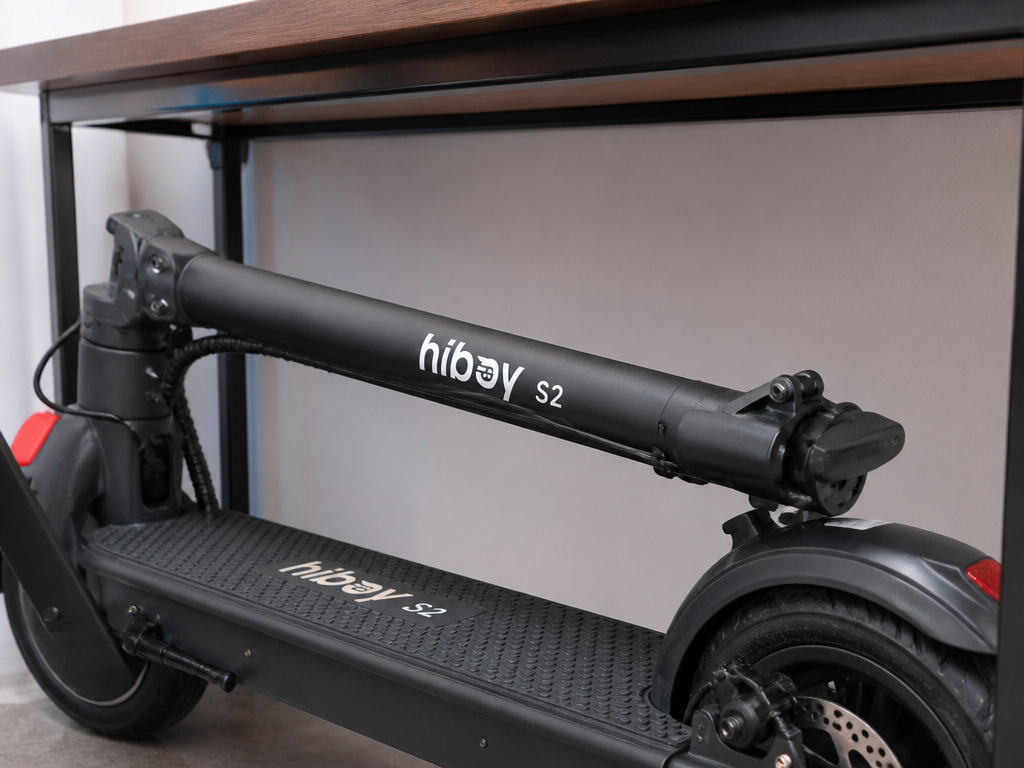
The S2 feels substantial. The deck is covered in a grippy rubber matting, the stem locks with a satisfying clunk, and the cables are internally routed for a clean look. But the reported weight varies by source: the Hiboy user manual lists item weight as 31.7 lbs (14.4 kg), the Hiboy product page lists product weight as 35.49 lbs, and Tom’s Guide review measured it at 29.5 pounds.
| Weight Claim Source | Reported Weight | Likely Explanation |
|---|---|---|
| Hiboy User Manual | 31.7 lbs (14.4 kg) | Weight of scooter alone |
| Hiboy Product Page | 35.49 lbs | Weight including packaging/accessories? |
| Tom’s Guide Review | 29.5 pounds | Possibly weighed without battery? |
Folded dimensions are 45.7 x 16.9 x 19.3 inches. It’s compact enough to stash under a desk or in a car trunk, and Its weight is manageable for carrying up a few stairs. The folding mechanism is simple: flip a lever and the stem hooks onto a latch on the rear fender.
The IPX4 splash resistance rating means it can handle a light drizzle or wet roads, but don’t take it through deep puddles or leave it out in a downpour. The operating temperature range is 14 to 104°F (-10 to 40°C).
The Hiboy App: Digital Convenience
The app connectivity is a legitimate perk. Through Bluetooth, you can lock the scooter (a basic theft deterrent), turn the lights on/off, switch between Drive and Sport modes, adjust speed settings, and manage cruise control. It’s not essential, but it adds a layer of customization and security that many budget scooters lack. Cruise control can also be activated manually by holding the throttle steady for about 5 seconds until you hear a beep.
Brakes, Safety, and Real-World Stopping Power
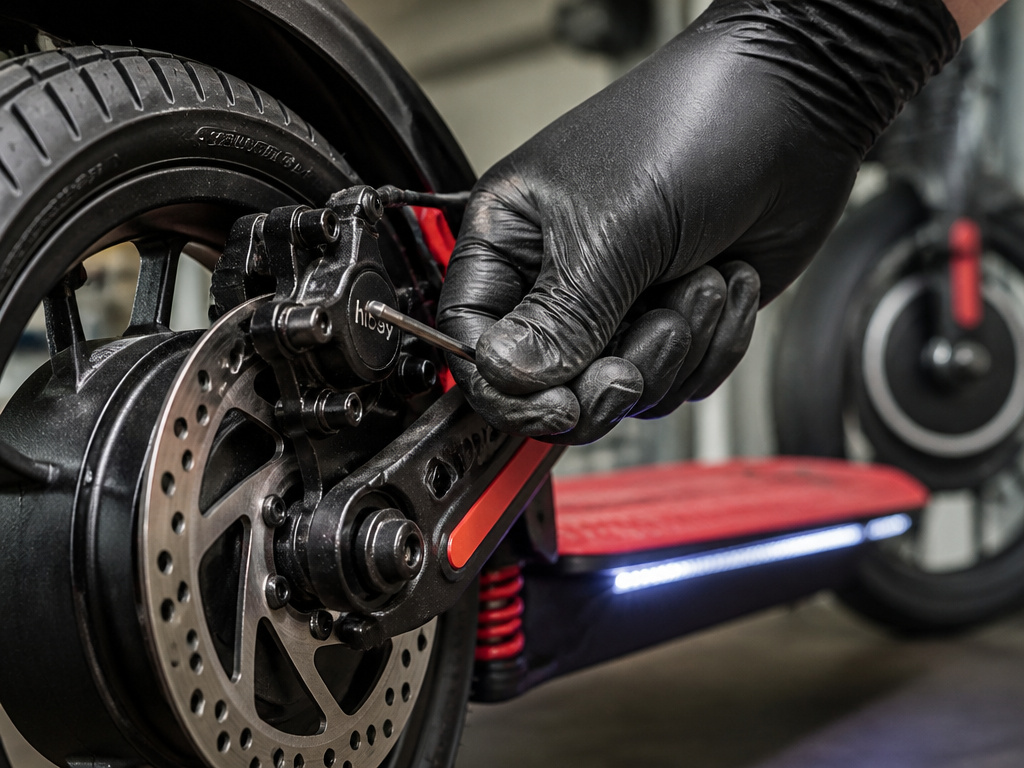
The S2 uses a combined braking system: regenerative electronic braking on the front motor and a rear mechanical disc brake. In theory, the regenerative brake captures some energy during deceleration and sends it back to the battery, while the disc brake provides strong, consistent stopping power.
In practice, the regenerative brake feels a bit soft initially, more like engine braking. The real stopping force comes from the rear disc brake. The manual and refurbished product pages stress that “regular maintenance of the disc brake is essential for optimal braking performance.”
You get a bright headlight, a tail light, and a strip of side LEDs that illuminate the ground on either side.
Reliability, Warranty, and the Refurbished Gamble
This is the murkiest part of the S2’s story. One review site estimated “at least 3 years before you have to worry about serious repairs or replacements” based on defect rates, but that’s an extrapolation, not a guarantee.
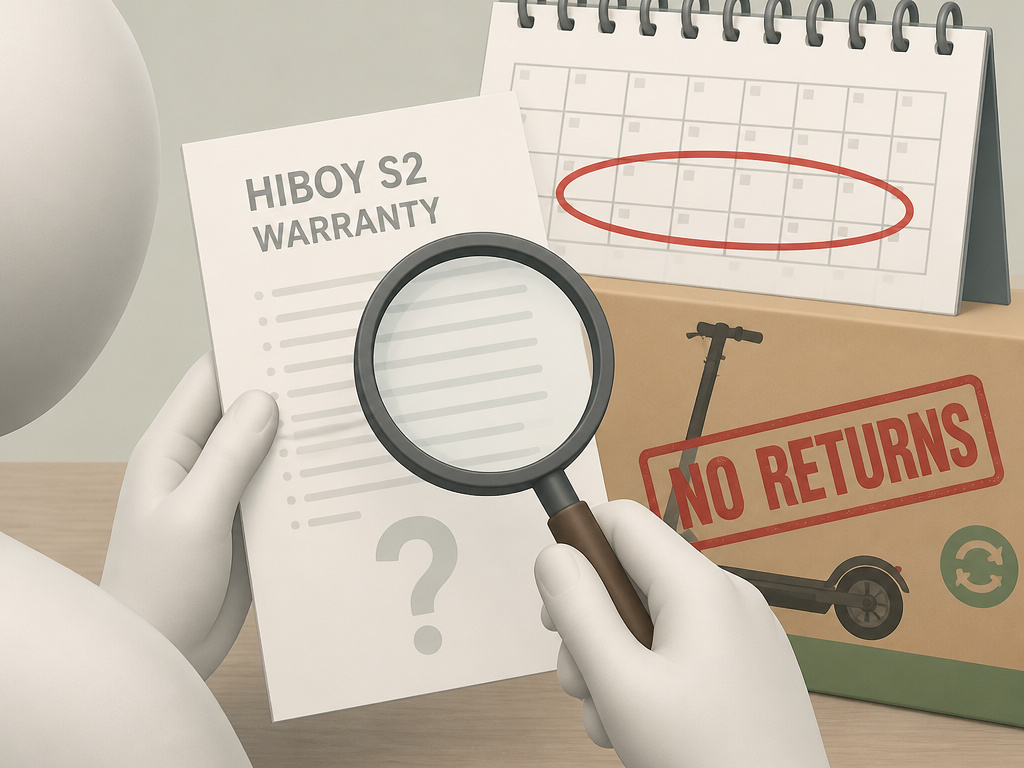
The standard warranty is vague, a common point of clarification in a Hiboy S2 scooter review. The manual states the product will be free from defects “for a period aforementioned,” but that period isn’t specified in the extracted text. There’s a 30-day satisfaction guarantee for returns, but the customer bears return shipping costs if there’s no quality issue.
The refurbished market is where things get risky. Hiboy sells refurbished S2 scooters with a strict “no returns, exchanges, or refunds” policy. They come with only a 2-week warranty covering electronic components (controller, battery, motor, charger). It’s a potential value play, but only if you’re comfortable with zero recourse after 14 days.
Hiboy S2 vs. The Competition: Who Is It Actually For?
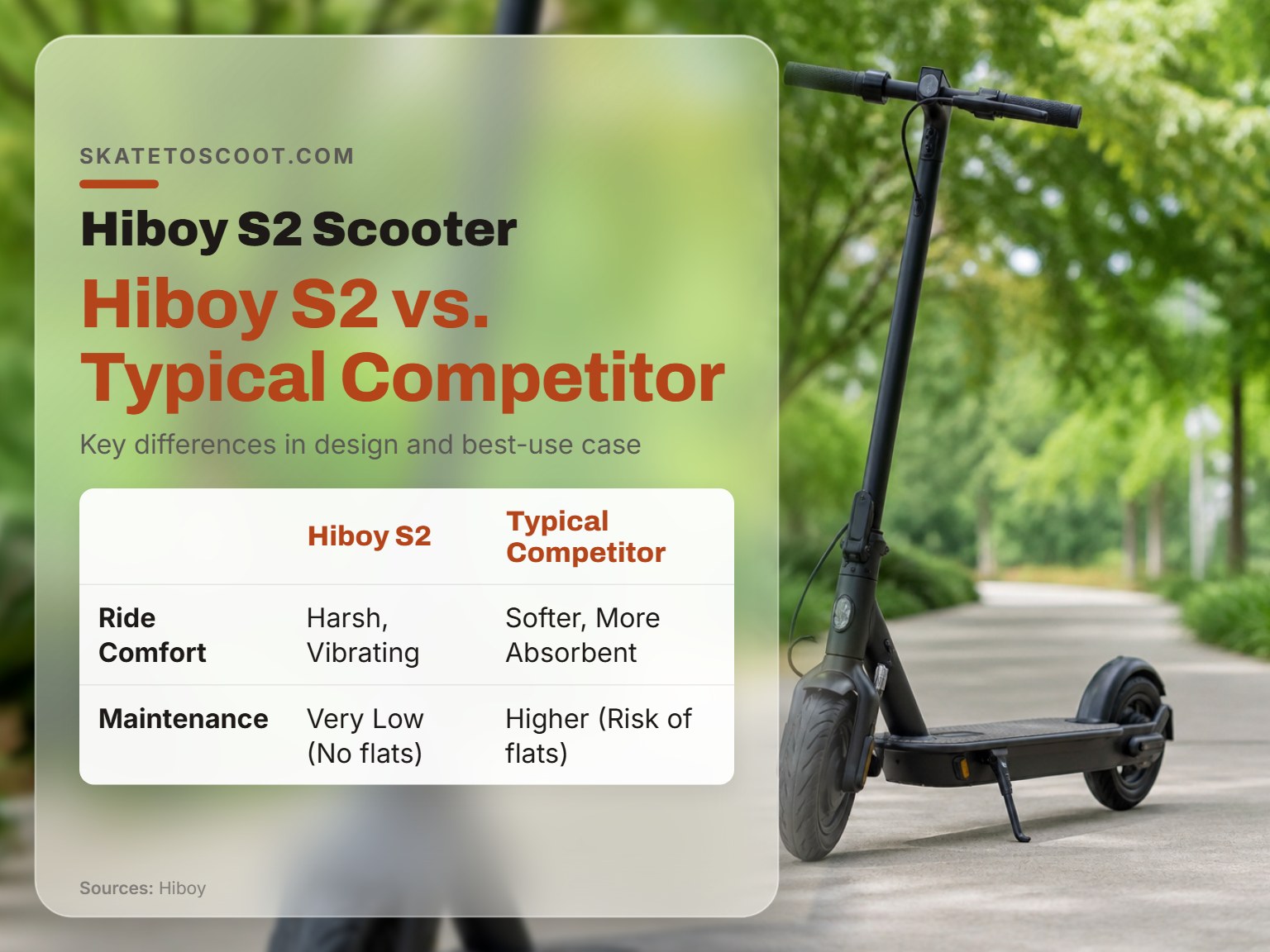
The S2 exists in a crowded field of budget commuter scooters. Its main advantage is its simple, solid-tire design and full lighting package. How does it stack up?
| Consideration | Hiboy S2 | A Typical Competitor (e.g., NIU KQi2 Pro) |
|---|---|---|
| Tires | 8.5″ Solid Honeycomb | 9.5″ Pneumatic (Air-Filled) |
| Ride Comfort | Harsh, Vibrating | Noticeably Softer, More Absorbent |
| Maintenance | Very Low (No tire inflation) | Higher (Risk of flats, pressure checks) |
| Max Load | 220 lbs (per manual; an Electric Boarding Company review states 260 lbs) | Often 220-265 lbs |
| Best For | Smooth pavement, short trips, riders who hate flats | Mixed surfaces, comfort-focused riders, longer commutes |
The S2 is for the pragmatic, low-maintenance commuter. Think a college student with a 2-mile campus commute on smooth paths, or a city dweller taking it from an apartment to a subway station on well-paved streets. It’s for someone who values “set it and forget it” reliability over comfort.
It is not for the heavier rider, the hilly-terrain commuter, or anyone with a bumpy route. If your wrists are sensitive or you plan rides over 30 minutes, the vibration will wear on you. In those cases, the comfort and performance upgrade to a model like the NIU KQi2 Pro is worth the extra investment.
The bottom line: The S2 does a few jobs well, but it’s brutally honest about its limitations. Your satisfaction depends entirely on how closely your needs align with its specific, narrow strengths.
Key Specifications Summary
The Hiboy S2’s core specs center on a 350W rated, 500W peak motor and a 36V, 7.5Ah (270Wh) battery. It claims a maximum speed of 19 mph in Sport mode and a maximum range of 17 miles under ideal conditions, with a load capacity of 220 lbs. The scooter uses 8.5-inch solid tires and a combined regenerative and mechanical disc brake system. It folds down for storage and takes several hours to charge. Real-world performance, particularly range and hill-climbing speed, will be lower than the maximum claims depending on rider weight, terrain, and temperature.
Frequently Asked Questions
Is the Hiboy S2 worth it?
At its frequent sale price around $400, the S2 can be worth it for a very specific user: a lighter rider (under 200 lbs) with a short, flat commute on good pavement who prioritizes never dealing with a flat tire. If you can find it for that price and your use case fits, it’s a functional tool. At its full $550 MSRP, competing scooters with air-filled tires and better comfort become more compelling.
How long do Hiboy S2 scooters last?
There’s no definitive answer. One reviewer estimated 3+ years based on defect rates, but real-world longevity depends heavily on maintenance, riding style, and weight load. The solid tires won’t puncture, but the motor, battery, and frame components are subject to wear. Proper care—especially battery storage and brake maintenance—is the biggest factor in extending its life.
Which is better, Segway or Hiboy?
Segway (Ninebot) is generally considered the more premium, reliable brand with better build quality, smoother rides (thanks to pneumatic tires and often suspension), and stronger after-sales support. Hiboy competes on price. The Hiboy S2 undercuts a comparable Segway model by a significant margin, but you trade off comfort, brand reputation, and sometimes long-term durability. For a “buy it for years” commuter, Segway often wins. For a budget-focused, light-use scenario, Hiboy has a place.
Are Hiboy scooters any good?
Hiboy scooters are “good” within the context of their price point. They deliver functional transportation with useful features like good lights and app connectivity. However, they frequently use solid tires to cut costs and maintenance, which severely impacts ride comfort. They are a solid choice for their intended use case—short, flat urban trips—but you must accept the trade-offs in comfort and sometimes component longevity. Reading a detailed review like this Hiboy S2 review can help clarify where specific models shine and stumble.
Before You Go
The Hiboy S2 is a lesson in matching expectations to reality. It delivers exactly what its core design promises: a simple, affordable electric scooter that won’t get a flat tire. It does not deliver a comfortable, powerful, or long-range experience.
Your decision comes down to a single question: are you buying a scooter for its convenience and low hassle, or for its ride quality and performance? The S2 nails the first, especially when you consider the value added by the Hiboy App. If your answer is the second, your money is better spent elsewhere, perhaps on a model from a list of the best Hiboy scooters or a different brand altogether.
Check your route on a map. If it’s mostly flat and smooth, the S2 could work. If you see an orange “steep grade” warning or long stretches of cracked concrete, keep looking. Your wrists and spine will thank you.
